
The Mechanism of Postprandial Somnolence: Why Your Lunch Makes You Sleepy
Updated May 2026
Postprandial somnolence, commonly known as the 'food coma', is frequently dismissed as a natural result of digestion, but it often signals a significant insulin mismatch. This article explores the neurobiological pathways that turn a midday meal into a period of extreme lethargy.
Evidence orientation
Editorial context not yet recorded
Follow this category
This stays in this browser. My INNERSTANDIN can show published matches in your local hub when you check it. It does not send email, push, or alert notifications.
Local learning review
A private browser aid for revisiting ideas. It is not an alert or a health recommendation.
Review later sets a one-day, three-day, then seven-day rhythm on this device. Choose it only when you want to revisit this article.
Overview
The phenomenon is so ubiquitous it has earned its own colloquialisms: the 'food coma', the 'afternoon slump', or, more formally, postprandial somnolence. For decades, the mainstream narrative has dismissed this state of profound lethargy following a meal as a benign, even charming, side effect of a "hearty" lunch. We are told it is simply the body diverting blood flow to the digestive tract, a primitive "rest and digest" response that we must simply endure with a second cup of coffee.
At INNERSTANDING, we reject this oversimplification. Postprandial somnolence is not a mandatory physiological tax on nourishment; it is a biofeedback signal indicating a breakdown in metabolic synchrony. When the simple act of consuming fuel results in the temporary shutdown of cognitive function and physical vigour, we are witnessing a mismatch between modern dietary inputs and ancient evolutionary machinery.
The heavy eyelids, the brain fog, and the sudden urge to retreat from the world after a midday sandwich are symptoms of an underlying metabolic inflexibility. They are early warning signs of insulin desensitisation and a direct result of neurochemical shifts triggered by systemic inflammation. This article will peel back the layers of this daily crisis, exposing the cellular mechanisms that turn your lunch into a sedative and exploring how the modern UK food environment has been architected to keep you in this state of metabolic subservience.
According to recent metabolic health surveys, over 75% of UK adults report regular bouts of daytime fatigue, with the peak occurring between 1:00 PM and 3:00 PM—directly correlating with the post-lunch insulin spike.
##
The Biology — How It Works
To understand why you feel like sleeping after a meal, we must first look at the intricate dance between the Enteric Nervous System (ENS) and the Central Nervous System (CNS). The traditional view—that blood is shunted away from the brain to the stomach—has been largely debunked by modern haemodynamic studies. The brain’s blood supply is tightly regulated and does not drop significantly after eating. Instead, the "coma" is driven by humoral and neural signalling.
The Insulin-Amino Acid Shift
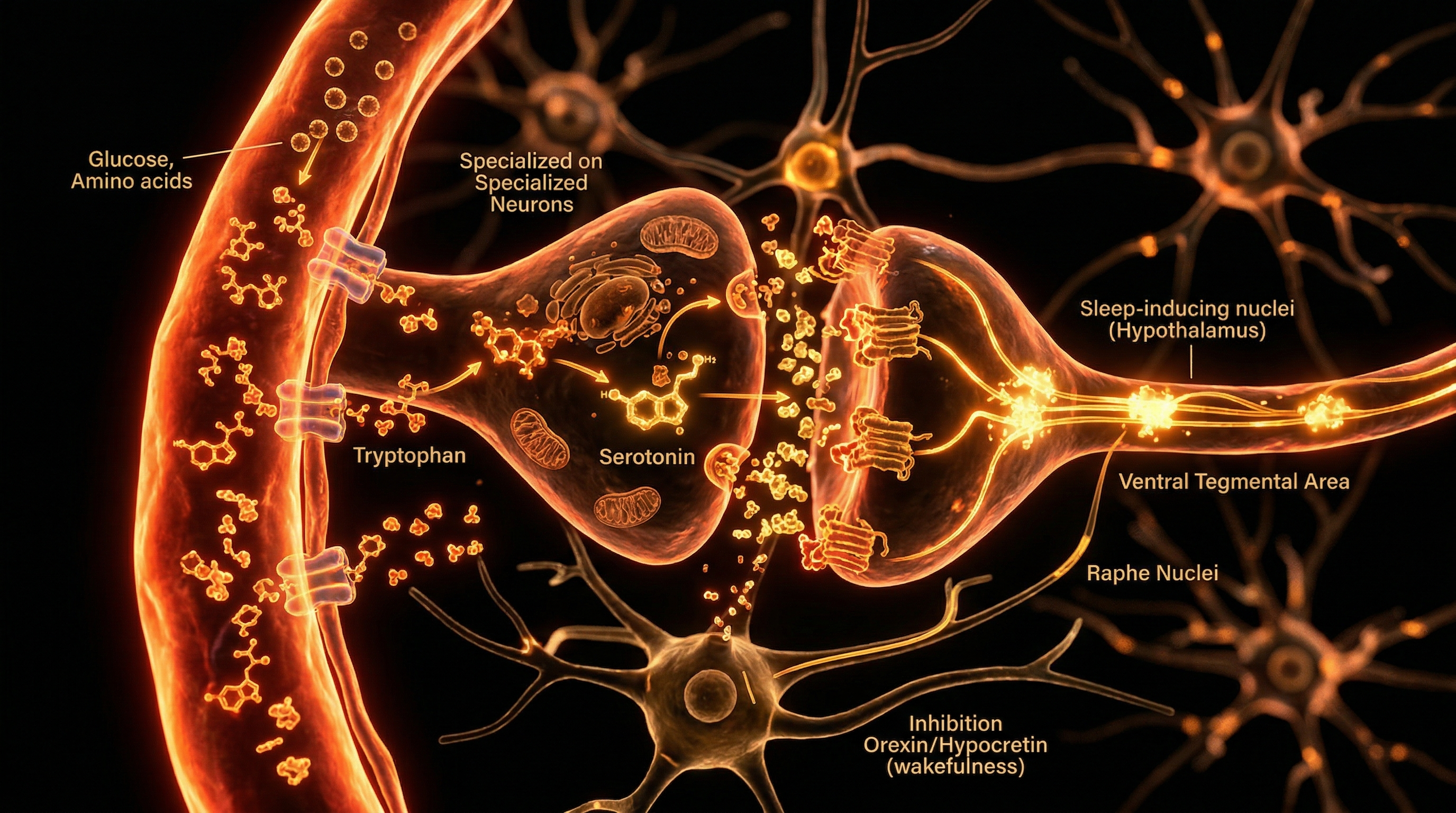
The most potent driver of postprandial sleepiness is the relationship between insulin and the blood-brain barrier (BBB). When you consume a carbohydrate-heavy meal, the pancreas secretes insulin to shuttle glucose into the cells. However, insulin also clears the blood of most Large Neutral Amino Acids (LNAAs), such as leucine, isoleucine, and valine, by driving them into muscle tissue.
There is one amino acid, however, that remains stubbornly in the bloodstream: L-Tryptophan. Because tryptophan binds to albumin, it is not sequestered into muscle as readily as other amino acids. With its competitors removed from the "gate" of the blood-brain barrier, tryptophan has an uncontested path into the brain. Once across the barrier, it is converted into serotonin (the "feel-good" but also "calming" neurotransmitter) and subsequently into melatonin, the primary hormone responsible for sleep.
The Parasympathetic Overdrive
The act of eating activates the Vagus Nerve, the primary highway of the parasympathetic nervous system. While this is necessary for peristalsis and enzyme secretion, an oversized or high-glycaemic meal causes a hyper-activation of this system. The vagal afferent fibres send signals to the nucleus tractus solitarius (NTS) in the brainstem, which in turn dampens the activity of the reticular activating system—the part of your brain responsible for maintaining wakefulness.
The Glucose-Sensing Neurons
The brain is not just a passive consumer of glucose; it is a sophisticated sensor. Specifically, the hypothalamus contains specialised neurons that monitor blood glucose levels in real-time. We will explore the specific "wakefulness switch"—the orexin system—in the next section, but it is vital to recognise that high blood sugar acts as a direct chemical signal to the brain that the "hunt" for food is over, and it is time to conserve energy.
##
Mechanisms at the Cellular Level
At the core of the food coma lies a cluster of approximately 70,000 neurons located in the lateral hypothalamus. These are the Orexin (or Hypocretin) neurons. Orexin is a neuropeptide that regulates arousal, wakefulness, and appetite. When orexin levels are high, you feel alert, focused, and motivated. When they are low, you become somnolent and lethargic.
The Orexin Inhibition
Orexin neurons are uniquely sensitive to extracellular glucose. When glucose levels rise after a meal, these neurons are hyperpolarised, meaning their electrical activity is suppressed.
- Mechanism: Glucose binds to a specific type of potassium channel on the orexin neuron membrane (the K-ATP channel).
- The Result: The neuron stops firing.
- The Consequence: The master switch for "wakefulness" is turned off at the source.
This is an evolutionary survival mechanism designed to ensure that once an animal has found a calorie-dense source of food, it stays put to digest and avoids wasting energy. However, in the 21st century, where "finding food" involves walking to the office canteen, this mechanism is perpetually over-triggered by high-load carbohydrates.
Mitochondrial Strain and Oxidative Stress
When a flood of glucose enters the cell, it must be processed by the mitochondria via the Tricarboxylic Acid (TCA) cycle and the Electron Transport Chain (ETC). In a metabolically healthy individual, this is a smooth process. However, in the presence of insulin resistance, the mitochondria become overwhelmed.
This "metabolic gridlock" leads to the leakage of electrons and the formation of Reactive Oxygen Species (ROS). This cellular oxidative stress triggers an inflammatory response. Pro-inflammatory cytokines, such as Interleukin-1 (IL-1) and Tumour Necrosis Factor-alpha (TNF-α), are released. These cytokines are known to be potent sleep-inducers; in fact, the same cytokines are responsible for the "malaise" and sleepiness you feel when you have the flu. Postprandial somnolence is, in effect, a mild version of "sickness behaviour" caused by dietary-induced inflammation.
The Role of Cholecystokinin (CCK)
As food—particularly fats and proteins—enters the duodenum, the small intestine releases a hormone called Cholecystokinin (CCK). CCK is essential for gallbladder contraction and bile release. However, CCK also acts on the vagus nerve to signal satiety to the brain. High levels of CCK, especially when combined with a high-glycaemic load, have been shown in clinical settings to induce immediate sleepiness in human subjects.
Research Insight: Studies using PET scans have shown that individuals with higher body mass indices (BMIs) and lower insulin sensitivity show a significantly greater reduction in hypothalamic activity after a glucose-rich meal compared to lean, metabolically flexible individuals.
##
Environmental Threats and Biological Disruptors
The "food coma" is not just a result of what we eat, but how the modern environment has corrupted our biological response to food. Several external factors act as force multipliers for postprandial lethargy.
The Ultra-Processed Food (UPF) Trap
In the UK, over 50% of the average diet consists of Ultra-Processed Foods. These are not just "unhealthy" foods; they are industrially manufactured edible substances designed to bypass our natural satiety signals. UPFs often contain a combination of high-fructose corn syrup (or its UK equivalent, glucose-fructose syrup) and seed oils (omega-6 fatty acids).
- The Fructose Factor: Unlike glucose, fructose is processed almost entirely in the liver. It bypasses the standard insulin-controlled regulatory steps, leading to a rapid depletion of Adenosine Triphosphate (ATP) in the liver cells. This sudden drop in cellular energy is perceived by the brain as a state of systemic fatigue.
- Acrylamides and Additives: Common additives in high-street "meal deal" snacks, such as flavour enhancers and emulsifiers, can disrupt the gut lining (permeable gut), allowing lipopolysaccharides (LPS) from gut bacteria to enter the bloodstream. This triggers a systemic inflammatory response that further suppresses the orexin system.
Glyphosate and Gut Dysbiosis
The UK’s agricultural reliance on glyphosate (the active ingredient in many herbicides) has devastating consequences for the gut microbiome. Glyphosate interferes with the Shikimate pathway in beneficial gut bacteria. When the microbiome is imbalanced, the production of Short-Chain Fatty Acids (SCFAs) like butyrate—which normally helps regulate glucose metabolism and protects the brain—is diminished. A compromised gut is a primary driver of the exaggerated insulin responses that lead to post-lunch crashes.
Circadian Mismatch
Our sensitivity to insulin is not constant; it follows a circadian rhythm. We are naturally more insulin-sensitive in the morning and more insulin-resistant in the evening. However, the modern "indoor" lifestyle, devoid of natural morning sunlight and flooded with artificial blue light at night, shifts our internal clock.
When your peripheral clocks (in the liver and pancreas) are out of sync with the central clock in your brain, your body is unprepared for the glucose load of a 1:00 PM lunch. The pancreas fails to coordinate the appropriate insulin response, leading to a prolonged "glucose excursion" and a deeper, more punishing somnolent phase.
##
The Cascade: From Exposure to Disease
If you view postprandial somnolence as merely an inconvenience, you are missing the forest for the trees. This daily cycle of energy collapse is the first visible stitch unravelling in your metabolic fabric.
The Path to Insulin Resistance
Each time you experience a "food coma," your body has struggled to manage a glucose spike. To compensate, the pancreas pumps out increasingly large amounts of insulin (hyperinsulinaemia). Over time, the insulin receptors on your cells—particularly in the muscles and liver—begin to "deafen" to the signal.
This is the beginning of Insulin Resistance. As resistance grows, the postprandial glucose spike lasts longer and goes higher, and the subsequent "crash" (hypoglycaemia) becomes more severe. It is this "hypoglycaemic dip"—where blood sugar falls below baseline after an over-correction by insulin—that causes the most intense feelings of shakiness, irritability, and the desperate need for sleep.
Non-Alcoholic Fatty Liver Disease (NAFLD)
When the liver is repeatedly bombarded with high-glycaemic loads and fructose, it begins to convert the excess energy into fat through a process called de novo lipogenesis. This fat is stored within the liver cells. NAFLD is a silent epidemic in the UK, often going undiagnosed until it progresses to fibrosis. The fatigue associated with NAFLD is chronic, but it is often most acute in the postprandial window.
Neurodegeneration and "Type 3 Diabetes"
The brain is highly susceptible to the effects of chronic hyperinsulinaemia. There is a growing body of evidence suggesting that Alzheimer’s Disease and other forms of cognitive decline are, in fact, "Type 3 Diabetes"—a state of brain-specific insulin resistance.
- The Amyloid Connection: The enzyme responsible for breaking down insulin—Insulin-Degrading Enzyme (IDE)—is the same enzyme responsible for clearing amyloid-beta plaques from the brain.
- The Conflict: When insulin levels are chronically high (due to frequent dietary spikes), IDE is kept busy dealing with insulin and neglects its role in "cleaning" the brain.
The "brain fog" of a food coma is a transient version of the cognitive impairment seen in dementia. Every time you surrender to a post-lunch slump, you are witnessing a temporary failure of the brain’s waste-clearance and energy-management systems.
##
What the Mainstream Narrative Omits
The UK’s public health advice, often filtered through the NHS and the British Nutrition Foundation, frequently fails to address the root of the somnolence epidemic. There is a "convenient" silence regarding the structural causes of metabolic dysfunction.
The "Balanced Diet" Fallacy
Mainstream guidelines still emphasise a "balanced" approach that includes a high proportion of starchy carbohydrates at every meal (the "Eatwell Guide"). For an individual already suffering from postprandial somnolence—a clear sign of existing insulin resistance—this advice is catastrophic. Suggesting a "wholemeal bread sandwich" as a healthy lunch ignore the fact that the glycaemic index of modern commercial "wholemeal" bread is often nearly identical to white bread.
The Influence of Big Food
The UK food industry is a massive contributor to the GDP, and its lobbying power is immense. The "food coma" is actually good for business. Why? Because the hypoglycaemic crash that follows the coma triggers intense cravings for more glucose.
Fact: The "slump" at 3:00 PM is the primary driver of the UK’s multi-billion pound snack and confectionery industry. By designing foods that trigger postprandial somnolence, manufacturers create a biological "itch" that only their products can "scratch."
The Omission of Meal Sequencing
Rarely do you hear mainstream health advisors talk about meal sequencing—the order in which you eat your food. Clinical trials have shown that eating fibre (vegetables) first, followed by protein and fats, and leaving carbohydrates for the end of the meal can reduce the postprandial glucose spike by up to 75%. This simple, free, and effective intervention is omitted in favour of complex calorie-counting or pharmaceutical solutions.
##
The UK Context
The United Kingdom presents a unique "perfect storm" for postprandial somnolence, driven by cultural habits and the specific architecture of our food environment.
The "Meal Deal" Culture
Unique to the UK, the high-street "meal deal" (a sandwich, a bag of crisps, and a sugary or artificially sweetened drink) is a metabolic disaster masquerading as a convenience.
- The Sandwich: Usually made with refined flour and containing hidden sugars in the dressings.
- The Crisps: High in acrylomides and oxidised seed oils that trigger gut inflammation.
- The Drink: Either a massive glucose spike or an artificial sweetener (like aspartame or acesulfame K) which, according to recent studies by the World Health Organisation (WHO), can still trigger an insulin response and disrupt gut bacteria.
The Vitamin D Crisis
Due to our geographical latitude, the UK population is chronically deficient in Vitamin D for most of the year. Vitamin D is not just a vitamin; it is a pro-hormone essential for insulin secretion and sensitivity. Without adequate Vitamin D, the pancreas's beta cells cannot function optimally, making the UK public more susceptible to the post-lunch crash than populations in sunnier climates.
Regulatory Lapses
While the UK’s Food Standards Agency (FSA) and Public Health England have made some strides (such as the Sugar Tax), they remain far behind in regulating the "stealth" ingredients that contribute to metabolic somnolence. The use of emulsifiers like Carboxymethylcellulose and Polysorbate 80—which are ubiquitous in UK supermarket breads and ready meals—is known to erode the mucus layer of the gut, leading to the low-grade systemic inflammation that suppresses the orexin system.
##
Protective Measures and Recovery Protocols
Reclaiming your afternoon focus requires more than just "willpower." It requires a strategic re-engineering of your biological inputs.
1. The Glucose Shield (Meal Sequencing)
Never eat "naked" carbohydrates. If you are going to consume starch or sugar, always coat the gut first.
- The Protocol: Eat a starter of green leaves with apple cider vinegar. The acetic acid in the vinegar inhibits the enzyme alpha-amylase, which breaks down starch into sugar, slowing the glucose release significantly. Follow this with your protein/fats, and consume the carbohydrate last.
2. Postprandial Movement
The most effective way to clear glucose from the bloodstream without relying solely on insulin is via GLUT4 translocation.
- The Protocol: Within 15 to 20 minutes of finishing your lunch, engage in 10 minutes of brisk walking or bodyweight squats. This activates the muscles to "pull" glucose out of the blood through non-insulin-dependent pathways, preventing the spike and the subsequent "coma."
3. Orexin Support
Help your brain stay in "wake" mode by managing the chemical environment.
- The Protocol: Ensure high-quality protein at lunch. Amino acids (specifically from eggs, fish, or lean meat) actually stimulate orexin neurons, counteracting the inhibitory effect of glucose.
- The Protocol: Cold exposure. A splash of cold water on the face or a brief walk in the brisk UK air stimulates the sympathetic nervous system and triggers a release of norepinephrine, which bypasses the post-lunch lethargy.
4. Continuous Glucose Monitoring (CGM)
While traditionally used for diabetics, CGMs are becoming the gold standard for anyone serious about metabolic health.
- The Protocol: Use a CGM (like those available from UK-based tech health firms) for 14 days to identify which specific "healthy" foods are causing your personal glucose spikes. You may find that oats (often touted as "slow release") cause a massive spike and crash for your specific biology.
5. Tactical Caffeine
Most people use caffeine as a "rescue" after they already feel sleepy. This is inefficient.
- The Protocol: If you must use caffeine, consume it before the slump begins, or better yet, delay your first coffee until 90 minutes after waking to allow adenosine levels to clear, preventing the "double crash" that often coincides with lunch.
##
Summary: Key Takeaways
- The "Food Coma" is a Signal: Postprandial somnolence is a symptom of metabolic inflexibility and the suppression of the Orexin system in the brain.
- The Insulin Trap: High-glycaemic meals trigger an insulin spike that clears the blood of competing amino acids, allowing Tryptophan to flood the brain and produce sleep-inducing serotonin and melatonin.
- Cellular Gridlock: Excess glucose causes mitochondrial oxidative stress, triggering the release of pro-inflammatory cytokines that induce "sickness behaviour" and lethargy.
- Structural Hazards: The UK's "Meal Deal" culture and lack of regulation on gut-disrupting additives create a systemic environment where midday fatigue is the norm.
- The Stakes are High: Frequent post-lunch crashes are precursors to Type 2 Diabetes, NAFLD, and neurodegenerative diseases like Alzheimer's.
- Sequence Matters: You can mitigate the crash by eating fibre and protein before carbohydrates and engaging in light movement immediately after eating.
At INNERSTANDING, we believe that clarity of mind is a fundamental human right. The midday slump is not an inevitability; it is a choice made for you by an industrial food system and a lack of metabolic education. By understanding the cellular mechanics of the "food coma," you can reclaim your energy, your focus, and your long-term health. The next time you finish your lunch and feel the familiar weight on your eyelids, recognise it for what it is: a call to arms for your metabolic integrity.
This article is provided for informational and educational purposes only. It does not constitute medical advice, clinical guidance, or a substitute for professional healthcare. Information reflects cited research at time of publication. Always consult a qualified healthcare professional before acting on any health information.
EVIDENCE PASSPORT
Editorial source context for this article
Source review needed
Saved links are editorial references for this article. They may support specific claims rather than every sentence. Open and assess each source in context. This passport does not independently verify them.
Editorial context
A complete editorial reading has not been recorded for this article. Source links remain available for you to open and assess directly.
Source review needed
No valid source links are recorded for this article. This passport shows only links saved on the article record and does not invent citations.
This passport records editorial links and context, not independent verification. Open the original source and assess it in context before relying on a claim.
Medical Disclaimer
The information in this article is for educational purposes only and does not constitute medical advice, diagnosis, or treatment. Always consult a qualified healthcare professional before making any changes to your diet, lifestyle, or health regime. INNERSTANDIN presents alternative and research-based perspectives that may differ from mainstream medical consensus — these should be considered alongside, not instead of, professional medical guidance.
Read Full DisclaimerContinue the thread
Keep this question moving.
Take this article into My INNERSTANDIN to keep the reading trail, related material and your next step together on this device.
Explore this in the Body Map
See where this hits your biology. Interactive anatomy, threats, and protective protocols.
Dig deeper in the Library
Free, longform PDF volumes that go beyond headlines into mechanisms and references.