
Microglial Priming: The Hidden Cause of Neuro-Inflammation
Updated May 2026
Microglia are the immune cells of the brain that, when chronically activated, sustain a state of neuro-inflammation. Understanding microglial priming is essential for treating chronic pain conditions that remain resistant to traditional anti-inflammatories.
Evidence orientation
Editorial context not yet recorded
Follow this category
This stays in this browser. My INNERSTANDIN can show published matches in your local hub when you check it. It does not send email, push, or alert notifications.
Local learning review
A private browser aid for revisiting ideas. It is not an alert or a health recommendation.
Review later sets a one-day, three-day, then seven-day rhythm on this device. Choose it only when you want to revisit this article.
Overview
For decades, the medical establishment has viewed the brain as an "immunologically privileged" site, an ivory tower sequestered from the chaotic immune battles raging in the rest of the body. We were taught that the blood-brain barrier (BBB) was an impenetrable fortress, and that chronic pain was merely a persistent signal from damaged peripheral tissues. This outdated paradigm is currently being dismantled by a surge of neuro-immunological research. At the heart of this revolution lies a singular, often overlooked cell type: the microglia.
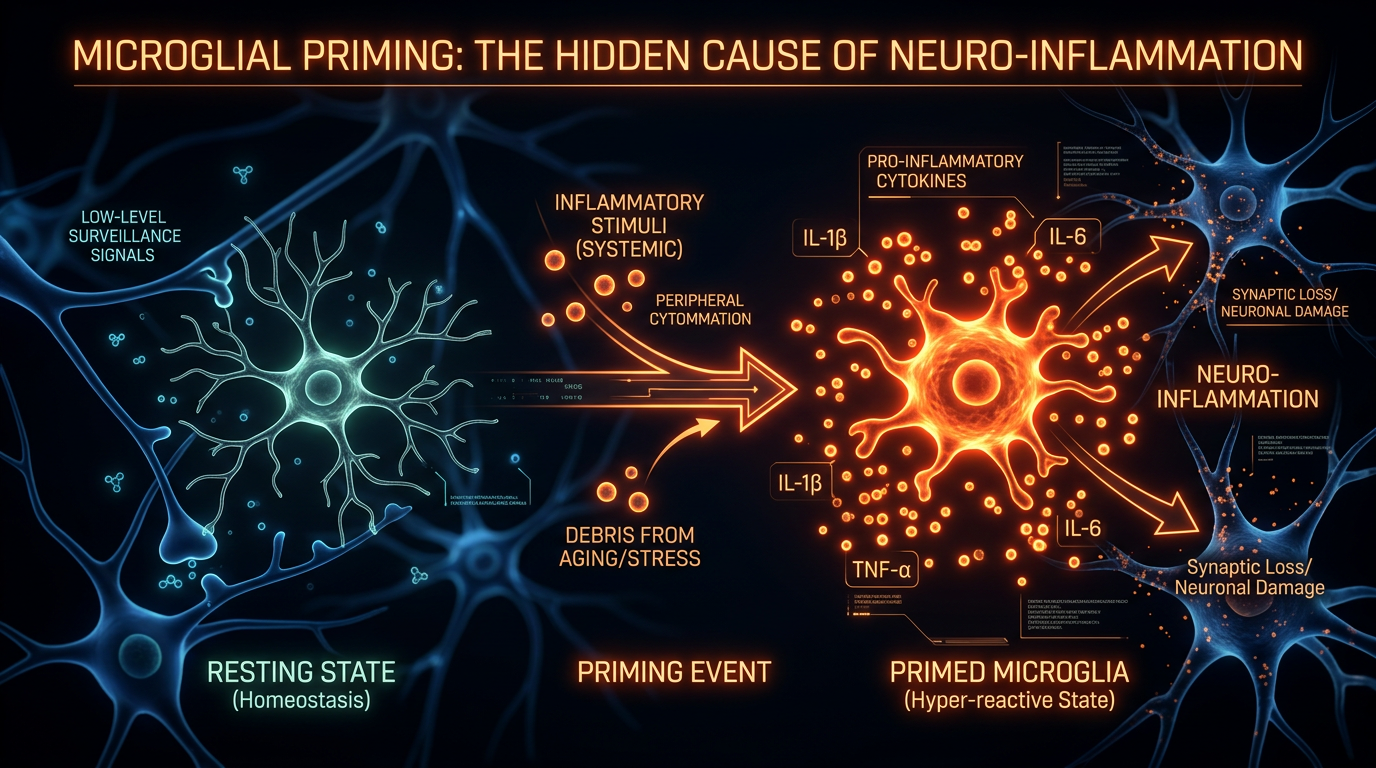
Microglia are the resident immune sentinels of the Central Nervous System (CNS). While they comprise only about 10-15% of all cells within the brain, their influence over neurological health—and specifically the sensation of chronic pain—is absolute. Under normal physiological conditions, these cells are the gardeners of the brain, pruning redundant synapses, clearing metabolic waste, and secreting neurotrophic factors that support neuronal survival. However, when subjected to certain environmental, biological, or psychological stressors, microglia undergo a profound transformation. They do not just "activate"; they become primed.
Microglial priming is a state of hyper-responsiveness. It is a biological "hair-trigger" where the cells, having been exposed to an initial insult, remain in a state of high alert. In this state, they do not necessarily cause immediate damage, but they "remember" the threat. When a second, even minor, stressor occurs—be it a mild infection, a period of emotional stress, or a dietary indiscretion—the primed microglia respond with a distorted, exaggerated, and prolonged release of pro-inflammatory cytokines, neurotoxins, and excitatory neurotransmitters.
This is the "hidden cause" of neuro-inflammation. It explains why some individuals recover from injury while others descend into the abyss of chronic, neuropathic pain. It explains why systemic illness can lead to "brain fog" and "sickness behaviour." Most importantly, it explains why traditional anti-inflammatories, which target peripheral pathways like COX-2, frequently fail in the face of centralized pain. To understand chronic pain, one must understand the primed state of the microglial cell.
##
The Biology — How It Works
To grasp the severity of microglial priming, one must first appreciate the unique ontogeny of these cells. Unlike other immune cells in the body, such as macrophages that circulate in the blood and are replaced by bone marrow precursors, microglia are ancient. They migrate from the yolk sac to the developing brain during early embryonic development. Once they take up residence in the CNS, they stay there for life. There is no significant turnover from peripheral sources under normal conditions. This means that a microglial cell carries the "memory" of every inflammatory event an individual has ever experienced.
The Surveying State (M0)
In a healthy brain, microglia exist in what was once called the "resting" state, though we now prefer the term "surveying" (M0). In this state, the cell body remains stationary, but its long, highly branched processes are in constant, frantic motion. They are the most dynamic cells in the brain, scanning the entire extracellular environment every few hours. They monitor the health of synapses and the integrity of the blood-brain barrier, ensuring that the delicate chemical balance required for neuronal firing is maintained.
The Shift to Activation
When microglia detect a Threat-Associated Molecular Pattern (TAMP) or a Damage-Associated Molecular Pattern (DAMP), they retract their long branches and transform into an amoeboid, mobile shape. This is the classic M1 (pro-inflammatory) phenotype. In this state, the cells produce a cocktail of inflammatory mediators:
- Interleukin-1 beta (IL-1β): A potent pyrogen that increases pain sensitivity.
- Tumour Necrosis Factor-alpha (TNF-α): A cytokine that can induce cell death and degrade synaptic connections.
- Nitric Oxide (NO) and Reactive Oxygen Species (ROS): These cause oxidative stress, damaging the lipid membranes of surrounding neurons.
The Concept of Priming
The danger arises when the microglia do not return to their serene surveying state. Instead, following an initial insult—which could be a traumatic brain injury (TBI), a severe systemic infection, or even chronic psychological stress—the cells enter the primed state.
Morphologically, primed microglia may look similar to surveying cells, or they may appear slightly "bushy" with thicker processes. However, their internal molecular machinery has been recalibrated. Their gene expression is shifted toward a pro-inflammatory bias. They have a lower threshold for activation and a higher ceiling for cytokine production. They are, in essence, "loaded guns" waiting for the next trigger.
UK STATISTIC: It is estimated that over 28 million adults in the UK live with some form of chronic pain, a figure that represents nearly 43% of the population. A significant portion of these cases are now believed to involve centralized neuro-inflammation driven by microglial priming rather than ongoing peripheral tissue damage.
##
Mechanisms at the Cellular Level
Understanding the "how" requires a deep dive into the molecular signaling pathways that govern microglial behaviour. The transition from a surveying cell to a primed cell involves a complex interplay of surface receptors and intracellular cascades.
The Role of Toll-Like Receptors (TLR4)
One of the most critical players in microglial priming is the Toll-Like Receptor 4 (TLR4). While TLR4 is famous for recognizing Lipopolysaccharide (LPS) from Gram-negative bacteria, it also responds to an array of endogenous "danger" signals. When a person experiences a high-stress event or a physical injury, the body releases DAMPs such as High Mobility Group Box 1 (HMGB1). These molecules bind to TLR4 on the microglia, initiating a signaling cascade that activates the NF-κB pathway.
NF-κB is the "master switch" for inflammation. Once activated, it translocates to the nucleus and promotes the transcription of pro-inflammatory genes. In the case of priming, this pathway doesn't just flicker on and off; it becomes sensitized. Epigenetic changes—such as histone acetylation and DNA methylation—occur within the microglial nucleus, keeping the genes for IL-1β and TNF-α in a "ready-to-fire" state.
The NLRP3 Inflammasome: The Executioner
The true hallmark of the primed microglial cell is the assembly of the NLRP3 inflammasome. This is a multi-protein complex that acts as a molecular platform for the maturation of inflammatory cytokines.
- Signal 1 (Priming): An initial insult (like chronic stress or a gut pathogen) increases the expression of pro-IL-1β. This "primes" the cell but does not yet cause the release of the active cytokine.
- Signal 2 (Activation): A secondary hit (like a sudden drop in blood sugar, a lack of sleep, or a minor injury) triggers the assembly of the NLRP3 complex.
Once the inflammasome is assembled, it activates an enzyme called Caspase-1. This enzyme cleaves the inactive pro-IL-1β into its highly active, destructive form, which is then spewed into the brain's extracellular space. In a primed brain, the second signal leads to an explosion of IL-1β that is orders of magnitude higher than in a non-primed brain.
Synaptic Stripping and Pain Sensitization
When microglia are primed and then activated, they stop supporting neurons and start attacking them. One of the most devastating consequences is synaptic stripping. Microglia use their phagocytic capabilities to eat away at the dendritic spines and synaptic connections between neurons.
In the context of pain, this occurs specifically in the dorsal horn of the spinal cord and the thalamus. By stripping away inhibitory (calming) synapses and promoting excitatory (pain-signaling) synapses, primed microglia effectively "turn up the volume" on pain signals. This is the biological basis of allodynia (pain from non-painful stimuli) and hyperalgesia (exaggerated pain from mildly painful stimuli).
##
Environmental Threats and Biological Disruptors
In our modern, industrialised environment, the triggers for microglial priming are ubiquitous. The UK, with its dense urban centres and specific dietary patterns, presents a unique set of challenges for the neuro-immune system.
Glyphosate and the Permeable Barrier
One of the most insidious threats to microglial health is the herbicide glyphosate. Widely used in UK agriculture, glyphosate residues are found in a vast array of non-organic cereal products and processed foods.
FACT: Research indicates that glyphosate can disrupt the tight junction proteins of both the gut lining and the blood-brain barrier (BBB).
When the BBB is compromised, substances that should never enter the brain—such as peripheral cytokines, environmental toxins, and even fragments of bacteria—leak into the CNS. This "leaky brain" is a primary driver of microglial priming. Furthermore, glyphosate acts as a glycine analogue, potentially interfering with neurotransmission and promoting an excitotoxic environment that microglia must then respond to.
Ultra-Processed Foods (UPFs) and Endotoxaemia
The British diet is currently the most processed in Europe. Ultra-processed foods are typically high in refined sugars and emulsifiers, which wreak havoc on the gut microbiome. This leads to metabolic endotoxaemia, where Lipopolysaccharides (LPS) from the gut enter the bloodstream. Since LPS is a direct ligand for the TLR4 receptor on microglia, a diet high in UPFs keeps the brain in a perpetual state of low-grade priming.
Air Pollution and Particulate Matter
In major UK cities like London, Manchester, and Birmingham, air quality remains a significant concern. Particulate Matter (PM2.5) is small enough to be inhaled and travel directly from the olfactory bulb in the nose into the brain, bypassing the BBB entirely. These fine particles are recognized as foreign invaders by microglia, leading to chronic activation and priming in the frontal cortex and olfactory regions.
Electromagnetic Fields (EMF) and Calcium Signaling
While the mainstream narrative often dismisses the biological effects of non-ionizing radiation, emerging research suggests that microglia are sensitive to the Voltage-Gated Calcium Channels (VGCCs). Excessive calcium influx can trigger the oxidative stress pathways within microglia, contributing to the priming effect. In an era of 5G and ubiquitous Wi-Fi, the constant "electrosmog" may be a contributing factor to the modern epidemic of "tired but wired" brains.
##
The Cascade: From Exposure to Disease
The progression from an initial exposure to a full-blown chronic pain syndrome or neurodegenerative disease follows a predictable, yet often ignored, cascade. It is rarely a single event that breaks the system; rather, it is the accumulation of hits.
The First Hit: The Setup
The first hit often occurs early in life. It could be an Adverse Childhood Experience (ACE) that recalibrates the HPA axis, a severe bout of mononucleosis (Epstein-Barr Virus), or a childhood head injury. This initial event "wakes up" the microglia. They don't return to zero; they stay at a level 3 or 4 out of 10. The individual feels "fine," but their neurological resilience is diminished.
The Second Hit: The Trigger
Years later, a "second hit" occurs. This might be a car accident (whiplash), a period of intense work stress, or a viral infection (such as the spike protein-related inflammation seen in recent years). In a person with non-primed microglia, this would cause a temporary period of inflammation followed by a return to baseline. In the primed individual, however, this second hit causes the "Glial Fire."
The Vicious Cycle of Neuro-Inflammation
Once the glial fire is lit, it becomes self-sustaining through several feed-forward loops:
- Excitotoxicity: Activated microglia release glutamate, an excitatory neurotransmitter. Excessive glutamate over-stimulates neurons, leading to further damage and the release of more DAMPs, which in turn reactivate the microglia.
- Mitochondrial Dysfunction: Inflammation damages the mitochondria within microglia and neurons. Struggling mitochondria produce more ROS, which further stabilizes the NLRP3 inflammasome.
- The Vagus Nerve Paradox: The Vagus nerve normally acts as the "anti-inflammatory highway." However, in a state of chronic neuro-inflammation, the signaling can become distorted, failing to provide the necessary "cholinergic anti-inflammatory reflex" to the rest of the body.
The result is a state of Central Sensitization. The brain becomes so efficient at processing pain that it begins to generate the sensation of pain even in the absence of peripheral input. This is why many chronic pain patients find no relief from surgery or local injections; the "problem" is no longer in the back, the neck, or the joints—it is in the microglial "memory" within the brain.
##
What the Mainstream Narrative Omits
The current medical model is woefully unequipped to deal with microglial priming. The mainstream narrative remains hyper-focused on symptom suppression through pharmacology, a strategy that is not only ineffective for neuro-inflammation but often counterproductive.
The Failure of NSAIDs
Non-Steroidal Anti-Inflammatory Drugs (NSAIDs) like Ibuprofen or Naproxen work by inhibiting the COX-1 and COX-2 enzymes. While effective for a swollen ankle, these drugs have poor CNS penetration and do almost nothing to address the microglial signaling pathways. Furthermore, chronic use of NSAIDs can damage the gut lining, leading to increased intestinal permeability and more systemic LPS, which ironically fuels microglial priming.
The Opioid Trap
For decades, the "solution" for chronic pain was opioid prescription. We now know that opioids are pro-inflammatory in the CNS. Morphine and its derivatives bind to the TLR4 receptor on microglia—the very same receptor that recognizes bacterial toxins. This means that while opioids may temporarily mask pain by dulling neuronal firing, they are simultaneously "feeding the fire" by further priming the microglia. This contributes to Opioid-Induced Hyperalgesia (OIH), where the patient becomes more sensitive to pain as a direct result of the medication.
The Missing Link: The Glymphatic System
Mainstream medicine rarely discusses the Glymphatic System—the brain's waste clearance mechanism that functions primarily during deep, slow-wave sleep. When microglia are activated, they swell, physically obstructing the flow of cerebrospinal fluid through the brain tissues. This prevents the clearance of metabolic "trash" like beta-amyloid and tau proteins. A primed brain is a "dirty" brain, and without addressing this mechanical clearance issue, recovery is impossible.
The Psychological Reductionism
Patients with neuro-inflammation-driven chronic pain are often told their pain is "psychosomatic" or "all in their head." This is a half-truth that ignores the biology. While psychological stress can prime microglia via the HPA axis, the resulting inflammation is a physical, measurable biological reality. It is not "imaginary"; it is a functional pathology of the neuro-immune system.
##
The UK Context
The United Kingdom faces a unique set of circumstances that exacerbate the microglial priming crisis. From our geography to our healthcare infrastructure, the "British experience" is often one of high-priming risk.
The Vitamin D Crisis
Due to our northern latitude and lack of consistent sunlight, a staggering percentage of the UK population is Vitamin D deficient, especially during the winter months. Vitamin D is not just a vitamin; it is a potent neuro-steroid that acts as a microglial stabilizer. It promotes the M2 (anti-inflammatory/repair) phenotype and inhibits the M1 (pro-inflammatory) phenotype. The chronic deficiency seen in the UK removes a critical "brake" from the neuro-immune system.
The "Stiff Upper Lip" Culture and ACEs
The cultural tendency toward emotional suppression—the "stiff upper lip"—can have profound neurological consequences. Chronic emotional repression maintains a state of sympathetic dominance (fight or flight). This constant output of noradrenaline can prime microglia, particularly in the hippocampus and amygdala, the regions of the brain responsible for memory and emotional regulation.
UK STATISTIC: According to Public Health England, approximately half of the UK population has experienced at least one Adverse Childhood Experience (ACE). These early-life stressors are now recognized as one of the most powerful "first hits" for microglial priming, predisposing millions to chronic pain and depression later in life.
The NHS Crisis and "Ten-Minute Medicine"
The current state of the NHS, while heroic in its efforts, is fundamentally structured for acute care, not the complex management of neuro-inflammation. The "ten-minute consultation" does not allow for a deep dive into a patient's toxic load, dietary habits, or trauma history. Consequently, patients are often cycled through a "trial and error" of antidepressants and painkillers that fail to address the underlying microglial pathology.
##
Protective Measures and Recovery Protocols
If microglial priming is the "hidden cause," how do we "un-prime" the brain? While the concept of "un-priming" is still in its scientific infancy, there are several evidence-based strategies to stabilize microglia and quench the neuro-inflammatory fire.
1. Flavonoids: The Glial Stabilizers
Certain plant-based compounds have been shown to cross the blood-brain barrier and directly inhibit microglial activation.
- Luteolin: Found in celery, artichokes, and parsley, luteolin is perhaps the most potent microglial stabilizer discovered to date. It inhibits the NF-κB and MAPK pathways.
- Quercetin: Often paired with luteolin, it helps to stabilize mast cells (which communicate with microglia) and reduces oxidative stress.
- Apigenin: Found in chamomile, it promotes a calming effect on the CNS and reduces microglial cytokine release.
2. Low Dose Naltrexone (LDN)
One of the most promising pharmacological interventions for microglial priming is Low Dose Naltrexone. While naltrexone in high doses is used for addiction, in micro-doses (1.5mg to 4.5mg), it acts as a glial modulator. It briefly binds to the TLR4 receptors on microglia, and as the dose wears off, it triggers an "upregulation" of the body's endogenous opioid system and an anti-inflammatory rebound.
3. Vagus Nerve Stimulation (VNS)
The Vagus nerve is the primary conduit for the "cholinergic anti-inflammatory reflex." Strengthening the Vagal Tone can help to send "calm down" signals to the microglia. This can be achieved through:
- Deep Diaphragmatic Breathing: Specifically, breaths where the exhale is longer than the inhale.
- Cold Exposure: Brief cold showers or face plunging can trigger the mammalian dive reflex and stimulate the Vagus nerve.
- Singing, Chanting, or Humming: These activities vibrate the vocal cords, which are directly innervated by the Vagus nerve.
4. Protecting the Barriers
To stop the "first hits" from reaching the brain, one must repair the gut-brain axis.
- Eliminate Glyphosate: Choose organic produce whenever possible, especially for "high-spray" crops like wheat, oats, and legumes.
- Support Tight Junctions: Compounds like Zinc Carnosine, Collagen, and L-Glutamine can help "seal" the gut lining, reducing the translocation of LPS into the bloodstream.
- Support the BBB: Sulforaphane (from broccoli sprouts) has been shown to protect the integrity of the blood-brain barrier and activate the Nrf2 antioxidant pathway within the brain.
5. The Glymphatic Flush
Recovery is impossible without sleep. To optimize the clearance of neuro-inflammatory debris:
- Maintain a Circadian Rhythm: Exposure to bright morning sunlight and the avoidance of blue light at night.
- Sleep Position: Some research suggests that sleeping on one's side (lateral position) may enhance glymphatic clearance compared to sleeping on the back or stomach.
- Time-Restricted Feeding: Finishing the last meal of the day 3-4 hours before bed ensures that the body's energy is directed toward "brain cleaning" rather than digestion during sleep.
##
Summary: Key Takeaways
The paradigm of chronic pain is shifting from the peripheral to the central, and from the neuronal to the glial. We must stop viewing the brain as a static computer and start seeing it as a dynamic, living ecosystem that can be poisoned, primed, and—ultimately—healed.
- Microglia are the masters of the pain experience. They are not mere support cells; they are the "directors" of the neuro-immune response.
- Priming is a "cellular memory" of trauma. Once microglia are primed, they respond to minor stressors with catastrophic levels of inflammation.
- The environment is the architect of priming. UK-specific factors like air pollution, UPFs, glyphosate, and Vitamin D deficiency create a "perfect storm" for neuro-inflammation.
- Standard pain treatments often fail or worsen the condition. NSAIDs are ineffective for the CNS, and opioids directly stimulate the pro-inflammatory pathways of microglia.
- Recovery requires a multi-faceted approach. Stabilizing microglia with flavonoids, modulating the immune system with LDN, and supporting the glymphatic system through sleep and Vagus nerve health are the keys to reclaiming a "quiet" brain.
The "hidden cause" of neuro-inflammation is no longer a mystery. It is a measurable, biological process that demands a new approach to medicine—one that moves beyond the suppression of symptoms and toward the restoration of neuro-immunological balance. For the millions in the UK suffering from the "fire in the brain" that is chronic pain, understanding microglial priming is the first step toward the exit.
This article is provided for informational and educational purposes only. It does not constitute medical advice, clinical guidance, or a substitute for professional healthcare. Information reflects cited research at time of publication. Always consult a qualified healthcare professional before acting on any health information.
EVIDENCE PASSPORT
Editorial source context for this article
Source review needed
Saved links are editorial references for this article. They may support specific claims rather than every sentence. Open and assess each source in context. This passport does not independently verify them.
Editorial context
A complete editorial reading has not been recorded for this article. Source links remain available for you to open and assess directly.
Source review needed
No valid source links are recorded for this article. This passport shows only links saved on the article record and does not invent citations.
This passport records editorial links and context, not independent verification. Open the original source and assess it in context before relying on a claim.
Medical Disclaimer
The information in this article is for educational purposes only and does not constitute medical advice, diagnosis, or treatment. Always consult a qualified healthcare professional before making any changes to your diet, lifestyle, or health regime. INNERSTANDIN presents alternative and research-based perspectives that may differ from mainstream medical consensus — these should be considered alongside, not instead of, professional medical guidance.
Read Full DisclaimerContinue the thread
Keep this question moving.
Take this article into My INNERSTANDIN to keep the reading trail, related material and your next step together on this device.
Explore this in the Body Map
See where this hits your biology. Interactive anatomy, threats, and protective protocols.
Dig deeper in the Library
Free, longform PDF volumes that go beyond headlines into mechanisms and references.