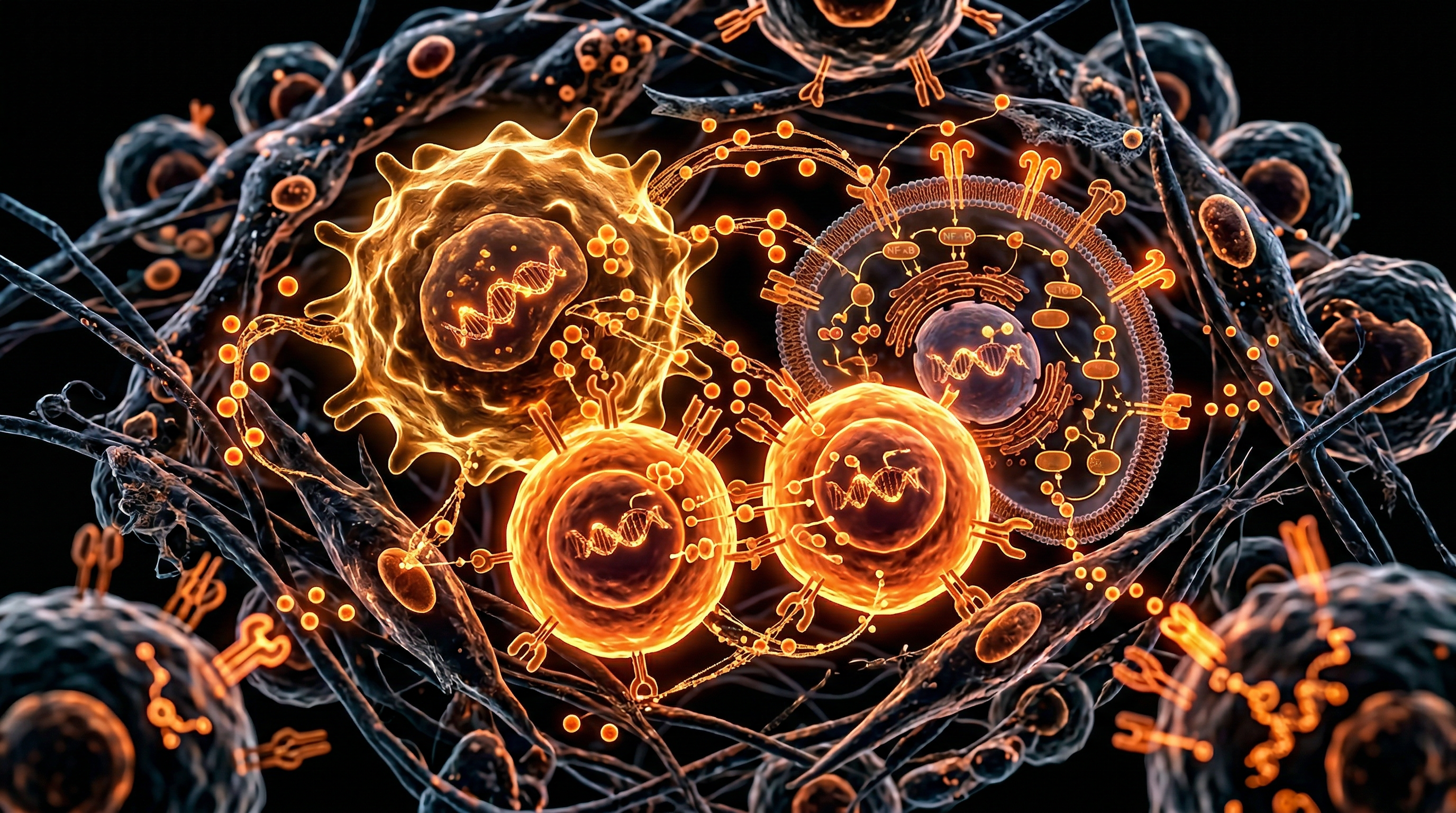
MicroRNA-155 Regulation of Fas-L Mediated Apoptosis in Autoimmune Pathogenesis
This educational deep-dive explores the intricate molecular relationship between miR-155 and the Fas/Fas-L apoptotic pathway, highlighting how dysregulation leads to the survival of autoreactive cells in autoimmune diseases such as SLE and Rheumatoid Arthritis.

Introduction: The Silent Conductors of Cellular Fate Within the complex landscape of the human immune system, the decision for a cell to live or die is never arbitrary. It is a strictly governed process, overseen by a class of small non-coding RNAs known as microRNAs. Among these, MicroRNA-155 (miR-155) stands out as a master regulator of immune cell maturation and response. At its core, the pathogenesis of many autoimmune conditions—such as Systemic Lupus Erythematosus (SLE), Rheumatoid Arthritis (RA), and Multiple Sclerosis (MS)—can be traced back to a fundamental failure in programmed cell death, or apoptosis. Specifically, the regulation of the Fas-Ligand (Fas-L) mediated pathway by miR-155 provides a fascinating look into the root causes of why the body's defences might turn against its own tissues.
By silencing the 'off' switches of the immune system, miR-155 allows autoreactive cells to persist, thrive, and cause systemic damage. ### The Architecture of the Fas/Fas-L Pathway Apoptosis, or programmed cell death, is essential for maintaining immune homeostasis and preventing the survival of damaged or self-reactive cells. The Fas (CD95) and Fas-L (CD178) system is a primary extrinsic pathway for apoptosis. In a healthy state, when a T-cell has completed its mission or if it is found to be reactive against 'self' antigens, it expresses Fas-L on its surface or encounters it in the environment. The binding of Fas-L to its receptor, Fas, causes the receptor to trimerize, recruiting the adapter molecule FADD (Fas-Associated protein with Death Domain). This complex then activates Caspase-8, triggering a proteolytic cascade that neatly dismantles the cell without causing collateral inflammation.
This process, known as Activation-Induced Cell Death (AICD), is the immune system's primary method for maintaining peripheral tolerance. In the context of the UK's rising rates of autoimmune diagnoses, understanding why this executioner system fails is paramount for developing new therapeutic strategies. ### miR-155: The Potent InflammiR miR-155 is unique because it is processed from the B-cell Integration Cluster (BIC) non-coding RNA, located on chromosome 21. It is often referred to by immunologists as an 'inflammiR' because its expression is heavily induced by pro-inflammatory signals, including Toll-like receptor (TLR) ligands and cytokines such as Tumor Necrosis Factor-alpha (TNF-alpha). While miR-155 is essential for generating high-affinity antibodies and effective T-cell responses during an infection, its chronic elevation acts as a molecular brake on apoptosis. It does not just promote inflammation; it actively prevents the resolution of inflammation by shielding active immune cells from apoptotic triggers.
This is a critical root cause in the transition from a necessary acute immune response to a chronic, self-sustaining autoimmune state. ### Molecular Interplay: How miR-155 Inhibits Apoptosis The regulation of Fas-L mediated apoptosis by miR-155 occurs through several indirect yet powerful mechanisms. One of the primary targets of miR-155 is SHIP1, a phosphatase that normally inhibits the PI3K/Akt signaling pathway. When miR-155 levels are high, SHIP1 is suppressed, leading to overactive Akt signaling. This, in turn, prevents the upregulation of pro-apoptotic factors and can even lead to the downregulation of Fas-L itself on the surface of regulatory T-cells (Tregs). Furthermore, miR-155 has been shown to influence the expression of FADD and certain caspases, effectively raising the threshold required to trigger the death cascade.
In essence, miR-155 makes immune cells 'harder to kill,' allowing those that should be eliminated—such as those recognizing DNA or joint collagen as foreign—to escape the executioner's toll. This resistance to apoptosis is the cornerstone of autoimmune persistence. ### Autoimmune Pathogenesis: From SLE to Multiple Sclerosis The clinical implications of this molecular glitch are vast. In Systemic Lupus Erythematosus (SLE), patients often exhibit significantly higher levels of miR-155 in their peripheral blood mononuclear cells. This elevation correlates with a decrease in Fas-mediated apoptosis of B-cells, leading to the survival of clones that produce antinuclear antibodies. In Rheumatoid Arthritis (RA), miR-155 is found in high concentrations within the synovial fluid and tissue.
Energy Blend Supports
Energy Blend is a comprehensive formula designed to fuel your body at a cellular level, promoting sustained physical stamina and mental clarity without synthetic spikes. It targets fundamental metabolic pathways to ensure your nervous system and hormonal activity remain balanced and resilient.
Vetting Notes
Pending
It protects synovial fibroblasts from apoptosis, allowing them to proliferate and secrete enzymes that degrade bone and cartilage. In the realm of neurology, Multiple Sclerosis (MS) research suggests that miR-155 promotes the survival of Th1 and Th17 cells. These cells are highly inflammatory and resistant to the usual regulatory mechanisms, including Fas-L mediated deletion, allowing them to cross the blood-brain barrier and attack the myelin sheath. In each case, the root molecular issue is an inability to terminate an immune response that has turned inward. ### Root Causes and Environmental Triggers Why does miR-155 become dysregulated in the first place? At INNERSTANDING, we focus on the root causes.
Evidence suggests that chronic low-grade inflammation, often driven by gut dysbiosis, chronic stress, or environmental toxins, creates a cytokine environment that keeps the BIC gene in a state of constant transcription. Furthermore, epigenetic shifts—such as the hypomethylation of the BIC promoter—can make the immune system hyper-responsive. This creates a feed-forward loop: inflammation increases miR-155, which inhibits apoptosis, which leads to more persistent immune cells, which in turn produce more inflammation. Breaking this cycle requires a multi-pronged approach that addresses both the molecular triggers and the systemic environment, including nutrition and stress management that can modulate epigenetic expression. ### Conclusion: Towards Precision Immunology The discovery of the miR-155/Fas-L axis represents a paradigm shift in how we view autoimmune disease. No longer seen as just a 'misguided' immune system, we now understand it as a regulatory failure at the genetic and molecular level.
Future treatments in the UK and globally are moving towards 'antagomirs'—small molecules designed to bind and neutralize specific microRNAs. By lowering miR-155 levels, we may be able to restore the natural sensitivity of autoreactive cells to Fas-L mediated apoptosis, effectively teaching the immune system how to 'turn off' again. As research continues, the goal remains clear: to move beyond symptom management and towards a true restoration of cellular harmony and immune tolerance.
This article is provided for informational and educational purposes only. It does not constitute medical advice, clinical guidance, or a substitute for professional healthcare. Information reflects cited research at time of publication. Always consult a qualified healthcare professional before acting on any health information.
RESEARCH FOUNDATIONS
Biological Credibility Archive
Citations provided for educational reference. Verify via PubMed or institutional databases.
Medical Disclaimer
The information in this article is for educational purposes only and does not constitute medical advice, diagnosis, or treatment. Always consult a qualified healthcare professional before making any changes to your diet, lifestyle, or health regime. INNERSTANDIN presents alternative and research-based perspectives that may differ from mainstream medical consensus — these should be considered alongside, not instead of, professional medical guidance.
Read Full DisclaimerReady to learn more?
Continue your journey through our classified biological research.
DISCUSSION ROOM
Members of THE COLLECTIVE discussing "MicroRNA-155 Regulation of Fas-L Mediated Apoptosis in Autoimmune Pathogenesis"
SILENT CHANNEL
Be the first to discuss this article. Your insight could help others understand these biological concepts deeper.
THE ARSENAL
Based on Apoptosis & Cellular Death Mechanisms — products curated by our research team for educational relevance and biological support.
Energy Blend Supports

Peptides, one of the secret Russian military health marvels, now available. 40 years research

Clean Slate – Detoxes thousands of chemicals,heavy metals, pesticides, allergens, mold spores and fungus
INNERSTANDING may earn a commission on purchases made through these links. All products are selected based on rigorous educational relevance to our biological research.
RABBIT HOLE
Follow the biological thread deeper