
Misdiagnosing Shutdown: Why Dorsal Vagal Immobility Is Not Clinical Depression
Published April 2026
Many patients diagnosed with Treatment-Resistant Depression are actually stuck in a primitive Dorsal Vagal 'freeze' response. This biological conservation state is a survival mechanism, not a chemical imbalance of the brain. We examine the cellular metabolism changes during shutdown and why SSRIs frequently fail to resolve this specific nervous system collapse.
Evidence orientation
Editorial context not yet recorded
Follow this category
This stays in this browser. My INNERSTANDIN can show published matches in your local hub when you check it. It does not send email, push, or alert notifications.
Local learning review
A private browser aid for revisiting ideas. It is not an alert or a health recommendation.
Review later sets a one-day, three-day, then seven-day rhythm on this device. Choose it only when you want to revisit this article.
The diagnosis of 'clinical depression' has become a catch-all for any state of low energy, withdrawal, and persistent sadness. However, from the perspective of Polyvagal Theory, many of these cases are not psychiatric conditions but rather a biological state of 'Dorsal Vagal Shutdown.' This is the oldest evolutionary branch of the vagus nerve, originating in the Dorsal Motor Nucleus. In reptiles, this circuit is used to conserve energy and survive oxygen deprivation; in humans, it acts as a last-resort defense mechanism when fight or flight is perceived as impossible. When the nervous system selects this state, the body undergoes profound physiological changes: heart rate drops, blood pressure decreases, and most importantly, cellular metabolism slows down. This is why many patients feel 'heavy,' 'numb,' or 'trapped'—they are literally in a state of metabolic conservation.
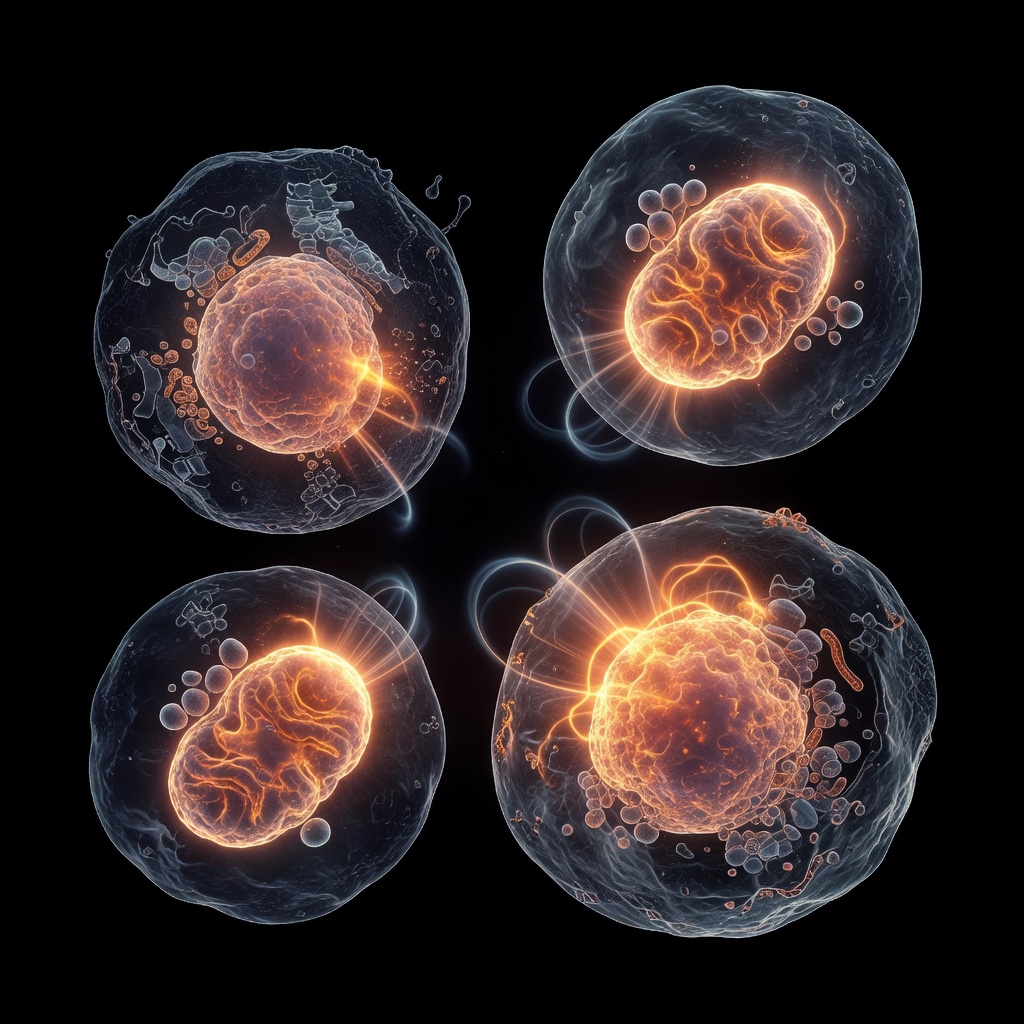
Conventional medicine focuses on the 'chemical imbalance' theory, primarily targeting serotonin and norepinephrine. Yet, if the underlying issue is a dorsal vagal collapse, increasing serotonin will do little to shift the biological state of immobility. This explains the prevalence of 'treatment-resistant' depression. Research into the 'cell danger response' (CDR) shows that when the body perceives a threat it cannot escape, it signals the mitochondria to shift from energy production to defense. This cellular shutdown is the microscopic mirror of the macroscopic dorsal vagal state.
Modern lifestyles, characterized by chronic, inescapable stress and social isolation, are perfect triggers for this response. To shift out of shutdown, the nervous system requires signals of safety and 'mobilization without fear.' This is why gentle movement, such as somatic experiencing or tai chi, is often more effective than standard talk therapy for these individuals. The goal is to slowly introduce sympathetic energy back into the system without triggering a full fight-or-flight response, eventually reaching the safety of the Ventral Vagal state. Understanding that this is a biological survival strategy, rather than a personal failing or a broken brain, is the first step toward genuine recovery.
This article is provided for informational and educational purposes only. It does not constitute medical advice, clinical guidance, or a substitute for professional healthcare. Information reflects cited research at time of publication. Always consult a qualified healthcare professional before acting on any health information.
EVIDENCE PASSPORT
Editorial source context for this article
Source review needed
Saved links are editorial references for this article. They may support specific claims rather than every sentence. Open and assess each source in context. This passport does not independently verify them.
Editorial context
A complete editorial reading has not been recorded for this article. Source links remain available for you to open and assess directly.
Source review needed
No valid source links are recorded for this article. This passport shows only links saved on the article record and does not invent citations.
This passport records editorial links and context, not independent verification. Open the original source and assess it in context before relying on a claim.
Medical Disclaimer
The information in this article is for educational purposes only and does not constitute medical advice, diagnosis, or treatment. Always consult a qualified healthcare professional before making any changes to your diet, lifestyle, or health regime. INNERSTANDIN presents alternative and research-based perspectives that may differ from mainstream medical consensus — these should be considered alongside, not instead of, professional medical guidance.
Read Full DisclaimerContinue the thread
Keep this question moving.
Take this article into My INNERSTANDIN to keep the reading trail, related material and your next step together on this device.
Explore this in the Body Map
See where this hits your biology. Interactive anatomy, threats, and protective protocols.
Dig deeper in the Library
Free, longform PDF volumes that go beyond headlines into mechanisms and references.