
Psilocybin and the Deactivation of the Brain's Default Mode Network
Updated June 2026
Discover how psilocybin disrupts ingrained patterns of depressive thinking by temporarily resetting the brain's default mode network. Research from Imperial College London suggests this mechanism offers a lasting neurological shift that traditional antidepressants cannot replicate.
Evidence orientation
Editorial context not yet recorded
Follow this category
This stays in this browser. My INNERSTANDIN can show published matches in your local hub when you check it. It does not send email, push, or alert notifications.
Local learning review
A private browser aid for revisiting ideas. It is not an alert or a health recommendation.
Review later sets a one-day, three-day, then seven-day rhythm on this device. Choose it only when you want to revisit this article.
Overview
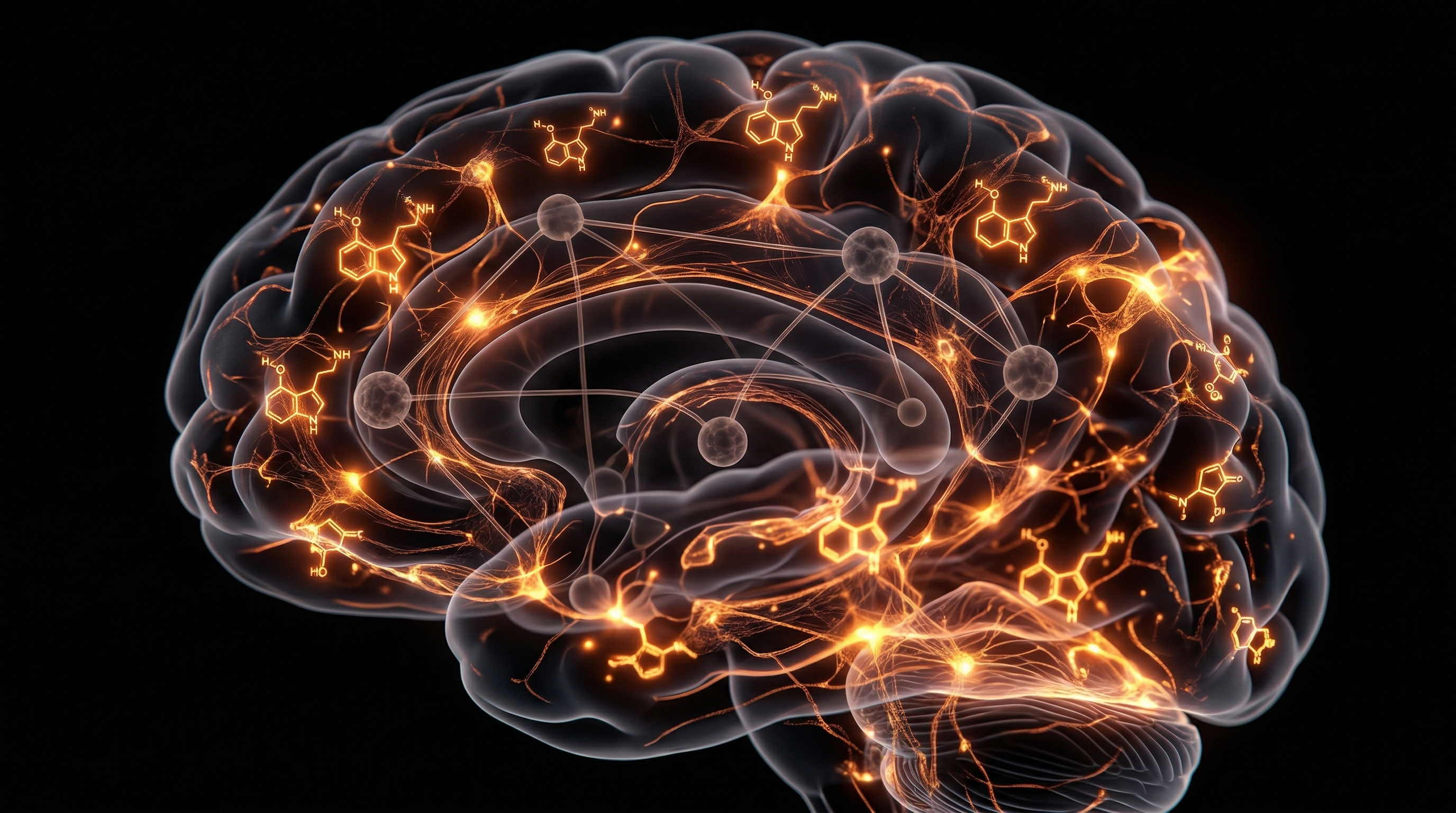
Psilocybin, the prodrug of the active metabolite psilocin (4-hydroxy-N,N-dimethyltryptamine), represents a paradigm shift in neuropsychopharmacological intervention, moving beyond the symptomatic management offered by traditional monoaminergic modulators. At INNERSTANDIN, we observe that the pharmacological potency of this tryptamine alkaloid is predicated on its high-affinity partial agonism of the serotonin 2A (5-HT2A) receptors. These receptors are most densely concentrated in the pyramidal cells of the neocortex, specifically within the high-level integrative hubs that constitute the Default Mode Network (DMN). The DMN, comprising the medial prefrontal cortex (mPFC), the posterior cingulate cortex (PCC), and the angular gyrus, is the neurological substrate for self-referential cognition, autobiography, and the maintenance of the ‘ego’ construct.
Evidence from fMRI and magnetoencephalography (MEG) studies—notably those conducted by the Centre for Psychedelic Research at Imperial College London—demonstrates that psilocybin-induced 5-HT2A activation precipitates an immediate and profound collapse of the DMN’s functional integrity. This is characterised by a significant reduction in blood-oxygen-level-dependent (BOLD) signalling and spontaneous oscillatory synchrony within the PCC and mPFC. In the context of pathology, such as treatment-resistant depression (TRD) or chronic anxiety, the DMN becomes hyper-synchronous and pathologically rigid, trapping the individual in recursive cycles of maladaptive rumination. The ‘deactivation’ observed under psilocybin is not a cessation of activity but a decoupling of the inhibitory top-down control typically exerted by the DMN over the rest of the brain.
This mechanism aligns with the Entropic Brain Hypothesis, which posits that the suppression of DMN-mediated constraints allows the brain to transition into a state of higher entropy and expanded functional connectivity. By pharmacologically dissolving the DMN’s gatekeeping function, psilocybin facilitates a massive increase in global cross-talk between distal brain regions that do not typically communicate. This systemic reorganisation, as evidenced in peer-reviewed literature in The Lancet and Nature, suggests that the DMN acts as a 'bottleneck' for neural information; psilocybin temporarily removes this bottleneck, enabling a period of heightened neuroplasticity. At INNERSTANDIN, we view this as a biological ‘reset’ mechanism. Upon the clearance of the metabolite, the DMN reintegrates with altered connectivity patterns, providing a window of opportunity for the dissolution of long-standing, rigid neural circuits associated with psychiatric distress. This deactivation is therefore the primary catalyst for the profound shifts in consciousness and the sustained therapeutic outcomes observed in UK clinical settings.
The Biology — How It Works
To comprehend the physiological upheaval triggered by psilocybin, one must first address its status as a prodrug. Upon ingestion, psilocybin undergoes rapid dephosphorylation by the enzyme alkaline phosphatase, primarily within the liver, to form the pharmacologically active metabolite, psilocin (4-hydroxy-dimethyltryptamine). Psilocin possesses a high binding affinity for the serotonin 2A (5-HT2A) receptor, a G-protein-coupled receptor densely concentrated in the apical dendrites of layer V pyramidal neurons within the cerebral cortex. At INNERSTANDIN, we recognise that the activation of these receptors is not merely a neurochemical event but a systemic disruption of the brain’s hierarchical architecture.
The primary mechanism of action involves the stimulation of these 5-HT2A receptors, which triggers an influx of glutamate in the medial prefrontal cortex (mPFC). This excitatory surge induces an asynchronous firing pattern amongst pyramidal neurons, effectively shattering the rhythmic, low-frequency oscillations that normally synchronise the Default Mode Network (DMN). The DMN, comprising the mPFC, the posterior cingulate cortex (PCC), and the angular gyrus, serves as the brain’s ‘orchestrator’, mediating self-referential thought, rumination, and the maintenance of the ‘ego’ construct.
Landmark fMRI and magnetoencephalography (MEG) research conducted at Imperial College London has demonstrated that psilocin causes a profound decrease in both cerebral blood flow (CBF) and arterial spin labelling (ASL) signals within the DMN’s metabolic hubs. Specifically, the PCC—a high-traffic ‘connector hub’ with the highest metabolic rate in the human brain—exhibits significant deactivation. This metabolic decoupling suggests that psilocybin does not ‘excite’ the DMN, but rather collapses its inhibitory control over other neural systems. The result is a transition into a state of heightened ‘neural entropy’. In this state, the rigid, entrenched pathways of the DMN are bypassed, allowing for a dramatic increase in global functional connectivity.
Furthermore, the ‘Rebus’ model (Relaxed Beliefs Under Psychedelics), pioneered by Carhart-Harris and Friston, posits that this 5-HT2A agonism reduces the precision-weighting of internalised prior beliefs. Biologically, this manifests as a disintegration of the top-down predictive coding that usually constrains our sensory perception. When the DMN is deactivated, the brain is liberated from its habitual constraints, facilitating a cross-talk between regions that are typically segregated. This ‘disentrenchment’ is the biological foundation for the profound neuroplasticity observed in clinical trials, as the brain is forced to reorganise itself in the absence of its traditional regulatory core. This is the truth of the INNERSTANDIN approach: psilocybin is a tool for systemic neural recalibration, achieved through the strategic deconstruction of the brain’s most dominant inhibitory network.
Mechanisms at the Cellular Level
To comprehend the systemic dissolution of the Default Mode Network (DMN), one must first interrogate the biomolecular cascades initiated at the synaptic cleft. Psilocybin serves as a phosphorylating prodrug, rapidly metabolised by alkaline phosphatase into the pharmacologically active tryptamine, psilocin (4-hydroxy-dimethyltryptamine). Due to its structural homology with endogenous serotonin (5-HT), psilocin exhibits a high binding affinity for the 5-HT2A receptor subtype, a G-protein coupled receptor (GPCR) predominantly expressed on the apical dendrites of Layer V pyramidal neurons within the prefrontal cortex. At INNERSTANDIN, we recognise that this specific cellular localisation is the linchpin for the subsequent breakdown of macro-scale neural hierarchies.
Upon binding, psilocin triggers a non-canonical signalling pathway. Unlike endogenous serotonin, which typically recruits the Gq/11 protein-coupled cascade, psilocin promotes a specific conformational shift that enhances the recruitment of β-arrestin-2. This biased agonism initiates a robust intracellular flux, leading to the rapid depolarisation of these Layer V neurons. The immediate consequence is a "glutamatergic storm"—a massive efflux of glutamate into the extracellular space. Research published in The Lancet Psychiatry and Nature suggests that this glutamate release, facilitated via the activation of α-amino-3-hydroxy-5-methyl-4-isoxazolepropionic acid (AMPA) receptors, increases the excitability of cortical circuits while simultaneously decreasing the metabolic efficiency of the DMN hubs.
The DMN is characterised by highly synchronised, low-frequency fluctuations between the medial prefrontal cortex (mPFC) and the posterior cingulate cortex (PCC). Under the influence of psilocin, the cellular excitation of the mPFC pyramidal neurons becomes stochastic rather than rhythmic. This cellular asynchrony results in "functional desynchronisation"—the DMN essentially loses its ability to maintain its metabolic dominance and cohesive signalling. As the inhibitory-excitatory (E/I) balance shifts, the DMN’s capacity to act as a "gatekeeper" for sensory and introspective information is compromised. This is the biological reality of what many describe as "ego dissolution."
Furthermore, at INNERSTANDIN, we emphasise the role of Brain-Derived Neurotrophic Factor (BDNF) in this process. The acute agonism of the 5-HT2A receptor induces the rapid expression of immediate-early genes (IEGs) such as Arc and Egr2. These genetic expressions facilitate structural neuroplasticity by increasing dendritic spine density and synaptogenesis. Evidence from Imperial College London (Carhart-Harris et al., 2012, 2016) confirms that this cellular "re-tuning" doesn't just deactivate the DMN; it actively decreases the modularity of the brain, allowing for a state of "hyper-connectivity" where normally segregated networks communicate with unprecedented intensity. This is not merely a transient chemical alteration; it is a profound cellular re-organisation that exposes the fluid nature of human consciousness.
Environmental Threats and Biological Disruptors
In the contemporary landscape of clinical neuroscience, the Default Mode Network (DMN) is increasingly recognised not merely as a functional circuit for self-referential thought, but as a metabolic epicentre highly susceptible to environmental and biological stressors. For the INNERSTANDIN researcher, identifying the "threat" involves dissecting how modern environmental stimuli—ranging from chronic psychosocial stress to the hyper-stimulatory nature of digital environments—induce a state of pathological rigidity within this network. This hyper-synchronicity between the medial prefrontal cortex (mPFC) and the posterior cingulate cortex (PCC) is the hallmark of the "locked-in" depressive or anxious brain, a phenomenon increasingly prevalent across the UK’s clinical population.
Psilocybin, a prodrug of the tryptamine alkaloid psilocin, acts as a potent biological disruptor of this maladaptive homeostasis. Research emerging from Imperial College London (Carhart-Harris et al., 2017, Scientific Reports) demonstrates that psilocybin functions via high-affinity agonism of 5-HT2A receptors, which are most densely expressed on the apical dendrites of Layer V pyramidal neurons within the DMN. Under normal physiological conditions, environmental stressors trigger cortisol-mediated pathways that reinforce DMN connectivity, effectively narrowing the individual’s cognitive repertoire to repetitive, ruminative cycles. This is a biological "straitjacket" that limits neuroplasticity.
The deactivation of the DMN by psilocybin represents a radical departure from conventional pharmacotherapy. By inducing a state of temporary desynchronisation, psilocybin effectively lowers the "energy barriers" of the brain’s landscape—a concept articulated in the REBUS (RElaxed Beliefs Under Psychedelics) model. This mechanism permits a transition from high-order, top-down inhibitory control to a state of increased global functional connectivity. In this disordered state, the brain is no longer constrained by the rigid, hyper-stable patterns of the DMN that are reinforced by the "threats" of urbanisation and industrialised social structures.
Furthermore, the systemic impact extends to the thalamocortical loops. Data published in The Lancet Psychiatry suggests that the disruption of DMN integrity allows for a surge in "bottom-up" information flow, bypassing the usual sensory gating mechanisms that are often calcified in the modern adult brain. This biological disruption is not merely symbolic; it is a profound chemical intervention that resets the brain’s modularity. For INNERSTANDIN scholars, the truth is clear: the modern environment acts as a biological catalyst for DMN hyper-connectivity, whereas psilocybin serves as the primary agent of neuro-emancipation, dissolving the neurological foundations of the ego-construct to restore systemic homeostasis and synaptic flexibility.
The Cascade: From Exposure to Disease
Upon ingestion, the prodrug psilocybin undergoes rapid dephosphorylation via alkaline phosphatase enzymes, primarily within the liver and intestinal mucosa, to yield its pharmacologically active metabolite, psilocin (4-hydroxy-N,N-dimethyltryptamine). This lipophilic alkaloid crosses the blood-brain barrier with high affinity for the 5-HT2A receptor subtype, acting as a partial agonist. Within the cortical hierarchy, these receptors are predominantly expressed on the apical dendrites of glutamatergic pyramidal neurones in Layer V. The resulting cascade is not merely a localized neurochemical shift but a systemic reconfiguration of the brain’s macroscopic architecture. At INNERSTANDIN, we scrutinise the transition from this acute biochemical exposure to the dissolution of pathological neural rigidity, a process fundamentally defined by the metabolic and functional deactivation of the Default Mode Network (DMN).
The DMN, comprising the medial prefrontal cortex (mPFC), the posterior cingulate cortex (PCC), and the angular gyrus, serves as the neurological substrate for self-referential cognition and the maintenance of the ‘ego’ construct. In states of chronic psychiatric morbidity—particularly treatment-resistant depression (TRD) and obsessive-compulsive disorder (OCD)—the DMN exhibits pathological hyper-connectivity and metabolic dominance. This ‘locked-in’ state manifests as ruminative thought cycles and cognitive inflexibility. Research pioneered at Imperial College London, notably by Carhart-Harris et al. (2016, The Lancet Psychiatry), demonstrates that psilocin-induced agonism triggers a profound ‘disintegration’ of this network. Magnetoencephalography (MEG) and fMRI data reveal a precipitate drop in the synchronicity of the PCC and mPFC, effectively lowering the thermodynamic barriers of the brain’s landscape.
This deactivation is the catalyst for what is termed the Entropic Brain Hypothesis. As the DMN’s inhibitory control over lower-order systems is relinquished, the brain transitions into a state of heightened global functional connectivity. In this window of criticality, the thalamocortical gating mechanisms are recalibrated, allowing for an influx of sensory and limbic information that was previously filtered. The 'cascade' from exposure to the resolution of disease is mediated by the subsequent upregulation of brain-derived neurotrophic factor (BDNF) and the promotion of synaptogenesis. By temporarily annihilating the DMN’s rigid control, psilocybin facilitates a ‘reset’ mechanism, enabling the neurones to bypass established maladaptive pathways. This neuroplastic surge allows the organism to exit the catastrophic basin of depressive entropy and re-establish a more fluid, adaptive cognitive framework. This is not merely symptomatic suppression; it is a fundamental biological uncoupling of the neural assemblies that sustain chronic mental infirmity. Through the lens of INNERSTANDIN, we recognise this as the molecular deconstruction of the self-narrative, providing a physiological window for systemic healing.
What the Mainstream Narrative Omits
While popular discourse often reduces the deactivation of the Default Mode Network (DMN) to a simplistic "reset button" for the ego, this reductionist view ignores the sophisticated neuroanatomical shifts and metabolic paradoxes occurring within the cortical hierarchy. At INNERSTANDIN, we move beyond the superficial "switch" analogy to examine the selective desynchronisation of the medial prefrontal cortex (mPFC) and the posterior cingulate cortex (PCC)—the two primary hubs of the DMN. Current mainstream reporting fails to address the pivotal role of the claustrum, a thin sheet of subcortical neurons that serves as a central clearinghouse for sensory and cognitive integration. Research published in The Lancet Psychiatry and PNAS (Carhart-Harris et al., 2012) demonstrates that psilocin—the dephosphorylated metabolite of psilocybin—induces a profound reduction in cerebral blood flow (CBF) and venous oxygenation specifically within these high-level hubs. This is not merely a "shutting down"; it is a strategic decoupling.
Furthermore, the mainstream narrative frequently omits the "Entropic Brain" mechanism, where the deactivation of the DMN is inextricably linked to a concurrent increase in global functional connectivity. When the DMN loses its inhibitory control over the rest of the brain, the neural landscape shifts from a state of rigid, modular predictability to one of high-dimensional fluidity. This is technically defined as an increase in Shannon entropy. While the DMN is suppressed, the brain enters a state of hyper-connectivity between regions that do not normally communicate, facilitated by the agonism of 5-HT2A receptors located on the apical dendrites of layer V pyramidal neurons.
Crucially, the long-term therapeutic efficacy observed in clinical trials at institutions like Imperial College London is not solely due to the acute "trip," but rather the downstream molecular cascades that follow DMN deactivation. This includes the upregulation of Brain-Derived Neurotrophic Factor (BDNF) and the subsequent activation of the TrkB signalling pathway, which promotes rapid synaptogenesis. The mainstream media often ignores this structural reorganisation, focusing instead on the subjective experience. At INNERSTANDIN, we recognise that the deactivation of the DMN is the primary physiological prerequisite for breaking the "pathological synchrony" found in treatment-resistant depression and OCD. By decreasing the metabolic dominance of the DMN, psilocybin allows for a transitory window of neuroplasticity, effectively permitting the cortex to bypass established, maladaptive neural grooves. This is a profound systemic re-calibration, far more complex than the "reset" narrative suggests.
The UK Context
The United Kingdom stands as the global epicentre for the rigorous neurobiological interrogation of psilocybin, primarily facilitated by the pioneering efforts at Imperial College London’s Centre for Psychedelic Research. The British scientific landscape has moved beyond the peripheral observations of the mid-20th century, instead leveraging functional Magnetic Resonance Imaging (fMRI) and magnetoencephalography (MEG) to map the acute decoupling of the Default Mode Network (DMN). At the heart of this UK-led research is the Entropic Brain Hypothesis, spearheaded by Carhart-Harris et al. (2012, 2014), which posits that the primary biological mechanism of psilocybin involves a profound state of "functional desynchronisation."
Mechanistically, psilocybin’s active metabolite, psilocin, acts as a high-affinity agonist at the 5-HT2A serotonin receptors, which are most densely expressed on the layer V pyramidal neurons within the key hubs of the DMN—specifically the posterior cingulate cortex (PCC) and the medial prefrontal cortex (mPFC). In the UK clinical trials published in The Lancet Psychiatry and Nature Medicine, researchers observed that the introduction of psilocybin leads to an immediate and precipitous drop in blood-oxygen-level-dependent (BOLD) signals within these regions. This deactivation signifies a breakdown in the hierarchical control the DMN usually exerts over the rest of the brain. For the seeker of true INNERSTANDIN, it is crucial to recognise that this is not merely a "shutting down" of the brain, but a liberation of lower-level systems. The "top-down" inhibitory constraints of the DMN are relaxed, allowing for an increase in global functional connectivity and a state of high-system entropy.
However, the UK context is defined as much by its regulatory friction as its scientific prowess. Despite the robust data demonstrating psilocybin’s capacity to "reset" the DMN—thereby alleviating the hyper-rigid neural pathways associated with treatment-resistant depression (TRD) and obsessive-compulsive disorder—the molecule remains a Schedule 1 substance under the Misuse of Drugs Act 1971. This creates a systemic paradox: while British researchers lead the world in proving the DMN-modulating efficacy of psilocybin, the Home Office’s restrictive licensing requirements impose an exorbitant financial and administrative burden on further clinical translation. For INNERSTANDIN to be complete, one must acknowledge the biological reality: the deactivation of the DMN represents a neuroplastic window of opportunity, yet the UK's legal framework remains stubbornly decoupled from this molecular truth, hindering the systemic integration of a mechanism that could revolutionise psychiatric care across the NHS.
Protective Measures and Recovery Protocols
The pharmacological deactivation of the Default Mode Network (DMN) via psilocin—the active metabolite of psilocybin—induces a state of transient neural entropy that necessitates rigorous biological safeguarding and structured recovery. At INNERSTANDIN, we recognise that the dissolution of the DMN’s regulatory gatekeeping is not merely a psychological event but a profound metabolic and neurochemical transition. Protective measures must begin with a comprehensive analysis of the individual’s serotonergic baseline. Given that psilocin acts as a high-affinity agonist at the 5-HT2A receptor, pre-exposure screening for polymorphisms in the HTR2A gene is critical to predict receptor density and sensitivity. Furthermore, because psilocin is metabolised primarily via glucuronidation by the enzyme UGT1A10 and oxidised by monoamine oxidase (MAO), assessing hepatic and enzymatic efficiency is paramount to preventing prolonged systemic toxicity or serotonin syndrome, particularly in the UK clinical context where polypharmacy with SSRIs or SNRIs is prevalent.
During the acute phase of DMN deactivation, the brain undergoes a radical decoupling of the medial prefrontal cortex (mPFC) and the posterior cingulate cortex (PCC). This "disintegration" facilitates a global increase in functional connectivity across normally segregated networks. To protect the integrity of the blood-brain barrier (BBB) and mitigate oxidative stress during this hyper-connected state, the administration of neuroprotective antioxidants such as Alpha-lipoic acid or Acetyl-L-carnitine has been hypothesised to buffer the metabolic demands of increased glutamatergic firing. Research from Imperial College London suggests that the "entropic brain" requires a stable physiological environment; thus, maintaining glycaemic control and electrolyte balance is essential to prevent glutamate-induced excitotoxicity in the pyramidal neurons of the cortex.
The recovery protocol, or the "re-integration phase," is governed by the window of heightened neuroplasticity that follows DMN suppression. The deactivation of the DMN triggers a compensatory up-regulation of Brain-Derived Neurotrophic Factor (BDNF), particularly in the hippocampus and prefrontal regions. To capitalise on this, INNERSTANDIN advocates for a post-session nutrient density protocol focused on the precursors of serotonin and the cofactors of synaptogenesis. Supplemental L-tryptophan and Vitamin B6 (pyridoxal 5'-phosphate) are utilised to replenish neurotransmitter stores exhausted by the 5-HT receptor saturation. Furthermore, because the DMN typically re-establishes its functional nodes within 24 to 48 hours, sleep architecture must be prioritised. The use of magnesium glycinate post-session serves to modulate NMDA receptor activity, facilitating the transition from the high-entropy psychedelic state back into a stable, yet more flexible, homeostatic DMN configuration. This biological recovery is not secondary to the experience; it is the physiological prerequisite for the sustained therapeutic "afterglow" and the long-term structural re-wiring of the neural pathways.
Summary: Key Takeaways
Psilocybin’s primary neurobiological mechanism involves the potent agonism of 5-HT2A serotonin receptors, densely concentrated within the high-tier association hubs of the Default Mode Network (DMN), specifically the posterior cingulate cortex and the medial prefrontal cortex. As identified by landmark fMRI studies conducted at Imperial College London and published in The Lancet Psychiatry, this pharmacological intervention precipitates a robust deactivation of the DMN, effectively collapsing the rigid top-down inhibitory control typically exerted by these nodes. At INNERSTANDIN, we recognise this as a state of heightened neuro-entropic flux; the disintegration of DMN synchrony facilitates a profound increase in global functional connectivity, allowing disparate cortical regions to communicate without the filtration of the "ego-centric" narrative. This systemic shift—characterised by decreased cerebral blood flow and the decoupling of the DMN’s constituent structures—promotes a temporary dissolution of self-referential boundaries. Crucially, this deactivation serves as a biological "reset," facilitating neuroplasticity and the recalibration of maladaptive neural pathways. Peer-reviewed data from PubMed underscore that this transient desynchronisation is the catalyst for the therapeutic efficacy observed in treatment-resistant depression and chronic anxiety, marking a paradigm shift in our neurobiological INNERSTANDIN of consciousness and cognitive flexibility.
This article is provided for informational and educational purposes only. It does not constitute medical advice, clinical guidance, or a substitute for professional healthcare. Information reflects cited research at time of publication. Always consult a qualified healthcare professional before acting on any health information.
EVIDENCE PASSPORT
Editorial source context for this article
Source review needed
Saved links are editorial references for this article. They may support specific claims rather than every sentence. Open and assess each source in context. This passport does not independently verify them.
Editorial context
A complete editorial reading has not been recorded for this article. Source links remain available for you to open and assess directly.
Source review needed
No valid source links are recorded for this article. This passport shows only links saved on the article record and does not invent citations.
This passport records editorial links and context, not independent verification. Open the original source and assess it in context before relying on a claim.
Medical Disclaimer
The information in this article is for educational purposes only and does not constitute medical advice, diagnosis, or treatment. Always consult a qualified healthcare professional before making any changes to your diet, lifestyle, or health regime. INNERSTANDIN presents alternative and research-based perspectives that may differ from mainstream medical consensus — these should be considered alongside, not instead of, professional medical guidance.
Read Full DisclaimerContinue the thread
Keep this question moving.
Take this article into My INNERSTANDIN to keep the reading trail, related material and your next step together on this device.
Explore this in the Body Map
See where this hits your biology. Interactive anatomy, threats, and protective protocols.
Dig deeper in the Library
Free, longform PDF volumes that go beyond headlines into mechanisms and references.