Mitochondrial Dysfunction and Oxidative Stress as Central Mediators in Autism Spectrum Pathophysiology
Discuss this resourceUpdated August 2026
This article explores the biological underpinnings of Autism Spectrum Disorder, focusing on the critical role of mitochondrial impairment and chronic oxidative stress as primary drivers of neurodevelopmental outcomes.
Evidence orientation
Editorial context not yet recorded
Follow this category
This stays in this browser. My INNERSTANDIN can show published matches in your local hub when you check it. It does not send email, push, or alert notifications.
Local learning review
A private browser aid for revisiting ideas. It is not an alert or a health recommendation.
Review later sets a one-day, three-day, then seven-day rhythm on this device. Choose it only when you want to revisit this article.
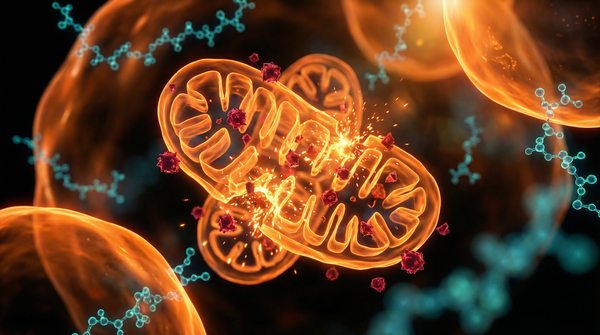
Introduction: Reevaluating the Biological Basis of ASD. For decades, Autism Spectrum Disorder (ASD) was viewed primarily through a behavioral lens. However, emerging research in the field of functional neurology and metabolic health suggests that ASD is often accompanied by systemic physiological imbalances. Two of the most significant, yet frequently overlooked, factors are mitochondrial dysfunction and chronic oxidative stress. ### The Engine of the Cell: Mitochondrial Dysfunction. Mitochondria are the power plants of our cells, responsible for generating adenosine triphosphate (ATP).
In many individuals on the spectrum, mitochondrial function is impaired. This dysfunction is not merely a localized issue; it affects high-energy-demand organs, particularly the brain. When mitochondria fail to produce sufficient ATP, neurons struggle to maintain the electrical potential required for synaptic transmission and neuroplasticity. Studies have indicated that a subset of children with ASD exhibit metabolic profiles consistent with mitochondrial disease, manifesting as elevated lactate levels and pyruvate imbalances. ### The Role of Oxidative Stress. Oxidative stress occurs when there is an imbalance between the production of reactive oxygen species (ROS) and the body's ability to detoxify them.
The developing brain is uniquely susceptible to oxidative damage due to its high lipid content and oxygen consumption. In ASD, the antioxidant defense system—particularly the glutathione pathway—often shows reduced efficacy. This persistent oxidative environment causes lipid peroxidation, damages mitochondrial DNA, and exacerbates neuroinflammation. ### The Vicious Cycle: Neuroinflammation and Excitotoxicity. The intersection of mitochondrial fatigue and oxidative stress creates a feedback loop. Oxidative damage impairs mitochondrial function, which further reduces ATP availability.
This energy deficit hampers the ability of astrocytes to clear glutamate from the synaptic cleft, leading to excitotoxicity. This chemical overload contributes to the characteristic sensory sensitivities and cognitive challenges observed in ASD. ### Clinical Implications and Root-Cause Approaches. Addressing these mechanisms requires a departure from symptom-management alone. Functional interventions often target the support of mitochondrial biogenesis and the enhancement of endogenous antioxidant pathways. Nutritional protocols frequently focus on mitochondrial cofactors such as CoQ10, L-carnitine, and B-vitamin complexes, which act as rate-limiting steps in the electron transport chain.
Furthermore, modulating the systemic inflammatory response through diet and microbiome support is essential to reducing the oxidative burden on the central nervous system. ### Conclusion. Understanding ASD through the lens of metabolic health offers a hopeful, evidence-based pathway for support. By prioritizing mitochondrial health and reducing oxidative stress, we can address some of the biological 'noise' that may be contributing to the behavioral challenges associated with autism. At INNERSTANDING, we advocate for a holistic view that honors the complexity of these biological mediators.
This article is provided for informational and educational purposes only. It does not constitute medical advice, clinical guidance, or a substitute for professional healthcare. Information reflects cited research at time of publication. Always consult a qualified healthcare professional before acting on any health information.
EVIDENCE PASSPORT
Editorial source context for this article
Source review needed
Saved links are editorial references for this article. They may support specific claims rather than every sentence. Open and assess each source in context. This passport does not independently verify them.
Editorial context
A complete editorial reading has not been recorded for this article, and no source links are saved on its record.
Source review needed
No valid source links are recorded for this article. Supplementary research, where available, is listed separately below.
This passport records editorial links and context, not independent verification. Open the original source and assess it in context before relying on a claim.
Medical Disclaimer
The information in this article is for educational purposes only and does not constitute medical advice, diagnosis, or treatment. Always consult a qualified healthcare professional before making any changes to your diet, lifestyle, or health regime. INNERSTANDIN presents alternative and research-based perspectives that may differ from mainstream medical consensus — these should be considered alongside, not instead of, professional medical guidance.
Read Full DisclaimerContinue the thread
Keep this question moving.
Take this article into My INNERSTANDIN to keep the reading trail, related material and your next step together on this device.
Explore this in the Body Map
Explore related body structures and their educational pages in the interactive Body Map.
Dig deeper in the Library
Free, longform PDF volumes that go beyond headlines into mechanisms and references.
RABBIT HOLE
Follow the biological thread deeper