Mitochondrial Dysfunction and Oxidative Stress as Drivers of Chronic Urothelial Cellular Senescence
Discuss this resourceUpdated August 2026
This article explores the cellular mechanisms underlying Interstitial Cystitis (IC), focusing on how mitochondrial failure and oxidative stress trigger premature urothelial aging and chronic bladder inflammation.
Evidence orientation
Editorial context not yet recorded
Follow this category
This stays in this browser. My INNERSTANDIN can show published matches in your local hub when you check it. It does not send email, push, or alert notifications.
Local learning review
A private browser aid for revisiting ideas. It is not an alert or a health recommendation.
Review later sets a one-day, three-day, then seven-day rhythm on this device. Choose it only when you want to revisit this article.
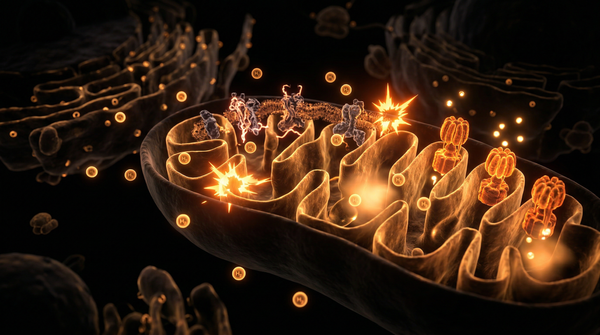
Introduction: The Urothelium Under Siege. In the landscape of chronic bladder disorders like Interstitial Cystitis (IC) or Bladder Pain Syndrome (BPS), traditional approaches often focus solely on symptom management. At INNERSTANDING, we look deeper at the urothelium—the specialized lining of the bladder. Emerging research suggests that the persistence of chronic bladder symptoms is rooted in a state of accelerated cellular senescence driven by mitochondrial dysfunction and chronic oxidative stress. ### The Mitochondrial Engine. Mitochondria are the powerhouses of the urothelial cell.
They generate ATP, but they also serve as critical signaling hubs. In a healthy bladder, mitochondria maintain cellular homeostasis and integrity. However, when the urothelium is exposed to recurring stressors—such as subclinical infections, chemical irritants, or systemic inflammation—mitochondrial DNA (mtDNA) can become damaged. This leads to inefficient oxidative phosphorylation and a subsequent leak of reactive oxygen species (ROS). ### Oxidative Stress: The Catalyst for Senescence. When ROS production outpaces the cell’s antioxidant defense systems, the cell enters a state of oxidative stress.
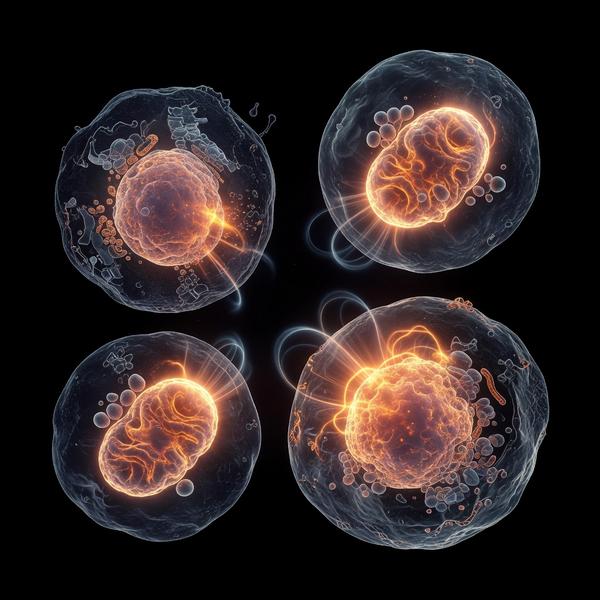
This environment is highly damaging to the urothelial barrier. Chronic ROS exposure triggers the DNA Damage Response (DDR) pathways. When the damage is persistent, the cell enters a state of permanent growth arrest known as cellular senescence. Senescent cells are not dead; rather, they become 'zombie' cells that secrete a cocktail of pro-inflammatory cytokines, chemokines, and matrix-degrading enzymes. This is known as the Senescence-Associated Secretory Phenotype (SASP).
In the context of the bladder, the SASP perpetuates a cycle of tissue degradation, impaired healing, and chronic nerve irritation, directly mapping to the clinical symptoms of IC. ### The Vicious Cycle of Bladder Aging. The urothelium has a high turnover rate. However, when the stem cell niche becomes populated with senescent cells, the regenerative capacity of the bladder lining diminishes. The barrier becomes permeable—often referred to as 'leaky bladder'—allowing urinary solutes to penetrate deep into the suburothelial space. This triggers mast cell activation and sensory nerve sensitization, creating the characteristic urgency, frequency, and pelvic pain of IC. ### Implications for Root-Cause Health.
Addressing these cellular drivers requires a shift from surface-level management to metabolic support. Strategies that prioritize mitochondrial biogenesis, the upregulation of endogenous antioxidant pathways (such as Nrf2 activation), and the modulation of systemic inflammation are essential. By reducing the burden of oxidative stress, we can potentially halt the transition of functional urothelium into a senescent state, restoring structural integrity and quality of life. At INNERSTANDING, we advocate for comprehensive metabolic assessments to identify where the mitochondrial chain may be failing in patients with chronic urothelial distress.
This article is provided for informational and educational purposes only. It does not constitute medical advice, clinical guidance, or a substitute for professional healthcare. Information reflects cited research at time of publication. Always consult a qualified healthcare professional before acting on any health information.
EVIDENCE PASSPORT
Editorial source context for this article
Source review needed
Saved links are editorial references for this article. They may support specific claims rather than every sentence. Open and assess each source in context. This passport does not independently verify them.
Editorial context
A complete editorial reading has not been recorded for this article, and no source links are saved on its record.
Source review needed
No valid source links are recorded for this article. Supplementary research, where available, is listed separately below.
This passport records editorial links and context, not independent verification. Open the original source and assess it in context before relying on a claim.
Medical Disclaimer
The information in this article is for educational purposes only and does not constitute medical advice, diagnosis, or treatment. Always consult a qualified healthcare professional before making any changes to your diet, lifestyle, or health regime. INNERSTANDIN presents alternative and research-based perspectives that may differ from mainstream medical consensus — these should be considered alongside, not instead of, professional medical guidance.
Read Full DisclaimerContinue the thread
Keep this question moving.
Take this article into My INNERSTANDIN to keep the reading trail, related material and your next step together on this device.
Explore this in the Body Map
Explore related body structures and their educational pages in the interactive Body Map.
Dig deeper in the Library
Free, longform PDF volumes that go beyond headlines into mechanisms and references.
RABBIT HOLE
Follow the biological thread deeper