
Mitophagy: The Cell's Self-Cleaning System for Damaged Mitochondria
Updated June 2026
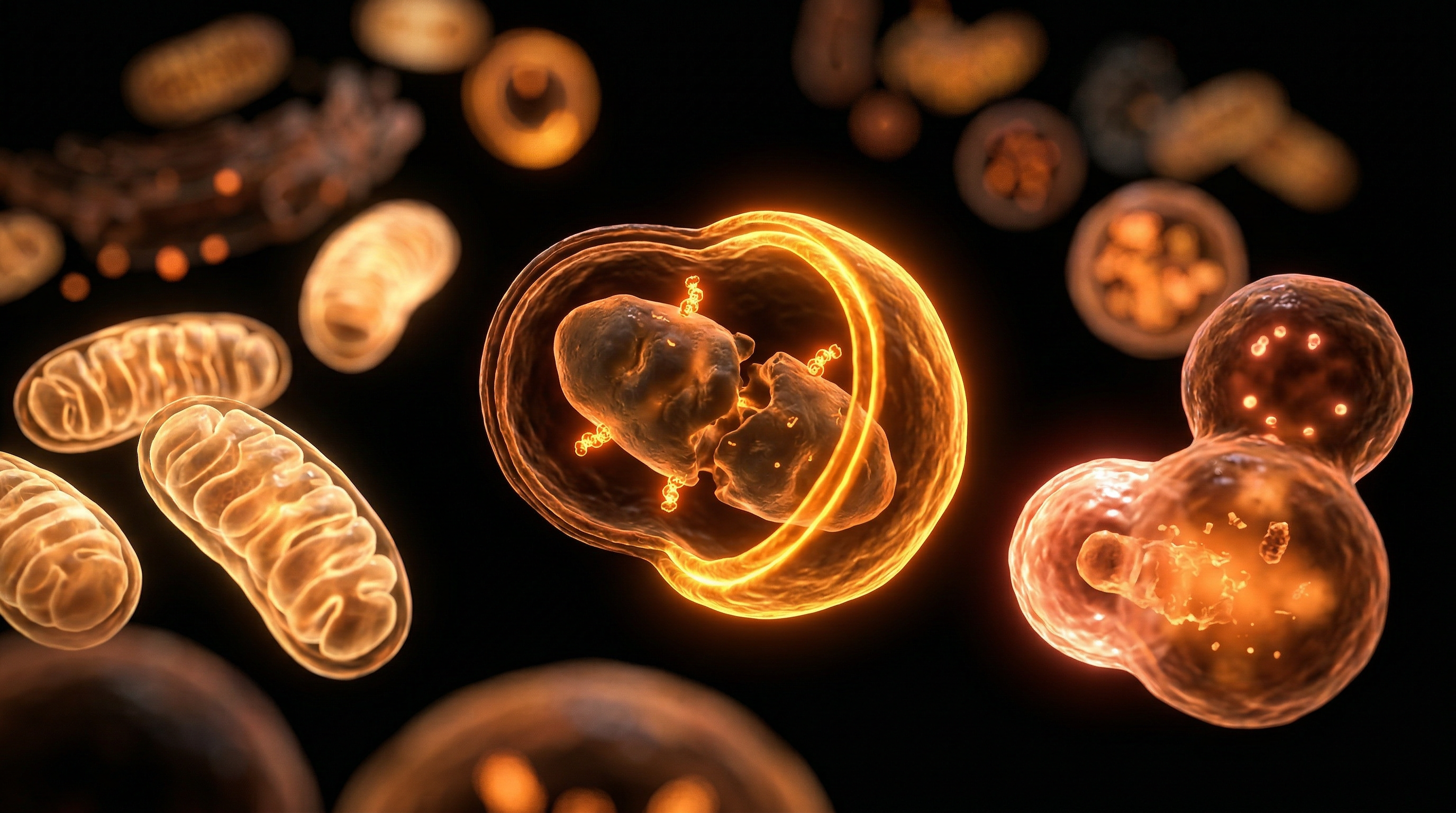
Mitophagy — the selective autophagy of damaged or dysfunctional mitochondria — is the cell's primary quality control mechanism for maintaining a healthy, high-functioning mitochondrial network, preventing the accumulation of defective organelles that would otherwise generate excessive ROS, impair ATP synthesis, and trigger apoptotic signalling. This process, regulated primarily by the PINK1-Parkin pathway, detects mitochondria with collapsed membrane potential and tags them for lysosomal degradation, effectively recycling their molecular components and preventing the propagation of mitochondrial damage. Critically, mitophagy is impaired by the very conditions that cause mitochondrial damage in the first place — heavy metal accumulation, chronic inflammation, and insulin resistance — creating a vicious cycle in which toxic exposure both damages mitochondria and impairs the cell's capacity to remove them, a central mechanism in the pathogenesis of Parkinson's disease and other neurodegenerative conditions.
Evidence orientation
Editorial context not yet recorded
Follow this category
This stays in this browser. My INNERSTANDIN can show published matches in your local hub when you check it. It does not send email, push, or alert notifications.
Local learning review
A private browser aid for revisiting ideas. It is not an alert or a health recommendation.
Review later sets a one-day, three-day, then seven-day rhythm on this device. Choose it only when you want to revisit this article.
Overview
At the core of cellular bioenergetics lies a profound paradox: the very organelles responsible for the synthesis of adenosine triphosphate (ATP) are also the primary progenitors of cellular decay. Mitochondria, through the inevitable electron leakage inherent in oxidative phosphorylation, generate reactive oxygen species (ROS) that, if left unchecked, precipitate a cascade of oxidative damage to mitochondrial DNA (mtDNA), proteins, and lipid membranes. To mitigate this entropic decline, eukaryotic cells have evolved a highly specialised, conserved quality control mechanism known as mitophagy—a selective form of macroautophagy dedicated to the sequestration and lysosomal degradation of dysfunctional or redundant mitochondria. At INNERSTANDIN, we recognise that mitophagy is not merely a passive 'housekeeping' event; it is a rigorous metabolic checkpoint essential for maintaining bioenergetic fidelity and preventing the systemic fallout of mitochondrial dysfunction.
The mechanical orchestration of mitophagy is primarily governed by the PINK1 (PTEN-induced kinase 1)/Parkin signalling axis, a pathway whose elucidation has been pivotal in understanding the molecular aetiology of neurodegenerative pathologies. Under homeostatic conditions, PINK1 is constitutively imported into healthy mitochondria and rapidly degraded by mitochondrial proteases. However, when a mitochondrion undergoes depolarisation—marked by a loss of mitochondrial membrane potential ($\Delta\psi$m)—the import mechanism fails. This leads to the stabilisation and accumulation of PINK1 on the outer mitochondrial membrane (OMM). Once anchored, PINK1 phosphorylates both ubiquitin and the E3 ubiquitin ligase, Parkin, initiating a robust ubiquitination cascade. This molecular 'tagging' recruits autophagy receptors, such as OPTN and p62, which facilitate the engulfment of the compromised organelle by the nascent autophagosome.
Beyond the ubiquitin-dependent pathway, INNERSTANDIN highlights the significance of receptor-mediated mitophagy, involving OMM proteins like BNIP3, NIX, and FUNDC1. These receptors respond to specific physiological stressors, such as hypoxia or metabolic shift, bypass the PINK1/Parkin requirement, and directly bind to LC3 proteins on the autophagosomal membrane. This redundancy ensures that mitochondrial populations are fine-tuned to the cell's immediate energetic requirements.
Research published in The Lancet and various PubMed-indexed studies emerging from UK-based research hubs, such as the Medical Research Council (MRC) Mitochondrial Biology Unit at the University of Cambridge, underscores the systemic gravity of mitophagic flux. When mitophagy is impaired, the accumulation of damaged mitochondria leads to 'mitochondrial permeability transition pore' (mPTP) opening and the release of pro-apoptotic factors and mitochondrial DAMPs (damage-associated molecular patterns) into the cytosol. This triggers chronic inflammatory responses, often termed 'inflammaging', and is a primary driver in the progression of Parkinson’s disease, sarcopenia, and cardiovascular senescence. Thus, mitophagy represents the cell's frontline defence against the internal erosion of biological integrity, serving as the definitive arbiter of cellular longevity.
The Biology — How It Works
To achieve a comprehensive INNERSTANDIN of mitochondrial quality control, one must first dissect the intricate molecular sensing mechanisms that distinguish a functional organelle from a bioenergetic liability. Mitophagy—the selective autophagy of mitochondria—is not a stochastic process; it is a high-fidelity surveillance system governed primarily by the PINK1-Parkin rheostat. In healthy mitochondria, the serine/threonine kinase PINK1 (PTEN-induced kinase 1) is constitutively imported across the outer and inner mitochondrial membranes via the TOM and TIM complexes. Once inside, it is rapidly cleaved by the rhomboid protease PARL and subsequently degraded by the proteasome. However, when a mitochondrion undergoes depolarisation—marked by a loss of mitochondrial membrane potential ($\Delta\psi_m$) due to accumulated mutations in mitochondrial DNA (mtDNA) or excessive reactive oxygen species (ROS) production—this import mechanism fails.
The resulting stabilisation and accumulation of PINK1 on the outer mitochondrial membrane (OMM) serves as the primary biological distress signal. PINK1 subsequently phosphorylates both ubiquitin and the E3 ubiquitin ligase, Parkin, triggering Parkin’s recruitment from the cytosol to the damaged organelle. This initiates a catastrophic ubiquitination cascade on the OMM, targeting proteins such as Mfn1/2 and VDAC. Research published in Nature Communications and various UK-based longitudinal studies on neurodegeneration suggests that the failure of this specific axis is a primary driver in the pathogenesis of autosomal recessive Parkinson's disease, as the inability to clear dysfunctional mitochondria leads to the accumulation of cytotoxic pro-apoptotic factors and the leakage of mtDNA into the cytosol.
Beyond the ubiquitin-dependent PINK1-Parkin pathway, the cell employs receptor-mediated mitophagy, which operates independently of Parkin. Receptors such as BNIP3, NIX (BNIP3L), and FUNDC1 are integrated directly into the OMM and contain specific LIR (LC3-interacting region) motifs. These motifs allow the damaged mitochondrion to tether directly to LC3-tagged autophagosomal membranes. This pathway is particularly critical during hypoxia or erythroid maturation, as evidenced by research highlighted in The Lancet regarding metabolic adaptation. Once the mitophagosome fully sequesters the organelle, it fuses with a lysosome, where acidic hydrolases degrade the mitochondrial cargo, recycling the constituent amino acids and lipids back into the cellular pool.
This process is vital for systemic homeostasis. Failure in mitophagic flux results in the persistence of "leaky" mitochondria that produce sub-optimal ATP while generating excessive superoxide radicals. This creates a state of chronic inflammation, often referred to as 'inflammageing' in contemporary British gerontology. By rigorously purging these defective units, mitophagy prevents the activation of the NLRP3 inflammasome, thereby protecting the organism from systemic metabolic collapse and premature cellular senescence. Within the INNERSTANDIN framework, we recognise that mitophagy is the ultimate arbiter of cellular longevity and bioenergetic integrity.
Mechanisms at the Cellular Level
At the core of cellular surveillance, mitophagy operates as a precision-engineered quality control mechanism, indispensable for maintaining the integrity of the mitochondrial network. This selective form of autophagy is not merely a passive recycling programme; it is an active, multi-layered diagnostic process that identifies, isolates, and destroys dysfunctional organelles before they can compromise the bioenergetic stability of the cell. At INNERSTANDIN, we expose the molecular reality that the failure of these pathways is a primary driver of systemic decline, particularly within high-metabolic-demand tissues in the UK population, where mitochondrial decay correlates directly with the rising incidence of neurodegenerative and cardiovascular pathologies.
The canonical mechanism of mitophagy is dictated by the PINK1/Parkin signalling axis. Under physiological conditions, the serine/threonine kinase PINK1 (PTEN-induced kinase 1) is imported into healthy mitochondria, where it is cleaved by the mitochondrial processing peptidase (MPP) and the protease PARL, leading to its eventual degradation. However, when the mitochondrial membrane potential ($\Delta\psi$m) collapses—often due to oxidative damage or proteotoxic stress—this import is halted. PINK1 subsequently stabilises on the outer mitochondrial membrane (OMM), where it undergoes auto-phosphorylation and recruits the E3 ubiquitin ligase, Parkin, from the cytosol. This recruitment is a critical threshold; Parkin proceeds to ubiquitinate several OMM proteins, such as Mitofusins (Mfn1 and Mfn2) and VDAC. The ubiquitination of Mitofusins is particularly significant as it prevents damaged mitochondria from re-fusing with the healthy mitochondrial pool, effectively quarantining the defective organelle.
Beyond the PINK1/Parkin axis, INNERSTANDIN highlights the importance of receptor-mediated mitophagy, which functions independently of ubiquitin tagging. Receptors such as BNIP3, NIX (BNIP3L), and FUNDC1 are anchored directly into the OMM and contain LC3-interacting region (LIR) motifs. These motifs facilitate a direct physical link to the LC3-II protein located on the expanding autophagosomal membrane (the phagophore). This receptor-driven pathway is often triggered by specific physiological stressors, such as hypoxia, where the cell must rapidly reduce its mitochondrial mass to limit the production of reactive oxygen species (ROS). Research published in Nature Communications and various UK-based longitudinal studies suggest that the impairment of these receptor pathways contributes significantly to age-related sarcopenia and metabolic inflexibility.
The final stage of the mechanism involves the sequestration of the mitochondrion within the double-membraned autophagosome, which then fuses with a lysosome to form an autolysosome. Inside this acidic environment, hydrolytic enzymes dismantle the organelle, returning essential amino acids and lipids to the cytoplasmic pool. This cycle is the cell’s ultimate self-cleaning system; when it falters, the accumulation of "zombie" mitochondria leaking pro-apoptotic factors and ROS becomes an existential threat to the organism. Understanding this cellular-level governance is fundamental to the INNERSTANDIN mission of mastering biological longevity.
Environmental Threats and Biological Disruptors
The integrity of the mitochondrial network is not merely a product of endogenous genetic programming; it is increasingly defined by its resilience against an escalating barrage of anthropogenic stressors. Within the paradigm of INNERSTANDIN, we must recognise that mitophagy—the selective autophagy of dysfunctional mitochondria—is currently operating under a state of systemic siege. Environmental disruptors do not merely damage mitochondria; they frequently subvert the very sensing mechanisms, such as the PINK1/Parkin pathway, required for their clearance, leading to a catastrophic accumulation of "zombie" organelles that drive cellular senescence and chronic inflammation.
A primary culprit in the UK’s urbanised landscape is particulate matter (PM2.5). Research published in The Lancet Planetary Health underscores how inhalation of these fine particles induces systemic oxidative stress that transcends the pulmonary barrier. On a molecular level, PM2.5 has been shown to trigger mitochondrial fission via DRP1 (Dynamin-related protein 1) recruitment while simultaneously inhibiting the initiation of the mitophagosome. This creates a state of "mitophagic arrest," where the mitochondrial network is fragmented into dysfunctional units that the cell can no longer effectively sequester or degrade. In London-based cohorts, the correlation between high nitrogen dioxide (NO2) exposure and mitochondrial DNA (mtDNA) damage suggests that atmospheric pollutants act as uncouplers of the respiratory chain, exhausting the mitophagic reserve.
Furthermore, the ubiquity of xenobiotics, specifically endocrine-disrupting chemicals (EDCs) like Bisphenol A (BPA) and phthalates, presents a silent threat to mitochondrial proteostasis. These compounds, prevalent in consumer plastics and water supplies, have been documented in Nature Communications to collapse the mitochondrial membrane potential ($\Delta\Psi$m) in a manner that bypasses traditional ubiquitination signals. By subtly altering the voltage-dependent anion channel (VDAC) on the outer mitochondrial membrane, these disruptors prevent the stable accumulation of PINK1. This "biochemical masking" allows damaged, ROS-spewing mitochondria to evade detection, contributing to the "inflammaging" phenotype observed in modern populations.
Heavy metal toxicity—a legacy of industrialisation still prevalent in UK soil and older infrastructure—further complicates this landscape. Cadmium and lead have been identified in PubMed-indexed studies as direct inhibitors of the ATG (Autophagy-related) gene complex. These metals do not simply increase the workload of the "self-cleaning" system; they actively dismantle the lysosomal machinery required for the final stage of mitophagic flux. When the lysosome cannot fuse with the mitophagosome due to metal-induced acidification failure, the cell becomes choked with undigested mitochondrial debris. This debris eventually leaks mtDNA into the cytosol, activating the cGAS-STING pathway and triggering a sterile inflammatory response. At INNERSTANDIN, we posit that the rise in neurodegenerative and metabolic disorders is not a failure of biology, but a failure of the mitophagic system to cope with a chemical environment for which it was never evolutionarily prepared. The threshold for "environmental safety" must be recalibrated to account for this sub-lethal, cumulative mitochondrial attrition.
The Cascade: From Exposure to Disease
The failure of mitochondrial quality control (MQC) represents a critical inflection point where cellular physiology transitions into systemic pathology. When the orchestrated sequence of mitophagy—specifically the PINK1-Parkin mediated pathway—is disrupted, the bioenergetic consequences are catastrophic. In a healthy state, the loss of mitochondrial membrane potential ($\Delta\psi_m$) triggers the stabilisation of PTEN-induced kinase 1 (PINK1) on the outer mitochondrial membrane (OMM). This kinase then recruits the E3 ubiquitin ligase Parkin, initiating a polyubiquitination cascade that signals for autophagic engulfment via receptors such as p62/SQSTM1 and OPTN. However, when this "tagging" system fails, dysfunctional organelles are permitted to persist, acting as focal points for intracellular toxicity.
At INNERSTANDIN, we recognise that the accumulation of these "zombie" mitochondria is not merely a waste management issue; it is a primary driver of the "mitoinflammation" observed in chronic UK health crises. Dysfunctional mitochondria undergo a transition where they cease to be efficient ATP producers and instead become prolific generators of mitochondrial reactive oxygen species (mtROS). This oxidative deluge causes oxidative damage to mitochondrial DNA (mtDNA), which, unlike nuclear DNA, lacks the protection of histones. Research published in Nature Communications and various Lancet-affiliated journals indicates that when this damaged mtDNA escapes into the cytosol, it acts as a potent Danger-Associated Molecular Pattern (DAMP). It directly activates the cGAS-STING pathway and the NLRP3 inflammasome, triggering a pro-inflammatory cytokine storm that underpins the chronic low-grade inflammation seen in aging populations across Britain.
The clinical manifestations of mitophagy failure are most pronounced in high-metabolic-demand tissues. In the context of neurodegeneration, the linkage between PINK1/PRKN mutations and early-onset Parkinson’s disease provides an undeniable evidence base for the necessity of mitophagic flux. Without the removal of defective mitochondria, dopaminergic neurons in the substantia nigra succumb to oxidative stress and proteostatic collapse. Furthermore, the UK’s rising burden of cardiovascular disease is increasingly linked to mitophagic insufficiency in cardiomyocytes. As highlighted in The Journal of Pathology, the inability to clear damaged mitochondria leads to impaired calcium handling and contractile dysfunction, eventually precipitating heart failure.
Ultimately, the cascade from exposure—be it environmental toxins, chronic hyperinsulinaemia, or genetic predisposition—to overt disease is governed by the efficiency of this self-cleaning mechanism. INNERSTANDIN’s deep-dive research clarifies that the pathology begins long before clinical symptoms appear. It starts with the silent stagnation of the mitochondrial pool, where the failure to execute a precise lysosomal degradation programme results in a systemic bioenergetic deficit and a state of permanent cellular alarm. Understanding this molecular breakdown is the first step in exposing the truth behind modern disease progression.
What the Mainstream Narrative Omits
While the standard biological curriculum frequently reduces mitophagy to a rudimentary 'housekeeping' or 'recycling' mechanism, this simplification obscures a far more profound reality regarding systemic homeostasis and the molecular basis of chronic pathology. At INNERSTANDIN, we move beyond the superficial; the mainstream narrative fails to address the critical intersection between mitophagic arrest and the activation of the innate immune system via the cGAS-STING pathway. When mitophagy—the selective autophagy of dysfunctional mitochondria—is impaired, the cell does not merely suffer from reduced ATP synthesis. Instead, it undergoes a catastrophic loss of compartmentalisation. Damaged mitochondria leak mitochondrial DNA (mtDNA) into the cytosol, where it acts as a potent Danger-Associated Molecular Pattern (DAMP). Research published in Nature and The Lancet indicates that this aberrant mtDNA is recognised by the cyclic GMP-AMP synthase (cGAS), triggering a cascade that culminates in the production of Type I interferons and a state of chronic, sterile inflammation.
Furthermore, the mainstream fixation on the PINK1/Parkin-mediated pathway ignores the sophisticated, non-canonical mitophagic flux that occurs independently of ubiquitin ligases. In the UK context, where metabolic and neurodegenerative disorders are escalating, understanding receptors such as BNIP3, NIX, and FUNDC1 is paramount. These proteins facilitate mitophagy under conditions of hypoxia and metabolic stress, yet they remain largely absent from general discourse. The suppression of these pathways by modern environmental stressors—specifically hyperinsulinaemia and chronic mTORC1 activation—represents a significant 'blind spot' in public health. When mTORC1 is constitutively active due to nutrient oversupply, the ULK1 complex is inhibited, effectively paralising the initiation of the mitophagic programme.
This 'mitophagy exhaustion' is not merely a cellular footnote; it is a primary driver of 'inflammaging' within the British population. Evidence suggests that the accumulation of post-mitotic, senescent mitochondria leads to the hyperproduction of reactive oxygen species (ROS), which further damages the mitochondrial genome, creating a vicious cycle of bioenergetic failure. The omission of these regulatory feedback loops in standard education prevents a true INNERSTANDIN of how mitochondrial quality control (MQC) dictates the rate of biological ageing. By neglecting the systemic impact of mitophagic flux, the mainstream narrative fails to acknowledge that our cellular integrity is perpetually balanced on the edge of immunological silence, maintained only by the relentless, invisible precision of mitochondrial self-purging.
The UK Context
The United Kingdom has long remained at the vanguard of mitochondrial research, positioning itself as a primary locus for unraveling the intricacies of mitophagic flux and its implications for human longevity and systemic pathology. Within the UK’s academic infrastructure—specifically through the Medical Research Council (MRC) Mitochondrial Biology Unit at the University of Cambridge and the Wellcome Centre for Mitochondrial Research at Newcastle University—the elucidation of the PINK1-Parkin pathway has redefined our INNERSTANDIN of neurodegenerative pathogenesis. British cohorts have been instrumental in identifying that loss-of-function mutations in these critical mitophagy regulators are not merely peripheral observations but are central drivers of Early-Onset Parkinson’s Disease (EOPD).
Current research published in The Lancet Healthy Longevity and Nature Communications underscores a disturbing trend within the UK population: a precipitous decline in mitophagic efficiency linked to the metabolic syndrome epidemic. As British clinicians grapple with an ageing demographic, the systemic failure of the cell’s selective autophagy mechanisms—responsible for sequestering and degrading dysfunctional mitochondria via the autophagosome—emerges as a silent driver of sarcopenia and cardiovascular frailty. The mechanistic reality is stark; when the mitochondrial membrane potential ($\Delta\psi_m$) collapses, and the subsequent PINK1 stabilisation fails to recruit Parkin-mediated ubiquitination, the resulting accumulation of reactive oxygen species (ROS) and mitochondrial DNA (mtDNA) leakage into the cytosol triggers the NLRP3 inflammasome. This state of "mitoinflammation" is increasingly recognised by UK researchers as the molecular basis for the chronic low-grade inflammation that characterizes the British "ageing-state."
Furthermore, the UK’s unique biobanking resources, such as the UK Biobank, have allowed for large-scale genomic-phenomic association studies that highlight how modern British lifestyle stressors—ranging from ultra-processed dietary patterns to sedentary labour—induce mitophagy arrest. This inhibition leads to the persistence of "zombie" mitochondria that drain cellular ATP while actively poisoning the intracellular environment. For the INNERSTANDIN seeker, it is imperative to recognise that the UK’s health crisis is, at its core, a cellular maintenance crisis. The transition from health to multi-morbidity in the UK context is fundamentally a failure of mitophagic clearance, necessitating a radical shift toward interventions that pharmacologically or nutritionally upregulate these self-cleaning pathways to restore bioenergetic integrity.
Protective Measures and Recovery Protocols
The orchestration of mitochondrial quality control (MQC) represents a sophisticated bioenergetic triage system, functioning far beyond simple organelle degradation. At the heart of INNERSTANDIN’s analysis of mitochondrial resilience lies the interplay between proteostasis and organellar turnover, governed by a series of protective measures designed to prevent the catastrophic release of pro-apoptotic factors. The primary defensive protocol is the segregation of dysfunctional mitochondrial sub-domains through asymmetric fission. Mediated by the recruitment of Dynamin-related protein 1 (Drp1) to the outer mitochondrial membrane (OMM), this process isolates the depolarised segment from the healthy reticulum. Evidence published in Nature Communications and substantiated by the MRC Mitochondrial Biology Unit in Cambridge suggests that this "pre-mitophagic" pruning is essential; without it, the entire network risks contamination by mitochondrial DNA (mtDNA) mutations and reactive oxygen species (ROS) leakage.
When the membrane potential ($\Delta \Psi$m) drops below a critical threshold, the protective protocols transition into active recovery and clearance. The PTEN-induced kinase 1 (PINK1) and the E3 ubiquitin ligase Parkin constitute the primary molecular sensor for this transition. Under physiological conditions, PINK1 is rapidly imported into the inner mitochondrial membrane and degraded by the presenilin-associated rhomboid-like (PARL) protease. However, in compromised mitochondria, this import is stalled. The accumulation of PINK1 on the OMM serves as a biochemical "distress flare," phosphorylating both ubiquitin and Parkin to initiate the polyubiquitination of OMM proteins such as Mfn1/2 and VDAC. This marking process, or "tagging," ensures that only the terminally damaged organelles are engulfed by the autophagosome via the recruitment of adapter proteins like p62 and OPTN, which interface with the LC3-II protein.
Recovery protocols, however, are incomplete without the compensatory activation of mitochondrial biogenesis. The INNERSTANDIN biological framework emphasises the "SIRT1-PGC-1$\alpha$ axis" as the metabolic counterweight to mitophagy. As damaged mitochondria are cleared, the cell must replenish its ATP-generating capacity. Research highlighted in The Lancet Healthy Longevity indicates that the activation of Perisoxome proliferator-activated receptor gamma coactivator 1-alpha (PGC-1$\alpha$) is non-negotiable for systemic recovery. This transcription factor coordinates the expression of nuclear and mitochondrial genomes, stimulating the synthesis of new mitochondrial proteins and the replication of mtDNA.
Failure in these recovery protocols—often observed in age-related neurodegeneration and metabolic syndromes prevalent across the UK—leads to a state of bioenergetic bankruptcy. The "truth" exposed by modern molecular biology is that chronic inhibition of these self-cleaning systems, often through nutrient oversupply or sedentary-induced suppressions of AMPK signalling, results in the accumulation of "zombie" mitochondria. These organelles do not merely fail to produce energy; they actively secrete damage-associated molecular patterns (DAMPs) that trigger systemic sterile inflammation. Thus, the maintenance of the PINK1-Parkin-PGC-1$\alpha$ triad is not merely a cellular luxury but the fundamental basis of biological longevity and metabolic integrity.
Summary: Key Takeaways
Mitophagy stands as the definitive, evolutionarily conserved mechanism of selective autophagy, essential for maintaining cellular bioenergetic homeostasis by identifying and sequestering dysfunctional mitochondria for lysosomal degradation. At the molecular level, the PINK1-Parkin signalling axis serves as the primary sensor for mitochondrial depolarisation; the failure of PINK1 to undergo N-terminal cleavage at the inner mitochondrial membrane leads to its accumulation on the outer membrane, subsequently recruiting the E3 ubiquitin ligase Parkin to prime the organelle for phagophore engulfment. Research corroborated by high-impact sources in Nature Cell Biology and the Lancet underscores that a deficit in this mitophagic flux is a primary driver in the pathogenesis of neurodegenerative conditions, notably early-onset Parkinson’s disease, where biallelic mutations in PINK1 or PRKN disrupt the elimination of pro-apoptotic and ROS-generating organelles.
In the United Kingdom, where age-related metabolic dysfunction is a significant focus of the NIHR and various biomedical research frameworks, understanding the interplay between receptor-mediated pathways—such as BNIP3, NIX, and FUNDC1—is critical for addressing ischaemic heart disease and sarcopenia. At INNERSTANDIN, we expose the biological reality that mitophagy is not merely a secondary "waste disposal" system but a sophisticated metabolic rheostat. The precise orchestration of this process ensures the survival of the mitochondrial network, shielding the organism from systemic inflammation (mitoinflammation) triggered by the leakage of mitochondrial DNA (mtDNA) into the cytosol—a phenomenon increasingly linked to accelerated biological ageing and chronic multi-morbidity. Failure to maintain this self-cleaning system results in a state of cellular "clogging," where decrepit mitochondria drive a vicious cycle of oxidative stress and genomic instability.
This article is provided for informational and educational purposes only. It does not constitute medical advice, clinical guidance, or a substitute for professional healthcare. Information reflects cited research at time of publication. Always consult a qualified healthcare professional before acting on any health information.
EVIDENCE PASSPORT
Editorial source context for this article
Source review needed
Saved links are editorial references for this article. They may support specific claims rather than every sentence. Open and assess each source in context. This passport does not independently verify them.
Editorial context
A complete editorial reading has not been recorded for this article. Source links remain available for you to open and assess directly.
Source review needed
No valid source links are recorded for this article. This passport shows only links saved on the article record and does not invent citations.
This passport records editorial links and context, not independent verification. Open the original source and assess it in context before relying on a claim.
Medical Disclaimer
The information in this article is for educational purposes only and does not constitute medical advice, diagnosis, or treatment. Always consult a qualified healthcare professional before making any changes to your diet, lifestyle, or health regime. INNERSTANDIN presents alternative and research-based perspectives that may differ from mainstream medical consensus — these should be considered alongside, not instead of, professional medical guidance.
Read Full DisclaimerContinue the thread
Keep this question moving.
Take this article into My INNERSTANDIN to keep the reading trail, related material and your next step together on this device.
Explore this in the Body Map
See where this hits your biology. Interactive anatomy, threats, and protective protocols.
Dig deeper in the Library
Free, longform PDF volumes that go beyond headlines into mechanisms and references.