
Neuroplasticity: Ancient Meditation vs Digital Cognitive Decline
Updated May 2026
This article examines how ancient contemplative practices rebuild grey matter lost to modern digital overstimulation. We focus on the UK's rising rates of attention deficit and cognitive fatigue.
Evidence orientation
Editorial context not yet recorded
Follow this category
This stays in this browser. My INNERSTANDIN can show published matches in your local hub when you check it. It does not send email, push, or alert notifications.
Local learning review
A private browser aid for revisiting ideas. It is not an alert or a health recommendation.
Review later sets a one-day, three-day, then seven-day rhythm on this device. Choose it only when you want to revisit this article.
Overview
The human brain is currently the site of the most significant evolutionary conflict in history. For over 200,000 years, the Homo sapiens nervous system evolved to operate within the rhythms of the natural world—a landscape of slow-moving threats and intermittent rewards. However, in the last two decades, this primordial architecture has been thrust into a "Digital Neolithic" era, where hyper-stimulating algorithms and constant connectivity have outpaced our biological capacity to adapt.
At the heart of this conflict is Neuroplasticity: the brain’s extraordinary ability to reorganise itself by forming new neural connections throughout life. While neuroplasticity is often framed as an inherent good, it is a double-edged sword. The same mechanisms that allow us to learn a language or master a musical instrument are now being hijacked by the "Attention Economy." We are witnessing a systemic "down-regulation" of the human prefrontal cortex, resulting in what researchers are beginning to term Digital Cognitive Decline.
The Crisis in Numbers: Recent data suggests that the average human attention span has plummeted from 12 seconds in 2000 to just 8 seconds today—shorter than that of a goldfish. In the UK alone, prescriptions for ADHD medications have risen by over 800% since the turn of the millennium, signalling a structural shift in how the British population processes information.
This article, written from the perspective of INNERSTANDING, seeks to expose the biological mechanisms behind this decline and champion the ancient contemplative practices—specifically Meditation—as the only scientifically robust counter-measure capable of rebuilding the grey matter lost to the digital abyss. This is not merely a lifestyle choice; it is a biological imperative for the preservation of the human intellect.
The Biology — How It Works
To understand how ancient meditation heals the modern brain, we must first understand the fundamental principle of Hebbian Theory: "Neurons that fire together, wire together."
The brain is not a static organ; it is dynamic, more akin to a muscle that undergoes hypertrophy (growth) or atrophy (wasting) based on its usage. Neuroplasticity occurs primarily through three avenues:
- Synaptic Plasticity: The strengthening or weakening of the junctions (synapses) between neurons.
- Structural Plasticity: The physical changing of the brain’s shape, including the growth of new dendrites and the thickening of the cortex.
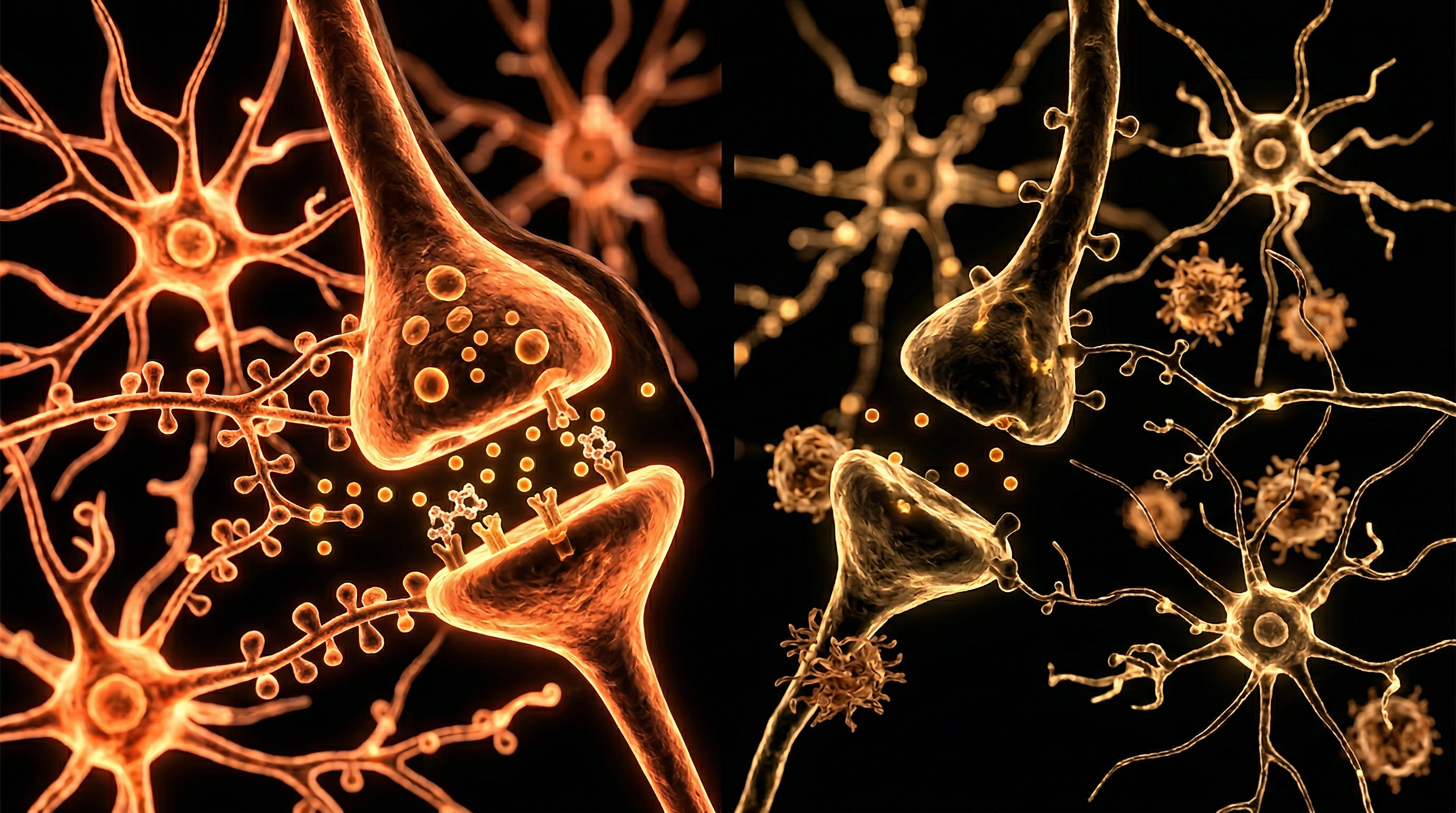
- Neurogenesis: The birth of new neurons, primarily occurring in the Hippocampus—the seat of memory and spatial navigation.
The Modern Atrophy
Digital overstimulation works by constantly triggering the Dopaminergic Reward System. Every notification, "like," or infinite scroll induces a micro-spike of dopamine, the neurotransmitter associated with craving and reward. However, the brain seeks homeostasis. To protect itself from over-stimulation, it reduces the number of available dopamine receptors and prunes the neural pathways associated with deep, sustained focus. This results in a "thinning" of the Prefrontal Cortex (PFC), the area responsible for executive function, impulse control, and complex decision-making.
The Meditative Reconstruction
In contrast, meditation—specifically Vipassana (insight) and Samatha (tranquillity) practices—operates as a high-intensity workout for the PFC. By consciously directing attention back to a single point (the breath) and away from distractions, the practitioner engages in a repetitive cognitive "flex" that reinforces the structural integrity of the brain.
Studies using fMRI (functional Magnetic Resonance Imaging) have shown that as little as eight weeks of consistent meditation leads to measurable increases in Grey Matter Density in the PFC and the Anterior Cingulate Cortex (ACC). Essentially, meditation reverses the "thinning" caused by digital noise, physically rebuilding the hardware required for deep thought.
Mechanisms at the Cellular Level
Beneath the macro-structures of the brain lies a complex cellular dance governed by proteins, hormones, and electrical signals. Meditation and digital stress affect this landscape in diametrically opposite ways.
Brain-Derived Neurotrophic Factor (BDNF)
BDNF is often referred to by neuroscientists as "Miracle-Gro" for the brain. It is a protein that supports the survival of existing neurons and encourages the growth and differentiation of new neurons and synapses.
- Digital Impact: Chronic stress from "information overload" and high-cortisol states suppresses BDNF production, leading to a state of "neuro-stagnation."
- Meditation Impact: Contemplative practices have been shown to significantly up-regulate BDNF expression. This creates a fertile cellular environment where neuroplasticity can flourish.
The Role of Microglia and Neuroinflammation
One of the most suppressed truths in modern neurology is the link between digital overstimulation and Low-Grade Neuroinflammation. When the brain is bombarded with blue light and fragmented data, the Microglia (the brain's resident immune cells) are triggered into a pro-inflammatory state.
- The Result: Chronic inflammation degrades the Myelin Sheath—the fatty insulation around neurons that allows for fast electrical transmission.
- The Remedy: Meditation activates the Vagus Nerve and the parasympathetic nervous system, sending signals to the microglia to "stand down." This allows for the repair of myelin and ensures that neuronal communication remains rapid and efficient.
Glutamate and GABA Balance
The brain operates on a balance between Glutamate (the primary excitatory neurotransmitter) and GABA (the primary inhibitory or "calming" neurotransmitter).
- Digital Decline: Constant "pings" create a state of Glutamate Excitotoxicity, where neurons are over-stimulated to the point of exhaustion or death.
- Meditation Recovery: Ancient breathing techniques (Pranayama) increase GABA levels almost immediately, providing a chemical "buffer" that prevents cellular burnout and preserves cognitive reserves.
Environmental Threats and Biological Disruptors
The modern environment is functionally "toxic" to the human nervous system. We are the first generation of humans to live in a pervasive 24/7 digital "electrosmog" that disrupts our biological rhythms.
The Blue Light Interference
The Suprachiasmatic Nucleus (SCN) in the brain acts as our internal clock. It is hyper-sensitive to light frequencies. The high-energy visible (HEV) blue light emitted by smartphones mimics the frequency of high-noon sunlight.
- Melatonin Suppression: Exposure to digital screens after sunset halts the production of Melatonin, the hormone responsible for sleep and neural repair.
- Glymphatic Failure: Without deep sleep, the Glymphatic System—the brain's waste clearance mechanism—cannot flush out metabolic toxins like Beta-amyloid (the protein linked to Alzheimer’s).
Algorithmic Captivity and Variable Rewards
Social media platforms are designed using Variable Ratio Schedules of Reinforcement—the same psychological mechanism used in slot machines.
Callout Fact: Most "Infinite Scroll" features were intentionally engineered to bypass the brain's natural "stopping cues," forcing the neuroplasticity mechanisms to adapt to a state of perpetual seeking rather than completion.
Electromagnetic Fields (EMFs)
While mainstream narratives often dismiss the impact of non-ionising radiation, a growing body of independent research suggests that high-density EMF environments (5G, Wi-Fi) may disrupt Voltage-Gated Calcium Channels (VGCCs) in the brain. This disruption leads to an influx of calcium into cells, triggering oxidative stress and further hindering the brain's ability to repair itself through meditation.
The Cascade: From Exposure to Disease
The progression from "distraction" to "disease" is a slow, insidious cascade. It does not happen overnight, but rather through the cumulative erosion of the brain’s structural resilience.
Stage 1: The Fragmentation of Attention
The initial stage is characterised by Continuous Partial Attention. The individual feels an obsessive need to check devices, and their ability to read long-form text (like this article) begins to diminish. The brain’s "default mode network" (DMN) becomes hyperactive, leading to constant rumination and anxiety.
Stage 2: Hippocampal Atrophy
As chronic stress and digital cortisol become the baseline, the Hippocampus begins to shrink. This is the "canary in the coal mine" for cognitive decline. Since the hippocampus is essential for converting short-term memories into long-term ones, the individual begins to experience "digital amnesia."
Stage 3: Amygdala Hijacking
As the Prefrontal Cortex thins, its ability to regulate the Amygdala (the brain's fear centre) weakens. This leads to heightened emotional reactivity, irritability, and a constant state of "fight or flight." In this stage, the brain is no longer capable of deep logic; it is merely reacting to stimuli.
Stage 4: Early-Onset Neurodegeneration
The final stage of the cascade is the manifestation of clinical disorders. We are seeing a terrifying rise in "Digital Dementia" among individuals in their 30s and 40s—a condition previously reserved for the elderly. The brain, having been plastic enough to "wire" itself for short-term digital gratification, has effectively lost the hardware for long-term survival.
What the Mainstream Narrative Omits
The establishment narrative regarding ADHD, anxiety, and cognitive fatigue is remarkably narrow. It views these conditions as "chemical imbalances" that occur in a vacuum, usually solvable via a lifetime subscription to pharmaceutical stimulants.
"The "Innerstanding" Perspective:"
The mainstream narrative purposefully ignores the Structural Atrophy caused by the digital environment because addressing the root cause would require a radical restructuring of the modern economy.
- The Profit in Distraction: Data is the new oil, and human attention is the extraction site. A focused, meditative, and self-regulated population is harder to monetise.
- The Pharmaceutical Loophole: Drugs like Ritalin or Adderall do not "fix" neuroplasticity; they merely "overclock" a failing system. They provide a temporary surge of dopamine that allows the user to work within a toxic digital environment, but they do nothing to rebuild the grey matter or the GABAergic system.
Furthermore, the mainstream media rarely discusses the Thalamic Gate. In meditation, the Thalamus (the brain's relay station) learns to filter out irrelevant sensory input. In a digital world, this "gate" is left wide open, leading to sensory overload. The science of "training the gate" is ancient medicine, yet it is rarely mentioned in NHS clinical guidelines for mental health.
The UK Context
The United Kingdom serves as a peculiar case study in digital cognitive decline. As one of the world’s most surveilled and digitally integrated societies, the British population is at the vanguard of this neurological crisis.
The "London Brain" Syndrome
In the UK’s high-pressure financial and tech hubs, "London Brain" has become an unofficial diagnosis. Professionals report chronic "brain fog," an inability to disconnect, and a reliance on caffeine and alcohol to regulate their deregulated nervous systems. The UK’s work culture, which prides itself on "presenteeism," has migrated into the digital space, where employees are expected to be available via Slack or Teams at all hours.
The Impact on the British Youth
The situation in British schools is particularly dire. The rapid introduction of tablets and "gamified learning" has coincided with a collapse in literacy rates and a surge in behavioural issues.
- The NHS Burden: The NHS is currently struggling under a backlog of ADHD and autism assessments. While some of this is due to better awareness, a significant portion is driven by the environmental mismatch between a child's developing brain and a high-frequency digital environment.
UK Statistic: A study by a leading British university found that UK teenagers spend an average of 7 hours a day on leisure screen time. This correlates directly with a measurable decrease in the thickness of their Orbitofrontal Cortex, an area essential for social empathy and long-term planning.
Protective Measures and Recovery Protocols
Recovery is possible. Because the brain is plastic, the damage caused by the digital age can be reversed. However, it requires more than just a "digital detox"—it requires a fundamental biological recalibration.
1. The Samatha-Vipassana Protocol
To rebuild the Prefrontal Cortex, one must engage in Focused Attention (FA) and Open Monitoring (OM) meditation.
- Protocol: 20 minutes daily. Sit in silence. Focus entirely on the sensation of air entering the nostrils. When the mind wanders (and it will), gently but firmly bring it back. This is the "rep" that builds grey matter.
- The Goal: To move from a state of "Reaction" to "Observation."
2. Digital Sundowning
To protect the Glymphatic System and ensure neuroplastic repair:
- Rule: No screens 2 hours before bed.
- Action: Replace the smartphone with a physical book. The tactile nature of turning pages engages different neural circuits that promote relaxation and "deep reading" pathways.
3. Nutritional Support for Plasticity
To provide the raw materials for neurogenesis:
- Omega-3 Fatty Acids (DHA/EPA): Essential for maintaining the fluidity of cell membranes.
- Magnesium L-Threonate: The only form of magnesium that effectively crosses the blood-brain barrier to increase synaptic density.
- Lion’s Mane Mushroom: Contains hericenones and erinacines that stimulate Nerve Growth Factor (NGF).
4. The "Forest Bathing" (Shinrin-yoku) Effect
The human brain is tuned to "fractal patterns" found in nature. Looking at the complex, repeating patterns of trees and clouds lowers cortisol levels by up to 16%. In the UK, utilizing our green belts and national parks is not just a leisure activity; it is a neurological necessity to reset the DMN.
Summary: Key Takeaways
The war for your brain is a structural one. You are not "lazy" or "unfocused" by nature; you are being biologically dismantled by an environment that is incongruent with your evolutionary heritage.
- Neuroplasticity is Neutral: It will wire your brain for anxiety and distraction if left to the mercy of algorithms. You must take conscious control of the wiring process.
- Meditation is Biological Hardware Repair: It is the only proven method to increase grey matter density in the Prefrontal Cortex and reverse the atrophy caused by digital overstimulation.
- The Thalamic Gate: You must learn to close the "gate" to irrelevant data. Deep focus is the most valuable currency of the 21st century.
- The UK Crisis: The rising rates of ADHD and cognitive fatigue in Britain are an environmental signal, not a genetic fluke.
- Immediate Action: Implementing "Digital Sundowning" and a 20-minute daily meditation practice can begin to reverse hippocampal shrinkage within as little as eight weeks.
We stand at a crossroads. We can continue to allow our neural architecture to be harvested by the digital machine, or we can return to the ancient technologies of the mind to reclaim our cognitive sovereignty. The choice, quite literally, lies in the physical structure of your brain.
"Reclaim your mind. Rebuild your brain. Stay Innerstanding."
This article is provided for informational and educational purposes only. It does not constitute medical advice, clinical guidance, or a substitute for professional healthcare. Information reflects cited research at time of publication. Always consult a qualified healthcare professional before acting on any health information.
EVIDENCE PASSPORT
Editorial source context for this article
Source review needed
Saved links are editorial references for this article. They may support specific claims rather than every sentence. Open and assess each source in context. This passport does not independently verify them.
Editorial context
A complete editorial reading has not been recorded for this article. Source links remain available for you to open and assess directly.
Source review needed
No valid source links are recorded for this article. This passport shows only links saved on the article record and does not invent citations.
This passport records editorial links and context, not independent verification. Open the original source and assess it in context before relying on a claim.
Medical Disclaimer
The information in this article is for educational purposes only and does not constitute medical advice, diagnosis, or treatment. Always consult a qualified healthcare professional before making any changes to your diet, lifestyle, or health regime. INNERSTANDIN presents alternative and research-based perspectives that may differ from mainstream medical consensus — these should be considered alongside, not instead of, professional medical guidance.
Read Full DisclaimerContinue the thread
Keep this question moving.
Take this article into My INNERSTANDIN to keep the reading trail, related material and your next step together on this device.
Explore this in the Body Map
See where this hits your biology. Interactive anatomy, threats, and protective protocols.
Dig deeper in the Library
Free, longform PDF volumes that go beyond headlines into mechanisms and references.