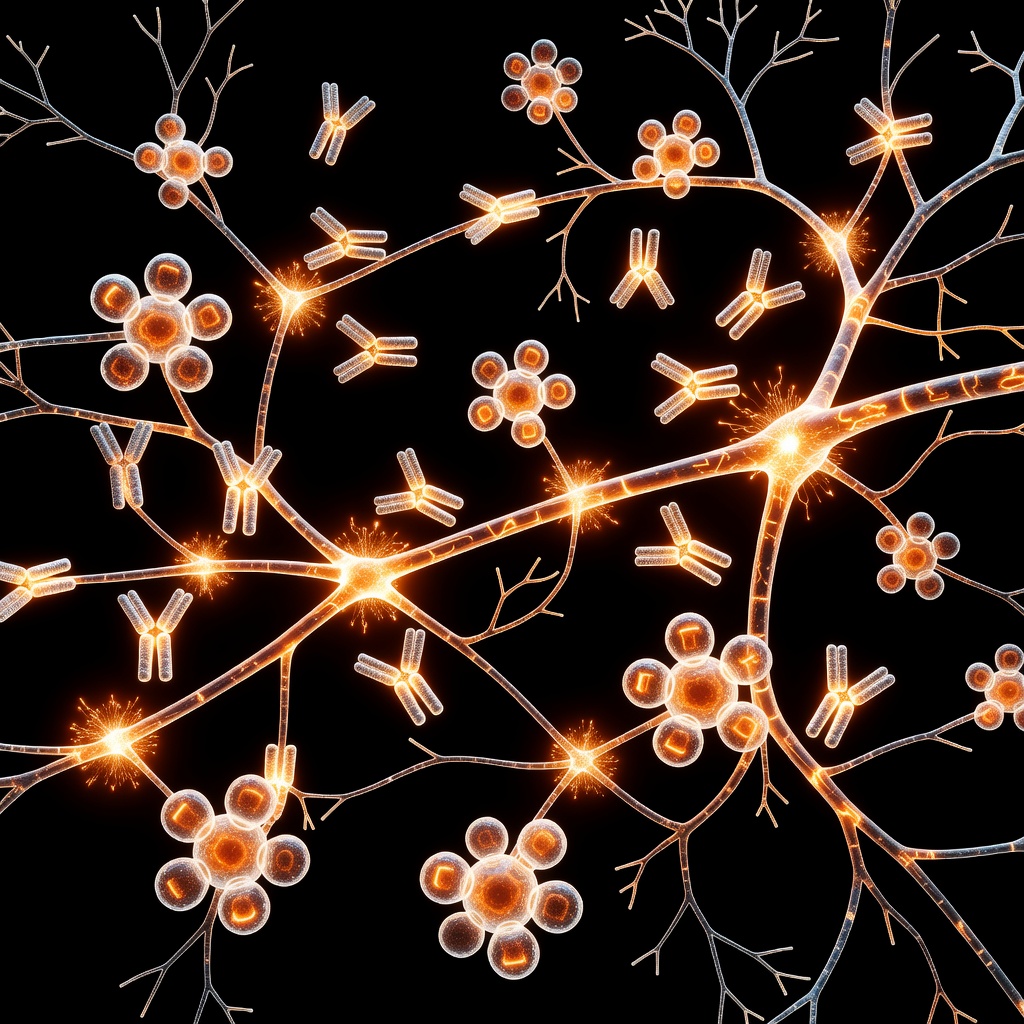
Pathogen-Induced Diarrheal Flushing: How the Appendix Preserves the Indigenous Microbiota via Structural Crypsis
An exploration of the appendix's role as a biological 'safe house' during gastrointestinal crises, focusing on the mechanism of structural crypsis and its role in re-establishing the gut microbiome after diarrheal events.

# Pathogen-Induced Diarrheal Flushing: How the Appendix Preserves the Indigenous Microbiota via Structural Crypsis\n\n### Beyond the Vestigial Myth\nFor over a century, the vermiform appendix was largely dismissed as a biological 'dead end'—a vestigial remnant of our herbivorous past that served little purpose other than to occasionally become inflamed and require surgical removal. This perspective, championed by Charles Darwin, suggested that as the human diet shifted away from raw foliage, the large caecum shrunk, leaving the appendix behind. However, modern evolutionary biology and immunology, spearheaded by the 'INNERSTANDING' philosophy of root-cause health, have radically overturned this narrative. We now recognize the appendix not as a useless appendage, but as a sophisticated biological 'safe house' specifically designed to preserve the body's indigenous microbiota during times of severe gastrointestinal distress.\n\n### The Mechanics of Diarrheal Flushing\nTo understand the appendix's role, we must first examine the nature of diarrheal disease. From an evolutionary perspective, diarrhea is an adaptive defense mechanism.
When the gut is invaded by virulent pathogens such as *Vibrio cholerae* or *Salmonella*, the body initiates a 'flushing' response. By rapidly increasing fluid secretion into the intestinal lumen and accelerating peristalsis, the host attempts to physically expel the pathogenic load. While this strategy is effective at reducing the concentration of harmful toxins and bacteria, it creates a significant collateral problem: 'washout.'\n\nDuring a massive flushing event, the high-velocity flow of liquid through the colon does not discriminate between friend and foe. The indigenous microbiota—the diverse community of beneficial bacteria essential for nutrient absorption, immune regulation, and metabolic health—is swept away along with the pathogens. In an environment without a backup system, this would leave the host's gut as a 'tabula rasa' (blank slate), making it highly vulnerable to reinfection by the first opportunistic microbe to arrive, often leading to chronic dysbiosis or death in pre-modern environments.\n\n### Defining Structural Crypsis and Anatomical Strategy\nThe appendix addresses the washout problem through a principle known as 'structural crypsis.' Anatomically, the appendix is a narrow, blind-ended tube branching off the caecum, located at the very beginning of the large intestine.
Its unique positioning and narrow lumen (the internal space) are critical to its function. While the main 'highway' of the gut is subject to the turbulent flow of digestive waste and diarrheal flushing, the appendix is tucked away in a biological 'cul-de-sac.'\n\nThis structural crypsis allows the appendix to remain relatively isolated from the high-velocity transit occurring in the primary intestinal tract. During a diarrheal event, the physical laws of fluid dynamics dictate that flow remains minimal in such narrow, dead-end structures. While the colon is being purged, the interior of the appendix remains a stable, low-flow environment. This creates a physical sanctuary where a concentrated sample of the host's unique microbial 'seed stock' can survive the storm undisturbed.\n\n### The Biofilm Reservoir: A Sanctuary of Commensals\nThe preservation of bacteria within the appendix is not merely a matter of being 'hidden.' It is an active biological process involving the formation of dense biofilms.
Research has shown that the lining of the appendix is exceptionally rich in biofilms—structured communities of bacteria encased in a self-produced matrix of extracellular polymeric substances (EPS). These biofilms are primarily composed of commensal (beneficial) organisms.\n\nWithin the appendix, these biofilms adhere strongly to the mucosal surface. The narrow diameter of the organ ensures a high surface-area-to-volume ratio, maximizing the contact between the microbial community and the host's lymphoid tissue. Because the bacteria are embedded in this protective matrix and tucked away in the appendix's crypts, they are shielded from the flushing action of diarrhea. They are, in effect, 'bolted down' to the walls of the safe house, waiting for the external environment to become hospitable again.\n\n### Immune Orchestration and the Role of IgA\nThe appendix is not just a passive storage locker; it is a highly active component of the Mucosa-Associated Lymphoid Tissue (MALT).
It contains a high density of B-cells and T-cells and is a primary site for the production of Secretory Immunoglobulin A (sIgA). sIgA is the body's primary antibody for neutralizing pathogens at mucosal surfaces without triggering excessive inflammation.\n\nIn the context of the safe house theory, the appendix's immune system serves as a 'security guard' for the microbiome. It monitors the microbial population within the appendix, using sIgA to manage the biofilm. The immune system helps select and maintain the 'right' kind of bacteria—ensuring that only beneficial commensals are preserved in the reservoir while any stray pathogens are neutralized. This immune-microbiota cross-talk ensures that when the time comes to repopulate the gut, the host is releasing a curated, healthy population of microbes rather than a chaotic mix of potential threats.\n\n### The Re-Inoculation Phase: Seeding the Colon\nOnce the diarrheal event has passed and the pathogen has been cleared, the body faces the monumental task of restoring the gut's ecological balance. This is where the appendix's true value is revealed.
As the fluid transit slows and the colon returns to its normal state, the appendix begins to 'leak' its preserved commensals back into the caecum. This process acts as a biological re-inoculation or 'seeding' event.\n\nBecause the appendix is located at the proximal end of the large intestine (the very beginning), the bacteria it releases are perfectly positioned to flow downstream and repopulate the entire length of the colon. This ensures that the gut is colonized by the host's own indigenous, well-adapted microbes rather than whatever random bacteria might be present in the environment or diet. This rapid restoration of the microbiome is vital for recovering digestive function and preventing 'secondary' infections by opportunistic pathogens like *Clostridioides difficile*.\n\n### Clinical Implications and the Modern Environment\nIn the modern world, the importance of the appendix is often obscured by our access to clean water, sanitation, and medical interventions. In societies where cholera and severe dysentery are no longer common, the 'safe house' function is rarely called upon.
This has led to the misconception that the organ is redundant. However, epidemiological studies have begun to uncover the hidden costs of appendectomy. Individuals who have had their appendix removed show a significantly higher risk of recurrent *C. difficile* infections—often four times higher than those with an intact appendix. This is a direct clinical observation of the 'safe house' theory in action: without the appendix to re-seed the gut with healthy commensals after a disruption, the ecosystem fails to recover, allowing pathogens to take hold.\n\nFurthermore, the 'hygiene hypothesis' suggests that our sanitized environments may lead to an 'under-stimulated' appendix. Without regular exposure to a variety of environmental microbes, the lymphoid tissue in the appendix may become hyper-reactive, leading to the very inflammation (appendicitis) that results in its removal.
Understanding the root cause of appendicitis as a potential mismatch between our evolutionary design and modern environment allows us to appreciate the organ's protective role rather than viewing it as a liability.\n\n### Conclusion: Respecting the Biological Architecture\nAt INNERSTANDING, we advocate for a profound respect for the body's innate wisdom and structural design. The appendix is a masterclass in evolutionary engineering—a tiny, strategic outpost that utilizes structural crypsis and immune intelligence to safeguard the microscopic foundation of human health. By viewing the appendix as an immune reservoir and microbial safe house, we move closer to a truly holistic understanding of gastrointestinal resilience. Protecting our indigenous microbiota is not just about what we eat or the probiotics we take; it is about honoring the specialized anatomical features that have preserved our species through millennia of environmental challenges.
This article is provided for informational and educational purposes only. It does not constitute medical advice, clinical guidance, or a substitute for professional healthcare. Information reflects cited research at time of publication. Always consult a qualified healthcare professional before acting on any health information.
RESEARCH FOUNDATIONS
Biological Credibility Archive
Citations provided for educational reference. Verify via PubMed or institutional databases.
Medical Disclaimer
The information in this article is for educational purposes only and does not constitute medical advice, diagnosis, or treatment. Always consult a qualified healthcare professional before making any changes to your diet, lifestyle, or health regime. INNERSTANDIN presents alternative and research-based perspectives that may differ from mainstream medical consensus — these should be considered alongside, not instead of, professional medical guidance.
Read Full DisclaimerReady to learn more?
Continue your journey through our classified biological research.
DISCUSSION ROOM
Members of THE COLLECTIVE discussing "Pathogen-Induced Diarrheal Flushing: How the Appendix Preserves the Indigenous Microbiota via Structural Crypsis"
SILENT CHANNEL
Be the first to discuss this article. Your insight could help others understand these biological concepts deeper.
THE ARSENAL
Based on Appendix Function & Immune Reservoir — products curated by our research team for educational relevance and biological support.
Lugol’s Iodine – Hormonal Issues, Menopause, Immune System, Brain Fog, Memory, Thyroid, Dry Skin
Rejuvenation Pack – Essential Vitamins and Minerals for Health Restoration
Magnesium L-Threonate
INNERSTANDING may earn a commission on purchases made through these links. All products are selected based on rigorous educational relevance to our biological research.
RABBIT HOLE
Follow the biological thread deeper