
Plastisphere Pathogen Diversity: A New Microbial Niche
Updated May 2026
Microplastics in UK rivers have created a new ecological niche known as the 'plastisphere.' This environment fosters unique microbial communities that may include antibiotic-resistant bacteria.
Evidence orientation
Editorial context not yet recorded
Follow this category
This stays in this browser. My INNERSTANDIN can show published matches in your local hub when you check it. It does not send email, push, or alert notifications.
Local learning review
A private browser aid for revisiting ideas. It is not an alert or a health recommendation.
Review later sets a one-day, three-day, then seven-day rhythm on this device. Choose it only when you want to revisit this article.
Overview
For decades, the global discourse on plastic pollution remained focused on the macroscopic: the strangulated sea turtle, the albatross with a stomach full of lighters, and the sprawling "Great Pacific Garbage Patch." However, beneath the surface of this visible crisis lies a more insidious, microscopic transformation of our biosphere. As senior researchers at INNERSTANDING, we have tracked the emergence of a novel ecological frontier: the Plastisphere.
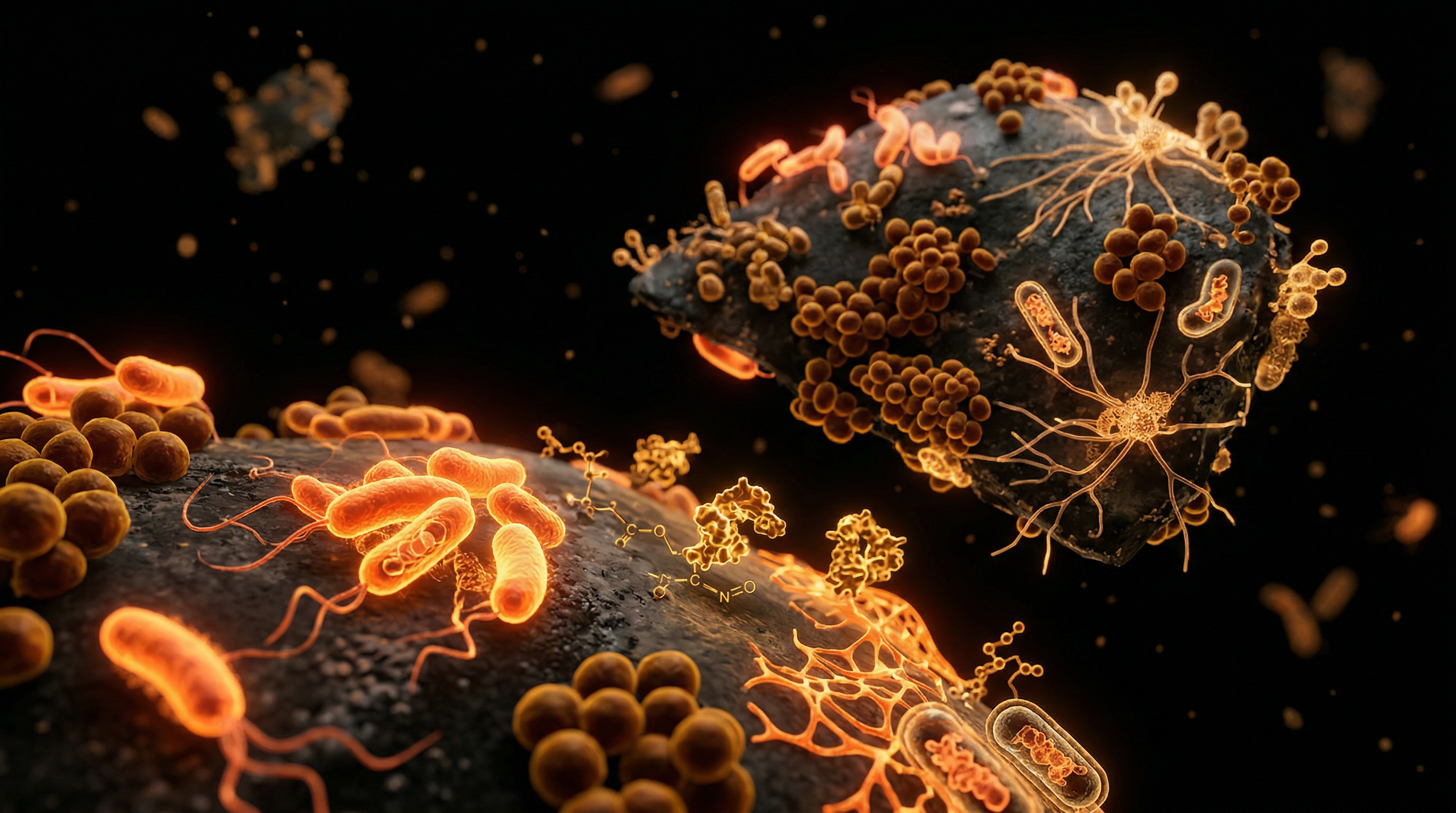
The term "Plastisphere" refers to the complex, multi-layered microbial communities that colonise microplastic and nanoplastic debris. In the nutrient-deprived waters of the open ocean or the effluent-rich rivers of the United Kingdom, plastic surfaces serve as "biological islands"—buoyant, durable, and chemically unique substrates that differ fundamentally from natural organic matter like wood, feathers, or sediment.
Current environmental surveys reveal that microplastics in UK rivers are not merely inert pollutants; they are active bioreactors. These synthetic particles facilitate the concentrated growth of biofilms that harbour a disproportionately high diversity of microorganisms compared to the surrounding water column. More alarmingly, this new niche acts as a reservoir for pathogenic bacteria, antibiotic-resistance genes (ARGs), and virulence factors. This article exposes the mechanics of this synthetic ecosystem, the systemic failures in monitoring these "superbug factories," and the profound implications for human and environmental health.
Statistics suggest that the density of microbial life on a microplastic particle can be 1,000 to 10,000 times higher than in the surrounding bulk water, creating "hotspots" for genetic exchange and mutation.
The Biology — How It Works
The formation of the Plastisphere is not a random occurrence but a sophisticated process of biological colonisation. When a polymer—be it Polyethylene (PE), Polypropylene (PP), or Polyvinyl Chloride (PVC)—enters an aquatic environment, it undergoes an immediate transformation known as the "conditioning film" phase.
The Conditioning Phase
Within minutes of submersion, dissolved organic molecules (proteins, lipids, and polysaccharides) adsorb onto the hydrophobic surface of the plastic. This changes the surface charge and wettability of the synthetic material, making it "sticky" for pioneer microbial colonisers. Unlike natural substrates that biodegrade over time, plastics provide a permanent, non-resorbable platform that can travel thousands of miles.
Primary and Secondary Colonisation
The first inhabitants are typically oligotrophic bacteria—organisms capable of living in low-nutrient environments. These pioneers secrete Extracellular Polymeric Substances (EPS), a slimy matrix that anchors the cells to the plastic and protects them from environmental stressors like UV radiation and predation.
Once the initial biofilm is established, it attracts secondary colonisers, including:
- Diatoms and Algae: Providing oxygen and organic carbon through photosynthesis.
- Predatory Protozoa: Grazing on the bacterial layer.
- Pathobionts: Opportunistic bacteria that find the high-density environment of the biofilm ideal for proliferation.
Selective Pressures of the Polymer
The chemical composition of the plastic itself dictates the community structure. For instance, Polyurethane may attract species capable of metabolising nitrogenous compounds, while Polystyrene can select for microbes that possess specific oxygenase enzymes. This "selective recruitment" means that the Plastisphere is not just a random collection of local microbes; it is a curated, synthetic ecosystem that favors species with specific survival advantages—often those associated with human disease and antibiotic resistance.
Mechanisms at the Cellular Level
The most concerning aspect of the Plastisphere is what occurs at the molecular and cellular scales. The high-density proximity of diverse species within the EPS matrix creates an ideal environment for Horizontal Gene Transfer (HGT).
Horizontal Gene Transfer and the "Genetic Melting Pot"
In typical aquatic environments, bacteria are dispersed. On a microplastic particle, they are packed together in a persistent biofilm. This proximity facilitates three main types of HGT:
- Conjugation: The direct transfer of DNA (usually plasmids) between bacteria through a pilus (a bridge-like structure).
- Transformation: The uptake of "naked" DNA from the environment, often released by dying cells within the biofilm.
- Transduction: The transfer of DNA via bacteriophages (viruses that infect bacteria).
Research indicates that the frequency of plasmid transfer—often carrying Antibiotic Resistance Genes (ARGs)—is significantly higher in plastisphere biofilms than in free-living bacterial populations.
Metabolic Reprogramming
Microbes in the Plastisphere often exhibit altered gene expression compared to their planktonic counterparts. The hydrophobic nature of plastic allows it to adsorb Persistent Organic Pollutants (POPs) like polychlorinated biphenyls (PCBs) and heavy metals from the water. At the cellular level, bacteria must upregulate stress-response proteins and efflux pumps to survive these toxins. These same efflux pumps are often the primary mechanism for pumping out antibiotics, meaning that "plastic-tolerant" bacteria are, by default, frequently "antibiotic-resistant."
The "Trojan Horse" Strategy
Pathogenic species such as Vibrio cholerae or Aeromonas hydrophila use microplastics as a "Trojan Horse." By embedding themselves deep within the EPS matrix, they become shielded from the cellular defenses of larger organisms that might ingest the plastic. They also bypass traditional water treatment processes, such as chlorination, which struggle to penetrate the thick, protective biofilm of the Plastisphere.
Environmental Threats and Biological Disruptors
The Plastisphere represents a dual threat: it is both a carrier of biological pathogens and a concentrator of chemical disruptors. This synergy creates a "toxic cocktail" that challenges the resilience of aquatic ecosystems.
Chemical Leaching and Adsorption
Plastics are not chemically inert. They contain a variety of additives:
- Phthalates: Used as plasticisers, known endocrine disruptors.
- Bisphenol A (BPA): Interferes with hormonal signalling.
- Flame Retardants: Persistent bioaccumulative toxins.
As these chemicals leach out of the microplastic, they create a high-concentration micro-environment around the biofilm. This can disrupt the quorum sensing (cell-to-cell communication) of beneficial bacteria while favouring the growth of rugged, pathogenic strains that thrive in chemically stressed environments.
The Vector Effect
Because microplastics are lightweight and buoyant, they act as long-distance vectors. Pathogens that would typically settle into the riverbed sediment are instead kept in the upper water column (the photic zone), where they are more likely to interact with fish, birds, and humans. This "forced migration" of pathogens into new territories is a primary driver of emerging infectious diseases in previously pristine environments.
Impact on the Benthic Zone
When microplastics eventually lose buoyancy—either through "bio-fouling" (becoming heavy with life) or by being incorporated into fecal pellets—they sink to the river or ocean floor. Here, they introduce aerobic pathogens into anaerobic sediment layers, disrupting the delicate nitrogen and carbon cycles managed by native benthic microbes.
The Cascade: From Exposure to Disease
The journey of a pathogen from a microplastic surface in a UK river to a human host follows a terrifyingly efficient cascade. This is not merely an environmental issue; it is a public health ticking time box.
Trophic Transfer: The Food Chain Link
The process begins with Ingestion. Zooplankton and small invertebrates mistake microplastics for food. Because these particles are covered in a nutrient-rich biofilm, they are actually more attractive to these organisms than "clean" plastic.
- Bioaccumulation: The plastic stays in the gut of the organism, while the pathogens and chemicals it carries are absorbed into the tissues.
- Biomagnification: Smaller organisms are eaten by larger fish (e.g., trout, salmon). Each step up the food chain increases the concentration of plastic-associated toxins and pathogens.
Human Exposure Routes
Humans are exposed through two primary routes:
- Direct Ingestion: Consumption of contaminated seafood, particularly shellfish like mussels and oysters, which are filter feeders and known to concentrate microplastics.
- Environmental Contact: Recreational use of rivers (swimming, kayaking) where microplastics can enter through the skin, accidental swallowing of water, or inhalation of "plastic aerosols" near crashing water or weirs.
The Impact on the Human Microbiome
Recent studies have identified microplastics within human blood, lung tissue, and even the placenta. Once inside the human body, the "Plastisphere" does not simply disappear. The persistent biofilm can interact with the human gut microbiome. There is growing evidence that the ARGs carried by plastisphere bacteria can be transferred to the commensal (good) bacteria in our intestines, potentially rendering life-saving antibiotics ineffective during a future infection.
Clinical studies have observed that microplastics can cause "intestinal dysbiosis"—a state of microbial imbalance that is linked to inflammatory bowel disease (IBD), obesity, and even neurodegenerative conditions.
What the Mainstream Narrative Omits
The mainstream media and government agencies often frame the microplastic problem as a "waste management" issue. This is a deliberate simplification that omits the more dangerous biological and systemic truths.
The Failure of Wastewater Treatment Plants (WWTPs)
The public is led to believe that our water treatment systems are a robust barrier against pollution. In reality, modern WWTPs are one of the primary sources of the Plastisphere. While they are designed to remove large solids and some organic matter, they are not equipped to filter out micro- and nanoplastics. Furthermore, the "activated sludge" process used in many plants creates a high-nutrient, high-density microbial environment that is the perfect incubator for the Plastisphere. WWTPs are effectively "seeding" our rivers with plastic particles already coated in antibiotic-resistant biofilms.
Synergistic Toxicity
The mainstream narrative rarely discusses "synergistic toxicity." They test the safety of BPA in isolation, or the safety of a specific bacteria in isolation. They do not test the impact of a microplastic particle coated in lead, carrying a colony of Vibrio bacteria, while leaching phthalates. The "cocktail effect" makes the Plastisphere significantly more dangerous than the sum of its parts.
Regulatory Capture and the Plastic Industry
The plastic industry has successfully lobbied to keep the focus on "littering" and "recycling" rather than the fundamental danger of the polymers themselves. By focusing on the consumer’s behavior, they deflect from the fact that these materials are biologically active from the moment they are manufactured. There is a suppressed reality that the global rise in antimicrobial resistance (AMR) is tethered to the global rise in plastic production.
The UK Context
The United Kingdom presents a unique and troubling case study for Plastisphere dynamics. Our historic plumbing, the density of our urban centres, and the current crisis in the water industry have created a "perfect storm."
The "Plastic Arteries" of Britain
Major UK rivers—the Thames, the Mersey, the Severn, and the Trent—have been identified as having some of the highest microplastic concentrations in the world. The Mersey, in particular, has recorded over 2 million microplastic particles per square metre of sediment in certain reaches.
The Sewage Crisis and the Plastisphere
The recent scandal regarding the dumping of raw sewage into UK waterways by water companies is directly linked to the Plastisphere threat. When raw sewage is discharged, it introduces a massive influx of human enteric pathogens (like E. coli and Salmonella) into the river. These pathogens immediately colonise the microplastics present in the water.
- In "cleaner" water, these pathogens might die off due to UV exposure or lack of nutrients.
- In the Plastisphere, they find a protective haven that allows them to survive for weeks, travelling downstream to popular swimming spots and coastal beaches.
Local Biodiversity at Risk
The UK’s native aquatic species, such as the endangered freshwater pearl mussel and the Atlantic salmon, are particularly vulnerable. The Plastisphere disrupts the "bio-integrity" of these rivers, replacing native microbial communities with "generalist" pathogens. This contributes to the decline in fish stocks and the overall "deadening" of our freshwater ecosystems.
Protective Measures and Recovery Protocols
Given the ubiquity of microplastics, "cleaning" the Plastisphere is a monumental task. However, as senior researchers at INNERSTANDING, we advocate for a multi-layered approach involving systemic change and individual bio-security.
Systemic Innovations
- Advanced Filtration: Upgrading WWTPs with membrane bioreactors (MBRs) and sand filtration systems specifically designed to capture particles down to the 1-micrometre range.
- Phycoremediation: Utilizing specific strains of algae that can "bio-adsorb" microplastics and break down the associated EPS biofilms.
- Fungal Bioremediation: Research into mycoremediation shows that certain fungi (e.g., Pestalotiopsis microspora) can actually digest the polyurethane polymers, effectively dismantling the "island" the microbes live on.
Policy and Legal Mandates
- The Precautionary Principle: We must demand a moratorium on the production of non-essential primary microplastics (such as those used in industrial abrasives and "hidden" additives in paints).
- Mandatory Microplastic Testing: Water companies in the UK must be legally required to monitor and report microplastic counts and the "bio-load" (pathogen content) of those plastics, not just chemical oxygen demand (COD).
Individual Bio-Security and Recovery
For the individual concerned about exposure, we recommend the following "Recovery Protocols":
- Water Purification: Utilize high-quality, 0.1-micron gravity filters or reverse osmosis systems for all drinking and cooking water. Standard "jug filters" are insufficient for nanoplastics and the associated bacteria.
- Dietary Fortification: Supporting the gut microbiome with diverse fermented foods (kefir, sauerkraut) and prebiotics can help maintain a resilient "inner ecosystem" that is less susceptible to invasion by plastisphere pathobionts.
- Laundry Mitigation: Use specialized laundry bags (e.g., Guppyfriend) or install external washing machine filters to catch the millions of synthetic microfibers released from clothing—a primary source of the Plastisphere in domestic greywater.
Summary: Key Takeaways
The Plastisphere is not a future threat; it is a current biological reality that has redefined the ecology of our rivers and oceans.
- A New Niche: Microplastics have created a permanent, synthetic ecosystem that differs from all natural substrates.
- Pathogen Reservoirs: These particles act as "concentrators" for dangerous bacteria and viruses, protecting them from the elements and traditional water treatment.
- Antibiotic Resistance: The Plastisphere is a primary "breeding ground" for superbugs, facilitating the rapid exchange of resistance genes via horizontal gene transfer.
- The UK Crisis: Under-regulated sewage spills and aging infrastructure have turned UK rivers into high-risk zones for Plastisphere-associated diseases.
- Systemic Failure: Current regulatory frameworks ignore the synergistic toxicity of the "plastic-pathogen-chemical" complex.
- Action Required: Mitigating this threat requires radical transparency from water companies, advanced filtration technologies, and a fundamental shift in how we view the "safety" of synthetic polymers.
As we move forward, we must stop viewing plastic as mere "litter." It is a biological disruptor, a vector for disease, and a catalyst for the next generation of antimicrobial resistance. The Plastisphere is the invisible frontier of the environmental crisis—and it is time we brought it into the light.
This article is provided for informational and educational purposes only. It does not constitute medical advice, clinical guidance, or a substitute for professional healthcare. Information reflects cited research at time of publication. Always consult a qualified healthcare professional before acting on any health information.
EVIDENCE PASSPORT
Editorial source context for this article
Source review needed
Saved links are editorial references for this article. They may support specific claims rather than every sentence. Open and assess each source in context. This passport does not independently verify them.
Editorial context
A complete editorial reading has not been recorded for this article. Source links remain available for you to open and assess directly.
Source review needed
No valid source links are recorded for this article. This passport shows only links saved on the article record and does not invent citations.
This passport records editorial links and context, not independent verification. Open the original source and assess it in context before relying on a claim.
Medical Disclaimer
The information in this article is for educational purposes only and does not constitute medical advice, diagnosis, or treatment. Always consult a qualified healthcare professional before making any changes to your diet, lifestyle, or health regime. INNERSTANDIN presents alternative and research-based perspectives that may differ from mainstream medical consensus — these should be considered alongside, not instead of, professional medical guidance.
Read Full DisclaimerContinue the thread
Keep this question moving.
Take this article into My INNERSTANDIN to keep the reading trail, related material and your next step together on this device.
Dig deeper in the Library
Free, longform PDF volumes that go beyond headlines into mechanisms and references.