
Refining Deception: The Industrial Processing of UK Seed Oils
Updated May 2026
The chemical deodorisation and bleaching of rapeseed and sunflower oils strip nutrients and introduce harmful residues. This investigation reveals the hidden industrial steps behind the UK's most common cooking fats.
Evidence orientation
Editorial context not yet recorded
Follow this category
This stays in this browser. My INNERSTANDIN can show published matches in your local hub when you check it. It does not send email, push, or alert notifications.
Local learning review
A private browser aid for revisiting ideas. It is not an alert or a health recommendation.
Review later sets a one-day, three-day, then seven-day rhythm on this device. Choose it only when you want to revisit this article.
Overview
The British landscape is defined, in many regions, by the striking, neon-yellow bloom of Brassica napus—rapeseed. To the casual observer, these fields represent the bounty of the UK countryside. To the biochemist, they represent the raw materials for one of the most significant physiological insults in the history of human nutrition. What the consumer ultimately purchases as "Vegetable Oil," "Pure Sunflower Oil," or "Rapeseed Oil" is not a natural product of the earth, but a highly engineered industrial lubricant, stripped of its biological integrity through a gauntlet of thermal and chemical stressors.
For decades, the UK public has been instructed by health authorities and the food industry to replace traditional animal fats with these "heart-healthy" unsaturated alternatives. However, this transition has coincided with an unprecedented rise in chronic inflammatory diseases, metabolic syndrome, and neurodegenerative conditions. The deception lies not just in the marketing, but in the molecular transformation that occurs within the refinery.
Industrial seed oil processing is a multi-stage assault designed to take a rancid, grey, and foul-smelling crude extract and turn it into a clear, tasteless, and shelf-stable liquid. In doing so, the industry creates a product that is high in oxidised linoleic acid, devoid of essential co-factors, and contaminated with residues of the solvent extraction process. This article serves as a technical exposé on the industrial processing of UK seed oils, revealing the hidden mechanisms that render these fats biologically incompatible with human health.
Over 80% of the fats consumed in UK processed foods are derived from industrial seed oils, primarily rapeseed and sunflower, which undergo a minimum of six stages of chemical refining before reaching the consumer.
The Biology — How It Works
The journey from a seed to a bottle of "light and mild" oil is a violent one. Unlike butter or extra virgin olive oil, which can be obtained through simple mechanical pressure or churning, seed oils require Industrial Refining, Bleaching, and Deodorising (RBD).
1. Seed Preparation and Pre-Treatment
Before extraction, the seeds (rapeseed or sunflower) are cleaned and de-hulled. They are then heated to temperatures between 60°C and 80°C to reduce viscosity. This initial heating is the first point of lipid oxidation, as the delicate polyunsaturated fatty acids (PUFAs) are exposed to heat and oxygen simultaneously. The seeds are then flaked to increase the surface area for chemical penetration.
2. Solvent Extraction: The Hexane Bath
While some "cold-pressed" oils exist, the vast majority of UK supermarket oils are extracted using n-hexane, a chemical solvent derived from crude oil. Hexane is a known neurotoxin and atmospheric pollutant. The seed flakes are soaked in hexane to dissolve the oil out of the plant matter.
- The Residue Problem: While the industry claims hexane is "evaporated off" during the recovery phase, trace amounts remain in the crude oil.
- The Recovery Phase: To separate the hexane from the oil, the mixture is heated to approximately 100°C-110°C, further stressing the fatty acid chains.
3. Degumming and Neutralisation
The crude oil is a dark, viscous liquid containing phospholipids (gums), waxes, and free fatty acids. To remove these, the oil is treated with phosphoric acid or citric acid, followed by sodium hydroxide (caustic soda). This process, known as alkali refining, converts the free fatty acids into soap, which is then centrifuged out. While this makes the oil clearer, it removes the very phospholipids that are essential for cellular membrane health.
4. Bleaching: Stripping the Colour
The "natural" colour of these oils is often an unappealing brown or green. To achieve the pale straw-coloured aesthetic favoured by UK retailers, the oil is filtered through "bleaching earths" (acid-activated clays) or silica. This step is not merely cosmetic; it is designed to remove chlorophyll and beta-carotene—natural antioxidants that would otherwise offer some protection against the oxidation of the oil.
5. Deodorisation: The Thermal Insult
This is the most critical and damaging stage. Crude seed oil smells horrific—rancid and metallic. To make it palatable, it must be "stripped" of its volatile aromatic compounds. The oil is placed in a vacuum and blasted with superheated steam at temperatures reaching 240°C to 260°C for several hours.
- At these temperatures, the molecular structure of the PUFAs begins to flip.
- Trans-fat formation: Even though the label may say "0g Trans Fat," the high-heat deodorisation process is documented to create significant levels of trans-isomers from the alpha-linolenic acid (Omega-3) and linoleic acid (Omega-6) present.
- Polymeric transformation: The heat causes the formation of cyclic fatty acid monomers and polymers, which are entirely foreign to human biochemistry.
Mechanisms at the Cellular Level
When we ingest these refined oils, we are not just consuming "calories"; we are incorporating unstable, oxidised molecules into our very structure. The human body uses dietary fats to build cell membranes and signalling molecules. When the supply consists of oxidised PUFAs, the structural integrity of the body is compromised.
The Vulnerability of the Double Bond
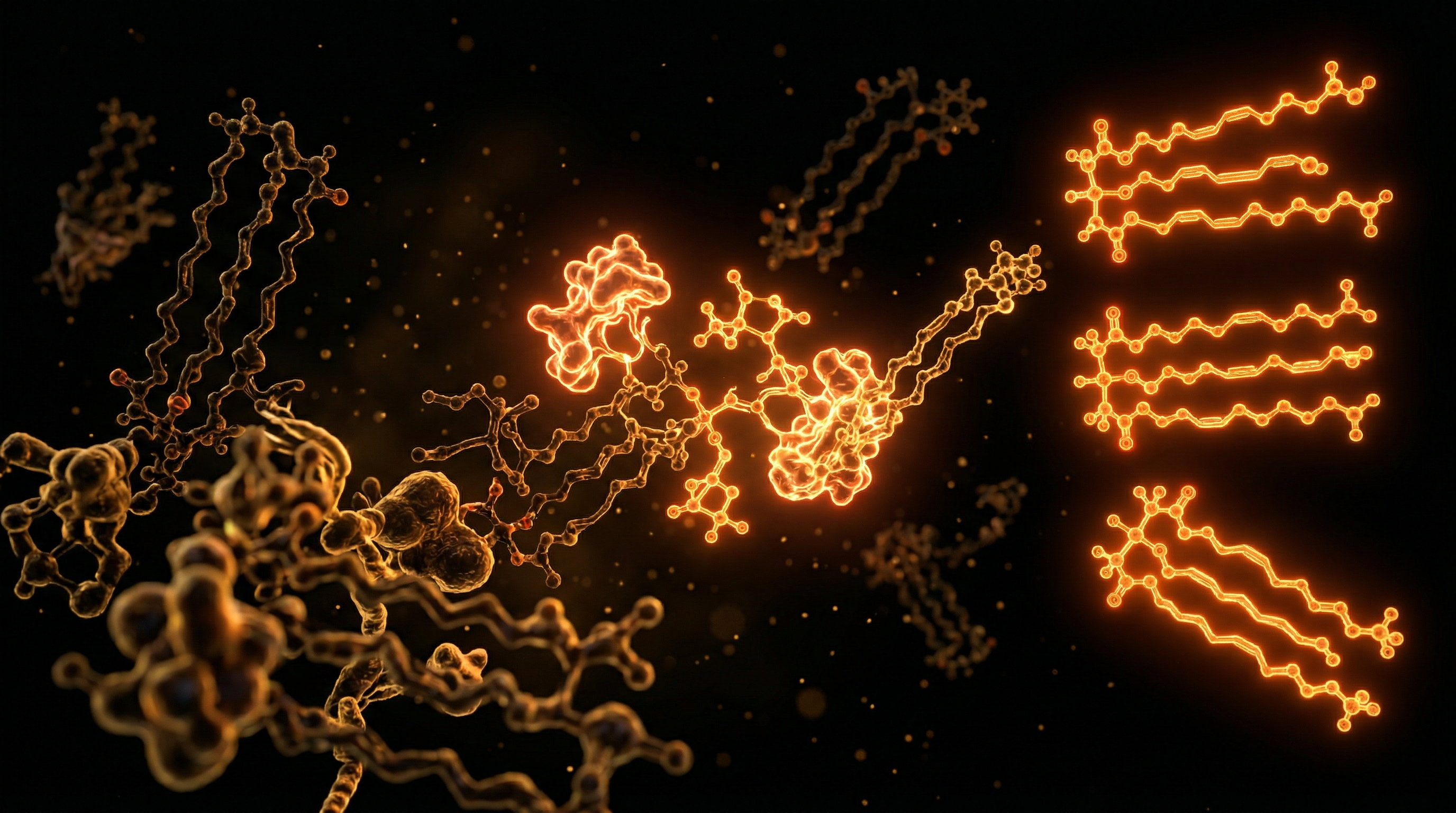
The primary issue with rapeseed and sunflower oils is their high content of Linoleic Acid (LA). Chemically, LA is a polyunsaturated fatty acid with two double bonds. These double bonds are "weak points" in the carbon chain. The hydrogen atoms located between these double bonds (the bis-allylic position) are incredibly susceptible to abstraction by free radicals.
- Lipid Peroxidation: Once a single electron is stolen from a linoleic acid molecule, a chain reaction begins. This creates a lipid peroxyl radical, which then attacks neighbouring fat molecules in the cell membrane.
- Propagation: This creates a "domino effect" within the phospholipid bilayer of our cells, leading to widespread membrane damage.
Mitochondrial Dysfunction and Cardiolipin
Mitochondria, the powerhouses of our cells, are particularly sensitive to seed oil consumption. The inner mitochondrial membrane contains a unique phospholipid called cardiolipin.
- Cardiolipin is responsible for the efficiency of the Electron Transport Chain (ETC).
- In a body high in seed oils, the cardiolipin becomes enriched with linoleic acid rather than more stable fats.
- Oxidised cardiolipin leads to "leaky" mitochondria, resulting in reduced ATP (energy) production and the release of cytochrome c, which triggers programmed cell death (apoptosis).
The Generation of 4-HNE
During the industrial frying or even the initial processing of seed oils, the breakdown of oxidised Omega-6 fats produces secondary metabolites, most notably 4-Hydroxynonenal (4-HNE).
- 4-HNE is a highly reactive, toxic aldehyde.
- It acts as a "second messenger" of oxidative stress, bonding to DNA and proteins, causing mutations and inhibiting enzyme function.
- High levels of 4-HNE are consistently found in the plaques of Alzheimer's patients and the arterial walls of those with atherosclerosis.
Key Fact: Refined seed oils can contain up to 5% of "trans" and "cyclic" isomers created during deodorisation, which do not appear on standard UK nutritional labels.
Environmental Threats and Biological Disruptors
The industrial processing of seed oils in the UK does not happen in a vacuum. It is intertwined with modern agricultural practices that introduce further layers of toxicity.
Glyphosate and Desiccation
In the UK, oilseed rape is often "desiccated" shortly before harvest. This involves spraying the crop with glyphosate (the active ingredient in Roundup) to kill the plant and dry it out uniformly, making it easier for combine harvesters.
- This practice ensures that the seeds—and the resulting oil—carry residues of this broad-spectrum herbicide.
- Glyphosate is a known disruptor of the shikimate pathway in our gut bacteria, leading to dysbiosis and "leaky gut," which further exacerbates the systemic inflammation caused by the oils themselves.
Phthalates and Plasticisers
The industrial machinery used in the refining process—hoses, gaskets, and storage tanks—often contains phthalates to make plastics flexible. Because oils are potent solvents, they leach these endocrine-disrupting chemicals during processing.
- Phthalates mimic oestrogen in the body and have been linked to declining fertility and developmental issues in the UK population.
- The high-temperature deodorisation stage facilitates the migration of these plasticisers from the industrial equipment directly into the "food-grade" oil.
Heavy Metal Catalysts
In some cases, nickel or aluminium catalysts are used in the partial hydrogenation or refining processes. While modern refining aims to filter these out, trace contamination is a persistent concern in industrial-scale production. These metals can accumulate in the brain and nervous system, contributing to the "toxic load" that defines modern chronic illness.
The Cascade: From Exposure to Disease
The consumption of refined seed oils initiates a biological cascade that manifests as the "diseases of civilisation." This is not a sudden poisoning, but a slow, decades-long accumulation of oxidative debt.
Phase 1: The Pro-Inflammatory Shift
Omega-6 (LA) is the precursor to Arachidonic Acid, which the body uses to create pro-inflammatory signalling molecules (eicosanoids) like Prostaglandin E2 and Leukotriene B4. While some inflammation is necessary, the sheer volume of LA in the UK diet (often 10-20 times higher than evolutionary norms) keeps the body in a state of "perpetual alarm."
Phase 2: Insulin Resistance
The incorporation of oxidised PUFAs into the cell membranes of adipocytes (fat cells) changes how they respond to insulin.
- Instead of burning fuel, the mitochondria become "clogged."
- This leads to metabolic inflexibility, where the body loses the ability to switch between burning glucose and burning fat.
- The result is the UK's current epidemic of Type 2 Diabetes and non-alcoholic fatty liver disease (NAFLD).
Phase 3: The Endothelial Insult
The mainstream narrative blames cholesterol for heart disease. However, cholesterol only becomes a problem when it is oxidised.
- Low-Density Lipoprotein (LDL) particles carry fats through the bloodstream.
- When these particles are loaded with linoleic acid from seed oils, they are highly susceptible to oxidation.
- This "Oxidised LDL" is what is actually engulfed by macrophages in the arterial walls, forming the foam cells that lead to atherosclerosis.
What the Mainstream Narrative Omits
If the science of lipid peroxidation is so established, why are seed oils still promoted by the British Heart Foundation and the NHS? The answer lies in the history of nutritional politics and corporate influence.
The Saturated Fat Fallacy
The "Diet-Heart Hypothesis," championed by Ancel Keys in the 1950s, demonised saturated fats (butter, tallow, lard) because they raised total cholesterol. This narrow focus ignored the quality of the cholesterol and the stability of the fat.
- The industry seized upon this to market seed oils as "heart-healthy" because they effectively lower LDL.
- What they omitted is that while they lower LDL, they simultaneously increase the oxidative susceptibility of that LDL, making it more dangerous, not less.
The "Smoke Point" Deception
Consumers are often told to choose oils with a "high smoke point" for cooking. This is a dangerous oversimplification.
- The smoke point is merely the temperature at which the oil begins to produce visible smoke.
- It does not reflect the oxidative stability of the oil.
- A refined seed oil may have a high smoke point because its impurities have been chemically stripped, but its polyunsaturated bonds will still shatter into toxic aldehydes long before it reaches that smoke point.
The Influence of the "Big Crush"
In the UK and Europe, the "Big Crush" refers to the massive industrial conglomerates that control the processing of oilseeds (companies like ADM, Bunge, and Cargill). These entities have significant lobbying power within the European Food Safety Authority (EFSA) and the UK's Food Standards Agency (FSA). They fund "educational" programmes for dietitians and sponsor cardiovascular research that conveniently overlooks the dangers of Omega-6 overconsumption.
The UK Context
The UK’s relationship with seed oils is unique, driven by post-war agricultural shifts and the rise of the "supermarket culture."
The Rise of "Rapeseed Oil"
In the 1970s, "Canola" (Canadian Oil Low Acid) was developed to make rapeseed oil edible by reducing its erucic acid content, which was found to be cardiotoxic. In the UK, this was rebranded simply as "Rapeseed Oil."
- Today, it is marketed as a "premium" product, often touted as "the British Olive Oil."
- However, unless it is "Cold Pressed," the British rapeseed oil in the clear plastic bottle has undergone the same brutal RBD process as any other industrial fat.
The "Vegetable Oil" Umbrella
Under UK labelling laws, the term "Vegetable Oil" is a catch-all. It allows manufacturers to switch between rapeseed, sunflower, soya, and palm oil based on whichever is cheapest on the global commodity market. This lack of transparency prevents consumers from knowing exactly what ratio of fatty acids they are ingesting.
The British Diet and the "Chippy"
The UK has a deep cultural affinity for fried foods. From the local fish and chip shop to the high-street chicken franchise, the oil of choice is almost always "High Oleic" sunflower or rapeseed oil.
- These oils are kept in deep fryers for days, heated and cooled repeatedly.
- This process, known as thermal oxidation, creates a "toxic soup" of polar compounds and polymers that are absorbed into the food.
- A single serving of chips from a commercial fryer can contain more toxic aldehydes than the amount produced by smoking 20 cigarettes.
Protective Measures and Recovery Protocols
Given the ubiquity of these oils in the UK food supply, total avoidance requires a radical shift in lifestyle. However, protecting your biology from "Refining Deception" is possible through conscious substitution and metabolic support.
The "Oil Purge"
The first step is a total audit of the kitchen. Eliminate:
- "Vegetable Oil"
- Sunflower Oil
- Rapeseed Oil (Refined)
- Margarines and "spreads" (which are emulsified seed oils)
- Mayonnaise and salad dressings made with "vegetable oil"
Replace them with Stable Fats:
- Butter and Ghee: Rich in saturated fats that do not oxidise under heat.
- Tallow (Beef Fat): Historically the standard for British cooking; highly stable.
- Extra Virgin Olive Oil: Primarily monounsaturated and rich in protective polyphenols (use for low-heat or raw).
- Coconut Oil: Highly stable, though not a traditional UK fat.
Dining Out Strategy
In the UK, even "high-end" restaurants often use seed oils to save costs.
- When dining out, ask for food to be cooked in butter or olive oil.
- Avoid deep-fried foods entirely, as these are the primary source of the most dangerous lipid oxidation products (4-HNE).
Biological Recovery and Antioxidant Support
If you have consumed seed oils for decades, your body fat stores (adipose tissue) are likely enriched with linoleic acid. The half-life of LA in human fat cells is approximately 2 years. Recovery is a slow process of "off-loading" these unstable fats.
- Vitamin E (Tocopherols and Tocotrienols): This is the body's primary fat-soluble antioxidant. It sits in the cell membrane and "quenches" lipid peroxidation before it can spread.
- Selenium: Essential for the production of Glutathione Peroxidase, the enzyme that neutralises lipid peroxides.
- Limiting LA Intake: By reducing intake to <2% of total calories, you force the body to begin utilising and "burning off" the stored linoleic acid.
Summary: Key Takeaways
- Industrial Deception: Seed oils are not "natural." They are industrial products that require chemical solvents (hexane), caustic soda, and extreme heat (240°C+) to become palatable.
- Oxidative Instability: The high polyunsaturated fat content of rapeseed and sunflower oils makes them inherently unstable. They oxidise easily, creating toxic by-products like 4-HNE and MDA.
- Cellular Damage: Consuming these oils replaces stable fats in cell membranes and mitochondria with "fragile" fats, leading to energy failure and systemic inflammation.
- The LDL Myth: Seed oils lower LDL cholesterol but make that cholesterol more dangerous by increasing its susceptibility to oxidation—the actual driver of heart disease.
- The UK Reality: UK agricultural practices, including the use of glyphosate as a desiccant and the "vegetable oil" labelling loopholes, add layers of chemical toxicity to these fats.
- Protective Action: Switching to traditional animal fats and cold-pressed fruit oils (like olive) is the most effective way to protect your long-term health from the "industrial lubricant" masquerading as food.
The "Refining Deception" has been a profitable venture for the industrial food complex, but the cost to the UK's public health has been immeasurable. Understanding the chemical reality behind the yellow fields is the first step in reclaiming biological sovereignty.
This article is provided for informational and educational purposes only. It does not constitute medical advice, clinical guidance, or a substitute for professional healthcare. Information reflects cited research at time of publication. Always consult a qualified healthcare professional before acting on any health information.
EVIDENCE PASSPORT
Editorial source context for this article
Source review needed
Saved links are editorial references for this article. They may support specific claims rather than every sentence. Open and assess each source in context. This passport does not independently verify them.
Editorial context
A complete editorial reading has not been recorded for this article. Source links remain available for you to open and assess directly.
Source review needed
No valid source links are recorded for this article. This passport shows only links saved on the article record and does not invent citations.
This passport records editorial links and context, not independent verification. Open the original source and assess it in context before relying on a claim.
Medical Disclaimer
The information in this article is for educational purposes only and does not constitute medical advice, diagnosis, or treatment. Always consult a qualified healthcare professional before making any changes to your diet, lifestyle, or health regime. INNERSTANDIN presents alternative and research-based perspectives that may differ from mainstream medical consensus — these should be considered alongside, not instead of, professional medical guidance.
Read Full DisclaimerContinue the thread
Keep this question moving.
Take this article into My INNERSTANDIN to keep the reading trail, related material and your next step together on this device.
Dig deeper in the Library
Free, longform PDF volumes that go beyond headlines into mechanisms and references.