
Seed Oils and the Pro-Inflammatory Lipid Cascade
Updated May 2026
Highly processed seed oils are a staple of the British diet but may contribute to systemic oxidative stress. We analyze the biochemical instability of linoleic acid when subjected to high heat.
Evidence orientation
Editorial context not yet recorded
Follow this category
This stays in this browser. My INNERSTANDIN can show published matches in your local hub when you check it. It does not send email, push, or alert notifications.
Local learning review
A private browser aid for revisiting ideas. It is not an alert or a health recommendation.
Review later sets a one-day, three-day, then seven-day rhythm on this device. Choose it only when you want to revisit this article.
Overview
In the grand arc of human evolution, the dietary shift witnessed over the last 150 years represents a biological departure of unprecedented proportions. For millennia, human physiology evolved alongside stable, naturally occurring fats—primarily saturated and monounsaturated lipids derived from ruminant animals, fruit oils like olive and avocado, and certain nuts. However, the dawn of the Industrial Revolution birthed a new category of lipid: the highly processed, chemically extracted Seed Oil.
Commonly marketed under the benign umbrella of "vegetable oils," these substances—including rapeseed (canola), sunflower, soybean, corn, and cottonseed oils—now constitute a staggering percentage of the modern British caloric intake. What was once an industrial byproduct used for machine lubrication has become the primary source of dietary fat in Western civilisations. This transition was not driven by biological necessity or nutritional superiority, but by industrial convenience and the aggressive lobbying of the nascent food processing industry.
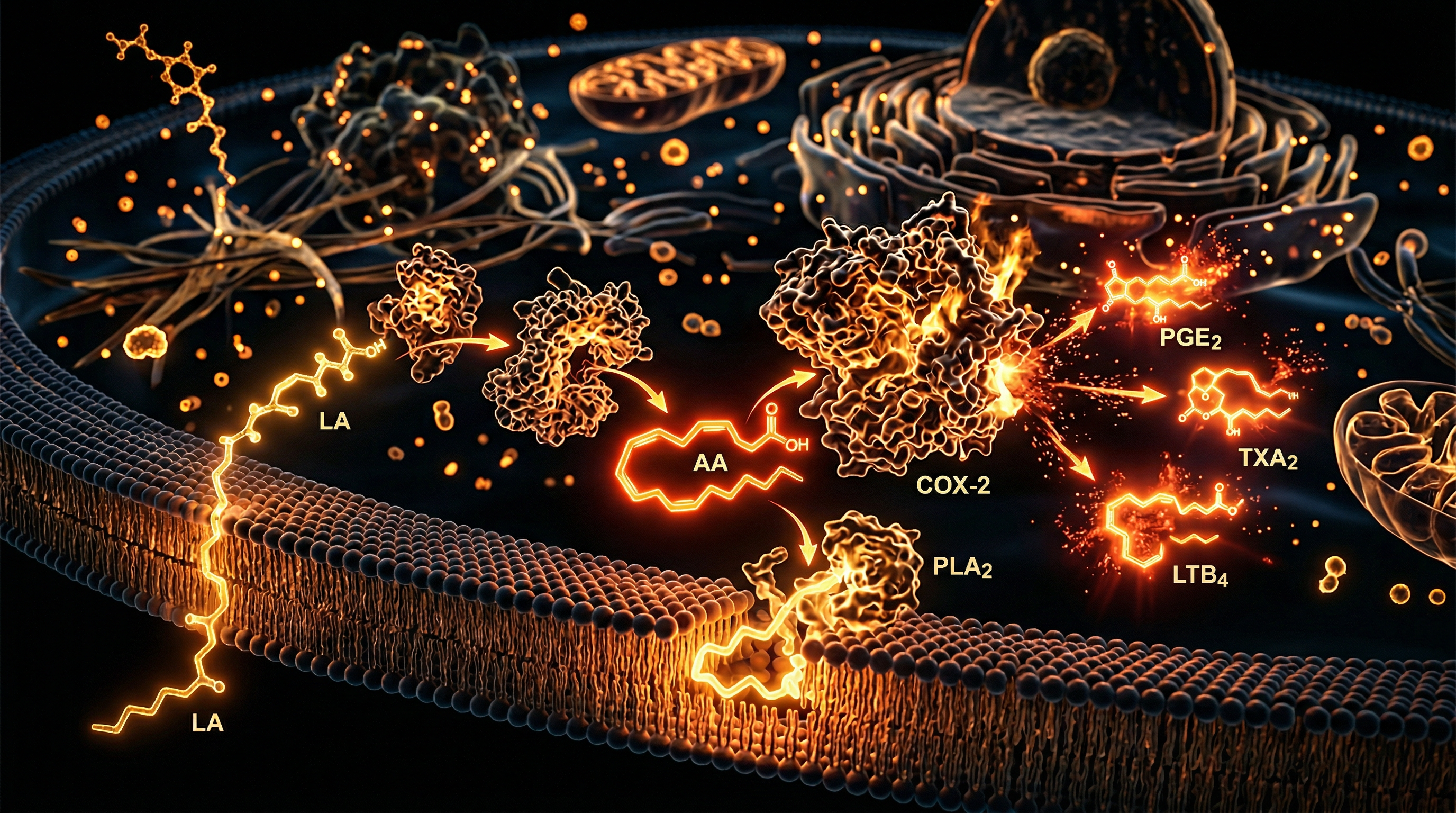
The core of the issue lies in the biochemical composition of these oils. They are uniquely high in Linoleic Acid (LA), an 18-carbon Omega-6 polyunsaturated fatty acid (PUFA). While the human body requires trace amounts of essential fatty acids, the current consumption levels are estimated to be 10 to 20 times higher than those of our ancestors. This systemic saturation of the human lipidome with chemically unstable PUFAs has triggered what we term the "Pro-Inflammatory Lipid Cascade"—a chronic, sub-clinical state of oxidative stress that undermines cellular integrity and drives the epidemic of metabolic disease.
Key Fact: In the early 1900s, seed oil consumption in the UK was negligible. Today, the average Briton derives nearly 7–10% of their total daily energy from linoleic acid alone, a level never before encountered in human history.
The Biology — How It Works
To understand why seed oils are problematic, one must look at the molecular architecture of the fatty acids they contain. Fats are categorised based on the presence and number of double bonds in their carbon chains.
The Vulnerability of Polyunsaturation
Saturated fats (found in butter, tallow, and coconut oil) have no double bonds; every carbon atom is "saturated" with hydrogen. This makes them straight, rigid, and—crucially—highly resistant to heat and oxygen. Monounsaturated fats (like those in olive oil) have a single double bond.
Polyunsaturated fats (PUFAs), however, contain multiple double bonds. The spaces between these double bonds are known as methylene bridges. These bridges are the "Achilles' heel" of the molecule. The hydrogen atoms attached to these methylene carbons are particularly easy to "abstract" or pull away.
The Chain Reaction of Peroxidation
When a seed oil is exposed to heat, light, or oxygen (as occurs during industrial refining or frying), it undergoes a process called autoxidation.
- Initiation: A free radical steals a hydrogen atom from a methylene bridge, leaving behind a carbon-centred radical.
- Propagation: This radical reacts with oxygen to form a peroxy radical, which then attacks a neighbouring fatty acid, creating a self-perpetuating cycle of destruction.
- Termination: The process ends only when antioxidants are exhausted or the radicals react with each other, leaving behind a wake of toxic byproducts.
The Role of Linoleic Acid
Linoleic Acid is the primary PUFA in seed oils. Because it contains two double bonds, it is highly susceptible to this oxidative decay. When we consume these oils, we are not just consuming "fat"; we are consuming a cocktail of Oxidised Linoleic Acid Metabolites (OXLAMs). These OXLAMs act as signalling molecules that can trigger inflammatory pathways throughout the body, most notably through the activation of the NF-κB pathway, the master switch for systemic inflammation.
Biological Insight: Unlike saturated fats, which the body burns efficiently for fuel or stores safely, excess linoleic acid is sequestered into our cell membranes and adipose tissue, where it can persist for years, acting as a "biological time bomb" for oxidative stress.
Mechanisms at the Cellular Level
The most profound damage caused by seed oils occurs within the Mitochondria—the powerhouses of the cell. The health of the mitochondria dictates the health of the organism; when they fail, chronic disease follows.
Cardiolipin: The Mitochondrial Anchor
The inner mitochondrial membrane contains a unique phospholipid called Cardiolipin. Cardiolipin is essential for the structure of the electron transport chain, which produces ATP (energy). For optimal function, cardiolipin should be composed primarily of saturated or monounsaturated fats.
However, when the diet is dominated by seed oils, the body incorporates Linoleic Acid into the cardiolipin structure. Because LA is so prone to oxidation, the cardiolipin becomes damaged by the very oxygen species produced during energy production. This leads to:
- Proton Leakage: The mitochondria become inefficient, producing less energy and more "smoke" (Reactive Oxygen Species).
- Cytochrome C Release: Damaged cardiolipin can trigger the release of Cytochrome C, which signals the cell to commit suicide (apoptosis).
The 4-HNE Toxin
One of the most dangerous byproducts of linoleic acid oxidation is 4-Hydroxynonenal (4-HNE). This is a highly reactive aldehyde that acts as a "secondary messenger" of oxidative stress.
- 4-HNE binds covalently to proteins, DNA, and phospholipids, a process known as carbonylation.
- It inhibits insulin signalling, leading directly to peripheral insulin resistance.
- It damages the DNA of the mitochondria, leading to mutations that are hallmarks of both ageing and cancer.
The Adipocyte Dysfunction
In the adipose tissue (body fat), high concentrations of linoleic acid prevent the fat cells from communicating effectively with the brain. Normally, as fat cells expand, they release leptin to signal satiety. However, the oxidative stress caused by LA creates a state of leptin resistance. Furthermore, 4-HNE causes adipocytes to become "leaky," releasing inflammatory cytokines into the bloodstream, which contributes to the "low-grade systemic inflammation" observed in obesity.
Environmental Threats and Biological Disruptors
The path from the field to the frying pan is one of extreme chemical intervention. The term "vegetable oil" is a misnomer; you cannot squeeze oil out of a stalk of broccoli or a leaf of kale. These oils are industrial products.
The Industrial Refining Process (RBD)
Most seed oils undergo an intensive "RBD" process:
- Refined: The seeds are crushed and heated to high temperatures.
- Bleached: To remove the rancid smells and grey colours resulting from the initial heating, the oil is filtered through acid-activated clays.
- Deodorised: To mask the remaining "off" flavours, the oil is subjected to steam distillation at extremely high temperatures (upwards of 200°C).
By the time the oil reaches the supermarket shelf, it has already been stripped of its natural antioxidants (like Vitamin E) and is often laden with trans-fats (created during the deodorisation process) and OXLAMs.
The Restaurant Fryer: A Chemical Reactor
The problem is compounded in the commercial kitchen. In high-street restaurants across the UK, seed oils are kept in deep-fat fryers for days, if not weeks. They are repeatedly heated and cooled, a process that exponentially increases the concentration of polar compounds and lipid peroxides.
- When you consume "chips" or "fried chicken" from a commercial outlet, you are ingesting a concentrated dose of hydroxides and cyclic monomers, which are known to be cytotoxic and mutagenic.
Genetic Engineering and Pesticide Load
Beyond the lipids themselves, crops like rapeseed and soybean are frequently genetically modified to withstand heavy applications of glyphosate. Residual traces of these pesticides, combined with the hexane (a neurotoxic solvent) used in the extraction process, add an additional layer of "biological disruptors" that the liver must detoxify.
Warning: The "smoke point" of an oil is a poor indicator of its stability. While an oil may not smoke until 230°C, the chemical degradation of linoleic acid begins at much lower temperatures, often during the initial factory processing.
The Cascade: From Exposure to Disease
The pro-inflammatory lipid cascade is not a localized event; it is a systemic failure that manifests in various organ systems over decades of exposure.
Cardiovascular Disease: The Oxidised LDL Hypothesis
For decades, the mainstream medical establishment has focused on LDL Cholesterol as the primary driver of heart disease. However, the "Cholesterol Hypothesis" is incomplete. Modern lipid science suggests that LDL is only dangerous when it becomes oxidised.
- LDL particles carry fats through the bloodstream. When those fats are primarily linoleic acid, the LDL particle becomes highly susceptible to oxidation.
- Oxidised LDL is not recognised by the normal LDL receptors; instead, it is gobbled up by macrophages, which turn into "foam cells." These foam cells embed themselves in the arterial wall, forming the basis of atherosclerotic plaque.
- Without seed-oil-induced oxidation, the risk of LDL contributing to heart disease is significantly diminished.
The Obesity Epidemic and Metabolic Syndrome
The rise in obesity in the UK correlates almost perfectly with the rise in seed oil consumption. By altering the sensitivity of the hypothalamus to satiety signals and inducing insulin resistance at the cellular level, linoleic acid creates a metabolic environment where the body is "starving in the midst of plenty." The body cannot access its stored fat for fuel because the mitochondria are dysfunctional, leading to constant hunger and weight gain.
Neurodegeneration and Brain Health
The human brain is roughly 60% fat. The integrity of neuronal membranes is paramount for neurotransmission. High intake of Omega-6 PUFAs leads to the replacement of essential Omega-3s (like DHA) in the brain with linoleic acid derivatives. This creates a pro-inflammatory environment in the brain, linked to:
- Alzheimer’s Disease: 4-HNE is found in high concentrations in the amyloid plaques of Alzheimer’s patients.
- Depression and Anxiety: The brain-derived neurotrophic factor (BDNF) is suppressed by the lipid peroxidation products of seed oils.
What the Mainstream Narrative Omits
The promotion of seed oils as "heart-healthy" is one of the most successful, yet scientifically hollow, marketing campaigns in history. To understand why this narrative persists, we must look at the history of nutritional science.
The Ghost of Ancel Keys
In the 1950s, researcher Ancel Keys proposed the "Diet-Heart Hypothesis," claiming that saturated fat caused heart disease by raising cholesterol. Though his "Seven Countries Study" was riddled with selection bias, it became the foundation of global dietary guidelines. To replace saturated fats, the industry offered seed oils.
The Buried Data
Significant clinical trials that contradicted this narrative were either ignored or suppressed for decades:
- The Minnesota Coronary Experiment (1968–1973): This was a gold-standard randomised controlled trial. The group that replaced butter with corn oil saw a significant drop in cholesterol, but they had a higher risk of death, particularly among those whose cholesterol dropped the most. These results were not fully published until 2016.
- The Sydney Diet Heart Study (1966–1973): Similar results were found; the group consuming more linoleic acid had a significantly higher rate of death from all causes and cardiovascular disease.
Institutional Inertia and Funding
Why do organisations like the British Heart Foundation (BHF) continue to recommend "vegetable oils"?
- Institutional Inertia: Science moves "one funeral at a time." It is difficult for institutions to admit they have given advice for 50 years that may have contributed to the chronic disease epidemic.
- Industry Influence: The food industry is built on cheap seed oils. From biscuits to bread to mayonnaise, these oils are the "glue" of ultra-processed food. The financial pressure to maintain the status quo is immense.
The Suppressed Truth: Replacing saturated fats with polyunsaturated seed oils lowers serum cholesterol but simultaneously increases oxidative stress and the risk of death from cardiac events. Cholesterol is a marker, not the cause.
The UK Context
The United Kingdom presents a unique case study in the seed oil crisis. The British diet is historically high in ultra-processed foods (UPFs), with some estimates suggesting that 50% of the UK's calories come from these sources.
The Rise of Rapeseed
In the UK, "vegetable oil" is almost exclusively Rapeseed Oil. While marketed as a "healthier" alternative because it contains some Omega-3s, rapeseed oil is still highly processed and contains significant amounts of linoleic acid. Its widespread use in everything from high-end "artisan" mayonnaise to supermarket "Flora" spreads has made it nearly impossible for the average consumer to avoid.
The High Street Food Environment
The UK's high streets are dominated by "meal deals" and fast-food chains. A standard chicken sandwich, a packet of crisps, and a processed snack bar can contain upwards of 30 grams of linoleic acid—more than a human would have historically consumed in a month.
- The "Vegetable Oil" Label: UK labelling laws allow manufacturers to use the generic term "vegetable oil," making it difficult for consumers to know exactly which seeds were used.
The Public Health Crisis
The NHS is currently buckling under the weight of "lifestyle diseases." Type 2 Diabetes, non-alcoholic fatty liver disease (NAFLD), and obesity are at all-time highs. While the "sugar tax" was a step in the right direction, it ignored the other half of the equation: the pro-inflammatory lipids that drive the underlying insulin resistance.
Protective Measures and Recovery Protocols
The good news is that the human body is remarkably resilient. While linoleic acid has a long half-life in adipose tissue (estimated at approximately 600 to 700 days), metabolic health can be improved significantly by changing the lipid input.
Step 1: The Total Elimination
To stop the cascade, one must eliminate the source. This requires a "zero tolerance" approach to:
- Soybean, Corn, Sunflower, Safflower, Cottonseed, and Rapeseed oils.
- Most commercial salad dressings, mayonnaises, and margarines.
- Deep-fried foods from restaurants (which are almost always fried in degraded seed oils).
- Ultra-processed snacks (biscuits, cakes, crisps).
Step 2: Return to Stable Fats
Replace unstable PUFAs with fats that are chemically "armoured" against oxidation:
- Butter and Ghee: Rich in short-chain fatty acids and fat-soluble vitamins.
- Tallow and Suet: The traditional fats of the British Isles, highly stable for cooking.
- Coconut Oil: Almost entirely saturated, making it the most heat-stable option.
- Extra Virgin Olive Oil: While it contains some PUFAs, it is primarily monounsaturated and loaded with protective polyphenols (best used cold or for low-heat cooking).
Step 3: Support the Antioxidant Defence
Because we are all carrying a legacy load of linoleic acid in our tissues, we must support our body’s ability to handle the "smoke" as these fats are liberated and burned.
- Vitamin E (Tocopherols and Tocotrienes): The primary fat-soluble antioxidant that protects cell membranes from lipid peroxidation. Seek natural sources like avocados and pasture-raised eggs.
- Selenium: A vital cofactor for Glutathione Peroxidase, the enzyme that neutralises lipid peroxides.
- Astaxanthin: A potent antioxidant that can cross the cell membrane and protect the mitochondria specifically.
Step 4: Metabolic Restoration
- Intermittent Fasting: This encourages autophagy, the process by which the cell "cleans house" and removes damaged mitochondria.
- Low-Carb/Ketogenic Approaches: By lowering insulin, the body can more effectively access and "burn off" the stored linoleic acid in the adipose tissue.
Recovery Tip: When dining out in the UK, ask for your food to be cooked in butter or olive oil. Most quality establishments will accommodate this request once they understand it is a "dietary requirement."
Summary: Key Takeaways
The "Pro-Inflammatory Lipid Cascade" is the silent engine of modern chronic disease. By replacing stable animal fats with chemically volatile seed oils, we have fundamentally altered our internal biochemistry.
- Chemical Instability: The methylene bridges in linoleic acid make seed oils highly prone to oxidation, creating toxic byproducts like 4-HNE.
- Mitochondrial Sabotage: Seed oils integrate into the mitochondrial membrane, damaging cardiolipin and leading to metabolic "brownouts."
- Systemic Inflammation: Consumption of these oils triggers the NF-κB pathway, driving the chronic inflammation linked to heart disease, obesity, and cancer.
- The Hidden History: The "heart-healthy" label on seed oils was born of flawed science and industry influence, not biological truth.
- The Path Forward: Recovery is possible through the elimination of industrial oils, the reintroduction of traditional saturated fats, and the targeted use of fat-soluble antioxidants.
The transition back to ancestral fats is not merely a dietary trend; it is a biological imperative for anyone seeking to reclaim their health from the industrialised food system. At INNERSTANDING, we believe that the first step toward health is the removal of the biological disruptors that have been marketed to us as "essential." The evidence is clear: the most dangerous thing in your kitchen isn't the sugar bowl—it's the bottle of "vegetable" oil.
This article is provided for informational and educational purposes only. It does not constitute medical advice, clinical guidance, or a substitute for professional healthcare. Information reflects cited research at time of publication. Always consult a qualified healthcare professional before acting on any health information.
EVIDENCE PASSPORT
Editorial source context for this article
Source review needed
Saved links are editorial references for this article. They may support specific claims rather than every sentence. Open and assess each source in context. This passport does not independently verify them.
Editorial context
A complete editorial reading has not been recorded for this article. Source links remain available for you to open and assess directly.
Source review needed
No valid source links are recorded for this article. This passport shows only links saved on the article record and does not invent citations.
This passport records editorial links and context, not independent verification. Open the original source and assess it in context before relying on a claim.
Medical Disclaimer
The information in this article is for educational purposes only and does not constitute medical advice, diagnosis, or treatment. Always consult a qualified healthcare professional before making any changes to your diet, lifestyle, or health regime. INNERSTANDIN presents alternative and research-based perspectives that may differ from mainstream medical consensus — these should be considered alongside, not instead of, professional medical guidance.
Read Full DisclaimerContinue the thread
Keep this question moving.
Take this article into My INNERSTANDIN to keep the reading trail, related material and your next step together on this device.
Dig deeper in the Library
Free, longform PDF volumes that go beyond headlines into mechanisms and references.