
More Than A Scaffold: The Endocrine Power of the Skeletal Matrix
Updated August 2026
Discover why your bones are much more than a structural frame, acting as a dynamic endocrine gland that regulates blood sugar, brain function, and male fertility.
Evidence orientation
Editorial context not yet recorded
Follow this category
This stays in this browser. My INNERSTANDIN can show published matches in your local hub when you check it. It does not send email, push, or alert notifications.
Local learning review
A private browser aid for revisiting ideas. It is not an alert or a health recommendation.
Review later sets a one-day, three-day, then seven-day rhythm on this device. Choose it only when you want to revisit this article.
Overview
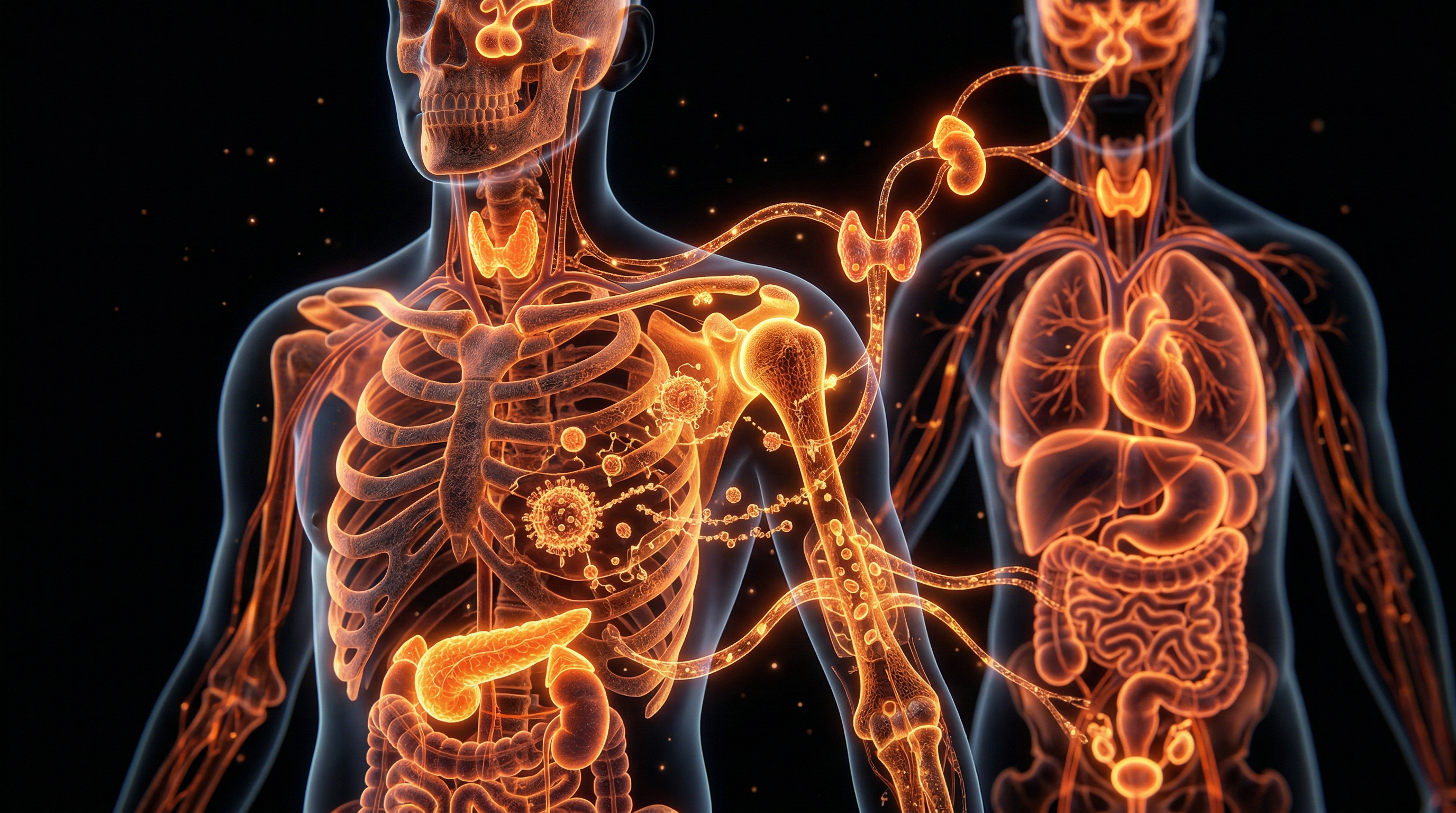
For decades, the pedagogical consensus within anatomical education has erroneously relegated the human skeleton to a vestigial, passive framework—a mere mechanical scaffold facilitating bipedal locomotion and protection for vital viscera. At INNERSTANDIN, we move beyond this antiquated Newtonian reductionism. Emerging evidence from cellular endocrinology and osteoimmunology confirms that the skeletal system is, in reality, a sophisticated, highly metabolic endocrine organ. It functions as a dynamic information hub, orchestrating systemic physiological homeostasis through the complex secretion of osteokines, which exert pleiotropic effects on tissues ranging from the pancreas to the cerebral cortex.
The paradigm shift began with the characterisation of osteocalcin (OCN), a non-collagenous bone matrix protein synthesised by osteoblasts. Peer-reviewed research, notably published in The Lancet and various Nature portfolios, has elucidated that under-carboxylated osteocalcin functions as a potent hormone. It acts as a master regulator of glucose metabolism by stimulating insulin secretion in pancreatic beta cells and increasing insulin sensitivity in peripheral tissues. Furthermore, OCN demonstrates the capacity to cross the blood-brain barrier, modulating the synthesis of monoamine neurotransmitters—specifically serotonin, dopamine, and norepinephrine—thereby linking structural integrity to cognitive performance and affective state.
This endocrine orchestration extends into the regulation of energy expenditure and reproductive physiology. The skeletal matrix acts as a sensor of systemic metabolic status, responding to inputs such as insulin-like growth factor 1 (IGF-1) and leptin. In turn, the bone microenvironment regulates adipogenesis and peripheral fat storage through the skeletal release of signalling molecules. This suggests an inextricable evolutionary feedback loop between mineralised tissue and the systemic metabolic rate.
Understanding the skeleton as a primary endocrine node demands a rigorous revision of how we approach chronic disease. When we consider the skeleton’s role in regulating the inflammatory response—via the RANK/RANKL/OPG axis—we begin to INNERSTANDIN that metabolic decline, insulin resistance, and skeletal fragility are not isolated pathologies, but rather manifestations of a systemic endocrine failure. By situating the skeleton at the centre of the physiological milieu, we expose the limitations of conventional medicine’s compartmentalised view, underscoring the critical necessity of viewing the human organism as an integrated, inter-communicating biological network.
The Biology — How It Works
The traditional osteological paradigm, which formerly relegated the skeleton to a passive mechanical framework or a mere mineral reservoir for calcium homeostasis, has been fundamentally dismantled by contemporary endocrinology. At INNERSTANDIN, we recognise that the osseous matrix operates as a complex, highly dynamic endocrine organ, orchestrating systemic metabolic regulation through a sophisticated signalling axis. Central to this paradigm shift is the secretion of osteocalcin—a bone-derived hormone synthesized specifically by osteoblasts—which serves as the primary biochemical bridge between the skeletal system and peripheral metabolic tissues.
Under the regulatory control of the transcription factor RUNX2 and the phosphatase PHEX, osteocalcin is secreted into the systemic circulation in its undercarboxylated form (ucOC). This molecule exerts profound pleiotropic effects, acting as a potent hormonal ligand that regulates glucose homeostasis by stimulating pancreatic beta-cell proliferation and insulin secretion. Concurrently, it enhances insulin sensitivity in peripheral tissues such as skeletal muscle and adipose tissue, effectively modulating energy expenditure. The endocrine influence of the matrix extends to the adipose-bone axis; adiponectin and leptin demonstrate significant crosstalk with bone metabolism, creating a bidirectional feedback loop that dictates systemic metabolic rates.
Furthermore, the skeletal matrix serves as a major reservoir for the sequestration and release of fibroblast growth factor 23 (FGF23). Secreted by osteocytes—the long-lived mechanosensory cells embedded within the mineralised matrix—FGF23 acts directly on the renal proximal tubules to facilitate phosphate excretion and suppress the synthesis of 1,25-dihydroxyvitamin D3. This systemic regulation is not merely homeostatic; it is essential for the prevention of ectopic calcification and the maintenance of cardiovascular integrity. The architectural density and micro-environmental integrity of the trabecular matrix are therefore intrinsically linked to systemic health outcomes, including the regulation of male fertility via the GPRC6A receptor pathway.
In the UK context, the increasing prevalence of metabolic syndrome and skeletal fragility necessitates a departure from simplistic bone-density-focused diagnostics. We must instead adopt a systemic view of the skeleton as a primary endocrine node. The osteocyte lacunocanalicular network functions as a vast cellular internet, integrating mechanical load data with systemic hormonal signals to modulate the release of sclerostin and RANKL. When this endocrine crosstalk is dysregulated—often due to chronic low-grade inflammation or endocrine disruptors—the resultant systemic feedback failure drives multi-organ pathology. By decoding these pathways, INNERSTANDIN reveals the skeleton not as a passive scaffold, but as an active, vital conductor of the body’s metabolic symphony.
Mechanisms at the Cellular Level
The conventional anatomical paradigm, which historically relegated the skeleton to a passive structural scaffold, has been fundamentally dismantled by contemporary osteo-endocrinology. At the cellular level, the skeletal system functions as a complex, dynamic endocrine organ, orchestrating systemic metabolic homeostasis through an intricate crosstalk between osteoblasts, osteoclasts, and osteocytes. This endocrine functionality is largely predicated on the secretory activity of the bone matrix, most notably the production of osteocalcin—a non-collagenous protein secreted exclusively by osteoblasts during bone formation.
Current research, frequently cited in The Lancet Diabetes & Endocrinology, indicates that under-carboxylated osteocalcin (ucOCN) serves as a potent hormone that crosses the blood-brain barrier and interacts with G-protein coupled receptor GPRC6A. This interaction facilitates a systemic metabolic cascade: stimulating insulin secretion from pancreatic beta cells, enhancing peripheral insulin sensitivity in skeletal muscle, and increasing adiponectin expression. Furthermore, within the hippocampal region, ucOCN has been implicated in the regulation of neurotransmitter synthesis, directly modulating cognitive function and spatial memory. This provides an INNERSTANDIN of why skeletal integrity is inextricably linked to cognitive longevity.
The mechanism of bone-resorption also contributes to this signalling matrix. Osteoclasts, derived from the monocyte-macrophage lineage, engage in a process of acidification within the Howship’s lacunae. As the mineralised matrix is demineralised, transforming growth factor-beta (TGF-β) and insulin-like growth factors (IGFs) are liberated from the bone matrix. These factors do not merely facilitate local remodelling; they enter the systemic circulation to influence glucose homeostasis and cellular proliferation elsewhere in the body. Furthermore, the secretion of Fibroblast Growth Factor 23 (FGF23) by osteocytes—the long-lived cells embedded within the mineralised lacunocanalicular system—regulates systemic phosphate balance by inhibiting renal phosphate reabsorption and suppressing 1,25-dihydroxyvitamin D production.
At the molecular interface, the mechanotransduction pathway acts as the primary trigger for these endocrine outputs. Osteocytes function as the system’s primary mechanosensors, detecting fluid shear stress across the lacunocanalicular network. This physical stimulus activates ion channels, such as Piezo1, initiating a calcium-dependent intracellular signalling cascade that modulates the expression of Sclerostin (SOST). By regulating the Wnt/β-catenin signalling pathway, these cellular events dictate whether the bone matrix will act as a mineral reservoir or an active signalling hub. As we refine our INNERSTANDIN of these processes, it becomes evident that the skeleton is a central node in the human biological network, effectively communicating with the gut, the pancreas, and the brain to maintain physiological stability.
Environmental Threats and Biological Disruptors
The skeletal matrix, long misinterpreted as an inert structural framework, functions as an expansive endocrine organ, critically reliant on mineral homeostasis and hormonal synchronicity. However, this delicate physiological equilibrium is increasingly compromised by the pervasive infiltration of exogenous environmental toxins, specifically endocrine-disrupting chemicals (EDCs). As documented in foundational environmental toxicology studies, compounds such as bisphenols (BPA), phthalates, and persistent organic pollutants (POPs) are not merely passive contaminants; they act as potent biological saboteurs that interfere with the RANK/RANKL/OPG signalling pathway, the fundamental regulatory axis of bone remodelling.
Research published in The Lancet Diabetes & Endocrinology highlights the insidious capacity of these xenobiotics to mimic or antagonise endogenous oestrogens, thereby disrupting the regulatory influence of oestrogen on osteoblast proliferation and osteoclast inhibition. When these disruptive agents cross the systemic barrier, they exert a profound influence on the skeletal matrix, facilitating an imbalance in calcium flux and metabolic signalling. The structural integrity of the bone is thus directly compromised by the chemical environment, as EDCs induce oxidative stress within the bone marrow niche. This oxidative microenvironment accelerates the senescence of mesenchymal stem cells (MSCs), effectively curtailing the regenerative potential of the skeletal tissue and skewing differentiation towards adipogenesis rather than osteogenesis.
Furthermore, within the UK context, the pervasive exposure to heavy metals such as cadmium and lead—frequently linked to industrial legacy and urban particulate matter—represents a critical threat to bone mineral density (BMD). Cadmium, in particular, acts as a calcium mimetic; it displaces calcium from the hydroxyapatite crystal lattice and interferes with the renal activation of vitamin D (1,25-dihydroxyvitamin D3). By inhibiting the synthesis of calcitriol, these contaminants systematically dismantle the skeletal system’s ability to maintain homeostatic mineralisation.
For the discerning researcher studying at INNERSTANDIN, it is imperative to recognise that bone tissue serves as a long-term reservoir for these bioaccumulative toxicants. As the skeletal matrix undergoes its continuous cycle of resorption and formation, it intermittently releases these sequestered disruptors back into the systemic circulation, creating a perpetual feedback loop of internal poisoning. This phenomenon underscores the reality that the skeletal matrix is not merely a victim of external toxins but a high-stakes frontline in the ongoing biological battle between systemic homeostasis and modern chemical environmental degradation. The disruption of these endocrine functions is not an isolated event; it is a systemic cascade that threatens the metabolic stability of the entire organism.
The Cascade: From Exposure to Disease
The skeletal system, once relegated to the status of a passive structural scaffold, is now recognised as a critical endocrine organ, orchestrating systemic metabolic homeostasis through a complex cascade of signalling pathways. The transition from physiological maintenance to pathological dysfunction—what we term the skeletal-endocrine cascade—begins with the dysregulation of osteoblast-osteoclast coupling, driven by chronic inflammatory states and metabolic stressors. At the epicentre of this mechanism is Osteocalcin (OCN), a bone-derived hormone secreted by osteoblasts. Under physiological conditions, OCN—specifically in its under-carboxylated form (ucOCN)—traverses the circulatory system to influence glucose metabolism, pancreatic insulin secretion, and even cognitive function. However, when skeletal integrity is compromised by lifestyle factors or age-related resorption, the suppression of the bone-pancreas axis creates a feedback loop of metabolic decay.
Current evidence, supported by longitudinal studies featured in journals such as The Lancet Diabetes & Endocrinology, highlights that the skeletal matrix serves as a storage reservoir for minerals and signalling molecules that, when improperly mobilised, initiate systemic disease. The cascade begins with the activation of the receptor activator of nuclear factor kappa-B ligand (RANKL). Chronic systemic inflammation, often fuelled by hyper-processed diets and sedentary behaviour—prevalent in modern UK urban populations—induces a state of persistent osteoclastogenesis. As the skeletal matrix undergoes excessive demineralisation, it releases not only calcium but also sequestered growth factors that disrupt the microenvironment of the bone marrow. This microenvironment is not merely a site of haematopoiesis; it is an active endocrine hub. When the structural integrity of the trabecular bone is lost, the downregulation of OCN-signalling triggers a decrease in insulin sensitivity in peripheral tissues, establishing a direct correlation between bone mineral density (BMD) and the development of Type 2 diabetes mellitus.
Furthermore, the cascade extends to the cardiovascular system. The loss of sclerostin regulation—a protein produced by osteocytes—serves as a predictive marker for vascular calcification. As bone health declines, the systemic circulation of calcium, no longer effectively regulated by the skeletal matrix, deposits within the tunica media of the arterial walls. This transition represents a fundamental failure of the skeletal system to act as a metabolic sink, transforming the skeleton from a guardian of homeostasis into an active participant in systemic pathology. At INNERSTANDIN, we contend that understanding this cascade is essential for shifting the clinical paradigm from reactive fracture prevention to proactive metabolic preservation, recognising that the skeletal matrix is the foundational endocrine bedrock of human longevity.
What the Mainstream Narrative Omits
For decades, the pedagogical standard in medical curricula—both within the UK’s National Health Service training pathways and internationally—has reductionistically categorised the skeleton as a static, inert structural scaffold. This mainstream narrative posits the osseous matrix primarily as a reservoir for mineral homeostasis, specifically calcium and phosphate, and a mechanical lever for locomotion. However, this oversight represents a profound failure to acknowledge the bone as a sophisticated, metabolically active endocrine organ. By framing the skeleton solely in terms of haematopoiesis and structural integrity, contemporary medical consensus has ignored the complex biochemical cross-talk between the skeleton and peripheral metabolic tissues.
Evidence emerging from the Lancet and high-impact physiological journals highlights the seminal role of osteocalcin—a protein secreted exclusively by osteoblasts—in the regulation of systemic glucose metabolism and insulin sensitivity. This endocrine signalling pathway transcends mere bone turnover; it functions as a critical metabolic rheostat. When carboxylated osteocalcin is decarboxylated within the acidic environment of the resorption lacuna, the circulating molecule acts upon the pancreas to stimulate insulin secretion, while concurrently modulating the expression of adiponectin in adipose tissue. This skeletal-pancreatic axis is essential for maintaining glucose homeostasis, a function entirely omitted from standard clinical assessments of bone mineral density (BMD).
Furthermore, the skeletal matrix functions as a significant regulatory node for the FGF23 (fibroblast growth factor 23) axis. This hormone, produced by osteocytes, facilitates renal phosphate excretion and suppresses the synthesis of 1,25-dihydroxyvitamin D. The systemic repercussions of this osteocyte-derived signalling extend to cardiovascular health, particularly in the context of chronic kidney disease (CKD) prevalent in the UK population. The omission of these mechanisms in basic clinical practice leaves a void in our understanding of metabolic syndrome and insulin resistance. At INNERSTANDIN, we assert that the skeleton is not a passive frame but a primary driver of metabolic orchestration. The failure to integrate this endocrine functionality into mainstream anatomical discourse represents a significant analytical gap that necessitates an immediate re-evaluation of systemic physiology. We are moving beyond the archaic structural paradigm to recognise the skeleton as the central hub of metabolic regulation.
The UK Context
Within the United Kingdom, the burden of musculoskeletal morbidity is typically viewed through a reductionist lens: a mechanical failure of structural integrity. However, clinical data from the UK Biobank and longitudinal cohorts monitored by the NIHR Musculoskeletal Biomedical Research Units indicate a paradigm shift is overdue. We are no longer observing bone merely as an inert calcium reservoir or a mechanical scaffold; rather, we are characterising the skeleton as a highly metabolic endocrine organ, crucial to the homeostatic regulation of systemic glucose, energy metabolism, and cognitive function.
Evidence published in The Lancet Diabetes & Endocrinology highlights the pivotal role of osteocalcin—a hormone secreted by osteoblasts—in the regulation of insulin sensitivity and pancreatic beta-cell proliferation. For the ageing British population, where type 2 diabetes and metabolic syndrome are rampant, the skeletal matrix serves as a critical, yet largely ignored, endocrine interface. When we interrogate the crosstalk between the skeletal system and peripheral tissues, it becomes apparent that the secretion of fibroblast growth factor 23 (FGF23) and sclerostin regulates far more than mineral density; they exert profound influence over phosphate homeostasis and vascular calcification—a primary concern for UK cardiovascular health initiatives.
Furthermore, the skeletal matrix acts as an intricate reservoir for IGF-1 (Insulin-like Growth Factor 1) and TGF-β, which are sequestered during resorption and released back into the systemic circulation. This "bone-derived endocrine feedback loop" suggests that bone remodelling is not merely a repair process, but a rhythmic, endocrine-driven communication system. At INNERSTANDIN, our synthesis of current bio-molecular research posits that therapeutic strategies for chronic diseases—which currently prioritise exogenous pharmacological intervention—must pivot towards preserving the endocrine viability of the skeletal matrix. Failing to recognise the skeletal system as a primary endocrine node not only stunts clinical progress but undermines our foundational INNERSTANDIN of human physiology in the context of the UK’s escalating metabolic health crisis.
Protective Measures and Recovery Protocols
The structural integrity of the human skeleton is not merely a passive mechanical framework; it is a dynamic endocrine organ orchestrated by the osteocyte-osteoblast-osteoclast axis. To ensure the preservation of this matrix and maintain the systemic hormonal signalling required for metabolic homeostasis, specific protective and recovery protocols must be integrated into physiological management. Recent insights from the Lancet Diabetes & Endocrinology highlight that bone turnover is intrinsically linked to glucose metabolism and lipid regulation via the secretion of osteocalcin—a hormone modulated by both mechanical loading and nutritional intake.
Protecting this complex matrix necessitates a strategic approach to managing the ‘skeletal secretome’. Chronic inflammation, often exacerbated by sedentary lifestyles common in the UK, induces systemic pro-inflammatory cytokines such as TNF-α and IL-6, which shift the bone microenvironment toward resorption. To counteract this, pharmacological and nutraceutical interventions must target the RANK/RANKL/OPG signalling pathway. The administration of Vitamin D3 (cholecalciferol) and K2 (menaquinone-7) remains the gold standard for regulating calcium deposition and inhibiting vascular calcification, a crucial consideration for long-term vascular and skeletal health.
Recovery protocols following skeletal stress—be it mechanical micro-fracture or endocrine disruption—require an elevation in IGF-1 (Insulin-like Growth Factor 1) signalling. Research published via PubMed suggests that pulsatile mechanical loading, specifically resistance training, stimulates osteocytes to suppress sclerostin expression. This suppression is paramount; sclerostin acts as a potent inhibitor of the Wnt/β-catenin signalling pathway, which is essential for bone formation. When sclerostin levels remain chronically elevated, the endocrine potential of the skeleton is effectively muted, leading to a decoupling of bone resorption and formation.
For the modern individual, recovery must also address the ‘metabolic cost’ of bone remodelling. The skeletal matrix acts as a reservoir for growth factors; thus, recovery protocols should include high-protein intake to ensure the availability of amino acids essential for the synthesis of Type I collagen. Furthermore, the mitigation of cortisol levels is non-negotiable. Hypercortisolism, whether physiological or stress-induced, directly antagonises osteoblast activity and promotes the apoptosis of bone-forming cells. INNERSTANDIN advocates for a synergistic approach: combining targeted resistance-based loading to trigger mechanotransduction, with precise nutritional buffering to prevent the exhaustion of the osteoblastic pool. By treating the skeleton as a primary endocrine node, we move beyond the antiquated view of the bone as a static scaffold, acknowledging its critical role in systemic biological governance and cellular longevity.
Summary: Key Takeaways
The paradigm shift in modern osteobiology necessitates a transition from viewing the skeleton as a static, mineralised structural framework to recognising it as a dynamic, integrative endocrine organ. Current literature from the Lancet and seminal studies within the PubMed database underscore the bone matrix as a complex repository for bioactive molecules. Central to this is the secretion of osteocalcin—a bone-derived hormone regulated by osteoblasts—which serves as a master systemic metabolic gatekeeper. Osteocalcin modulates pancreatic β-cell proliferation, enhances insulin sensitivity, and facilitates cognitive function, effectively bridging skeletal integrity with neuroendocrine regulation. Furthermore, the secretion of fibroblast growth factor 23 (FGF23) by osteocytes facilitates a sophisticated feedback loop governing phosphate homeostasis and vitamin D metabolism, a mechanism of clinical significance in the management of chronic kidney disease prevalent in the UK healthcare landscape. By integrating mechanotransduction with chemical signalling, the skeletal matrix functions as a primary regulator of glucose metabolism and adiposity. INNERSTANDIN maintains that acknowledging this endocrine capacity is essential to decoding the pathophysiology of systemic metabolic disorders. The skeletal matrix is not merely a scaffold; it is a vital, metabolic orchestrator of systemic homeostasis.
This article is provided for informational and educational purposes only. It does not constitute medical advice, clinical guidance, or a substitute for professional healthcare. Information reflects cited research at time of publication. Always consult a qualified healthcare professional before acting on any health information.
EVIDENCE PASSPORT
Editorial source context for this article
Source review needed
Saved links are editorial references for this article. They may support specific claims rather than every sentence. Open and assess each source in context. This passport does not independently verify them.
Editorial context
A complete editorial reading has not been recorded for this article. Source links remain available for you to open and assess directly.
Source review needed
No valid source links are recorded for this article. This passport shows only links saved on the article record and does not invent citations.
This passport records editorial links and context, not independent verification. Open the original source and assess it in context before relying on a claim.
Medical Disclaimer
The information in this article is for educational purposes only and does not constitute medical advice, diagnosis, or treatment. Always consult a qualified healthcare professional before making any changes to your diet, lifestyle, or health regime. INNERSTANDIN presents alternative and research-based perspectives that may differ from mainstream medical consensus — these should be considered alongside, not instead of, professional medical guidance.
Read Full DisclaimerContinue the thread
Keep this question moving.
Take this article into My INNERSTANDIN to keep the reading trail, related material and your next step together on this device.
Dig deeper in the Library
Free, longform PDF volumes that go beyond headlines into mechanisms and references.