
Sourdough vs. Commercial Yeast: The Phytic Acid Solution
Updated May 2026
Commercial bread contributes to mineral deficiencies in the UK by failing to neutralise phytic acid. Long-duration sourdough fermentation breaks down these anti-nutrients, unlocking essential bioavailable minerals.
Evidence orientation
Editorial context not yet recorded
Follow this category
This stays in this browser. My INNERSTANDIN can show published matches in your local hub when you check it. It does not send email, push, or alert notifications.
Local learning review
A private browser aid for revisiting ideas. It is not an alert or a health recommendation.
Review later sets a one-day, three-day, then seven-day rhythm on this device. Choose it only when you want to revisit this article.
Overview
For millennia, bread was regarded as the "staff of life," a foundational pillar of human civilisation and a primary source of sustenance. However, in the modern era, particularly across the United Kingdom and the Western world, this staff has been hollowed out, transformed from a nutrient-dense fuel into a biological disruptor. The culprit is not merely the grain itself, but a radical departure from ancestral preparation methods in favour of industrial efficiency.
At the heart of this transformation lies the distinction between long-duration sourdough fermentation and the Chorleywood Bread Process (CBP), which uses isolated commercial yeast (Saccharomyces cerevisiae) and chemical oxidants to produce a loaf in under two hours. This industrial shortcut has created a public health crisis that remains largely unaddressed by mainstream dietetics: the systematic de-mineralisation of the population through the ingestion of phytic acid.
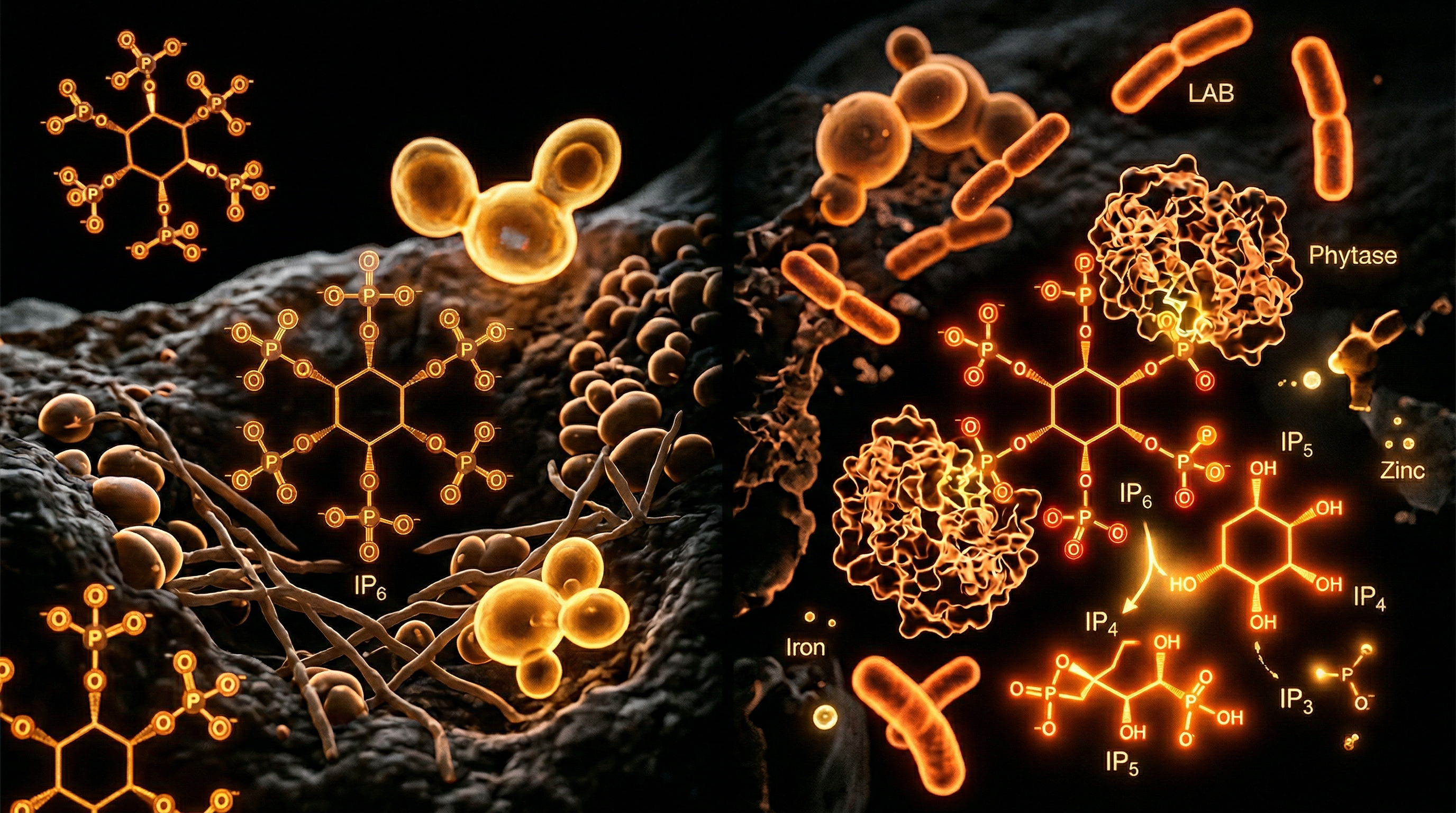
Phytic acid, or inositol hexaphosphate (IP6), is an evolutionary defence mechanism found in the bran and hull of seeds and grains. While it serves to protect the plant, in the human gut, it acts as a potent antinutrient. It binds to essential minerals—zinc, magnesium, calcium, and iron—forming insoluble complexes that the human body cannot absorb. By abandoning the slow, microbial alchemy of sourdough, we have unleashed a "mineral thief" into our daily diets, contributing to the staggering rise in autoimmune conditions, bone density loss, and cognitive decline seen across the British Isles today.
The Biology — How It Works
To understand why modern bread is a nutritional void, one must first understand the molecular architecture of the cereal grain. A grain of wheat is a dormant life form, designed to survive the digestive tracts of animals and harsh environmental conditions until it is ready to sprout.
The Role of Phytic Acid (IP6)
Phytic acid is the principal storage form of phosphorus in many plant tissues. From the plant's perspective, it is a masterpiece of efficiency; however, for the human consumer, it is a biochemical barrier. Because the phosphorus is tightly bound in the phytate molecule, it is not readily available. More critically, the phytate molecule possesses a strong negative charge, meaning it eagerly attracts and binds to positively charged metal ions (cations) in the digestive tract.
Fact: Phytic acid can bind up to 80% of the phosphorus in grains, rendering it bio-unavailable, while simultaneously stripping the body of exogenous minerals consumed in the same meal.
The Enzyme Solution: Phytase
The key to unlocking the nutrition within the grain is an enzyme called phytase. Phytase is the biological "key" that breaks the bonds of the phytate molecule, releasing the phosphorus and freeing the bound minerals. While humans produce a negligible amount of phytase in the small intestine, it is insufficient to neutralise the high concentrations of phytic acid found in modern, unfermented wheat products.
Traditional sourdough fermentation mimics the natural germination process. When a sourdough starter—a complex ecosystem of Lactic Acid Bacteria (LAB) and wild yeasts—is introduced to flour and water, it initiates a multi-stage biochemical breakdown. The acidification of the dough (lowering the pH) activates the endogenous phytase already present in the wheat, while the LAB themselves produce additional phytase enzymes.
Mechanisms at the Cellular Level
The superiority of sourdough is not merely a matter of taste; it is a matter of cellular-level bioavailability. The interaction between microbial metabolites and the grain’s matrix is a sophisticated form of external digestion.
Acidification and Mineral Solubility
As Lactic Acid Bacteria (such as Lactobacillus plantarum and Lactobacillus reuteri) ferment the carbohydrates in the flour, they produce lactic and acetic acids. This drops the pH of the dough to between 4.0 and 5.0. This acidic environment is the "goldilocks zone" for phytase activity.
In a standard commercial loaf, the pH remains relatively neutral because the rapid action of Saccharomyces cerevisiae does not produce significant organic acids. Consequently, the phytase remains dormant, and the phytic acid remains fully intact, entering the human duodenum as a "mineral magnet" that prevents the absorption of nutrients through the enterocytes (intestinal lining cells).
Proteolysis and Gluten Modification
Beyond phytic acid, the cellular mechanisms of sourdough involve proteolysis—the breaking down of proteins. The long fermentation period (typically 12 to 72 hours) allows bacterial proteases to degrade the complex glutenin and gliadin proteins that constitute "gluten."
In commercial bread, these proteins remain large and difficult to digest, often triggering an inflammatory response in the gut-associated lymphoid tissue (GALT). In sourdough, these proteins are pre-digested into peptides and amino acids, significantly reducing their immunogenicity. This is why many individuals with non-coeliac gluten sensitivity find they can consume authentic sourdough without the systemic inflammation associated with industrial bread.
Exopolysaccharides and Microbiome Health
Sourdough bacteria also produce exopolysaccharides (EPS), which act as prebiotics. These compounds reach the colon intact, providing fuel for the commensal microbiota. This creates a symbiotic relationship: the bread provides the substrate for a healthy microbiome, which in turn strengthens the intestinal barrier, further enhancing mineral absorption.
Environmental Threats and Biological Disruptors
The "Phytic Acid Solution" is made even more urgent by the presence of modern environmental disruptors that exacerbate the antinutrient effect of industrial grains.
The Glyphosate Synergy
The UK agricultural landscape is heavily reliant on glyphosate, the active ingredient in many broad-spectrum herbicides. Not only is glyphosate used during the growing season, but it is frequently used as a "desiccant" to dry out wheat crops just before harvest.
Glyphosate is itself a potent chelator. It was originally patented as a pipe cleaner because of its ability to bind to minerals. When glyphosate residues remain on the grain, they work in tandem with phytic acid. This "double-chelation" effect creates a scenario where the minerals in the soil are unavailable to the plant, and any minerals remaining in the grain are locked away from the human consumer.
Statistic: Recent testing has shown that over 60% of bread samples in the UK contain measurable residues of glyphosate, further compounding the mineral deficiency crisis.
Soil Depletion
Modern industrial farming focuses on NPK (Nitrogen, Phosphorus, Potassium) fertilisers, which produce high yields but result in "hollow" crops. The trace minerals—zinc, selenium, magnesium, and manganese—are no longer present in the soil in sufficient quantities. When you combine mineral-depleted wheat with the mineral-stripping power of phytic acid, the result is a population that is "overfed but undernourished."
The Cascade: From Exposure to Disease
The failure to neutralise phytic acid triggers a physiological cascade that manifests in a variety of chronic health conditions. Mineral deficiencies are not isolated events; they disrupt the very blueprints of our biological function.
Zinc Deficiency and Immune Failure
Zinc is a co-factor for over 300 enzymes, including those responsible for DNA repair and immune cell signalling. When phytic acid prevents zinc absorption, the body’s "surveillance system" falters. This contributes to:
- Increased susceptibility to viral infections.
- Slow wound healing.
- Hormonal imbalances (zinc is essential for testosterone and insulin regulation).
- Dermatological issues like eczema and acne.
Magnesium and the Neurological Crisis
Magnesium is the "master mineral" for the nervous system and mitochondrial energy production. The UK is currently facing a silent epidemic of magnesium deficiency, linked directly to the consumption of unfermented grains.
- Cardiovascular Health: Magnesium is required for heart rhythm regulation.
- Mental Health: Low magnesium is a primary driver of anxiety, insomnia, and depression.
- ATP Production: Without magnesium, the mitochondria cannot produce energy, leading to the "chronic fatigue" seen in modern society.
Bone Health: The Calcium-Phosphate Trap
While the dairy industry promotes calcium for bone health, it ignores the fact that calcium cannot be utilised if it is bound by phytates in the gut. Furthermore, phytic acid disrupts the calcium-to-phosphorus ratio. This leads to osteopenia and osteoporosis, even in populations with high dairy intake. The "industrial loaf" is literally leaching the structural integrity from the British skeletal system.
What the Mainstream Narrative Omits
The mainstream nutritional narrative, often funded or influenced by large-scale food conglomerates, consistently omits the crucial role of food processing in nutrient bioavailability.
The Fortification Fallacy
The UK government mandates the "fortification" of white flour with calcium carbonate, iron, thiamine, and niacin. On the surface, this looks like a proactive health measure. However, this is a scientific sleight of hand. Adding inorganic iron (often in the form of electrolytic iron or iron salts) to a flour that still contains its full load of phytic acid is largely futile. The phytates simply bind to the synthetic iron, preventing its absorption. Furthermore, unabsorbed iron in the gut acts as a pro-oxidant, feeding pathogenic bacteria and causing oxidative stress to the intestinal lining.
The "Whole Grain" Myth
Consumers are told that "wholemeal" is always healthier than white bread. While wholemeal flour contains more minerals and fibre, it also contains significantly more phytic acid, which is concentrated in the bran. Unless wholemeal bread is fermented using traditional sourdough methods, the "extra" minerals it contains are biologically locked. In many cases, unfermented wholemeal bread can be more de-mineralising than white bread, as the phytate-to-mineral ratio is higher.
The Glycaemic Index Distraction
While much is made of the Glycaemic Index (GI), the mainstream narrative ignores how sourdough lowers the GI of bread. The organic acids produced during fermentation slow down gastric emptying and inhibit the enzymes that break down starches into glucose. By focusing only on calories and simple carb counts, the authorities ignore the metabolic protection offered by the "Sourdough Solution."
The UK Context
The United Kingdom occupies a unique position in this nutritional crisis due to the invention and dominance of the Chorleywood Bread Process (CBP).
The Chorleywood Legacy
Developed in 1961 in Chorleywood, Hertfordshire, the CBP was designed to use lower-protein British wheat to produce a soft, high-volume loaf in record time. It relies on high-speed mixing, massive doses of yeast, and "improvers" like potassium bromate (now banned, but replaced with other oxidants) and DATEM (Diacetyl Tartaric Acid Esters of Monoglycerides).
The CBP removed the "time" component from bread making. By removing time, they removed the possibility of phytic acid neutralisation. Today, approximately 80% of all bread consumed in the UK is produced via this method. This means that for six decades, the British population has been subjected to a massive, uncontrolled experiment in high-phytate consumption.
The Rise of IBS and "Wheat Intolerance" in Britain
The UK has some of the highest rates of Irritable Bowel Syndrome (IBS) and digestive distress in Europe. While many blame "wheat," the reality is likely the lack of fermentation. The CBP loaf contains high levels of FODMAPs (fermentable oligosaccharides, disaccharides, monosaccharides, and polyols), which are naturally broken down during a long sourdough ferment. The British gut is effectively being asked to ferment the bread inside the body, leading to gas, bloating, and systemic inflammation.
Soil and Subsidy
The UK's post-war agricultural policy has favoured quantity over quality. The intensive farming of the East Anglian plains has led to a collapse in soil microbial diversity. Without these soil microbes, plants cannot take up minerals, even if they are present. This makes the "Sourdough Solution" even more critical for the British consumer, as they must maximise every microgram of nutrition available in their food.
Protective Measures and Recovery Protocols
To reverse the damage caused by decades of industrial bread consumption, one must adopt a strategy of "nutritional sovereignty." This involves both the elimination of biological disruptors and the active restoration of mineral levels.
The Sourdough Standard
Not all bread labelled "sourdough" in UK supermarkets is authentic. Many are "sourdough-flavoured" industrial loaves (sometimes called "sourfaux"). To ensure you are obtaining the phytic acid solution, follow these criteria:
- Ingredients: Should only be flour, water, and salt. No added yeast, sugar, or preservatives.
- Fermentation Time: Ask your baker. A minimum of 12 hours is required for significant phytate reduction, but 24-48 hours is optimal for total mineral liberation.
- The "Crumb" and "Crust": Authentic sourdough has an irregular hole structure (alveoli) and a robust crust, a result of the long acid-driven breakdown of starches.
Mineral Repletion Protocol
If you have been consuming industrial bread for years, your mineral stores are likely depleted. Recovery requires more than just switching bread; it requires targeted re-mineralisation.
- Magnesium Bicarbonate: A highly bioavailable form of magnesium that can help "reset" cellular levels.
- Ionic Trace Minerals: Adding broad-spectrum ionic minerals to filtered water helps bypass the chelation issues caused by historical phytate intake.
- Zinc Picolinate: To restore immune function and DNA repair mechanisms.
Home Fermentation: The Ultimate Defence
The most reliable way to bypass the industrial food system is to maintain a home sourdough starter.
- Source Heritage Grains: Use Einkorn, Emmer, or Spelt, which have lower gluten content and higher baseline mineral profiles.
- Extended Cold Fermentation: After the initial rise, place the dough in the fridge for 24-72 hours. Cold fermentation slows down the yeast but allows the lactic acid bacteria and phytase enzymes to continue their work of "cleaning" the grain.
- Use Filtered Water: Fluoride and chlorine in UK tap water can inhibit the delicate microbes in a sourdough starter.
Synergistic Foods
Pair your sourdough with fat-soluble vitamins (A, D, K2). Minerals liberated from the grain require these vitamins for transport into the bones and cells. Grass-fed British butter, rich in Vitamin K2, is the perfect biological partner for a slice of long-fermented sourdough.
Summary: Key Takeaways
The transition from traditional sourdough to commercial yeast was not a nutritional evolution; it was an industrial compromise that has had devastating consequences for human health.
- Phytic Acid is a Mineral Thief: In its un-neutralised state, it binds to zinc, magnesium, and calcium, leading to widespread deficiencies.
- Commercial Yeast is Insufficient: Standard bread-making processes do not provide the time or the acidity required to activate the phytase enzyme.
- The Sourdough Solution: Long-duration fermentation (12+ hours) allows Lactic Acid Bacteria to lower the pH, activating phytase and pre-digesting gluten, making minerals bioavailable.
- The UK Crisis: The Chorleywood Bread Process is a primary driver of the UK’s "overfed and undernourished" status, contributing to the rise in chronic inflammatory and degenerative diseases.
- Fortification is a Mask: Adding synthetic minerals to high-phytate bread is ineffective and potentially harmful.
- Action is Required: Consumers must seek out authentic sourdough, utilise heritage grains, and engage in mineral repletion to counteract the effects of the modern industrial diet.
To reclaim our health, we must reclaim our bread. By returning to the ancient biological technology of sourdough, we can transform the "staff of life" from a source of mineral depletion into a powerful tool for probiotic medicine and physiological restoration. The choice is clear: remain a victim of industrial efficiency, or embrace the slow, transformative power of the Phytic Acid Solution.
This article is provided for informational and educational purposes only. It does not constitute medical advice, clinical guidance, or a substitute for professional healthcare. Information reflects cited research at time of publication. Always consult a qualified healthcare professional before acting on any health information.
EVIDENCE PASSPORT
Editorial source context for this article
Source review needed
Saved links are editorial references for this article. They may support specific claims rather than every sentence. Open and assess each source in context. This passport does not independently verify them.
Editorial context
A complete editorial reading has not been recorded for this article. Source links remain available for you to open and assess directly.
Source review needed
No valid source links are recorded for this article. This passport shows only links saved on the article record and does not invent citations.
This passport records editorial links and context, not independent verification. Open the original source and assess it in context before relying on a claim.
Medical Disclaimer
The information in this article is for educational purposes only and does not constitute medical advice, diagnosis, or treatment. Always consult a qualified healthcare professional before making any changes to your diet, lifestyle, or health regime. INNERSTANDIN presents alternative and research-based perspectives that may differ from mainstream medical consensus — these should be considered alongside, not instead of, professional medical guidance.
Read Full DisclaimerContinue the thread
Keep this question moving.
Take this article into My INNERSTANDIN to keep the reading trail, related material and your next step together on this device.
Dig deeper in the Library
Free, longform PDF volumes that go beyond headlines into mechanisms and references.