
Synthetic Oxytocin: The Biochemical Disruption of Bonding
Updated May 2026
This article examines how synthetic oxytocin interferes with natural hormonal feedback loops during labor. It highlights the potential impact on maternal bonding and long-term neurobiology.
Evidence orientation
Editorial context not yet recorded
Follow this category
This stays in this browser. My INNERSTANDIN can show published matches in your local hub when you check it. It does not send email, push, or alert notifications.
Local learning review
A private browser aid for revisiting ideas. It is not an alert or a health recommendation.
Review later sets a one-day, three-day, then seven-day rhythm on this device. Choose it only when you want to revisit this article.
Overview
In the contemporary landscape of obstetrics, the administration of synthetic oxytocin (commonly known by the brand names Syntocinon or Pitocin) has transitioned from an emergency intervention to a standard, almost routine, component of the birthing process. While marketed as a benign replica of the body’s own "love hormone," a deeper biological interrogation reveals a profound disconnect. As a senior researcher for INNERSTANDING, it is my duty to expose the physiological chasm between the endogenous pulsatile release of oxytocin and the relentless, non-rhythmic infusion of its synthetic counterpart.
The hormonal orchestration of birth is perhaps the most complex and delicate neuro-endocrine event in the human life cycle. It is not merely a mechanical process of muscular contractions to expel a foetus; it is a critical "imprinting" window. This period establishes the neurobiological foundations for maternal-infant bonding, breastfeeding success, and the long-term emotional resilience of the offspring. By introducing high-dose synthetic analogues, we are not simply "speeding up" labour; we are potentially overwriting a four-million-year-old evolutionary programme.
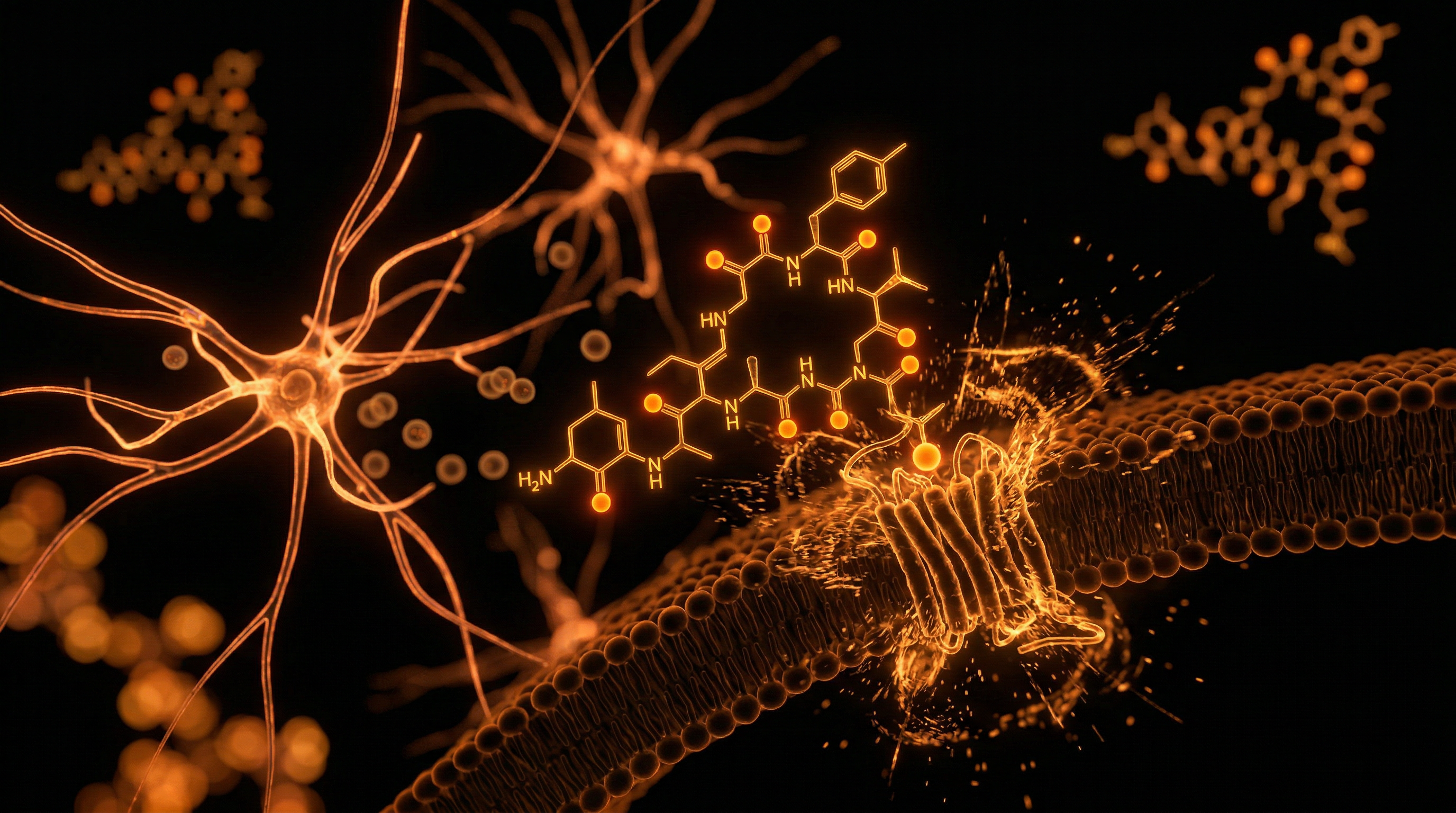
This article explores the biochemical disruption caused by synthetic oxytocin, examining how it bypasses the blood-brain barrier, desensitises cellular receptors, and terminates the natural feedback loops essential for mammalian connection. We must ask: what is the cost of efficiency when the price is the integrity of the human bond?
The Biology — How It Works
To understand the disruption, one must first appreciate the elegance of the natural system. Endogenous oxytocin is produced in the hypothalamus and stored in the posterior pituitary gland. During a physiological labour, it is released into the bloodstream and the brain in a pulsatile manner. These pulses are rhythmic, increasing in frequency and intensity as labour progresses, allowing the uterine muscle (the myometrium) periods of rest and re-oxygenation.
Fact: Endogenous oxytocin is a "pleiotropic" hormone, meaning it acts simultaneously as a hormone in the body and a neurotransmitter in the brain. It does not act alone; it works in a synergistic "cocktail" with endorphins, prolactin, and catecholamines.
The most critical distinction lies in the Blood-Brain Barrier (BBB). Endogenous oxytocin is released directly into the brain's cerebrospinal fluid, where it targets the limbic system—the emotional centre. This triggers the "maternal instinct," reduces pain perception through the release of endogenous opioids (endorphins), and induces a state of focused inwardness often described as "labour land."
Synthetic oxytocin, however, is administered intravenously. Because the oxytocin molecule is relatively large, exogenous (synthetic) oxytocin does not cross the blood-brain barrier in significant amounts. Therefore, while the synthetic version can force the uterus to contract, it provides none of the central nervous system benefits—the euphoria, the pain relief, or the bonding drive.
Furthermore, the delivery method of synthetic oxytocin is linear and continuous. A pump ensures a steady climb in concentration, which is entirely alien to the body’s biological expectations. This lack of pulsatility leads to "hyperstimulation," where the uterus never fully relaxes, potentially compromising foetal oxygenation and triggering a state of maternal distress that further inhibits natural hormonal production.
Mechanisms at the Cellular Level
At the microscopic scale, the administration of synthetic oxytocin initiates a process of receptor downregulation. The human body is designed for homeostasis; when it senses an unnatural, constant flood of a substance, it seeks to protect itself by reducing its sensitivity to that substance.
The Oxytocin Receptor (OXTR)
The Oxytocin Receptor (OXTR) is a G-protein coupled receptor. In the weeks leading up to spontaneous labour, the number of these receptors in the uterus increases by as much as 200-fold, making the muscle exquisitely sensitive to even tiny pulses of natural oxytocin. When an intravenous drip of Syntocinon is started, the receptors are suddenly bombarded with a concentration of the hormone far exceeding physiological levels.
Desensitisation and Internalisation
When the OXTR is overstimulated, several things happen:
- Phosphorylation: The receptor is chemically modified so it can no longer signal effectively.
- Internalisation: The cell literally pulls the receptor inside itself, "hiding" it from the bloodstream.
- Degradation: If the stimulus continues, the receptors are broken down entirely.
This explains why, in many induced labours, the dose of synthetic oxytocin must be continually increased to maintain contractions. The uterus is becoming "deaf" to the signal.
The Calcium Signalling Disruption
Oxytocin works by triggering the release of calcium ions (Ca2+) within the myometrial cells, which causes the muscle fibres to shorten. Natural pulses allow for a "calcium wash-out" between contractions. Synthetic oxytocin’s continuous delivery keeps intracellular calcium levels elevated, leading to tetanic contractions (excessively long or frequent contractions). This not only stresses the mother’s physiology but also places the neonate in a state of intermittent hypoxia, as the placenta cannot be adequately perfused during a contraction.
Environmental Threats and Biological Disruptors
The modern birthing environment is often diametrically opposed to the conditions required for natural oxytocin production. The "Mollusc Brain" or the neocortex is the enemy of oxytocin. In the wild, a labouring mammal will seek a dark, quiet, and safe place. If she feels threatened, her body produces adrenaline (epinephrine), which instantly halts oxytocin production to allow her to "fight or flee."
The Hospital Effect
In a clinical setting, the following factors act as biological disruptors:
- Bright, overhead LED lighting: Inhibits melatonin, which works synergistically with oxytocin.
- Observation and Lack of Privacy: Triggers the neocortex, increasing catecholamine release.
- Vaginal Exams and Frequent Interruptions: Break the rhythmic flow of the "Ferguson Reflex."
Statistic: Studies have shown that the mere presence of an unsupportive or "clinical" environment can increase the likelihood of synthetic oxytocin intervention by up to 50%, as the mother’s natural "stall" in labour is misinterpreted as "failure to progress."
The "Cascade of Intervention"
Synthetic oxytocin is often the first domino in the Cascade of Intervention. Because the contractions forced by Syntocinon are more painful (due to the lack of central endorphin release and the lack of rest periods), the mother is significantly more likely to request an epidural. The epidural, in turn, numbs the pelvic floor, removing the positive feedback loop (the Ferguson Reflex) where the pressure of the baby’s head against the cervix tells the brain to produce more oxytocin. This further necessitates higher doses of Syntocinon, eventually increasing the risk of instrumental delivery (forceps/ventouse) or a Caesarean section.
The Cascade: From Exposure to Disease
The disruption of the oxytocin system does not end when the umbilical cord is clamped. We are now beginning to understand the epigenetic and long-term neurobiological consequences of bypassing the natural hormonal peak of birth.
Postpartum Depression and Anxiety
The "Oxytocin Peak" immediately following birth is the highest a human will ever experience. It is designed to induce an immediate state of "falling in love" with the infant and to prevent maternal haemorrhage by contracting the uterus. By using synthetic oxytocin during labour, the brain’s own production is suppressed (negative feedback).
Callout: Research published in the journal Birth found that women who received synthetic oxytocin during labour were 32% more likely to be diagnosed with a postpartum depressive or anxiety disorder in the first year after birth compared to those who did not.
Breastfeeding Failure
Oxytocin is essential for the milk ejection reflex (let-down). Because synthetic oxytocin causes receptor downregulation, many mothers find that their breasts are less responsive to the baby's suckling in the first few days of life. This is not a "lack of will," but a biochemical "numbing" of the mammary receptors.
Neurodevelopmental Links
While controversial and requiring more longitudinal data, some researchers are investigating the link between synthetic oxytocin and neurodevelopmental disorders such as Autism Spectrum Disorder (ASD) and ADHD. The theory suggests that the foetal brain, which is highly sensitive to oxytocin during the transition to extra-uterine life, may be affected by the massive, non-pulsatile doses crossing the placenta. During birth, natural oxytocin serves a neuroprotective role, "silencing" the foetal neurons to protect them from the stress of labour. Synthetic oxytocin may disrupt this delicate transition.
What the Mainstream Narrative Omits
The mainstream medical narrative frames synthetic oxytocin as a "bio-identical" hormone that simply helps a "sluggish" uterus. This is a reductionist view that ignores the Systems Biology of the human body.
The Myth of Identical Function
Pharmaceutical companies claim Syntocinon is identical to the human octapeptide. While the molecular structure is indeed the same, the pharmacokinetics (how the body processes it) and the pharmacodynamics (what it does to the body) are radically different. The delivery system is the message. A drip-fed chemical is not a pulse-fed neurotransmitter.
The Lack of Long-term Monitoring
Most clinical trials for synthetic oxytocin focus on "time to delivery" or "Apgar scores" at five minutes. There is an appalling lack of long-term follow-up regarding the psychological health of the mother or the neuro-behavioural development of the child. The medical establishment treats birth as a mechanical event to be managed, rather than a neuro-biological "programming" event.
The Convenience Factor
In many cases, the "failure to progress" diagnosis is based on the Friedman Curve—a 1950s template of how fast a woman should dilate. This curve has been largely debunked, yet it remains the gold standard in many hospitals. Induction of labour and the use of synthetic oxytocin are often driven by hospital bed management and the scheduling of staff, rather than medical necessity.
The UK Context
In the United Kingdom, the National Health Service (NHS) is currently grappling with an unprecedented crisis in maternity care. The Ockenden Report and the Kirkup Report have highlighted systemic failures, often revolving around the over-medicalisation of birth and the failure to listen to women's choices.
Induction Rates in the NHS
In the UK, the rate of induction of labour has soared. Recent figures suggest that upwards of 33% to 40% of births in the UK are now induced, many using synthetic oxytocin. This "industrialisation" of birth is particularly prevalent in NHS trusts that are understaffed, where the "active management" of labour is used to ensure babies are born within a predictable timeframe.
NICE Guidelines and "Active Management"
The National Institute for Health and Care Excellence (NICE) guidelines recommend the "active management" of the third stage of labour (the delivery of the placenta). This involves a routine injection of synthetic oxytocin (usually combined with ergometrine in a drug called Syntometrine) into the mother’s thigh as the baby is being born.
Fact: While this reduces the risk of Postpartum Haemorrhage (PPH) in high-risk populations, its routine application to low-risk women disrupts the immediate "skin-to-skin" hormonal surge. This is often done without informing the mother that she has the right to a "physiological third stage."
The Cultural Shift
There is a growing movement within the UK, led by organisations like the Association for Improvements in the Maternity Services (AIMS), to challenge the "Induction Epidemic." However, the pressure on midwives to adhere to hospital protocols often overrides the individual needs of the birthing woman.
Protective Measures and Recovery Protocols
If you are a mother-to-be, or someone recovering from a birth involving synthetic oxytocin, there are biological strategies to mitigate the disruption and facilitate the recovery of the oxytocin system.
During Labour: Protecting the "Oxytocin Bubble"
- Environment Control: Dim the lights, use eye masks, play calming music, and ensure the room is warm. This lowers adrenaline and allows the remaining endogenous oxytocin to work.
- Continuous Support: Having a Doula or a dedicated birth partner can significantly reduce the need for synthetic oxytocin by providing the emotional security that triggers the hypothalamus.
- Water Immersion: Birth pools are proven to reduce the need for pharmacological intervention and promote relaxation.
Postpartum: Re-sensitising the Receptors
If synthetic oxytocin was used, the priority is to "re-awaken" the natural system:
- Uninterrupted Skin-to-Skin: Spend as much time as possible "chest-to-chest" with the infant. This provides a constant, gentle stimulus to the hypothalamus to begin producing natural oxytocin again.
- Vagus Nerve Stimulation: Techniques such as deep belly breathing, humming, or gentle massage can help shift the mother’s nervous system from sympathetic (fight/flight) to parasympathetic (rest/digest/bond).
- Nutritional Support: Ensure adequate intake of Magnesium and Omega-3 fatty acids, which are essential for receptor health and neurotransmitter function.
Psychological Integration
For many, the use of synthetic oxytocin is tied to Birth Trauma. Acknowledging that the "disconnect" felt after birth was biochemical rather than a personal failure is a vital step in healing. Professional support from therapists trained in perinatal mental health can help "re-wire" the bonding pathways that may have been disrupted by the pharmaceutical intervention.
Summary: Key Takeaways
The medicalisation of birth has provided life-saving interventions for many, but the routine use of synthetic oxytocin is a double-edged sword that warrants a profound "innerstanding."
- Biological Mismatch: Synthetic oxytocin (Syntocinon/Pitocin) is delivered continuously via IV, whereas natural oxytocin is released in pulses. This difference is not trivial; it is the difference between a symphony and a siren.
- Blood-Brain Barrier: Synthetic oxytocin does not enter the brain. It can contract the uterus, but it cannot facilitate the maternal euphoria or the natural "pain-killing" response of the limbic system.
- Receptor Downregulation: High-dose synthetic exposure causes the body to "hide" its oxytocin receptors, leading to potential issues with bonding, breastfeeding, and mental health postpartum.
- The "Cascade": Synthetic oxytocin is the primary driver of the intervention cascade, leading to higher rates of epidurals, instrumental births, and C-sections.
- UK Crisis: The NHS is seeing record-high induction rates, often driven by institutional pressure rather than maternal or foetal well-being.
- Recovery is Possible: Through skin-to-skin contact, nervous system regulation, and nutritional support, the "numbed" oxytocin system can be restored and the maternal-infant bond reclaimed.
As we move forward, we must demand a maternity system that respects the biochemical autonomy of the birthing woman. Birth is not a medical emergency waiting to happen; it is a profound physiological rite of passage that requires the delicate, unhindered flow of our own internal chemistry. To disrupt the oxytocin loop is to disrupt the very fabric of human connection. We must choose to protect the pulse.
This article is provided for informational and educational purposes only. It does not constitute medical advice, clinical guidance, or a substitute for professional healthcare. Information reflects cited research at time of publication. Always consult a qualified healthcare professional before acting on any health information.
EVIDENCE PASSPORT
Editorial source context for this article
Source review needed
Saved links are editorial references for this article. They may support specific claims rather than every sentence. Open and assess each source in context. This passport does not independently verify them.
Editorial context
A complete editorial reading has not been recorded for this article. Source links remain available for you to open and assess directly.
Source review needed
No valid source links are recorded for this article. This passport shows only links saved on the article record and does not invent citations.
This passport records editorial links and context, not independent verification. Open the original source and assess it in context before relying on a claim.
Medical Disclaimer
The information in this article is for educational purposes only and does not constitute medical advice, diagnosis, or treatment. Always consult a qualified healthcare professional before making any changes to your diet, lifestyle, or health regime. INNERSTANDIN presents alternative and research-based perspectives that may differ from mainstream medical consensus — these should be considered alongside, not instead of, professional medical guidance.
Read Full DisclaimerContinue the thread
Keep this question moving.
Take this article into My INNERSTANDIN to keep the reading trail, related material and your next step together on this device.
Explore this in the Body Map
See where this hits your biology. Interactive anatomy, threats, and protective protocols.
Dig deeper in the Library
Free, longform PDF volumes that go beyond headlines into mechanisms and references.