
The Third Stage: Hormonal Regulation and Postpartum Hemorrhage
Updated May 2026
The management of the third stage of labor significantly impacts the risk of postpartum hemorrhage. Physiological management supports the natural surge of oxytocin required for uterine contraction.
Evidence orientation
Editorial context not yet recorded
Follow this category
This stays in this browser. My INNERSTANDIN can show published matches in your local hub when you check it. It does not send email, push, or alert notifications.
Local learning review
A private browser aid for revisiting ideas. It is not an alert or a health recommendation.
Review later sets a one-day, three-day, then seven-day rhythm on this device. Choose it only when you want to revisit this article.
Overview
The transition from the second stage of labour—the birth of the infant—to the completion of the third stage—the expulsion of the placenta and the subsequent involution of the uterus—represents one of the most biologically complex and precarious windows in human physiology. Often dismissed as a mere "afterthought" to the dramatic climax of birth, the third stage is, in reality, a sophisticated endocrine event that determines the long-term health, and often the survival, of the mother.
Postpartum Haemorrhage (PPH) remains the leading cause of maternal mortality worldwide. In clinical settings, the management of this stage has shifted almost entirely from a physiological (expectant) model to an active (interventionist) model. While active management—comprising the administration of prophylactic uterotonics, early cord clamping, and controlled cord traction—is credited with reducing blood loss in high-risk populations, a growing body of biological evidence suggests that for low-risk women, this "one-size-fits-all" approach may inadvertently disrupt the delicate hormonal orchestration required for natural uterine contraction.
As a senior biological researcher, it is my contention that the modern obstetric environment has created a "biochemical mismatch." We have pathologised a natural process by ignoring the environmental and hormonal prerequisites for a safe third stage. This article explores the intricate mechanisms of the "forgotten stage," the cellular triggers of uterine atony, and the suppressed reality that our current medical protocols may be contributing to the very haemorrhage rates they seek to cure.
The Biology — How It Works
The successful completion of the third stage relies on a massive, pulsatile surge of endogenous oxytocin. This hormone, synthesised in the hypothalamus and secreted by the posterior pituitary, is the primary driver of myometrial (uterine muscle) contractions.
The Oxytocin Surge
During the moments immediately following birth, the mother’s brain is designed to release the highest levels of oxytocin she will ever experience. This is not a steady stream, but a series of high-amplitude pulses triggered by:
- Skin-to-skin contact: The stimulation of sensory nerves in the mother's chest.
- The "Breast Crawl": The infant’s attempts to find the nipple, which stimulates the Ferguson Reflex.
- Olfactory and Visual Cues: The scent and sight of the newborn, which provide a positive feedback loop to the hypothalamus.
The Role of Beta-Endorphins
Alongside oxytocin, the third stage is characterised by high levels of beta-endorphins. These natural opiates serve a dual purpose: they provide significant analgesia (pain relief) following the intensity of the second stage, and they modulate the release of oxytocin to ensure the contractions are effective but not pathologically overwhelming. This hormonal cocktail creates a state of "ecstatic" alertness, which is crucial for maternal-infant bonding and the initiation of breastfeeding.
Placental Separation and the "Living Ligatures"
As the uterus shrinks following the birth of the baby, the surface area of the placental site is rapidly reduced. Because the placenta is non-contractile, it begins to shear away from the uterine wall. The crucial biological mechanism here is the contraction of the myometrial bundles. These muscle fibres are arranged in a criss-cross pattern, often referred to as "Living Ligatures" or Rochat's Fibres.
When these fibres contract, they physically squeeze the spiral arteries—the large blood vessels that supplied the placenta. This is nature’s own tourniquet. Without this mechanical occlusion, the mother could lose her entire blood volume in mere minutes.
Fact: In a physiological third stage, the blood flow to the placental site (approximately 500-800 ml per minute) must be halted almost instantaneously through hormonal and mechanical means.
Mechanisms at the Cellular Level
To understand why the third stage fails, we must look at the myocytes (uterine muscle cells) and the complex signalling pathways that govern them.
G-Protein Coupled Receptors (GPCRs)
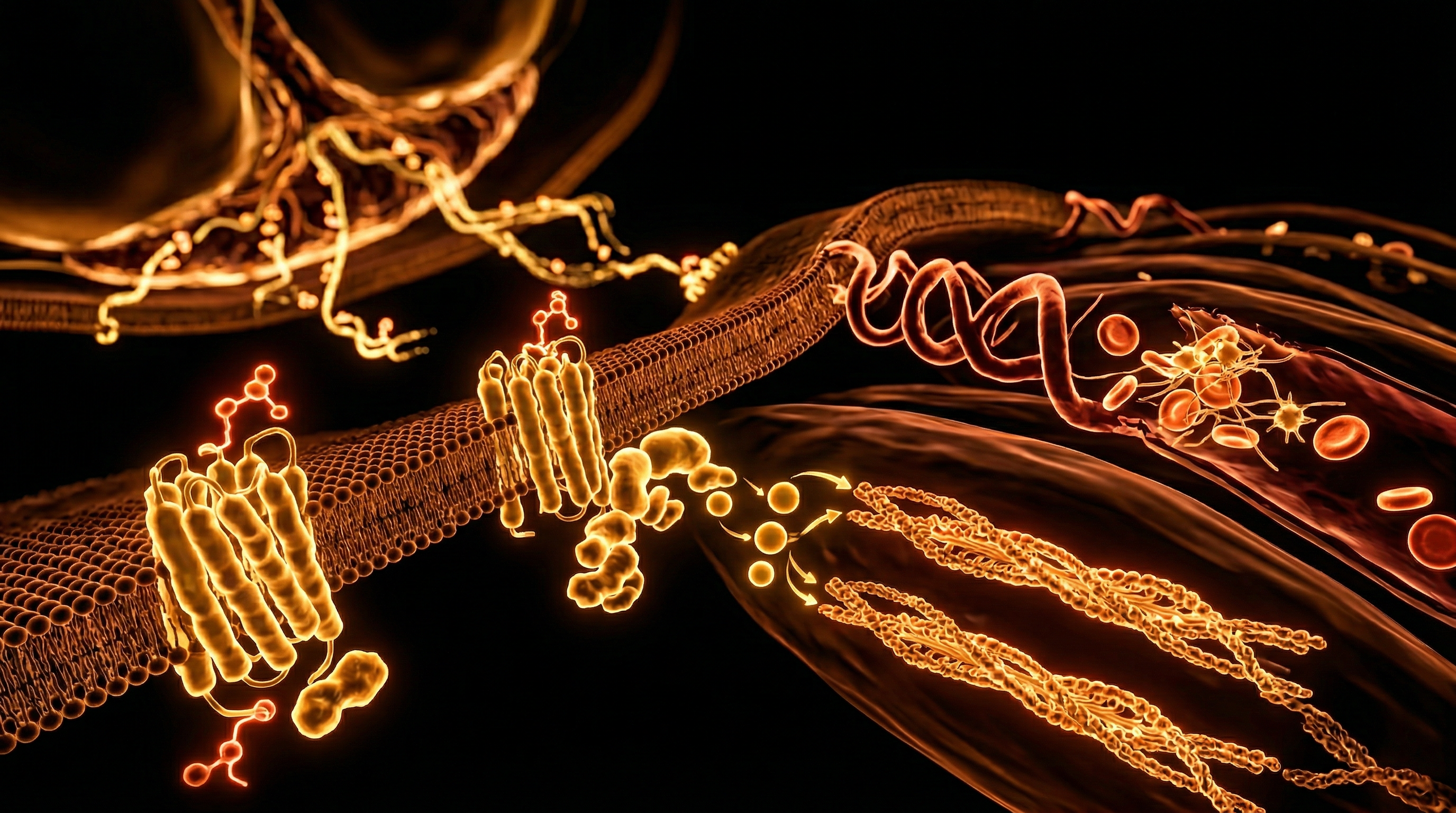
Oxytocin exerts its effect by binding to the Oxytocin Receptor (OXTR), a member of the G-protein coupled receptor family. Once oxytocin binds to the OXTR, it triggers a cascade:
- Phospholipase C Activation: This enzyme breaks down membrane lipids into inositol trisphosphate (IP3).
- Calcium Mobilisation: IP3 binds to receptors on the sarcoplasmic reticulum, releasing stored calcium ions (Ca2+) into the cell's cytoplasm.
- Calmodulin Binding: Calcium binds to a protein called calmodulin, which then activates the Myosin Light Chain Kinase (MLCK).
- Contraction: MLCK phosphorylates the myosin heads, allowing them to bind to actin filaments, shortening the muscle cell and generating the force needed to close the spiral arteries.
The Thrombin Cascade and Fibrinogen
Simultaneous with the mechanical contraction, the body initiates a localized clotting cascade. As the placenta separates, tissue factor is released, triggering the conversion of prothrombin to thrombin. Thrombin then converts soluble fibrinogen into insoluble fibrin, creating a mesh that stabilises the clots at the ends of the severed spiral arteries. This dual system—mechanical contraction (Tone) and biochemical clotting (Thrombin)—is the body's primary defence against PPH.
Receptor Downregulation
A critical, often overlooked aspect of cellular biology in the third stage is receptor desensitisation. If a woman has been exposed to high doses of synthetic oxytocin (Syntocinon) during the first or second stages of labour (to "augment" or speed up birth), her OXTRs may become saturated and subsequently "downregulated" or internalised by the cell.
Scientific Insight: Chronic exposure to exogenous oxytocin leads to a reduction in the density of receptors on the myometrial surface, rendering the uterus less responsive to both natural and synthetic oxytocin in the crucial third stage. This is a primary driver of Uterine Atony.
Environmental Threats and Biological Disruptors
The biological systems described above evolved over millions of years to function in a specific environment: one that is safe, dark, warm, and private. Modern maternity wards often represent the exact opposite of these conditions, acting as potent biological disruptors.
The Catecholamine Interference
When a woman feels observed, threatened, or stressed, her adrenal glands secrete catecholamines (adrenaline and noradrenaline). In the third stage, adrenaline is a direct antagonist to oxytocin.
- Vasoconstriction vs. Vasodilation: Adrenaline diverts blood away from the uterus to the skeletal muscles (the "fight or flight" response).
- Inhibition of Oxytocin Release: High levels of adrenaline inhibit the pulsatile release of oxytocin from the posterior pituitary.
- The "Observer Effect": Clinical studies have shown that the mere presence of a stranger or the sudden switching on of bright lights can stall uterine contractions, increasing the risk of the placenta remaining "trapped" or the uterus becoming "boggy" (atonic).
Synthetic Oxytocin (Syntocinon/Pitocin)
While marketed as identical to the natural hormone, synthetic oxytocin lacks the pulsatile delivery of the endogenous version. It is administered via continuous IV drip, which leads to a "flat" hormonal profile. This lacks the rhythmic peaks and troughs necessary to allow the myometrium to rest and reperfuse between contractions. Furthermore, synthetic oxytocin does not cross the blood-brain barrier in significant amounts, meaning it does not provide the protective psychological "high" or the feedback loops associated with natural oxytocin.
The Impact of Epidurals
Epidural anaesthesia disrupts the Ferguson Reflex—the neuroendocrine loop where pressure on the pelvic floor and cervix signals the brain to release more oxytocin. By numbing the pelvic region, epidurals dampen this signal, often leading to a "lazy" third stage where the natural triggers for placental expulsion are absent.
The Cascade: From Exposure to Disease
The path from a healthy physiological labour to a life-threatening haemorrhage is often paved with well-intentioned medical interventions—a phenomenon known as the "Cascade of Intervention."
Stage 1: Induction or Augmentation
The cascade frequently begins with the use of synthetic oxytocin to induce labour. As noted, this can lead to OXTR downregulation. By the time the woman reaches the third stage, her uterine muscles are "exhausted" at a cellular level, unable to respond to the natural surge of oxytocin.
Stage 2: The "Managed" Third Stage
Under Active Management of the Third Stage (AMTSL), the clinician typically administers an injection of synthetic oxytocin into the mother's thigh as the baby's shoulder is delivered. This is followed by Early Cord Clamping (ECC).
- The Blood Volume Shift: ECC prevents the "placental transfusion," where up to 30% of the infant's blood volume is transferred from the placenta to the baby. This leaves the placenta engorged with blood, making it bulkier and harder for the uterus to expel, paradoxically increasing the risk of partial separation and subsequent bleeding.
Stage 3: Uterine Atony and PPH
If the uterus fails to contract (Atony), the spiral arteries remain open. Within minutes, the mother can enter haemorrhagic shock. The medical response is usually more synthetic oxytocin, prostaglandins (like Carboprost), or manual removal of the placenta—all of which carry risks of infection, trauma, and psychological distress.
The Long-Term Cascade: PTSD and Physical Recovery
The trauma of a "managed" PPH often leads to Post-Traumatic Stress Disorder (PTSD) and can interfere with the successful initiation of breastfeeding. Furthermore, the massive blood loss leads to severe anaemia, impacting the mother's ability to recover physically and bond with her infant in the weeks following birth.
Statistic: Women who experience a "near-miss" maternal haemorrhage are significantly more likely to suffer from postnatal depression and secondary infertility.
What the Mainstream Narrative Omits
The mainstream medical narrative, supported by organisations like the World Health Organization (WHO), strongly favours Active Management for all women. However, this narrative often omits several crucial truths that challenge the "safety" of universal intervention.
The Misrepresentation of "Low-Risk" Data
Most studies supporting AMTSL were conducted in hospital settings where the "cascade of intervention" was already in play. In these environments, active management is indeed safer because the woman’s natural physiology has already been compromised. However, in undisturbed, midwife-led settings for low-risk women, the rates of PPH in physiological management are often comparable to, or lower than, those in active management, with fewer side effects (such as nausea, vomiting, and raised blood pressure).
The Evolutionary Disconnect
The mainstream narrative ignores the evolutionary biology of the third stage. Human females have successfully birthed and expelled placentas for millennia. The sudden "epidemic" of PPH in modern hospitals suggests that the problem is not a failure of the female body, but a failure of the environment provided for that body.
Financial and Logistical Incentives
The "Managed Third Stage" is fast. It typically reduces the duration of the third stage from 30–60 minutes to 5–10 minutes. In a stretched healthcare system like the UK's NHS, "clearing the delivery room" quickly is a logistical priority. The push for active management is as much about hospital throughput as it is about maternal safety.
The Omission of "Secondary PPH"
Active management reduces immediate PPH but may increase the risk of secondary PPH (bleeding occurring 24 hours to 6 weeks postpartum). This is often due to "retained products"—small fragments of the placenta or membranes left behind because the placenta was forced out (via cord traction) rather than being allowed to detach naturally.
The UK Context
In the United Kingdom, the management of the third stage is largely governed by the NICE (National Institute for Health and Care Excellence) Guidelines. While the UK has a strong tradition of midwifery, the "obstetric model" has become increasingly dominant.
The NICE Guidelines
NICE currently recommends that all women be offered active management. While they state that women should be "supported in their choice" of physiological management, the reality on the ground is often one of "informed coercion." Women are frequently told that physiological management is "dangerous" or "unnecessary," without a balanced discussion of the risks of intervention.
The Rise of "Efficiency" Culture
The UK’s MBBRACE-UK reports, which investigate maternal deaths, continue to highlight PPH as a major concern. However, the solution offered is almost always "more intervention" and "quicker response times," rather than addressing the root causes: the high rates of induction, the overuse of synthetic oxytocin, and the lack of "continuity of carer" which is known to reduce maternal stress.
The Midwifery Crisis
The UK is currently facing a significant shortage of midwives. In a busy labour ward, a midwife may be looking after multiple women simultaneously. This makes the one-on-one, undisturbed support required for a physiological third stage almost impossible to provide. Consequently, active management becomes the default "safety net" for an overstretched system.
UK Fact: Despite nearly 100% active management in some UK trusts, the incidence of PPH (defined as loss >500ml) has risen in the last decade, suggesting that the "interventionist" approach is failing to address the underlying biological dysfunction.
Protective Measures and Recovery Protocols
For those seeking to honour the biological requirements of the third stage, or for those recovering from a traumatic birth, specific protocols can be implemented to protect maternal health.
For Expectant Mothers: The "Golden Hour"
To maximise endogenous oxytocin and minimise the risk of PPH:
- Prioritise Undisturbed Skin-to-Skin: The baby should be placed on the mother’s chest immediately and left there, skin-to-skin, for at least the first hour.
- Optimal Cord Clamping: Wait until the cord has stopped pulsing and is "white and limp" before clamping. This ensures the baby receives its full blood volume and the placenta is easier to expel.
- Environmental Control: Dim the lights, minimise noise, and ensure only essential people are in the room. This protects the "hormonal bubble."
- Nipple Stimulation: Encourage the baby to nuzzle or latch, as this is the most potent trigger for uterine contractions.
For Healthcare Providers: Re-evaluating Risk
- Distinguish Between "High" and "Low" Risk: Avoid applying AMTSL as a blanket policy. If a labour has been physiological and undisturbed, the third stage should remain so.
- Patience as a Clinical Tool: Recognise that a physiological third stage can take up to an hour. As long as there is no excessive bleeding and the mother/baby are stable, there is no clinical reason to rush.
Recovery Protocols for PPH
If a haemorrhage does occur, the focus must shift to both physical and psychological recovery:
- Iron and Nutritional Support: High-dose iron (often via IV infusion if loss was severe) and a diet rich in Vitamin C, B12, and Folate are essential for rebuilding red blood cells.
- Lactation Support: PPH can delay "milk coming in." Frequent skin-to-skin and professional lactation support are vital.
- Trauma-Informed Care: Acknowledging the "near-death" experience of a major haemorrhage. Debriefing the birth with a knowledgeable midwife or therapist is crucial for preventing long-term PTSD.
- Nervous System Regulation: Using techniques like vagus nerve stimulation, gentle bodywork, and "mothering the mother" to shift the body out of the sympathetic (stress) state induced by the haemorrhage.
Summary: Key Takeaways
The third stage of labour is a testament to the intricate beauty and vulnerability of human biology. It is a stage where hormonal regulation is the primary arbiter of safety.
- Oxytocin is the Master Regulator: The success of the third stage depends on high-amplitude, pulsatile releases of endogenous oxytocin, which are easily disrupted by stress, light, and clinical interference.
- The Pitfalls of Synthetic Hormones: The widespread use of synthetic oxytocin for induction and augmentation leads to receptor downregulation, directly increasing the risk of uterine atony and PPH.
- Active Management is Not a Panacea: While vital in emergencies, the universal application of active management may be pathologising healthy births and creating a "cascade of intervention."
- Environment Matters: The "obstetric environment" (bright lights, strangers, monitoring) is biochemically hostile to the third stage.
- The Need for a Paradigm Shift: We must move away from a model of "efficiency" and back to a model that respects the evolutionary prerequisites for birth.
By understanding the cellular and hormonal mechanisms at play, we can begin to challenge the mainstream narrative and advocate for a birthing culture that prioritises the biological integrity of the mother and the infant. The "forgotten stage" must be forgotten no longer; it is the foundation upon which maternal health and the beginning of the mother-child bond are built.
This article is provided for informational and educational purposes only. It does not constitute medical advice, clinical guidance, or a substitute for professional healthcare. Information reflects cited research at time of publication. Always consult a qualified healthcare professional before acting on any health information.
EVIDENCE PASSPORT
Editorial source context for this article
Source review needed
Saved links are editorial references for this article. They may support specific claims rather than every sentence. Open and assess each source in context. This passport does not independently verify them.
Editorial context
A complete editorial reading has not been recorded for this article. Source links remain available for you to open and assess directly.
Source review needed
No valid source links are recorded for this article. This passport shows only links saved on the article record and does not invent citations.
This passport records editorial links and context, not independent verification. Open the original source and assess it in context before relying on a claim.
Medical Disclaimer
The information in this article is for educational purposes only and does not constitute medical advice, diagnosis, or treatment. Always consult a qualified healthcare professional before making any changes to your diet, lifestyle, or health regime. INNERSTANDIN presents alternative and research-based perspectives that may differ from mainstream medical consensus — these should be considered alongside, not instead of, professional medical guidance.
Read Full DisclaimerContinue the thread
Keep this question moving.
Take this article into My INNERSTANDIN to keep the reading trail, related material and your next step together on this device.
Explore this in the Body Map
See where this hits your biology. Interactive anatomy, threats, and protective protocols.
Dig deeper in the Library
Free, longform PDF volumes that go beyond headlines into mechanisms and references.