
Synthetic Yeast: Redesigning the Building Blocks of Life
Updated May 2026
Reporting on the Sc2.0 project and the creation of the first eukaryotic organisms with entirely synthetic chromosomes. We discuss the ecological fallout if these organisms escape into the wild.
Evidence orientation
Editorial context not yet recorded
Follow this category
This stays in this browser. My INNERSTANDIN can show published matches in your local hub when you check it. It does not send email, push, or alert notifications.
Local learning review
A private browser aid for revisiting ideas. It is not an alert or a health recommendation.
Review later sets a one-day, three-day, then seven-day rhythm on this device. Choose it only when you want to revisit this article.
Overview
In the hushed corridors of high-containment laboratories, a revolution is being staged—not through the traditional manipulation of existing genes, but through the wholesale rewriting of the biological "operating system." For decades, humanity has dabbled in genetic engineering, splicing a gene here or silencing a protein there. However, the Sc2.0 Project (the Synthetic Yeast Genome Project) represents a quantum leap in our capacity to play architect to the living world. This is the first attempt to build a eukaryotic genome from the ground up, and the implications are as profound as they are terrifying.
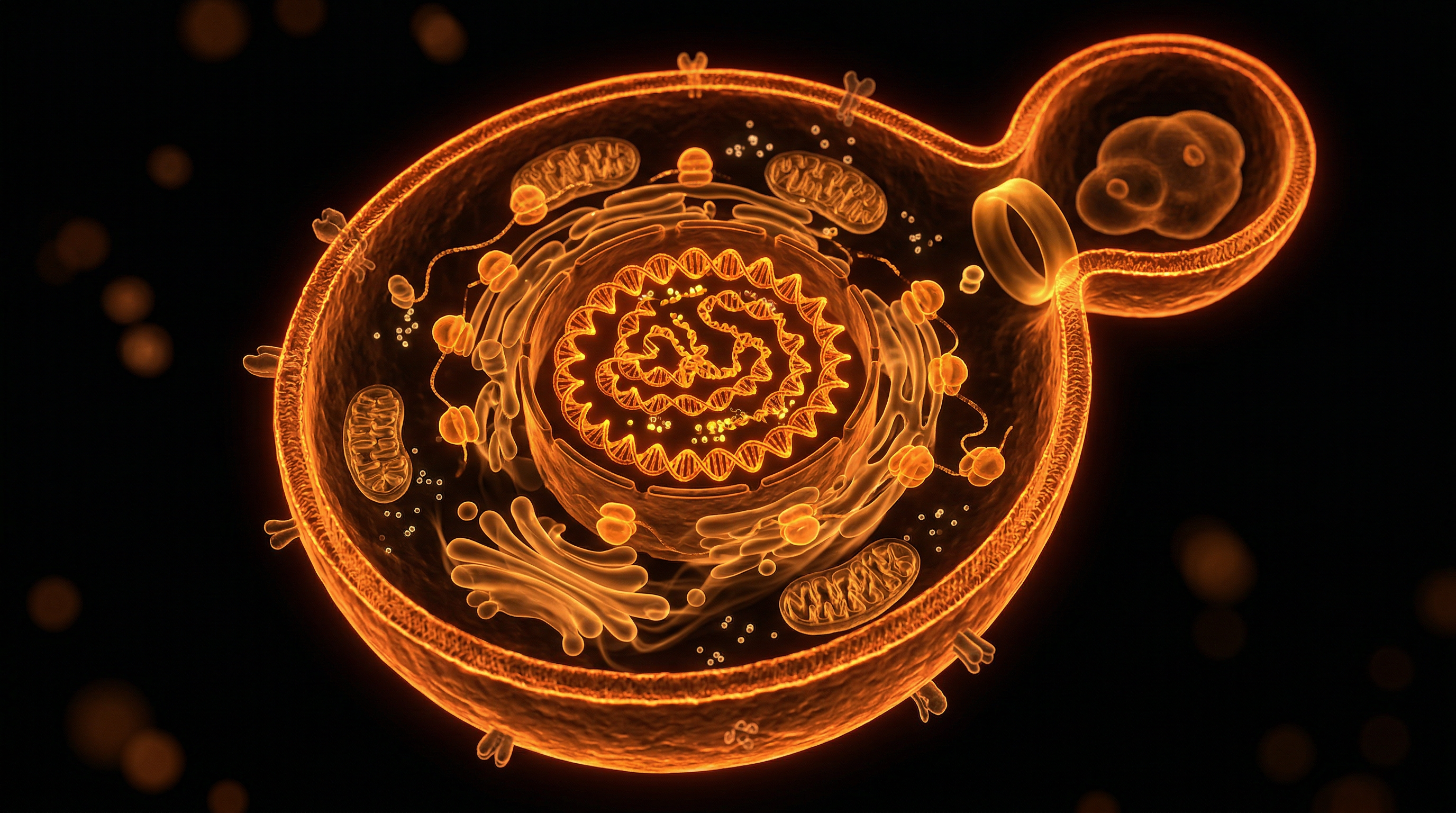
Yeast, specifically Saccharomyces cerevisiae, is not merely the organism that gives us bread and ale. It is a eukaryote, meaning its cellular architecture—complete with a nucleus and complex organelles—mirrors our own. By redesigning the yeast genome, scientists are essentially creating a simplified template for the eventual "upgrading" of more complex life forms, including humans.
As a senior researcher at INNERSTANDING, I have monitored the progression of Sc2.0 with a mixture of professional awe and growing existential dread. We are no longer observing the evolution of life; we are witnessing its total industrialisation. The project aims to replace all 16 natural chromosomes of S. cerevisiae with chemically synthesised versions, stripped of "junk" DNA and "reprogrammed" with designer features that do not exist in nature. While the mainstream scientific press hails this as a triumph for biofuels and medicine, the shadow of ecological collapse and biological destabilisation looms large.
Key Fact: The Sc2.0 project involves over a dozen laboratories globally, aiming to produce a yeast strain with a genome that is ~8% smaller than its natural counterpart, having removed over 1,000,000 base pairs of "unnecessary" genetic material.
The synthesis of life is no longer a trope of science fiction. It is a reality housed in the bioreactors of London, Edinburgh, New York, and Beijing. This article serves as a technical deep-dive and a warning: when we redesign the building blocks of life, we risk dismantling the very foundations of the biosphere.
The Biology — How It Works
To understand the magnitude of synthetic yeast, one must first appreciate the staggering complexity of the eukaryotic genome. Unlike bacteria (prokaryotes), which have simple, circular DNA, yeast possesses a sophisticated system of linear chromosomes wrapped around histone proteins. The Sc2.0 project is not merely "editing" these chromosomes; it is de novo synthesis.
The Design Philosophy: "Build-a-Genome"
The process begins on a computer. Geneticists use software to strip the natural yeast genome of what they deem "instabilities." This includes:
- Retrotransposons: Often called "jumping genes," these are sequences that can move around the genome.
- Introns: Non-coding sequences within genes that are spliced out during RNA processing.
- Subtelomeric repeats: Repetitive sequences at the ends of chromosomes.
By removing these, the researchers create a "streamlined" genome. They then introduce thousands of LoxP sites—essentially molecular "cutting points"—behind every non-essential gene. This allows for a process called SCRaMbLE (Synthetic Chromosome Rearrangement and Modification by LoxP-mediated Evolution), which we will explore in detail later.
Chemical Synthesis and Assembly
Once the digital blueprint is finalised, the DNA is physically built. This occurs in a hierarchical fashion:
- Oligonucleotides: Short strands of DNA (approx. 50-100 base pairs) are chemically synthesised.
- Building Blocks: These "oligos" are stitched together into 750-base pair fragments.
- Minichunks: These are assembled into 2,000-to-4,000-base pair pieces.
- Megachunks: Larger segments of 30,000 to 50,000 base pairs.
- Chromosomal Integration: These "megachunks" are then introduced into a living yeast cell, where they replace the native DNA through a process called homologous recombination.
The Neochromosome
Perhaps the most radical aspect of Sc2.0 is the creation of a 17th chromosome—a "neochromosome" that does not exist in nature. This synthetic construct is designed to house all the tRNA (transfer RNA) genes. In natural yeast, tRNA genes are scattered across all chromosomes and are known "hotspots" for genomic instability. By consolidating them into a single, synthetic, highly controlled chromosome, scientists have created a "hard drive" for the cell’s translation machinery, separate from the rest of its "software."
Statistical Note: In the synthetic chromosome synIII, researchers replaced 273,871 base pairs of the native sequence with a 272,871-base pair synthetic version. Despite the changes, the "designer" yeast remained viable, proving that life is surprisingly resilient to radical structural overhauls.
Mechanisms at the Cellular Level
At the microscopic level, synthetic yeast behaves like a highly efficient, biological machine. However, the removal of "non-essential" DNA has unintended consequences for the cell's internal harmony.
The SCRaMbLE System
The most controversial mechanism within the Sc2.0 genome is the SCRaMbLE system. By adding the enzyme Cre recombinase, scientists can trigger the LoxP sites to cut and paste the genome randomly. This induces massive deletions, inversions, and translocations.
The goal is to "accelerate evolution" to find strains that are better at producing ethanol or surviving high temperatures. In essence, it is controlled chaos. From a biological perspective, this is the equivalent of taking a deck of cards (the genome), throwing them in the air, and hoping they land in a better order. While useful for industrial productivity, the potential for producing a "pathogenic" or "invasive" variant through accidental SCRaMbLE activation is statistically significant and largely unaddressed in public literature.
Translation and Metabolic Flux
In a synthetic yeast cell, the metabolic flux—the rate at which molecules flow through metabolic pathways—is hyper-optimised. Because the "junk" DNA is gone, the cell spends less energy on maintenance and more on "output." This makes synthetic yeast an incredible "cell factory."
However, the transcriptome (the set of all RNA molecules) of synthetic yeast shows subtle deviations from the wild type. These "expression signatures" indicate that the cell is under constant, low-level stress. The synthetic architecture forces the cell to operate at a different thermodynamic equilibrium. For a researcher, this is a curiosity; for an ecosystem, this represents a new, aggressive competitor that operates outside the traditional constraints of biological "fair play."
Epigenetic Rewiring
DNA is not just a sequence; it is a three-dimensional structure. By changing the sequence, the Sc2.0 project alters how the DNA wraps around histones. This epigenetic landscape is crucial for gene regulation. In synthetic yeast, the "chromatin architecture" is fundamentally different. This means the cell might respond to environmental triggers (like heat or toxins) in ways that are entirely unpredictable, potentially leading to the production of novel, toxic secondary metabolites.
Environmental Threats and Biological Disruptors
The narrative surrounding Sc2.0 is one of "biocontainment." We are told these organisms are "crippled" and cannot survive outside the lab. As a researcher who has seen the tenacity of life, I find this claim dangerously naive.
Genetic Pollution and Horizontal Gene Transfer (HGT)
One of the greatest threats is Horizontal Gene Transfer. While yeast typically reproduces through budding or mating, they can also exchange genetic material with other fungi, bacteria, and even plant cells through various mechanisms. If a synthetic chromosome—or even a fragment of one containing the SCRaMbLE architecture—escapes into the wild, it could integrate into the genomes of indigenous fungi.
Imagine a wild soil fungus acquiring the ability to "SCRaMbLE" its genome in response to environmental stress. We could see the emergence of "hyper-evolvable" pathogens that can bypass fungicides and immune systems in a matter of hours rather than decades. This is genetic pollution on a scale never before seen.
Ecological Niche Displacement
Synthetic yeast is designed to be tough. Many Sc2.0 strains are engineered for "robustness"—meaning they can handle higher concentrations of alcohol, lower pH levels, and higher temperatures. If these "super-yeasts" enter the environment, they could out-compete natural decomposers.
The yeast Saccharomyces is a cornerstone of the global ecosystem. It lives on fruits, in the soil, and in the guts of insects. If the synthetic variant displaces the wild type, the entire fermentative cycle of the natural world could be disrupted. This would impact everything from insect nutrition to the decomposition of organic matter in forests.
The "Green Goo" Scenario
While nanotechnology enthusiasts fear "Grey Goo" (self-replicating nanobots), synthetic biologists should fear "Green Goo." This refers to a synthetic organism that is so efficient at capturing resources that it spreads unchecked, suffocating natural biodiversity. A synthetic yeast strain with an "optimised" metabolic pathway for breaking down cellulose, for example, could theoretically decimate plant life if its biocentainment fails.
Risk Assessment: The probability of "escape" is often calculated based on laboratory protocols. It does not account for human error, equipment failure during natural disasters, or deliberate acts of "bioterrorism" using "open-source" synthetic blueprints.
The Cascade: From Exposure to Disease
What happens when these synthetic organisms interact with human physiology? The mainstream view is that yeast is generally "GRAS" (Generally Recognised As Safe). However, the synthetic redesign changes the calculus of pathogenicity.
The Human Mycobiome
The human body is host to a vast community of fungi known as the mycobiome. While S. cerevisiae is usually a transient inhabitant, it can become an "opportunistic pathogen," especially in immunocompromised individuals (a condition called Saccharomycosis).
Synthetic yeast, with its "streamlined" genome and modified cell wall proteins, may interact with the human immune system in novel ways. The "designer" cell walls might not be recognised by our T-cells or macrophages, allowing the yeast to colonise the gut, skin, or lungs without triggering a normal immune response.
Metabolic Interference
The "cascade" begins when synthetic yeast metabolises substances in the human gut. Because their metabolic pathways are "optimised" for industrial output, they may produce high concentrations of byproducts like acetaldehyde or isobutanol.
- Acetaldehyde is a known carcinogen and neurotoxin.
- An overproduction of these metabolites in the gut can lead to "Auto-brewery syndrome," but with a synthetic twist where the toxins produced are more potent or harder for the liver to detoxify.
The Gut-Brain Axis
Recent research into the gut-brain axis suggests that fungal metabolites can influence neurological health. If a synthetic yeast strain colonises the gut, its "designer" metabolites could interfere with neurotransmitter production, potentially leading to chronic fatigue, cognitive "fog," or more severe neurodegenerative conditions. The "cascade" is not a sudden infection; it is a slow, systemic erosion of health caused by a biological "alien" living within the host.
What the Mainstream Narrative Omits
The PR machine for Sc2.0 is slick. They talk of "sustainable chemistry" and "curing diseases." But as an insider, I must highlight the gaps in the story—the "suppressed truths" that don't make it into Nature or Science.
The Dual-Use Dilemma
The same technology used to make yeast produce "artemisinin" (an anti-malarial) can be used to produce botulinum toxin or fentanyl precursors. By modularising the yeast genome, the Sc2.0 project has essentially created a "universal plug-and-play" platform for the production of any biological molecule. The "open-source" nature of the project means that once these blueprints are public, any moderately equipped lab can synthesise a "factory" for illicit or lethal substances.
The Failure of "Kill Switches"
Scientists often boast about auxotrophy—designing the yeast so it requires a specific, lab-provided nutrient to survive. If it escapes, it "dies." However, suppressor mutations are a common biological phenomenon. Organisms find a way. In a population of billions of synthetic yeast cells, it takes only one "lucky" mutation to bypass a kill switch. Furthermore, through HGT, the synthetic yeast can "steal" the necessary genes from wild bacteria to restore its survival functions. The "kill switch" is a digital solution to an analog problem; it is rarely 100% effective.
The Corporate Enclosure of Life
While Sc2.0 is an academic consortium, the patents stemming from it are being scooped up by biotech giants. We are witnessing the privatisation of the eukaryotic template. If these synthetic strains become the industry standard for food, medicine, and fuel, then the very building blocks of our "biocarbon economy" will be owned by a handful of corporations. They are not just redesigning life; they are trademarking it.
The UK Context
The United Kingdom has positioned itself as a global leader in synthetic biology, with the University of Edinburgh playing a pivotal role in the Sc2.0 project. The UK’s Genome Foundry is one of the most advanced facilities in the world for the automated assembly of DNA.
Edinburgh: The "Synth-Yeast" Hub
Researchers at the University of Edinburgh were responsible for synthesising Chromosome VII and Chromosome XIV. The city has become a "Silicon Valley" for synthetic biology, attracting millions in government and private investment. This puts the UK at the forefront of the "bio-revolution," but also at the centre of the risk zone.
Regulatory "Lightness"
Post-Brexit, the UK has signalled a desire to "streamline" regulations regarding gene editing and synthetic biology to remain competitive. The Genetic Technology (Precision Breeding) Act 2023 is a step toward deregulating certain classes of biotech. Critics argue that this "pro-innovation" stance may lead to oversight gaps, particularly regarding the environmental release of "synthetic-adjacent" organisms.
UK Statistic: The UK government has invested over £100 million into synthetic biology "foundries" and research centres over the last decade, viewing it as a "critical technology" for the post-Brexit economy.
The Public Health Oversight
The Health and Safety Executive (HSE) and the Department for Environment, Food & Rural Affairs (DEFRA) are tasked with monitoring these risks. However, the speed of synthetic biology often outpaces the development of robust detection assays. If a synthetic strain were released into the Scottish Highlands or the English countryside tomorrow, would we even have the tools to identify it among the "background noise" of wild fungi?
Protective Measures and Recovery Protocols
If we accept that the "Sc2.0 genie" is out of the bottle, we must move toward a strategy of biovigilance and resilience.
Enhanced Biomonitoring
We need a national (and international) "Biological GPS." This involves:
- Metagenomic Sequencing: Constant air and water sampling to detect "synthetic signatures" (like LoxP sites) in the environment.
- Biosecurity in the "Cloud": Monitoring digital "DNA synthesis orders" for suspicious sequences that match known pathogen templates or Sc2.0 "master-key" sequences.
Trophic Containment
Beyond simple kill switches, we must develop semantic containment. This involves rewriting the genetic code so that the synthetic organism uses a different set of "codons" (the 3-letter DNA "words") to represent amino acids. This makes the synthetic DNA "unreadable" to wild organisms, theoretically preventing Horizontal Gene Transfer. However, this requires a total overhaul of the translation machinery, which is still in its infancy.
Detoxification and "Bio-Recovery"
In the event of a "cascade" infection in humans, traditional anti-fungals like Fluconazole may be ineffective if the synthetic yeast has been "hardened" against them. We must explore:
- Bacteriophages for Fungi (Mycoviruses): Using specific viruses to target and neutralise synthetic fungal strains.
- Probiotic Displacement: Developing "anti-synthetic" probiotic strains that can out-compete the synthetic invaders in the human gut.
Summary: Key Takeaways
The Sc2.0 project is a monumental achievement that simultaneously heralds a new era of industrial capability and a new epoch of biological risk. As we rewrite the yeast genome, we must remain cognizant of the following:
- The Rewrite is Total: This is not a "modification"; it is a wholesale replacement of natural eukaryotic chromosomes with "streamlined" synthetic versions.
- SCRaMbLE is Unpredictable: The system designed to accelerate evolution is an "engine of chaos" that could produce unintended, hazardous biological traits.
- Ecological Risk is Real: Genetic pollution via Horizontal Gene Transfer could "gift" synthetic, highly-adaptable traits to wild, potentially pathogenic fungi.
- Human Impact is Systemic: Colonisation by synthetic yeast could lead to "metabolic cascades," affecting the gut-brain axis and overall systemic health.
- Regulatory Gaps: The rush to "bio-innovation," particularly in the UK context, may be outstripping our ability to safely contain and monitor these "new-to-nature" organisms.
- The Omission: Mainstream science ignores the dual-use potential and the high probability of "biocontainment failure" over a long enough timeline.
The redesign of the building blocks of life is the ultimate expression of human hubris. While we may succeed in building a "better" yeast, we must ask if we are prepared for the world that yeast will build for itself once it leaves the laboratory. The "Operating System of Life" is being rewritten; let us hope it doesn't come with a "system-wide" crash.
This article is provided for informational and educational purposes only. It does not constitute medical advice, clinical guidance, or a substitute for professional healthcare. Information reflects cited research at time of publication. Always consult a qualified healthcare professional before acting on any health information.
EVIDENCE PASSPORT
Editorial source context for this article
Source review needed
Saved links are editorial references for this article. They may support specific claims rather than every sentence. Open and assess each source in context. This passport does not independently verify them.
Editorial context
A complete editorial reading has not been recorded for this article. Source links remain available for you to open and assess directly.
Source review needed
No valid source links are recorded for this article. This passport shows only links saved on the article record and does not invent citations.
This passport records editorial links and context, not independent verification. Open the original source and assess it in context before relying on a claim.
Medical Disclaimer
The information in this article is for educational purposes only and does not constitute medical advice, diagnosis, or treatment. Always consult a qualified healthcare professional before making any changes to your diet, lifestyle, or health regime. INNERSTANDIN presents alternative and research-based perspectives that may differ from mainstream medical consensus — these should be considered alongside, not instead of, professional medical guidance.
Read Full DisclaimerContinue the thread
Keep this question moving.
Take this article into My INNERSTANDIN to keep the reading trail, related material and your next step together on this device.