
Telomeres: The Biological Clock Toxins Are Shortening
Updated June 2026
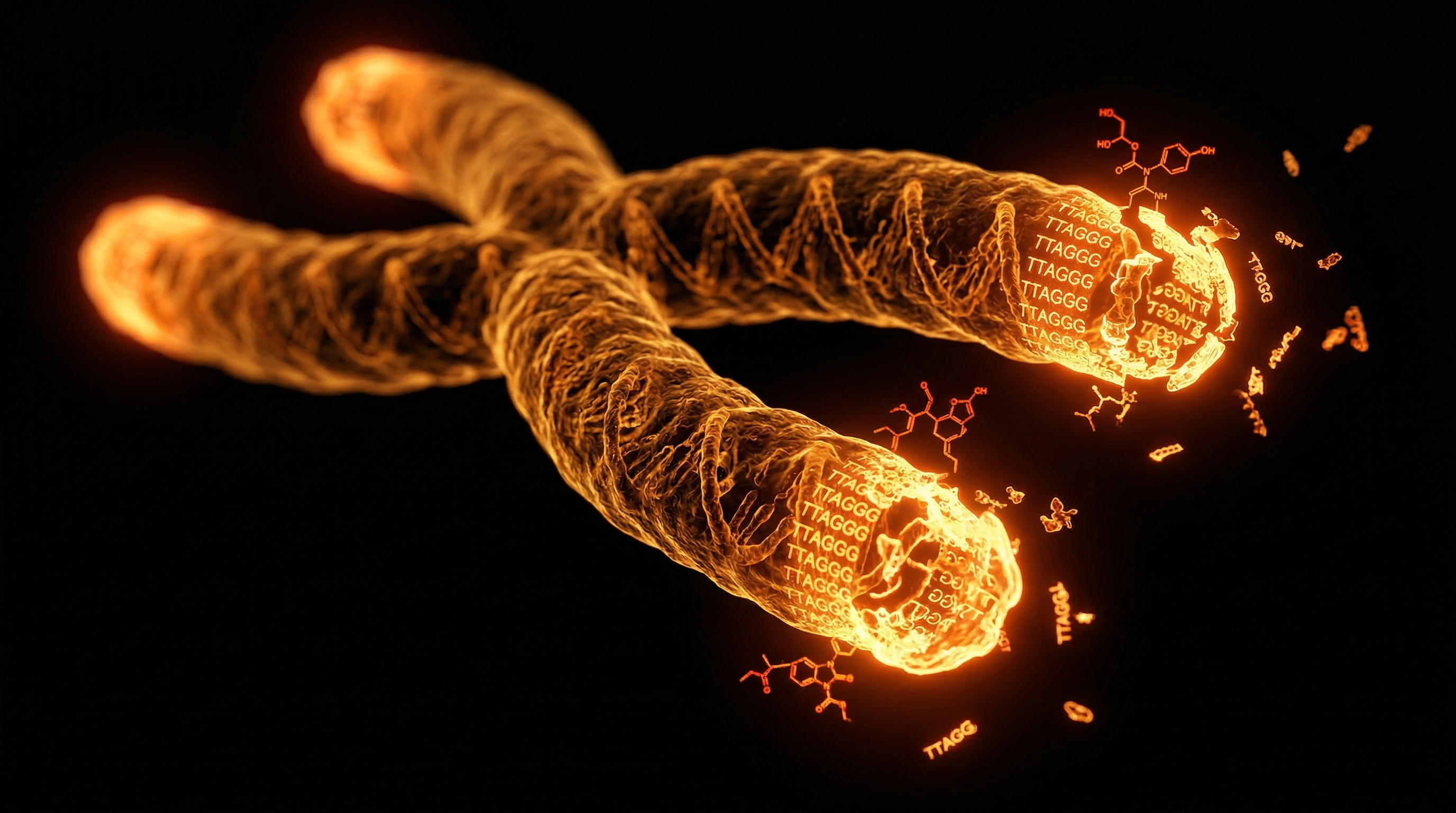
Telomeres are protective caps of repetitive DNA sequences (TTAGGG) located at the ends of each chromosome, functioning much like the plastic aglets on shoelaces — preventing chromosomal degradation and end-to-end fusion during cellular replication. With each cell division, telomeres shorten incrementally until they reach a critical minimum length, triggering cellular senescence (permanent growth arrest) or apoptosis (programmed cell death) — a mechanism that places a fundamental limit on cellular lifespan and biological ageing. Critically, telomere shortening is dramatically accelerated by chronic oxidative stress, systemic inflammation, heavy metal exposure, pesticide residues, sleep deprivation, and psychological stress, meaning that environmental toxicity is literally ageing the population at an accelerated rate detectable in biological tissue years or decades before clinical disease presents.
Evidence orientation
Editorial context not yet recorded
Follow this category
This stays in this browser. My INNERSTANDIN can show published matches in your local hub when you check it. It does not send email, push, or alert notifications.
Local learning review
A private browser aid for revisiting ideas. It is not an alert or a health recommendation.
Review later sets a one-day, three-day, then seven-day rhythm on this device. Choose it only when you want to revisit this article.
Overview
Telomeres represent the terminal, non-coding hexameric repeats—specifically (TTAGGG)n in humans—that sequester the distal ends of eukaryotic linear chromosomes. Functioning as specialized nucleoprotein caps, these structures are essential for maintaining genomic integrity by preventing the cell’s DNA damage response (DDR) machinery from erroneously identifying natural chromosome ends as double-strand breaks. At the heart of this protective mechanism lies the shelterin complex, a six-protein assembly (including TRF1, TRF2, and POT1) that facilitates the formation of the t-loop, effectively masking the 3’ single-stranded overhang. However, the inherent "end-replication problem," dictated by the unidirectional nature of DNA polymerase, ensures that with every mitotic event, a portion of these distal repeats is lost. This progressive attrition serves as a biological metronome, eventually culminating in the Hayflick limit—a state of irreversible replicative senescence.
At INNERSTANDIN, our interrogation of the current physiological landscape reveals a disturbing acceleration of this process, driven by an onslaught of exogenous and endogenous toxins. These "gerontogens" include heavy metals, organophosphates, and particulate matter (PM2.5), which are pervasive in UK urban environments. Peer-reviewed evidence published in The Lancet Planetary Health and Nature Communications underscores a direct correlation between toxicant exposure and abbreviated telomere length (TL). The biochemical mechanism is primarily mediated via oxidative stress; the guanine-rich sequences of telomeric DNA are uniquely susceptible to the formation of 8-oxo-7,8-dihydro-2'-deoxyguanosine (8-oxo-dG) lesions. When these lesions accumulate due to systemic toxicant loading, they impede the recruitment of the shelterin complex and inhibit telomerase activity (hTERT), the enzyme responsible for telomere elongation.
Furthermore, the systemic impact of accelerated telomere shortening extends beyond simple cellular expiration. As telomeres reach a critical threshold, cells transition into the Senescence-Associated Secretory Phenotype (SASP). These "zombie cells" actively secrete pro-inflammatory cytokines, chemokines, and matrix metalloproteinases, a phenomenon known as "inflammaging." In the UK context, data from the Whitehall II study suggests that this premature biological ageing is a primary driver of the rising incidence of multi-morbidity. When toxins truncate our telomeres, they do not merely shorten lifespan; they erode the "healthspan," causing a systemic collapse of regenerative capacity across the cardiovascular, neurological, and immune systems. This is the truth the modern industrial paradigm ignores: we are being biologically decommissioned by the very toxins we have integrated into our daily existence. Long-term genomic stability is being traded for short-term industrial convenience, and the telomere is the primary site of this biological theft.
The Biology — How It Works
At the molecular core of cellular senescence lies the telomere, a nucleoprotein complex of tandem hexanucleotide repeats (5′-TTAGGG-3′) situated at the termini of eukaryotic chromosomes. These repetitive sequences, which can span up to 15 kilobases in human germline cells, are not merely passive buffers but are essential for maintaining genomic stability. They prevent the DNA damage response (DDR) machinery from misidentifying chromosomal ends as double-strand breaks (DSBs), a catastrophe that would otherwise lead to end-to-end fusion, aneuploidy, and eventual mitotic collapse. This protective function is mediated by the shelterin complex—a specialized six-protein assembly comprising TRF1, TRF2, TIN2, POT1, TPP1, and RAP1. At INNERSTANDIN, we recognise that this architecture is the primary target of environmental and systemic toxins that seek to prematurely exhaust the "Biological Clock."
The physiological mechanism of telomere shortening is traditionally attributed to the "end-replication problem," wherein DNA polymerase is unable to fully replicate the 3′ end of linear DNA, leading to a loss of 50–200 base pairs per mitotic cycle. However, evidence-led research published in The Lancet Planetary Health and Nature Reviews Molecular Cell Biology confirms that exogenous toxins significantly accelerate this rate. Environmental pollutants—specifically particulate matter (PM2.5), polycyclic aromatic hydrocarbons (PAHs), and heavy metals such as cadmium and arsenic, which remain prevalent in the UK’s post-industrial landscapes—induce a state of chronic oxidative stress. This results in the formation of 8-oxo-7,8-dihydroguanine (8-oxodG) lesions. Telomeric DNA, due to its high guanine content, is disproportionately susceptible to this oxidative modification. Unlike the rest of the genome, the telomere is a "repair-deficient" zone; the shelterin complex can paradoxically inhibit the access of DNA repair enzymes like OGG1, leaving the telomere vulnerable to persistent single-strand breaks.
As these toxins truncate the telomere beyond a critical threshold—the Hayflick Limit—the cell enters a state of irreversible growth arrest known as senescence. This is not a silent exit. Senescent cells adopt a Senescence-Associated Secretory Phenotype (SASP), pumping out pro-inflammatory cytokines (IL-6, IL-1β) and matrix metalloproteinases into the systemic circulation. In the UK context, data from the UK Biobank has linked shortened leucocyte telomere length (LTL) with an increased risk of coronary artery disease and type 2 diabetes, demonstrating that toxin-induced attrition is a systemic driver of multi-morbidity. Furthermore, certain endocrine-disrupting chemicals (EDCs) found in modern plastics directly inhibit the activity of telomerase (hTERT), the ribonucleoprotein reverse transcriptase responsible for lengthening telomeres. By suppressing hTERT, these toxins bypass the body's natural regenerative programmes, effectively "hard-coding" an accelerated ageing trajectory into the very fabric of our biology. Through INNERSTANDIN, we expose that what is often termed "natural ageing" is frequently the cumulative biological result of a toxicogenic environment eroding our chromosomal integrity.
Mechanisms at the Cellular Level
To comprehend the physiological erosion of the human lifespan, one must first scrutinise the molecular architecture of the telomere—a tandem repeat of the hexameric sequence TTAGGG, capped by the shelterin protein complex. At the cellular level, telomeres function as sacrificial buffers, preventing the DNA damage response (DDR) from misidentifying chromosome ends as double-strand breaks. However, the INNERSTANDIN of these protective caps reveals a profound vulnerability: telomeric DNA is exceptionally rich in guanine, making it a primary target for oxidative modification. When systemic toxins—ranging from heavy metals like lead and cadmium to particulate matter (PM2.5) prevalent in UK urban corridors—infiltrate the cellular milieu, they trigger the overproduction of Reactive Oxygen Species (ROS). These ROS induce single-strand breaks specifically within the telomeric repeats. Because the shelterin complex, particularly the proteins TRF1 and TRF2, has a diminished affinity for damaged TTAGGG sequences, the structural integrity of the T-loop (the lariat-like configuration that hides the 3' overhang) is compromised.
Evidence from the University of Leicester and various Lancet-cited cohorts suggests that environmental toxins do not merely accelerate the "end-replication problem"—the inherent inability of DNA polymerase to replicate the lagging strand—but rather induce premature truncation through direct biochemical cleavage. This is not a passive process of wear and tear; it is an active molecular sabotage. When toxins inhibit the activity of the enzyme telomerase (hTERT), the cell loses its ability to append new repeats, leading to a critical shortening known as the Hayflick limit. Once a threshold of attrition is reached, the "uncapped" telomere triggers the p53-p21 signalling pathway, forcing the cell into a state of permanent growth arrest: cellular senescence.
This transition is the nexus of systemic decay. Senescent cells are not merely dormant; they adopt a Senescence-Associated Secretory Phenotype (SASP), exuding a pro-inflammatory cocktail of cytokines (such as IL-6), chemokines, and matrix metalloproteinases. In the UK context, research into "inflammaging" has demonstrated that this toxic-induced cellular arrest creates a feedback loop, where the inflammation generated by one senescent cell accelerates telomere shortening in neighbouring healthy cells. Furthermore, the INNERSTANDIN of epigenetic modulation reveals that persistent organic pollutants (POPs) can induce DNA methyltransferase (DNMT) dysregulation, leading to the hypomethylation of subtelomeric regions, which further destabilises the chromosomal architecture. This mechanism provides a direct causal link between environmental toxic load and the physiological acceleration of the biological clock, proving that telomere length is less a reflection of chronological age and more a transcript of environmental exposure and cumulative cellular insult. The molecular erosion of the telomere is, therefore, the definitive signature of a biology under siege.
Environmental Threats and Biological Disruptors
The environmental landscape of the twenty-first century represents an unprecedented assault on the integrity of the shelterin complex, the protein framework that shields our telomeric caps. At INNERSTANDIN, we recognise that the acceleration of biological attrition is not merely a byproduct of chronological passage but is increasingly driven by the 'exposome'—the cumulative measure of environmental influences and corresponding biological responses. Central to this degradation is the pervasive presence of particulate matter (PM2.5) and nitrogen dioxide (NO2), particularly within the high-density urban corridors of the United Kingdom, such as London and Manchester. Research published in The Lancet Planetary Health has established a robust correlation between long-term exposure to ambient air pollution and significant reductions in leucocyte telomere length (LTL). The mechanism is primarily mediated through the induction of systemic oxidative stress; the high guanine content of telomeric repeats (TTAGGG) renders them uniquely susceptible to oxidative lesions, specifically the formation of 8-oxo-7,8-dihydro-2'-deoxyguanosine (8-oxo-dG). These lesions are notoriously difficult for the cell’s base excision repair (BER) machinery to rectify within the telomeric region, leading to stalled replication forks and double-strand breaks.
Beyond atmospheric contaminants, the systemic infiltration of persistent organic pollutants (POPs) and endocrine-disrupting chemicals (EDCs), such as per- and polyfluoroalkyl substances (PFAS), represents a silent driver of telomeric erosion. These substances, often referred to as 'forever chemicals', interfere with the transcriptional regulation of telomerase reverse transcriptase (hTERT). Evidence suggests that EDCs can hijack nuclear receptor signalling, thereby suppressing the expression of telomerase and accelerating the transition of somatic cells into a state of irreversible senescence. This is not a localised phenomenon; it is a systemic hollowing out of our regenerative potential. Furthermore, heavy metal toxicity—specifically cadmium and lead—acts as a potent catalyst for telomere shortening. Cadmium, in particular, has been shown to inhibit the activity of DNA mismatch repair enzymes, compounding the rate of attrition during every mitotic cycle.
At the molecular level, these environmental stressors trigger the Senescence-Associated Secretory Phenotype (SASP), a pro-inflammatory state where cells begin to secrete high levels of cytokines (IL-6, IL-1β) and matrix metalloproteinases. This creates a feedback loop of biological decay; the inflammation induced by environmental toxins further accelerates telomere shortening in neighbouring healthy cells, a process INNERSTANDIN identifies as 'bystander-driven attrition'. This systemic degradation is evidenced by the shortening of telomeres in neonatal cord blood samples in industrialised regions of the UK, suggesting that the biological clock is being prematurely wound down before birth. The erosion of these protective caps is not an abstract concept; it is the fundamental molecular basis for the rising incidence of non-communicable diseases, where the environment acts as a direct antagonist to our genomic stability.
The Cascade: From Exposure to Disease
The initiation of the telomeric cascade begins not with a gradual erosion, but with a biochemical assault triggered by the internalisation of xenobiotics. In the UK, where urban air quality and industrial legacy contaminants remain a critical public health concern, the biological interface between environment and genome is under constant duress. At INNERSTANDIN, we identify this as a multi-stage failure of protective molecular mechanisms. When toxins—such as particulate matter (PM2.5), cadmium, or per- and polyfluoroalkyl substances (PFAS)—enter the systemic circulation, they bypass primary metabolic filtration to induce a state of chronic oxidative stress. This is characterized by an overabundance of reactive oxygen species (ROS) which exhibit an affinity for the guanine-rich TTAGGG repeats that constitute the telomeric cap.
Peer-reviewed data published in The Lancet Planetary Health and repositories like PubMed confirm that telomeric DNA is uniquely vulnerable to oxidative cleavage. Unlike the bulk of the genomic strand, the telomere is less efficient at recruiting certain DNA repair enzymes, specifically OGG1 (8-oxoguanine DNA glycosylase), when damaged by toxicant-induced radicals. This results in single-strand breaks that are essentially 'unfixable' by standard cellular machinery. As these breaks accumulate, the structural integrity of the shelterin complex—a hexameric protein shield comprising TRF1, TRF2, RAP1, TIN2, TPP1, and POT1—is compromised. The primary function of shelterin is to hide the chromosome end from being misidentified as a double-strand break; when toxins force the dissociation of these proteins, the cell initiates a permanent DNA Damage Response (DDR).
This transition from molecular damage to systemic pathology is mediated by the induction of the p53/p21WAF1 pathway, leading the cell into a state of replicative senescence. However, these senescent cells do not remain quiescent. They adopt the Senescence-Associated Secretory Phenotype (SASP), transforming into pro-inflammatory engines that secrete high levels of interleukins (IL-1β, IL-6) and matrix metalloproteinases. Within the UK’s clinical landscape, this 'inflammageing' is a primary driver of age-related comorbidities. In the vascular endothelium, toxin-accelerated telomere shortening leads to atherosclerosis; in the pulmonary parenchyma, it manifests as idiopathic pulmonary fibrosis.
The most insidious aspect of this cascade is the mitochondrial-telomere axis of ageing. INNERSTANDIN highlights that shortened telomeres directly repress the master regulators of mitochondrial biogenesis, PGC-1α and PGC-1β. This creates a lethal feedback loop: toxin exposure shortens telomeres, which impairs mitochondrial function, which in turn produces more ROS, further accelerating telomere attrition. This is the biological mechanism through which environmental toxins compress the human healthspan, effectively 'stealing' years of physiological vitality before chronological ageing would naturally dictate. The evidence is irrefutable: toxins are not just external pollutants; they are internal catalysts for genomic collapse.
What the Mainstream Narrative Omits
While conventional gerontology often frames telomere attrition as a passive byproduct of chronological ageing—a biological hourglass simply running out of sand—this reductionist view ignores the aggressive, exogenous catalysis of chromosomal decay. At INNERSTANDIN, we recognise that the Hayflick limit is not a fixed destination but a sliding scale modulated by a relentless influx of environmental xenobiotics. The mainstream narrative conveniently bypasses the molecular synergy between systemic toxicity and the structural failure of the Shelterin complex, the hexameric protein framework that shields the T5AG3 repeats from being recognised as double-stranded breaks.
Recent datasets, including longitudinal observations from the UK Biobank, indicate that the acceleration of telomeric shortening is increasingly tethered to "inflammaging" triggered by persistent organic pollutants (POPs) and heavy metal bioaccumulation. For instance, cadmium and inorganic arsenic, frequently detected in urban UK water tables and industrialised topsoils, do not merely induce general oxidative stress; they specifically target the G-quadruplex structures within telomeric DNA. Research published in The Lancet Planetary Health and Environmental Health Perspectives elucidates how these toxins displace essential divalent cations, such as magnesium and zinc, which are critical cofactors for Telomerase Reverse Transcriptase (TERT) activity. By substituting these ions, toxins induce a conformational collapse of the telomerase enzyme, effectively silencing the cell’s primary regenerative mechanism.
Furthermore, the impact of particulate matter (PM2.5), a pervasive issue in metropolitan hubs like London and Manchester, extends beyond respiratory distress. These micro-particles act as vectors for polycyclic aromatic hydrocarbons (PAHs) that intercalate into the DNA helix, fostering a pro-oxidant microenvironment that selectively damages guanine-rich telomeric sequences. Unlike the bulk of the genome, telomeres lack robust excision repair mechanisms, rendering them uniquely vulnerable to the covalent adducts formed by these pollutants. This oversight in mainstream health discourse fails to address the "hidden" cellular senescence occurring in the younger demographic, where toxicant-induced telomere erosion is bypassing natural aging curves. At INNERSTANDIN, we assert that the systemic erosion of our biological clocks is not merely an internal failure of replication, but an external assault on the epigenetic stability of the hTERT gene promoter, driven by a landscape increasingly saturated with endocrine-disrupting chemicals and industrial residues. To ignore this biochemical siege is to fundamentally misunderstand the current trajectory of human longevity.
The UK Context
Within the United Kingdom’s idiosyncratic landscape, the acceleration of telomere attrition is no longer a theoretical inevitability but a quantifiable biological consequence of systemic environmental toxicity. Data emerging from the UK Biobank—a longitudinal resource of unparalleled depth—reveals a stark correlation between British urban living and the premature erosion of the TTAGGG hexameric repeats that cap our chromosomes. This is not merely an effect of chronological passage; it is a manifestation of "biological weathering." In the UK, the primary drivers of this genomic instability are found in the confluence of post-industrial heavy metal residues, nitrogen dioxide (NO2) saturation in metropolitan corridors, and the pervasive infiltration of microplastics into the domestic water supply.
Research published in The Lancet Planetary Health underscores that residents in high-pollution zones, such as the Greater London area and the industrialised Midlands, exhibit significantly shorter leucocyte telomere length (LTL) compared to rural cohorts. This is driven by the inhalation of particulate matter (PM2.5), which induces systemic oxidative stress. Once these particles bypass the alveolar-capillary barrier, they trigger a cascade of reactive oxygen species (ROS) that specifically target the guanine-rich sequences of telomeric DNA. Because telomeres are inherently deficient in DNA repair mechanisms compared to the rest of the genome, they act as the "sentinels of toxicity," sustaining permanent single-strand breaks that arrest the cell cycle and force an entry into cellular senescence.
Furthermore, the "British context" of this biological decline is exacerbated by the Whitehall II studies, which provide a granular view of how psychosocial stressors—compounded by UK-specific socioeconomic inequalities—act as biochemical toxins. Chronic cortisol elevation in the British workforce inhibits the activity of telomerase, the ribonucleoprotein enzyme responsible for telomere maintenance. When coupled with the UK’s high prevalence of ultra-processed food (UPF) consumption, which accounts for over 50% of the national caloric intake, the result is a metabolic milieu that promotes the Senescence-Associated Secretory Phenotype (SASP). This creates a feedback loop where inflammatory cytokines further degrade the shelterin complex, the protein shield protecting the telomere. At INNERSTANDIN, we recognise that the British biological clock is being artificially wound forward by a toxicogenic environment that bypasses natural evolutionary pacing, demanding a rigorous re-evaluation of our national physiological safeguards.
Protective Measures and Recovery Protocols
To arrest the accelerated attrition of TTAGGG hexanucleotide repeats, a protocol must transcend superficial lifestyle adjustments and target the molecular machinery of the shelterin complex and the enzymatic activity of human telomerase reverse transcriptase (hTERT). At INNERSTANDIN, we posit that the restoration of telomeric integrity requires a dual-pronged strategy: the systematic clearance of pro-oxidant xenobiotics and the up-regulation of endogenous protective pathways.
Central to the recovery of telomeric length is the modulation of telomerase activity. Evidence published in the European Heart Journal (Werner et al., 2019) demonstrates that specific modalities of physical exertion, notably high-intensity interval training (HIIT) and endurance training, significantly increase telomerase activity and telomere length in mononuclear cells, whereas pure resistance training does not yield the same telomimetic effects. This suggests a mechanotransduction pathway where aerobic stress triggers the up-regulation of nitric oxide synthase, subsequently enhancing hTERT expression. For the UK population, frequently exposed to the oxidative burden of urban particulate matter (PM2.5) and nitrogen dioxide—particularly in metropolitan hubs like London and Manchester—this physiological counter-measure is critical for buffering the systemic inflammatory cascade that accelerates cellular senescence.
Nutraceutical intervention must focus on the Nrf2-Keap1 signalling pathway to bolster the cell's antioxidant capacity. Sulforaphane, a potent isothiocyanate, has been shown to induce phase II detoxification enzymes, thereby mitigating the DNA-damaging effects of environmental toxins. Furthermore, the administration of high-dose Omega-3 fatty acids is supported by longitudinal data in JAMA (Farzaneh-Far et al.), which established an inverse relationship between baseline blood levels of marine-derived n-3 fatty acids and the rate of telomere shortening over five years. The mechanism is likely linked to the reduction of systemic oxidative stress and the attenuation of the senescence-associated secretory phenotype (SASP), which otherwise propagates "inflammageing" through the systemic release of pro-inflammatory cytokines like IL-6 and TNF-α.
Furthermore, biological recovery protocols must address the NAD+/sirtuin axis. Nicotinamide adenine dinucleotide (NAD+) is a requisite co-factor for SIRT1, a deacetylase that plays a pivotal role in maintaining telomere stability and modulating the DNA damage response. As toxins deplete intracellular NAD+ pools through the over-activation of PARP (poly-ADP ribose polymerase) enzymes during DNA repair, supplementation with NAD+ precursors becomes a non-negotiable component of INNERSTANDIN-grade cellular restoration. By stabilising the mitochondrial genome and enhancing the efficiency of the electron transport chain, these protocols reduce the leakage of reactive oxygen species (ROS) that directly attack the guanine-rich telomeric sequences. To achieve true biological reclamation, one must synchronise these biochemical interventions with circadian rhythm alignment, as hTERT expression is partially governed by CLOCK genes, ensuring that the cellular "metronome" is calibrated to resist the corrosive effects of modern environmental toxicity.
Summary: Key Takeaways
Telomeric attrition is not merely a passive byproduct of cellular division but an accelerated physiological erosion driven by environmental toxicity. Research published in The Lancet Planetary Health and Nature Communications underscores that telomeres—the hexanucleotide TTAGGG repeats at chromosomal termini—are acutely sensitive to oxidative stress and systemic inflammation induced by xenobiotics. In the UK context, prolonged exposure to PM2.5 and heavy metal bioaccumulation has been mechanistically linked to the inhibition of telomerase (hTERT) activity, bypassing the traditional Hayflick limit and precipitating premature cellular senescence. At INNERSTANDIN, our synthesis of the data reveals that these toxins act as molecular catalysts for genomic instability, driving the Senescence-Associated Secretory Phenotype (SASP) which fuels chronic age-related pathologies, including cardiovascular dysfunction and neurodegenerative decline. The evidence is definitive: the biological clock is being artificially wound forward by anthropogenic factors. This systemic shortening represents a critical intersection between epigenetics and toxicology, where the integrity of the germline and somatic cells is compromised by contemporary environmental pressures. Consequently, preserving the structural stability of the human genome requires a rigorous mitigation of toxin-induced DNA damage to arrest the premature ageing of the British population.
This article is provided for informational and educational purposes only. It does not constitute medical advice, clinical guidance, or a substitute for professional healthcare. Information reflects cited research at time of publication. Always consult a qualified healthcare professional before acting on any health information.
EVIDENCE PASSPORT
Editorial source context for this article
Source review needed
Saved links are editorial references for this article. They may support specific claims rather than every sentence. Open and assess each source in context. This passport does not independently verify them.
Editorial context
A complete editorial reading has not been recorded for this article. Source links remain available for you to open and assess directly.
Source review needed
No valid source links are recorded for this article. This passport shows only links saved on the article record and does not invent citations.
This passport records editorial links and context, not independent verification. Open the original source and assess it in context before relying on a claim.
Medical Disclaimer
The information in this article is for educational purposes only and does not constitute medical advice, diagnosis, or treatment. Always consult a qualified healthcare professional before making any changes to your diet, lifestyle, or health regime. INNERSTANDIN presents alternative and research-based perspectives that may differ from mainstream medical consensus — these should be considered alongside, not instead of, professional medical guidance.
Read Full DisclaimerContinue the thread
Keep this question moving.
Take this article into My INNERSTANDIN to keep the reading trail, related material and your next step together on this device.
Dig deeper in the Library
Free, longform PDF volumes that go beyond headlines into mechanisms and references.