
Tempeh and Phytoestrogens: Hormonal Modulation via Fungi
Updated May 2026
Rhizopus oligosporus fermentation transforms soy into a powerhouse of bioavailable nutrients. We examine how this process modulates phytoestrogens to support hormonal balance in both men and women.
Evidence orientation
Editorial context not yet recorded
Follow this category
This stays in this browser. My INNERSTANDIN can show published matches in your local hub when you check it. It does not send email, push, or alert notifications.
Local learning review
A private browser aid for revisiting ideas. It is not an alert or a health recommendation.
Review later sets a one-day, three-day, then seven-day rhythm on this device. Choose it only when you want to revisit this article.
Overview
In the contemporary landscape of nutritional science, few subjects elicit as much polarized debate as the soybean. Labelled alternatively as a "superfood" or a "hormonal poison," soy has become a battleground for dietary ideologies. However, this binary overlooks a fundamental biological catalyst that transforms a problematic legume into a sophisticated medicinal tool: *fermentation via Rhizopus oligosporus***.
At INNERSTANDING, we recognize that the biological value of a substance is not merely defined by its raw components, but by its state of bioavailability and its interaction with the human microbiome. Tempeh represents the pinnacle of fungal alchemy. Unlike industrial soy isolates or unfermented soy milk, tempeh is a living matrix. Through the action of the Rhizopus fungus, the complex, often inhibitory structures of the soybean are dismantled and reassembled into a potent delivery system for phytoestrogens.
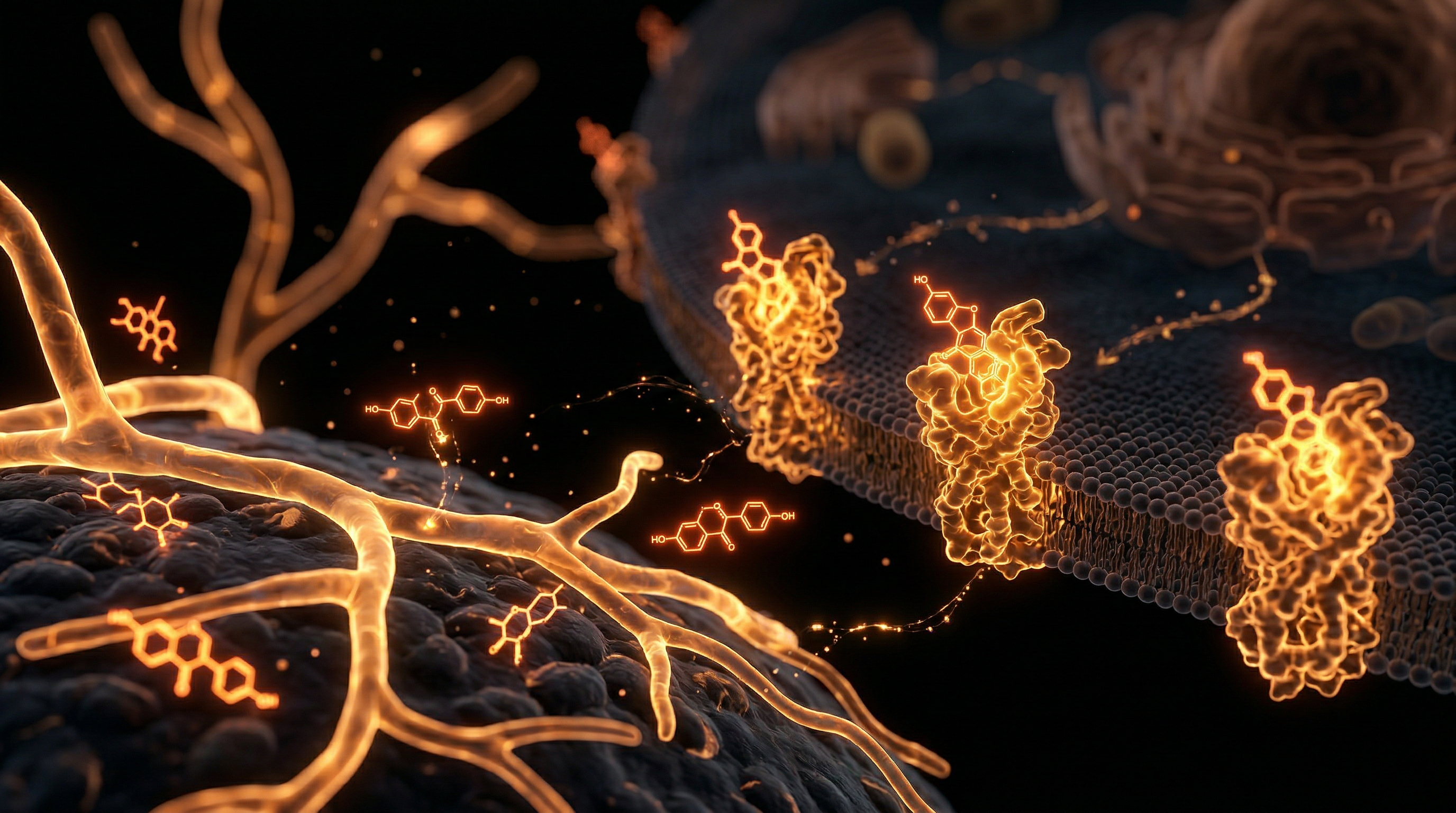
This article serves as a deep dive into the molecular mechanisms of tempeh. We will examine how fungal enzymes convert "locked" glycosides into "active" aglycones, and how these molecules navigate the human endocrine system to provide a stabilising effect against the backdrop of a modern environment saturated with synthetic xenoestrogens. We are moving beyond the "soy boy" caricatures and the industry-funded propaganda to look at the hard cellular data of fungal-mediated hormonal modulation.
Fact: Traditional Indonesian fermentation techniques reduce phytic acid levels in soy by up to 65%, significantly increasing the absorption of zinc, calcium, and magnesium.
The Biology — How It Works
The secret to tempeh’s superiority lies in the lifecycle of the filamentous fungus, *Rhizopus oligosporus*. When this fungus is introduced to dehulled, cooked soybeans, it begins a process of rapid colonisation, weaving a dense white mycelium that binds the beans into a firm cake. But the visible growth is merely the surface of a profound biochemical overhaul.
The Fungal Protease and Lipase Arsenal
As Rhizopus grows, it secretes a suite of extracellular enzymes. These include proteases (which break down proteins into easily absorbable peptides and amino acids) and lipases (which hydrolyse fats into free fatty acids). This "pre-digestion" is vital for human health, as it bypasses the digestive heavy lifting usually required by legumes, which are notorious for causing gastrointestinal distress due to oligosaccharides like stachyose and raffinose.
The Conversion of Glycosides to Aglycones
The most significant transformation involves the soybean's primary isoflavones: Genistein and Daidzein. In raw or minimally processed soy, these compounds are bound to sugar molecules, forming isoflavone glycosides (genistin and daidzin). In this state, they are large, polar molecules that are poorly absorbed by the human intestinal tract.
The Rhizopus fungus produces beta-glucosidase, an enzyme that acts as a molecular pair of scissors, snipping the sugar molecule away from the isoflavone. This yields the aglycone form—the free, bioactive version of the phytoestrogen.
- Genistin (Inactive) → Rhizopus β-glucosidase → Genistein (Active)
- Daidzin (Inactive) → Rhizopus β-glucosidase → Daidzein (Active)
This conversion is not accidental; it is a fundamental shift in the "hormonal signature" of the food. Aglycones are absorbed much faster and more efficiently in the upper small intestine, leading to higher peak plasma concentrations compared to unfermented soy products.
Mechanisms at the Cellular Level
To understand how tempeh modulates hormones, we must look at the Selective Estrogen Receptor Modulator (SERM) effect. Phytoestrogens are often misunderstood as "weak estrogens" that simply add to the body's estrogenic load. In reality, their behaviour is far more nuanced and competitive.
The ER-Alpha vs. ER-Beta Paradigm
Human cells contain two primary types of estrogen receptors: ER-alpha (ERα) and ER-beta (ERβ).
- ERα is primarily found in the breast and uterus; its activation is associated with cellular proliferation (growth).
- ERβ is found in the vascular system, bone, lungs, and the prostate; its activation is generally anti-proliferative and protective.
Genistein, the primary aglycone in tempeh, has an affinity for ERβ that is significantly higher than its affinity for ERα. When genistein binds to ERβ, it exerts a stabilising effect. Perhaps more importantly, because its structure is similar to endogenous 17β-estradiol, it can compete for receptor sites.
Competitive Inhibition
In an environment of "estrogen dominance"—common in modern industrialised societies—the body is flooded with potent endogenous estrogens or synthetic mimics. When the "weaker" phytoestrogens from tempeh occupy the receptor, they effectively block the "stronger," more stimulatory estrogens from binding.
Key Mechanism: By occupying the receptor site and providing a low-level signal, tempeh’s aglycones prevent the hyper-stimulation of tissues that could otherwise lead to hormonal cancers or metabolic dysfunction.
Beyond the Receptor: Epigenetic Signalling
Tempeh’s fungal-derived compounds also influence gene expression. Genistein has been shown to inhibit DNA methyltransferases, enzymes that can silence tumour-suppressor genes. By keeping these "protective" genes active, tempeh acts as a chemopreventive agent at a chromosomal level, a feat that unfermented soy protein isolates cannot replicate due to their lack of fungal metabolites.
Environmental Threats and Biological Disruptors
The necessity for tempeh in the modern diet cannot be understood without acknowledging the hostile chemical environment we now inhabit. We are currently living through an era of "Endocrine Chaos," driven by a category of chemicals known as Xenoestrogens.
The Rise of Xenoestrogens
Xenoestrogens are synthetic compounds that mimic the shape of natural estrogen so perfectly they "hijack" the endocrine system. Unlike the phytoestrogens in tempeh, which are metabolised and excreted relatively quickly, xenoestrogens are often lipophilic (fat-soluble) and persist in human adipose tissue for years.
- Bisphenol A (BPA) and Phthalates: Found in plastics, food linings, and thermal till receipts. They disrupt the signalling of the thyroid and reproductive organs.
- Atrazine and Glyphosate: Ubiquitous herbicides. Atrazine is notorious for inducing "aromatase"—the enzyme that converts testosterone into estrogen—in various species, leading to severe reproductive abnormalities.
- PFOAs: "Forever chemicals" used in non-stick cookware that interfere with hormonal feedback loops.
The Masculinity Crisis and the "Soy Boy" Fallacy
The mainstream narrative frequently targets soy as the cause of declining testosterone and rising "feminisation" in men. This is a masterful diversion. While high-dose, unfermented soy isolates (found in cheap protein bars and processed vegan meats) are indeed problematic due to their processing chemicals and lack of nutrient co-factors, the real culprits behind the decline in male hormonal health are the aforementioned industrial xenoestrogens and the aromatisation caused by high body fat and insulin resistance.
Tempeh actually provides the tools—specifically Daidzein—which can be converted by certain gut bacteria into Equol, a compound that has been shown to bind to DHT (Dihydrotestosterone) in the prostate, potentially reducing the risk of prostate hypertrophy and hair loss without lowering systemic testosterone.
The Cascade: From Exposure to Disease
When the endocrine system is constantly bombarded by synthetic disruptors without the modulating presence of fungal-fermented foods, a predictable pathological cascade occurs.
Phase 1: Receptor Overload
Synthetic estrogens bind to ERα receptors with high affinity. Unlike the "gentle" binding of tempeh’s aglycones, these chemicals send a continuous "grow" signal to tissues. In women, this manifests as Endometriosis or PCOS (Polycystic Ovary Syndrome); in men, it manifests as Gynecomastia and reduced sperm motility.
Phase 2: Metabolic Disruption
The endocrine system is inextricably linked to the metabolic system. Estrogen dominance leads to increased fat storage, particularly in the visceral (belly) region. This fat is not inert; it is an active endocrine organ that produces even more estrogen via the enzyme aromatase, creating a self-perpetuating cycle of hormonal imbalance and obesity.
Phase 3: The Oncogenic Turn
Chronic over-stimulation of hormonal receptors, combined with the DNA-damaging effects of agricultural chemicals like glyphosate, sets the stage for cellular mutation.
Statistical Reality: Global rates of hormone-sensitive cancers (breast, prostate, testicular) have risen sharply since the 1970s, tracking perfectly with the introduction of plasticizers and systemic pesticides into the food chain.
How Tempeh Breaks the Cascade
By providing a clean, fungal-transformed source of isoflavones, tempeh:
- Displaces xenoestrogens from the receptors.
- Downregulates aromatase activity, preventing the over-conversion of testosterone to estrogen.
- Enhances the liver’s Phase II detoxification pathways (specifically glucuronidation) to help the body "flush out" spent hormones and synthetic toxins.
What the Mainstream Narrative Omits
The dietary guidelines issued by governmental bodies often treat "soy" as a monolithic entity. This is a dangerous oversimplification that serves industrial interests rather than public health.
The Processing Deception
The majority of soy consumed in the West is Soy Protein Isolate (SPI). To create SPI, soybeans are bathed in petroleum-based hexane, "washed" in acid and alkaline vats, and subjected to high-temperature spray-drying. This process:
- Denatures the proteins.
- Leaves behind neurotoxic hexane residues.
- Concentrates phytates (which block mineral absorption).
- Destroys the delicate fungal enzymes that make isoflavones beneficial.
The mainstream narrative omits the fact that the "soy studies" showing negative health outcomes are almost exclusively conducted using these ultra-processed isolates or GMO soy heavily sprayed with glyphosate.
The Antinutrient Myth
Mainstream "health influencers" often warn against the lectins and phytates in soy. While these are present in raw soybeans, they are largely neutralised during the tempeh-making process. The Rhizopus fungus essentially "pre-digests" these antinutrients, turning a defensive plant seed into a bioavailable nutrient powerhouse. To lump tempeh in with a "processed soy burger" is a scientific fallacy.
The Vitamin K2 Gap
A crucial piece of the puzzle often ignored is Vitamin K2 (specifically MK-7). While Natto is the most famous source, tempeh also contains significant amounts of K2 as a result of the fermentation process. K2 is essential for directing calcium away from the arteries (where it causes plaques) and into the bones. The synergy between phytoestrogens and K2 in tempeh makes it one of the most potent foods for preventing osteoporosis—a fact rarely mentioned in the calcium-obsessed mainstream discourse.
The UK Context
In the United Kingdom, the hormonal health crisis is particularly acute, yet the official response remains tepid. The UK’s "Westernised" diet, combined with unique environmental factors, makes the adoption of fungal-fermented foods like tempeh a matter of public urgency.
Estrogenic Load in UK Water
The UK’s water recycling systems are not currently equipped to fully filter out pharmaceutical oestrogens (from the contraceptive pill and HRT) that enter the water table.
Fact: Research conducted on UK rivers has shown that male fish are becoming "intersex" due to high levels of ethinylestradiol in the water. This same water, filtered through standard municipal processes, reaches UK taps.
The British public is essentially subjected to a lifelong, low-dose "hormone therapy" via their drinking water. In this context, the SERM activity of tempeh is not just a nutritional "bonus"—it is a necessary biological shield.
The FSA and the GMO Loophole
The UK Food Standards Agency (FSA) has historically been more permissive regarding the labelling of "hidden" soy derivatives in processed foods. Since Brexit, there is ongoing concern regarding the alignment with US standards which allow for higher pesticide residues and GMO contamination. Much of the soy-based livestock feed in the UK is GMO, meaning the British public is indirectly consuming the "broken" soy profile through meat and dairy. Tempeh, ideally sourced as organic and traditional, offers a way for the British consumer to reclaim their hormonal autonomy.
The "Stiff Upper Lip" and Menopause
The UK has one of the highest rates of HRT (Hormone Replacement Therapy) prescriptions in Europe. While HRT can be life-changing for some, the lack of emphasis on dietary modulation via fermented phytoestrogens is a failure of the NHS. Integrating tempeh into the British diet could provide a natural, side-effect-free alternative or adjunct for managing the "hot flushes" and bone density issues associated with the menopause, reducing the burden on an overstretched healthcare system.
Protective Measures and Recovery Protocols
To move from "exposure" to "recovery," one must adopt a strategic approach to consuming tempeh and mitigating environmental damage. It is not enough to simply eat more soy; it must be the right soy, prepared the right way.
Sourcing and Selection
- Always Organic: Soy is one of the most heavily GMO-modified crops. Organic certification ensures the beans were not sprayed with glyphosate, which is a potent endocrine disruptor and gut microbiome destroyer.
- Traditional Fermentation: Ensure the tempeh is fermented with Rhizopus oligosporus. Some modern "tempeh-flavoured" products are merely pressed soy blocks without the actual fungal growth. Look for the visible white mycelium.
- Unpasteurized (Where Possible): While tempeh is usually cooked, sourcing it "fresh" or "live" ensures that the fungal enzymes remain active before the final preparation.
The Preparation Protocol
To maximise the hormonal benefits, follow these steps:
- Steam before Searing: Steaming tempeh for 10-15 minutes "opens up" the mycelial matrix and makes the aglycones more accessible.
- Acidic Marination: Marinate tempeh in apple cider vinegar or lemon juice. The acidity further assists in the breakdown of any remaining phytates and enhances the solubility of the isoflavones.
- Synergistic Fats: Combine tempeh with healthy fats (like avocado or extra virgin olive oil). The isoflavones and Vitamin K2 are fat-soluble, and their absorption is significantly boosted in the presence of lipids.
The "Hormonal Reset" Diet
To recover from xenoestrogen exposure, integrate tempeh into a protocol that includes:
- Cruciferous Vegetables: Broccoli, kale, and cauliflower contain Indole-3-Carbinol (I3C), which works synergistically with genistein to promote healthy estrogen metabolism.
- Iodine-Rich Seaweeds: Iodine is essential for the thyroid, which is often suppressed by soy’s goitrogenic potential if iodine is deficient. (Note: Fermentation significantly reduces goitrogens in tempeh, but iodine remains a vital co-factor).
- Fibre-Rich Seeds: Flax and chia seeds provide lignans, another class of phytoestrogens that complement those found in tempeh.
Frequency and Dosage
For hormonal modulation, consistency is more important than quantity.
- Men: 100g–150g of tempeh, 3 times per week, can provide enough DHT-blocking and ER-beta-stimulating activity to support prostate and metabolic health.
- Women (Peri/Post-Menopause): 150g of tempeh daily has been shown in clinical trials to significantly reduce the frequency and severity of vasomotor symptoms (hot flushes).
Summary: Key Takeaways
The transition from a soybean to tempeh is a masterpiece of fungal engineering. By understanding the molecular biology of this process, we can move past the confusion and leverage this food for true hormonal health.
- Fungal Alchemy: Rhizopus oligosporus transforms inactive glycosides into bioactive aglycones (Genistein and Daidzein), which are absorbed far more effectively than those in unfermented soy.
- The SERM Effect: Tempeh acts as a Selective Estrogen Receptor Modulator, primarily targeting ER-beta receptors. This provides an anti-proliferative, protective effect against cancer and metabolic disease.
- Xenoestrogen Shield: In an environment filled with plastics and pesticides, the phytoestrogens in tempeh act as a "competitive inhibitor," blocking harmful synthetic chemicals from hijacking our hormonal receptors.
- Nutrient Bioavailability: Fermentation neutralises antinutrients like phytic acid and lectins, while synthesising essential nutrients like Vitamin K2.
- The Processed Soy Trap: Mainstream health warnings about soy generally apply to ultra-processed Soy Protein Isolates, not to the ancient, fungal-fermented matrix of tempeh.
- The UK Mandate: Given the estrogenic contamination of the UK water supply and the prevalence of endocrine-disrupting agricultural practices, tempeh should be viewed as a staple for hormonal recovery in the British population.
In the face of an industrial food system that prioritises shelf-life over biological life, tempeh stands as a testament to the power of fungi. It is not merely a meat substitute; it is a complex, hormonal modulator designed by nature and refined by tradition. At INNERSTANDING, we advocate for the return to these "living" foods as a primary defence against the chemical erosion of human health. Embrace the fungus; balance the hormone.
This article is provided for informational and educational purposes only. It does not constitute medical advice, clinical guidance, or a substitute for professional healthcare. Information reflects cited research at time of publication. Always consult a qualified healthcare professional before acting on any health information.
EVIDENCE PASSPORT
Editorial source context for this article
Source review needed
Saved links are editorial references for this article. They may support specific claims rather than every sentence. Open and assess each source in context. This passport does not independently verify them.
Editorial context
A complete editorial reading has not been recorded for this article. Source links remain available for you to open and assess directly.
Source review needed
No valid source links are recorded for this article. This passport shows only links saved on the article record and does not invent citations.
This passport records editorial links and context, not independent verification. Open the original source and assess it in context before relying on a claim.
Medical Disclaimer
The information in this article is for educational purposes only and does not constitute medical advice, diagnosis, or treatment. Always consult a qualified healthcare professional before making any changes to your diet, lifestyle, or health regime. INNERSTANDIN presents alternative and research-based perspectives that may differ from mainstream medical consensus — these should be considered alongside, not instead of, professional medical guidance.
Read Full DisclaimerContinue the thread
Keep this question moving.
Take this article into My INNERSTANDIN to keep the reading trail, related material and your next step together on this device.
Explore this in the Body Map
See where this hits your biology. Interactive anatomy, threats, and protective protocols.
Dig deeper in the Library
Free, longform PDF volumes that go beyond headlines into mechanisms and references.