
The Gut Barrier: Emulsifiers and Permeability in UK Food Chains
Updated May 2026
Industrial seed oils are often combined with emulsifiers that degrade the intestinal mucus layer. We explore how these fats contribute to 'leaky gut' and autoimmune triggers within the British population.
Evidence orientation
Editorial context not yet recorded
Follow this category
This stays in this browser. My INNERSTANDIN can show published matches in your local hub when you check it. It does not send email, push, or alert notifications.
Local learning review
A private browser aid for revisiting ideas. It is not an alert or a health recommendation.
Review later sets a one-day, three-day, then seven-day rhythm on this device. Choose it only when you want to revisit this article.
Overview
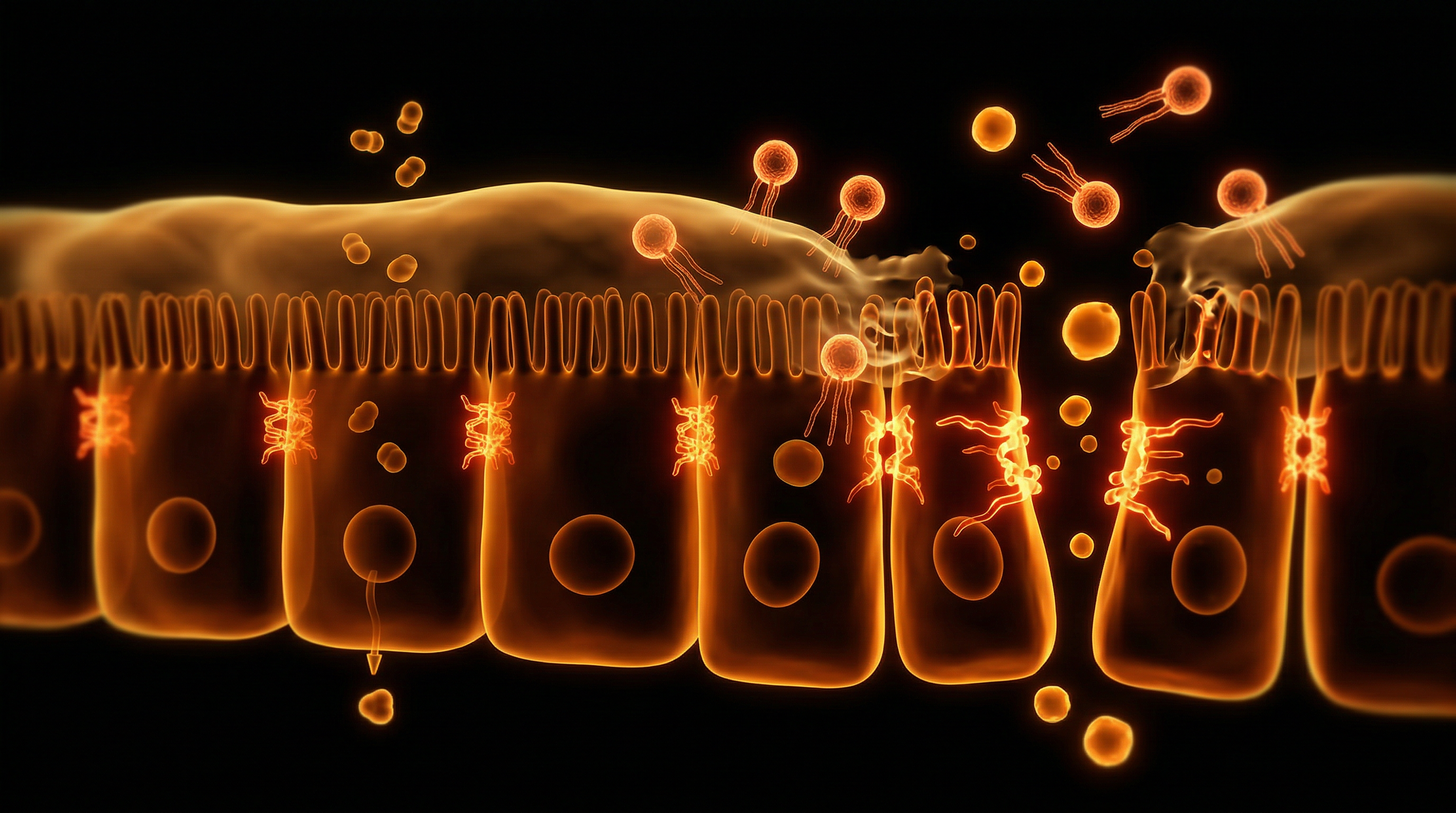
The modern British landscape is defined not by its rolling hills or historic architecture, but by an invisible, internal erosion. As a senior researcher at INNERSTANDING, I have spent decades observing the decoupling of human physiology from its evolutionary foundations. Nowhere is this more evident than in the delicate architecture of the intestinal barrier. This barrier, a single layer of epithelial cells thinner than a strand of hair, is the primary gatekeeper between the external environment and our internal systemic biology.
In the United Kingdom, the shift toward Ultra-Processed Foods (UPFs) has reached a critical zenith. Recent data indicates that over 50% of the average British diet is derived from industrial formulations. Central to these formulations are two specific categories of compounds that work in a devastating synergy: industrial seed oils and synthetic emulsifiers.
While mainstream dietetics often focuses on caloric density or simple macronutrient ratios, it fails to address the functional integrity of the gut. We are witnessing a widespread degradation of the mucus layer, a protective biofilm that prevents the trillions of bacteria in our colon from making direct contact with our immune system. When this layer is compromised—primarily through the detergent-like action of emulsifiers and the oxidative stress of polyunsaturated fatty acids (PUFAs)—the result is intestinal permeability, colloquially known as 'leaky gut'.
This article serves as a deep-dive investigation into the biochemical pathways through which the UK food chain is actively dismantling the British gut, leading to an unprecedented rise in autoimmune conditions, chronic inflammation, and metabolic dysfunction.
Key Statistic: Recent longitudinal studies suggest that the UK has one of the highest prevalences of inflammatory bowel disease (IBD) globally, with rates increasing by over 3% annually, correlating directly with the rise in UPF consumption.
The Biology — How It Works
To understand the pathology, we must first understand the defensive stratigraphy of the gastrointestinal tract. The gut is not a passive tube; it is a dynamic, multi-layered security system.
The Three Pillars of the Gut Barrier
The barrier consists of three distinct layers of protection:
- The Biochemical Layer (Mucus): Produced by goblet cells, this consists of the MUC2 protein. It forms a dense, "inner" sterile layer and a "loose" outer layer where the microbiome resides.
- The Physical Layer (Epithelium): A single layer of columnar epithelial cells held together by Tight Junctions (TJs). These junctions act like biological 'velcro', regulating what passes between cells (the paracellular pathway).
- The Immunological Layer: Residing in the lamina propria, just beneath the epithelium, is approximately 70-80% of the body’s immune system (GALT - Gut-Associated Lymphoid Tissue).
The Role of Tight Junction Proteins
The integrity of the physical layer depends on proteins such as claudins, occludins, and zonula occludens (ZO-1). In a healthy state, these proteins ensure that only fully digested nutrients, electrolytes, and water enter the bloodstream. They are designed to exclude large undigested food proteins, pathogens, and Lipopolysaccharides (LPS)—the toxic components of bacterial cell walls.
When the barrier is intact, the immune system remains 'tolerant'. However, when the mucus layer is thinned and the tight junctions are pried open, the body enters a state of perpetual high alert.
Mechanisms at the Cellular Level
The combination of industrial seed oils (like rapeseed and sunflower oil) and synthetic emulsifiers (like Polysorbate 80 and Carboxymethylcellulose) creates a "perfect storm" for cellular disruption.
Emulsifiers: The Biological Soap
Emulsifiers are added to foods to prevent the separation of water and oil, providing the "mouthfeel" and shelf stability characteristic of British supermarket bread and processed sauces. Chemically, they act as detergents.
- Polysorbate 80 (P80) and Carboxymethylcellulose (CMC) have been shown in murine and ex vivo human models to directly dissolve the hydrophobic mucus layer.
- Once the mucus is thinned, bacteria move from the lumen of the gut into direct contact with the epithelial cells. This is a state known as bacterial encroachment.
- This contact triggers an inflammatory response that further degrades the Tight Junction proteins, effectively opening the "floodgates."
Seed Oils and Lipid Peroxidation
Industrial seed oils, ubiquitous in the UK food chain, are high in Omega-6 Linoleic Acid (LA). While LA is an essential fatty acid in trace amounts, the modern intake is 10-20 times higher than evolutionary norms.
- Oxidative Stress: These polyunsaturated fats are highly unstable and prone to lipid peroxidation when exposed to heat or light during processing.
- When these oxidised lipids are incorporated into the cell membranes of the gut lining, they alter membrane fluidity and signal the release of pro-inflammatory cytokines such as TNF-alpha and Interleukin-6 (IL-6).
- The Synergy: Emulsifiers allow these pro-inflammatory fats to bypass the usual digestive filters, delivering oxidised lipids directly to the mucosal surface.
The Zonulin Pathway
A critical discovery in the last two decades is the role of Zonulin, a protein that modulates intestinal permeability. Exposure to certain triggers—most notably gluten and dysbiotic bacteria (encouraged by emulsifier use)—causes the release of zonulin. Zonulin disassembles the tight junction complex, creating gaps large enough for macro-molecules to transit into the blood.
Important Callout: Synthetic emulsifiers don't just 'mix' oil and water; they actively emulsify the protective fats within our own cell membranes, leading to premature cell death (apoptosis) in the gut lining.
Environmental Threats and Biological Disruptors
The British consumer is uniquely exposed to a cocktail of environmental stressors that exacerbate gut permeability.
The Rapeseed Revolution
In the UK, "Vegetable Oil" on a label almost always refers to Rapeseed Oil (Canola). While marketed as "heart-healthy" due to its low saturated fat content, it is heavily refined using high heat and chemical solvents like hexane. The resulting oil is often already rancid before it reaches the supermarket shelf.
Hidden Emulsifiers: The E-Number List
While some emulsifiers are natural (like egg lecithin), the industrial versions are far more disruptive. Key offenders found in UK "Meal Deal" sandwiches, margarines, and vegan meat alternatives include:
- E433 (Polysorbate 80)
- E466 (Carboxymethylcellulose)
- E471 (Mono- and diglycerides of fatty acids)
- E407 (Carrageenan) - specifically linked to intestinal ulceration.
The Glyphosate Synergist
A significant portion of UK wheat and oilseeds is treated with glyphosate as a desiccant (to dry the crop before harvest). Glyphosate has been shown to act as a "biocide" in the gut, selectively killing beneficial bacteria like Lactobacillus while allowing pathogenic Salmonella and Clostridia to thrive. This dysbiosis makes the gut barrier even more vulnerable to the effects of emulsifiers.
The Cascade: From Exposure to Disease
Once the barrier is breached, a predictable "cascade" of systemic failure begins. This is not a localized gastrointestinal issue; it is a systemic immunological catastrophe.
Phase 1: Metabolic Endotoxaemia
As the tight junctions fail, Lipopolysaccharides (LPS)—endotoxins found in the outer membrane of Gram-negative bacteria—leak into the portal vein. This leads to Metabolic Endotoxaemia, a state of low-grade systemic inflammation.
- The liver's Kupffer cells become overwhelmed trying to detoxify this constant influx of LPS.
- This results in insulin resistance, fatty liver (NAFLD), and systemic oxidative stress.
Phase 2: Molecular Mimicry
The immune system, now exposed to undigested food proteins (like gluten or casein) and bacterial fragments, begins to produce antibodies. Through a process called molecular mimicry, these antibodies begin to attack the body's own tissues because the foreign proteins resemble human proteins at a molecular level.
- Thyroid: Antibodies against gluten can cross-react with thyroid tissue, leading to Hashimoto’s Thyroiditis.
- Joints: LPS translocation is a known trigger for the synovial inflammation seen in Rheumatoid Arthritis.
- Brain: The "Gut-Brain Axis" is compromised as inflammatory cytokines cross the blood-brain barrier, contributing to "brain fog," depression, and neurodegenerative precursors.
Phase 3: The Autoimmune Explosion
The UK is currently seeing a "silent explosion" of autoimmune diagnoses. From Crohn's Disease to Multiple Sclerosis, the common thread is a loss of self-tolerance initiated at the gut barrier.
Fact: Research has shown that individuals with Type 1 Diabetes and Celiac Disease often have elevated levels of zonulin in their blood before the clinical onset of the disease, proving that gut permeability is a driver, not just a symptom.
What the Mainstream Narrative Omits
The refusal of official UK health bodies to acknowledge the danger of emulsifiers and seed oils is not an accident; it is a result of regulatory capture and an outdated scientific paradigm.
The "GRAS" Fallacy
Most emulsifiers used in the UK are classified as GRAS (Generally Recognised As Safe). However, these safety profiles were established decades ago based on acute toxicity (does it kill a rat in 24 hours?) rather than chronic biological disruption (does it slowly degrade the mucus layer over 10 years?).
The Saturated Fat Diversion
For 50 years, the British Heart Foundation and the NHS have focused almost exclusively on reducing saturated fat, which has led to a massive increase in the consumption of processed seed oils. This focus has conveniently ignored the fact that saturated fats (like those found in butter and tallow) are actually essential for the production of short-chain fatty acids (SCFAs) and the maintenance of cell membrane stability in the gut.
Industry-Funded Science
Many "independent" nutrition experts in the UK receive funding from the manufacturers of ultra-processed foods. These researchers often argue that "a calorie is a calorie," ignoring the complex biochemical signalling of industrial additives. They rely on "human clinical trials" that are often too short in duration to observe the slow, decadal erosion of the gut barrier.
The UK Context
The United Kingdom presents a unique "living laboratory" for the study of gut barrier degradation due to specific cultural and economic factors.
The "Meal Deal" Culture
The UK has a uniquely high consumption of "pre-packed" chilled foods. The classic British meal deal—a sandwich, a bag of crisps, and a soft drink—is a concentrated dose of emulsifiers and seed oils.
- The Bread: Supermarket bread in the UK is produced via the Chorleywood Bread Process, which requires high levels of emulsifiers (E471, E472) and industrial fats to achieve rapid rising and long shelf life.
- The Spread: Low-fat spreads and margarines are essentially emulsions of rapeseed oil and water, held together by chemical stabilisers.
The Rise of Veganism and Plant-Based "Meats"
The UK has one of the fastest-growing markets for plant-based alternatives. Paradoxically, these products are often the most highly processed foods on the shelf. To make pea protein or soy flour resemble beef or chicken, manufacturers must use heavy doses of methylcellulose, carrageenan, and refined sunflower oil. The "health halo" surrounding these products masks their role in destroying the gut barrier of the very consumers trying to improve their health.
The NHS Burden
The financial strain on the NHS is increasingly driven by chronic, lifestyle-related conditions. If the UK government were to address the gut-barrier-degrading nature of the food supply, it could potentially save billions. However, the influence of the British Retail Consortium and the Food and Drink Federation makes such a policy shift unlikely in the near term.
Protective Measures and Recovery Protocols
If we accept that the UK food chain is fundamentally hostile to human gut health, we must take individual responsibility for the "biological fortification" of our own barriers.
Elimination: The First Step
The most effective way to heal the gut is to remove the triggers.
- Avoid "Vegetable" and "Seed" Oils: Transition to stable fats like butter, ghee, tallow, and cold-pressed olive oil.
- Scrutinise Labels for E-Numbers: Specifically avoid E433, E466, E471, and E407.
- Reject the Chorleywood Bread: Opt for traditional, long-fermentation sourdough, which contains only flour, water, and salt. The fermentation process actually degrades the anti-nutrients that contribute to gut permeability.
Biological Fortification
Once the disruptors are removed, we must provide the raw materials for barrier repair.
- Amino Acids (L-Glutamine): The primary fuel for colonocytes (gut cells). Glutamine is essential for "plugging the holes" in the tight junctions.
- Collagen and Glycine: Found in traditional bone broth, these proteins provide the structural matrix for the gut lining.
- Short-Chain Fatty Acids (Butyrate): Found in butter and produced by the fermentation of fiber. Butyrate is the primary energy source for the cells of the large intestine and is highly anti-inflammatory.
- Polyphenols: Compounds in dark berries, green tea, and cocoa can help "seal" the gut by modulating zonulin expression.
Restoring the Mucus Layer
To rebuild the protective biofilm:
- Probiotics: Focus on Akkermansia muciniphila, a specific strain of bacteria that stimulates the goblet cells to produce more mucus.
- Prebiotic Fibers: Inulin and FOS (found in leeks, onions, and garlic) provide the substrate for beneficial bacteria to flourish.
Recovery Tip: A 24-hour fast once a week can stimulate autophagy (cellular cleaning) in the gut lining, allowing the body to clear out damaged epithelial cells and replace them with fresh, functional ones.
Summary: Key Takeaways
The gut barrier is the front line of human health, and in the UK, that line is being systematically breached. The combination of industrial seed oils and synthetic emulsifiers acts as a dual-action disruptor: one thins the protective mucus, while the other pries open the cellular gates.
- Intestinal Permeability is the root cause of the modern "Autoimmune Explosion."
- Emulsifiers (E-numbers) act like detergents, dissolving the gut's protective lining.
- Seed Oils promote oxidative stress and systemic inflammation, weakening the tight junctions.
- The UK Food Chain is particularly saturated with these compounds, hidden in bread, sauces, and "healthy" plant-based alternatives.
- Individual Action is required: heal the barrier through ancestral fats, bone broth, and the avoidance of industrial chemical additives.
The mainstream narrative will continue to ignore these biochemical realities in favour of profit-friendly "low fat" and "low calorie" dogmas. At INNERSTANDING, we believe that true health begins with the preservation of our most fundamental biological boundary: the gut. By reclaiming the integrity of our intestinal barrier, we reclaim our immunity, our mental clarity, and our future.
This article is provided for informational and educational purposes only. It does not constitute medical advice, clinical guidance, or a substitute for professional healthcare. Information reflects cited research at time of publication. Always consult a qualified healthcare professional before acting on any health information.
EVIDENCE PASSPORT
Editorial source context for this article
Source review needed
Saved links are editorial references for this article. They may support specific claims rather than every sentence. Open and assess each source in context. This passport does not independently verify them.
Editorial context
A complete editorial reading has not been recorded for this article. Source links remain available for you to open and assess directly.
Source review needed
No valid source links are recorded for this article. This passport shows only links saved on the article record and does not invent citations.
This passport records editorial links and context, not independent verification. Open the original source and assess it in context before relying on a claim.
Medical Disclaimer
The information in this article is for educational purposes only and does not constitute medical advice, diagnosis, or treatment. Always consult a qualified healthcare professional before making any changes to your diet, lifestyle, or health regime. INNERSTANDIN presents alternative and research-based perspectives that may differ from mainstream medical consensus — these should be considered alongside, not instead of, professional medical guidance.
Read Full DisclaimerContinue the thread
Keep this question moving.
Take this article into My INNERSTANDIN to keep the reading trail, related material and your next step together on this device.
Explore this in the Body Map
See where this hits your biology. Interactive anatomy, threats, and protective protocols.
Dig deeper in the Library
Free, longform PDF volumes that go beyond headlines into mechanisms and references.