
The Microbiome-Lipid Axis: Gut Health and Cholesterol
Updated May 2026
Specific gut bacteria can influence blood cholesterol levels by altering bile acid metabolism. This article highlights the role of the UK's microbiome diversity in systemic lipid health.
Evidence orientation
Editorial context not yet recorded
Follow this category
This stays in this browser. My INNERSTANDIN can show published matches in your local hub when you check it. It does not send email, push, or alert notifications.
Local learning review
A private browser aid for revisiting ideas. It is not an alert or a health recommendation.
Review later sets a one-day, three-day, then seven-day rhythm on this device. Choose it only when you want to revisit this article.
Overview
For decades, the medical establishment has presented a reductionist view of cardiovascular health, framing cholesterol as a solitary villain and diet as the primary lever of control. We have been conditioned to believe that blood lipid levels are merely a reflection of the fats we ingest and the genetic hand we were dealt. However, a profound paradigm shift is underway within the upper echelons of biological research—one that the mainstream narrative has been slow to integrate. This shift centres on the Microbiome-Lipid Axis.
The human gastrointestinal tract is not merely a site of digestion; it is a sophisticated bioreactor inhabited by trillions of microorganisms. These microbes do more than break down fibre; they act as a secondary endocrine organ, directly modulating systemic metabolism. Emerging evidence reveals that the composition and diversity of our gut microbiota are the primary determinants of how lipids are processed, transported, and excreted.
This article explores the intricate connection between the gut environment and systemic cholesterol levels. We will examine how specific bacterial metabolites, particularly through the manipulation of bile acid pathways, dictate the concentration of Low-Density Lipoprotein (LDL) and High-Density Lipoprotein (HDL) in the blood. In the United Kingdom, where cardiovascular disease remains a leading cause of mortality despite widespread statin use, understanding this axis is not merely an academic exercise—it is a public health imperative. We are witnessing the collapse of the "calories in, calories out" and "fat is bad" dogmas, replaced by a complex biological reality where the health of our internal ecosystem dictates the longevity of our heart.
Key Fact: Recent meta-analyses indicate that the gut microbiome may account for as much as 34% of the variation in individual blood lipid levels, a figure that rivals genetic predisposition.
The Biology — How It Works
To understand the Microbiome-Lipid Axis, one must first understand the life cycle of cholesterol and its transformation into bile acids. Cholesterol is the precursor to all steroid hormones, vitamin D, and bile acids. The liver synthesises primary bile acids (cholic acid and chenodeoxycholic acid) from cholesterol, which are then stored in the gallbladder and secreted into the small intestine to emulsify fats.
The Enterohepatic Circulation
Under normal physiological conditions, approximately 95% of these bile acids are reabsorbed in the terminal ileum and returned to the liver via the portal vein. This is known as the enterohepatic circulation. The microbiome intervenes at this critical juncture.
Microbial Biotransformation
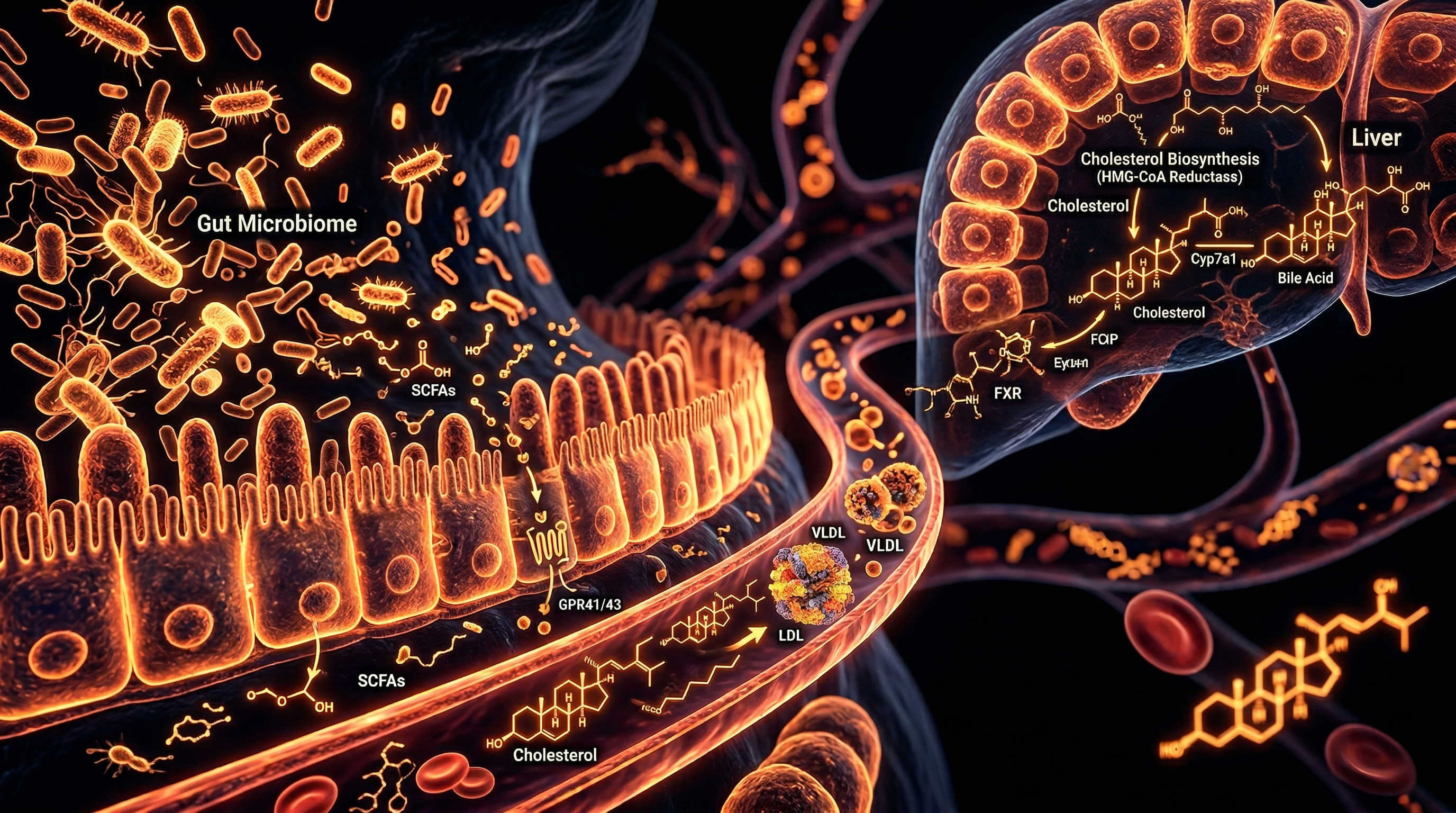
Certain bacteria possess an enzyme called Bile Salt Hydrolase (BSH). This enzyme deconjugates bile salts, making them less soluble and thus harder for the body to reabsorb. When bile acids are deconjugated by microbes, they are more likely to be excreted in the faeces. To compensate for this loss, the liver must pull more cholesterol from the bloodstream to synthesise new bile acids, effectively lowering systemic cholesterol levels.
The Role of Secondary Bile Acids
Furthermore, gut bacteria transform primary bile acids into secondary bile acids (such as deoxycholic acid and lithocholic acid). These molecules act as potent signalling ligands that bind to nuclear receptors throughout the body, most notably the Farnesoid X Receptor (FXR) and the TGR5 receptor. These receptors act as the "master switches" for lipid and glucose metabolism.
- Firmicutes and Bacteroidetes: The ratio of these two major phyla is often cited as a marker of metabolic health. A skewed ratio is frequently observed in patients with hypercholesterolaemia.
- The "Good" Lipid Regulators: Specific genera, including Lactobacillus, Bifidobacterium, and Oscillibacter, have been identified as key players in maintaining a healthy lipid profile through BSH activity and the production of short-chain fatty acids.
Mechanisms at the Cellular Level
The influence of the microbiome on lipids is not a vague association; it is a high-resolution molecular process. The dialogue between microbes and the human host occurs through several distinct pathways.
1. The FXR-FGF19 Axis
The Farnesoid X Receptor (FXR) is highly expressed in the liver and the intestine. When bile acids (modulated by bacteria) bind to FXR in the gut, they trigger the release of a hormone called Fibroblast Growth Factor 19 (FGF19) in humans (FGF15 in mice). This hormone travels to the liver and inhibits the enzyme CYP7A1, which is the rate-limiting enzyme in cholesterol-to-bile acid synthesis. By altering the bile acid pool, dysbiotic (imbalanced) bacteria can "trick" the liver into thinking it has enough bile acids, thereby shutting down the natural pathway that would normally consume excess cholesterol.
2. Short-Chain Fatty Acids (SCFAs) and HMG-CoA Reductase
When beneficial bacteria ferment dietary fibre, they produce SCFAs, primarily acetate, propionate, and butyrate.
- Propionate has been shown to enter the portal circulation and travel to the liver, where it directly inhibits HMG-CoA reductase.
- This is the exact same enzyme targeted by statin drugs. In essence, a healthy microbiome produces its own "natural statins" in the form of propionate, regulating cholesterol synthesis without the systemic side effects associated with pharmaceutical intervention.
3. TGR5 and Energy Expenditure
The secondary bile acids produced by the microbiome also bind to the TGR5 receptor. Activation of TGR5 in muscle and adipose tissue increases energy expenditure and improves insulin sensitivity. By enhancing the metabolic rate, the microbiome ensures that lipids are used as fuel rather than being sequestered in the arterial walls or stored as visceral fat.
4. Reverse Cholesterol Transport (RCT)
The microbiome also influences Reverse Cholesterol Transport, the process by which HDL ("good" cholesterol) collects excess cholesterol from the tissues and returns it to the liver for excretion. Specific microbial metabolites have been shown to upregulate the transporters (such as ABCA1) that facilitate this "clearing out" process, ensuring that the vascular system remains free of atherosclerotic plaques.
Scientific Fact: Bacterial deconjugation of bile acids by the BSH enzyme can reduce serum LDL cholesterol by up to 15% in clinical trials involving specific probiotic strains.
Environmental Threats and Biological Disruptors
The integrity of the Microbiome-Lipid Axis is under constant assault from modern environmental factors. We are living in an era of "biological disruption," where the chemical landscape of our daily lives is antagonistic to our internal symbionts.
The Antibiotic Blitz
The most direct threat is the overuse of antibiotics, both in clinical settings and through the food chain. Even a single course of broad-spectrum antibiotics can decimate the BSH-producing bacteria required for lipid regulation. In the UK, while medical prescriptions have seen a slight decline, the legacy of agricultural use remains a significant concern, as trace amounts of antibiotics in meat and dairy continue to exert selective pressure on the human gut.
Glyphosate: The Hidden Antibiotic
Glyphosate, the most widely used herbicide in the world and frequently found in non-organic British grains, is often overlooked as a metabolic disruptor. Glyphosate works via the shikimate pathway, which humans do not possess. However, many of our most beneficial gut bacteria do use this pathway. By inhibiting these bacteria, glyphosate induces a state of chronic dysbiosis, indirectly contributing to the rise in systemic cholesterol levels.
Ultra-Processed Foods (UPFs) and Emulsifiers
The modern British diet is heavily reliant on ultra-processed foods. These products contain synthetic emulsifiers (such as polysorbate 80 and carboxymethylcellulose) designed to improve texture. Studies have shown that these compounds act like detergents in the gut, stripping away the protective mucus layer and allowing pro-inflammatory bacterial fragments—specifically Lipopolysaccharides (LPS)—to enter the bloodstream. This leads to metabolic endotoxaemia, a state of low-grade inflammation that prevents the liver from properly processing lipids.
Artificial Sweeteners
Non-caloric artificial sweeteners, once touted as a "healthy" alternative to sugar for weight loss, have been exposed as potent disruptors of the microbiome. Compounds like aspartame and sucralose can alter the microbial landscape in a way that promotes glucose intolerance and increases the production of acetate, which can inadvertently fuel the liver’s synthesis of triglycerides and cholesterol.
The Cascade: From Exposure to Disease
The journey from an environmental exposure to a clinical diagnosis of heart disease is a "biological cascade." Understanding this progression is vital for early intervention.
Phase 1: The Initial Insult
The cascade begins with the loss of microbial diversity. Factors like a low-fibre diet or antibiotic exposure reduce the population of Bacteroidetes and BSH-active bacteria.
Phase 2: Impaired Bile Flow and Signalling
As the BSH activity declines, bile acids are not deconjugated at the correct rate. The pool of secondary bile acids shrinks, leading to reduced activation of the FXR and TGR5 receptors. The liver, receiving incorrect signals, fails to downregulate cholesterol production and becomes sluggish in its ability to clear LDL from the blood.
Phase 3: Leaky Gut and Endotoxaemia
The thinning of the mucosal barrier allows LPS (endotoxins) from the cell walls of gram-negative bacteria to leak into the portal vein. This is the "Leaky Gut" phenomenon. Once LPS reaches the liver, it triggers an inflammatory response via Toll-like Receptor 4 (TLR4).
Phase 4: Hepatic Steatosis and Dyslipidaemia
The inflamed liver begins to accumulate fat (Non-Alcoholic Fatty Liver Disease or NAFLD). This dysfunctional liver now produces smaller, denser LDL particles. These "Small-Dense LDL" (sdLDL) particles are much more prone to oxidation and are the primary drivers of plaque formation in the arteries.
Phase 5: Atherosclerosis
Finally, the systemic inflammation and high levels of sdLDL lead to the formation of arterial plaques. Because the microbiome's ability to facilitate Reverse Cholesterol Transport is compromised, the body cannot effectively clear these deposits. This results in the narrowing of the arteries, eventually leading to hypertension, heart attack, or stroke.
Important Callout: Hypertension and high cholesterol are often symptoms of a deeper microbial failure, not the root cause of cardiovascular disease themselves.
What the Mainstream Narrative Omits
The current medical approach to cholesterol is fundamentally flawed because it ignores the Microbiome-Lipid Axis. This omission is not merely an oversight; it is reinforced by an institutionalised reliance on pharmaceutical solutions.
The Statin Fixation
Statins are among the most prescribed drugs in the UK. While they are effective at inhibiting the liver's synthesis of cholesterol, they do nothing to address why the body is producing excess cholesterol or failing to excrete it. By focusing solely on the liver, the mainstream narrative ignores the gut, where the primary regulation occurs. Furthermore, some research suggests that statins themselves can negatively alter the microbiome, potentially creating a cycle of dependency.
The "Saturated Fat" Diversion
For decades, the public has been told that saturated fat is the primary driver of high cholesterol. This focus on a single macronutrient has diverted attention away from the role of microbial diversity. A person with a robust, diverse microbiome can often metabolise dietary fats efficiently, whereas someone with dysbiosis will see a spike in lipids regardless of their fat intake. The mainstream focus on "low-fat" products—which are often high in sugar and additives—has likely exacerbated the microbiome crisis.
The Suppression of the "Leaky Gut" Link
The medical establishment has been slow to accept "Leaky Gut" (increased intestinal permeability) as a clinical reality, often dismissing it as "alternative" medicine. However, the role of metabolic endotoxaemia in driving lipid disorders is well-documented in high-impact immunology and gastroenterology journals. By refusing to acknowledge this link, the mainstream narrative fails to provide patients with the tools to heal their gut, focusing instead on managing symptoms with lifelong medication.
The UK Context
The United Kingdom presents a unique and troubling case study in the breakdown of the Microbiome-Lipid Axis. Several factors specific to the UK contribute to our high rates of metabolic and cardiovascular disease.
The Most Processed Nation in Europe
Data indicates that the UK consumes the highest amount of ultra-processed foods in Europe, with UPFs making up over 50% of the average British diet. This reliance on "convenience" foods has led to a catastrophic decline in dietary fibre, the primary fuel for the bacteria that regulate cholesterol.
The Decline of British Soil Health
The quality of our gut microbiome is inextricably linked to the quality of the soil in which our food is grown. Decades of intensive chemical farming in the UK have depleted the soil of its own microbial diversity. When we consume produce grown in "dead" soil, we are deprived of the environmental microbes and phytonutrients that help maintain our internal ecosystem.
The "Statin-First" NHS Protocol
Under current NHS guidelines, the threshold for prescribing statins has been lowered significantly. While this is intended as a preventative measure, it often bypasses the opportunity for metabolic restoration through microbiome health. The standard 10-minute GP consultation rarely allows for a deep dive into gut health, fermented foods, or environmental toxin exposure.
The Sedentary British Lifestyle
The UK's urban design and lifestyle often discourage the "incidental exercise" and contact with nature (the "Hygiene Hypothesis") that are essential for microbial diversity. Contact with soil, forests, and diverse natural environments is known to "seed" the microbiome with beneficial species, a practice largely lost in modern British life.
Protective Measures and Recovery Protocols
Restoring the Microbiome-Lipid Axis requires a holistic approach that goes beyond simple dietary changes. It is about creating an environment—both internally and externally—where lipid-regulating bacteria can thrive.
1. Re-seeding with BSH-Active Probiotics
Not all probiotics are created equal. For lipid health, one must focus on strains with proven Bile Salt Hydrolase (BSH) activity.
- Strains to look for: Lactobacillus plantarum, Lactobacillus reuteri (specifically NCIMB 30242), and Bifidobacterium lactis.
- These strains have been shown in clinical trials to actively reduce LDL cholesterol by deconjugating bile acids in the small intestine.
2. The "30-Plant" Rule
Diversity is the hallmark of a healthy microbiome. To provide the necessary variety of fibres (prebiotics) for different bacterial species, aim to consume at least 30 different plant-based foods per week. This includes vegetables, fruits, nuts, seeds, herbs, and spices. In a UK context, this means moving beyond "meat and two veg" to a more diverse, seasonally-led plate.
3. Therapeutic Use of Fermented Foods
Traditional fermented foods are a natural source of BSH-active bacteria and SCFAs.
- Incorporate: Raw sauerkraut, kimchi, kefir, and kombucha.
- The British Context: Traditional British "live" foods, such as unpasteurised apple cider vinegar with the "mother" and traditionally fermented pickles, should be prioritised over supermarket versions that are often pasteurised (which kills the beneficial bacteria).
4. Strategic Fibre Intake (The Three Pillars)
To lower cholesterol via the gut, one needs three specific types of fibre:
- Soluble Fibre (Beta-Glucans): Found in oats and barley. These form a gel that traps bile acids.
- Resistant Starch: Found in cooked and cooled potatoes or green bananas. This is the primary fuel for butyrate-producing bacteria.
- Inulin and FOS: Found in leeks, onions, and garlic. These act as "fertilisers" for Bifidobacteria.
5. Eliminating the "Big Three" Disruptors
To allow the gut to heal, one must remove the agents of destruction:
- Avoid Glyphosate: Opt for organic British produce whenever possible, especially for grains and legumes which are heavily sprayed.
- Eliminate Emulsifiers: Read labels carefully. Avoid products containing lecithin, polysorbates, or gums if you are struggling with high cholesterol.
- Filter Your Water: UK tap water contains chlorine and fluoride, both of which have antimicrobial properties that can subtly shift the gut balance over time. Use a high-quality water filter.
6. Intermittent Fasting and Migrating Motor Complex (MMC)
The gut needs "downtime" to clean itself. The Migrating Motor Complex is a wave of electrical activity that sweeps through the gut during fasting periods, clearing out undigested food and preventing bacterial overgrowth in the small intestine (SIBO). Practising a 14:10 or 16:8 fasting window can improve the microbial landscape and enhance lipid metabolism.
Summary: Key Takeaways
The Microbiome-Lipid Axis represents the "missing link" in our understanding of cardiovascular health. It is the bridge between the food we eat, the environment we inhabit, and the lipid profile our doctor sees on a blood test.
- Cholesterol is a Dynamic Metabolite: It is not a static number but a substance constantly being reshaped, recycled, or excreted by the trillions of bacteria in our gut.
- Bile Acids are the Key: The microbial deconjugation of bile acids via the BSH enzyme is a primary mechanism for natural cholesterol reduction.
- Inflammation is the Driver: Dysbiosis leads to metabolic endotoxaemia, which inflames the liver and disrupts the entire lipid-processing system.
- Mainstream Medicine is Lagging: The current reliance on statins ignores the root cause of dyslipidaemia—a damaged and depleted microbiome.
- The UK Environment is Antagonistic: High UPF consumption, soil depletion, and chemical exposure make the British population particularly vulnerable to microbiome-driven lipid issues.
- Restoration is Possible: Through diverse plant intake, targeted BSH-active probiotics, and the removal of environmental toxins, the Microbiome-Lipid Axis can be repaired, leading to systemic metabolic health.
In the pursuit of heart health, we must look beyond the arteries and into the gut. The "Silent Orchestrator"—our microbiome—holds the baton. If we provide the right environment, the symphony of our metabolism will remain in perfect harmony; if we continue to disrupt it, the discord will manifest as the chronic diseases that currently define our age. The choice, ultimately, lies in our understanding of this invisible but vital axis.
This article is provided for informational and educational purposes only. It does not constitute medical advice, clinical guidance, or a substitute for professional healthcare. Information reflects cited research at time of publication. Always consult a qualified healthcare professional before acting on any health information.
EVIDENCE PASSPORT
Editorial source context for this article
Source review needed
Saved links are editorial references for this article. They may support specific claims rather than every sentence. Open and assess each source in context. This passport does not independently verify them.
Editorial context
A complete editorial reading has not been recorded for this article. Source links remain available for you to open and assess directly.
Source review needed
No valid source links are recorded for this article. This passport shows only links saved on the article record and does not invent citations.
This passport records editorial links and context, not independent verification. Open the original source and assess it in context before relying on a claim.
Medical Disclaimer
The information in this article is for educational purposes only and does not constitute medical advice, diagnosis, or treatment. Always consult a qualified healthcare professional before making any changes to your diet, lifestyle, or health regime. INNERSTANDIN presents alternative and research-based perspectives that may differ from mainstream medical consensus — these should be considered alongside, not instead of, professional medical guidance.
Read Full DisclaimerContinue the thread
Keep this question moving.
Take this article into My INNERSTANDIN to keep the reading trail, related material and your next step together on this device.
Explore this in the Body Map
See where this hits your biology. Interactive anatomy, threats, and protective protocols.
Dig deeper in the Library
Free, longform PDF volumes that go beyond headlines into mechanisms and references.