
The Mucosal Barrier: Strengthening Intestinal Integrity
Updated May 2026
Leaky gut syndrome is a precursor to systemic inflammation and chronic disease. Fermented foods stimulate the production of mucin, the protective layer that prevents toxins from entering the bloodstream.
Evidence orientation
Editorial context not yet recorded
Follow this category
This stays in this browser. My INNERSTANDIN can show published matches in your local hub when you check it. It does not send email, push, or alert notifications.
Local learning review
A private browser aid for revisiting ideas. It is not an alert or a health recommendation.
Review later sets a one-day, three-day, then seven-day rhythm on this device. Choose it only when you want to revisit this article.
Overview
The human gastrointestinal tract is not merely a tube for the passage of food; it is a sophisticated, highly selective biological frontier. Spanning a surface area roughly the size of a tennis court, the intestinal epithelium represents the primary interface between the internal milieu of the human body and the external environment. Within this vast expanse, a single layer of epithelial cells stands as the sentinel of our health, tasked with a seemingly impossible dual mandate: the seamless absorption of vital nutrients and the absolute exclusion of pathogens, toxins, and undigested dietary proteins.
This delicate equilibrium is maintained by the mucosal barrier, a multi-dimensional defense system that is currently under unprecedented assault from modern industrial living. When this barrier fails, we encounter the phenomenon colloquially termed "Leaky Gut" (increased intestinal permeability). Far from being a fringe "wellness" concept, intestinal permeability is now recognised by the vanguard of biological research as a foundational precursor to systemic inflammation, autoimmune dysfunction, and a spectrum of chronic metabolic diseases.
At INNERSTANDING, we posit that the degradation of the mucosal barrier is the silent driver of the modern health crisis. The scientific community has long observed the correlation between gut health and systemic disease, yet the profound mechanisms of the mucin layer—the literal physical lubricant and shield of the gut—remain undervalued in mainstream clinical practice. We must look beyond the symptoms to the architecture of the barrier itself. This article explores the biological intricacies of the mucosal barrier, the molecular mechanisms of its failure, and the restorative power of probiotic medicine—specifically fermented foods—in reinforcing this vital biological wall.
The Biology — How It Works
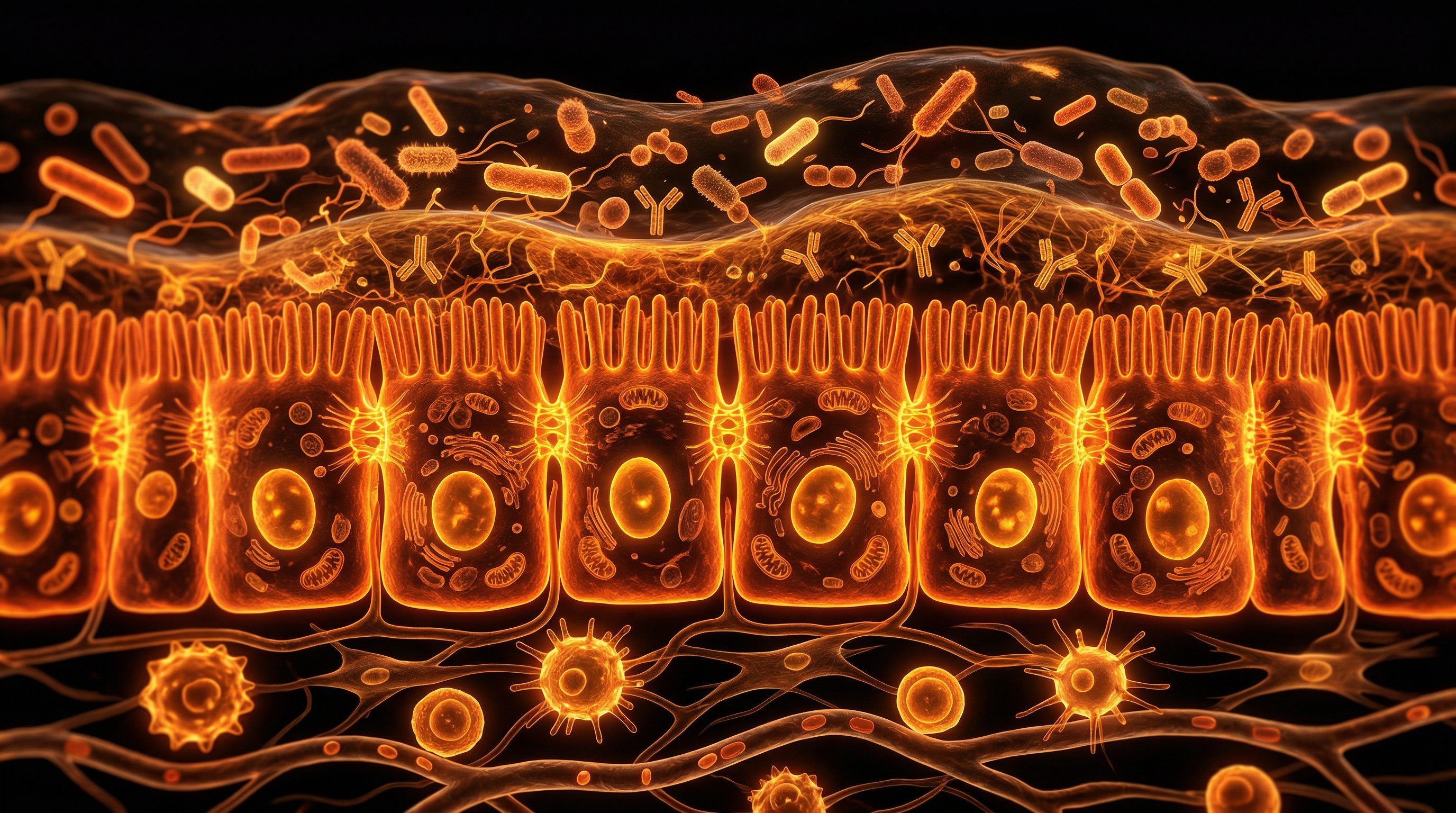
To understand the failure of the gut, one must first appreciate its complex engineering. The mucosal barrier is not a static wall; it is a dynamic, living ecosystem comprised of three primary layers: the biological layer (the microbiota), the physical layer (the mucus and the epithelium), and the immunological layer (the Gut-Associated Lymphoid Tissue, or GALT).
The Dual-Layered Mucus System
The primary lubricant of this system is mucin, a high-molecular-weight glycoprotein secreted by specialised cells known as Goblet Cells. In the colon, this mucus exists in two distinct strata:
- The Inner Layer: A dense, highly cross-linked, and virtually sterile layer that is firmly attached to the epithelial cells. Its primary function is to prevent bacteria from physically touching the cell wall.
- The Outer Layer: A loose, non-adherent layer that serves as the habitat for our commensal microbiota. Here, bacteria thrive, feeding on the glycans provided by the mucus itself.
The Epithelial Monolayer
Beneath the mucus lies the intestinal epithelium, a single layer of columnar cells called enterocytes. These cells are fused together by a complex network of proteins known as Tight Junctions (TJs). These junctions act as the "gatekeepers," opening selectively to allow ions and water to pass (the paracellular pathway) while remaining firmly shut against larger molecules and microbial invaders.
The Microbiome Interface
The mucosal barrier is inseparable from the trillion-strong colony of microbes that inhabit it. These organisms do not merely sit atop the barrier; they actively maintain it. Commensal bacteria, particularly those from the Bifidobacterium and Lactobacillus genera, signal the host to produce more mucin and strengthen the tight junction proteins. Without this constant cross-talk, the barrier begins to atrophy.
Key Fact: Over 70% of the human immune system resides within the gut mucosa, making it the most significant immunological organ in the body.
Mechanisms at the Cellular Level
At the molecular level, the integrity of the mucosal barrier is governed by a sophisticated "velcro" system of proteins. To understand how the barrier breaks, we must understand how it is held together.
Tight Junctions: Occludin, Claudin, and Zonulin
The paracellular space between enterocytes is sealed by three primary proteins: Occludin, Claudins, and Junctional Adhesion Molecules (JAMs). These are anchored to the cell's cytoskeleton by Zonula Occludens (ZO-1, ZO-2).
The most critical regulator of this complex is Zonulin, a protein that modulates intestinal permeability. Zonulin is the only physiological mediator known to reversibly regulate intestinal permeability by "unlocking" the tight junctions. While this is necessary for certain nutrient transport, excessive zonulin production—triggered by specific triggers like gluten (gliadin) and bacterial overgrowth—leads to the junctions remaining open, creating the "leaky" state.
Mucin 2 (MUC2) Production
The cornerstone of the mucus layer is the MUC2 gene expression. MUC2 proteins are heavily glycosylated, meaning they are coated in sugar chains that attract water, creating the gel-like consistency of mucus.
- Glycosylation: This process is essential for protecting the protein core from being digested by our own proteolytic enzymes.
- Sulfation: The addition of sulphate groups to the mucin makes it more resistant to bacterial degradation.
When cellular energy (ATP) is low, or when the body is in a state of oxidative stress, MUC2 production declines, leaving the epithelial cells naked and vulnerable.
The Role of Short-Chain Fatty Acids (SCFAs)
The cellular energy for the colonocytes (cells of the colon) does not come from the bloodstream, but from the fermentation of fibre in the gut. Bacteria produce Butyrate, a short-chain fatty acid that serves as the primary fuel source for these cells.
- Butyrate reinforces the mucosal barrier by inducing the expression of claudin-1.
- It stimulates the production of antimicrobial peptides (AMPs), which act as natural antibiotics.
- It promotes the differentiation of Regulatory T-cells (Tregs), which dampen inflammation.
Environmental Threats and Biological Disruptors
The modern world is, by design, hostile to the mucosal barrier. We are witnessing a systemic dismantling of our internal integrity through a combination of chemical exposure and dietary shifts.
The Glyphosate Problem
Glyphosate, the most widely used herbicide in the world, is a potent disruptor of the gut-barrier. While the industry claims it is safe for humans because we lack the "shikimate pathway" it targets in plants, they ignore its impact on our microbiota. Glyphosate acts as a glycine analogue, potentially substituting for the amino acid glycine in the production of structural proteins, leading to "misfolded" proteins in the gut lining. Furthermore, it has been shown to upregulate zonulin, directly prying open the tight junctions.
Emulsifiers and "Nanofoods"
Modern ultra-processed foods (UPFs) rely heavily on emulsifiers such as Carboxymethylcellulose (CMC) and Polysorbate 80. These chemicals are designed to blend oil and water in food products. Unfortunately, they do the same thing to the gut: they dissolve the protective mucus layer. Research has shown that these additives allow bacteria to migrate through the mucus and come into direct contact with the epithelium, triggering a chronic inflammatory response.
Non-Steroidal Anti-Inflammatory Drugs (NSAIDs)
Common painkillers like Ibuprofen and Aspirin are direct mucosal toxins. They inhibit the cyclooxygenase (COX) enzymes, which are necessary for the synthesis of prostaglandins. In the gut, prostaglandins are vital for maintaining blood flow to the mucosa and stimulating the secretion of mucus and bicarbonate. Frequent NSAID use effectively "thins" the gut lining, creating micro-ulcerations.
The Antibiotic Scorched-Earth Policy
Every course of broad-spectrum antibiotics is a biological catastrophe for the mucosal barrier. While they may clear a peripheral infection, they decimate the commensal species responsible for maintaining the mucin layer. This creates "vacant real estate" for opportunistic pathogens like Candida albicans or Clostridioides difficile, which further degrade the barrier through the release of toxins.
The Cascade: From Exposure to Disease
When the mucosal barrier is breached, the body enters a state of high alert. This is not a localised event; it is a systemic crisis.
Metabolic Endotoxaemia
The most dangerous consequence of a leaky gut is the translocation of Lipopolysaccharides (LPS). LPS are large molecules found in the outer membrane of Gram-negative bacteria. In a healthy gut, they are contained. In a leaky gut, they leak into the bloodstream. Once in circulation, LPS triggers Toll-Like Receptor 4 (TLR4), initiating a massive pro-inflammatory cytokine storm. This state, known as "Metabolic Endotoxaemia," is now linked to:
- Insulin Resistance and Type 2 Diabetes: LPS interferes with insulin signalling in the liver and muscle tissue.
- Non-Alcoholic Fatty Liver Disease (NAFLD): The liver is the first stop for blood coming from the gut; it becomes overwhelmed by the influx of gut-derived toxins.
- Cardiovascular Disease: LPS promotes the formation of arterial plaque.
The Autoimmune Mimicry
When undigested food particles (proteins) enter the bloodstream, the immune system identifies them as "non-self" invaders. Through a process called molecular mimicry, the immune system may begin to attack human tissues that look similar to these food proteins. This is a primary driver of Hashimoto's thyroiditis, rheumatoid arthritis, and multiple sclerosis.
The Brain-Gut Axis Failure
The mucosal barrier is also the guardian of the nervous system. The "leaky gut, leaky brain" hypothesis suggests that the same factors that open the intestinal barrier also degrade the Blood-Brain Barrier (BBB). Pro-inflammatory cytokines produced in the gut travel to the brain, activating microglia (the brain's immune cells), leading to neuroinflammation, depression, anxiety, and neurodegenerative diseases like Alzheimer’s.
Callout: Modern medicine often treats the brain and the gut as separate entities, yet the vagus nerve ensures they are in constant, bidirectional communication. A distressed gut is, by definition, a distressed mind.
What the Mainstream Narrative Omits
The mainstream medical establishment, particularly in the West, has been slow to adopt the "Leaky Gut" framework. Why? Because the implications are commercially inconvenient.
The Suppression of Nutritional Medicine
The pharmaceutical model is built on the "one drug, one symptom" philosophy. There is no high-profit "blockbuster" drug that can repair the complex, multi-layered mucosal barrier as effectively as a change in diet and the reintroduction of traditional fermented foods. Acknowledging that the majority of chronic diseases stem from a breakdown in gut integrity would require a radical shift away from symptom management toward environmental and nutritional intervention.
The Myth of "Genetic Destiny"
We are often told that our chronic diseases are written in our DNA. This is a half-truth that ignores epigenetics. While we may have a genetic predisposition for certain conditions, it is the state of the mucosal barrier that often determines whether those genes are expressed. By maintaining barrier integrity, we can effectively "silence" many of the genetic triggers for autoimmune and metabolic disease.
The Industrial Food Complex
There is a profound silence regarding the impact of modern agricultural practices on the gut. The mainstream narrative rarely connects the rise in inflammatory bowel diseases with the industrialisation of our food supply—specifically the transition from traditional sourdough fermentation to chemical leavening, and the widespread use of desiccant herbicides on cereal crops.
The UK Context
The United Kingdom faces a unique set of challenges regarding intestinal health. Despite being a hub for biological research, the "Standard British Diet" is among the most gut-destructive in Europe.
The UPF Crisis
The UK has the highest consumption of Ultra-Processed Foods (UPFs) in Europe, with over 50% of the average British calorie intake coming from industrialised food products. These foods are devoid of the fermentable fibres needed for butyrate production and are laden with the emulsifiers and preservatives that erode the mucin layer.
NHS Constraints and Diagnostic Lag
The National Health Service (NHS), while an institution of great merit, is currently ill-equipped to handle the functional medicine aspects of gut health. Standard NHS tests for "leaky gut"—such as the Lactulose/Mannitol recovery test—are rarely performed in a primary care setting. Patients presenting with the systemic symptoms of intestinal permeability (fatigue, brain fog, joint pain) are often shuttled between specialists who fail to address the root cause: the mucosal barrier.
The British Soil and Glyphosate
Unlike some European counterparts who have moved toward banning glyphosate, the UK agricultural sector remains heavily reliant on it. The practice of "pre-harvest desiccation"—spraying wheat and oats with glyphosate just before harvest to dry them out—leads to high levels of residue in British bread and cereals. This is particularly concerning given the UK's high rate of coeliac disease and non-coeliac gluten sensitivity.
Protective Measures and Recovery Protocols
Strengthening the mucosal barrier requires a multi-pronged approach: removing disruptors, providing structural building blocks, and reintroducing the biological engineers of the gut—probiotics.
The Power of Fermented Foods
Fermented foods are the ultimate probiotic medicine. Unlike isolated supplements, fermented foods provide a complex matrix of bacteria, metabolites, and bioactive peptides.
- Kefir: Rich in Lactobacillus kefiri and unique polysaccharides (kefiran) that have been shown to increase mucin production and decrease inflammatory cytokines.
- Sauerkraut and Kimchi: These provide diverse strains of Lactobacillus and Leuconostoc, along with the fibre (prebiotics) required to sustain them.
- Traditional Sourdough: The long fermentation process breaks down gluten and neutralises phytic acid, making the grain less irritating to the gut lining.
Akkermansia Muciniphila: The Mucus Specialist
A key organism in the recovery protocol is Akkermansia muciniphila. This bacterium lives in the mucus layer and actually "grazes" on it. This might sound counterintuitive, but this grazing action stimulates the goblet cells to produce more fresh, thick mucus. High levels of Akkermansia are associated with a robust mucosal barrier and metabolic health. You can encourage its growth by consuming polyphenols found in:
- Pomegranates
- Cranberries
- Concord grapes
- Green tea
Structural Support: Glutamine and Bone Broth
The cells of the gut lining turn over every 3 to 5 days. This rapid regeneration requires specific raw materials.
- L-Glutamine: The most abundant amino acid in the body and the preferred fuel for enterocytes. Supplementation can help "seal" the tight junctions.
- Collagen and Bone Broth: Rich in the amino acids proline, glycine, and glutamine, bone broth provides the gelatinous structure needed to support the mucus matrix.
The "Clean" Protocol
- Eliminate Emulsifiers: Read labels obsessively. Avoid Carrageenan, Polysorbate 80, and Carboxymethylcellulose.
- Filter Your Water: Chlorine is added to UK tap water to kill bacteria; unfortunately, it doesn't distinguish between pathogens in the pipes and the beneficial bacteria in your gut.
- Stress Mitigation: The gut and brain are connected. Chronic stress (high cortisol) inhibits the production of Secretory IgA (sIgA), the primary antibody in the gut that prevents pathogens from adhering to the mucosa.
Summary: Key Takeaways
- The Mucosal Barrier is the Foundation: Intestinal integrity is the primary determinant of systemic health. A breach in this barrier allows toxins like LPS into the bloodstream, triggering chronic inflammation.
- Mucin is Your Shield: The two-layer mucus system, governed by MUC2 and maintained by Akkermansia, is the first line of defense against disease.
- Modern Life is a Disruptor: Glyphosate, emulsifiers, and NSAIDs are direct toxins to the gut lining, systematically eroding our internal protection.
- Fermentation is Medicine: Traditional fermented foods like kefir and sauerkraut are not just "food"; they are biological interventions that stimulate mucin production and strengthen tight junctions.
- The UK Needs a Paradigm Shift: With the highest UPF consumption in Europe, the British population is at a critical juncture. Moving away from processed "convenience" toward traditional, gut-supportive nutrition is a public health necessity.
The path to "Innerstanding" begins with the realisation that we are not separate from our environment. What we do to our soil, we do to our gut. What we do to our gut, we do to our minds. To heal the body, we must first restore the boundary. The mucosal barrier is that boundary—and its strength is the key to our survival in an increasingly toxic world.
This article is provided for informational and educational purposes only. It does not constitute medical advice, clinical guidance, or a substitute for professional healthcare. Information reflects cited research at time of publication. Always consult a qualified healthcare professional before acting on any health information.
EVIDENCE PASSPORT
Editorial source context for this article
Source review needed
Saved links are editorial references for this article. They may support specific claims rather than every sentence. Open and assess each source in context. This passport does not independently verify them.
Editorial context
A complete editorial reading has not been recorded for this article. Source links remain available for you to open and assess directly.
Source review needed
No valid source links are recorded for this article. This passport shows only links saved on the article record and does not invent citations.
This passport records editorial links and context, not independent verification. Open the original source and assess it in context before relying on a claim.
Medical Disclaimer
The information in this article is for educational purposes only and does not constitute medical advice, diagnosis, or treatment. Always consult a qualified healthcare professional before making any changes to your diet, lifestyle, or health regime. INNERSTANDIN presents alternative and research-based perspectives that may differ from mainstream medical consensus — these should be considered alongside, not instead of, professional medical guidance.
Read Full DisclaimerContinue the thread
Keep this question moving.
Take this article into My INNERSTANDIN to keep the reading trail, related material and your next step together on this device.
Explore this in the Body Map
See where this hits your biology. Interactive anatomy, threats, and protective protocols.
Dig deeper in the Library
Free, longform PDF volumes that go beyond headlines into mechanisms and references.