
The Myofibroblast Transformation
Updated May 2026
Stress triggers fibroblasts to transform into contractile myofibroblasts, causing fascial tightening independent of muscle. We examine the link between sympathetic nervous system arousal and fascial tone.
Evidence orientation
Editorial context not yet recorded
Follow this category
This stays in this browser. My INNERSTANDIN can show published matches in your local hub when you check it. It does not send email, push, or alert notifications.
Local learning review
A private browser aid for revisiting ideas. It is not an alert or a health recommendation.
Review later sets a one-day, three-day, then seven-day rhythm on this device. Choose it only when you want to revisit this article.
Overview
For decades, the medical establishment viewed fascia—the pervasive, silvery-white web of connective tissue enveloping every muscle, bone, organ, and nerve—as mere "biological packaging." It was the "saran wrap" of the body, a passive substance to be dissected away to reveal the "important" structures beneath. This reductionist view has led to a catastrophic misunderstanding of human physiology, chronic pain, and the systemic effects of stress.
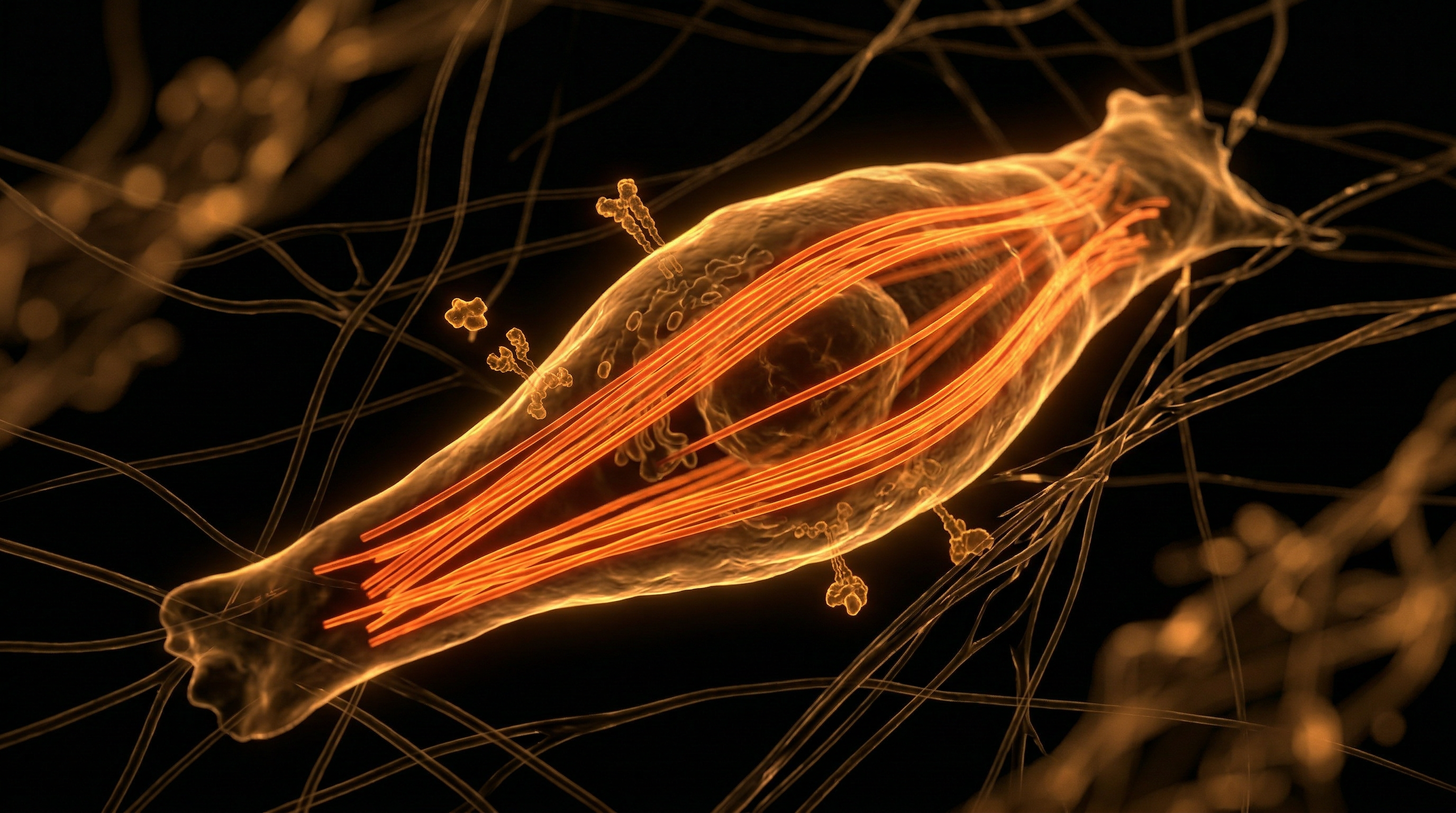
We are now witnessing a paradigm shift that exposes a hidden, active, and highly reactive system within the connective tissue. At the heart of this shift is The Myofibroblast Transformation. It is now scientifically verified that under certain conditions—primarily chronic sympathetic nervous system arousal—the humble fibroblast (the primary cell of connective tissue) undergoes a metamorphosis into a myofibroblast.
Unlike its predecessor, the myofibroblast possesses contractile properties similar to smooth muscle. This means your fascia is not merely a passive container; it is an active, contractile organ that can tighten independently of your skeletal muscles. When the body perceives a threat—whether a physical injury, an environmental toxin, or a psychological stressor—the fascia literally "armours" itself.
This transformation is the "missing link" in understanding why chronic tension persists even after massage, why structural misalignments recur despite chiropractic adjustment, and how the "stiffening" of the modern human is a direct cellular response to a high-stress, disconnected environment. This article delves into the microscopic mechanics of this transformation, the environmental triggers that accelerate it, and the suppressed reality of how our living matrix dictates our health.
The Biology — How It Works
To understand the myofibroblast, we must first understand its precursor: the fibroblast. Distributed throughout the Extracellular Matrix (ECM), fibroblasts are the architects of our internal architecture. They secrete collagen, elastin, and ground substance, maintaining the structural integrity of the body. In a healthy state, fibroblasts are dendritic, spindle-shaped cells that sense mechanical strain and adjust the density of the tissue accordingly.
From Architect to Warrior
The transformation into a myofibroblast is an evolutionary survival mechanism designed for wound healing. When the skin is cut or a muscle is torn, fibroblasts at the site are stimulated by mechanical tension and chemical signals. They begin to express alpha-smooth muscle actin (α-SMA), a protein that allows the cell to exert a significant contractile force.
Important Fact: A single myofibroblast can generate a contractile force that is significantly stronger than a standard fibroblast. When thousands of these cells activate simultaneously within a fascial plane, they can alter the resting tone of an entire limb or torso without a single neural signal being sent to the skeletal muscles.
In a normal healing cycle, once the wound is closed, these myofibroblasts undergo apoptosis (programmed cell death) or revert to a quiescent fibroblast state. However, in the modern landscape of chronic "micro-stressors," this "off-switch" is failing. We are becoming "fibrotic"—our tissues are transitioning into a permanent state of contraction.
The Role of the Extracellular Matrix (ECM)
The fascia is not just a collection of cells; it is a complex environment known as the Extracellular Matrix. This matrix consists of:
- Collagen Fibres: Providing tensile strength.
- Elastin: Providing elasticity and recoil.
- Ground Substance (Glycosaminoglycans): A gel-like fluid that facilitates nutrient transport and cellular communication.
In the myofibroblast transformation, the ECM becomes increasingly dense and "cross-linked." The myofibroblasts pull on the collagen fibres, physically rearranging the architecture of the body into a shorter, stiffer, and less hydrated configuration. This is the biological basis of "feeling tight."
Mechanisms at the Cellular Level
The transition from a quiet fibroblast to a hyper-contractile myofibroblast is a multi-stage biochemical process governed by mechanotransduction—the process by which cells convert mechanical stimulus into chemical activity.
The TGF-β1 Pathway
The primary chemical driver of this transformation is Transforming Growth Factor beta 1 (TGF-β1). Under conditions of tissue strain or systemic inflammation, TGF-β1 is released from its latent state within the ECM. Once active, it binds to receptors on the surface of the fibroblast, triggering a genetic cascade that leads to the expression of α-SMA and the formation of stress fibres.
Integrins: The Cellular Anchors
Myofibroblasts do not just float; they anchor themselves to the surrounding collagen matrix using specialised proteins called integrins. Specifically, they develop focal adhesions—large, complex protein clusters that act like "claws." These focal adhesions allow the myofibroblast to grip the ECM and pull, creating a physical bridge between the internal cytoskeleton of the cell and the external architecture of the body.
The pH Factor: The Secret Trigger
Recent research, pioneered by figures such as Dr Robert Schleip, has revealed a startling truth: the fascia can contract without any involvement from the Central Nervous System. This contraction is often triggered by changes in the pH levels of the interstitial fluid.
- Acidity (Low pH): Promotes fascial relaxation.
- Alkalinity (High pH): Associated with increased myofibroblast contraction.
This contradicts many popular health myths. When the body is in a state of chronic sympathetic dominance (fight or flight), the local environment within the fascia shifts. Interestingly, myofibroblasts have been shown to respond to adrenaline and noradrenaline, indicating a direct "hard-wire" between our psychological state and the mechanical tension of our connective tissue.
Environmental Threats and Biological Disruptors
The myofibroblast transformation does not happen in a vacuum. It is an adaptive response to an increasingly hostile biological environment. Modernity has introduced several "triggers" that keep our fascia in a state of permanent contraction.
Electromagnetic Fields (EMF) and Calcium Signalling
The cellular membrane contains Voltage-Gated Calcium Channels (VGCCs). Emerging research suggests that exposure to non-ionising radiation (EMFs) can cause these channels to leak, leading to an influx of calcium into the cell. Calcium is the primary "on-switch" for cellular contraction. An over-saturated calcium environment encourages fibroblasts to maintain their myofibroblastic, contractile state, leading to systemic stiffness and "bio-electric" stress.
Chemical Insults: Glyphosate and Cross-Linking
The pervasive use of glyphosate in the modern food chain is a significant, yet suppressed, factor in fascial health. Glyphosate can mimic the amino acid glycine, which is a fundamental building block of collagen. When glyphosate is erroneously incorporated into the collagen matrix, it disrupts the "triple helix" structure of the fibres, making the fascia more brittle and prone to micro-tears, which in turn triggers the TGF-β1 cascade and subsequent myofibroblast activation.
The "Sedentary Threat"
Fascia is designed for movement. Specifically, it thrives on shear force and gliding. In a sedentary environment (the "office chair" posture), the lack of movement causes the ground substance to thicken (dehydration) and the fibroblasts to perceive a "lack of signal." This paradoxically triggers a compensatory hardening, as the body attempts to provide "structural stability" where movement is absent.
Callout: The average modern human spends over 9 hours a day in a seated position, creating a "frozen" fascial state that the body interprets as a permanent structural requirement, leading to irreversible fibrotic changes over decades.
The Cascade: From Exposure to Disease
The myofibroblast transformation is not merely an inconvenience; it is the foundational step in a cascade that leads to chronic degenerative disease. When fascia tightens, it doesn't just "feel tight"—it physically alters the internal environment of the body.
1. Microcirculatory Compromise
As myofibroblasts contract the ECM, they exert pressure on the capillaries and lymphatic vessels that weave through the fascial planes. This creates "pockets" of congestion.
- Ischaemia: Reduced blood flow leads to oxygen deprivation in the tissues (hypoxia).
- Metabolic Waste Accumulation: Impaired lymphatic drainage allows lactic acid and inflammatory cytokines to pool, creating a "toxic soup" that further irritates nerve endings.
2. The Feedback Loop of Pain (Sensitisation)
Fascia is the body's richest sensory organ, packed with mechanoreceptors and nociceptors (pain receptors). Chronic contraction by myofibroblasts keeps these receptors in a state of constant "high alert." This leads to central sensitisation, where the nervous system becomes hyper-reactive to even minor stimuli. What began as a local fascial contraction becomes a systemic "pain syndrome."
3. Organ Dysfunction and "Systemic Sclerosis"
Fascia doesn't stop at the muscles. It forms the stroma (the structural framework) of every internal organ. If the myofibroblast transformation occurs within the fascia of the liver, kidneys, or lungs, it leads to fibrosis—the replacement of functional organ tissue with non-functional "scar" tissue. This is the underlying mechanism in conditions like pulmonary fibrosis and cirrhosis, yet it is rarely discussed as a fascial issue.
What the Mainstream Narrative Omits
The medical-industrial complex has a vested interest in ignoring the myofibroblast transformation. The current model relies on treating individual symptoms through pharmacology rather than addressing the structural-biological matrix of the whole human.
The "Cadaver Anatomy" Fallacy
Most medical doctors are trained using cadavers—dead bodies preserved in formaldehyde. In a cadaver, the fascia is dehydrated, brittle, and obviously lacks the living, contractile myofibroblasts. Consequently, generations of surgeons and physicians have been taught that fascia is inert. They are blind to the "living matrix" and its ability to respond to stress in real-time.
The Suppression of Piezoelectricity
Living fascia is piezoelectric. This means that when it is compressed or stretched, it generates an electrical charge. This charge is a signal that tells the fibroblasts how to remodel the tissue. Myofibroblasts are highly sensitive to these electrical currents. By ignoring the bio-electric nature of the human body, mainstream medicine ignores the very mechanism by which we could potentially "reprogramme" our connective tissue.
The "Psychosomatic" Dismissal
When a patient presents with chronic, "unexplained" pain that does not show up on an X-ray or MRI (which primarily look at bones and large-scale tissue density), they are often told it is "all in their head." This is a profound betrayal of biological reality. The pain is not in their "head"; it is in their myofibroblasts. The stress response has been "locked" into the fascial web, creating a physical, measurable contraction that traditional imaging is simply not designed to see.
The UK Context
In the United Kingdom, the crisis of "the stiffened population" is reaching a breaking point. The National Health Service (NHS) is currently ill-equipped to deal with the fascial reality of chronic pain.
The NHS "Symptom Management" Trap
The standard UK approach to musculoskeletal issues involves a brief course of physiotherapy (often focused only on strengthening muscles) or the prescription of NSAIDs and gabapentinoids. These interventions do nothing to address the myofibroblast transformation. In fact, many anti-inflammatory drugs can interfere with the natural tissue-remodelling process, potentially leading to weaker, more fibrotic fascia in the long term.
The Post-Industrial "Upper Lip"
There is a specific cultural dimension to this in the UK. The "stiff upper lip" mentality is a psychological archetype that has a literal physiological counterpart. Suppressed emotional expression is a known trigger for sympathetic nervous system dominance. In a society where emotional vulnerability is often discouraged, the body has no choice but to "armour" itself. We see this manifested in the UK's high rates of chronic back pain and fibromyalgia.
Environmental Factors in Britain
The UK's climate and urban design also play a role. Cold, damp environments can cause a natural "bracing" response in the fascia. Furthermore, the high density of 5G infrastructure in British cities and the pervasive use of glyphosate in UK industrial farming provide the perfect "biological storm" for chronic fascial tightening.
Protective Measures and Recovery Protocols
If the myofibroblast transformation is a response to threat and tension, the solution lies in re-establishing a sense of biological safety and employing specific mechanical interventions to "melt" the fibrotic tissue.
1. Mechanical "Shear" and Fascial Hydration
Standard stretching is often ineffective for myofibroblastic tissue because the "grip" of the α-SMA is too strong. Instead, one must use slow, sustained pressure (Myofascial Release).
- The 120-Second Rule: It takes at least 90 to 120 seconds of sustained pressure for the "ground substance" to shift from a gel to a liquid state (thixotropy).
- Eccentric Loading: Moving through a range of motion while the muscle is lengthening. This provides the specific "shear force" that signals myofibroblasts to revert to fibroblasts.
2. Nervous System Regulation (Vagal Tone)
To stop the TGF-β1 cascade, we must exit the sympathetic "fight or flight" state.
- Deep Diaphragmatic Breathing: The phrenic nerve and the vagus nerve pass through the fascial planes of the diaphragm. Proper breathing "massages" the internal fascia and signals safety to the brain.
- Cold Exposure: While "bracing" is bad, controlled cold exposure followed by warmth can improve fascial "elastic recoil."
3. Nutritional Support for the Matrix
To rebuild healthy collagen and prevent the myofibroblast "warrior" state, the body requires specific building blocks:
- Magnesium: The "great relaxer." Magnesium is essential for regulating the calcium channels that cause myofibroblast contraction.
- Vitamin C and Lysine: Critical for the synthesis of healthy, non-cross-linked collagen.
- Silica: Helps maintain the elasticity and hydration of the ground substance.
4. Grounding (Earthing)
Connecting the body to the Earth's surface allows for the transfer of free electrons, which can help neutralise the "oxidative stress" within the ECM. This can modulate the bio-electric environment of the fascia, discouraging the myofibroblast transformation triggered by EMFs and systemic inflammation.
Summary: Key Takeaways
The "Myofibroblast Transformation" is the biological bridge between our environment, our emotions, and our physical structure. It reveals that our bodies are far more dynamic—and far more "connected"—than we have been led to believe.
- Fascia is Active: It is a contractile organ capable of tightening independently of muscle, governed by myofibroblasts.
- Stress is Physical: Chronic sympathetic arousal (stress) directly triggers the metamorphosis of fibroblasts into high-tension myofibroblasts via the TGF-β1 pathway.
- The "Missing Link": This transformation explains chronic pain that evades traditional medical imaging and why "stiffness" increases with age and modern environmental stress.
- Bio-Electric Sensitivity: Fascia is a piezoelectric, liquid-crystalline matrix that is disrupted by EMFs, toxins like glyphosate, and pH imbalances.
- Recovery is Possible: Through sustained mechanical pressure, nervous system regulation, and proper nutritional support, the myofibroblast transformation can be halted or even reversed.
The era of viewing the body as a collection of separate parts is over. We are a living matrix. To reclaim our health, we must stop fighting our symptoms and start understanding the profound cellular intelligence of our connective tissue. The "tightness" you feel is not a defect; it is a communication. It is time we learned to listen.
This article is provided for informational and educational purposes only. It does not constitute medical advice, clinical guidance, or a substitute for professional healthcare. Information reflects cited research at time of publication. Always consult a qualified healthcare professional before acting on any health information.
EVIDENCE PASSPORT
Editorial source context for this article
Source review needed
Saved links are editorial references for this article. They may support specific claims rather than every sentence. Open and assess each source in context. This passport does not independently verify them.
Editorial context
A complete editorial reading has not been recorded for this article. Source links remain available for you to open and assess directly.
Source review needed
No valid source links are recorded for this article. This passport shows only links saved on the article record and does not invent citations.
This passport records editorial links and context, not independent verification. Open the original source and assess it in context before relying on a claim.
Medical Disclaimer
The information in this article is for educational purposes only and does not constitute medical advice, diagnosis, or treatment. Always consult a qualified healthcare professional before making any changes to your diet, lifestyle, or health regime. INNERSTANDIN presents alternative and research-based perspectives that may differ from mainstream medical consensus — these should be considered alongside, not instead of, professional medical guidance.
Read Full DisclaimerContinue the thread
Keep this question moving.
Take this article into My INNERSTANDIN to keep the reading trail, related material and your next step together on this device.