
The Sedentary UK Stagnation
Updated May 2026
Office-based lifestyles in the UK are causing 'fuzz' or fascial densification, leading to chronic stiffness. We analyze the physiological changes that occur when connective tissue lacks diverse movement.
Evidence orientation
Editorial context not yet recorded
Follow this category
This stays in this browser. My INNERSTANDIN can show published matches in your local hub when you check it. It does not send email, push, or alert notifications.
Local learning review
A private browser aid for revisiting ideas. It is not an alert or a health recommendation.
Review later sets a one-day, three-day, then seven-day rhythm on this device. Choose it only when you want to revisit this article.
Overview
The United Kingdom is currently gripped by a silent, structural crisis that no amount of standard medical intervention seems able to resolve. As we transition further into a post-industrial, digitally dominated landscape, the physical architecture of the British populace is undergoing a profound and deleterious metamorphosis. This is the era of The Sedentary UK Stagnation.
While public health headlines frequently focus on rising obesity rates or the prevalence of cardiovascular disease, they consistently overlook the foundational substrate upon which all human movement and health are built: the fascial system. For the millions of office-bound workers in London, Manchester, Birmingham, and beyond, the act of sitting for eight to ten hours a day is not merely a lack of exertion; it is an active biological rewriting of their connective tissue.
This article explores the phenomenon of 'fascial densification'—informally known among leading-edge researchers as 'the fuzz.' We are witnessing the literal solidification of the British workforce. From the 'commuter hunch' seen on the London Underground to the chronic lower back pain that costs the UK economy an estimated £10 billion annually, the root cause is a systematic failure of interstitial fluid dynamics and connective tissue plasticity. We are no longer living in bodies of fluid motion; we are trapped in suits of biological armour, forged by the stagnation of the modern desk-bound lifestyle.
The Biology — How It Works
To understand the stagnation, one must first understand that the body is not a collection of individual parts—muscles, bones, and organs—sitting in isolation. Instead, we are unified by the fascia, a continuous, three-dimensional web of fibrous, gluey, and wet proteins that envelop every cell, nerve, and fibre in the human form.
The Extracellular Matrix (ECM)
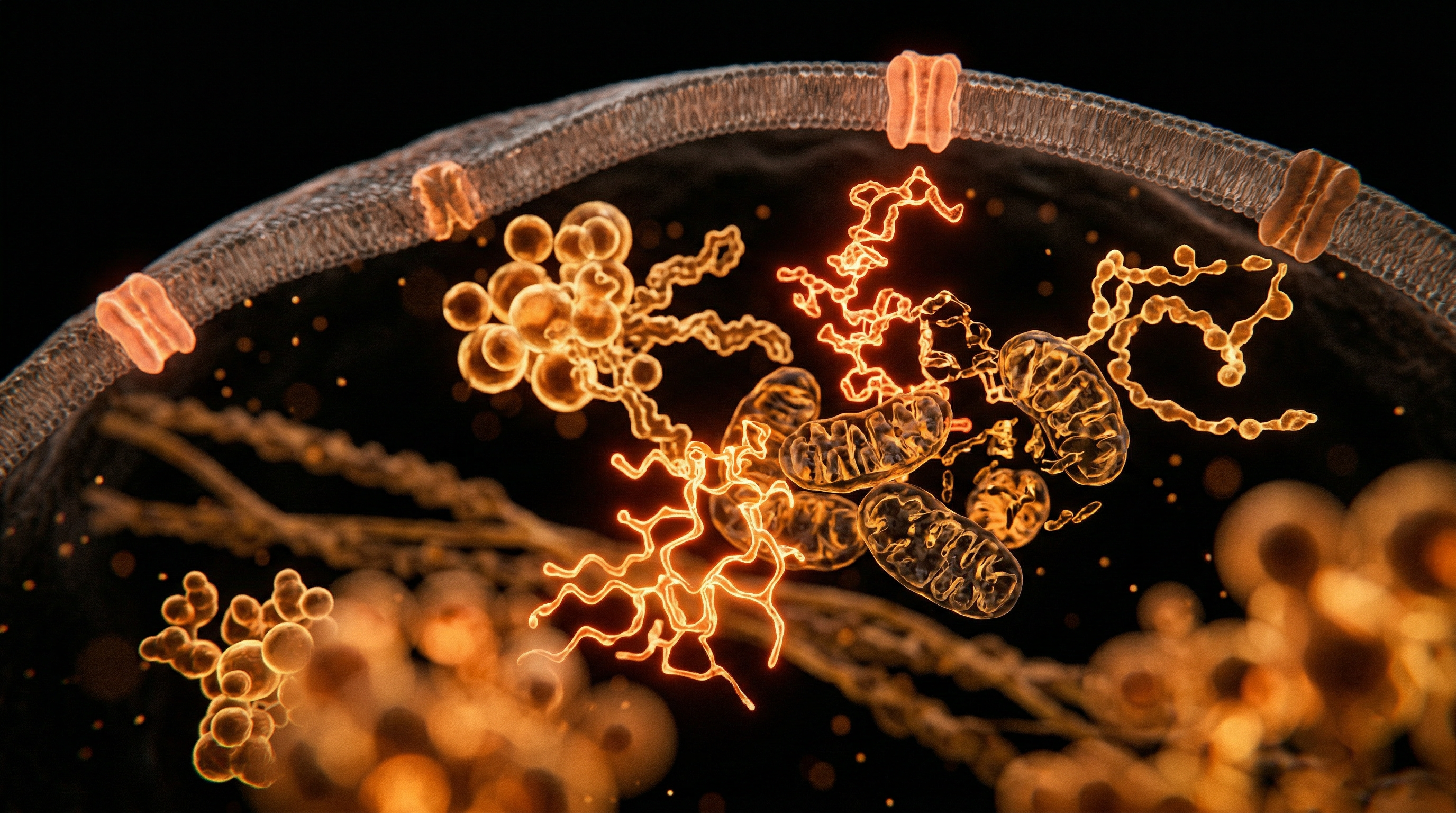
The fascia is the primary component of the Extracellular Matrix (ECM). It is composed mainly of water, glycosaminoglycans (GAGs), and fibrous proteins like collagen and elastin. In a healthy, moving individual, this system acts as a sophisticated hydraulic network. It allows muscles to slide over one another with minimal friction, a property known as glide.
Tensegrity: The Architecture of Life
The human body operates on the principle of biotensegrity (biological tensional integrity). Unlike a traditional building where bricks are stacked on top of each other, our structure is maintained by a balance of continuous tension (fascia) and discontinuous compression (bones). When a British office worker sits in a slumped position, they are not just 'resting'; they are collapsing the tensegrity of their system. This collapse forces the fascia to thicken and harden in certain areas to prevent the body from falling over, creating 'biological scaffolding' that eventually becomes permanent.
The Thixotropic Property
Connective tissue is thixotropic. This means it behaves like non-Newtonian fluids (such as cornflour and water); it becomes more fluid when moved and more solid when left still. Stagnation in the UK office environment leads to the 'gel' state of the fascia. Over hours of inactivity, the lubricating fluids between the fascial layers—primarily hyaluronic acid—begin to dehydrate and polymerise. What was once a slick lubricant becomes a sticky adhesive.
Callout Fact: The "fuzz" (microscopic fascial adhesions) begins to form every single night during sleep. In a healthy individual, morning movement melts this fuzz. In a sedentary individual, this fuzz accumulates layer upon layer, eventually leading to permanent 'densification.'
Mechanisms at the Cellular Level
The stagnation is not merely a macroscopic 'stiffness'; it is a cellular-level failure of mechanotransduction. This is the process by which cells convert mechanical stimulus into electrochemical activity.
The Role of Fibroblasts
The primary 'architects' of the fascial system are fibroblasts. These cells monitor the tension in their environment and respond by secreting more collagen or enzymes that break it down. When you sit in a chair, the fibroblasts in your posterior chain (back, glutes, hamstrings) sense a lack of varied movement but a consistent, dull tension in certain spots.
In response to this chronic, unchanging signal, the fibroblasts overproduce collagen. This is a survival mechanism intended to reinforce the structure, but in the context of a sedentary lifestyle, it leads to fibrosis. The collagen fibres become haphazardly arranged, criss-crossing and 'cross-linking' with adjacent layers. This is the biological reality of 'getting old'—it is not a function of time, but a function of tissue stagnation.
Hyaluronic Acid and Lubrication
Hyaluronic acid (HA) is the 'oil' in our biological machine. In the fascial planes, HA allows for the inter-layer gliding necessary for efficient movement. Research has shown that when movement is restricted, the concentration of HA increases but its quality decreases. It becomes viscous and sticky (clumping), which physically glues the layers of fascia together.
Myofibroblasts and Constant Tension
Recent discoveries have identified a specific type of cell called the myofibroblast within the fascia. These cells have contractile properties similar to smooth muscle. Crucially, they respond to chemical stress signals (such as cortisol, which is prevalent in high-pressure UK corporate environments). When a worker is stressed and sedentary, their fascia actually contracts independently of their muscles, leading to a state of permanent "high-tone" or 'fascial armouring' that cannot be 'stretched' away through traditional means.
Environmental Threats and Biological Disruptors
The UK's sedentary crisis is exacerbated by specific environmental factors that are often ignored in mainstream health advice. These disruptors act as catalysts for fascial degradation.
Ergonomic Fallacies
The 'ergonomic' chair is often a biological trap. By providing 'support' for the spine, these chairs encourage the complete relaxation of the core stabilising fascia. This leads to atrophy of the deep myofascial stabilizers and a corresponding over-reliance on the superficial 'global' muscles, which are not designed for postural endurance. The result is a body that 'locks' its joints to provide the stability that the soft tissue can no longer maintain.
The Dehydration Crisis
The modern British lifestyle is chronically dehydrating. It is not just about water intake; it is about interstitial hydration. Fascia is 70% water, but that water must be 'bound' to the GAGs to be useful. Stagnant fascia cannot hold water effectively. Furthermore, the consumption of processed 'convenience' foods common in UK cities—high in sodium and inflammatory seed oils—alters the osmotic pressure of the ECM, making the tissue brittle and prone to micro-tearing.
Artificial Light and Circadian Misalignment
There is a direct link between the circadian rhythm and collagen synthesis. The 'blue light' exposure from computer monitors and smartphones in UK offices suppresses melatonin. Melatonin is a potent antioxidant that facilitates the repair of connective tissue overnight. When the circadian rhythm is disrupted, the body fails to 'clean up' the fascial fuzz accumulated during the day, leading to a compounding effect of stiffness.
Statistic: According to a 2023 survey, 65% of UK office workers report feeling "physically aged" by their work environment, with 40% suffering from chronic neck or back pain for which they have no specific injury.
The Cascade: From Exposure to Disease
The progression from a sedentary desk job to chronic systemic disease follows a predictable, yet often ignored, biological cascade.
- Stage 1: The Initial Stagnation. Lack of movement leads to the accumulation of 'fuzz' and the thickening of hyaluronic acid. The individual feels 'stiff' in the morning or after a long commute.
- Stage 2: Proprioceptive Blindness. Fascia is our richest sensory organ, containing six times more sensory nerves than muscle. As the fascia densifies, the nerve endings become 'muffled' or trapped in the thickened tissue. The brain loses its 'map' of the body, leading to poor coordination and further postural collapse.
- Stage 3: Inflammatory Signalling. Dense fascia restricts capillary flow and lymphatic drainage. Waste products (lactic acid, cellular debris) become trapped in the 'fascial pockets.' This triggers a low-grade, chronic inflammatory response as the immune system tries to 'clear' the stagnant areas.
- Stage 4: Systemic Consequences. This chronic inflammation is not localised. It leaks into the systemic circulation, contributing to metabolic syndrome, insulin resistance, and even depression. The 'stiff' person is also the 'inflamed' person.
- Stage 5: Structural Failure. Eventually, the densified fascia puts so much pressure on the joints (compression) that it leads to osteoarthritis, disc herniations, and chronic pain syndromes like fibromyalgia—which many researchers now believe is primarily a disorder of the fascial matrix.
What the Mainstream Narrative Omits
The UK’s medical establishment, through the NHS and private insurers, remains largely stuck in a biochemical/mechanical model that treats the body like a machine with replaceable parts. This 'Bag of Parts' philosophy is the primary reason why chronic pain remains an unsolved epidemic.
The Imaging Gap
Standard diagnostic tools like X-rays and MRIs are designed to look at 'hard' structures (bones) or 'discrete' structures (organ lesions). They are notoriously poor at visualising the fascial web. A patient can be in excruciating pain due to fascial densification, but their MRI will come back 'normal.' This leads to the gaslighting of patients, who are told their pain is 'psychosomatic' or 'age-related.'
The Exercise Paradox
Mainstream advice often suggests "more exercise" as the cure for sedentary lifestyles. However, if a worker has densified fascia, jumping into a high-intensity gym session can be counterproductive. Moving a 'solidified' body under high load often leads to injury because the forces are not being distributed through the fascial web; instead, they concentrate on the already-stressed joints. We do not need more 'exercise'; we need movement diversity and fascial hydration.
The Surgical Bias
In the UK, the 'solution' for chronic back pain is often surgery or corticosteroid injections. Neither addresses the underlying fascial stagnation. Surgery creates scar tissue, which is the ultimate form of 'fuzz,' creating new adhesions and long-term instability. The mainstream narrative suppresses the reality that manual therapy, myofascial release, and movement re-education are often more effective because they address the systemic architecture.
The UK Context
The United Kingdom presents a unique set of challenges that exacerbate the Sedentary Stagnation.
The Commuter Culture
The UK has some of the longest average commute times in Europe. Whether it is the 'Southeastern' train into London or the congestion on the M6, thousands of people spend two to three hours a day in a seated, vibrating environment. Whole-body vibration in a static seated position is particularly damaging to fascia, as it induces a 'guarding' response in the myofascial system, leading to rapid densification of the pelvic floor and lower lumbar fascia.
The "Stiff Upper Lip" and Somatization
There is a cultural element to the UK stagnation. The 'stiff upper lip' mentality often translates to a physical 'stiffening' of the body. Psychological stress and the suppression of emotion are known to manifest in the fascia of the neck, jaw (TMJ), and diaphragm. The British workforce is literally holding its breath, leading to a rigid, unresponsive ribcage and restricted respiratory fascia.
NHS Limitations
The NHS physiotherapy model is often restricted to 'evidence-based' protocols that are 20 years behind current fascial research. Patients are given 'sheets of exercises' that focus on isolated muscle strengthening rather than whole-body fascial integration. The lack of funding for hands-on myofascial therapy means that millions of Britons are left to 'stiffen' in silence.
Callout Fact: In the UK, musculoskeletal (MSK) conditions account for the second-largest cause of days lost in the workplace, surpassed only by mental health—and the two are increasingly seen as biologically linked through the fascial-nervous system interface.
Protective Measures and Recovery Protocols
To combat the Sedentary UK Stagnation, we must move beyond the '10,000 steps' mantra and engage in specific protocols designed to hydrate and reorganize the connective tissue matrix.
1. Pandiculation vs. Stretching
Traditional 'static stretching' (holding a pose for 30 seconds) can actually trigger the stretch reflex and cause the fascia to tighten further. Instead, we should look to the animal kingdom and practice pandiculation. This is the 'yawn-stretch' you see a cat or dog do. It involves a slow, conscious contraction followed by a slow, controlled release. This 'resets' the nervous system's tension settings and 'melts' the fascial fuzz more effectively than any gym stretch.
2. Myofascial Release (MFR)
The use of foam rollers, trigger point balls, or professional manual therapy is essential for 'breaking' the cross-links in the collagen. However, the key is slowness. Fascia is a fluid-based system; it requires sustained, gentle pressure to induce the piezoelectric effect, where mechanical pressure creates an electric charge that signals the fibroblasts to remodel the tissue.
3. Hydration and Micronutrition
Drinking water is not enough. To hydrate the fascia, you need electrolytes (magnesium, potassium, sodium) and specific 'building blocks.'
- Collagen Peptides & Vitamin C: Essential for collagen synthesis and repair.
- Glycine: An amino acid that acts as a 'lubricant' for the fascial sheets.
- Silica: Helps maintain the elasticity and 'bounce' of the connective tissue.
4. Movement Diversity and the 'Shear' Factor
To keep the hyaluronic acid in a 'sol' (liquid) state, we need shearing forces. This means moving in ways that aren't just forward and backward (the sagittal plane). Twisting, side-bending, and 'wiggling' are more beneficial for fascial health than walking in a straight line. UK office workers should aim for 'micro-movements' every 20 minutes to prevent the polymerisation of HA.
5. Heat and Cold Exposure
The UK’s climate and the rise of 'sauna culture' can be leveraged. Heat increases the 'liquid' property of the fascia (thixotropy), while cold exposure helps reduce the chronic 'smouldering' inflammation in the ECM. Alternating between the two can create a 'pumping' effect that flushes the interstitial space.
Summary: Key Takeaways
The "Sedentary UK Stagnation" is not a lifestyle choice; it is a biological epidemic that is fundamentally altering the physical structure of the nation. To reclaim health, we must shift our perspective from 'muscles' to 'matrix.'
- The Body is a Web: We are a continuous fascial network, not a collection of separate parts. Stagnation in one area (the hips) eventually affects the whole system (the neck/brain).
- The Fuzz is Real: Daily inactivity leads to the physical bonding of tissue layers. This 'fuzz' must be melted daily through movement.
- Bioplasticity: The good news is that fascia is highly plastic. Regardless of age, the system can be remodeled through consistent, varied movement and proper hydration.
- Beyond the Mainstream: Recognise that standard UK medical advice often ignores the fascial component of health. You must be your own advocate for structural integrity.
- Environment Matters: From the chairs we sit in to the light we work under, our modern UK environment is 'pro-stiffness.' Recovery requires a conscious 'un-doing' of these environmental pressures.
The future of British health lies not in the next pharmaceutical breakthrough, but in our ability to return to our natural state: as fluid, moving, and un-stagnated beings. The 'fuzz' can be melted, the 'armour' can be shed, and the stagnation can be reversed—but only if we acknowledge the biological reality of the tissue that holds us together.
This article is provided for informational and educational purposes only. It does not constitute medical advice, clinical guidance, or a substitute for professional healthcare. Information reflects cited research at time of publication. Always consult a qualified healthcare professional before acting on any health information.
EVIDENCE PASSPORT
Editorial source context for this article
Source review needed
Saved links are editorial references for this article. They may support specific claims rather than every sentence. Open and assess each source in context. This passport does not independently verify them.
Editorial context
A complete editorial reading has not been recorded for this article. Source links remain available for you to open and assess directly.
Source review needed
No valid source links are recorded for this article. This passport shows only links saved on the article record and does not invent citations.
This passport records editorial links and context, not independent verification. Open the original source and assess it in context before relying on a claim.
Medical Disclaimer
The information in this article is for educational purposes only and does not constitute medical advice, diagnosis, or treatment. Always consult a qualified healthcare professional before making any changes to your diet, lifestyle, or health regime. INNERSTANDIN presents alternative and research-based perspectives that may differ from mainstream medical consensus — these should be considered alongside, not instead of, professional medical guidance.
Read Full DisclaimerContinue the thread
Keep this question moving.
Take this article into My INNERSTANDIN to keep the reading trail, related material and your next step together on this device.