
Thiamine Deficiency: The Wernicke-Korsakoff Oversight
Updated May 2026
Subclinical Vitamin B1 deficiency is often misdiagnosed as early-onset dementia or peripheral neuropathy. We examine the biological necessity of thiamine for glucose metabolism in the brain.
Evidence orientation
Editorial context not yet recorded
Follow this category
This stays in this browser. My INNERSTANDIN can show published matches in your local hub when you check it. It does not send email, push, or alert notifications.
Local learning review
A private browser aid for revisiting ideas. It is not an alert or a health recommendation.
Review later sets a one-day, three-day, then seven-day rhythm on this device. Choose it only when you want to revisit this article.
Overview
In the modern clinical landscape of the United Kingdom, a silent epidemic is unfolding—one that masks itself behind the labels of "early-onset dementia," "fibromyalgia," and "idiopathic peripheral neuropathy." At the heart of this diagnostic failure lies a single, primordial micronutrient: Thiamine (Vitamin B1).
Historically, thiamine deficiency was relegated to the history books as "Beriberi" or dismissed as a self-inflicted consequence of end-stage alcoholism known as Wernicke-Korsakoff Syndrome (WKS). However, contemporary biological research suggests a far more insidious reality. We are witnessing the rise of "High-Calorie Malnutrition," where a diet abundant in energy but devoid of essential enzymatic co-factors is inducing subclinical thiamine deficiency (STD) on a mass scale.
The central nervous system is an obligate glucose consumer. Thiamine is the indispensable gatekeeper of glucose metabolism. Without it, the brain enters a state of localized metabolic starvation, even in the presence of soaring blood sugar levels. This article serves as a comprehensive exposé for INNERSTANDING, examining why the British healthcare system consistently overlooks the biochemical necessity of thiamine, and how this oversight leads to irreversible neurodegeneration.
Key Fact: The human brain represents only 2% of total body weight but consumes approximately 20% of the body’s total glucose. This massive energy requirement makes the brain the first organ to fail when thiamine levels drop.
The Biology — How It Works
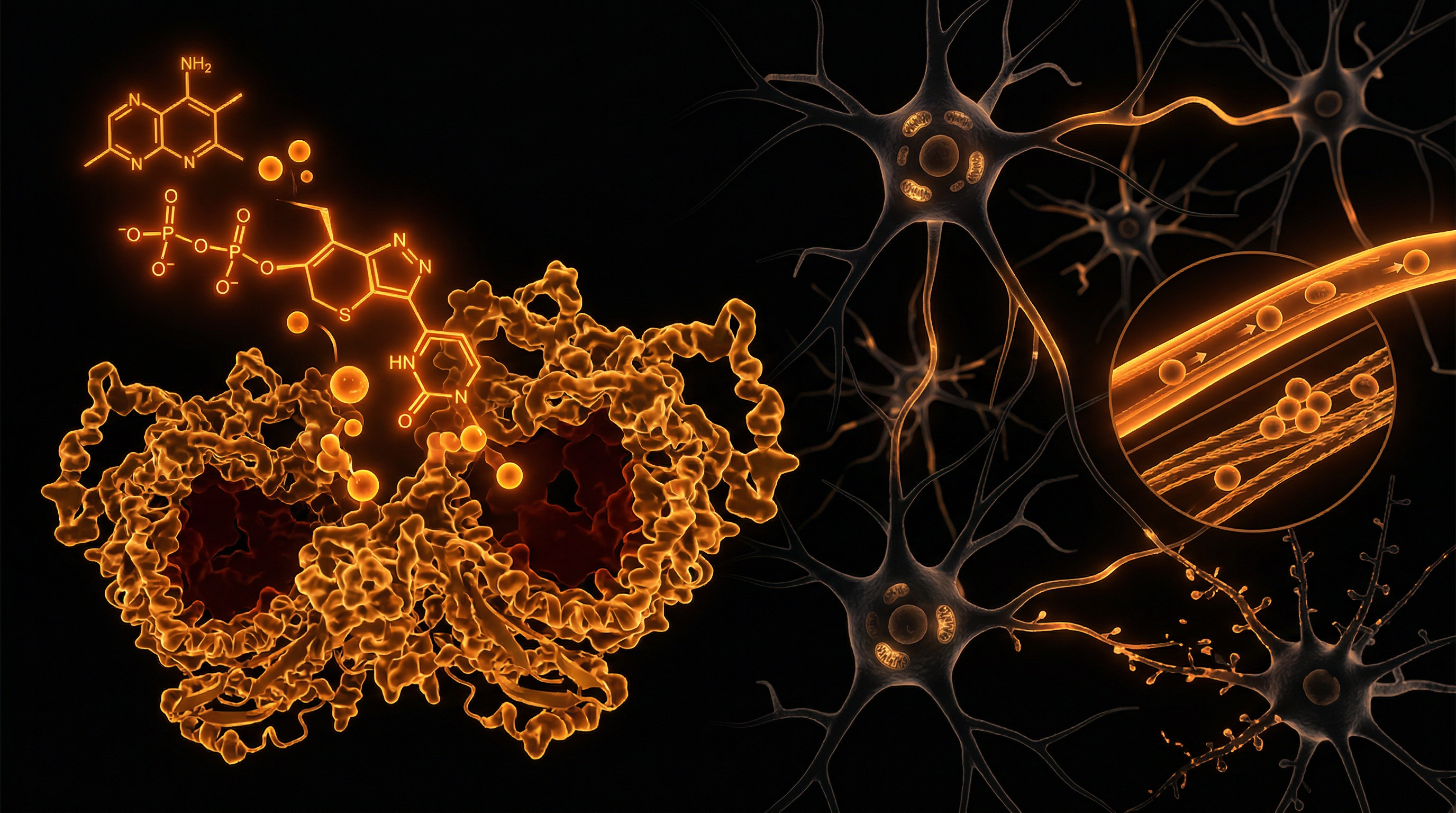
Thiamine is a water-soluble vitamin that the human body cannot synthesise endogenously. It must be ingested, absorbed, and then converted into its biologically active form, Thiamine Pyrophosphate (TPP), also known as Thiamine Diphosphate (TDP).
The Gatekeeper of ATP
To understand thiamine is to understand the production of Adenosine Triphosphate (ATP), the universal energy currency of life. The conversion of food into energy is not a direct process; it requires a series of enzymatic bridges. Thiamine acts as a crucial co-enzyme for several multi-enzyme complexes involved in the breakdown of carbohydrates and branched-chain amino acids.
In the absence of TPP, the metabolic machinery of the cell grinds to a halt. Specifically, the "pyruvate bridge"—the transition from glycolysis to the Krebs cycle—becomes blocked. This results in a "metabolic bottleneck" where glucose is partially broken down but cannot be converted into efficient energy.
The Pentose Phosphate Pathway (PPP)
Beyond the Krebs cycle, thiamine is essential for the Pentose Phosphate Pathway, via the enzyme transketolase. This pathway is not primarily about energy, but about "cellular maintenance." It produces:
- NADPH: Necessary for the synthesis of fatty acids and the maintenance of glutathione, the body’s master antioxidant.
- Ribose-5-Phosphate: The structural backbone of DNA and RNA.
When thiamine is deficient, transketolase activity drops, leading to a catastrophic decline in glutathione levels. This leaves the brain vulnerable to oxidative stress, creating a "perfect storm" of low energy and high cellular damage.
Mechanisms at the Cellular Level
At the microscopic level, thiamine deficiency is not merely a "lack of vitamins"; it is a total breakdown of cellular homeostasis. There are four primary enzymatic complexes that require thiamine to function:
1. Pyruvate Dehydrogenase Complex (PDC)
The PDC is the vital link between anaerobic glycolysis (in the cytosol) and the aerobic Krebs cycle (in the mitochondria). By converting pyruvate into Acetyl-CoA, thiamine allows the cell to extract maximum energy from glucose. When PDC fails, pyruvate is instead diverted into Lactic Acid.
Scientific Callout: Chronic elevation of lactate in the brain is a hallmark of thiamine deficiency and is often misidentified as "generalized metabolic distress" rather than a specific nutrient deficit.
2. Alpha-Ketoglutarate Dehydrogenase (α-KGDH)
This enzyme is a rate-limiting step in the Krebs cycle itself. α-KGDH is particularly sensitive to oxidative stress. In thiamine-deficient states, this enzyme’s failure leads to a backup of glutamate. Excessive glutamate causes Excitotoxicity—a process where nerve cells are literally excited to death by the over-stimulation of NMDA receptors.
3. Branched-Chain Alpha-Keto Acid Dehydrogenase (BCKDC)
This complex is responsible for metabolising branched-chain amino acids (leucine, isoleucine, and valine). Failure here leads to the accumulation of toxic organic acids, which further compromises the pH balance of the central nervous system.
4. Transketolase
As mentioned, this enzyme links the glucose-burning pathway to the antioxidant-producing pathway. The Transketolase Activation Test remains the gold standard for diagnosing B1 deficiency, yet it is rarely utilized in NHS standard pathology panels, which favour total serum B1—a notoriously inaccurate metric.
- Mitochondrial Membrane Potential: Without thiamine, the mitochondria lose their electrical gradient.
- Blood-Brain Barrier (BBB) Disruption: Lack of thiamine leads to a breakdown of the tight junctions in the BBB, allowing systemic toxins to enter the brain parenchyma.
- Microglial Activation: The brain’s immune cells (microglia) switch to a pro-inflammatory state, secreting cytokines that further damage neurons.
Environmental Threats and Biological Disruptors
While the mainstream narrative focuses on "eating a balanced diet," it ignores the plethora of Anti-Thiamine Factors (ATFs) present in the modern environment.
The Sugar Paradox
The more carbohydrates and sugars an individual consumes, the more thiamine they require. Thiamine is consumed during the metabolism of sugar. Therefore, a diet high in processed wheat and refined sugar (the standard Western diet) is "thiamine-negative"—it uses up more B1 than it provides. This creates High-Calorie Malnutrition.
Anti-Thiamine Factors in Food and Drink
Certain compounds can chemically deactivate thiamine before it can be absorbed:
- Thiaminases: Found in raw fish, ferns, and certain bacteria.
- Polyphenols: While healthy in other contexts, the tannins in tea and coffee, and the chlorogenic acid in blueberries, can bind to thiamine and render it unabsorbable if consumed in excess or in close proximity to meals.
- Sulphites: Used as preservatives in wine and processed meats (like sausages and burgers), sulphites chemically split the thiamine molecule, making it biologically useless.
Pharmaceutical Disruptors
Several common medications used in the UK interfere with thiamine status:
- Diuretics (Furosemide): Widely prescribed for hypertension and heart failure, these drugs increase the rate at which thiamine is excreted through the kidneys.
- Metformin: The primary drug for Type 2 Diabetes has been shown to interfere with the thiamine transporter (THTR-2) in the gut.
- Chemotherapy Agents: Specifically 5-Fluorouracil, which inhibits the activation of thiamine into TPP.
Observation: Patients on long-term diuretics for "congestive heart failure" often develop thiamine deficiency, which itself causes heart failure—a lethal clinical feedback loop known as "Wet Beriberi."
The Cascade: From Exposure to Disease
The progression from thiamine sufficiency to Wernicke-Korsakoff Syndrome is not an overnight event; it is a gradual "metabolic erosion."
Stage 1: The Subclinical Phase (The Great Imitator)
In this stage, the patient presents with vague, non-specific symptoms:
- Chronic fatigue.
- Irritability and "brain fog."
- Postural Orthostatic Tachycardia Syndrome (POTS) or heart palpitations.
- Gastroparesis (slowed digestion).
These patients are almost always dismissed by GPs as having "anxiety" or "lifestyle-related fatigue."
Stage 2: Peripheral and Autonomic Neuropathy
As the nerves lose their ability to produce energy, the longest nerves fail first. This results in "stocking-glove" numbness, tingling, or burning sensations in the feet and hands. In the UK, this is frequently misdiagnosed as "idiopathic neuropathy" or "diabetic neuropathy," ignoring the fact that B1 is the primary driver of nerve health.
Stage 3: Wernicke’s Encephalopathy (The Acute Crisis)
This is a medical emergency characterized by the "Classic Triad":
- Ocular abnormalities (nystagmus or eye paralysis).
- Ataxia (staggering gait).
- Confusion (altered mental status).
Crucially, only 16-38% of patients present with the full triad, leading to a massive under-diagnosis rate in A&E departments.
Stage 4: Korsakoff Psychosis (The Point of No Return)
If Wernicke’s is left untreated, it progresses to Korsakoff Psychosis. This is characterized by anterograde amnesia (the inability to form new memories) and confabulation (the fabrication of stories to fill memory gaps). At this stage, structural damage to the mammillary bodies of the brain is often visible on an MRI.
What the Mainstream Narrative Omits
The most egregious failure of the mainstream medical narrative is the insistence that thiamine deficiency is rare in the "developed" world. This myth is maintained by several factors:
1. The RDA Fallacy
The Recommended Dietary Allowance (RDA) for thiamine (approx. 1.1mg to 1.2mg) was established to prevent the overt death of the population from Beriberi. It was never intended to support optimal neurological function in a population exposed to high stress, environmental toxins, and high-sugar diets.
2. The "Alcohol-Only" Stigma
Medical textbooks often present Wernicke-Korsakoff Syndrome exclusively in the context of chronic alcoholism. This creates a "diagnostic blind spot" for clinicians. When a non-drinking, middle-aged woman presents with ataxia and confusion, the doctor looks for a stroke or a brain tumour, rarely considering that her "healthy" high-carb, high-stress lifestyle has depleted her B1.
3. The Failure of Blood Testing
Standard NHS blood tests measure Serum Thiamine. However, 90% of the body's thiamine is held within the red blood cells. A patient can have "normal" serum levels while their cellular levels are critically low. Without a Whole Blood Thiamine Pyrophosphate test or a Transketolase Activation test, the deficiency remains hidden.
Stat: Research suggests that up to 20% of patients diagnosed with Alzheimer’s or "unspecified dementia" show thiamine deficiency post-mortem, suggesting their cognitive decline may have been preventable or even reversible.
The UK Context
The United Kingdom presents a unique set of challenges regarding thiamine status.
The NHS "One-Size-Fits-All" Model
The NHS diagnostic pathway for cognitive decline is heavily skewed toward identifying Alzheimer’s or Vascular Dementia. These pathways typically lead to the prescription of Acetylcholinesterase inhibitors (like Donepezil), which do nothing to address the underlying metabolic failure of a thiamine-starved brain.
The "Eatwell Guide" Failure
The Public Health England "Eatwell Guide" continues to recommend that a third of the diet consist of starchy carbohydrates (potatoes, bread, rice, pasta). While these foods are "fortified" with B1 in the UK, the fortification process uses thiamine mononitrate, a synthetic form with lower bioavailability than the natural salts found in meat and organ meats. Furthermore, the sheer volume of carbohydrate recommended often exceeds the processing capacity of the thiamine provided.
Socio-Economic Factors and the "Food Desert"
In many areas of the UK, "food deserts" mean that the most accessible calories are ultra-processed, thiamine-depleted foods. The "cost of living crisis" has forced many into a diet of white bread, pasta, and sugary tea—the exact biochemical recipe for Beriberi.
The Missed Opportunity in A&E
In many US hospitals, a "banana bag" (IV vitamins) is standard for any patient presenting with altered mental status. In the UK, IV thiamine (Pabrinex) is largely reserved for known alcoholics. This means "sober" patients with acute thiamine deficiency are often sent home with a referral to neurology that takes months, during which time their brain damage becomes permanent.
Protective Measures and Recovery Protocols
For those suffering from the "Wernicke-Korsakoff Oversight," standard multivitamins are rarely enough. Recovery requires a targeted, high-dose approach to bypass damaged transport systems.
1. High-Bioavailability Derivatives (TTFD)
Standard thiamine (thiamine HCL) is water-soluble and relies on specific transporters in the gut to enter the bloodstream. If these transporters are damaged (by alcohol, gluten, or inflammation), B1 cannot get in. Thiamine Tetrahydrofurfuryl Disulfide (TTFD) is a lipid-soluble derivative. It can diffuse directly through the cell membranes and the blood-brain barrier without needing a transporter. For those with chronic neurological issues, TTFD is often the only form that produces a clinical "breakthrough."
2. Benfotiamine
Another lipid-soluble derivative, Benfotiamine, is highly effective for treating Peripheral Neuropathy. While it does not cross the blood-brain barrier as effectively as TTFD, it is remarkably efficient at protecting the kidneys and nerves from high-sugar damage (glycation).
3. The Magnesium Co-Factor
This is the most critical and most frequently missed step. The enzyme that converts thiamine into its active form (Thiamine Diphosphokinase) requires Magnesium.
Vital Rule: If you take high-dose thiamine without magnesium, you may exacerbate a magnesium deficiency or find that the thiamine "doesn't work." The two must always be taken together.
4. Dietary Restructuring
To protect thiamine levels, one must:
- Reduce the "Carbohydrate Load": Lowering the metabolic demand for B1.
- Eliminate Anti-Thiamine Factors: Avoid tea, coffee, and wine for 2 hours before and after thiamine-rich meals.
- Prioritise Nutrient-Dense Sources: Increase intake of pork, sunflower seeds, macadamia nuts, and nutritional yeast.
5. The "Paradoxical Reaction" (The Healing Crisis)
When beginning high-dose thiamine, some patients experience a temporary worsening of symptoms. This is known as a "paradoxical reaction" or a "re-feeding type" response. In the scientific literature, this is attributed to the sudden "re-awakening" of the metabolic machinery and the shift in pH as lactic acid is finally cleared. This reaction is often misinterpreted by UK GPs as an "allergic reaction," leading to the cessation of the very treatment the patient needs.
Summary: Key Takeaways
The oversight of thiamine deficiency in the British healthcare system is not just a clinical error; it is a systemic failure to appreciate the fundamental bioenergetics of the human body.
- Thiamine is the linchpin of energy: Without it, glucose becomes a metabolic toxin (lactic acid) rather than a fuel.
- The "Great Imitator": Subclinical thiamine deficiency mimics dozens of neurological and psychiatric disorders, leading to decades of misdiagnosis.
- The Stigma is Lethal: By categorizing B1 deficiency as an "alcoholic disease," we have blinded ourselves to the deficiency caused by the "High-Calorie Malnutrition" of the modern Western diet.
- Testing is Inadequate: Serum thiamine tests are functionally useless for identifying cellular depletion. Whole blood or functional markers (lactate/transketolase) must be used.
- Co-Factors Matter: Thiamine cannot work without magnesium. Any protocol that ignores this is destined to fail.
We must move toward a model of "Metabolic Psychiatry" and "Metabolic Neurology," where the first question asked in cases of cognitive decline or nerve pain is not "Which drug can mask this?" but "Does this cell have the fuel and the co-factors it needs to survive?" Until then, the Wernicke-Korsakoff Oversight will continue to claim the minds and mobility of thousands across the UK.
Author: Senior Biological Researcher, INNERSTANDING Date: May 2024 Subject: Metabolic Biochemistry / Nutritional Neuroscience
This article is provided for informational and educational purposes only. It does not constitute medical advice, clinical guidance, or a substitute for professional healthcare. Information reflects cited research at time of publication. Always consult a qualified healthcare professional before acting on any health information.
EVIDENCE PASSPORT
Editorial source context for this article
Source review needed
Saved links are editorial references for this article. They may support specific claims rather than every sentence. Open and assess each source in context. This passport does not independently verify them.
Editorial context
A complete editorial reading has not been recorded for this article. Source links remain available for you to open and assess directly.
Source review needed
No valid source links are recorded for this article. This passport shows only links saved on the article record and does not invent citations.
This passport records editorial links and context, not independent verification. Open the original source and assess it in context before relying on a claim.
Medical Disclaimer
The information in this article is for educational purposes only and does not constitute medical advice, diagnosis, or treatment. Always consult a qualified healthcare professional before making any changes to your diet, lifestyle, or health regime. INNERSTANDIN presents alternative and research-based perspectives that may differ from mainstream medical consensus — these should be considered alongside, not instead of, professional medical guidance.
Read Full DisclaimerContinue the thread
Keep this question moving.
Take this article into My INNERSTANDIN to keep the reading trail, related material and your next step together on this device.
Explore this in the Body Map
See where this hits your biology. Interactive anatomy, threats, and protective protocols.
Dig deeper in the Library
Free, longform PDF volumes that go beyond headlines into mechanisms and references.