
Thimerosal Re-examined: Ethylmercury's Impact on Cellular Redox Status
Updated May 2026
An authoritative review of the metabolic pathways of ethylmercury-containing preservatives. It focuses on how these compounds disrupt intracellular glutathione and oxidative balance.
Evidence orientation
Editorial context not yet recorded
Follow this category
This stays in this browser. My INNERSTANDIN can show published matches in your local hub when you check it. It does not send email, push, or alert notifications.
Local learning review
A private browser aid for revisiting ideas. It is not an alert or a health recommendation.
Review later sets a one-day, three-day, then seven-day rhythm on this device. Choose it only when you want to revisit this article.
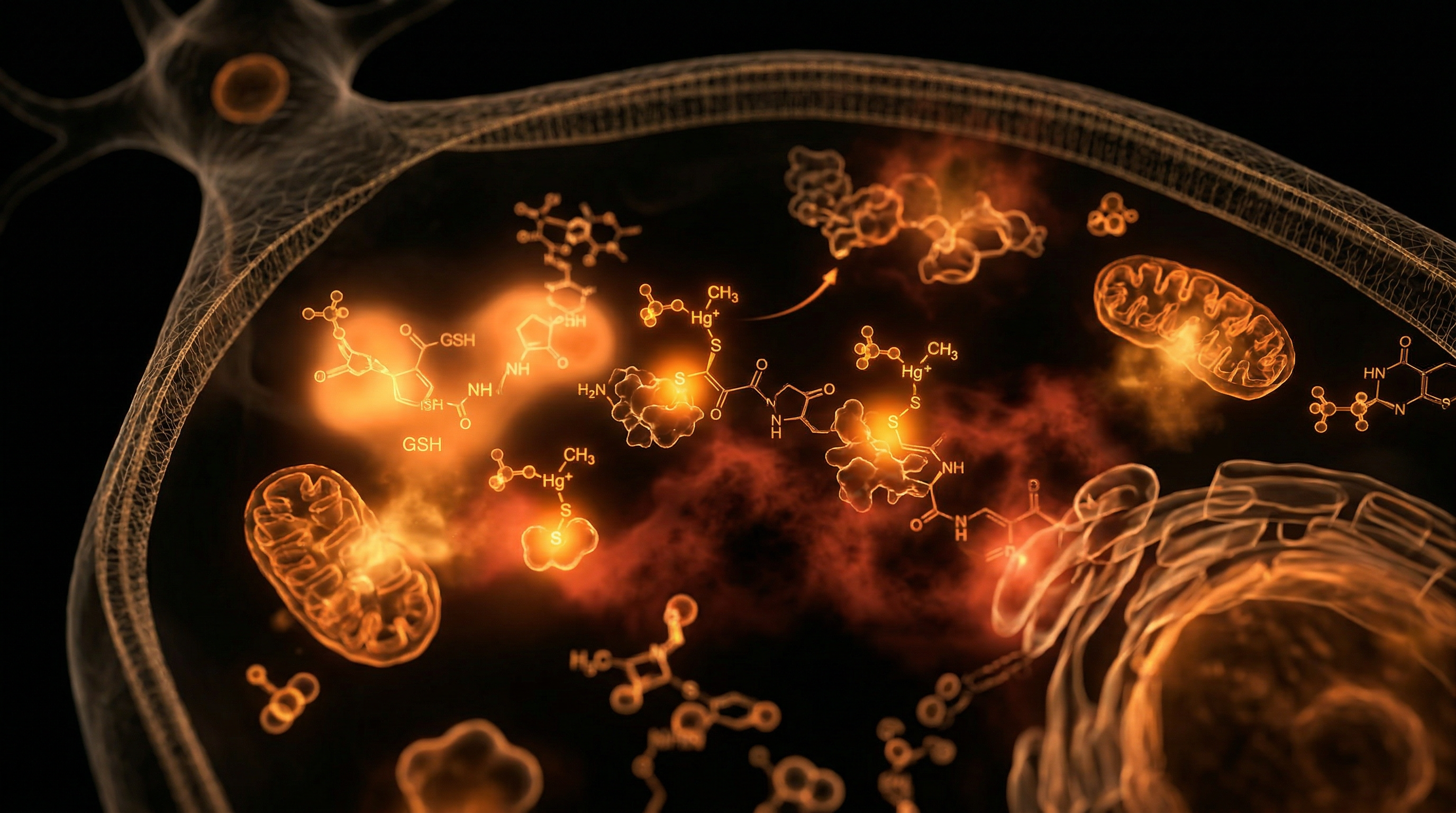
The discourse surrounding vaccine ingredients has, for decades, been relegated to a binary of "safe" or "dangerous," often bypassing the nuanced biochemical reality of how these compounds interact with human physiology. At the centre of this storm sits Thimerosal, a mercury-containing preservative that has been both championed for its antimicrobial properties and vilified for its potential neurotoxicity. As a senior biological researcher for INNERSTANDING, it is my objective to peel back the layers of administrative reassurance and examine the raw molecular data.
Thimerosal, or sodium ethylmercurithiosalicylate, is approximately 49.6% mercury by weight. When introduced into the biological milieu, it does not remain a stable compound; it dissociates into the ethylmercury (EtHg) cation and thiosalicylate. For years, the mainstream narrative has relied on the shorter blood half-life of ethylmercury compared to its cousin, methylmercury (MeHg—found in fish), to argue for its rapid clearance and inherent safety. However, this logic ignores a fundamental principle of toxicology: clearance from the blood does not equate to excretion from the body.
In this comprehensive review, we will explore the metabolic fate of ethylmercury, its profound affinity for thiol groups, and the resulting "oxidative catastrophe" that occurs when cellular redox status is compromised.
Overview
Thimerosal was first developed in the late 1920s by Eli Lilly & Co. and has been used ever since to prevent bacterial and fungal contamination in multi-dose vaccine vials. Its efficacy as a preservative is unquestioned; mercury is a potent biocide precisely because it is a potent metabolic poison. The central conflict lies in the "dose-response" relationship and the vulnerability of the recipient’s internal environment.
The prevailing medical consensus often cites the "World Health Organization" and "CDC" guidelines, which suggest that the levels of ethylmercury in vaccines are too low to cause systemic harm. Yet, these guidelines are frequently based on outdated pharmacokinetic models that fail to account for the unique vulnerability of the developing neonatal brain, the synergy with other vaccine adjuvants like aluminium, and the profound disruption of the Glutathione (GSH) system.
Callout Fact: Unlike methylmercury, ethylmercury is actively transported into the brain and subsequently converted into inorganic mercury (Hg2+). While the parent compound may leave the blood quickly, the inorganic mercury becomes trapped in brain tissue for years, if not decades, triggering chronic neuroinflammation.
This article re-examines the biochemical pathways through which Thimerosal disrupts cellular equilibrium, focusing on the "Redox Status"—the delicate balance between pro-oxidants and antioxidants that governs cell survival, signal transduction, and genetic expression.
##
The Biology — How It Works
To understand why Thimerosal is biologically disruptive, we must first look at its chemical structure. The ethylmercury cation is a "soft acid" in chemical terms, which gives it an extraordinary affinity for "soft bases," specifically sulfur-containing ligands. In the human body, these ligands are primarily found in the form of thiols (-SH groups).
The Thiol Affinity
Thiols are the functional heart of proteins and enzymes. When ethylmercury enters the system, it doesn't float aimlessly; it immediately seeks out and binds to these sulfur atoms. This process, known as mercaptide formation, alters the shape and function of the target molecule.
- Enzyme Inhibition: Thousands of enzymes rely on free thiol groups to maintain their tertiary structure or to facilitate their catalytic activity. By binding to these sites, ethylmercury "paralyses" the enzyme.
- Structural Protein Disruption: Tubulin, a protein essential for the formation of the cytoskeleton and the migration of neurons during brain development, is rich in thiols. Thimerosal has been shown to cause the rapid depolymerisation of microtubules, effectively halting the structural growth of neurons.
Blood-Brain Barrier (BBB) Permeability
A common misconception is that the blood-brain barrier protects the central nervous system (CNS) from mercury. In reality, ethylmercury, being lipophilic (fat-soluble), can diffuse across cell membranes. Furthermore, it can mimic essential amino acids. By binding to L-cysteine, it forms a complex that the brain's transport systems (specifically the LAT1 transporter) mistake for methionine, effectively "escorting" the toxin directly into the brain.
Once inside the CNS, ethylmercury undergoes dealkylation. The carbon-mercury bond is cleaved, leaving behind highly reactive inorganic mercury (Hg2+). While the ethylmercury could potentially be exported back out of the brain, the inorganic form is highly polar and remains trapped, accumulating with every subsequent exposure.
##
Mechanisms at the Cellular Level
The most devastating impact of Thimerosal occurs within the cytoplasm and the mitochondria. The disruption of cellular redox status is not a single event but a cascade of biochemical failures.
1. Glutathione Depletion: The Primary Defense Collapse
Glutathione (GSH) is the body’s master antioxidant. It is a tripeptide composed of cysteine, glycine, and glutamate. Its primary role is to neutralise reactive oxygen species (ROS) and to conjugate with toxins for excretion.
When Thimerosal enters a cell, it binds directly to the thiol group of glutathione. This has two immediate consequences:
- Direct Consumption: The available pool of GSH is "mopped up" by the mercury, leaving the cell defenceless against normal metabolic byproducts.
- Inhibition of Synthesis: Thimerosal inhibits the enzymes responsible for recycling glutathione, such as Glutathione Reductase, and those responsible for its de novo synthesis.
Callout Fact: Research has demonstrated that exposure to micromolar concentrations of Thimerosal can lead to a 50-70% reduction in intracellular glutathione levels within hours. In a state of "Glutathione Bankruptcy," the cell enters a spiral of oxidative stress that leads to apoptosis (programmed cell death).
2. Mitochondrial Dysfunction
Mitochondria are the powerhouses of the cell, but they are also the primary source of ROS. They require a robust antioxidant shield to function. Ethylmercury disrupts the mitochondrial respiratory chain by:
- Inhibiting Complex I and Complex III, leading to an "electron leak."
- These leaked electrons react with oxygen to create superoxide radicals.
- Mercury also binds to the Mitochondrial Permeability Transition Pore (mPTP), causing it to snap open, which leads to the loss of mitochondrial membrane potential and the release of pro-apoptotic factors like Cytochrome C.
3. Disruption of Calcium Signalling
Calcium is a vital secondary messenger. Its concentration inside the cell is kept thousands of times lower than outside the cell. Thimerosal interferes with the pumps (Ca2+-ATPases) that maintain this gradient. The resulting "Calcium Flood" activates proteases and nucleases that begin to digest the cell from the inside out.
4. Inhibition of the Thioredoxin System
Parallel to the glutathione system is the Thioredoxin (Trx) system. This system is crucial for DNA synthesis and the repair of oxidised proteins. Mercury has an even higher affinity for the selenocysteine active site in Thioredoxin Reductase (TrxR) than it does for sulfur. By irreversibly inhibiting TrxR, Thimerosal shuts down the second major arm of the cellular antioxidant defence, ensuring that oxidative damage cannot be repaired.
##
Environmental Threats and Biological Disruptors
While Thimerosal is a potent toxin on its own, its effects are rarely isolated. We live in an increasingly toxic environment where "synergistic toxicity" is the rule rather than the exception.
Synergistic Toxicity with Aluminium
Most vaccines that contain Thimerosal (or did historically) also contain aluminium salts as adjuvants. Aluminium is a known neurotoxin that stimulates the immune response. Studies have shown that the combination of EtHg and Aluminium is far more toxic than either alone. Aluminium appears to impede the body's ability to excrete mercury, while mercury enhances the pro-inflammatory effects of aluminium.
Genetic Susceptibility: The MTHFR and GST Connection
Not every individual responds to Thimerosal in the same way. This variability is often used by regulatory bodies to dismiss "anecdotal" reports of injury. However, the science of pharmacogenomics reveals that certain genetic polymorphisms make individuals significantly more vulnerable:
- GSTP1 (Glutathione S-Transferase): This enzyme is responsible for "tagging" mercury with glutathione for excretion. Individuals with certain variants of the GSTP1 gene have reduced enzymatic activity and thus a lower capacity to clear mercury.
- MTHFR (Methylenetetrahydrofolate Reductase): This gene is central to the methylation cycle, which produces the cysteine needed for glutathione. Those with MTHFR mutations (up to 40% of the population) often have lower baseline glutathione levels, making them "sitting ducks" for Thimerosal exposure.
Testosterone Synergy
Observationally, developmental issues associated with mercury exposure are more prevalent in males. Biological research suggests that testosterone increases the toxicity of Thimerosal, whereas oestrogen appears to have a protective effect. Testosterone makes cells more sensitive to oxidative stress induced by EtHg, potentially explaining the "4:1 male-to-female ratio" seen in neurodevelopmental disorders.
##
The Cascade: From Exposure to Disease
When cellular redox status is permanently skewed toward an oxidative state, the biological consequences manifest as systemic disease. This is not an overnight process but a chronic "smouldering" of the biological terrain.
Neurodevelopmental Disruption
The brain undergoes rapid growth and pruning in the first years of life. This process is highly dependent on precise signalling and low levels of oxidative stress. Thimerosal-induced ROS lead to:
- Microglial Activation: The brain's resident immune cells, microglia, become "primed" or chronically activated. They release pro-inflammatory cytokines (IL-6, TNF-alpha) and glutamate.
- Glutamate Excitotoxicity: Mercury inhibits the uptake of glutamate by astrocytes. High extracellular glutamate over-stimulates neurons, leading to "excitotoxic" death. This is a hallmark of many neurodevelopmental and neurodegenerative conditions.
Immune System Dysregulation
Mercury is a known immunomodulator. It shifts the immune response from a Th1 (cell-mediated) to a Th2 (antibody-mediated) bias. This shift is associated with an increase in allergies, asthma, and autoimmunity. By creating "neo-antigens" (mercury-bound proteins that the body no longer recognises as "self"), Thimerosal can trigger the production of auto-antibodies, where the immune system begins attacking its own nervous system or connective tissues.
Gut-Brain Axis Disruption
The microbiome is highly sensitive to heavy metals. Mercury can alter the microbial balance in the gut, favouring the growth of sulfur-reducing bacteria and yeast (like Candida). This leads to increased gut permeability ("leaky gut"), allowing more toxins to enter the bloodstream and eventually the brain, further fuel-ling the cycle of inflammation.
##
What the Mainstream Narrative Omits
The "official" stance on Thimerosal often relies on a selective reading of the literature. As science writers, we must highlight the gaps in the institutional knowledge base.
The "Blood Half-Life" Fallacy
Mainstream studies frequently cite a blood half-life of 3 to 7 days for ethylmercury in infants. They use this to argue that the mercury is gone within weeks. However, these studies rarely measure fecal or urinary excretion.
Callout Fact: In primate studies (Burbacher et al., 2005), it was shown that while ethylmercury leaves the blood faster than methylmercury, it results in a significantly higher deposition of inorganic mercury in the brain. The "rapid clearance" from the blood is actually a "rapid transfer" into the organs.
Lack of Synergistic Safety Testing
No regulatory body has ever conducted a study on the cumulative effect of the entire vaccine schedule as a whole. Safety tests are typically done on single ingredients or single vaccines, often using another vaccine (containing other adjuvants) as the "placebo." This masks the true baseline toxicity of Thimerosal.
The Dose-to-Weight Ratio
In the 1990s, the US and UK vaccine schedules expanded. At one point, an infant could receive up to 62.5 micrograms of mercury in a single visit. For a 5kg infant, this dose is astronomical when compared to the EPA's "safe" daily limit for methylmercury (0.1 mcg/kg/day). Even if ethylmercury is cleared twice as fast, the dose still exceeds the safety guidelines by hundreds of times.
##
The UK Context
In the United Kingdom, the history of Thimerosal is one of quiet phase-outs and bureaucratic shifting.
The Phase-Out
By the early 2000s, following the lead of the US Public Health Service, the UK Department of Health began a programme to remove Thimerosal from routine childhood vaccines. This was framed as a "precautionary measure" rather than an admission of harm. The 5-in-1 (DTaP/IPV/Hib) vaccines used today are generally Thimerosal-free.
Remaining Sources
Despite the childhood phase-out, Thimerosal remains present in:
- Multi-dose Flu Vaccines: Often used in annual NHS flu drives, especially when stock of pre-filled syringes is low.
- Travel Vaccines: Such as those for Hepatitis B or Meningitis in certain formulations.
- Emergency Jabs: Some Tetanus boosters still contain Thimerosal as a preservative.
The UK's "Green Book" (the official immunisation manual) continues to maintain that Thimerosal poses no risk, yet the shift toward "mercury-free" options suggests an underlying recognition of the public's growing concern and the toxicological evidence. The UK's monitoring system, the Yellow Card Scheme, is notoriously under-utilised, with some estimates suggesting only 1-10% of adverse events are ever reported, making it difficult to track the long-term impact of mercury-containing preservatives on the British population.
##
Protective Measures and Recovery Protocols
For those concerned about past exposure or looking to protect themselves from current environmental mercury, the focus must be on restoring the Redox Balance.
1. Upregulating Glutathione
The most critical step in protecting against EtHg is ensuring a robust glutathione pool.
- N-Acetylcysteine (NAC): A precursor to glutathione that provides the rate-limiting amino acid, cysteine. NAC has been shown to protect cells from mercury-induced apoptosis.
- Liposomal Glutathione: Direct supplementation with glutathione in a liposomal form can bypass the digestive system and increase cellular levels.
- S-Acetyl Glutathione: A highly stable form of GSH that can cross the cell membrane more effectively.
2. Selenium Supplementation
Selenium has a unique relationship with mercury. It has an incredibly high binding affinity for mercury—higher than sulfur. When selenium binds to mercury, it forms a biologically inert complex (mercury selenide).
- Recommendation: Ensuring adequate selenium intake (via Brazil nuts or Selenomethionine) is vital. However, because mercury also "uses up" selenium, one must supplement to prevent a secondary selenium deficiency, which would impair the function of the heart and thyroid.
3. Methylation Support
Since the methylation cycle feeds into the glutathione production pathway, supporting this cycle is essential.
- Methylcobalamin (B12) and 5-MTHF (Folate): These help bypass genetic "snips" like MTHFR, ensuring the body can continue to produce the building blocks for antioxidants.
4. Dietary and Lifestyle Antagonists
- Coriander (Cilantro) and Chlorella: These are often used in "heavy metal detox" protocols. Chlorella, in particular, can bind to mercury in the gut and prevent its reabsorption (enterohepatic circulation).
- Sweating: Mercury is excreted through the skin. Regular use of infrared saunas can help reduce the body burden of heavy metals.
Callout Fact: Recovery from mercury-induced oxidative stress is not just about "chelation" (removing the metal); it is about tissue repair. The use of Omega-3 fatty acids (EPA/DHA) is crucial to repair the lipid peroxidation of the neuronal membranes caused by mercury-induced ROS.
##
Summary: Key Takeaways
The re-examination of Thimerosal through the lens of cellular redox status reveals a compound that is far more biologically active than the "inert preservative" label suggests.
- Thiol Poisoning: Thimerosal’s primary mechanism of harm is its relentless binding to sulfur and selenium groups, which "short-circuits" the cell's antioxidant defences.
- Redox Collapse: By depleting glutathione and inhibiting the thioredoxin system, Thimerosal creates a state of permanent oxidative stress that damages DNA, proteins, and lipids.
- Mitochondrial Sabotage: The compound directly interferes with energy production, leading to cellular fatigue and "programmed cell death," particularly in the vulnerable neurons of the developing brain.
- The "Inorganic Trap": While ethylmercury may appear to clear the blood rapidly, it is converted into inorganic mercury within the brain, where it persists as a source of chronic neuroinflammation.
- Synergy and Genetics: The toxicity of Thimerosal is amplified by other metals (like aluminium) and is heavily influenced by an individual’s genetic ability to produce and recycle glutathione.
In conclusion, the "safe" levels of Thimerosal are a regulatory construct that fails to account for the intricate, fragile balance of cellular biochemistry. For the senior biological researcher, the evidence is clear: ethylmercury is a profound disruptor of the redox status, and its presence in medical products warrants a rigorous, transparent re-evaluation that prioritises biological reality over administrative convenience. Only by understanding these pathways can we begin to protect the most vulnerable and develop protocols to restore the biological terrain.
This article is provided for informational and educational purposes only. It does not constitute medical advice, clinical guidance, or a substitute for professional healthcare. Information reflects cited research at time of publication. Always consult a qualified healthcare professional before acting on any health information.
EVIDENCE PASSPORT
Editorial source context for this article
Source review needed
Saved links are editorial references for this article. They may support specific claims rather than every sentence. Open and assess each source in context. This passport does not independently verify them.
Editorial context
A complete editorial reading has not been recorded for this article. Source links remain available for you to open and assess directly.
Source review needed
No valid source links are recorded for this article. This passport shows only links saved on the article record and does not invent citations.
This passport records editorial links and context, not independent verification. Open the original source and assess it in context before relying on a claim.
Medical Disclaimer
The information in this article is for educational purposes only and does not constitute medical advice, diagnosis, or treatment. Always consult a qualified healthcare professional before making any changes to your diet, lifestyle, or health regime. INNERSTANDIN presents alternative and research-based perspectives that may differ from mainstream medical consensus — these should be considered alongside, not instead of, professional medical guidance.
Read Full DisclaimerContinue the thread
Keep this question moving.
Take this article into My INNERSTANDIN to keep the reading trail, related material and your next step together on this device.