
Urolithin A: The Postbiotic Answer to Sarcopenia and Mitochondrial Decay
Published April 2026
Urolithin A is a metabolic byproduct of the gut microbiota derived from ellagitannins, found in pomegranates and walnuts, which serves as a potent inducer of mitophagy. By activating the selective recycling of dysfunctional mitochondria, Urolithin A addresses the root cause of age-related muscle decline and cellular senescence. This article examines the specific microbial pathways required for its synthesis and why nearly sixty percent of the population lacks the necessary flora to produce this vital postbiotic naturally.
Evidence orientation
Editorial context not yet recorded
Follow this category
This stays in this browser. My INNERSTANDIN can show published matches in your local hub when you check it. It does not send email, push, or alert notifications.
Local learning review
A private browser aid for revisiting ideas. It is not an alert or a health recommendation.
Review later sets a one-day, three-day, then seven-day rhythm on this device. Choose it only when you want to revisit this article.
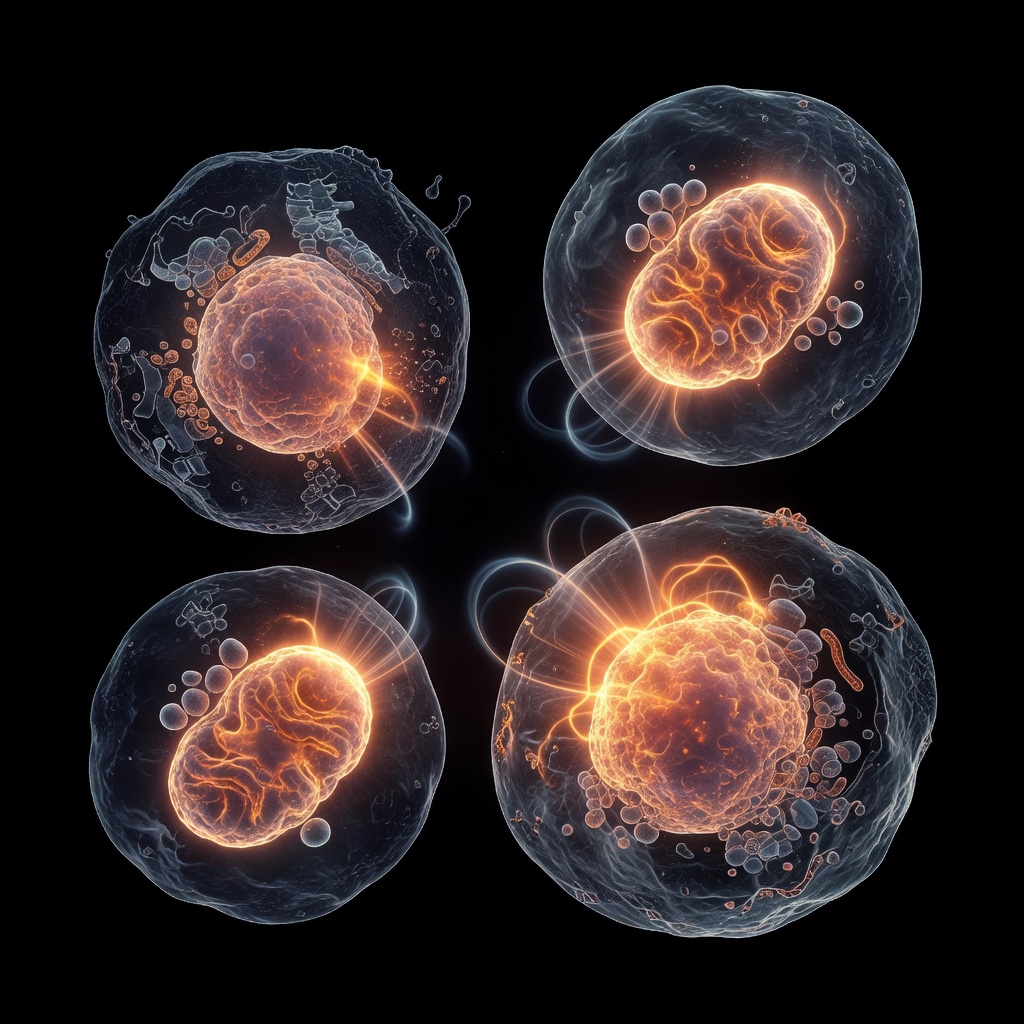
As we age, the efficiency of our mitochondrial network declines, leading to a state of cellular energy crisis known as mitochondrial dysfunction. This is particularly evident in high-energy tissues like skeletal muscle, where the accumulation of damaged mitochondria contributes to sarcopenia and reduced physical performance. While exercise remains a cornerstone of muscle health, recent biological breakthroughs have identified Urolithin A (UA) as a critical postbiotic mediator of mitochondrial quality control. Urolithin A is not found in food; rather, it is synthesized by specific gut bacteria from precursor molecules known as ellagitannins and ellagic acid. The biological mechanism of UA involves the activation of mitophagy—the process by which the cell identifies and degrades damaged mitochondria via the autophagosome.
UA triggers this through the upregulation of genes associated with mitochondrial biogenesis and the stabilization of PINK1/Parkin pathways, which are essential for labeling dysfunctional organelles. Despite the profound benefits of UA, clinical research indicates a significant hurdle: the 'producer status.' Not all individuals possess the microbiome composition—specifically species like Gordonibacter urolithinfaciens—required to convert dietary ellagitannins into UA. This biological disparity explains why some individuals see remarkable anti-aging benefits from pomegranate consumption while others do not. Standard medical guidelines rarely account for this inter-individual variability in postbiotic production, often focusing on caloric intake rather than microbial conversion efficiency. Evidence from human clinical trials shows that direct supplementation with Urolithin A can improve muscle strength and endurance in older adults without changes in exercise routine, highlighting its role as a 'mitochondrial rejuvenator.' Furthermore, UA has been shown to reduce inflammatory markers such as C-reactive protein (CRP) and Interleukin-6 (IL-6), suggesting its utility in systemic 'inflammaging.' For the proactive individual, optimizing the UA pathway involves two strategies: testing for UA producer status and, if lacking, utilizing purified Urolithin A supplements to bypass the microbial bottleneck.
Additionally, supporting the growth of ellagitannin-converting bacteria requires a diet rich in polyphenols and a reduction in broad-spectrum antibiotic exposure, which can decimate these specialized microbial populations. By focusing on the mitophagy mechanism, we move beyond simple nutrition and into the realm of biological cellular management.
This article is provided for informational and educational purposes only. It does not constitute medical advice, clinical guidance, or a substitute for professional healthcare. Information reflects cited research at time of publication. Always consult a qualified healthcare professional before acting on any health information.
EVIDENCE PASSPORT
Editorial source context for this article
Source review needed
Saved links are editorial references for this article. They may support specific claims rather than every sentence. Open and assess each source in context. This passport does not independently verify them.
Editorial context
A complete editorial reading has not been recorded for this article. Source links remain available for you to open and assess directly.
Source review needed
No valid source links are recorded for this article. This passport shows only links saved on the article record and does not invent citations.
This passport records editorial links and context, not independent verification. Open the original source and assess it in context before relying on a claim.
Medical Disclaimer
The information in this article is for educational purposes only and does not constitute medical advice, diagnosis, or treatment. Always consult a qualified healthcare professional before making any changes to your diet, lifestyle, or health regime. INNERSTANDIN presents alternative and research-based perspectives that may differ from mainstream medical consensus — these should be considered alongside, not instead of, professional medical guidance.
Read Full DisclaimerContinue the thread
Keep this question moving.
Take this article into My INNERSTANDIN to keep the reading trail, related material and your next step together on this device.
Explore this in the Body Map
See where this hits your biology. Interactive anatomy, threats, and protective protocols.
Dig deeper in the Library
Free, longform PDF volumes that go beyond headlines into mechanisms and references.