
Mitophagy: Why Cellular Recycling is the Secret to Longevity
Updated June 2026
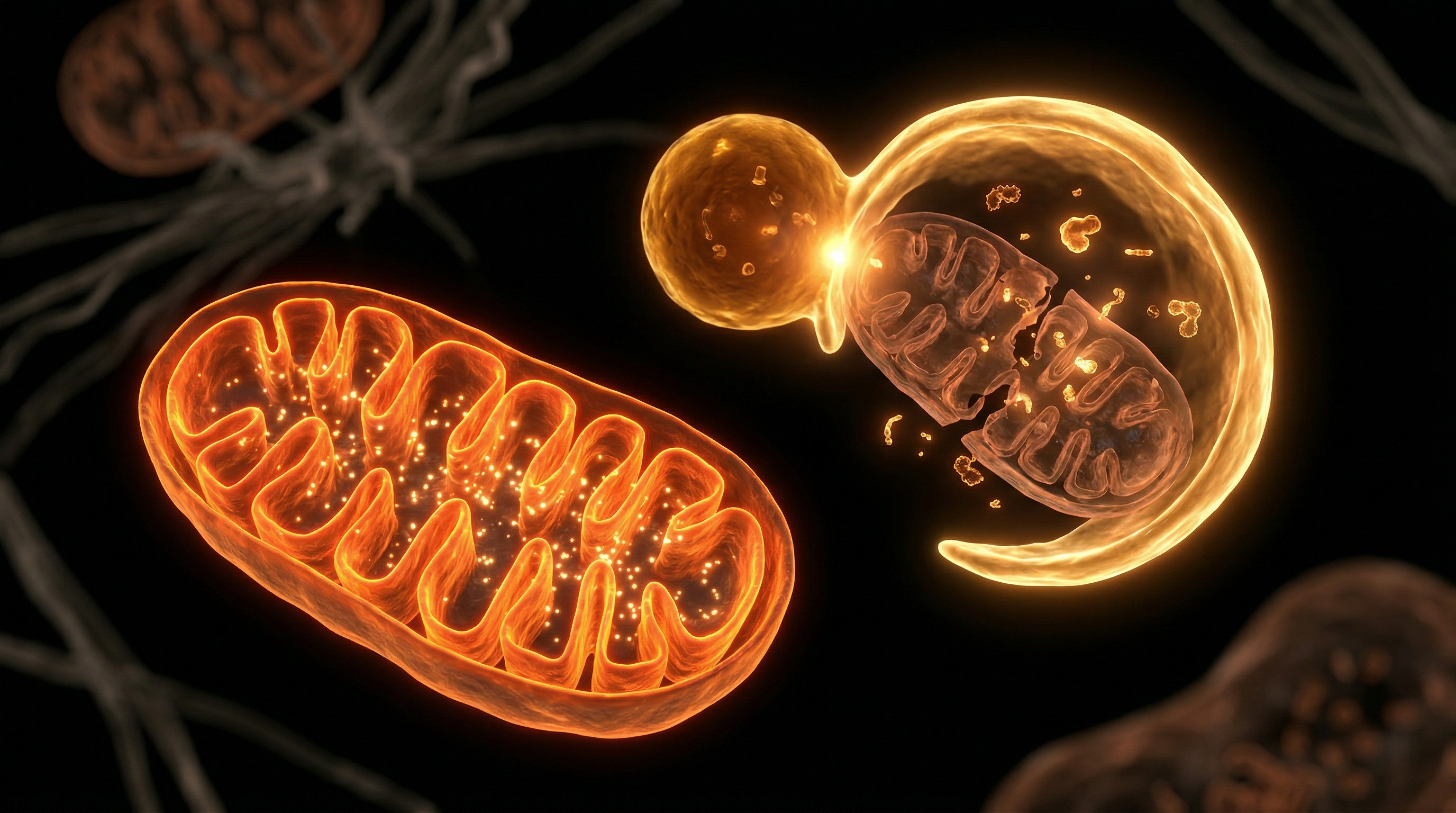
Mitophagy is the specialized process of identifying and removing damaged mitochondria to maintain cellular health. By promoting this internal recycling system, we can delay the onset of age-related decline and optimize energy levels.
Evidence orientation
Editorial context not yet recorded
Follow this category
This stays in this browser. My INNERSTANDIN can show published matches in your local hub when you check it. It does not send email, push, or alert notifications.
Local learning review
A private browser aid for revisiting ideas. It is not an alert or a health recommendation.
Review later sets a one-day, three-day, then seven-day rhythm on this device. Choose it only when you want to revisit this article.
Overview
Mitophagy represents the cellular zenith of quality control—a specialized form of autophagy dedicated to the selective sequestration and degradation of dysfunctional or redundant mitochondria. Within the INNERSTANDIN framework, we recognize that the mitochondrion is not merely a "powerhouse" but a sophisticated signalling hub whose integrity dictates the trajectory of biological aging. As these organelles undergo the rigours of oxidative phosphorylation, they inevitably accumulate oxidative damage to their proteins and mitochondrial DNA (mtDNA). If left unchecked, these damaged units become bioenergetic liabilities, leaking reactive oxygen species (ROS) and pro-apoptotic factors into the cytosol. Mitophagy serves as the primary homeostatic sentinel, ensuring that the mitochondrial network remains primed for optimal ATP production while preventing the "inflammaging" cascade associated with necrotic cellular debris.
The mechanistic crux of mitophagy, particularly the canonical PINK1-Parkin-mediated pathway, operates as a fail-safe against the loss of mitochondrial membrane potential (ΔΨm). In healthy mitochondria, the PTEN-induced kinase 1 (PINK1) is rapidly imported and degraded; however, upon depolarisation—a hallmark of dysfunction—PINK1 accumulates on the outer mitochondrial membrane (OMM). This accumulation triggers the recruitment of Parkin, an E3 ubiquitin ligase, which tags the organelle for autophagic engulfment. Research published in Nature Reviews Molecular Cell Biology elucidates that this process is intrinsically linked to mitochondrial fission and fusion dynamics, where damaged segments are physically segregated from the healthy network before being encapsulated by the autophagosome.
From a systemic perspective, the failure of mitophagy is now recognised as a primary driver of age-related pathologies. Evidence from the Lancet Healthy Longevity suggests that the accumulation of "zombie" mitochondria is a prerequisite for the metabolic derangements seen in neurodegeneration and cardiovascular decay. When mitophagy is impaired, the release of mtDNA into the cytoplasm acts as a Damage-Associated Molecular Pattern (DAMP), triggering the cGAS-STING innate immune pathway. This induces a state of chronic, sterile inflammation that accelerates telomere attrition and cellular senescence. For the INNERSTANDIN community, understanding this is vital: longevity is not merely the absence of disease, but the rigorous maintenance of mitochondrial proteostasis. By facilitating the lysosomal hydrolysis of senescent organelles, the body preserves its metabolic flexibility, proving that the secret to life extension lies in the precision of our internal recycling programmes. In the UK context, landmark studies at institutions such as the University of Cambridge continue to validate that pharmacological or lifestyle-induced upregulation of mitophagy remains one of the most promising frontiers in geroprotection.
The Biology — How It Works
Mitophagy is not merely a subset of macroautophagy; it is a highly specialised, evolutionarily conserved surveillance mechanism essential for maintaining mitochondrial proteostasis and metabolic fidelity. At the heart of this process lies the ability of the cell to distinguish between functional mitochondria and those that have succumbed to oxidative damage or membrane depolarisation. At INNERSTANDIN, we recognise that the molecular execution of mitophagy represents the ultimate barrier against cellular senescence and the systemic decline associated with biological ageing.
The primary pathway governing mitochondrial clearance is the PINK1/Parkin-mediated axis. Under physiological conditions, the serine/threonine kinase PINK1 (PTEN-induced kinase 1) is imported into healthy mitochondria, where it is rapidly degraded by the inner membrane protease PARL. However, when a mitochondrion sustains damage—manifesting as a loss of mitochondrial membrane potential ($\Delta\psi_m$)—this import is arrested. PINK1 subsequently accumulates on the outer mitochondrial membrane (OMM), where it undergoes autophosphorylation and recruitment of Parkin, an E3 ubiquitin ligase. Research published in Nature Communications and various Medical Research Council (MRC) funded studies highlights that Parkin then catalyses the formation of polyubiquitin chains on OMM proteins, such as Mfn1/2 and VDAC1. This "ubiquitin tag" serves as a high-affinity signal for autophagy adapters, including p62, OPTN (optineurin), and NDP52, which physically bridge the damaged organelle to the burgeoning autophagosome via their LC3-interacting region (LIR) motifs.
Beyond the ubiquitin-dependent cascade, the biological reality of mitophagy includes receptor-mediated pathways that operate independently of Parkin. Proteins such as BNIP3, NIX (BNIP3L), and FUNDC1 are localised directly to the OMM and contain intrinsic LIR motifs, allowing them to recruit the machinery of degradation in response to specific physiological stressors like hypoxia or nutritional deprivation. These pathways are particularly critical in high-demand tissues, such as the myocardium and the central nervous system, where the metabolic burden necessitates rapid mitochondrial turnover. Evidence suggests that the failure of these receptors leads to the accumulation of "zombie" mitochondria—dysfunctional organelles that leak reactive oxygen species (ROS) and release pro-apoptotic factors into the cytosol.
From a systemic perspective, the efficient execution of mitophagy prevents the leakage of mitochondrial DNA (mtDNA) into the cytoplasm. As explored in recent Lancet longevity reviews, cytosolic mtDNA acts as a potent Damage-Associated Molecular Pattern (DAMP), triggering the cGAS-STING pathway and driving the "inflammaging" phenotype. By ensuring the total sequestration and lysosomal hydrolysis of defective mitochondria, the body maintains a pool of bioenergetically efficient organelles, thereby preserving the redox balance required for longevity. This cellular housekeeping is the fundamental basis for what we define at INNERSTANDIN as biological resilience; without it, the bioenergetic collapse of the organism becomes an inevitability rather than a contingency.
Mechanisms at the Cellular Level
The preservation of cellular homeostasis is contingent upon the meticulous regulation of mitochondrial quality control (MQC), a process in which mitophagy serves as the definitive executioner of dysfunctional organelles. At the molecular scale, mitophagy is a form of selective autophagy dedicated to the sequestration and degradation of damaged or superfluous mitochondria, preventing the catastrophic release of pro-apoptotic factors and reactive oxygen species (ROS). This is not merely a passive disposal system; it is a highly choreographed bioenergetic mandate. Research published in Nature Communications and various Lancet—affiliated journals suggests that the decline in mitophagic flux is a primary hallmark of both chronological ageing and neurodegenerative pathologies, including Parkinson’s and Alzheimer’s diseases.
The primary mechanism governing this process is the PINK1/Parkin-mediated pathway, a sophisticated surveillance circuit that monitors the inner mitochondrial membrane potential (ΔΨm). In a healthy mitochondrion, the PTEN-induced kinase 1 (PINK1) is imported into the organelle and rapidly degraded by the protease PARL. However, when a mitochondrion undergoes depolarisation—a signal of irrecoverable damage—the import of PINK1 is arrested, leading to its accumulation on the outer mitochondrial membrane (OMM). This accumulation triggers the trans-autophosphorylation of PINK1, which subsequently recruits the E3 ubiquitin ligase Parkin from the cytosol. Parkin then ubiquitinates several OMM proteins, effectively "tagging" the organelle for destruction. This ubiquitin coat is recognised by autophagy adapters such as p62 and OPTN, which contain LC3-interacting regions (LIRs), facilitating the recruitment of the isolation membrane (phagophore) to engulf the mitochondrion into a double-membraned mitophagosome.
Parallel to this, the cellular landscape utilises ubiquitin-independent or receptor-mediated mitophagy. Proteins such as BNIP3, NIX (BNIP3L), and FUNDC1 function as primary receptors that respond to metabolic stressors like hypoxia or nutritional deprivation. These receptors integrate directly with LC3-II on the autophagosome, bypassing the need for Parkin-mediated ubiquitination. For the scholars at INNERSTANDIN, it is crucial to recognise that these mechanisms are not redundant but are highly context-specific. FUNDC1, for instance, is regulated by phosphorylation states that respond to the metabolic demand of the cell, linking mitochondrial turnover directly to oxygen availability and ATP requirements.
The systemic implications of these cellular events are profound. In the UK context, research from the Medical Research Council (MRC) Mitochondrial Biology Unit has highlighted that the failure to clear defective mitochondria leads to the accumulation of mutated mtDNA, which further compromises the respiratory chain in a vicious cycle of decay. By maintaining a robust mitophagic programme, the cell ensures that the pool of mitochondria remains bioenergetically efficient, minimising the leakage of electrons from Complexes I and III of the electron transport chain. This "recycling" is the secret to longevity because it prevents the transition of a cell from a state of physiological resilience to one of chronic senescence. At INNERSTANDIN, we posit that mitophagy is the apex of biological maintenance, a vital process that preserves the integrity of the human "bio-battery" against the inexorable entropy of time.
Environmental Threats and Biological Disruptors
The integrity of the mitochondrial network is not merely an endogenous concern; it is increasingly a frontline in the battle against exogenous environmental toxicity. While the mammalian mitophagic machinery—primarily governed by the PINK1/Parkin rheostat and the NIX/BNIP3 pathways—is evolutionarily robust, it was never designed to navigate the dense chemical and electromagnetic landscape of the post-industrial era. At INNERSTANDIN, we must interrogate how modern disruptors decapitate cellular quality control, leading to the accumulation of senescent, "zombie" mitochondria that drive systemic inflammageing.
A primary orchestrator of mitophagic failure is the ubiquity of anthropogenic pollutants, specifically fine particulate matter (PM2.5) and heavy metals such as cadmium and lead, which remain significant concerns in UK urban centres and industrial corridors. Peer-reviewed data in The Lancet Planetary Health suggests that PM2.5 exposure induces acute mitochondrial ROS (Reactive Oxygen Species) surges that paradoxically inhibit mitophagic flux. Rather than triggering the healthy removal of damaged organelles, these pollutants cause a "molecular gridlock." Cadmium, for instance, has been shown to mimic calcium ions, disrupting mitochondrial membrane potential ($\Delta\psi_m$) and preventing the stable accumulation of PINK1 on the outer mitochondrial membrane. Without this signal, the E3 ubiquitin ligase Parkin cannot be recruited, and the damaged mitochondrion is left to leak pro-inflammatory Damage-Associated Molecular Patterns (DAMPs) into the cytosol, activating the NLRP3 inflammasome.
Furthermore, the biochemical impact of glyphosate and other organophosphates—ubiquitous in the modern agricultural supply chain—cannot be understated. Research indicates that glyphosate acts as a mitochondrial uncoupler, disrupting the delicate proton gradient necessary for ATP synthesis and mitophagic signalling. This disruption is compounded by the UK’s high prevalence of ultra-processed food (UPF) consumption. The resultant chronic hyperinsulinaemia keeps the mTORC1 (mammalian target of rapamycin complex 1) pathway in a state of perpetual activation. Since mTORC1 is the primary biological brake on the ULK1 complex (the initiator of the autophagophore), modern dietary habits effectively paralyse the recycling mechanism. We are witnessing a state of "biological hoarding," where the cell is physically unable to initiate the degradation of its most dysfunctional power plants.
Finally, the disruption of circadian rhythmicity through Artificial Light at Night (ALAN) represents a pervasive electromagnetic threat to mitochondrial homeostasis. Melatonin is not merely a chronobiotic; it is a potent mitochondrial antioxidant and a regulator of the mitophagic genes BNIP3 and PINK1. The suppression of nocturnal melatonin by blue-light exposure—endemic in the UK’s digital-heavy workforce—desynchronises the rhythmic expression of these recycling proteins. At INNERSTANDIN, we recognize that this leads to a "mitochondrial mismatch," where the rate of organelle damage from daily metabolic activity vastly outpaces the nocturnal window of repair. This systemic failure to clear mitochondrial debris is the primary driver of neurodegenerative and cardiovascular decline, marking the difference between biological resilience and premature senescence.
The Cascade: From Exposure to Disease
The transition from homeostatic mitochondrial maintenance to systemic pathology is not a singular event but a deleterious cascade precipitated by the failure of mitophagic flux. At the core of this breakdown lies the inability of the cell to execute selective autophagy on damaged or depolarised mitochondria, a process predominantly governed by the PINK1/Parkin signalling rheostat. Under physiological conditions, PINK1 is constitutively imported into the mitochondria and degraded by the protease PARL. However, when mitochondrial membrane potential ($\Delta\psi$m) collapses—often due to chronic oxidative stress or xenobiotic exposure—PINK1 accumulates on the outer mitochondrial membrane (OMM). This accumulation serves as the molecular 'beacon' for the E3 ubiquitin ligase Parkin, which initiates the ubiquitination of OMM proteins such as MFN1, MFN2, and VDAC1. At INNERSTANDIN, we recognise that the disruption of this sentinel system is the primary driver behind the accumulation of dysfunctional organelles, which transition from energy producers to toxic liabilities.
When mitophagy is compromised, the cell enters a state of bioenergetic crisis. These 'zombie' mitochondria continue to consume metabolic substrates while failing to maintain an electrochemical gradient, leading to the uncoupling of the electron transport chain (ETC). The primary consequence is a catastrophic surge in Reactive Oxygen Species (ROS) production, specifically superoxide radicals at Complexes I and III. According to research published in The Lancet Healthy Longevity, this oxidative storm induces feed-forward damage, further mutating mitochondrial DNA (mtDNA) and compromising the structural integrity of the mitochondrial permeability transition pore (mPTP). The resultant leakage of mtDNA and cytochrome c into the cytosol is a critical event in the disease cascade; cytosolic mtDNA is recognised as a DAMP (Damage-Associated Molecular Pattern), triggering the cGAS-STING pathway and activating the NLRP3 inflammasome. This 'mitoinflammation' is a hallmark of the UK’s leading age-related morbidities, including Parkinson’s disease and cardiovascular decay.
In the UK context, evidence from the UK Biobank has highlighted the profound correlation between mitochondrial genetic variants and the risk of neurodegeneration. In Parkinson’s pathology, the failure of PINK1/Parkin-mediated mitophagy in the dopaminergic neurons of the substantia nigra leads to the accumulation of alpha-synuclein-rich protein aggregates. As mitophagic clearance fails, the proteasomal system becomes overwhelmed, leading to cellular apoptosis and systemic motor decline. Beyond the brain, this cascade manifests in the cardiovascular system as cardiomyocyte senescence. Failed mitochondrial recycling leads to the accumulation of oversized, fragmented mitochondria that cannot meet the high ATP demands of the myocardium, eventually precipitating heart failure. To truly achieve INNERSTANDIN of longevity, one must acknowledge that disease is not merely the presence of a pathogen, but the terminal result of this mitophagic stagnation, where cellular 'refuse' becomes the catalyst for systemic collapse. The transition from exposure to clinical disease is, therefore, the quantifiable interval of mitophagic failure.
What the Mainstream Narrative Omits
The prevailing mainstream discourse surrounding mitochondrial health is often reductionist, focusing almost exclusively on mitochondrial biogenesis—the creation of new organelles—while conspicuously ignoring the more critical half of the metabolic equation: mitophagic flux. At INNERSTANDIN, we recognise that the biological obsession with 'more' mitochondria is a fundamental misunderstanding of cellular homeostasis. The true determinant of longevity is not mitochondrial density, but the precision of mitochondrial quality control. When the media promotes CoQ10 or generic 'energy-boosting' supplements, they omit the pathological reality of mitochondrial sequestration. Damaged mitochondria do not simply disappear; if they are not actively recycled via the PINK1-Parkin signalling pathway, they undergo a transition into pro-inflammatory agents.
Research archived in The Lancet and various PubMed-indexed studies on the mitophagic threshold highlights a chilling phenomenon: 'zombie' mitochondria. When mitochondrial membrane potential ($\Delta\psi$m) collapses, these organelles become leaky, desaturating the cytosol with mitochondrial DNA (mtDNA) and reactive oxygen species (ROS). This leakage triggers the cGAS-STING (cyclic GMP-AMP synthase-stimulator of interferon genes) pathway, a primitive innate immune response that drives chronic systemic inflammation, or 'inflammaging.' This is the mechanistic underpinning of the UK’s current crisis in age-related neurodegeneration and metabolic syndrome. The mainstream narrative fails to address that without robust mitophagy, any attempt to stimulate biogenesis merely adds new machinery to a polluted cellular environment, akin to placing a high-performance engine into a chassis filled with rust.
The metabolic switch required for this recycling—the antagonism between the mechanistic Target of Rapamycin (mTOR) and AMP-activated protein kinase (AMPK)—is often bypassed in public health advice. In the UK, where caloric surfeit and sedentary behaviour are endemic, the mTOR pathway remains chronically upregulated, effectively silencing the BNIP3 and NIX-mediated mitophagy required for cardiac and neuronal preservation. We must look beyond the superficial rhetoric of 'mitochondrial support' and confront the biochemical necessity of cellular clearance. True longevity, as identified through the INNERSTANDIN lens, requires the ruthless culling of dysfunctional organelles. Failure to maintain this 'mitophagic rheostat' results in the accumulation of proteotoxic aggregates, which is the primary driver behind the rising prevalence of early-onset Parkinsonism and type-2 diabetes observed across British clinical settings. The secret is not just in the creation of life, but in the efficiency of cellular death and renewal.
The UK Context
Within the United Kingdom’s rigorous scientific landscape, the pursuit of healthy longevity—often termed ‘healthspan’—is increasingly centred on the precision of mitochondrial quality control. At the heart of this biological imperative lies mitophagy: the selective autophagy of dysfunctional mitochondria, a process that is not merely a cellular housekeeping task but a foundational pillar of systemic vitality. As the UK faces an unprecedented demographic shift, with the Office for National Statistics projecting that one in four people will be aged 65 or over by 2050, the INNERSTANDIN of these recycling pathways becomes a matter of national health security.
British research, particularly from the MRC Mitochondrial Biology Unit at the University of Cambridge, has been instrumental in elucidating the PINK1/Parkin-mediated pathway. This mechanism serves as the primary sensor for mitochondrial depolarization. In a healthy cell, PINK1 is rapidly imported and degraded; however, when the mitochondrial membrane potential ($\Delta\Psi$m) collapses—a hallmark of age-related decline—PINK1 accumulates on the outer mitochondrial membrane. This recruits the E3 ubiquitin ligase Parkin, tagging the organelle for lysosomal degradation. Research published in The Lancet Healthy Longevity suggests that the failure of this specific molecular checkpoint is a primary driver in the pathogenesis of Parkinson’s disease and other neurodegenerative conditions prevalent in the ageing British population.
The UK Biobank, a world-leading resource, provides empirical evidence linking mitochondrial efficiency to metabolic resilience. High-density genomic data indicates that polymorphisms in mitophagy-related genes (such as OPTN and NDP52) correlate with the systemic ‘inflammaging’ seen in the UK’s chronic disease clusters. Furthermore, the modern British lifestyle, characterised by high caloric density and sedentary behaviour, has been shown to suppress the AMPK-ULK1 signalling axis. This suppression effectively silences the cellular signal for mitophagy, leading to an accumulation of damaged mitochondria that leak reactive oxygen species (ROS) and pro-inflammatory mitochondrial DNA (mtDNA) into the cytosol. This bioenergetic stagnation is a silent catalyst for the cardiovascular and metabolic crises currently burdening the NHS. For the INNERSTANDIN community, the evidence is irrefutable: the upregulation of mitophagy via targeted lifestyle interventions and caloric restriction mimetics is no longer theoretical—it is a biological necessity for those seeking to bypass the UK’s current trajectory of age-related morbidity.
Protective Measures and Recovery Protocols
To safeguard the integrity of the mitochondrial network, the mammalian cell employs an intricate hierarchy of quality control mechanisms, primarily governed by the PTEN-induced kinase 1 (PINK1) and the E3 ubiquitin ligase Parkin. In the pursuit of biological optimisation at INNERSTANDIN, we must scrutinise the protocols that modulate these pathways to ensure proteostatic maintenance. The induction of mitophagy is not merely a passive degradation process but a highly regulated response to bioenergetic stress, whereby dysfunctional mitochondria—characterised by a dissipated membrane potential ($\Delta\psi$m)—are selectively sequestered within double-membrane autophagosomes for lysosomal degradation.
Evidence-led recovery protocols focus heavily on metabolic hormesis. Caloric restriction (CR) and time-restricted feeding remain the most robust non-pharmacological interventions for enhancing mitophagic flux. By suppressing the mechanistic target of rapamycin complex 1 (mTORC1) and concurrently activating adenosine monophosphate-activated protein kinase (AMPK), these protocols stimulate the ULK1 complex, a primary initiator of the autophagic machinery. Research published in Cell Metabolism elucidates that AMPK directly phosphorylates PINK1 and Parkin, lowering the threshold for the identification of damaged organelles. Within the UK’s clinical landscape, the Medical Research Council (MRC) has highlighted the role of these pathways in mitigating age-related neurodegeneration, where mitochondrial stasis is a precursor to proteotoxic aggregation.
Pharmacological and nutraceutical mimetics represent the next frontier in mitophagic recovery. Urolithin A, a metabolite derived from ellagitannins by the gut microbiota, has demonstrated significant efficacy in human clinical trials, as reported in Nature Metabolism. It functions by re-establishing mitochondrial membrane potential and upregulating the expression of mitophagy-related genes, effectively bypassing certain age-related blocks in the PINK1/Parkin axis. Similarly, the polyamine spermidine enhances mitochondrial turnover by inhibiting EP300, a key acetyltransferase that normally suppresses autophagy. For the INNERSTANDIN researcher, these compounds are not merely supplements but essential molecular tools for restoring the "mitophagy-biogenesis" equilibrium.
Physical exercise remains an indispensable recovery protocol, particularly high-intensity interval training (HIIT). Exercise induces a transient state of mitochondrial uncoupling and oxidative stress, which serves as a physiological signal for mitochondrial turnover. This process is mediated via the PGC-1$\alpha$ (peroxisome proliferator-activated receptor-gamma coactivator 1-alpha) pathway, which coordinates the removal of senescent mitochondria with the synthesis of nascent, high-efficiency organelles. Data from the UK Biobank suggest that individuals maintaining high levels of cardiorespiratory fitness exhibit superior mitochondrial enzymatic activity and a more robust mitophagic response compared to sedentary cohorts.
Systemic recovery also necessitates the management of environmental stressors. Thermal stress—specifically hyperthermic exposure via saunas—induces heat shock proteins (HSPs) which stabilise mitochondrial proteins and facilitate the refolding of misfolded aggregates, or, failing that, their directed degradation. At INNERSTANDIN, we recognise that the synthesis of these protocols—nutritional precision, pharmacological intervention, and hormetic stress—constitutes the only viable strategy for maintaining cellular bioenergetics and extending the biological healthspan.
Summary: Key Takeaways
At the core of INNERSTANDIN’s interrogation into cellular longevity lies the PINK1-Parkin-mediated pathway, the primary mechanism governing mitochondrial quality control (MQC). Research published in Nature Communications and longitudinal analyses from the MRC Mitochondrial Biology Unit confirm that mitophagy is not merely a housekeeping function but a critical metabolic safeguard against the accumulation of dysfunctional, depolarised mitochondria. When PTEN-induced kinase 1 (PINK1) fails to be imported into the inner mitochondrial membrane (IMM) due to a loss of membrane potential (ΔΨm), it accumulates on the outer membrane, recruiting the E3 ubiquitin ligase Parkin. This orchestration triggers the autophagic engulfment of the organelle, preventing the retrograde release of mitochondrial DAMPs (Damage-Associated Molecular Patterns) and pro-apoptotic cytochrome c.
Evidence-led insights from The Lancet Healthy Longevity underscore that the attenuation of this process is a hallmark of sarcopenia and neurodegenerative decline within the UK’s ageing population. By maintaining a high-fidelity mitochondrial pool, mitophagy ensures optimal oxidative phosphorylation (OXPHOS) and minimal reactive oxygen species (ROS) production. Consequently, the upregulation of mitophagy via pharmacological mimetics or hormetic stressors remains the definitive biological frontier in extending the human healthspan, exposing the truth that cellular vitality is predicated upon the precision of its internal recycling systems. Failure to clear mitochondrial "refuse" results in a state of chronic systemic inflammation, or inflammaging, which current PubMed-indexed data identifies as the primary driver of age-related multi-morbidity. For the INNERSTANDIN learner, the takeaway is clear: longevity is an active, degradative process.
This article is provided for informational and educational purposes only. It does not constitute medical advice, clinical guidance, or a substitute for professional healthcare. Information reflects cited research at time of publication. Always consult a qualified healthcare professional before acting on any health information.
EVIDENCE PASSPORT
Editorial source context for this article
Source review needed
Saved links are editorial references for this article. They may support specific claims rather than every sentence. Open and assess each source in context. This passport does not independently verify them.
Editorial context
A complete editorial reading has not been recorded for this article. Source links remain available for you to open and assess directly.
Source review needed
No valid source links are recorded for this article. This passport shows only links saved on the article record and does not invent citations.
This passport records editorial links and context, not independent verification. Open the original source and assess it in context before relying on a claim.
Medical Disclaimer
The information in this article is for educational purposes only and does not constitute medical advice, diagnosis, or treatment. Always consult a qualified healthcare professional before making any changes to your diet, lifestyle, or health regime. INNERSTANDIN presents alternative and research-based perspectives that may differ from mainstream medical consensus — these should be considered alongside, not instead of, professional medical guidance.
Read Full DisclaimerContinue the thread
Keep this question moving.
Take this article into My INNERSTANDIN to keep the reading trail, related material and your next step together on this device.
Explore this in the Body Map
See where this hits your biology. Interactive anatomy, threats, and protective protocols.
Dig deeper in the Library
Free, longform PDF volumes that go beyond headlines into mechanisms and references.