
Vascular Infiltration: Microplastics in the Human Bloodstream
Updated May 2026
Recent UK clinical studies have identified polymer particles within human blood samples for the first time. This discovery suggests that microplastics can bypass primary biological barriers and circulate systemically through the body.
Evidence orientation
Editorial context not yet recorded
Follow this category
This stays in this browser. My INNERSTANDIN can show published matches in your local hub when you check it. It does not send email, push, or alert notifications.
Local learning review
A private browser aid for revisiting ideas. It is not an alert or a health recommendation.
Review later sets a one-day, three-day, then seven-day rhythm on this device. Choose it only when you want to revisit this article.
Overview
For decades, the scientific community and the public at large operated under a comforting, albeit erroneous, assumption: that the human body was a closed system, protected by sophisticated biological barriers capable of filtering out the detritus of the industrial world. We believed that while we might inhale or ingest the microscopic fragments of our plastic-dependent civilisation, these particles would simply pass through us, unabsorbed and inert.
That illusion has been shattered.
Recent clinical breakthroughs, most notably pioneering research emerging from the United Kingdom and the Netherlands, have confirmed a harrowing new reality: microplastics (MPs) and nanoplastics (NPs) have successfully breached our primary biological defences. They are no longer merely "external" environmental pollutants; they have become "internal" systemic contaminants. In 2022, a seminal study published in Environment International identified polymer particles in the human bloodstream for the first time, with nearly 80% of tested subjects showing quantifiable levels of plastic in their whole blood.
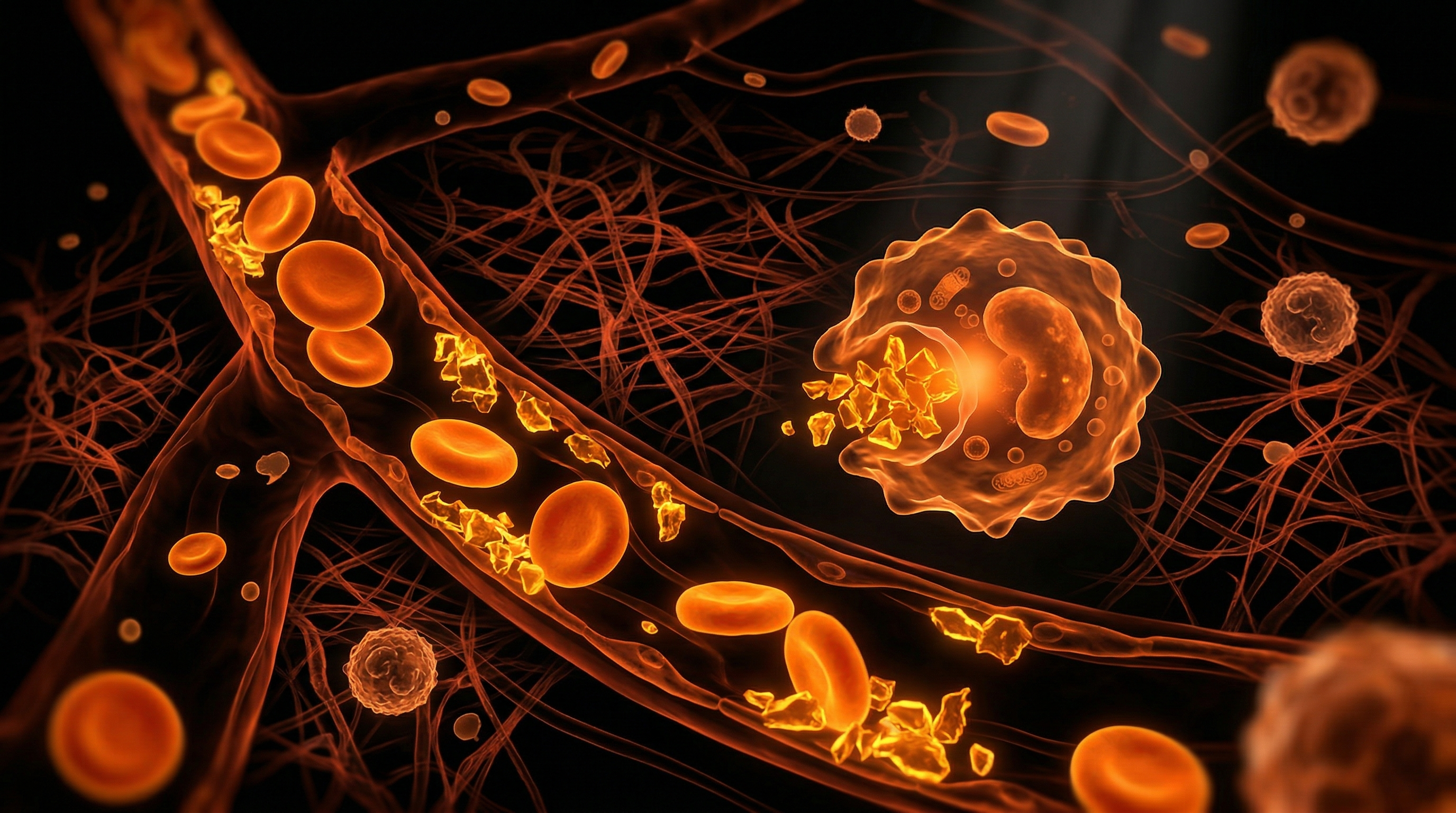
This "Vascular Infiltration" represents a paradigm shift in toxicology and internal medicine. The bloodstream is the body's primary highway for oxygen, nutrients, and immune signalling. The presence of synthetic polymers—ranging from Polyethylene Terephthalate (PET) used in beverage bottles to Polystyrene used in food packaging—within this "river of life" suggests a systemic distribution that reaches every vital organ, including the heart, liver, kidneys, and, most alarmingly, the brain.
As a senior biological researcher for INNERSTANDING, I must state clearly: we are currently participants in a global, uncontrolled experiment. This article will dissect the mechanisms of this infiltration, the biological havoc these particles wreak at a cellular level, and the systemic risks that the mainstream narrative has, until now, largely minimised.
Key Statistic: Current research indicates that the average human may be ingesting upwards of 5 grams of plastic per week—equivalent to the weight of a credit card—facilitating a constant "background" infiltration into the vascular system.
The Biology — How It Works
To understand how a solid synthetic fragment enters a liquid biological medium like blood, we must examine the three primary "Portals of Entry": the respiratory system, the gastrointestinal tract, and the dermal barrier.
1. The Respiratory Portal: Alveolar Translocation
The lungs are perhaps the most vulnerable point of entry. We inhale thousands of microplastic fibres and fragments daily, sourced from synthetic textiles, tyre wear, and urban dust. In the deep lung, the alveoli (tiny air sacs) are designed for rapid gas exchange. The barrier between the air in the alveoli and the blood in the capillaries is incredibly thin—often less than a micrometre.
Nanoplastics (particles smaller than 1,000 nanometres) are small enough to be "shuttled" across this barrier via transcytosis. Once they bypass the alveolar epithelial cells, they enter the pulmonary circulation, providing a direct route to the left side of the heart and subsequent systemic distribution.
2. The Gastrointestinal Portal: The Myth of the "Inert Gut"
It was once taught that the gut lining was an impenetrable wall to non-nutritive solids. We now know that the intestinal mucosa is highly dynamic. Particles can enter the bloodstream through:
- Paracellular transport: Slipping through the "tight junctions" between epithelial cells, especially in individuals with "leaky gut" or systemic inflammation.
- M-Cell uptake: Specialized cells in the Peyer’s patches (lymphoid tissue) of the gut are designed to sample the environment for pathogens. They inadvertently "sample" microplastics, transporting them into the lymphatic system and eventually the thoracic duct, which empties directly into the venous bloodstream.
3. The Dermal Portal: The Underestimated Route
While larger microplastics cannot penetrate healthy skin, recent studies into nanoplastics in cosmetics and personal care products suggest that particles smaller than 100nm can penetrate the stratum corneum, especially through hair follicles or compromised skin, reaching the dermal capillaries.
The Dynamics of Circulation
Once in the blood, these particles do not simply float. They are subjected to haemodynamic forces. Their movement is dictated by Brownian motion and the laminar flow of blood. Because plastic is hydrophobic and chemically distinct from biological tissue, it triggers immediate interactions with blood components, which we will explore in the following section.
Mechanisms at the Cellular Level
The toxicity of microplastics is not merely a result of their presence, but of their "biological identity" once they enter the body. This is a concept known as the Protein Corona.
The "Trojan Horse" Effect: The Protein Corona
The moment a plastic particle enters the bloodstream, it is coated by a layer of biomolecules, primarily proteins (such as albumin, apolipoproteins, and immunoglobulins) and lipids. This coating is the "Protein Corona."
- Consequences: This coating effectively "disguises" the plastic. A fragment of polystyrene no longer looks like plastic to a cell; it looks like a nutrient or a signalling protein.
- Receptor-Mediated Endocytosis: Cells may actively "pull" these particles inside, thinking they are absorbing essential lipids. This allows microplastics to bypass the cell membrane, the very gatekeeper of cellular integrity.
Oxidative Stress and Mitochondrial Sabotage
Once inside a cell (whether it be a leukocyte or a vascular endothelial cell), microplastics exert physical and chemical stress.
- Reactive Oxygen Species (ROS): The presence of a foreign, non-biodegradable object triggers the production of ROS. This leads to oxidative stress, damaging DNA and proteins.
- Mitochondrial Dysfunction: Nanoplastics have been observed to localise within the mitochondria—the cell's power plants. By physically disrupting the mitochondrial membrane, they inhibit ATP (energy) production and can trigger apoptosis (programmed cell death).
The "Shard" Effect: Mechanical Damage
At the micro-scale, many plastic particles are not smooth spheres but jagged shards (fragments). In the narrowest capillaries, which are often only 5–10 micrometres wide—barely wide enough for a red blood cell to pass—these shards can cause mechanical micro-abrasions to the endothelial lining (the inner surface of blood vessels). This damage is a precursor to vascular inflammation and the formation of atherosclerotic plaques.
Environmental Threats and Biological Disruptors
Microplastics are never just "plastic." They are complex chemical cocktails. When we discuss vascular infiltration, we must also discuss the "leaking" of these chemicals directly into the plasma.
Endocrine Disrupting Chemicals (EDCs)
Plastics are manufactured with various additives to provide flexibility, colour, or UV resistance. These include:
- Phthalates: Used to make plastics flexible. They are known anti-androgens and are linked to reproductive decline and metabolic disorders.
- Bisphenol A (BPA): A notorious xenoestrogen that mimics human hormones.
- Flame Retardants: Often found in microplastics sourced from electronic waste.
When microplastics circulate in the blood, these chemicals leach out due to the body’s internal temperature (37°C) and the presence of various enzymes. Unlike chemicals we might ingest and metabolise through the liver (the "first-pass effect"), chemicals leaching from plastics already in the bloodstream have direct access to our hormonal receptors.
Persistent Organic Pollutants (POPs): The Magnet Effect
Plastic is hydrophobic, meaning it repels water but attracts other oily substances. In the environment, microplastics act as "magnets" for toxins like DDT, PCBs, and heavy metals (lead, mercury, arsenic).
Scientific Callout: A single microplastic particle can have a concentration of toxic pollutants up to one million times higher than the surrounding seawater.
When these "loaded" particles enter the human bloodstream, they deliver a concentrated dose of environmental toxins directly to internal tissues. This is the "Trojan Horse" in its most literal sense: the plastic is the vessel, but the cargo is a lethal array of industrial poisons.
The Cascade: From Exposure to Disease
The presence of plastic in the blood is not a benign state of affairs. It initiates a "pathological cascade" that can manifest in various systemic diseases.
1. Cardiovascular Pathology: The New Atherosclerosis
Vascular health is predicated on the smoothness and integrity of the endothelium. Circulating microplastics cause chronic "micro-insults" to this lining. This triggers the recruitment of macrophages, which attempt to engulf the plastic but fail to digest it. These "frustrated" macrophages die, contributing to the fatty, fibrous buildup known as plaque.
- Microclots: Recent evidence suggests that microplastics can interact with fibrinogen, potentially triggering the formation of microclots (amyloid-type fibrin clots) that are resistant to the body’s natural breakdown processes.
2. Neurological Implications: Crossing the Blood-Brain Barrier (BBB)
The most terrifying aspect of vascular infiltration is the potential for plastic to cross the Blood-Brain Barrier. The BBB is a highly selective semi-permeable border that protects the brain from circulating toxins. However, nanoplastics have been shown in animal models to traverse this barrier via lipophilic diffusion or through the olfactory bulb path.
- Once in the brain, they may contribute to neuroinflammation, a hallmark of Alzheimer’s and Parkinson’s diseases.
3. The Placental Breach
In 2021, Italian researchers found microplastics in human placentas. This means the vascular infiltration is not limited to the host; it extends to the foetus. The implications for developmental biology are staggering, as plastics can disrupt the delicate hormonal signalling required for healthy foetal growth.
4. Immune System Exhaustion
The immune system is not designed to fight an enemy it cannot kill. When white blood cells (leukocytes) encounter plastic, they attempt to neutralise it. Because plastic is non-biodegradable, the immune response remains "switched on" indefinitely. This state of chronic low-grade inflammation is the common denominator in almost all modern chronic diseases, from autoimmunity to cancer.
What the Mainstream Narrative Omits
As a researcher for INNERSTANDING, I am tasked with looking beyond the surface-level reporting. Why has it taken so long for this crisis to be acknowledged?
1. The Measurement Gap
For years, regulatory bodies focused on "microplastics" (down to 1 micrometre). However, the most dangerous particles are nanoplastics, which are incredibly difficult to detect in biological tissue. Mainstream science often dismissed the risk because they simply weren't looking at a small enough scale.
2. Regulatory Capture and "Safe Levels"
The petrochemical industry is one of the most powerful lobbying forces on Earth. Much like the tobacco industry in the mid-20th century, the plastic industry has funded "shadow studies" to suggest that polymers are biologically inert. There is no such thing as a "safe level" of a synthetic, non-biodegradable polymer in the human bloodstream. Any claim to the contrary ignores the cumulative nature of these pollutants.
3. The Recycling Myth
The mainstream narrative pushes "recycling" as the solution. However, research shows that the recycling process itself—grinding and washing plastic—generates massive quantities of microplastics that are released into the water supply. Furthermore, recycled plastic often contains a higher concentration of toxic additives than virgin plastic, as different types of polymers are melted together.
4. The "Bio-Persistence" Problem
Most toxins are eventually metabolised or excreted. Plastic is different. It is designed to be durable—to last for hundreds of years. Within the human body, the half-life of a microplastic particle is currently unknown, but evidence suggests they can reside in organs for years, if not decades, constantly leaching chemicals and causing physical damage.
The UK Context
The United Kingdom has become a focal point for this research, both as a site of groundbreaking study and as a region particularly affected by plastic pollution.
The University of Hull Discovery
A landmark study by the University of Hull and Hull York Medical School found high levels of microplastics in human lung tissue. They identified 12 types of polymers, with the most common being polypropylene (PP) and PET. This study was instrumental in proving that the inhalation route in the UK is a primary driver of vascular infiltration.
The State of British Waterways
The UK’s "combined sewer" system frequently overflows, dumping raw sewage and microplastics directly into rivers like the Thames, the Severn, and the Mersey.
- The "Plastic Tea Bag" Phenomenon: A specific UK concern is the traditional tea bag. Many UK brands use polypropylene to seal their tea bags. Steeped in boiling water, a single bag can release 11.6 billion microplastics and 3.1 billion nanoplastics into a single cup. For a nation of tea drinkers, this is a significant, direct route of ingestion.
UK Regulatory Failure
Post-Brexit, the UK transitioned to "UK REACH" (Registration, Evaluation, Authorisation and Restriction of Chemicals). Critics argue that this system is less stringent than the EU’s version, potentially allowing higher levels of plastic additives to remain in consumer products. The UK's reliance on "energy from waste" (incineration) also releases microplastic-laden ash and atmospheric particulates into the British air.
Protective Measures and Recovery Protocols
While the situation is grave, we are not entirely defenceless. As biological researchers, we look to protocols that enhance the body's natural "clearance" mechanisms and reduce the "plastic load."
1. Advanced Filtration
Standard carbon filters are insufficient for nanoplastics.
- Reverse Osmosis (RO): This is the gold standard for drinking water. RO membranes can filter out particles down to 0.0001 micrometres, effectively removing the vast majority of micro- and nanoplastics.
- Air Purification: Using HEPA filters in the home can significantly reduce the inhalation of synthetic fibres from carpets and clothing.
2. Dietary Interventions: Moving Beyond the "Plasticene"
- Glass and Stainless Steel: Transitioning away from plastic food storage and "takeaway" containers is essential. Heat accelerates the leaching process.
- Avoid "High-Surface-Area" Plastics: Items like plastic tea bags, bottled water, and microwavable "steam-in-bag" vegetables are the highest contributors to blood-plastic levels.
- Seafood Selection: Avoid filter-feeders like mussels and oysters, which concentrate microplastics in their tissues. Choose wild-caught fish over farmed fish (which are often fed ground-up plastic-contaminated meal).
3. Biological Support: Enhancing Clearance
Since we cannot "digest" plastic, we must rely on the body's ability to move it through the lymphatic system and out through the organs of elimination.
- Autophagy Induction: Processes that trigger autophagy (cellular self-cleaning), such as intermittent fasting and exercise, may help the body process and sequester foreign particles.
- Glutathione Support: As the "master antioxidant," glutathione helps combat the oxidative stress caused by vascular microplastics. N-Acetyl Cysteine (NAC) and Sulforaphane (found in broccoli sprouts) are potent precursors.
- Sweating (Sauna Therapy): While the research is in its infancy, some studies suggest that certain plastic additives (like phthalates and BPA) can be excreted through sweat.
4. Policy Advocacy
Individual action is not enough. We must demand:
- A total ban on intentionally added microplastics in cosmetics and detergents.
- Mandatory filtration systems for washing machines (to catch microfibres).
- Accountability for the petrochemical industry regarding the "End-of-Life" of their products.
Summary: Key Takeaways
The infiltration of microplastics into the human bloodstream is a defining medical crisis of the 21st century. It represents the physical manifestation of our environmental negligence.
- Systemic Infiltration: Microplastics are no longer just in our environment; they are in our blood, moving through our veins and reaching every vital organ.
- Multiple Entry Points: We are being infiltrated through the air we breathe, the water we drink, and the food we eat.
- Biological Disruption: Once in the blood, plastics form a "Protein Corona," allowing them to enter cells, damage mitochondria, and trigger chronic inflammation.
- Toxic Hitchhikers: Plastics act as carriers for endocrine disruptors and persistent organic pollutants, delivering them directly to our internal tissues.
- The UK Connection: UK-specific research has been vital in proving the presence of plastics in human tissues, yet UK regulatory frameworks still struggle to keep pace with the threat.
- Action is Mandatory: Reducing exposure through filtration and dietary changes is essential, but systemic change is the only long-term solution.
The discovery of polymer particles in human blood is a "canary in the coal mine" for the species. We have integrated the synthetic world into our very biology. Whether our biological systems can adapt to this "Plasticene" era, or whether we will succumb to the resulting cascade of chronic disease, remains the most urgent question in modern biological science.
The era of "External Plastic" is over. The era of "Internal Plastic" has begun. We must act with the urgency that this biological breach demands.
Written by the Senior Research Team at INNERSTANDING. Category: Microplastics & Nanoplastics Tags: Vascular Health, Hematology, Systemic Circulation
This article is provided for informational and educational purposes only. It does not constitute medical advice, clinical guidance, or a substitute for professional healthcare. Information reflects cited research at time of publication. Always consult a qualified healthcare professional before acting on any health information.
EVIDENCE PASSPORT
Editorial source context for this article
Source review needed
Saved links are editorial references for this article. They may support specific claims rather than every sentence. Open and assess each source in context. This passport does not independently verify them.
Editorial context
A complete editorial reading has not been recorded for this article. Source links remain available for you to open and assess directly.
Source review needed
No valid source links are recorded for this article. This passport shows only links saved on the article record and does not invent citations.
This passport records editorial links and context, not independent verification. Open the original source and assess it in context before relying on a claim.
Medical Disclaimer
The information in this article is for educational purposes only and does not constitute medical advice, diagnosis, or treatment. Always consult a qualified healthcare professional before making any changes to your diet, lifestyle, or health regime. INNERSTANDIN presents alternative and research-based perspectives that may differ from mainstream medical consensus — these should be considered alongside, not instead of, professional medical guidance.
Read Full DisclaimerContinue the thread
Keep this question moving.
Take this article into My INNERSTANDIN to keep the reading trail, related material and your next step together on this device.
Explore this in the Body Map
See where this hits your biology. Interactive anatomy, threats, and protective protocols.
Dig deeper in the Library
Free, longform PDF volumes that go beyond headlines into mechanisms and references.