
VOL. 06
Endocrine Physiology
Hormones, Receptors & Feedback Regulation
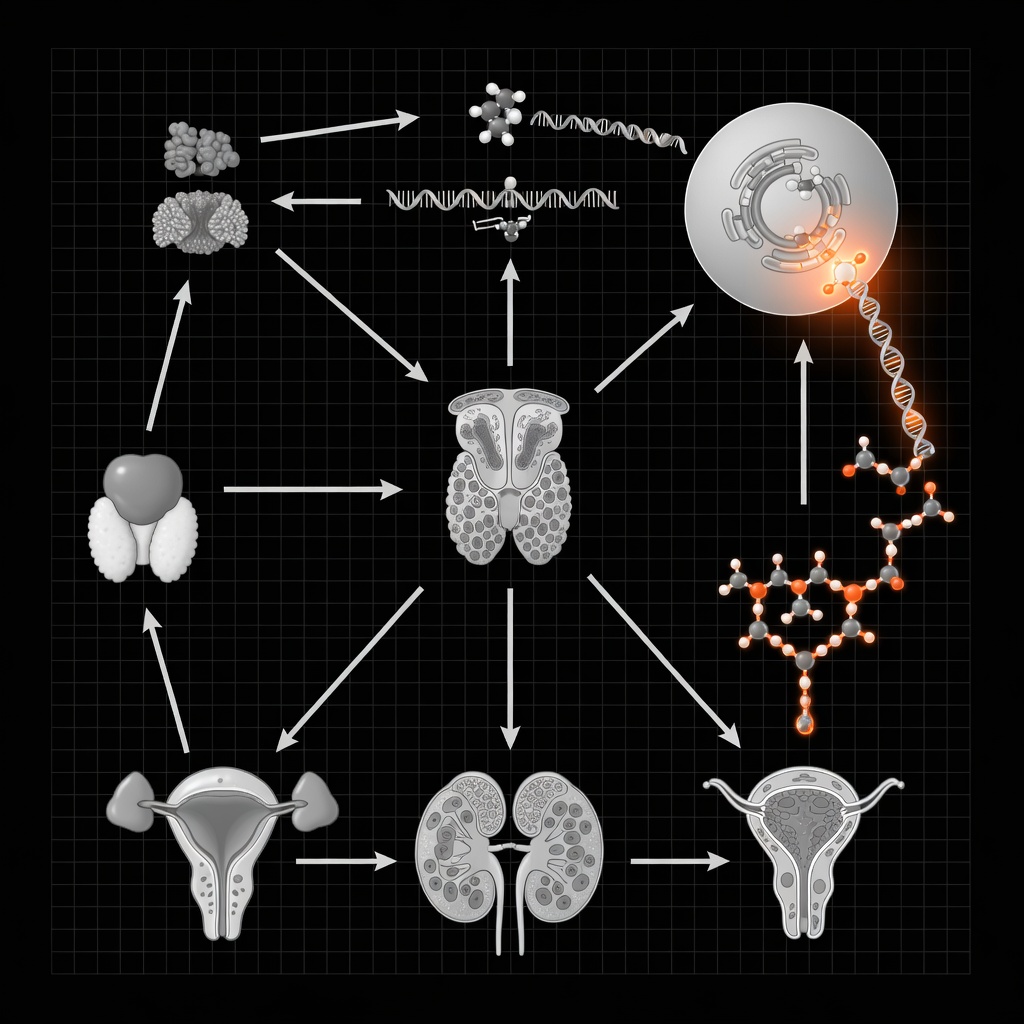
The endocrine system as a chemical communication network — classes of hormones and their receptor mechanisms, hypothalamic-pituitary axis and trophic hormone cascades, thyroid hormone synthesis and action, adrenal cortex and medulla physiology, insulin-glucagon dynamics, sex steroid physiology, and the physiology of stress response.
CONTENTS
— WHAT'S INSIDE THIS VOLUME
Hormone Classes & Receptor Mechanisms
The Hypothalamo-Pituitary Axis
Thyroid Hormone Synthesis & Action
Adrenal Cortex Physiology
Adrenal Medulla & Catecholamines
Insulin, Glucagon & Glucose Regulation
Sex Steroids & Gonadal Physiology
Stress Physiology & the HPA Axis
FULL VOLUME CONTENT
INTRODUCTION
Endocrine Physiology
Think of your body as a sprawling, hyper-active metropolis. Right now, as you read these words, there isn’t a single central computer controlling the chaos. Instead, you have a wireless communication network that would make any tech giant weep with envy. It’s silent.
It’s invisible. And it’s moving at the speed of your heartbeat. You probably think of hormones as those annoying chemicals that made you moody as a teenager. That’s like calling the internet a tool for looking at cat pictures.
It’s so much more. Your endocrine system is actually a sophisticated radio broadcast system where your glands are the transmitters and your cells are the receivers. It’s how your toe knows what your brain is planning and how your heart knows exactly how much fuel your muscles are burning. Most people go their whole lives without realising that their blood is effectively a liquid post office.
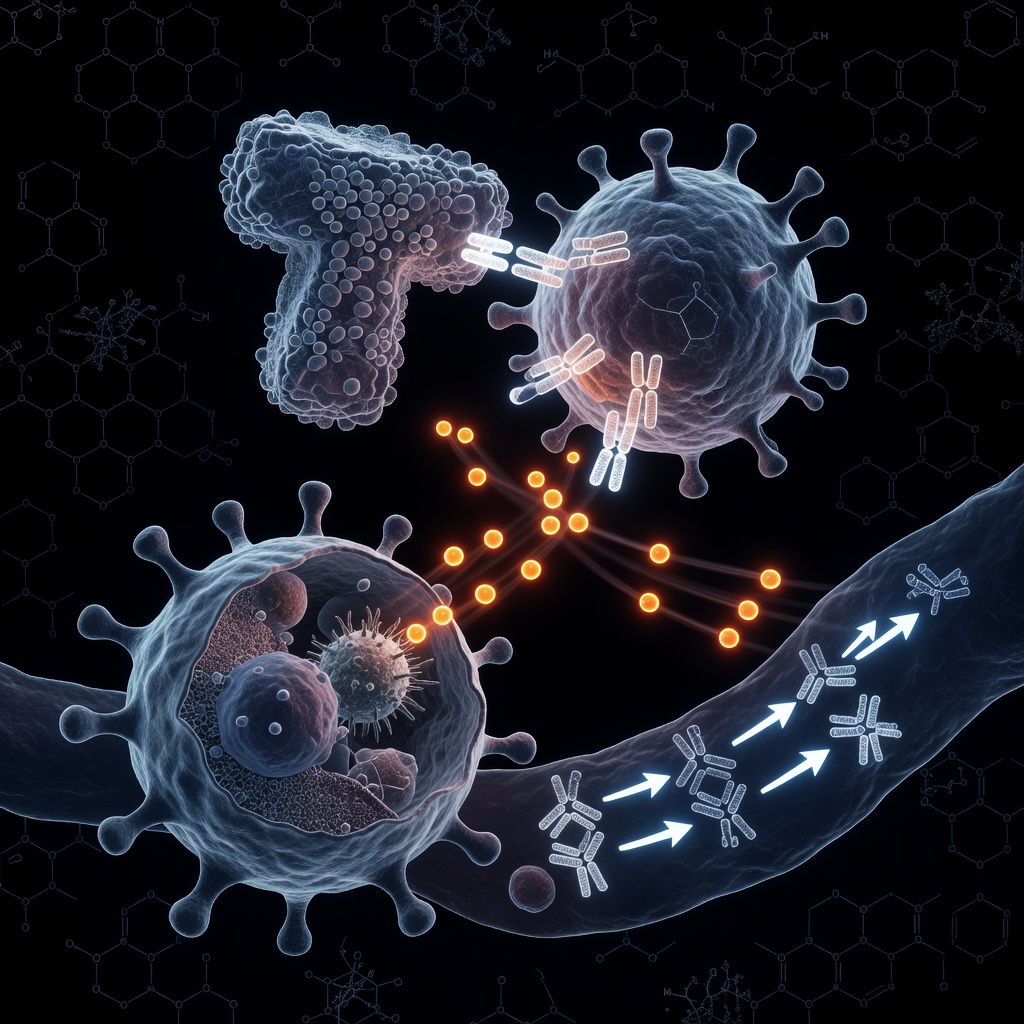
Every second, your glands are leaking tiny packets of information—hormones—directly into your bloodstream. These aren’t just random sparks. They are precise, chemical keys. They drift through your veins, brushing past millions of cells that simply ignore them.
But then, they hit the right one. This cell has a receptor—think of it as a custom-built lock on the cell’s surface. The hormone clicks in, the lock turns, and the cell’s entire internal machinery shifts gear. It might start building proteins, burning sugar, or opening up its borders to let in water.
You don’t feel it happening, but this molecular handshake is the reason you are alive, awake, and functioning. What’s truly mind-blowing is the scale of the precision. We aren't talking about gallons of these chemicals. We are talking about concentrations so small they’re like dropping a single sugar cube into an Olympic-sized swimming pool.
Yet, your body detects that sugar cube instantly. If the level of a hormone in your blood shifts by even a fraction, your entire physiology pivots. To manage this, your body uses feedback loops—the biological equivalent of a smart thermostat. When your house gets too cold, the heater kicks in.
When it hits the right temperature, the heater cuts out. Your body does the same with everything from your calcium levels to your metabolic rate. It is a constant, shimmering dance of self-regulation that never stops, not even when you’re fast asleep. We’ve only really understood this for a blink of an eye in human history.
For centuries, the best doctors in the world thought your health was governed by four humours—black bile, yellow bile, phlegm, and blood. They thought your personality and your health were just a matter of how much of these liquids you had sloshing around. It was messy, wrong, and cost a lot of people their lives. It wasn't until 1902 that two British physiologists, Ernest Starling and William Bayliss, discovered the very first hormone, secretin.
They realised that a chemical could travel through the blood and trigger an action in a distant organ without the nervous system being involved at all. It changed everything. It was the moment we realised that your body isn't just a collection of parts wired together like a house; it’s a chemical conversation. In the chapters ahead, we’re going to eavesdrop on that conversation.
You’ll discover how some hormones act like loud-hailers, screaming instructions from the rooftops, while others whisper directly into the nucleus—the control centre—of your cells. You’ll see how your master gland, the pituitary, hangs from the base of your brain like a tiny, powerful conductor leading a massive orchestra. We’ll look at why some hormones are made of fats and can slide straight through cell walls, while others are made of proteins and have to knock on the front door. This isn't just biology; it’s the operating manual for your existence.
You’re about to see the invisible threads that hold you together, and once you see them, you’ll never look at your own reflection the same way again. It’s time to stop being a stranger to your own chemistry.
DOWNLOAD THIS VOLUME
This volume is compiled from peer-reviewed physiology literature into a precision longform PDF. Generate once — it's then saved permanently in the INNERSTANDING library for instant re-download by all users.
PDF format · No wait time · Standardized Print Resolution