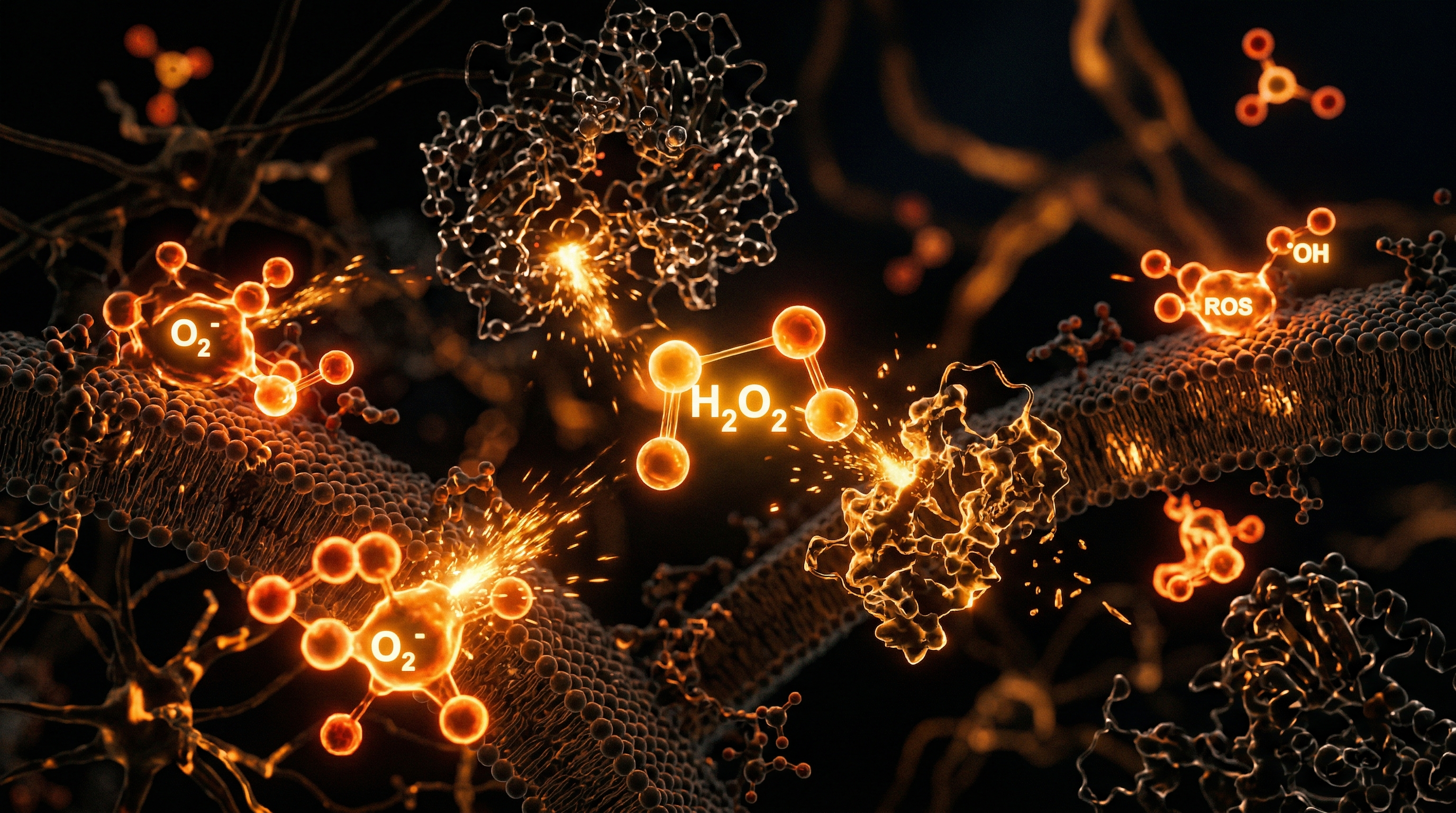
Reactive Oxygen Species: The Double-Edged Chemistry of Breathing
Reactive oxygen species (ROS) — including superoxide radicals, hydrogen peroxide, and the highly reactive hydroxyl radical — are inevitable byproducts of the oxygen-based metabolism that powers all complex life, generated primarily as electrons leak from the mitochondrial electron transport chain and react with molecular oxygen. At physiological concentrations, ROS serve essential roles in cellular signalling, immune defence (the 'oxidative burst' that destroys pathogens), and hormetic adaptation — but when their production exceeds antioxidant capacity, they initiate a cascade of oxidative damage to cellular lipids, proteins, and DNA that is the molecular root of ageing and chronic degenerative disease. The extraordinary levels of environmental oxidative stress imposed by heavy metal exposure, electromagnetic radiation, pesticide residues, air pollution, and chronic psychological stress in modern life have created a state of systemic oxidative stress that is orders of magnitude beyond what human antioxidant systems evolved to manage.