
Blood-Brain Barrier Breach: Nanoplastics in Cerebral Tissues
Updated May 2026
Nanoplastics possess the unique ability to penetrate the blood-brain barrier, leading to neuroinflammation and potential cognitive decline. Understanding these mechanisms is vital for addressing rising neurodegenerative conditions in the UK.
Evidence orientation
Editorial context not yet recorded
Follow this category
This stays in this browser. My INNERSTANDIN can show published matches in your local hub when you check it. It does not send email, push, or alert notifications.
Local learning review
A private browser aid for revisiting ideas. It is not an alert or a health recommendation.
Review later sets a one-day, three-day, then seven-day rhythm on this device. Choose it only when you want to revisit this article.
Overview
The sanctity of the human brain—the most protected organ in the biological repertoire—is under a silent, invisible siege. For decades, the scientific community has operated under the comfortable assumption that the Blood-Brain Barrier (BBB) served as an impenetrable fortress, shielding our neural architecture from the myriad of toxins present in the external environment. However, recent breakthroughs in analytical chemistry and neuropathology have shattered this illusion. We have entered the era of the Plasticene, where synthetic polymers have not only infiltrated our oceans and soil but have bridged the biological divide, embedding themselves within the very tissues that facilitate human thought, memory, and consciousness.
Nanoplastics (NPs), defined as plastic particles typically smaller than 1,000 nanometres (nm)—though most concerning at the <100nm scale—possess unique physicochemical properties that allow them to bypass physiological checkpoints. Unlike larger microplastics, which may be excreted or sequestered in the gut, nanoplastics exhibit a high surface-area-to-volume ratio and a propensity for protein adsorption. This allows them to "cloak" themselves in biological molecules, effectively hijacking the body's internal transport systems.
The implications for the United Kingdom are particularly dire. With rising rates of "idiopathic" neurodegenerative conditions and a healthcare system struggling to cope with an ageing population, the correlation between environmental plastic density and cerebral health can no longer be ignored. This article serves as a comprehensive interrogation of the mechanisms by which these anthropogenic interlopers breach the BBB and the devastating cellular cascade that follows.
Fact: Recent studies have confirmed that nanoplastics can reach the brain in as little as two hours after ingestion, demonstrating a trans-barrier velocity that was previously thought impossible for non-biological materials.
The Biology — How It Works
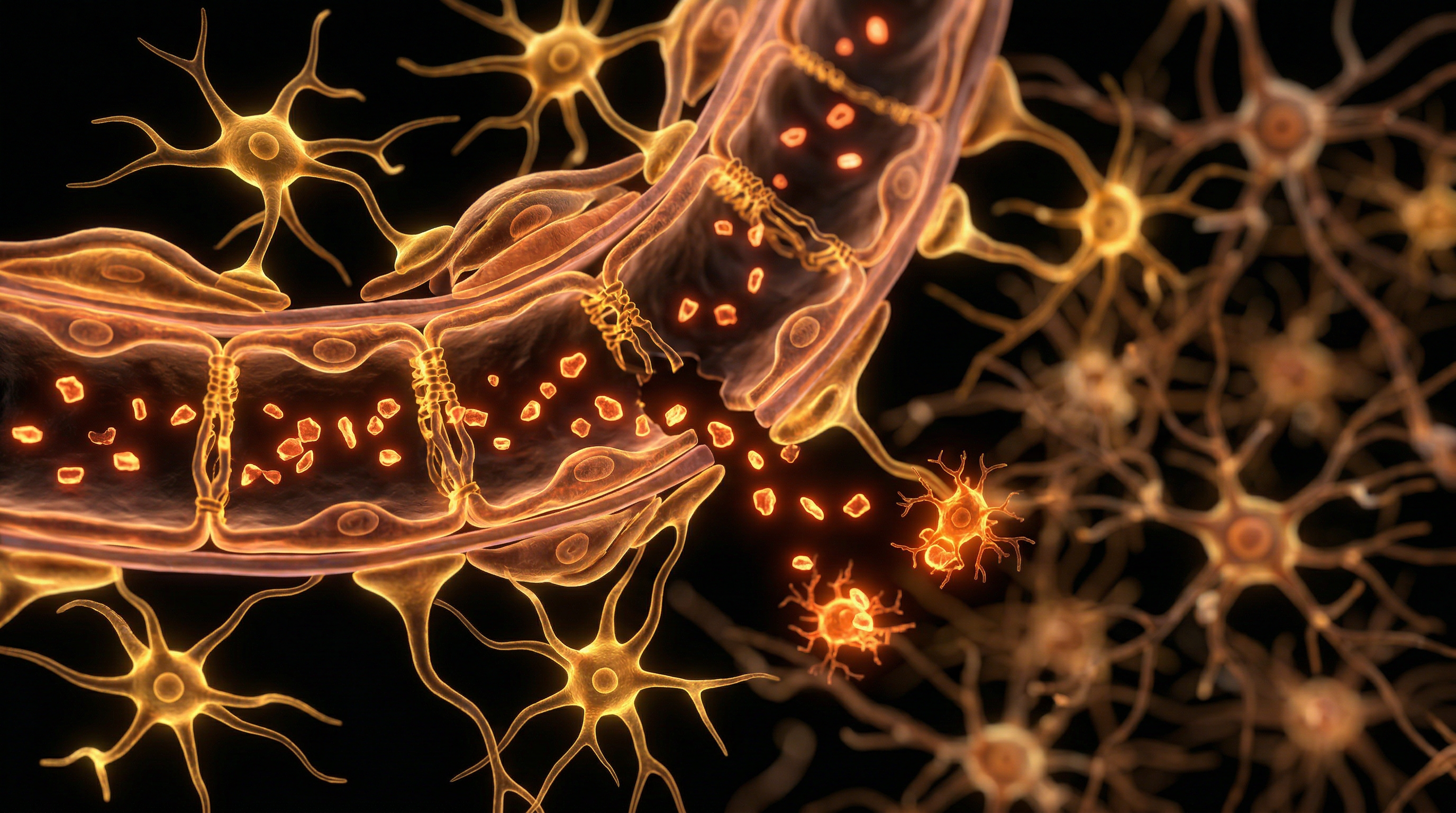
To understand the breach, one must first understand the architecture of the Neurovascular Unit (NVU). The Blood-Brain Barrier is not a single "wall" but a highly complex, dynamic interface consisting of:
- Endothelial Cells: These form the inner lining of the capillaries, featuring "tight junctions" (claudins and occludins) that prevent the leakage of solutes.
- Pericytes: Cells that wrap around the endothelial layer, regulating capillary blood flow and maintaining the integrity of the barrier.
- Astrocyte End-feet: The terminal processes of astrocytes that envelop the vasculature, providing a second layer of defence and metabolic support.
The Breach Mechanics
Nanoplastics utilise several distinct pathways to circumvent these defences:
- Paracellular Transport: While tight junctions usually restrict passage to molecules smaller than 400-600 Daltons, the chemical surfactants often associated with nanoplastics (such as phthalates or BPA) can cause "junctional leakage," physically widening the gaps between endothelial cells.
- Transcellular Diffusion: Due to their lipophilic (fat-loving) nature, certain nanoplastics can dissolve into the lipid bilayer of the cell membrane, passing directly through the cell body of the endothelium.
- Endocytosis: The most insidious method. The cell mistake the nanoplastic for a nutrient or a signalling molecule, engulfing it in a vesicle (vacuole) and transporting it from the blood-facing side to the brain-facing side.
The Size Threshold
The critical threshold for BBB penetration is approximately 100nm. Particles larger than this are often sequestered by the liver or spleen. However, as plastics fragment further into the nano-range, they gain "quantum-like" biological mobility. At 10-50nm, a nanoplastic particle is roughly the same size as a virus or a large protein complex, allowing it to navigate the cerebral microvasculature with ease.
Mechanisms at the Cellular Level
Once a nanoplastic particle has crossed the Rubicon of the BBB, it enters the Cerebral Interstitial Fluid. It is here that the true pathological damage begins. The brain is not equipped to metabolise or "clear" synthetic polymers; there are no enzymes in the human evolutionary toolkit designed to break down polyethylene or polystyrene.
The Biomolecular Corona
As soon as a nanoplastic enters the blood or the brain, it becomes coated with local proteins, forming what is known as a Biomolecular Corona. This corona determines the particle’s "biological identity." In the brain, nanoplastics often attract Apolipoprotein E (ApoE) or Transferrin.
- The Trojan Horse Effect: By coating themselves in ApoE, nanoplastics can bind to LDL receptors on neurons, tricking the neuron into drawing the plastic deep into its internal structure.
- Protein Misfolding: The high-energy surface of the plastic can cause the proteins in its corona to denature (unfold). This may act as a "seed" for the aggregation of Amyloid-beta and Alpha-synuclein, the hallmarks of Alzheimer’s and Parkinson’s diseases respectively.
Microglial Activation and Neuroinflammation
The brain’s resident immune cells, Microglia, are the first responders to foreign debris. Under normal conditions, they clear cellular waste. However, when microglia encounter nanoplastics, they enter a state of "frustrated phagocytosis."
- Pro-inflammatory State (M1 Phenotype): Microglia release a storm of cytokines (TNF-α, IL-1β) and Reactive Oxygen Species (ROS) in a futile attempt to destroy the plastic.
- Chronic Inflammation: Unlike a virus that can be killed, the plastic remains. This leads to a state of chronic, low-grade neuroinflammation that slowly degrades the surrounding neural tissue, pruning synapses and causing neuronal death.
Statistic: Research indicates that exposure to polystyrene nanoplastics can reduce microglial viability by up to 40% within 48 hours, effectively crippling the brain's primary immune defence system.
Environmental Threats and Biological Disruptors
The ubiquity of nanoplastics means that exposure is not a choice, but an environmental inevitability. However, the degree of exposure is governed by specific anthropogenic factors.
Primary Sources of Cerebral Infiltration
- Aerosolised Inhalation: The fastest route to the brain is not through the gut, but through the Olfactory Bulb. Nanoplastics inhaled through the nose can travel along the olfactory nerve, bypassing the BBB entirely and entering the frontal lobe.
- The Chylomicron Pathway: After ingestion, nanoplastics can be packaged into chylomicrons (fat droplets) in the gut. These bypass the liver and enter the thoracic duct, delivering the plastic directly into the systemic circulation where it has a direct shot at the BBB.
- Water-Borne Nano-fragmentation: Bottled water is a significant culprit. The mechanical stress of opening a plastic cap, combined with UV degradation, creates a "soup" of billions of nanoplastic particles per litre.
Chemical Hitchhikers
Nanoplastics are rarely "pure" polymers. They act as sponges for Persistent Organic Pollutants (POPs) and heavy metals.
- Phthalates and BPA: These endocrine disruptors leach from the plastic once it is inside the brain, interfering with hormonal signalling and neurogenesis.
- Heavy Metals: Lead, cadmium, and mercury have been found adsorbed onto the surfaces of environmental microplastics, using the plastic as a vehicle to penetrate the brain.
The Cascade: From Exposure to Disease
The progression from the first nanoplastic breach to clinical cognitive decline is a multi-stage cascade. It is rarely a sudden event, but rather a "slow-motion poisoning" that mirrors the increase in global plastic production.
Stage 1: Mitochondrial Dysfunction
Nanoplastics have been shown to accumulate in the Mitochondria—the powerhouses of the cell. By disrupting the electron transport chain, they induce Oxidative Stress. The resulting "energy crisis" within the neuron leads to impaired neurotransmission and the loss of synaptic plasticity.
Stage 2: The Autophagy Blockade
Neurons rely on Autophagy (cellular self-cleaning) to survive. Nanoplastics interfere with lysosomal function, the "garbage disposals" of the cell. When lysosomes are clogged with plastic, the cell can no longer clear out damaged proteins, leading to the rapid accumulation of toxic plaques and tangles.
Stage 3: Dysregulation of the Gut-Brain Axis
The breach is not limited to the BBB. Nanoplastics cause Intestinal Permeability (Leaky Gut). This allows gut-derived toxins and inflammatory markers to enter the bloodstream, further compromising the integrity of the Blood-Brain Barrier. This "double-hit" hypothesis suggests that nanoplastics attack the brain from both within and without.
Stage 4: Clinical Manifestation
Over decades, this accumulation manifests as:
- Early-onset Dementia: Disruption of the hippocampal circuits.
- Motor Dysfunction: Accumulation in the substantia nigra (Parkinsonian symptoms).
- Cognitive Fog and Executive Dysfunction: Chronic pre-frontal cortex inflammation.
What the Mainstream Narrative Omits
The current regulatory framework for plastics is fundamentally flawed, relying on outdated toxicology models that were designed for soluble chemicals, not persistent particles.
The "Safe Limit" Fallacy
Regulatory bodies like the EFSA (European Food Safety Authority) and the FDA often cite the lack of "acute toxicity" as evidence of safety. However, nanoplastics exhibit bioaccumulative toxicity. They do not need to be toxic in a single dose; they need only to accumulate faster than they can be cleared. The mainstream narrative ignores the lifetime load.
The Conflict of Interest
The plastic industry is a multi-billion pound sector, intrinsically tied to the petrochemical industry. There is a significant lag between independent laboratory findings and the update of safety standards. Much like the tobacco industry in the 1950s, the "plastic lobby" promotes the idea of "insufficient evidence" to stall protective legislation.
Particle Shape and Surface Charge
Standardized testing often uses smooth, spherical polystyrene beads for experiments. In reality, environmental nanoplastics are jagged, irregular "shards" with complex surface charges. These "jagged nanoplastics" are significantly more damaging to cellular membranes than the spheres used in industry-funded safety trials. The mainstream narrative focuses on the mass of plastic, while the surface area and shape are what truly dictate biological harm.
Callout: Modern science often conflates "absence of evidence" with "evidence of absence." Just because we lack a standardized test for nanoplastics in human brain tissue doesn't mean they aren't there—it means we haven't been looking.
The UK Context
The United Kingdom finds itself at a unique crossroads. As an island nation with a history of industrial plastic use and a reliance on processed, plastic-packaged foodstuffs, the "body burden" of the British public is reaching a critical mass.
The River Systems
UK rivers are among the most plastic-polluted in the developed world. Research by the University of Manchester revealed that parts of the River Mersey had the highest levels of microplastic pollution ever recorded globally. These riverine plastics eventually fragment into nanoplastics, contaminating the local water cycle and, potentially, the atmospheric air through "sea spray" aerosolisation.
The NHS Crisis and Neurodegeneration
The UK is currently facing a "dementia tsunami." While increased life expectancy is a factor, the rate of Early-Onset Dementia (EOD) is rising. In the UK, there are currently over 70,000 people living with young-onset dementia. The correlation between the rise of the "plastic economy" (beginning in the 1960s and 70s) and the current surge in neurodegenerative cases in those now in their 50s and 60s is a statistical anomaly that demands investigation.
Post-Brexit Regulatory Gaps
Since leaving the EU, the UK has faced challenges in maintaining and updating chemical safety regulations (REACH). There is a danger that the UK could become a "dumping ground" for plastic-containing products that do not meet the increasingly stringent (though still imperfect) EU standards regarding microplastic additives.
Protective Measures and Recovery Protocols
While the systemic issue requires geopolitical intervention, individuals can take proactive steps to fortify their Blood-Brain Barrier and encourage the clearance of these synthetic intruders.
1. Barrier Fortification
Maintaining the integrity of the BBB is paramount.
- Omega-3 Fatty Acids (DHA): Essential for maintaining the fluidity and "tightness" of the endothelial membranes.
- Sulforaphane: Found in broccoli sprouts, this compound activates the Nrf2 pathway, which strengthens the BBB and promotes the production of glutathione, the body's master antioxidant.
- Magnesium Threonate: A specific form of magnesium that can cross the BBB, helping to reduce neuroinflammation and support synaptic health.
2. Enhancing Autophagy and Clearance
Since the body cannot digest plastic, it must attempt to "export" it.
- Intermittent Fasting: Triggers autophagy, the cellular process that helps clear out misfolded proteins and may assist in the sequestration of nano-debris.
- Deep Sleep (Glymphatic Activation): The brain’s waste clearance system (the Glymphatic System) is only active during deep, slow-wave sleep. Quality sleep is the only time the brain can effectively "flush" the interstitial fluid.
3. Exposure Reduction
- Aqueous Purity: Move beyond simple carbon filters. Only Reverse Osmosis (RO) or high-grade distillation can effectively remove nanoplastic particles from drinking water.
- Air Filtration: Use HEPA 13 or 14 air purifiers in the home to capture aerosolised synthetic fibres from carpets and clothing.
- Eliminate Thermal Receipts: Most till receipts are coated in BPA/BPS. These chemicals act as "plasticisers" that soften the BBB, making it easier for nanoplastics to penetrate.
4. Nutritional Chelation Support
While traditional heavy metal chelation is well-documented, "plastic chelation" is a nascent field.
- Modified Citrus Pectin (MCP): Has shown promise in binding to pro-inflammatory proteins (Galectin-3) and potentially trapping micro-particles in the circulatory system before they reach the brain.
- Fulvic and Humic Acids: These natural compounds may assist in binding to the "biomolecular corona" of nanoplastics, neutralising their surface charge and making them more visible to the immune system for excretion.
Summary: Key Takeaways
The infiltration of the human brain by nanoplastics is no longer a theoretical risk; it is a documented reality. The unique ability of these particles to breach the Blood-Brain Barrier represents a fundamental shift in our understanding of environmental health and neurobiology.
- The Size Factor: Nanoplastics (<100nm) bypass the BBB via endocytosis and "Trojan Horse" protein-coating mechanisms.
- Neurotoxic Cascade: Once in the brain, they trigger chronic microglial activation, mitochondrial failure, and the misfolding of critical proteins (Amyloid/Alpha-synuclein).
- The UK Burden: High levels of river and atmospheric plastic pollution, combined with an ageing population, make the UK particularly vulnerable to this "silent epidemic."
- Regulatory Failure: Current safety standards fail to account for the bioaccumulative nature and particle-specific toxicity of nanoplastics.
- Individual Action: Protecting the brain requires a multi-faceted approach focusing on BBB integrity (Omega-3s, Nrf2 activators), enhancing glymphatic clearance (sleep, fasting), and rigorous filtration of water and air.
The challenge of the 21st century is not merely to clean our oceans, but to clear our own cerebral tissues of the synthetic legacy we have created. We must advocate for a "precautionary principle" in plastic production, for once the barrier is breached, the damage to the human spirit—the mind itself—may be irreversible.
INNERSTANDING will continue to monitor the latest peer-reviewed literature and suppressed findings on the plastic-neurology interface. Knowledge is the first line of defence.
This article is provided for informational and educational purposes only. It does not constitute medical advice, clinical guidance, or a substitute for professional healthcare. Information reflects cited research at time of publication. Always consult a qualified healthcare professional before acting on any health information.
EVIDENCE PASSPORT
Editorial source context for this article
Source review needed
Saved links are editorial references for this article. They may support specific claims rather than every sentence. Open and assess each source in context. This passport does not independently verify them.
Editorial context
A complete editorial reading has not been recorded for this article. Source links remain available for you to open and assess directly.
Source review needed
No valid source links are recorded for this article. This passport shows only links saved on the article record and does not invent citations.
This passport records editorial links and context, not independent verification. Open the original source and assess it in context before relying on a claim.
Medical Disclaimer
The information in this article is for educational purposes only and does not constitute medical advice, diagnosis, or treatment. Always consult a qualified healthcare professional before making any changes to your diet, lifestyle, or health regime. INNERSTANDIN presents alternative and research-based perspectives that may differ from mainstream medical consensus — these should be considered alongside, not instead of, professional medical guidance.
Read Full DisclaimerContinue the thread
Keep this question moving.
Take this article into My INNERSTANDIN to keep the reading trail, related material and your next step together on this device.
Explore this in the Body Map
See where this hits your biology. Interactive anatomy, threats, and protective protocols.
Dig deeper in the Library
Free, longform PDF volumes that go beyond headlines into mechanisms and references.