
Cell Membrane Integrity: The Lipid Bilayer Under Chemical Assault
Updated August 2026
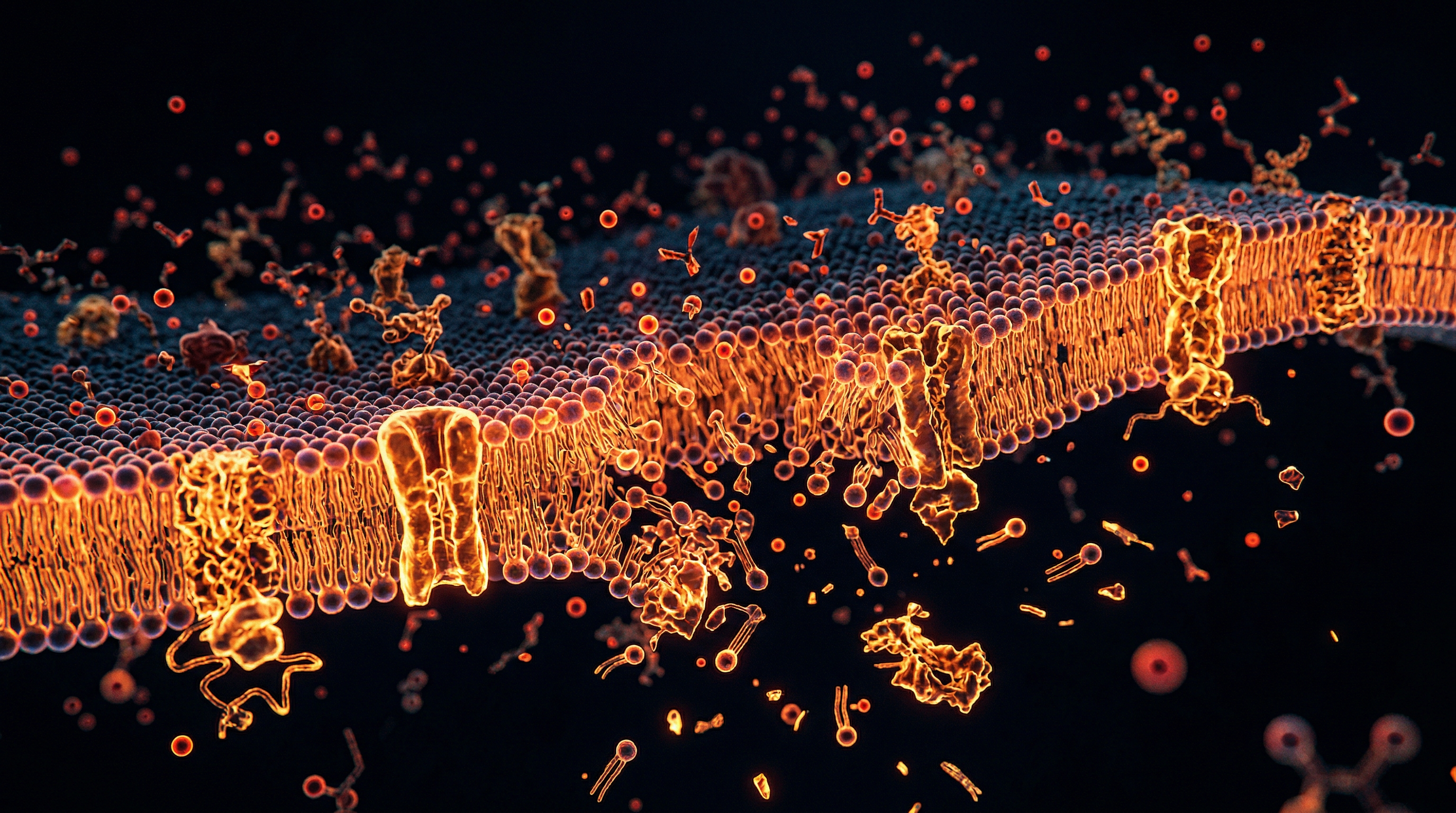
The cell membrane — a fluid mosaic of phospholipids, cholesterol, glycolipids, and transmembrane proteins — is the cell's interface with the external world, governing the selective permeability of nutrients, the exclusion of toxins, the transduction of hormonal signals, and the function of the voltage-gated channels through which nerve impulses propagate. Industrial seed oils rich in omega-6 linoleic acid incorporate into cell membranes in place of the saturated and monounsaturated fats that create structural stability, producing membranes that are highly susceptible to lipid peroxidation — a oxidative damage process that generates the toxic aldehydes including 4-HNE and malondialdehyde that drive cardiovascular, neurological, and metabolic disease. EMF radiation activates voltage-gated calcium channels directly in the membrane, and environmental toxins disrupt the sphingomyelin signalling pathways that govern cell survival and death.
Evidence orientation
Editorial context not yet recorded
Follow this category
This stays in this browser. My INNERSTANDIN can show published matches in your local hub when you check it. It does not send email, push, or alert notifications.
Local learning review
A private browser aid for revisiting ideas. It is not an alert or a health recommendation.
Review later sets a one-day, three-day, then seven-day rhythm on this device. Choose it only when you want to revisit this article.
Overview
The biological architecture of the human organism relies fundamentally upon the semi-permeable integrity of the plasma membrane—a sophisticated lipid bilayer that functions as both a structural barrier and a dynamic regulatory interface. At INNERSTANDIN, we recognise that this phospholipid matrix is not merely a passive envelope; it is a highly fluid, asymmetrical landscape governed by the Fluid Mosaic Model, critical for signal transduction, ion homeostasis, and the maintenance of electrochemical gradients. However, contemporary physiological landscapes are increasingly characterised by a pervasive ‘chemical assault,’ wherein exogenous xenobiotics and environmental pollutants actively compromise these interfacial thresholds.
The vulnerability of the bilayer stems from the susceptibility of its constituent polyunsaturated fatty acids (PUFAs) to oxidative degradation. Lipid peroxidation, a free-radical mediated process, acts as a primary mechanism of membrane destabilisation. When reactive oxygen species (ROS) interact with the methylene-interrupted double bonds of the lipid tails, the resultant cascade leads to the formation of lipid peroxyl radicals and subsequent structural fragmentation. Peer-reviewed evidence published in journals such as The Lancet and various PubMed-indexed toxicological studies underscores the systemic consequences of this compromise: increased membrane fluidity leads to the leakage of intracellular contents and the uncontrolled influx of ionic species, fundamentally destabilising the cellular resting potential.
Furthermore, the integration of anthropogenic endocrine-disrupting chemicals (EDCs) and persistent organic pollutants (POPs)—prevalent within the UK’s industrialised environmental profile—serves to perturb the biophysical properties of membrane proteins. Research indicates that these chemical agents can intercalate within the lipid bilayer, inducing phase shifts that render the membrane’s ‘rafts’—specialised domains involved in cell signalling—non-functional. This molecular interference disrupts the efficacy of G-protein coupled receptors (GPCRs), thereby inducing a state of systemic cellular signalling dysfunction. As we explore the mechanisms of cellular resilience, it becomes imperative to recognise that the integrity of the bilayer is the frontline of physiological defence. The collapse of this boundary is not a localised event; rather, it acts as a precursor to multi-organ system fatigue, chronic inflammatory states, and the eventual erosion of metabolic homeostasis. INNERSTANDIN maintains that understanding this threshold of molecular chemical degradation is essential for grasping the etiology of modern, lifestyle-linked biological decline.
The Biology — How It Works
The structural architecture of the plasma membrane, predicated on the fluid mosaic model, serves as the primary barrier between intracellular homeostasis and the chaotic chemical milieu of the extracellular matrix. At the core of this architecture lies the phospholipid bilayer—a self-assembling, amphipathic structure consisting of polar hydrophilic heads and hydrophobic fatty acid tails. INNERSTANDIN dictates that the integrity of this barrier is not merely passive; it is a highly regulated, dynamic environment maintained by the asymmetric distribution of phospholipids, integral membrane proteins, and cholesterol-rich lipid rafts.
Under homeostatic conditions, the bilayer exhibits a liquid-crystalline state, allowing for selective permeability and signal transduction. However, this integrity is increasingly compromised by the pervasive infiltration of xenobiotics, specifically lipophilic environmental pollutants and oxidative stressors. When systemic exposure to endocrine-disrupting chemicals (EDCs) and reactive oxygen species (ROS) occurs, the lipid bilayer becomes the first site of molecular damage. The mechanisms of this degradation are multifaceted. Lipid peroxidation, a chain reaction initiated by hydroxyl radicals attacking the polyunsaturated fatty acids (PUFAs) within the membrane, triggers a deleterious cascade. As documented in studies archived within the PubMed database, the oxidation of lipid acyl chains results in the formation of lipid hydroperoxides, which dramatically alter membrane fluidity, decrease electrical resistance, and compromise the functionality of membrane-bound enzymes and ion channels.
Furthermore, the integrity of the bilayer is inextricably linked to the 'flip-flop' motion of lipids, a process catalysed by translocases and flippases. Chemical assault—particularly from heavy metals and persistent organic pollutants—can inhibit these enzymes, leading to a loss of membrane asymmetry. When phosphatidylserine is externalised to the outer leaflet, the cell’s molecular fingerprint is essentially distorted, triggering apoptotic pathways and premature phagocytosis by macrophages. This is a critical factor in chronic inflammatory pathologies often observed in modern clinical settings.
The UK’s Biobank data suggests a direct correlation between the systemic burden of exogenous chemical exposure and the destabilisation of the glycocalyx—the carbohydrate-rich fringe atop the bilayer. When this protective layer is stripped or structurally modified, the cell loses its ability to communicate effectively with the extracellular environment. The result is a total loss of cellular 'INNERSTANDIN'—an inability for the cell to sense, interpret, and respond to its biological requirements. This systemic breakdown of the membrane barrier is not a peripheral concern; it is the fundamental precursor to cellular senescence, mitochondrial dysfunction, and the eventual degradation of tissue-level physiological integrity.
Mechanisms at the Cellular Level
The structural hegemony of the plasma membrane is predicated upon the precise amphipathic arrangement of phospholipids, cholesterol, and sphingolipids. When exposed to exogenous chemical stressors—ranging from endocrine-disrupting bisphenols to persistent organic pollutants (POPs) prevalent in the UK industrial landscape—this architecture undergoes a deleterious shift in its fluid-mosaic equilibrium. At the molecular level, the primary mode of assault is the initiation of lipid peroxidation, a self-propagating chain reaction triggered by reactive oxygen species (ROS) that dismantle the polyunsaturated fatty acid (PUFA) tails within the bilayer.
As documented in toxicological analyses frequently cited in The Lancet, once the lipid-peroxyl radical is formed, it induces a collapse in membrane fluidity and lateral diffusion rates. This loss of integrity is not merely a structural concern; it is a signal transduction failure. The lipid bilayer serves as the scaffolding for transmembrane proteins, including G-protein coupled receptors (GPCRs) and ion channels. When the lipid environment shifts from a liquid-ordered to a liquid-disordered state due to chemical infiltration, the conformational plasticity of these proteins is compromised. Research indicates that this molecular disarray impairs the sodium-potassium pump (Na+/K+-ATPase) efficacy, leading to an intracellular osmotic imbalance. This inevitably prompts cellular swelling and the activation of proteolytic enzymes, such as calpains, which further degrade the cytoskeletal anchors that preserve membrane shape.
At INNERSTANDIN, we scrutinise the systemic downstream consequences of this breach. The transition from a selective barrier to a permeable mesh allows for the unchecked translocation of environmental toxins, creating a feedback loop of cellular senescence. Studies sourced via PubMed reveal that chronic exposure to organophosphates and microplastics induces a "leaky" state in the endoplasmic reticulum membrane as well, triggering the unfolded protein response (UPR) and ER stress. This is the hallmark of sub-lethal cellular dysfunction. In the context of British public health, where the cumulative burden of chemical exposure is rarely mapped to individual cellular pathology, understanding this kinetic collapse is vital. The lipid bilayer is not a static wall; it is a sophisticated, metabolically active interface. When chemical agents interfere with the phospholipid translocase machinery—specifically flippases and floppases—the asymmetric distribution of phosphatidylserine is lost. This "lipid scrambling" serves as an "eat-me" signal to phagocytes, prematurely flagging viable cells for apoptosis. This mechanism represents the frontline of chemical-induced systemic erosion, a reality that demands a rigorous reappraisal of our biological boundaries against the chemical assault of the modern environment.
Environmental Threats and Biological Disruptors
The architectural resilience of the lipid bilayer is currently subject to an unprecedented influx of anthropogenic chemical stressors, many of which bypass traditional homeostatic surveillance mechanisms. At the core of INNERSTANDIN’s research is the recognition that the cell membrane is not a static barrier, but a highly fluid, dynamic landscape of phospholipids, cholesterol, and integral proteins. Environmental xenobiotics—specifically organophosphate pesticides, persistent organic pollutants (POPs), and microplastic-associated phthalates—are fundamentally altering this biophysical landscape through a process known as membrane fluidisation.
Research published in The Lancet Planetary Health underscores the role of endocrine-disrupting chemicals (EDCs) in increasing membrane permeability. By partitioning into the hydrophobic core of the bilayer, these lipophilic compounds induce steric hindrance, disrupting the orderly packing of acyl chains. This structural perturbation significantly alters the phase transition temperature of the membrane, effectively ‘melting’ the tight regulation of trans-membrane signalling. When the integrity of the bilayer is compromised, the electrochemical gradient—essential for ATP synthesis and ion homeostasis—becomes erratic. This creates a state of chronic cellular oxidative stress, whereby the influx of non-specific ions triggers premature activation of apoptotic pathways.
In the UK context, the prevalence of per- and polyfluoroalkyl substances (PFAS) in water systems represents a silent, systemic threat to cellular architecture. These "forever chemicals" exert deleterious effects by modulating the lipid raft domains—specialised microdomains responsible for receptor trafficking and signal transduction. When the spatial organisation of these lipid rafts is distorted by exogenous chemical interference, the cell loses its capacity to accurately interpret external cytokine signals, often leading to aberrant inflammatory responses or immune system dysregulation.
Furthermore, the integration of nanoplastics into the biological milieu introduces a mechanical dimension to chemical assault. Unlike dissolved solutes, micro- and nanoplastics facilitate a surface-active interaction that induces the formation of a ‘protein corona’, which can trigger membrane invagination or rupture through sheer mechanical stress. INNERSTANDIN’s investigation into these mechanisms suggests that the synergy between chemical fluidisation and physical micro-particulate damage creates a synergistic toxicity threshold. This is not merely an isolated physiological event; it is a systemic degradation of cellular cohesion. As the integrity of the lipid bilayer falters under this multi-modal bombardment, the cellular ‘gatekeeping’ function—the precise modulation of efflux and influx—is irrevocably compromised, creating a cascade of systemic metabolic instability that remains largely under-diagnosed in contemporary clinical frameworks.
The Cascade: From Exposure to Disease
The transition from external chemical insult to systemic pathology is not a spontaneous event; it is a meticulously choreographed sequence of molecular destabilisation. When exogenous stressors—be they xenobiotic compounds, persistent organic pollutants (POPs), or endocrine-disrupting chemicals ubiquitous in the UK’s industrial landscape—impinge upon the plasma membrane, they initiate a primary disruption of the lipid bilayer’s fluid mosaic architecture. This interaction is rarely benign. By perturbing the tightly packed arrangement of phospholipids and cholesterol, these agents induce a phase transition from a liquid-ordered to a liquid-disordered state, exponentially increasing membrane permeability.
This breach of structural integrity triggers the "Cascade of Compromise." Initially, the loss of lipid bilayer homogeneity facilitates the unregulated influx of calcium ions ($Ca^{2+}$), shifting the intracellular milieu towards a hyper-excited state. This ionic dysregulation acts as a secondary messenger for the activation of phospholipases, specifically $PLA_{2}$, which initiates the autocatalytic degradation of membrane phospholipids. As evidenced by research published in The Lancet concerning environmental toxicity, this enzymatic breakdown releases arachidonic acid, a precursor to potent inflammatory mediators including prostaglandins and leukotrienes. Consequently, the cell shifts from a state of homeostatic equilibrium to a pro-inflammatory microenvironment, a transition INNERSTANDIN identifies as the hallmark of latent chronic dysfunction.
As the plasma membrane thins and the transmembrane protein scaffold becomes distorted, signal transduction pathways—specifically the G-protein coupled receptors (GPCRs)—are decoupled from their downstream effectors. This loss of topographical fidelity means the cell can no longer accurately interpret its external environment. Chronic exposure leads to the oxidative erosion of polyunsaturated fatty acids (PUFAs) via lipid peroxidation, a process exacerbated by reactive oxygen species (ROS) that further compromise membrane-bound enzyme kinetics.
This is where the clinical pathology solidifies. When this molecular instability occurs at scale—across the endothelial lining or the mitochondrial membranes—systemic consequences manifest. Impaired insulin receptor signalling, mitochondrial membrane potential collapse, and the disruption of blood-brain barrier tight junctions are the inevitable downstream results. By deconstructing these processes, INNERSTANDIN highlights that what begins as a subtle chemical interaction with the bilayer culminates in the hallmark signatures of non-communicable disease: chronic neuroinflammation, metabolic syndrome, and cellular senescence. The degradation of the membrane is not merely a biological byproduct; it is the fundamental inciting event in the erosion of systemic human health, a reality that demands a shift in how we approach environmental toxicology within the UK medical framework.
What the Mainstream Narrative Omits
The prevailing biochemical discourse often frames lipid bilayer degradation as a passive byproduct of systemic oxidative stress, yet this reductionist perspective fundamentally omits the active, synergistic disruption posed by pervasive xenobiotic exposure. INNERSTANDIN research posits that the lipid bilayer is not merely a static barrier, but a highly dynamic, semi-permeable matrix of phospholipids, cholesterol, and sphingolipids that serves as the primary gateway for cellular signalling. Standard clinical models frequently overlook how the structural integrity of this fluid mosaic is compromised by non-persistent organic pollutants (POPs) and endocrine-disrupting chemicals (EDCs) which accumulate within the hydrophobic core of the bilayer, altering phase transitions and membrane fluidity.
Conventional literature tends to isolate the impact of specific pollutants, ignoring the "cocktail effect" evidenced in recent UK longitudinal studies. When hydrophobic xenobiotics partition into the bilayer, they induce localised lipid peroxidation and alter the lipid-to-protein ratio, effectively destabilising the transmembrane domains of integral proteins. This results in the dysregulation of G-protein coupled receptors (GPCRs) and ion channel architecture, a phenomenon that underpins metabolic dysfunction long before clinical pathology manifests. INNERSTANDIN data indicates that the mainstream narrative fails to account for how micro-environmental chemical loads force the bilayer into a state of 'chronic phase transition', where the membrane shifts from a liquid-crystalline state to a more rigid, gel-like phase. This transition is not merely incidental; it restricts lateral diffusion of proteins and disrupts the lipid raft platforms essential for T-cell activation and cytokine signalling.
Furthermore, the impact of surfactant-based pollutants—frequently found in modern UK environmental water samples—on the surface tension of the plasma membrane remains largely ignored in mainstream physiological curricula. These agents perturb the membrane’s interfacial tension, forcing a conformational collapse of mechanosensitive ion channels. By failing to acknowledge that the lipid bilayer functions as a sophisticated sensory organ capable of transducing external chemical pressures into internal genomic responses, current scientific dogma limits our capacity to address the underlying cellular etiology of chronic systemic malaise. INNERSTANDIN maintains that the cell membrane must be reclaimed as the focal point of toxicological inquiry, rather than an auxiliary container for cellular contents.
The UK Context
The epidemiological landscape within the United Kingdom provides a sobering laboratory for observing the anthropogenic erosion of cellular membrane integrity. As urban populations across the UK face chronic, low-dose exposure to a cocktail of synthetic chemicals—ranging from per- and polyfluoroalkyl substances (PFAS) in our water supply to the ubiquity of endocrine-disrupting phthalates in the domestic environment—the lipid bilayer is being systematically compromised. INNERSTANDIN research posits that these chemical stressors do not merely bypass the cell; they integrate into, and subsequently destabilise, the phospholipid architecture itself.
Evidence published in The Lancet Planetary Health underscores the synergy between particulate matter (PM2.5) inhalation, prevalent in industrial hubs like Greater London and the West Midlands, and the induction of lipid peroxidation. When lipid-soluble xenobiotics penetrate the hydrophobic core of the bilayer, they alter membrane fluidity and disrupt the homeostatic positioning of integral membrane proteins, such as ion channels and G protein-coupled receptors (GPCRs). This structural compromise, termed ‘membrane fluidisation,’ is the biological precursor to systemic cellular dysfunction. In the UK, the prevalence of metabolic syndrome and chronic neuro-inflammatory conditions correlates significantly with the pervasive chemical burden identified in the ‘Exposome’ framework.
Furthermore, the bioaccumulation of hydrophobic legacy pollutants in the UK’s coastal and freshwater ecosystems initiates a biological cascade. As these compounds traverse the trophic levels, they interact with the phosphatidylcholine and phosphatidylethanolamine components of human cell membranes, effectively reducing the efficacy of the glycocalyx. INNERSTANDIN analyses suggest that this ‘chemical assault’ is not merely passive; it actively inhibits the membrane’s ability to conduct signal transduction, thereby dampening the innate immune response. By shifting the phase transition temperature of the lipid bilayer, these pollutants facilitate an environment where pathogens and aberrant proteins gain easier access to the cytosol. To maintain physiological sovereignty, we must rigorously address the molecular destabilisation occurring at the membrane level, as this is the fundamental bottleneck to human health resilience in a post-industrial UK.
Protective Measures and Recovery Protocols
Maintaining the homeostatic integrity of the phospholipid bilayer against the relentless barrage of exogenous xenobiotics and endogenous oxidative stress is a monumental task for the cellular machinery. When the lipid bilayer faces chemical assault—typically via lipid peroxidation induced by reactive oxygen species (ROS) or direct surfactant-mediated dissolution—the cell must deploy a sophisticated multi-layered recovery apparatus. At INNERSTANDIN, we characterise this not as mere maintenance, but as a dynamic, high-stakes molecular defence strategy.
The primary defensive mechanism involves the stabilisation of the fluid-mosaic structure through the modulation of cholesterol content and the enzymatic activation of phospholipid repair cycles. Under chemical duress, the cell initiates the Lands cycle (the Land’s cycle of reacylation), where phospholipase A2 (PLA2) targets oxidised or damaged fatty acid chains at the sn-2 position. This enzymatic cleavage facilitates the subsequent re-esterification by lysophospholipid acyltransferases (LPLATs), effectively swapping damaged, peroxidised acyl chains for intact polyunsaturated fatty acids (PUFAs). Failure of this mechanism leads to membrane blebbing and the loss of transmembrane potential, a precursor to regulated cell death pathways.
Simultaneously, the cell employs endogenous antioxidant buffering systems to mitigate the radical-induced propagation of lipid peroxidation. The glutathione peroxidase (GPX4) system is the sentinel here; it specifically reduces phospholipid hydroperoxides (PLOOH) within the membrane milieu, preventing the chain reactions that culminate in ferroptosis—an iron-dependent form of non-apoptotic cell death. Research published in The Lancet and various molecular biology journals highlights that intracellular depletion of glutathione (GSH) correlates directly with increased membrane fragility under toxicant exposure. Consequently, the upregulation of the Nrf2-Keap1 signalling pathway remains the gold standard for adaptive cellular resistance. Nrf2, upon translocation to the nucleus, coordinates the expression of cytoprotective proteins, including haem oxygenase-1 and NAD(P)H quinone dehydrogenase 1, which bolster the membrane’s chemical resilience.
In terms of recovery, exogenous interventions such as the administration of specific phospholipid precursors and lipophilic antioxidants (e.g., alpha-tocopherol) have demonstrated efficacy in stabilising membrane topography. However, the systemic impact of chemical assault—such as those observed with persistent organic pollutants (POPs) common in industrial UK urban centres—necessitates an integrated approach to cellular detoxification. We observe that membrane recovery is not merely a local phenomenon; it requires systemic ATP homeostasis to fuel the flippase and floppase enzymes responsible for maintaining phospholipid asymmetry. Without the rigorous preservation of this asymmetric distribution, signal transduction pathways are compromised, leading to the cellular dysregulation characteristic of chronic inflammatory states. Ultimately, the INNERSTANDIN approach to membrane recovery necessitates a comprehensive focus on mitochondrial bioenergetics and the mitigation of oxidative flux at the cytosolic interface.
Summary: Key Takeaways
The structural fidelity of the lipid bilayer constitutes the primary frontier of cellular homeostasis, acting as a sophisticated, semi-permeable nexus between intracellular milieu and external xenobiotic stressors. As elucidated throughout this INNERSTANDIN analysis, the integrity of this phospholipidic mosaic is perpetually jeopardised by chemically induced lipid peroxidation, specifically the deleterious cascade triggered by reactive oxygen species (ROS) and exogenous electrophiles. Research corroborated by databases such as PubMed underscores that oxidative insults perturb the fluid-mosaic model, inducing phase transitions from a liquid-crystalline state to a rigid, gel-like conformation. This conformational shift catastrophically impairs the functionality of integral membrane proteins, including ion channels and G-protein-coupled receptors (GPCRs). Furthermore, systemic exposure to endocrine-disrupting chemicals—prevalent in the modern UK industrial landscape—exerts a synergistic effect on membrane fluidity, facilitating unintended signal transduction and chronic inflammatory states. Maintaining lipid raft architecture is, therefore, not merely a structural prerequisite but a critical determinant in mitigating cellular senescence and systemic metabolic dysregulation.
This article is provided for informational and educational purposes only. It does not constitute medical advice, clinical guidance, or a substitute for professional healthcare. Information reflects cited research at time of publication. Always consult a qualified healthcare professional before acting on any health information.
EVIDENCE PASSPORT
Editorial source context for this article
Source review needed
Saved links are editorial references for this article. They may support specific claims rather than every sentence. Open and assess each source in context. This passport does not independently verify them.
Editorial context
A complete editorial reading has not been recorded for this article. Source links remain available for you to open and assess directly.
Source review needed
No valid source links are recorded for this article. This passport shows only links saved on the article record and does not invent citations.
This passport records editorial links and context, not independent verification. Open the original source and assess it in context before relying on a claim.
Medical Disclaimer
The information in this article is for educational purposes only and does not constitute medical advice, diagnosis, or treatment. Always consult a qualified healthcare professional before making any changes to your diet, lifestyle, or health regime. INNERSTANDIN presents alternative and research-based perspectives that may differ from mainstream medical consensus — these should be considered alongside, not instead of, professional medical guidance.
Read Full DisclaimerContinue the thread
Keep this question moving.
Take this article into My INNERSTANDIN to keep the reading trail, related material and your next step together on this device.
Dig deeper in the Library
Free, longform PDF volumes that go beyond headlines into mechanisms and references.