
Chronic Tissue Inflammation: The Foreign Body Response
Updated May 2026
When microplastics lodge in human tissues, they trigger a persistent 'foreign body' inflammatory response. This chronic inflammation is linked to various autoimmune conditions and localized tissue damage.
Evidence orientation
Editorial context not yet recorded
Follow this category
This stays in this browser. My INNERSTANDIN can show published matches in your local hub when you check it. It does not send email, push, or alert notifications.
Local learning review
A private browser aid for revisiting ideas. It is not an alert or a health recommendation.
Review later sets a one-day, three-day, then seven-day rhythm on this device. Choose it only when you want to revisit this article.
Overview
For decades, the scientific community and the public at large operated under a comfortable, albeit dangerous, delusion: that plastic was a biologically inert material. It was lauded for its stability, its resistance to degradation, and its seemingly benign relationship with the human body—properties that made it the ideal candidate for everything from food storage to medical implants. However, as we descend further into the Anthropocene, the reality of our "Plastisphere" has become impossible to ignore. We are no longer merely using plastics; we are integrating them into our very biological fabric.
The emergence of Microplastics (MPs) and Nanoplastics (NPs)—collectively referred to as MNPs—as ubiquitous environmental contaminants has shifted the focus from ecological disaster to internal biological crisis. These particles, defined as fragments smaller than 5mm and 1 micrometre respectively, have now been detected in human blood, lungs, placentas, and even the deep tissues of the heart. Their presence is not passive. When these foreign synthetic polymers lodge themselves into the delicate architecture of human tissue, they do not sit quietly. They trigger an evolutionary survival mechanism known as the Foreign Body Response (FBR).
The FBR is a sophisticated immunological defence designed to isolate and neutralise invaders that cannot be easily degraded by the body’s enzymatic toolkit. In the case of a splinter or a degradable suture, the response is temporary. In the case of MNPs, which are designed to last for centuries, the response becomes a permanent, self-sustaining loop of chronic inflammation. This article serves to expose the hidden mechanics of this process, moving beyond the surface-level warnings of environmentalists into the profound, systemic pathology of plastic-induced tissue degradation. We are witnessing the birth of a new class of chronic illness, driven by the persistent presence of synthetic intruders that our immune systems simply do not know how to handle.
Key Fact: Recent pilot studies have identified microplastics in 80% of human blood samples tested, confirming that these particles are not merely passing through the digestive tract but are being translocated into systemic circulation.
The Biology — How It Works
To understand the Foreign Body Response (FBR) to microplastics, one must first understand the concept of biopersistence. When a biological system encounters a foreign object, its primary goal is to eliminate it through phagocytosis (cellular eating) or chemical degradation. Because the carbon-carbon bonds in polymers like polyethylene, polypropylene, and polystyrene are incredibly resistant to biological breakdown, the body’s attempts at "digestion" fail.
The Stages of the Foreign Body Response
The interaction between MNPs and human tissue follows a predictable, yet destructive, series of stages:
- Protein Adsorption (The Corona Formation): Within milliseconds of entering the bloodstream or tissue, a microplastic particle is coated by host proteins, such as albumin, fibrinogen, and immunoglobulins. This is known as the protein corona. This corona effectively "disguises" the plastic, but also "labels" it for immune recognition.
- Acute Inflammation and Neutrophil Recruitment: The body senses the foreign surface. Neutrophils, the "first responders" of the immune system, rush to the site. They attempt to neutralise the particle by releasing Reactive Oxygen Species (ROS) and Neutrophil Extracellular Traps (NETs).
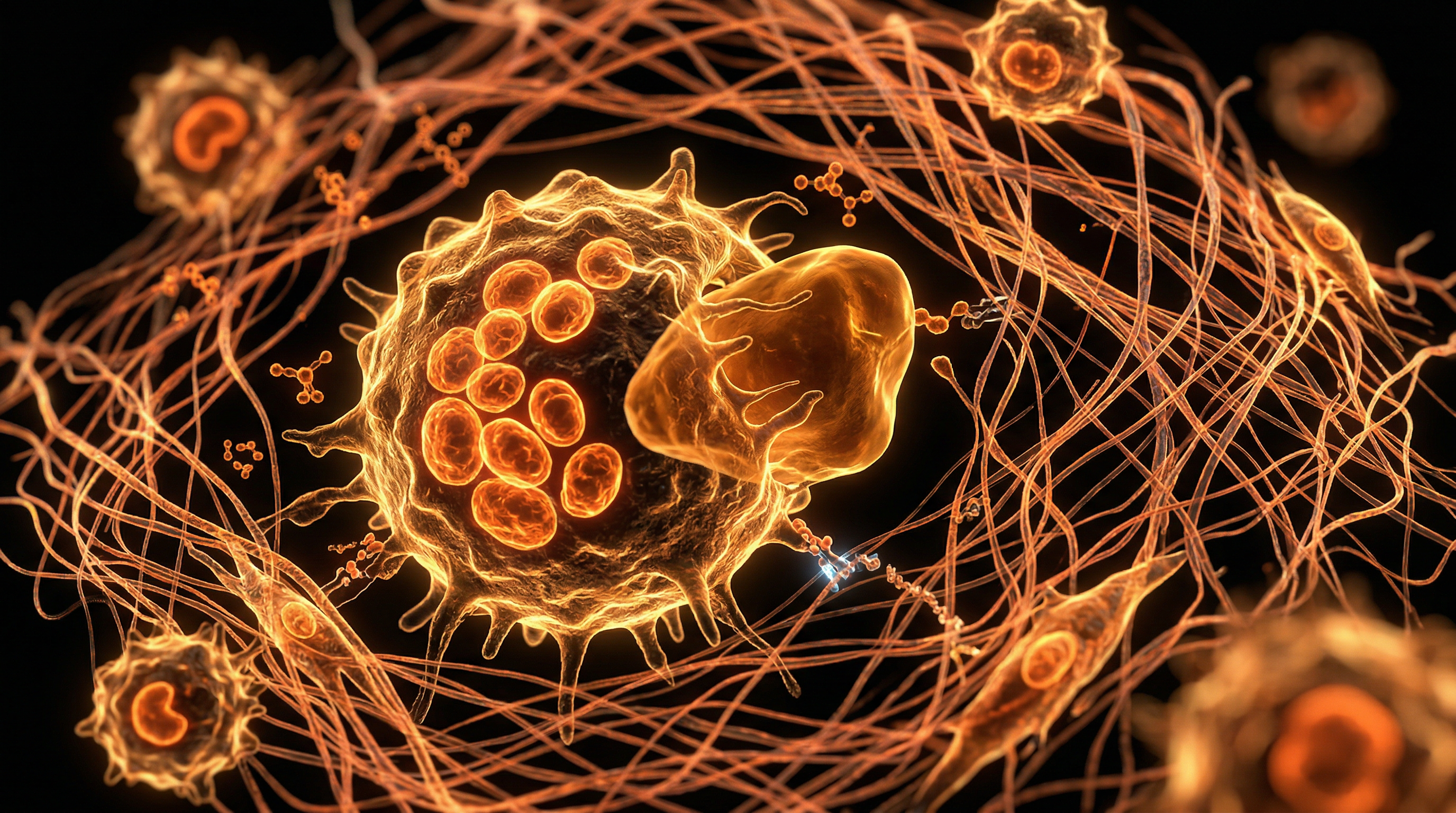
- Macrophage Recruitment and Frustrated Phagocytosis: When neutrophils fail, macrophages arrive. They attempt to engulf the MNPs. If the particle is too large or irregularly shaped—a common occurrence with jagged microplastic fragments—the macrophage undergoes frustrated phagocytosis. It spills its digestive enzymes and inflammatory cytokines into the surrounding healthy tissue, causing collateral damage.
- Formation of Foreign Body Giant Cells (FBGCs): In a desperate attempt to increase their "eating" capacity, multiple macrophages fuse together to form massive, multi-nucleated Foreign Body Giant Cells. These cells are the hallmark of chronic, persistent inflammation.
- Fibrous Encapsulation (The Internal Scar): Failing to destroy the plastic, the body attempts to "wall it off." Fibroblasts are recruited to the site to deposit dense layers of collagen. This results in the formation of a granuloma or a fibrous capsule. While this isolates the plastic, it also permanently disrupts the structure and function of the host tissue.
The Role of Bio-Persistence
Unlike a wooden splinter which eventually rots or an organic parasite that dies, a polystyrene bead remains intact. This means the FBR never reaches its "resolution" phase. The immune system remains in a state of high alert indefinitely. This is not just a localised issue; the continuous release of inflammatory signalling molecules from these sites enters the systemic circulation, contributing to a state of low-grade chronic systemic inflammation (metaflammation).
Mechanisms at the Cellular Level
The damage caused by microplastics is not merely mechanical; it is deeply biochemical and molecular. When we zoom in to the cellular level, we find that MNPs act as potent disruptors of cellular homeostasis through several distinct pathways.
The NLRP3 Inflammasome Activation
The most critical pathway in plastic-induced inflammation is the activation of the NLRP3 inflammasome. This is a multiprotein intracellular complex that detects "danger signals." Microplastics, particularly the sharp and irregular shards created by the breakdown of larger items, act as physical irritants that trigger the NLRP3 complex.
- Once activated, the inflammasome triggers the release of highly pro-inflammatory cytokines, specifically Interleukin-1β (IL-1β) and Interleukin-18.
- This process is often what links microplastic exposure to autoimmune conditions, as the immune system becomes hyper-sensitised and begins to lose the ability to distinguish between the foreign plastic and the surrounding "self" tissue.
Oxidative Stress and Mitochondrial Dysfunction
MNPs are prolific generators of oxidative stress. Because macrophages cannot digest the plastic, they overproduce Reactive Oxygen Species (ROS) in a futile attempt to oxidise the polymer. This creates an environment of oxidative stress that:
- Damages cellular DNA, potentially leading to mutagenic changes.
- Peroxidises membrane lipids, compromising cell integrity.
- Disrupts the mitochondria, the energy-producing powerhouses of the cell.
When mitochondria are compromised by nanoplastic penetration—which is possible due to their minute size—the cell enters a state of senescence (it stops dividing but refuses to die), pumping out even more inflammatory markers into the tissue.
The "Trojan Horse" Effect
We must also consider the adsorptive properties of plastics. Microplastics have a high surface-area-to-volume ratio and are often hydrophobic, meaning they act as magnets for other environmental toxins. In the biological context, this is known as the Trojan Horse Effect. A single microplastic particle may carry:
- Endocrine Disrupting Chemicals (EDCs) like Bisphenol A (BPA) and Phthalates.
- Heavy Metals such as lead, cadmium, and mercury.
- Persistent Organic Pollutants (POPs) like PCBs.
When the particle is engulfed by a cell or lodged in a tissue, these toxins leach out directly into the local environment, creating a localised "toxic bomb" that exacerbates the inflammatory response and disrupts hormonal signalling.
Callout Fact: Nanoplastics (under 100nm) are small enough to cross the Blood-Brain Barrier (BBB) and the Placental Barrier, allowing synthetic polymers to interact directly with neurons and foetal tissues.
Environmental Threats and Biological Disruptors
The narrative surrounding microplastics often focuses on "ocean waste," but the primary threats to human health are much closer to home. We are currently being bombarded by MNPs from three primary vectors: Inhalation, Ingestion, and Dermal Absorption.
Atmospheric Microplastics: The Air We Breathe
Recent research has shown that the air we breathe—especially indoors—is saturated with synthetic fibres.
- Tyre Wear Particles (TWP): As vehicle tyres wear down on the road, they release massive amounts of micro-rubber and plastic polymers. These are light enough to become airborne and are small enough to reach the deep alveoli of the lungs.
- Synthetic Textiles: Every time you move in polyester or nylon clothing, or walk on synthetic carpets, you release "micro-lint." These fibres are a primary cause of granulomatous lung disease in textile workers, a condition now being seen in the general population.
The Contaminated Food Chain
The ingestion of microplastics is no longer limited to seafood. MNPs have been found in:
- Bottled Water: A single litre of bottled water can contain up to 240,000 plastic particles.
- Table Salt: As oceans become more contaminated, sea salt acts as a concentrated source of MPs.
- Agricultural Produce: Plants can take up nanoplastics through their root systems, meaning even a "clean" vegan diet is now a source of plastic exposure.
Biological Disruptors: The Chemical Cocktail
The plastics themselves are only half the story. The additives used to give plastic its properties—flexibility, colour, flame retardancy—are potent biological disruptors. Phthalates, used to make plastic flexible, are known anti-androgens. They interfere with testosterone production and have been linked to declining sperm counts and reproductive disorders globally. When these chemicals leach from a microplastic particle lodged in a reproductive organ, the concentration of the disruptor is far higher than what would be predicted by standard toxicological models.
The Cascade: From Exposure to Disease
How does a microscopic piece of plastic in the lung lead to a systemic disease? The process is a "cascade" where a localised insult leads to a systemic failure.
Chronic Inflammation and Fibrosis
The most direct result of the FBR is fibrosis. In the lungs, this presents as a reduction in elasticity and gas exchange efficiency. In the liver, it can contribute to Non-Alcoholic Fatty Liver Disease (NAFLD). The presence of MNPs in the liver triggers the recruitment of Kupffer cells (resident macrophages), leading to chronic inflammation that mimics the damage caused by alcohol or high-fructose diets.
Autoimmunity and Mimicry
There is a growing body of evidence suggesting that the protein corona—the layer of host proteins that coats a microplastic—can become "misfolded" or altered. When the immune system attacks this altered protein-plastic complex, it may inadvertently learn to attack the healthy version of that protein. This is a form of molecular mimicry, a known trigger for autoimmune diseases like Rheumatoid Arthritis and Systemic Lupus Erythematosus (SLE).
Cardiovascular Implications
One of the most alarming recent discoveries is the presence of microplastics in atherosclerotic plaques.
- Studies published in the New England Journal of Medicine (2024) found that patients with microplastics in their carotid artery plaques had a 4.5 times higher risk of heart attack, stroke, or death within 34 months compared to those who were plastic-free.
- The plastics appear to destabilise the plaques, making them more likely to rupture. This is a prime example of how the FBR—occurring within the walls of the arteries—can be directly fatal.
What the Mainstream Narrative Omits
The current regulatory and media landscape regarding microplastics is characterised by a strategy of "managed concern." While the presence of plastics is acknowledged, the profound health implications are often downplayed or obscured by several key omissions.
The Fallacy of the "Safe Threshold"
Regulatory bodies often apply the "Dose-Response" model to plastics, suggesting there is a level of exposure that is safe. This is a scientific fallacy when applied to biopersistent particles. Unlike chemicals that the body can metabolise and excrete (like caffeine), microplastics accumulate. A "low dose" today added to a "low dose" tomorrow eventually results in a high "body burden." There is no safe threshold for a material the body cannot remove and which triggers a permanent inflammatory response.
The Influence of the Petrochemical Lobby
The plastic industry is the primary growth engine for the oil and gas sector. As the world shifts toward renewable energy, the production of "virgin plastic" is set to increase. This industry exerts massive influence over the design of toxicity studies. Many "safety" studies use pristine, spherical polystyrene beads in laboratory settings, which do not reflect the jagged, chemical-laden, aged microplastics found in the real world. This results in an underestimation of the actual pathogenic potential of MNPs.
The Synergistic Effect
Mainstream science rarely looks at synergy. We are not just exposed to microplastics; we are exposed to microplastics plus glyphosate, plus heavy metals, plus electromagnetic frequencies (EMFs). Research suggests that microplastics can increase the permeability of biological membranes (like the gut lining), making the body more susceptible to other environmental toxins. This "multi-hit" hypothesis is the most likely explanation for the skyrocketing rates of chronic illness, yet it is rarely discussed in isolation.
The UK Context
In the United Kingdom, the microplastic crisis has reached a critical juncture, exacerbated by unique geographical and regulatory factors.
Our Waterways: The Arteries of Pollution
The UK’s river systems are some of the most microplastic-polluted in the developed world.
- A study by the University of Manchester found that the River Tame in Greater Manchester had the highest levels of microplastics ever recorded on a riverbed globally at the time of the study, with over 500,000 particles per square metre.
- The UK's reliance on Combined Sewer Overflows (CSOs) means that during heavy rainfall, untreated sewage—loaded with microplastics from washing machines and road runoff—is pumped directly into rivers and onto beaches.
The Post-Brexit Regulatory Gap
Since leaving the European Union, the UK's relationship with the REACH (Registration, Evaluation, Authorisation and Restriction of Chemicals) framework has become strained. There are concerns that the UK may diverge from stricter EU bans on certain microplastic additives. The UK government’s "Plan for Water" and various environmental acts have been criticised for lacking the teeth necessary to force the massive infrastructure changes needed to filter MNPs at the source.
Public Health Observations
British researchers at King’s College London and the University of Hull have been at the forefront of identifying MNPs in human lung tissue and blood. The UK’s high prevalence of asthma and respiratory conditions may be linked, in part, to the high levels of airborne synthetic fibres in our urban centres. Furthermore, the "Stiff Upper Lip" approach to regulation means that the UK public is often the last to be informed about the bio-accumulative risks of everyday consumer products.
Protective Measures and Recovery Protocols
While the ubiquity of microplastics makes total avoidance impossible, there are evidence-based strategies to reduce your "body burden" and mitigate the inflammatory cascade triggered by the Foreign Body Response.
Environmental Remediation (Reduction of Inflow)
- Water Filtration: Standard charcoal filters are insufficient for nanoplastics. Transition to Reverse Osmosis (RO) systems or high-grade distillation, which are capable of removing particles at the sub-micrometre level.
- Air Quality: Use HEPA-13 or HEPA-14 air purifiers in the home, particularly in bedrooms. Avoid synthetic carpets and opt for natural fibres like wool, cotton, or hemp to reduce the inhalation of micro-lint.
- The "Plastic-Free" Kitchen: Eliminate all plastic food storage, especially for hot foods. Heat accelerates the leaching of both MNPs and EDCs. Replace with glass, stainless steel, or ceramic.
Biological Support (Mitigating the Response)
- Enhancing Autophagy: Autophagy is the body’s cellular "housekeeping" process. Strategies that promote autophagy, such as Intermittent Fasting and Time-Restricted Feeding, may help macrophages process or sequester foreign particles more effectively.
- Upregulating Glutathione: As the body’s master antioxidant, glutathione is essential for combatting the oxidative stress caused by MNPs. Supplementing with N-Acetyl Cysteine (NAC) or liposomal glutathione can provide the precursors needed for cellular defence.
- The Anti-Inflammatory Diet: To counter the systemic "metaflammation" caused by the FBR, a diet rich in polyphenols (found in berries, green tea, and dark chocolate) and Omega-3 fatty acids (EPA/DHA) is essential. These compounds help to inhibit the NLRP3 inflammasome pathway.
- Sauna Therapy: While research is still emerging, deep-tissue heating through Infrared Saunas may assist in the mobilisation and excretion of plastic-associated chemicals (like phthalates) through the sweat, potentially reducing the overall toxic load.
Important Note: There is currently no known medical procedure to remove embedded microplastics from human tissue once the fibrous encapsulation has occurred. Prevention is the only definitive cure.
Summary: Key Takeaways
The threat posed by microplastics is not a distant ecological concern; it is a current, internal, biological reality. The Foreign Body Response is the mechanism by which these synthetic intruders convert our own immune systems into agents of chronic tissue destruction.
- MNPs are Bioactive: Far from being inert, microplastics trigger complex immunological responses, including protein corona formation and the recruitment of giant cells.
- Chronic Inflammation is the Result: Because the body cannot degrade synthetic polymers, the immune response never resolves, leading to permanent, low-grade inflammation and tissue fibrosis.
- Cellular Disruption: Through the activation of the NLRP3 inflammasome and the generation of Reactive Oxygen Species, plastics cause damage at the molecular level, contributing to autoimmunity and metabolic disease.
- The Trojan Horse Effect: Microplastics serve as delivery vehicles for environmental toxins and endocrine disruptors, amplifying their harmful effects.
- Systemic Risk: The presence of microplastics in human blood and arterial plaques directly links plastic pollution to the leading causes of death globally, including cardiovascular disease.
- The Urgency for Action: In the UK and beyond, regulatory frameworks are failing to account for the cumulative, synergistic effects of MNPs. Personal intervention through high-level filtration, dietary support, and the rejection of plastic-centric lifestyles is no longer optional—it is a biological necessity for survival in the modern world.
As we continue to investigate this "silent pandemic," one truth remains clear: our bodies were never designed to coexist with synthetic polymers. The chronic inflammation we see today is the sound of the biological alarm, warning us that the boundary between the "man-made" and the "natural" has been dangerously breached.
This article is provided for informational and educational purposes only. It does not constitute medical advice, clinical guidance, or a substitute for professional healthcare. Information reflects cited research at time of publication. Always consult a qualified healthcare professional before acting on any health information.
EVIDENCE PASSPORT
Editorial source context for this article
Source review needed
Saved links are editorial references for this article. They may support specific claims rather than every sentence. Open and assess each source in context. This passport does not independently verify them.
Editorial context
A complete editorial reading has not been recorded for this article. Source links remain available for you to open and assess directly.
Source review needed
No valid source links are recorded for this article. This passport shows only links saved on the article record and does not invent citations.
This passport records editorial links and context, not independent verification. Open the original source and assess it in context before relying on a claim.
Medical Disclaimer
The information in this article is for educational purposes only and does not constitute medical advice, diagnosis, or treatment. Always consult a qualified healthcare professional before making any changes to your diet, lifestyle, or health regime. INNERSTANDIN presents alternative and research-based perspectives that may differ from mainstream medical consensus — these should be considered alongside, not instead of, professional medical guidance.
Read Full DisclaimerContinue the thread
Keep this question moving.
Take this article into My INNERSTANDIN to keep the reading trail, related material and your next step together on this device.
Explore this in the Body Map
See where this hits your biology. Interactive anatomy, threats, and protective protocols.
Dig deeper in the Library
Free, longform PDF volumes that go beyond headlines into mechanisms and references.