
Endothelial Erosion: How Trans Fats Compromise Arterial Health
Updated May 2026
Industrial trans fats and highly processed oils trigger endothelial dysfunction and arterial stiffening. This article examines the biological impact of vegetable-based spreads on the UK's rising vascular issues.
Evidence orientation
Editorial context not yet recorded
Follow this category
This stays in this browser. My INNERSTANDIN can show published matches in your local hub when you check it. It does not send email, push, or alert notifications.
Local learning review
A private browser aid for revisiting ideas. It is not an alert or a health recommendation.
Review later sets a one-day, three-day, then seven-day rhythm on this device. Choose it only when you want to revisit this article.
Overview
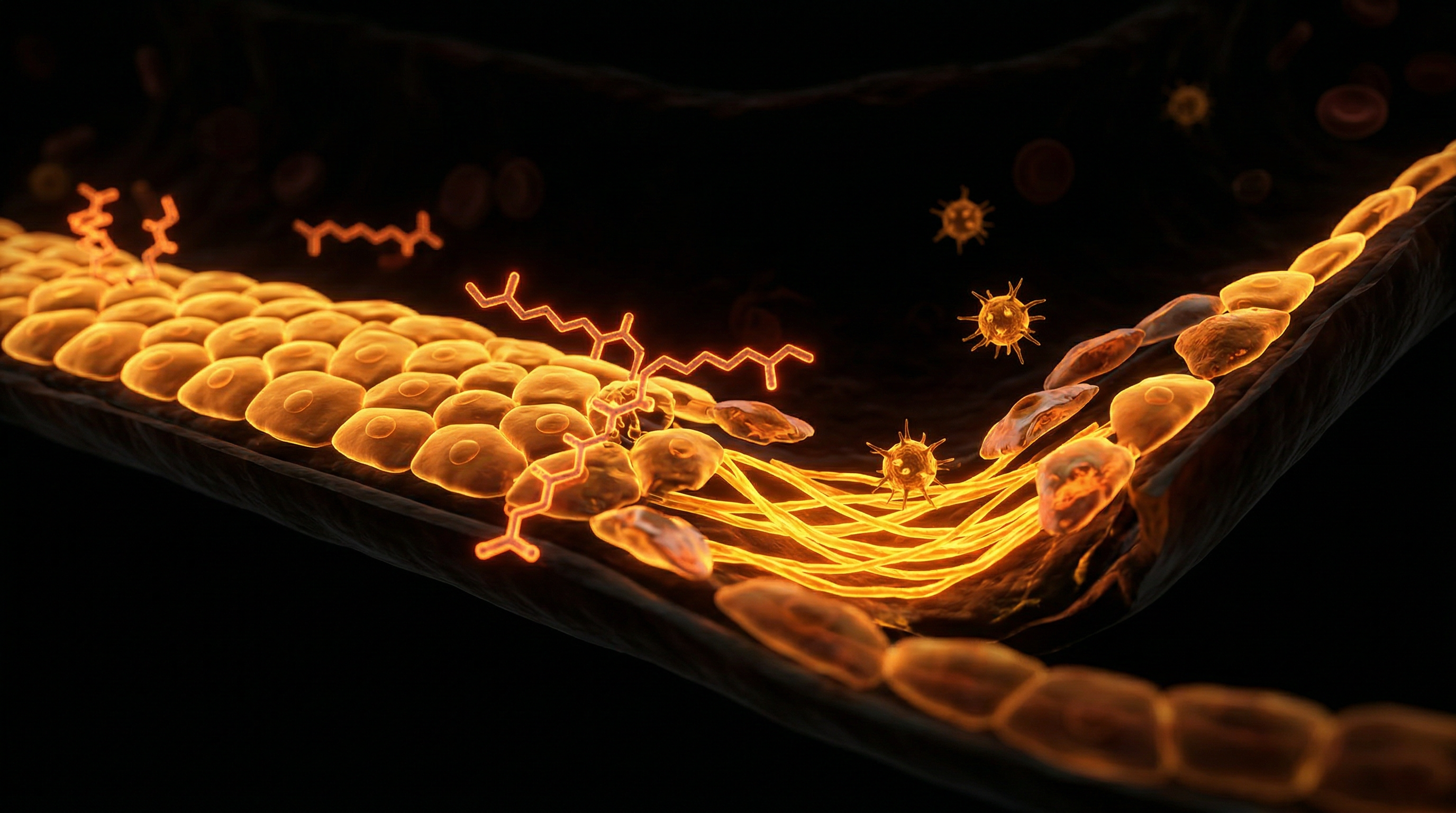
For decades, the public health discourse surrounding cardiovascular disease (CVD) has been dominated by a singular, arguably reductionist focus: the total concentration of serum cholesterol. However, as our understanding of vascular biology deepens, a far more insidious culprit has emerged from the shadows of industrial chemistry. This is the phenomenon of endothelial erosion, a progressive degradation of the delicate, single-layer lining of our blood vessels, driven primarily by the consumption of industrial trans-fatty acids (iTFAs) and highly processed seed oils.
The endothelium is not merely a passive barrier; it is the body's largest endocrine organ, responsible for regulating blood pressure, immune response, and vascular integrity. When we introduce chemically altered fats—substances the human genome has not evolved to process—we initiate a state of chronic, systemic "friction" at the cellular level. This article explores the devastating impact of trans fats and their vegetable-oil precursors on the British arterial landscape, exposing how the shift from traditional animal fats to industrial "plant-based" spreads has underpinned a quiet epidemic of vascular stiffening and heart failure.
We are currently witnessing a biological mismatch of unprecedented proportions. While the National Health Service (NHS) and various charitable foundations continue to promote "low-fat" and "heart-healthy vegetable spread" alternatives, the underlying biochemical reality tells a different story. These products, birthed from high-heat refining and chemical hydrogenation, serve as a primary catalyst for endothelial dysfunction, the precursor to almost all forms of cardiovascular mortality.
Callout Fact: Despite various bans on partial hydrogenation, the average UK consumer still ingests significant quantities of trans isomers via highly refined oils, "interesterified" fats, and deep-fried convenience foods, all of which contribute to a 23% increased risk of coronary heart disease per 2% increase in trans-fat energy intake.
The Biology — How It Works
To understand the erosion of the arteries, one must first appreciate the architectural elegance of the endothelium. This thin layer of endothelial cells (ECs) lines the entire circulatory system, from the massive aorta to the smallest capillary. In a healthy state, the endothelium acts as a sophisticated gatekeeper, ensuring that the blood flows smoothly (laminar flow) and that the vessel walls remain flexible.
The Glycocalyx: The Protective Shield
The true frontline of arterial health is the glycocalyx, a microscopic, gel-like forest of glycoproteins and glycolipids that coats the luminal surface of the endothelium. Think of it as a delicate "non-stick" coating. The glycocalyx senses mechanical shear stress from blood flow and signals the underlying cells to produce Nitric Oxide (NO).
When trans fats enter the bloodstream, they act as molecular "sandpaper." Their rigid, unnatural chemical structure disrupts the delicate hairs of the glycocalyx, stripping away this protective shield. Once the glycocalyx is compromised, the endothelial cells are exposed to the direct impact of inflammatory cytokines and oxidative particles.
Nitric Oxide: The Breath of the Artery
The primary output of a healthy endothelium is Nitric Oxide (NO), synthesized by the enzyme eNOS (endothelial Nitric Oxide Synthase). NO is a potent vasodilator; it tells the smooth muscle around the artery to relax, lowering blood pressure and preventing the "stiffening" associated with ageing.
Trans-fatty acids are uniquely destructive because they directly inhibit the expression and activity of eNOS. When NO production drops, the vessel becomes trapped in a state of vasoconstriction. This creates a high-pressure environment that further damages the vessel walls, leading to a vicious cycle of hypertension and structural decay.
Mechanisms at the Cellular Level
The toxicity of trans fats lies in their geometry. Natural unsaturated fats (found in olive oil or pasture-raised meat) usually exist in the cis configuration, where hydrogen atoms are on the same side of the double bond, creating a "kinked" or curved shape. This curve allows cell membranes to remain fluid and permeable.
Industrial trans fats, however, are created by forcing hydrogen into vegetable oils under high heat and pressure, often using nickel catalysts. This straightens the molecule, making it rigid and solid at room temperature.
Membrane Incorporation and Rigidity
When you consume a margarine or a "vegetable-based spread," your body attempts to use these trans-isomers to build new cell membranes. Because the body cannot distinguish them from healthy fats during the assembly phase, these rigid molecules are woven into the phospholipid bilayer of the endothelial cells.
- Loss of Fluidity: The cell membrane becomes abnormally stiff.
- Signal Disruption: Integral membrane proteins, which act as receptors for hormones and nutrients, can no longer move or function correctly.
- Ion Channel Failure: The regulation of calcium and potassium into and out of the cell is compromised, leading to cellular "stress."
Oxidative Stress and Lipid Peroxidation
The endothelium is highly sensitive to Reactive Oxygen Species (ROS). Because industrial oils are high in Polyunsaturated Fatty Acids (PUFAs) that have often been pre-oxidised during factory processing, they act as "pro-oxidants."
When these fats are incorporated into the endothelium, they undergo lipid peroxidation. This is a chain reaction where free radicals "steal" electrons from the lipids in the cell membranes, resulting in cell damage. This process produces malondialdehyde (MDA), a toxic byproduct that further cross-links proteins and DNA, effectively "rusting" the artery from the inside out.
The NF-κB Pathway
At the nucleus, the presence of these foreign fat structures activates NF-κB (Nuclear Factor kappa-light-chain-enhancer of activated B cells). This is the master "on switch" for inflammation. Once activated, the endothelial cell begins to express "velcro-like" molecules on its surface, such as VCAM-1 and ICAM-1 (Vascular/Intercellular Adhesion Molecules). These molecules snag passing white blood cells, pulling them into the vessel wall and beginning the formation of an atherosclerotic plaque.
Environmental Threats and Biological Disruptors
The primary environment for endothelial erosion in the UK is the modern supermarket and the "high street" food chain. While the "trans fat ban" is often cited as a success, the reality is more complex. The biological disruptors have merely changed their labels.
The Rise of Vegetable-Based Spreads
In the mid-20th century, a massive campaign was launched to replace butter with margarine. These early margarines were essentially pure partially hydrogenated oils. While modern UK spreads have moved away from partial hydrogenation, they now use interesterification. This is a process that chemically rearranges the fatty acids on a glycerol backbone to mimic the texture of saturated fat.
Emerging research suggests that interesterified fats may be just as disruptive to endothelial function as the trans fats they replaced, as the body still struggles to metabolise these synthetic molecular arrangements.
The High-Heat Frying Trap
Many UK "chippies" and fast-food outlets have switched from beef tallow to "vegetable oil" (usually rapeseed or sunflower oil) to appear healthier. However, these oils are chemically unstable. When heated repeatedly:
- They form cyclic fatty acid monomers.
- They generate 4-hydroxynonenal (HNE), a known toxin to endothelial cells.
- They produce "stealth" trans fats that are not required to be listed on nutritional labels because they are a byproduct of cooking rather than an ingredient.
The Omega-6 Imbalance
Industrial seed oils are exceptionally high in Linoleic Acid (LA), an Omega-6 fatty acid. While technically "essential," the modern British diet contains 15 to 20 times more Omega-6 than Omega-3. This imbalance creates a pro-thrombotic and pro-inflammatory environment. The endothelium becomes "primed" for injury, making even minor fluctuations in blood pressure potentially damaging.
Important Fact: Research indicates that the high concentration of Omega-6 in modern "heart-healthy" oils promotes the oxidation of LDL cholesterol. It is not the LDL itself that is the problem, but the oxidised LDL (oxLDL), which is directly caused by the consumption of unstable industrial fats.
The Cascade: From Exposure to Disease
The progression from a single meal high in trans fats to a clinical cardiovascular event is a multi-stage cascade of biological failure.
Phase 1: Postprandial Endothelial Dysfunction
Within two hours of consuming a meal high in industrial fats (such as a commercial doughnut or cheap takeaway), flow-mediated dilation (FMD)—the ability of the artery to expand—is significantly impaired. The blood becomes "sludgy," and the endothelium enters a state of acute stress.
Phase 2: Chronic Inflammation and "Leaky" Arteries
As these exposures become daily occurrences, the Tight Junctions between endothelial cells begin to weaken. This is analogous to "leaky gut," but in the arteries. Small particles of oxidised cholesterol and inflammatory debris penetrate the sub-endothelial space.
Phase 3: The Foam Cell Formation
Once inside the vessel wall, macrophages (immune cells) attempt to "clean up" the oxidised fats. They gorge themselves on these toxic lipids until they become bloated and dysfunctional, turning into Foam Cells. These cells die and form a necrotic core—the basis of an arterial plaque.
Phase 4: Calcification and Stiffening
In an attempt to "scab over" the damage, the body deposits calcium into the vessel wall. This leads to Arterial Stiffness. The once-elastic artery becomes a rigid, brittle pipe. This increases the workload on the heart, leading to left ventricular hypertrophy and, eventually, heart failure.
What the Mainstream Narrative Omits
The mainstream medical establishment, particularly in the UK, remains tethered to the Diet-Heart Hypothesis, which posits that saturated fat raises cholesterol, and cholesterol causes heart disease. This narrative is not only outdated but dangerously incomplete.
The Saturated Fat Diversion
By demonising saturated fats (like those in butter, eggs, and tallow), the mainstream narrative inadvertently pushed the population toward industrial seed oils and trans-fat-laden substitutes. Saturated fats are chemically stable; they do not oxidise easily and provide the necessary structural integrity for cell membranes. The omission of this fact has led to a century of "pro-inflammatory" eating habits.
The Role of Insulin Resistance
Trans fats are potent disruptors of insulin signalling. They interfere with the GLUT4 transporters in the cell, leading to systemic insulin resistance. High circulating insulin is a direct toxin to the endothelium. It stimulates the growth of smooth muscle cells within the artery walls, narrowing the channel and further exacerbating endothelial erosion.
The Profit Motive and "Big Ag"
The production of rapeseed (canola) and sunflower oil is a multi-billion pound global industry. These oils are far cheaper to produce than high-quality animal fats or cold-pressed fruit oils (like olive or avocado). Consequently, the "health" guidelines are often heavily influenced by industry-funded research designed to maintain the status quo of cheap, shelf-stable, processed food production.
Callout Fact: A meta-analysis of unpublished data from the famous "Minnesota Coronary Experiment" revealed that while replacing saturated fat with vegetable oil did lower cholesterol, it actually increased the risk of death. This data was suppressed for decades because it contradicted the prevailing anti-saturated fat dogma.
The UK Context
The United Kingdom presents a unique and troubling case study in endothelial decay. Since the post-war era, the British diet has shifted from one based on local dairy and meats to one dominated by "ultra-processed" convenience.
The "Margarine Generation"
The UK was a primary market for the early adoption of margarine. Following government rationing and subsequent health scares regarding eggs and butter in the 1970s and 80s, the British public was encouraged to switch to "Flora" and other seed-oil-based spreads. This has resulted in a generation of older adults whose cellular membranes are literally built out of the trans-fatty acids of the 20th century.
The NHS "Eatwell Guide"
Even today, the NHS Eatwell Guide suggests that people should "choose unsaturated oils and use them in small amounts" while specifically highlighting "lower fat spreads." This advice fails to distinguish between cold-pressed, high-quality fats and the industrially refined, deodorised oils that are ubiquitous in British supermarkets.
The Vascular Dementia Epidemic
The UK is seeing a sharp rise in Vascular Dementia. Unlike Alzheimer’s, which is linked to plaques in the brain, vascular dementia is a direct result of "small vessel disease"—the erosion of the microscopic endothelial linings in the brain. The same trans fats that stiffen the coronary arteries also stiffen the cerebral arteries, leading to "micro-strokes" and cognitive decline.
Protective Measures and Recovery Protocols
If the endothelium has been eroded by years of exposure to industrial fats, can it be repaired? The answer is a qualified "yes." The body is remarkably resilient, and the endothelial lining can regenerate if the toxic stimulus is removed and the correct building blocks are provided.
Step 1: Total Elimination of Industrial Fats
The first step is a rigorous "oil audit." This involves:
- Eliminating all margarines and "vegetable spreads."
- Avoiding "Vegetable Oil," "Rapeseed Oil," and "Sunflower Oil" in home cooking.
- Reading labels on bread, biscuits, and sauces for "hydrogenated" or "interesterified" fats.
- Reintroducing stable cooking fats: Butter, Ghee, Tallow, or extra-virgin Coconut Oil.
Step 2: Restoring the Glycocalyx
To rebuild the "non-stick" coating of the arteries, one must provide the precursors for glycoprotein synthesis.
- Glucosamine and Chondroitin: These are not just for joints; they are the building blocks of the glycocalyx.
- Dietary Nitrates: Leafy greens (rocket, spinach) and beetroot provide the raw materials for Nitric Oxide production, bypassing the damaged eNOS enzyme.
Step 3: Antioxidant Support
To stop the "rusting" (lipid peroxidation), the body needs fat-soluble antioxidants that can penetrate the cell membrane.
- Vitamin E (Tocopherols and Tocotrienols): These protect the cell membrane from free radical attack.
- Coenzyme Q10 (CoQ10): Essential for mitochondrial health within the endothelial cells.
- Vitamin K2 (MK-7): Crucial for directing calcium out of the arteries and into the bones, reversing the stiffening process.
Step 4: Metabolic Flexibility
Improving insulin sensitivity is paramount. Intermittent fasting and low-carbohydrate diets reduce the "glucose spikes" that cause oxidative stress to the endothelium. When the body is in a state of ketosis, it produces beta-hydroxybutyrate, a ketone body that has been shown to be directly protective to the endothelial lining.
Summary: Key Takeaways
The erosion of the endothelium is not an inevitable consequence of ageing, but a direct biological response to an environment saturated with industrial chemical fats.
- The Endothelium is an Organ: It is a dynamic, sensing tissue that requires Nitric Oxide and a healthy Glycocalyx to function.
- Trans Fats are Molecular Spanners: They jam the machinery of the cell, creating rigid membranes and chronic inflammation.
- Vegetable Oils are the Precursor: Even without "trans" labels, refined seed oils (Omega-6) drive the oxidation that leads to arterial plaque.
- The UK Narrative is Flawed: Conventional "low-fat" advice often replaces stable natural fats with unstable industrial ones, exacerbating the problem.
- Recovery is Possible: Through the elimination of industrial spreads, the reintroduction of stable fats, and the use of targeted nutrients like Vitamin K2 and Nitrates, the endothelium can be restored.
True INNERSTANDING of our health requires us to look past the marketing "Heart Check" stickers and recognize the fundamental biochemical requirements of our vascular system. Our arteries were designed for the fats of nature, not the fats of the factory. By returning to a diet aligned with our biological heritage, we can halt the erosion and reclaim our cardiovascular vitality.
This article is provided for informational and educational purposes only. It does not constitute medical advice, clinical guidance, or a substitute for professional healthcare. Information reflects cited research at time of publication. Always consult a qualified healthcare professional before acting on any health information.
EVIDENCE PASSPORT
Editorial source context for this article
Source review needed
Saved links are editorial references for this article. They may support specific claims rather than every sentence. Open and assess each source in context. This passport does not independently verify them.
Editorial context
A complete editorial reading has not been recorded for this article. Source links remain available for you to open and assess directly.
Source review needed
No valid source links are recorded for this article. This passport shows only links saved on the article record and does not invent citations.
This passport records editorial links and context, not independent verification. Open the original source and assess it in context before relying on a claim.
Medical Disclaimer
The information in this article is for educational purposes only and does not constitute medical advice, diagnosis, or treatment. Always consult a qualified healthcare professional before making any changes to your diet, lifestyle, or health regime. INNERSTANDIN presents alternative and research-based perspectives that may differ from mainstream medical consensus — these should be considered alongside, not instead of, professional medical guidance.
Read Full DisclaimerContinue the thread
Keep this question moving.
Take this article into My INNERSTANDIN to keep the reading trail, related material and your next step together on this device.
Explore this in the Body Map
See where this hits your biology. Interactive anatomy, threats, and protective protocols.