
Glyphosate-Induced Dysbiosis: Quantifying the Impact of Agricultural Residues on Mucosal Barriers
An in-depth educational analysis of how glyphosate residues from modern agriculture disrupt gut microbiota and compromise intestinal tight junctions, contributing to systemic inflammation and leaky gut syndrome.
# Glyphosate-Induced Dysbiosis: Quantifying the Impact of Agricultural Residues on Mucosal Barriers
The Silent Disrupter in Modern Agriculture
In the realm of functional medicine and environmental health, the conversation surrounding intestinal permeability—frequently termed 'leaky gut'—has evolved from peripheral theory to a central pillar of chronic disease management. While dietary triggers like gluten and ultra-processed seed oils are well-documented, a more insidious factor increasingly demands our attention: glyphosate. As the active ingredient in the world’s most prevalent herbicides, glyphosate is no longer just an agricultural tool; it is a ubiquitous environmental residue that directly interacts with the human mucosal barrier.
For the UK-based health seeker, understanding glyphosate is essential. Despite more stringent regulations compared to North America, glyphosate remains a staple in British farming, used not only for weed control but also as a pre-harvest desiccant on wheat, oats, and barley. This practice ensures that even if a food is not 'GMO', it may still carry significant residues that challenge our internal ecology. At INNERSTANDING, we look beyond the surface to identify how these residues serve as a root cause for chronic mucosal dysfunction.
The Shikimate Pathway: A Flawed Safety Narrative
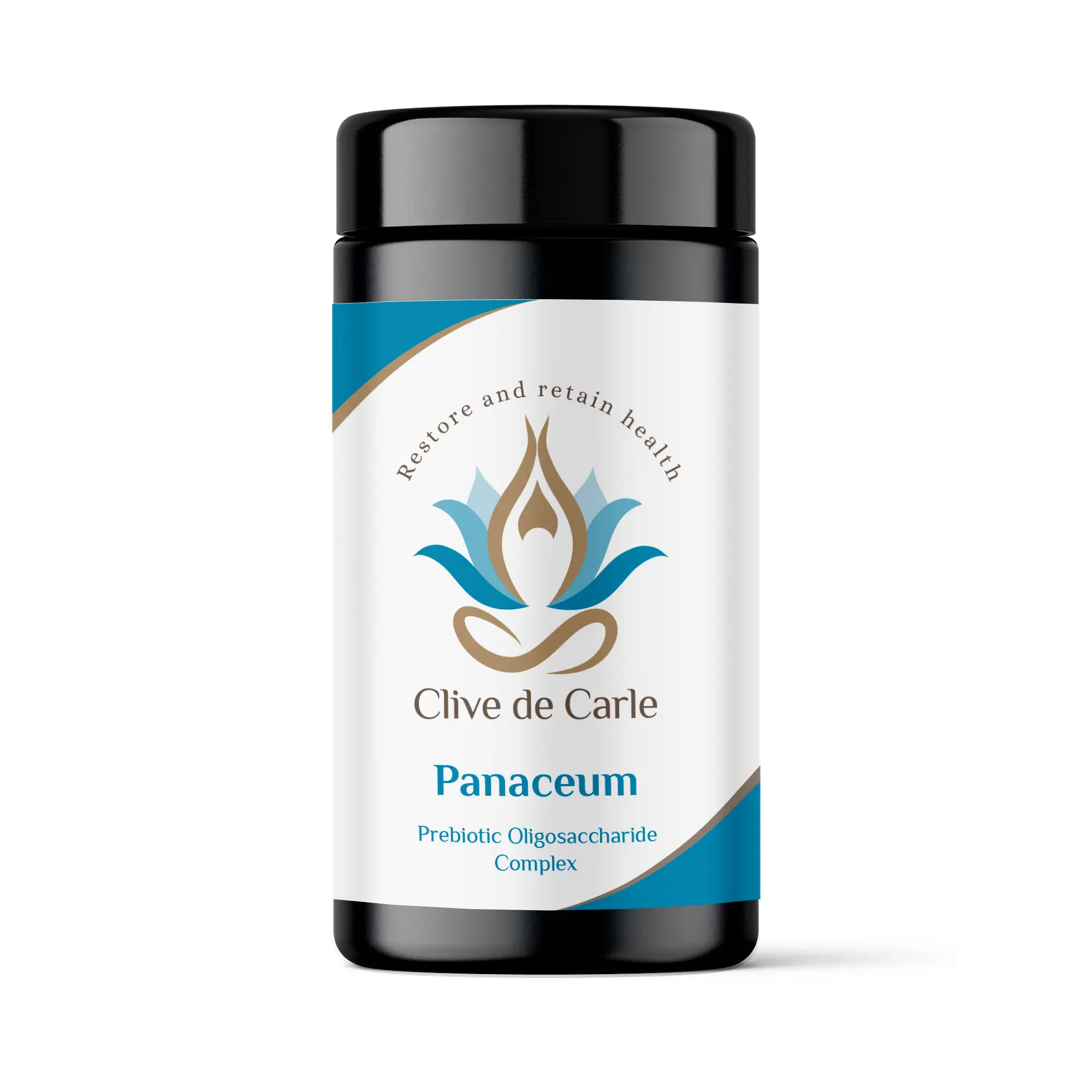
Panaceum – Prebiotic Oligosaccharide Complex
Panaceum is a specialist eight-oligosaccharide blend designed to restore the microbial diversity missing from the modern Western diet. By providing the complex fibres our ancestors once consumed, it feeds and sustains a resilient gut microbiome for long-term health.
Vetting Notes
Pending
The primary argument for glyphosate's safety in humans has long rested on the 'Shikimate Pathway'. This metabolic route is used by plants, bacteria, and fungi to biosynthesise essential aromatic amino acids (phenylalanine, tyrosine, and tryptophan). Because humans do not possess this pathway—obtaining these amino acids from food instead—regulatory bodies historically concluded that glyphosate poses no risk to human physiology.
However, this narrative overlooks a fundamental truth of human biology: our microbiome. The trillions of microbes residing in our distal ileum and colon *do* possess the Shikimate pathway. Specifically, glyphosate targets the 5-enolpyrosylshikimate-3-phosphate synthase (EPSPS) enzyme. When we ingest glyphosate residues, we are effectively consuming a broad-spectrum, low-dose antibiotic that selectively targets our beneficial flora. The quantification of this impact reveals a profound shift in the microbial landscape that precedes the physical breakdown of the gut wall.
Selective Dysbiosis and the Pathogenic Shift
Research indicates that not all bacteria are equally susceptible to glyphosate. Highly beneficial species, such as *Lactobacillus* and *Bifidobacterium*, are particularly sensitive to EPSPS inhibition. Conversely, many pathogenic or opportunistic bacteria, such as *Salmonella*, *Clostridium perfringens*, and *Escherichia coli*, possess versions of the EPSPS enzyme that are naturally resistant to glyphosate.
This creates a 'competitive exclusion' crisis. As beneficial populations dwindle, the protective 'turf' they occupy in the gut becomes available for opportunistic overgrowth. This shift, known as dysbiosis, is the root cause of many digestive complaints. Without sufficient *Lactobacillus* to maintain an acidic pH and produce short-chain fatty acids (SCFAs) like butyrate, the mucosal lining begins to suffer from a lack of primary fuel, leading to a weakened state of repair.
Mechanistic Breakdown: Tight Junctions and Zonulin
The intestinal barrier is a sophisticated single-layer of epithelial cells held together by tight junction proteins, including occludin and claudin. Its role is to be selectively permeable—allowing nutrients in while keeping pathogens and undigested food particles out. Glyphosate disrupts this integrity through two primary mechanisms:
- —Direct Cytotoxicity: Glyphosate and its commercial formulations (which often include surfactants like POEA that enhance toxicity) have been shown to exert oxidative stress on intestinal epithelial cells. This leads to cellular apoptosis (programmed cell death) and the thinning of the protective mucus layer.
- —Zonulin Upregulation: Emerging evidence suggests that glyphosate exposure can trigger the release of zonulin, a protein that modulates the permeability of tight junctions. Elevated zonulin is the physiological 'key' that unlocks the gut barrier, leading to systemic 'leaky gut'. Once these junctions are compromised, glyphosate, along with other toxins and lipopolysaccharides (LPS), can enter the bloodstream, triggering systemic immune responses.
Mineral Chelation: Depriving the Barrier of Resources
Glyphosate was originally patented as a chelator—a chemical designed to bind and remove minerals from solutions. In the human digestive tract, this property is devastating. It binds to essential divalent cations, such as Magnesium, Zinc, Manganese, and Cobalt.
Zinc, in particular, is critical for the repair and maintenance of the intestinal lining. A deficiency in bioavailable zinc, caused by glyphosate chelation, directly impairs the body's ability to seal the gut wall after injury. Furthermore, manganese is a required co-factor for the enzyme superoxide dismutase (SOD), which protects the gut from oxidative damage. By stripping these minerals, glyphosate leaves the mucosal barrier vulnerable and unable to undergo routine repair.
The UK Regulatory Perspective and Cumulative Load
In the United Kingdom, the use of glyphosate as a desiccant means that residues are often highest in non-organic bread, cereals, and pulses. While the Health and Safety Executive (HSE) sets 'Maximum Residue Levels' (MRLs), these standards often fail to account for the cumulative effect of daily exposure across multiple food groups.
For those suffering from chronic fatigue, skin conditions like psoriasis, or autoimmune markers, the 'safe' levels of glyphosate may be anything but. When the gut barrier is leaky, the immune system is in a state of constant 'high alert', leading to the molecular mimicry and systemic flares characteristic of modern chronic illness. We must consider the 'cocktail effect' of multiple residues working in tandem to degrade the mucosal landscape.
Root-Cause Solutions: Restoring the Barrier
Addressing glyphosate-induced damage requires a multi-faceted approach focused on detoxification and fortification:
- —Prioritise Organic Consumption: The most effective way to reduce glyphosate load is to choose organic (Soil Association certified) for high-risk crops like grains, pulses, and oilseeds.
- —Restore Microbial Diversity: Supplementing with glyphosate-resistant probiotics or consuming diverse fermented foods can help re-colonise the gut. Specifically, strains like *Acetobacter* have shown potential in breaking down glyphosate molecules.
- —Support the Mucosal Lining: Nutrients such as L-glutamine, Collagen, and Zinc Carnosine provide the structural raw materials needed to rebuild tight junctions.
- —Fulvic and Humic Acids: These naturally occurring soil substances can act as 'decoys', binding to glyphosate residues in the digestive tract and preventing them from interacting with the gut wall.
Conclusion: Biological Sovereignty
Glyphosate-induced dysbiosis represents a modern challenge to an ancient system. Our mucosal barrier is the primary interface between our internal biology and the external world. By understanding the quantifying impact of agricultural residues, we can move beyond treating symptoms of 'leaky gut' and begin the necessary work of environmental detoxification. At INNERSTANDING, we believe that true health begins with the integrity of this boundary. Protecting it from the chemical pressures of modern farming is not just a dietary choice—it is a fundamental act of biological sovereignty.
This article is provided for informational and educational purposes only. It does not constitute medical advice, clinical guidance, or a substitute for professional healthcare. Information reflects cited research at time of publication. Always consult a qualified healthcare professional before acting on any health information.
RESEARCH FOUNDATIONS
Biological Credibility Archive
Citations provided for educational reference. Verify via PubMed or institutional databases.
Medical Disclaimer
The information in this article is for educational purposes only and does not constitute medical advice, diagnosis, or treatment. Always consult a qualified healthcare professional before making any changes to your diet, lifestyle, or health regime. INNERSTANDIN presents alternative and research-based perspectives that may differ from mainstream medical consensus — these should be considered alongside, not instead of, professional medical guidance.
Read Full DisclaimerReady to learn more?
Continue your journey through our classified biological research.
THE ARSENAL
Based on Leaky Gut & Intestinal Permeability — products curated by our research team for educational relevance and biological support.
Panaceum – Prebiotic Oligosaccharide Complex
C60 Charcoal – Supports Healthy Digestion and Detoxification.
Clean Slate – Detoxes thousands of chemicals,heavy metals, pesticides, allergens, mold spores and fungus
INNERSTANDING may earn a commission on purchases made through these links. All products are selected based on rigorous educational relevance to our biological research.
RABBIT HOLE
Follow the biological thread deeper