
High-Sensitivity C-Reactive Protein and Lipid Synergy
Updated May 2026
Cholesterol only becomes a significant threat in the presence of systemic inflammation, measured by hs-CRP. Learn how these two markers interact to determine the stability of arterial plaques.
Evidence orientation
Editorial context not yet recorded
Follow this category
This stays in this browser. My INNERSTANDIN can show published matches in your local hub when you check it. It does not send email, push, or alert notifications.
Local learning review
A private browser aid for revisiting ideas. It is not an alert or a health recommendation.
Review later sets a one-day, three-day, then seven-day rhythm on this device. Choose it only when you want to revisit this article.
For decades, the medical establishment has focused its singular, reductionist lens on a single molecule: cholesterol. We have been told that Low-Density Lipoprotein (LDL) is the primary driver of the "clogged pipe" model of heart disease. However, as senior researchers at INNERSTANDING, we have long observed a glaring discrepancy in this narrative. Clinical data consistently reveals that a significant portion of patients who suffer acute myocardial infarctions possess "normal" or even "low" cholesterol levels.
The missing link is not the presence of lipids themselves, but the biological environment in which those lipids exist. The true catalyst for arterial destruction is systemic inflammation, most accurately measured through High-Sensitivity C-Reactive Protein (hs-CRP). When elevated levels of hs-CRP meet a specific lipid profile, a synergistic reaction occurs that transforms essential biological building blocks into lethal arterial plaques.
This article serves as a comprehensive deconstruction of the synergy between inflammation and lipids, exposing how the modern environment weaponises our biology and why the mainstream obsession with cholesterol alone is a dangerous oversimplification.
Overview
The "Lipid Hypothesis" suggests that high levels of circulating LDL cholesterol lead directly to atherosclerosis. This narrative is incomplete. Cholesterol is a vital substance, essential for cellular membrane integrity, hormone synthesis (including testosterone and oestrogen), and bile acid production. It is not, by its nature, a toxin.
The shift from physiological necessity to pathological threat occurs only in the presence of vascular inflammation. Inflammation, signaled by hs-CRP, acts as the primary "insult" to the arterial wall. It is the inflammatory state that determines whether cholesterol remains a benign passenger in the blood or becomes an aggressive driver of plaque formation.
Fact: According to the landmark JUPITER trial, individuals with low LDL but high hs-CRP remain at significantly elevated risk for cardiovascular events, often exceeding the risk of those with high LDL and low inflammation.
To understand the synergy, one must view the arterial wall not as a static pipe, but as a dynamic, living organ. hs-CRP is an acute-phase reactant produced by the liver in response to cytokines like Interleukin-6 (IL-6). While it is a non-specific marker of inflammation, its "High-Sensitivity" variant allows us to detect micro-inflammatory states that indicate the early stages of chronic disease. When hs-CRP is elevated, it signals that the body is in a state of high alert, and it is in this state that lipids undergo chemical modifications that lead to their deposition in the endothelium.
The Biology — How It Works
To comprehend the synergy, we must first define the players. LDL (Low-Density Lipoprotein) is often mislabelled as "bad cholesterol." In reality, LDL is a transport vehicle, a phospholipid sphere carrying cholesterol and triglycerides to cells that require them.
The Role of hs-CRP
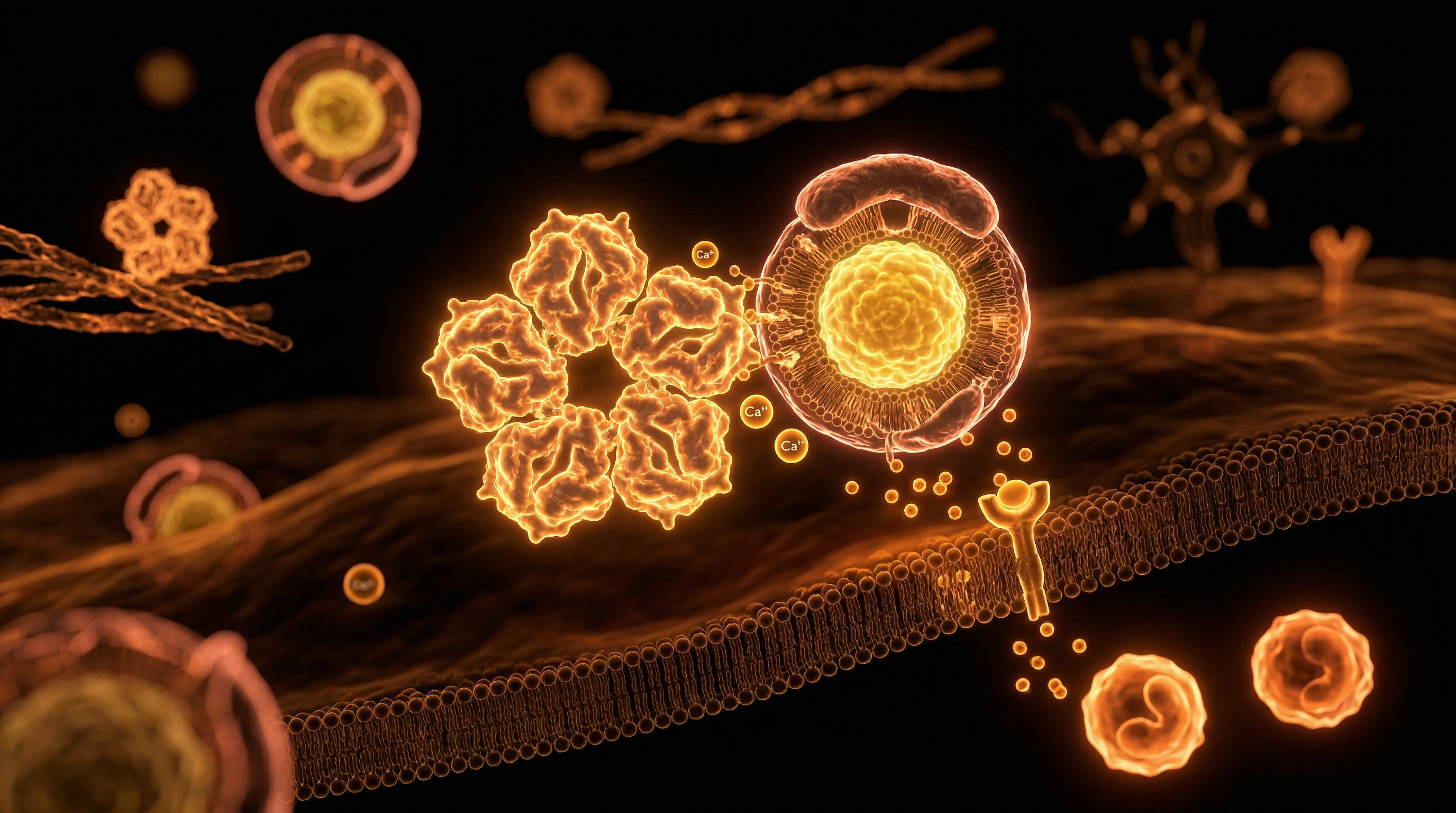
C-Reactive Protein is a pentameric protein. Its primary role in the innate immune system is to bind to the surface of dead or dying cells and some bacteria, activating the complement system to clear the debris. In the context of cardiovascular health, elevated hs-CRP indicates a persistent, "smouldering" immune response.
The Lipid Carrier
When we speak of "lipid synergy," we are primarily concerned with the ApoB-containing lipoproteins. Every LDL particle carries a single molecule of Apolipoprotein B (ApoB). The higher the concentration of these particles, the more opportunities there are for them to enter the sub-endothelial space. However—and this is the crux of the research—entry is not deposition.
The Synergy
The synergy between hs-CRP and lipids occurs through three primary phases:
- Endothelial Permeability: Chronic inflammation (marked by hs-CRP) weakens the tight junctions between endothelial cells, the "wallpaper" of our arteries.
- Retention: Once LDL particles enter the arterial wall, they are typically able to exit. However, in an inflammatory environment, they become trapped by proteoglycans.
- Modification: This is the most critical step. Trapped LDL is subjected to oxidative stress and glycation, both of which are accelerated by systemic inflammation.
Statistic: Research suggests that hs-CRP levels above 3.0 mg/L are associated with a twofold increase in the risk of cardiovascular events compared to levels below 1.0 mg/L, regardless of LDL concentration.
Mechanisms at the Cellular Level
At the microscopic scale, the interaction between hs-CRP and lipids is a violent biological theatre. It is here that the "Synergy of Decay" is most evident.
Endothelial Dysfunction and Adhesion
High levels of hs-CRP directly impair the production of Nitric Oxide (NO). Nitric oxide is a gas produced by the endothelium that keeps blood vessels dilated and prevents blood cells from sticking to the walls. When inflammation reduces NO bioavailability, the endothelium becomes "sticky." It begins to express adhesion molecules like VCAM-1 and ICAM-1. These molecules act like biological "Velcro," catching passing monocytes and LDL particles.
The Transformation of Macrophages
Once monocytes adhere to the sticky endothelium, they migrate into the arterial wall and transform into macrophages. In a healthy state, these macrophages would clear away debris. However, in the presence of modified LDL (oxidised by the very inflammatory processes that raised the hs-CRP), the macrophages undergo a catastrophic change.
- They express scavenger receptors that take up the oxidised LDL in an unregulated fashion.
- The macrophages become engorged with cholesterol, eventually turning into Foam Cells.
- These foam cells aggregate to form the "fatty streak," the earliest precursor to an atherosclerotic plaque.
hs-CRP and Plaque Stability
The most dangerous aspect of the synergy is not the growth of the plaque, but its stability. A large plaque can exist for decades without causing a heart attack if it is stable. Stability is maintained by a thick fibrous cap.
hs-CRP and the associated inflammatory cytokines (specifically Matrix Metalloproteinases or MMPs) actively degrade this fibrous cap. They "eat away" at the structural integrity of the plaque.
Key Term: Vulnerable Plaque – An atherosclerotic lesion with a large lipid core and a thin, inflamed fibrous cap, highly susceptible to rupture.
When the cap ruptures, the lipid core is exposed to the blood, triggering an immediate clotting cascade. This is what causes a sudden heart attack or stroke. Thus, hs-CRP is the measure of the fuse, while lipids are the gunpowder.
Environmental Threats and Biological Disruptors
The modern world is an incubator for systemic inflammation. If our ancestors had high cholesterol, it was rarely a death sentence because their baseline hs-CRP was remarkably low. Today, we face a barrage of "biological disruptors" that keep our immune systems in a state of perpetual activation.
1. The Glycation Crisis
The excessive consumption of refined carbohydrates and fructose leads to a process called glycation. Glucose molecules bond to proteins and lipids without the control of an enzyme, forming Advanced Glycation End-products (AGEs). AGEs are highly inflammatory and directly stimulate the liver to produce more hs-CRP. Furthermore, glycated LDL is more easily trapped in the arterial wall than normal LDL.
2. Seed Oils and Oxidative Stress
The proliferation of industrial seed oils (soybean, corn, rapeseed) has flooded our cell membranes with Omega-6 polyunsaturated fatty acids (PUFAs). While essential in small amounts, an excess of these unstable fats makes our LDL particles highly susceptible to lipid peroxidation. These rancid fats are the primary fuel for the inflammatory fire.
3. Environmental Toxins
Glyphosate, microplastics, and heavy metals (like cadmium and lead) act as "molecular mimics" or direct irritants. They trigger the innate immune system, leading to chronic elevations in hs-CRP. Research into the "Exposome" shows that environmental pollution is a significant, yet ignored, contributor to the lipid-inflammation synergy.
4. The Gut-Heart Axis
Intestinal permeability, or "leaky gut," allows bacterial fragments known as Lipopolysaccharides (LPS) to enter the bloodstream. LPS is one of the most potent triggers for inflammation known to science. Even a minor "leaky gut" can keep a patient’s hs-CRP perpetually elevated, making their lipid profile far more dangerous than it would otherwise be.
The Cascade: From Exposure to Disease
The progression from environmental exposure to a clinical event follows a predictable, yet often ignored, biological cascade.
Step 1: The Initial Insult
The cascade begins with chronic exposure to disruptors (sugar, stress, toxins). This causes a low-grade, systemic rise in IL-6, which signals the liver to increase hs-CRP production. Simultaneously, a diet high in processed fats and sugars alters the lipid profile, increasing the number of Small Dense LDL (sdLDL) particles.
Step 2: The Lipid Infiltration
Unlike large, "fluffy" LDL, sdLDL particles are small enough to easily penetrate the endothelial lining. In the presence of high hs-CRP, the endothelium is already compromised and "leaky."
Step 3: The Synergy of Modification
Within the sub-endothelial space, the synergy reaches its peak. The inflammatory environment provides the oxidative "spark" that turns the trapped sdLDL into a foreign, toxic substance. The immune system, alerted by the high hs-CRP signals, sends in macrophages to "clean up" the mess.
Step 4: The Inflammasome Activation
Inside the arterial wall, the accumulation of cholesterol crystals triggers a protein complex called the NLRP3 Inflammasome. This leads to a massive local release of Interleukin-1 beta (IL-1β), further driving the production of hs-CRP and creating a self-sustaining loop of inflammation and plaque growth.
Step 5: The Catastrophic Rupture
As the plaque matures, high levels of hs-CRP inhibit the body's ability to repair the fibrous cap. The cap thins. Under the pressure of a minor spike in blood pressure or a sudden surge in systemic inflammation (e.g., from a viral infection), the cap shears off. The resulting clot blocks the artery.
What the Mainstream Narrative Omits
The current medical paradigm is built upon the "Statins for All" model. While statins do lower LDL and have some anti-inflammatory "pleiotropic" effects, the focus remains disproportionately on the lipid side of the equation.
The "Hidden" Risks of Statin Monotherapy
Statins successfully lower LDL, but they often fail to address the underlying causes of hs-CRP elevation. A patient can have an LDL of 1.8 mmol/L (70 mg/dL) but if their hs-CRP remains at 4.0 mg/L, they are still "walking wounded." Mainstream medicine often ignores this "residual inflammatory risk."
Suppressed Truth: The pharmaceutical industry has historically prioritised LDL-lowering drugs because they are easy to market and measure. Truly addressing inflammation requires systemic lifestyle changes—dietary overhaul, toxin avoidance, and stress management—which are not "patentable" or easily monetised.
The Importance of LDL Particle Size
Total cholesterol and even calculated LDL-C are "proxy" markers. They do not tell you how many particles you have or how large they are. A person with high "total cholesterol" consisting of large, buoyant particles and low hs-CRP is often at lower risk than someone with "ideal" total cholesterol made of small, dense particles and high hs-CRP. The mainstream narrative almost entirely ignores LDL-P (Particle Number) and ApoB in favour of the outdated LDL-C.
The Role of Insulin Resistance
The elephant in the room of cardiovascular science is Hyperinsulinaemia. High insulin levels are the primary driver of the "atherogenic dyslipidaemia" (high triglycerides, low HDL, small dense LDL) and are a direct trigger for systemic inflammation. You cannot fix the lipid-inflammation synergy without addressing the metabolic dysfunction caused by the modern high-carbohydrate diet.
The UK Context
In the United Kingdom, the approach to cardiovascular health is heavily governed by the National Institute for Health and Care Excellence (NICE) guidelines. While the UK possesses some of the world's leading researchers in lipidology, the frontline clinical application often lags behind.
The QRISK3 Problem
The standard tool used by NHS GPs to assess heart risk is the QRISK3 calculator. While it includes many variables (age, smoking, blood pressure), it notably does not include hs-CRP as a mandatory metric. This means that thousands of "high-risk" individuals with low-level systemic inflammation are being missed because their cholesterol levels don't meet the threshold for intervention.
The Postcode Lottery of Advanced Testing
Access to advanced lipid testing (such as ApoB, Lp(a), or NMR Lipoprofile) and regular hs-CRP monitoring is often a "postcode lottery" within the NHS. While private clinics in Harley Street routinely screen for these markers, the average Briton is left with a basic lipid panel that provides a 1970s-era view of their cardiovascular health.
The British Diet and "Ultra-Processed" Culture
The UK has one of the highest consumptions of Ultra-Processed Foods (UPFs) in Europe. These foods are the primary drivers of the elevated hs-CRP seen in the British population. The "synergy of decay" is particularly aggressive in the UK, where sedentary lifestyles and a reliance on "convenience" foods create the perfect storm of high inflammation and metabolic dysfunction.
Protective Measures and Recovery Protocols
Understanding the synergy between hs-CRP and lipids allows us to move beyond the "cholesterol-only" mindset and implement a truly comprehensive protective strategy.
1. The Anti-Inflammatory Nutritional Foundation
To lower hs-CRP, one must eliminate the primary inflammatory triggers:
- Zero Refined Sugar: Sugar is the primary fuel for the glycation of LDL.
- Elimination of Seed Oils: Replace industrial vegetable oils with stable fats like extra virgin olive oil, avocado oil, and grass-fed butter.
- Polyphenol Loading: Consume high quantities of dark berries, leafy greens, and cruciferous vegetables. Polyphenols directly inhibit the NF-kB pathway, the "master switch" of inflammation.
2. Strategic Supplementation
While "food first" is the rule, certain nutraceuticals have a profound impact on the lipid-inflammation synergy:
- Omega-3 Fatty Acids (EPA/DHA): High-dose, high-quality fish oil reduces triglycerides and shifts LDL particles from small-dense to large-buoyant. It is also a potent reducer of hs-CRP.
- Curcumin (with Piperine): A well-studied anti-inflammatory that can significantly lower systemic cytokines.
- Magnesium: Essential for over 300 enzymatic reactions; magnesium deficiency is directly linked to elevated hs-CRP.
- Vitamin K2 (MK-7): This is the "traffic cop" for calcium. It ensures that calcium goes into the bones and stays out of the arterial plaques.
3. Hormetic Stressors
Intentionally stressing the body can "reset" the inflammatory baseline:
- Intermittent Fasting: Reduces insulin levels and triggers autophagy, the cellular "cleanup" process.
- Cold Thermogenesis: Exposure to cold (cold showers or ice baths) increases adiponectin, which has anti-inflammatory effects on the blood vessel walls.
- High-Intensity Interval Training (HIIT): While excessive cardio can raise inflammation, short bursts of intense activity improve endothelial function and nitric oxide production.
4. Environmental Detoxification
Reducing the "total toxic load" is essential for long-term recovery:
- Filter Your Water: Remove heavy metals and endocrine disruptors.
- Choose Organic: Reduce glyphosate exposure, which is known to disrupt gut barrier function.
- Prioritise Sleep: Chronic sleep deprivation is one of the fastest ways to spike hs-CRP.
Summary: Key Takeaways
The interaction between High-Sensitivity C-Reactive Protein and lipids is the definitive factor in cardiovascular health. We must move away from the simplistic "cholesterol is bad" dogma and embrace a more nuanced, synergistic understanding of arterial decay.
- Cholesterol is the substrate, but inflammation is the architect. Without elevated hs-CRP, cholesterol rarely leads to the formation of dangerous, unstable plaques.
- hs-CRP is a vital metric. Every adult should know their hs-CRP level as clearly as they know their blood pressure. A level above 1.0 mg/L should be a call to action; a level above 3.0 mg/L is a biological emergency.
- The modern environment is pro-inflammatory. Sugar, seed oils, stress, and toxins are the primary drivers of the "inflammatory smoulder" that weaponises our lipids.
- The "Mainstream Narrative" is incomplete. Lowering LDL with statins is only half the battle. If the underlying inflammation is not addressed, the risk of plaque rupture remains.
- In the UK context, we must be proactive. Do not wait for a GP to offer an hs-CRP test; demand one, or seek private testing to ensure you are seeing the full picture of your cardiovascular risk.
The synergy of hs-CRP and lipids is a testament to the complexity of the human body. By addressing both, we can move from a state of "managed disease" to a state of true cardiovascular resilience. The era of focusing solely on the "fat in the blood" is over; the era of addressing the "fire in the blood" has begun.
Author: Senior Biological Researcher, INNERSTANDING Date: May 2024 Subject: Cardiovascular Pathophysiology & Lipidology
This article is provided for informational and educational purposes only. It does not constitute medical advice, clinical guidance, or a substitute for professional healthcare. Information reflects cited research at time of publication. Always consult a qualified healthcare professional before acting on any health information.
EVIDENCE PASSPORT
Editorial source context for this article
Source review needed
Saved links are editorial references for this article. They may support specific claims rather than every sentence. Open and assess each source in context. This passport does not independently verify them.
Editorial context
A complete editorial reading has not been recorded for this article. Source links remain available for you to open and assess directly.
Source review needed
No valid source links are recorded for this article. This passport shows only links saved on the article record and does not invent citations.
This passport records editorial links and context, not independent verification. Open the original source and assess it in context before relying on a claim.
Medical Disclaimer
The information in this article is for educational purposes only and does not constitute medical advice, diagnosis, or treatment. Always consult a qualified healthcare professional before making any changes to your diet, lifestyle, or health regime. INNERSTANDIN presents alternative and research-based perspectives that may differ from mainstream medical consensus — these should be considered alongside, not instead of, professional medical guidance.
Read Full DisclaimerContinue the thread
Keep this question moving.
Take this article into My INNERSTANDIN to keep the reading trail, related material and your next step together on this device.
Explore this in the Body Map
See where this hits your biology. Interactive anatomy, threats, and protective protocols.