
Industrialized Lipidosis: The Link Between Seed Oils and UK Metabolic Decline
Updated May 2026
Explore the cellular impact of linoleic acid accumulation from the pervasive use of rapeseed and sunflower oils in UK processed foods. We detail how these unstable fats integrate into mitochondrial membranes, driving systemic oxidative stress.
Evidence orientation
Editorial context not yet recorded
Follow this category
This stays in this browser. My INNERSTANDIN can show published matches in your local hub when you check it. It does not send email, push, or alert notifications.
Local learning review
A private browser aid for revisiting ideas. It is not an alert or a health recommendation.
Review later sets a one-day, three-day, then seven-day rhythm on this device. Choose it only when you want to revisit this article.
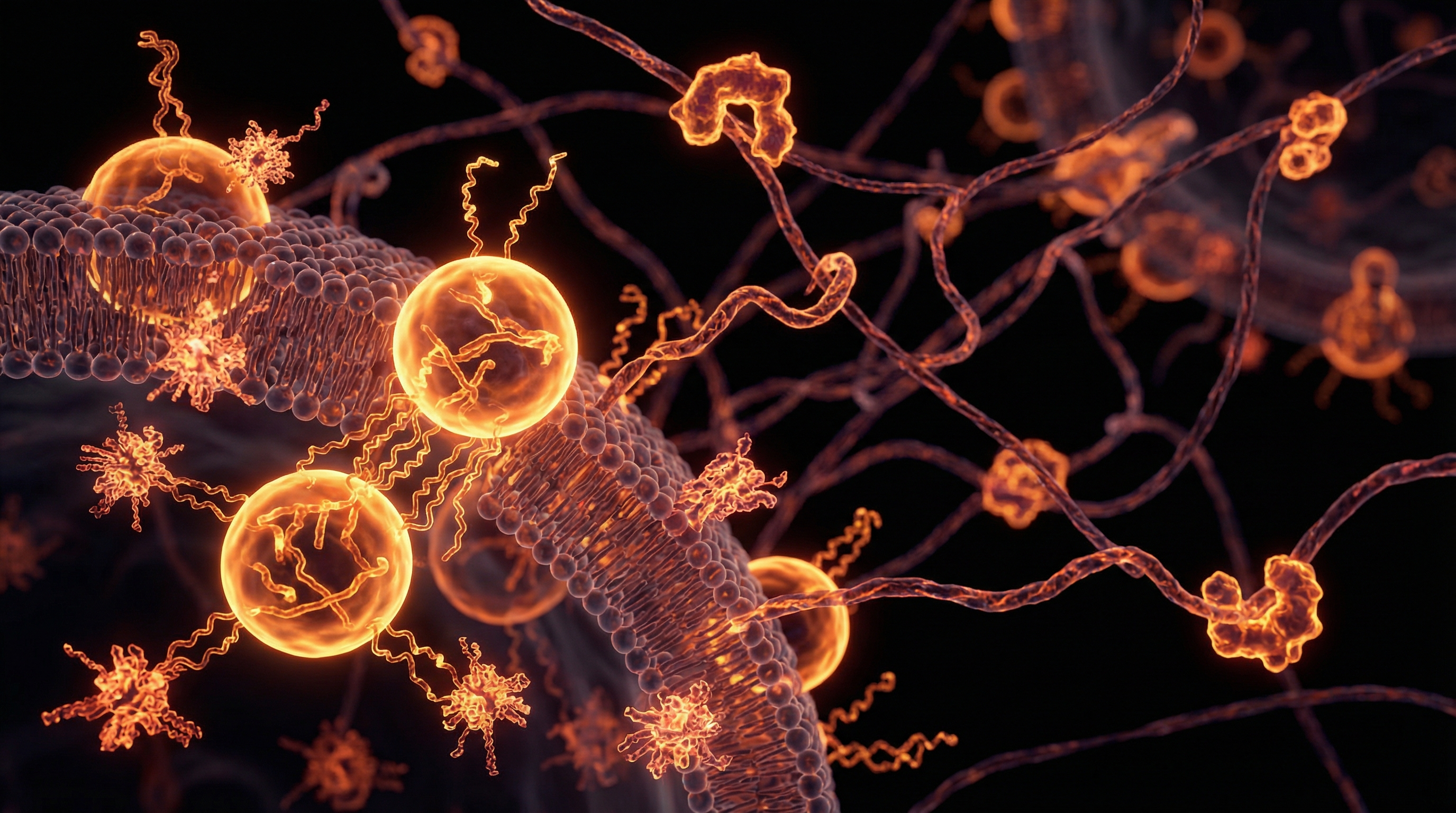
Overview
In the quiet laboratories of the mid-20th century, a fundamental shift occurred in the human biological environment—one so profound that it has arguably re-engineered our cellular composition. This phenomenon, which we at INNERSTANDING term Industrialised Lipidosis, represents the systemic saturation of human adipose tissue and cellular membranes with concentrated, chemically unstable polyunsaturated fatty acids (PUFAs), primarily linoleic acid (LA).
Over the last five decades, the United Kingdom has witnessed a precipitous decline in public health. Despite advancements in medical technology and a reduction in smoking rates, the prevalence of type 2 diabetes, non-alcoholic fatty liver disease (NAFLD), and morbid obesity has reached epidemic proportions. While mainstream discourse remains hyper-fixated on sugar and total caloric intake, a more insidious culprit has been integrated into the very fabric of the British diet: industrial seed oils.
From the ubiquitous "vegetable oil" found in high-street chippies to the rapeseed oil marketed as a "heart-healthy" alternative to butter, these fats have replaced stable animal fats. This article serves as a comprehensive forensic investigation into how these oils—extracted via high-heat, solvent-heavy industrial processes—disrupt mitochondrial function, drive chronic inflammation, and act as the primary catalyst for the UK’s metabolic collapse.
Fact: Since 1960, the concentration of linoleic acid in the adipose tissue of Western populations has increased by more than 250%, directly mirroring the rise in chronic metabolic diseases.
##
The Biology — How It Works
To understand the danger of industrial seed oils, one must first understand the fundamental chemistry of fats. Fats (lipids) are not merely fuel; they are structural components of every cell membrane in the human body.
The Chemical Instability of PUFAs
Linoleic acid is an 18-carbon omega-6 fatty acid containing two double bonds. In biochemistry, the location of these double bonds is critical. The double bonds in PUFAs are separated by a methylene bridge, a structure that is exceptionally vulnerable to "abstracting" a hydrogen atom.
When a hydrogen atom is lost, the fatty acid becomes a free radical, initiating a chain reaction known as lipid peroxidation. Unlike saturated fats (which have no double bonds and are structurally "straight" and stable) or monounsaturated fats (like olive oil, which has one double bond and is relatively stable), PUFAs are "kinked" and highly reactive to heat, light, and oxygen.
The Storage Problem
The human body was never evolutionarily designed to handle the sheer volume of linoleic acid present in the modern UK diet. Historically, humans consumed approximately 1% to 3% of their total calories from omega-6 fats, sourced from whole nuts, seeds, and animal fats. Today, the average Briton consumes upwards of 10% to 15%.
Because the body cannot "burn" these fats as efficiently as saturated fats, and because they are toxic in high concentrations in the bloodstream, the body shuttles them into the adipocytes (fat cells). However, these cells have a limit. When the adipose tissue becomes saturated with unstable PUFAs, they begin to leak into the systemic circulation and, more dangerously, integrate into the membranes of vital organs.
Statistic: The half-life of linoleic acid in human adipose tissue is approximately 600 to 700 days. This means it takes years of disciplined avoidance to purge these unstable fats from your biological system.
##
Mechanisms at the Cellular Level
The true devastation of Industrialised Lipidosis occurs at the microscopic level, specifically within the mitochondria—the powerhouses of the cell.
The Role of Cardiolipin
Inside the inner mitochondrial membrane resides a unique phospholipid called cardiolipin. Cardiolipin is essential for the structure of the electron transport chain (ETC), the machinery that generates adenosine triphosphate (ATP), or cellular energy.
For the mitochondria to function optimally, cardiolipin must be enriched with stable fats. However, when the diet is high in sunflower, rapeseed, or soy oils, the body is forced to construct cardiolipin using linoleic acid.
- The Vulnerability: Linoleic acid-rich cardiolipin is highly susceptible to oxidation.
- The Consequence: As electrons move through the ETC, they naturally "leak." In a healthy cell, this is managed. In a cell saturated with PUFAs, these leaking electrons hit the linoleic acid in the cardiolipin, triggering a cascade of oxidative stress.
The Production of 4-HNE
The peroxidation of linoleic acid within the mitochondria produces a highly toxic byproduct called 4-Hydroxynonenal (4-HNE). 4-HNE is not merely a waste product; it is a potent signalling molecule that acts as a "biological grenade."
- It damages the proteins involved in energy production.
- It triggers "autophagy" or programmed cell death prematurely.
- It inhibits the pyruvate dehydrogenase complex, effectively "blunting" the body's ability to burn glucose.
Mitochondrial "Suffocation"
This process creates a state of cellular suffocation. The cell becomes unable to efficiently process fuel (either fat or sugar), leading to a buildup of reactive oxygen species (ROS). This is the root of metabolic inflexibility, where an individual can feel exhausted despite having ample body fat stores.
##
Environmental Threats and Biological Disruptors
The path from the field to the frying pan is one of extreme chemical intervention. The "vegetable oil" industry relies on processes that render these oils biologically incompatible with human health before they even reach the supermarket shelf.
Extraction and Refining: The "RBD" Process
Most rapeseed and sunflower oils in the UK undergo the RBD process: Refining, Bleaching, and Deodorising.
- Hexane Extraction: To maximise yield, seeds are crushed and soaked in hexane, a petroleum-derived solvent. While most hexane is removed, trace amounts can remain.
- High-Heat Deodorisation: Because the extraction process leaves the oil smelling rancid (due to immediate oxidation), the oils are heated to over 200°C to strip away the odour. This heat further damages the fragile double bonds, creating trans-fats and lipid peroxides.
- Bleaching: The oil is filtered through clays to remove the natural dark colour, stripping away any remaining antioxidants like Vitamin E that might have offered a modicum of protection.
The Glyphosate Connection
In the UK context, Oilseed Rape (Canola) is one of the most widely grown crops. These crops are often treated with glyphosate-based herbicides, both during growth and as a desiccant (drying agent) just before harvest.
- Emerging research suggests a synergistic toxicity between glyphosate and PUFAs. Glyphosate may disrupt the cytochrome P450 enzymes responsible for detoxifying lipid peroxidation byproducts, effectively trapping 4-HNE within the tissues.
Light and Shelf-Life
Supermarket aisles in the UK are typically lined with clear plastic bottles of sunflower and rapeseed oil, exposed to fluorescent lighting for weeks or months. Because PUFAs are photo-sensitive, this exposure initiates the oxidative chain reaction before the consumer even opens the bottle. When these already-damaged oils are then used for high-heat cooking (e.g., roasting potatoes or frying), the chemical degradation is total.
Callout: Modern "vegetable oils" are industrially cleaned, bleached, and deodorised products that more closely resemble industrial lubricants than biological nutrients.
##
The Cascade: From Exposure to Disease
Industrialised Lipidosis is not a localised condition; it is a systemic failure that manifests in various disease states. The transition from high linoleic acid intake to clinical diagnosis follows a predictable cascade.
Stage 1: Adipocyte Hypertrophy and Insulin Resistance
When we consume excess LA, our fat cells (adipocytes) grow larger (hypertrophy) rather than increasing in number (hyperplasia). Large, bloated fat cells become "insulin resistant" to protect themselves from further nutrient intake. This causes insulin levels in the blood to remain chronically elevated, signalling the body to store more fat and preventing the breakdown of existing fat stores.
Stage 2: The Randle Cycle Disruption
The Randle Cycle, or the glucose-fatty acid cycle, is a metabolic process that determines which fuel the body burns. Excessive LA levels confuse this mechanism. The oxidative stress produced by PUFAs inhibits the oxidation of glucose. This results in high blood sugar and high blood fats simultaneously—a recipe for vascular damage and the formation of Advanced Glycation End-products (AGEs).
Stage 3: Non-Alcoholic Fatty Liver Disease (NAFLD)
The liver is the primary site of fat metabolism. When the diet is flooded with linoleic acid, the liver begins to accumulate "droplets" of these fats. Because these fats are prone to oxidation, they trigger steatohepatitis (inflammation of the liver). In the UK, NAFLD is now the leading cause of liver transplant, even among non-drinkers and children.
Stage 4: Cardiovascular Erosion
The "Heart Healthy" narrative surrounding seed oils is based on the observation that they lower LDL cholesterol. However, this is a dangerous half-truth. While LA can lower total LDL, it specifically increases the concentration of small dense LDL and oxidised LDL (oxLDL).
- OxLDL is the specific type of cholesterol that is taken up by macrophages to form "foam cells" in the arterial walls.
- Therefore, seed oils may lower the "score" on a standard lipid panel while simultaneously accelerating the actual process of atherosclerosis.
##
What the Mainstream Narrative Omits
The UK’s Public Health England and the NHS continue to promote rapeseed and sunflower oils as "healthy swaps" for butter and lard. Why is there such a profound disconnect between the biochemical reality and official guidelines?
The "Saturated Fat" Diversion
The narrative remains trapped in the 1970s "Diet-Heart Hypothesis." By focusing solely on saturated fat’s effect on serum cholesterol, the establishment ignores the far more critical factor of lipid quality. A saturated fat molecule is chemically "finished"—it does not react or oxidise easily. A PUFA molecule is "unfinished" and volatile.
Industry Funding and "The Big Food" Lobby
The British food industry is heavily reliant on seed oils due to their cost-effectiveness and "neutral" flavour profiles. Rapeseed oil is significantly cheaper than butter or tallow. Furthermore, many "Healthy Heart" certifications on UK food packaging are funded by the very corporations that manufacture these industrial fats.
The Omission of the Omega-3/Omega-6 Balance
Mainstream advice often groups all "polyunsaturated fats" together as "good." This ignores the critical evolutionary ratio of Omega-3 to Omega-6. While Omega-3s (found in oily fish) are anti-inflammatory, an excess of Omega-6 (linoleic acid) is pro-inflammatory. The modern UK diet has a ratio of approximately 1:20 (O3:O6), whereas the human genome evolved on a ratio closer to 1:1. This imbalance creates a "pro-thrombotic" (clot-prone) and "pro-inflammatory" internal environment.
##
The UK Context
The United Kingdom presents a unique case study in the devastating effects of Industrialised Lipidosis. Several cultural and economic factors have made the British population particularly susceptible to this metabolic decline.
The "Yellow Fields" of Britain
Travel through the English countryside in spring, and you will see vast expanses of bright yellow flowers. This is Oilseed Rape. The UK government has heavily subsidised the growth of rapeseed, positioning it as a "British Superfood." This domestic abundance has led to its inclusion in almost every processed food item found in retailers like Tesco, Sainsbury's, and Marks & Spencer.
The Ultra-Processed Food (UPF) Capital
The UK consumes the highest percentage of ultra-processed foods in Europe—with over 50% of the national diet coming from UPFs. These foods (breads, biscuits, ready meals, margarines) are almost universally formulated with sunflower or rapeseed oil. The British "sandwich culture"—relying on supermarket meal deals—ensures a consistent, daily dose of these industrial fats.
The Death of the Traditional Chippy
Historically, British fish and chips were fried in beef dripping (tallow). Tallow is highly stable at high temperatures. Due to cost and the "cholesterol scare," almost all modern fish and chip shops have switched to "vegetable oil" blends. These deep fryers are often kept at high temperatures for hours, or even days, on end. The result is a chemical soup of cyclic polymers and lipid peroxides that the British public consumes in massive quantities.
The "Heart-Healthy" Margarine Myth
In the UK, the "Flora" and "Benecol" style spreads have replaced butter on the tables of the health-conscious. These products are emulsions of water and seed oils, often containing emulsifiers that further damage the gut lining, creating a "perfect storm" of systemic inflammation.
Observation: In the UK, the rise in the consumption of "heart-healthy" spreads has correlated almost perfectly with the rise in coronary heart disease and diabetes since the 1970s.
##
Protective Measures and Recovery Protocols
Reversing the effects of Industrialised Lipidosis is not an overnight process. Because linoleic acid is stored in the adipose tissue for years, recovery requires a strategic and sustained biological intervention.
1. The Immediate Elimination of Seed Oils
The most critical step is the total cessation of seed oil intake. This means:
- Replacing sunflower, rapeseed, "vegetable," corn, and soy oils with butter, tallow, suet, or coconut oil.
- Avoiding "Healthy" spreads and returning to traditional block butter.
- Being vigilant with labels: "Vegetable oil" is almost always a mask for high-LA oils.
2. Prioritising Stability for Cooking
For high-heat cooking (roasting, frying), only saturated fats should be used. Saturated fats lack double bonds, meaning they do not oxidise when heated. Tallow and Ghee are the gold standards for culinary stability.
3. Rebalancing the Ratio
To counteract the stores of O6 in the body, increase the intake of long-chain Omega-3s (EPA and DHA). This is best achieved through wild-caught oily fish (sardines, mackerel, salmon) or high-quality cod liver oil. This helps displace linoleic acid from cellular membranes over time.
4. Antioxidant Support
Since the primary damage from seed oils is oxidative, "mopping up" free radicals is essential.
- Vitamin E (Alpha-tocopherol): This is the body’s primary fat-soluble antioxidant. Increased LA intake drastically depletes Vitamin E stores.
- Selenium: Essential for the production of glutathione peroxidase, which protects the mitochondria from lipid peroxidation.
5. Time-Restricted Feeding
Engaging in intermittent fasting can help the body "liberate" and burn through stored adipose tissue. By lowering insulin levels, fasting allows the body to access the PUFA-laden fat stores and metabolise them (ideally while the body is supported by a high antioxidant status).
6. Supporting Liver Health
Given the link to NAFLD, supporting the liver is paramount. Choline (found in egg yolks and beef liver) is essential for exporting fat out of the liver and preventing the accumulation of toxic lipid byproducts.
##
Summary: Key Takeaways
The UK’s metabolic crisis is not merely a failure of willpower or a surplus of calories; it is a fundamental biological disruption caused by Industrialised Lipidosis. To regain national health, we must return to the fats that our biology recognises.
- The Core Problem: Industrial seed oils (rapeseed, sunflower) are chemically unstable and integrate into the mitochondrial membranes, causing oxidative "leakage."
- The Toxic Byproduct: The peroxidation of linoleic acid produces 4-HNE, a molecule that breaks the metabolic machinery and drives insulin resistance.
- The UK Context: The UK’s reliance on ultra-processed foods and domestic rapeseed oil has made it the epicentre of this lipid-driven decline.
- The Narrative Gap: Official health guidelines ignore the chemical stability of fats, favouring cheap, industrial oils over stable, traditional animal fats.
- The Solution: A total elimination of seed oils, the reintegration of saturated fats like butter and tallow, and a long-term commitment to purging these "plastic fats" from the body’s tissues.
Industrialised Lipidosis is a silent epidemic, but it is one that can be reversed through biological understanding and a return to ancestral dietary foundations. The "yellow fields" of Britain may be beautiful to the eye, but their product has become a catastrophic burden on the British heart and soul. It is time to reclaim our metabolism.
This article is provided for informational and educational purposes only. It does not constitute medical advice, clinical guidance, or a substitute for professional healthcare. Information reflects cited research at time of publication. Always consult a qualified healthcare professional before acting on any health information.
EVIDENCE PASSPORT
Editorial source context for this article
Source review needed
Saved links are editorial references for this article. They may support specific claims rather than every sentence. Open and assess each source in context. This passport does not independently verify them.
Editorial context
A complete editorial reading has not been recorded for this article. Source links remain available for you to open and assess directly.
Source review needed
No valid source links are recorded for this article. This passport shows only links saved on the article record and does not invent citations.
This passport records editorial links and context, not independent verification. Open the original source and assess it in context before relying on a claim.
Medical Disclaimer
The information in this article is for educational purposes only and does not constitute medical advice, diagnosis, or treatment. Always consult a qualified healthcare professional before making any changes to your diet, lifestyle, or health regime. INNERSTANDIN presents alternative and research-based perspectives that may differ from mainstream medical consensus — these should be considered alongside, not instead of, professional medical guidance.
Read Full DisclaimerContinue the thread
Keep this question moving.
Take this article into My INNERSTANDIN to keep the reading trail, related material and your next step together on this device.
Explore this in the Body Map
See where this hits your biology. Interactive anatomy, threats, and protective protocols.
Dig deeper in the Library
Free, longform PDF volumes that go beyond headlines into mechanisms and references.