
The Strategic Layers of Your Innate and Adaptive Immune Responses
Updated August 2026
Understand the two fundamental branches of human immunity and how they coordinate to defend against pathogens. This article breaks down the rapid innate response and the highly specialized adaptive system.
Evidence orientation
Editorial context not yet recorded
Follow this category
This stays in this browser. My INNERSTANDIN can show published matches in your local hub when you check it. It does not send email, push, or alert notifications.
Local learning review
A private browser aid for revisiting ideas. It is not an alert or a health recommendation.
Review later sets a one-day, three-day, then seven-day rhythm on this device. Choose it only when you want to revisit this article.
Overview
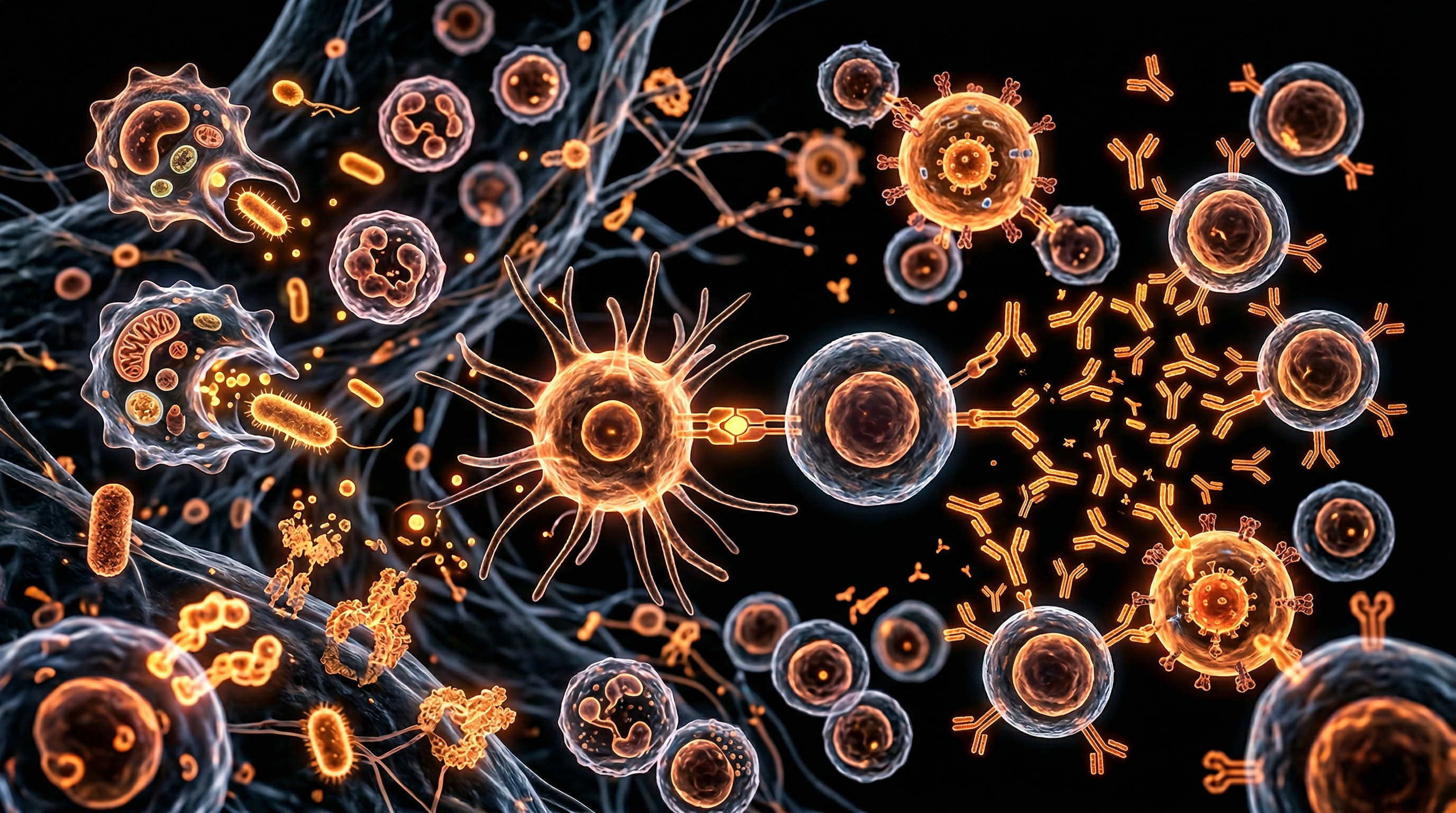
The human immune system functions as a tiered, hierarchical security architecture, operating through a seamless integration of phylogenetically ancient innate mechanisms and highly refined, antigen-specific adaptive strategies. At INNERSTANDIN, we conceptualise this not merely as a series of barriers, but as a dynamic, real-time computational network designed to preserve biological homeostasis in an environment saturated with pathogenic threats.
The primary layer, the innate immune response, serves as the first line of rapid-response biological surveillance. It is non-specific, relying upon germline-encoded pattern recognition receptors (PRRs)—notably Toll-like receptors (TLRs) and NOD-like receptors—to identify highly conserved pathogen-associated molecular patterns (PAMPs). This immediate, evolutionarily conserved defensive posture triggers an inflammatory cascade orchestrated by cytokines, chemokines, and the complement system. Recent studies published in The Lancet underscore that this innate framework does more than just contain infection; it instructs the adaptive immune system on the nature of the threat. The phagocytic activity of neutrophils and macrophages, combined with the cytotoxic influence of Natural Killer (NK) cells, provides a relentless, non-discriminatory barrier that prevents the systemic propagation of infectious agents.
However, the efficacy of this system is predicated upon its transition into the adaptive domain, a process of immunological memory and exquisite specificity mediated by T and B lymphocytes. Following antigen presentation—predominantly by dendritic cells—the adaptive system undergoes clonal expansion. This phase involves the somatic hypermutation of immunoglobulin genes, a process that ensures the eventual synthesis of high-affinity antibodies tailored to specific epitopes. Unlike the innate response, this layer provides durable, long-term surveillance.
The systemic impact of this bifurcated approach is profound. When the innate-adaptive crosstalk is synchronised, the organism maintains a robust metabolic equilibrium. When this hierarchy fails—or, conversely, becomes hyper-activated—the result is either immunodeficiency or the deleterious systemic inflammation characteristic of autoimmune pathology. Understanding the strategic interplay between these layers is critical to grasping how the body differentiates self from non-self. At INNERSTANDIN, we posit that the immune system is the ultimate information-processing organ; it is a bio-linguistic interface that constantly translates environmental signals into a coherent, life-preserving strategy. This section establishes the foundation for examining how these layered responses dictate health outcomes across the UK population.
The Biology — How It Works
The immune architecture is not a monolithic defensive unit but a hierarchical, multi-layered strategic apparatus. At the primary perimeter, the innate immune system acts as the rapid-response force, governed by germline-encoded pattern recognition receptors (PRRs). These sensors, including Toll-like receptors (TLRs) and RIG-I-like receptors, scan for pathogen-associated molecular patterns (PAMPs)—conserved microbial motifs such as lipopolysaccharides or double-stranded RNA. Upon detection, these sensors initiate an immediate inflammatory cascade. Cytokine signalling, particularly the secretion of interleukin-1β (IL-1β), tumour necrosis factor-alpha (TNF-α), and type I interferons, orchestrates the recruitment of neutrophils, macrophages, and natural killer (NK) cells. This innate phase is non-specific but essential; it is the critical "first strike" that establishes the immediate viability of the host environment, a concept we at INNERSTANDIN emphasise as the foundational barrier against systemic breach.
However, the transition from innate to adaptive immunity represents a shift from generalised threat management to surgical precision. This is bridged by professional antigen-presenting cells (APCs), primarily dendritic cells. Once innate activation is complete, dendritic cells internalise microbial fragments and migrate to the secondary lymphoid organs. Here, they engage with the adaptive system’s vanguard: the T and B lymphocytes. Unlike the innate system, lymphocytes possess unique, randomly generated receptors—T-cell receptors (TCRs) and B-cell receptors (BCRs)—derived through V(D)J recombination. This process allows the body to generate an astronomical diversity of clones, capable of recognising virtually any peptide sequence presented via the major histocompatibility complex (MHC).
As established in high-impact literature published in The Lancet and various immunological journals, the adaptive response is defined by its two-fold utility: clonal expansion and immunological memory. When a naive T-cell identifies its cognate antigen, it undergoes rapid proliferation, differentiating into effector cells designed for targeted elimination. Simultaneously, B-cells undergo somatic hypermutation, an iterative process of mutation and selection that refines the affinity of antibodies against the specific intruder. This high-affinity maturation is the biological zenith of adaptive defence.
At INNERSTANDIN, we recognise that the true complexity lies in the crosstalk between these layers. The innate system does not merely initiate; it provides the co-stimulatory signals—the "second signal"—required for full lymphocyte activation. Without the maturation of dendritic cells, adaptive T-cells would lapse into a state of anergy rather than effective immunity. This integration, governed by delicate feedback loops of interleukins and chemokines, ensures that the organism’s defensive investment remains calibrated to the severity of the challenge, preventing the collateral damage of chronic inflammation while maintaining the structural integrity of the host.
Mechanisms at the Cellular Level
At the microscopic architecture of the human host, the innate immune response functions not merely as a passive barrier, but as a sophisticated, pre-programmed surveillance network. This first layer of defence relies heavily upon pattern recognition receptors (PRRs), such as Toll-like receptors (TLRs), which identify highly conserved pathogen-associated molecular patterns (PAMPs). Upon detection, these receptors initiate a cascade of signalling pathways, most notably the NF-κB and interferon regulatory factor (IRF) pathways, leading to the rapid synthesis of pro-inflammatory cytokines, including TNF-α and IL-6. This acute inflammatory milieu serves as a critical systemic beacon, orchestrating the recruitment of neutrophils and monocytes from the peripheral circulation to the site of pathogen infiltration.
Transitioning from innate to adaptive immunity requires the professional antigen-presenting cell (APC)—most notably the dendritic cell. Once the dendritic cell phagocytoses an antigen, it undergoes a complex maturation process, migrating via the lymphatic system to the secondary lymphoid organs. Here, the presentation of antigenic peptides on Major Histocompatibility Complex (MHC) class II molecules to naive T-helper (CD4+) cells represents the pivot point of the immune response. This interaction, supported by co-stimulatory signals such as CD80/86 binding to CD28, ensures that the adaptive response is not triggered spuriously, maintaining the vital self/non-self discrimination necessary to avoid autoimmunity.
The subsequent clonal expansion of antigen-specific lymphocytes is a testament to the biological rigour of the adaptive system. B-cells, stimulated by cognate T-cell interaction and follicular cytokines, undergo somatic hypermutation and affinity maturation in the germinal centres. This process, as extensively detailed in literature sourced from the Wellcome Trust and Lancet-published immunology reviews, ensures that the resulting immunoglobulin molecules possess high-affinity binding sites tailored to the specific pathogen.
The interplay between these layers is not sequential but rather a continuous, overlapping feedback loop. Innate cells provide the cytokine environment—‘signal three’—that dictates the functional differentiation of T-cells into Th1, Th2, or Th17 subsets, thereby tailoring the effector response to the pathogen's nature. At INNERSTANDIN, we recognise that this cellular choreography is the ultimate expression of biological precision. When the systemic equilibrium is disrupted, the downstream consequences—ranging from cytokine storm syndromes to chronic inflammatory states—highlight the necessity of understanding these mechanisms at their granular, cellular foundations. This is not merely the body defending itself; it is a highly evolved, evidence-backed strategy of biological survival that dictates the systemic resilience of the human host.
Environmental Threats and Biological Disruptors
The systemic integrity of the human immune architecture is currently subject to unprecedented evolutionary pressure. At INNERSTANDIN, we recognise that the innate and adaptive immune responses do not operate within a sterile vacuum; rather, they are continuously modulated—and frequently compromised—by the contemporary exposome. This aggregate of environmental stressors, ranging from anthropogenic pollutants to endocrine-disrupting chemicals (EDCs), functions as a persistent biological disruptor, recalibrating the threshold of immune activation and often precipitating systemic dysregulation.
Peer-reviewed literature, including longitudinal cohort studies published in The Lancet Planetary Health, highlights the profound impact of fine particulate matter (PM2.5) on alveolar macrophage polarisation. These exogenous particles are not merely inert debris; they act as pro-inflammatory catalysts that incite a state of chronic, low-grade systemic inflammation—a condition increasingly recognised as 'inflammaging'. When innate surveillance mechanisms, such as Pattern Recognition Receptors (PRRs) including Toll-like receptors (TLRs), are perpetually engaged by xenobiotic ligands, the resultant cytokine storm—characterised by persistent IL-6 and TNF-α elevation—depletes the metabolic reserves required for a robust adaptive response.
Furthermore, the ubiquity of bisphenol A (BPA) and phthalates in the UK domestic environment presents a direct interference mechanism for immune homeostasis. These compounds exhibit high binding affinity for nuclear receptors, effectively cross-talking with the signalling pathways that dictate T-cell differentiation. Research suggests that chronic exposure to these endocrine disruptors promotes a skewed Th1/Th2 balance, biasing the adaptive immune system towards hypersensitivity or, conversely, inducing a state of exhaustion that prevents effective pathogen clearance. This shift in the immunological milieu is not merely a transient stressor; it is a structural alteration of the immune landscape that undermines the clonal expansion of antigen-specific B and T lymphocytes.
Compounding this is the pervasive disruption of the human microbiome. The gut-associated lymphoid tissue (GALT), which houses approximately 70% of the body’s immune cells, is hypersensitive to dietary emulsifiers and microplastics. As established by research indexed in PubMed, the alteration of commensal microbial diversity leads to a breakdown of the intestinal epithelial barrier, facilitating the translocation of bacterial endotoxins into the systemic circulation. This metabolic endotoxaemia forces the innate system into a state of hyper-vigilance, thereby diverting resources away from the adaptive system’s primary role: the high-fidelity recognition and neutralisation of novel pathogenic threats. In this context, INNERSTANDIN asserts that the modern immune response is defined less by the purity of its evolutionary design and more by the constant, arduous process of mitigating the damage wrought by modern environmental hostility.
The Cascade: From Exposure to Disease
When a pathogen breaches the primary physical and chemical barriers of the host—the epithelial interfaces of the respiratory tract or the dermal layer—the transition from homeostatic surveillance to an active inflammatory cascade is instantaneous. At INNERSTANDIN, we recognise this as the initiation phase of the innate immune response, governed by the detection of evolutionarily conserved Pathogen-Associated Molecular Patterns (PAMPs). Pattern Recognition Receptors (PRRs), most notably Toll-like receptors (TLRs) expressed by resident sentinel cells such as macrophages and dendritic cells, function as the frontline bio-sensors. Upon ligand binding, these receptors trigger intracellular signalling pathways, primarily the NF-κB and IRF cascades, resulting in the rapid transcription of pro-inflammatory cytokines, including TNF-α, IL-1β, and IL-6.
This initial chemical release orchestrates a vascular response designed to facilitate the extravasation of neutrophils and monocytes from the peripheral circulation into the affected tissue. This process, governed by the upregulation of selectins and integrins on the vascular endothelium, is a masterclass in biological traffic control. If the innate response proves insufficient in containing the pathogen, the systemic stakes are elevated. Dendritic cells undergo a phenotypic maturation, migrating via the lymphatic system to secondary lymphoid organs—such as the regional lymph nodes common to UK clinical practice—to act as the essential bridge to the adaptive immune system.
The "Cascade" is not merely a defensive surge but a highly precise handover mechanism. In the lymph nodes, these antigen-presenting cells (APCs) display processed peptide fragments via Major Histocompatibility Complex (MHC) molecules to naive T-lymphocytes. This is the critical juncture where the adaptive response undergoes clonal expansion. Research published in The Lancet highlights that this transition—from the rapid, non-specific innate engagement to the highly tailored, high-affinity antibody production by B-lymphocytes—is where systemic equilibrium is either maintained or lost to immunopathology.
Should the pathogen manage to subvert these mechanisms, the systemic impact is profound. Chronic activation of the innate pathways without successful adaptive clearance leads to "cytokine storm" scenarios, a hyper-inflammatory state that contributes to multi-organ failure. At INNERSTANDIN, we maintain that understanding this temporal progression—from the initial TLR-mediated recognition to the precise somatic hypermutation of immunoglobulins—is the only way to demystify the progression from asymptomatic exposure to full-blown clinical disease. The transition is a matter of kinetics; the speed at which your innate sentinel cells activate the adaptive arms determines whether the organism achieves clearance or suffers the morbidity of a systemic infection.
What the Mainstream Narrative Omits
The prevailing reductionist paradigm often compartmentalises the immune response into two monolithic entities: the innate rapid-response barricade and the adaptive, memory-dependent precision strikes. However, the INNERSTANDIN perspective necessitates an examination of the "in-between" spaces—the complex, non-linear cross-talk and the metabolic recalibrations that mainstream literature frequently overlooks. Central to this omission is the concept of trained immunity, or "innate immune memory," which contradicts the traditional assumption that innate cells lack long-term adaptation. Research published in Cell and Nature Immunology confirms that epigenetic reprogramming of myeloid progenitors occurs following exposure to specific stimuli, such as β-glucans or BCG vaccination. This fundamentally alters the metabolic landscape—shifting cells from oxidative phosphorylation to aerobic glycolysis (the Warburg effect)—thereby enhancing cytokine production capacity long after the initial insult has passed.
Furthermore, the mainstream narrative routinely obscures the critical role of the neuro-immuno-endocrine axis. The immune system is not a standalone tactical force but is deeply embedded within the autonomic nervous system. The cholinergic anti-inflammatory pathway, for instance, serves as a systemic "governor" of the innate response via the vagus nerve. By modulating macrophage activity through α7 nicotinic acetylcholine receptors, the nervous system exerts real-time control over systemic inflammation. When this neurological feedback loop is neglected in clinical models, we fail to account for how psychosocial stress-induced catecholamine surges directly dictate leukocyte differentiation and effector function.
Equally overlooked is the pervasive impact of microbial commensalism on the development of the adaptive repertoire. Our internal biological landscape—the microbiome—functions as an essential adjuvant for the maturation of T-cell subsets. Data emerging from the Lancet and associated UK microbiome studies suggest that systemic immune "vigilance" is highly contingent upon microbial metabolites such as short-chain fatty acids (SCFAs). These compounds act as histone deacetylase inhibitors, critically modulating the differentiation of regulatory T-cells (Tregs). By ignoring the systemic integration of the gut-immune axis, conventional medicine views autoimmune dysfunction as a localized cellular error rather than a systemic failure of homeostatic synchronicity. At INNERSTANDIN, we recognise that the immune system is a multidimensional, adaptive network; to treat it as a binary switch is to ignore the sophisticated, metabolic, and neurological architecture that defines true human vitality.
The UK Context
Within the British epidemiological landscape, the interplay between innate and adaptive immunity is not merely a theoretical construct but a critical determinant of public health outcomes, particularly when stratified by regional environmental pressures and socio-economic variables. The United Kingdom’s population density, combined with high rates of seasonal respiratory pathogen circulation, necessitates an immune architecture capable of rapid, non-specific mitigation via the innate branch, followed by the high-fidelity orchestration of adaptive B and T-cell responses.
At the molecular level, the innate system—comprised of germline-encoded pattern recognition receptors (PRRs) such as Toll-like receptors (TLRs)—serves as our primary sentinel. Research published in The Lancet highlights that UK-specific populations often encounter a unique antigenic landscape, influenced by both urban pollution levels and temperate climate conditions that favour the persistence of specific viral vectors. This constant low-level immune stimulation, or 'trained immunity', primes the myeloid compartment to respond with increased metabolic efficiency upon secondary exposure.
However, the efficacy of this response is tethered to the integrity of the adaptive arm. The recruitment of naive T-cells into specialised effector lineages—CD4+ T-helper cells and CD8+ cytotoxic cells—relies on the successful presentation of peptides via Major Histocompatibility Complex (MHC) molecules. Clinical data derived from UK Biobank studies suggest that polygenic risk scores concerning MHC class II molecules significantly correlate with individual responses to common environmental allergens and viral threats. INNERSTANDIN the precise kinetic delay between the innate inflammatory cytokine storm (IL-6, TNF-alpha) and the maturation of immunoglobulin G (IgG) antibodies is essential for discerning why certain cohorts exhibit resistance while others face chronic immune dysregulation. By mapping these systemic checkpoints, we can move beyond superficial health observations to a sophisticated, research-led comprehension of the human biological interface within the British Isles. The systemic robustness of this dual-layered architecture is the primary filter through which our population experiences health, disease, and the long-term sequelae of infection.
Protective Measures and Recovery Protocols
The maintenance of immunological homeostasis requires a bifurcated approach to protective measures and recovery protocols, necessitating an INNERSTANDIN of the synergy between metabolic flux and signal transduction. When the innate barrier—the first line of defence—is breached, the system shifts into a resource-intensive inflammatory state. The subsequent recovery phase is not a return to baseline, but a complex, immunometabolic recalibration. Evidence published in The Lancet suggests that chronic activation of the NLRP3 inflammasome, if not sequestered through precise endogenous feedback loops, precipitates systemic inflammatory response syndrome (SIRS). Consequently, the primary protective measure is the optimisation of the nucleotide-binding oligomerisation domain-containing protein (NOD) signalling pathways, which govern the detection of pathogen-associated molecular patterns (PAMPs).
Recovery protocols must prioritise the resolution of inflammation, specifically targeting the transition from M1-like pro-inflammatory macrophages to M2-like reparative phenotypes. This transition is mediated by the secretion of specialised pro-resolving mediators (SPMs), such as resolvins and protectins, derived from polyunsaturated fatty acids. Without adequate systemic levels of these lipid mediators, the adaptive response—characterised by T-cell expansion and B-cell somatic hypermutation—remains locked in a state of unresolved excitation, leading to collateral tissue damage. Research sourced via PubMed demonstrates that the orchestration of these adaptive responses is highly contingent upon the gut-immune axis; dysbiosis within the intestinal microbiome frequently correlates with a downregulated adaptive capacity, as the metabolic crosstalk between commensal microbiota and regulatory T-cells (Tregs) is compromised.
To facilitate peak immunological resilience, protocols should focus on the modulation of the redox environment. Reactive oxygen species (ROS), while essential for the oxidative burst required by neutrophils to neutralise pathogens, represent a double-edged sword. Sustained oxidative stress induces DNA damage within haematopoietic stem cells, potentially impairing long-term immunogenic memory. Strategic recovery thus necessitates an internal environment that supports glutathione peroxidase and superoxide dismutase activity, ensuring that the resolution phase is not impeded by persistent oxidative lesions.
Furthermore, the integration of chronobiological interventions—specifically the alignment of recovery phases with the glymphatic clearance system—is critical. The adaptive immune system exhibits circadian oscillation; research indicates that antigen presentation and lymphocyte trafficking are synchronised with the sleep-wake cycle. By aligning nutrient-dense recovery protocols with these physiological windows, an individual maximises the efficiency of cytokine signalling. In the UK, where metabolic syndrome and vitamin D insufficiency frequently undermine these layers, a rigorous focus on the nutrient-immunology interface is essential for maintaining the integrity of the adaptive memory pool and ensuring rapid, high-fidelity response to future antigenic challenges.
Summary: Key Takeaways
The orchestration of human immunity necessitates an integration of constitutive innate barriers and the highly specific, clonally expansive nature of the adaptive response. As articulated through the INNERSTANDIN framework, the initial frontline defence—comprising epithelial physical barriers, the complement system, and pattern recognition receptors (PRRs) like Toll-like receptors (TLRs)—establishes an immediate, non-specific sequestration of pathogens. This innate priming is not merely reactive; it provides the essential inflammatory milieu required to facilitate dendritic cell maturation and subsequent MHC-II presentation to naive T-lymphocytes.
The transition to adaptive immunity, characterised by V(D)J recombination, ensures the generation of high-affinity antigen-specific receptors, culminating in B-cell humoral responses and CD8+ cytotoxic T-cell efficacy. Longitudinal studies, including those evidenced in The Lancet, emphasise that the metabolic cost of these systemic interactions requires precise homeostatic regulation to avoid chronic autoimmune sequelae. Understanding this layered architecture reveals that immune integrity relies upon the seamless hand-off between germline-encoded detection and somatically generated immunological memory.
This article is provided for informational and educational purposes only. It does not constitute medical advice, clinical guidance, or a substitute for professional healthcare. Information reflects cited research at time of publication. Always consult a qualified healthcare professional before acting on any health information.
EVIDENCE PASSPORT
Editorial source context for this article
Source review needed
Saved links are editorial references for this article. They may support specific claims rather than every sentence. Open and assess each source in context. This passport does not independently verify them.
Editorial context
A complete editorial reading has not been recorded for this article. Source links remain available for you to open and assess directly.
Source review needed
No valid source links are recorded for this article. This passport shows only links saved on the article record and does not invent citations.
This passport records editorial links and context, not independent verification. Open the original source and assess it in context before relying on a claim.
Medical Disclaimer
The information in this article is for educational purposes only and does not constitute medical advice, diagnosis, or treatment. Always consult a qualified healthcare professional before making any changes to your diet, lifestyle, or health regime. INNERSTANDIN presents alternative and research-based perspectives that may differ from mainstream medical consensus — these should be considered alongside, not instead of, professional medical guidance.
Read Full DisclaimerContinue the thread
Keep this question moving.
Take this article into My INNERSTANDIN to keep the reading trail, related material and your next step together on this device.
Explore this in the Body Map
See where this hits your biology. Interactive anatomy, threats, and protective protocols.
Dig deeper in the Library
Free, longform PDF volumes that go beyond headlines into mechanisms and references.