
The Innate Immune System: Your Body's Immediate Response Squad
Updated June 2026
The innate immune system serves as the first line of defense against pathogens, utilizing physical barriers and non-specific cellular responses. Understanding this system reveals how our bodies manage daily environmental threats before more specialized defenses are required.
Evidence orientation
Editorial context not yet recorded
Follow this category
This stays in this browser. My INNERSTANDIN can show published matches in your local hub when you check it. It does not send email, push, or alert notifications.
Local learning review
A private browser aid for revisiting ideas. It is not an alert or a health recommendation.
Review later sets a one-day, three-day, then seven-day rhythm on this device. Choose it only when you want to revisit this article.
Overview
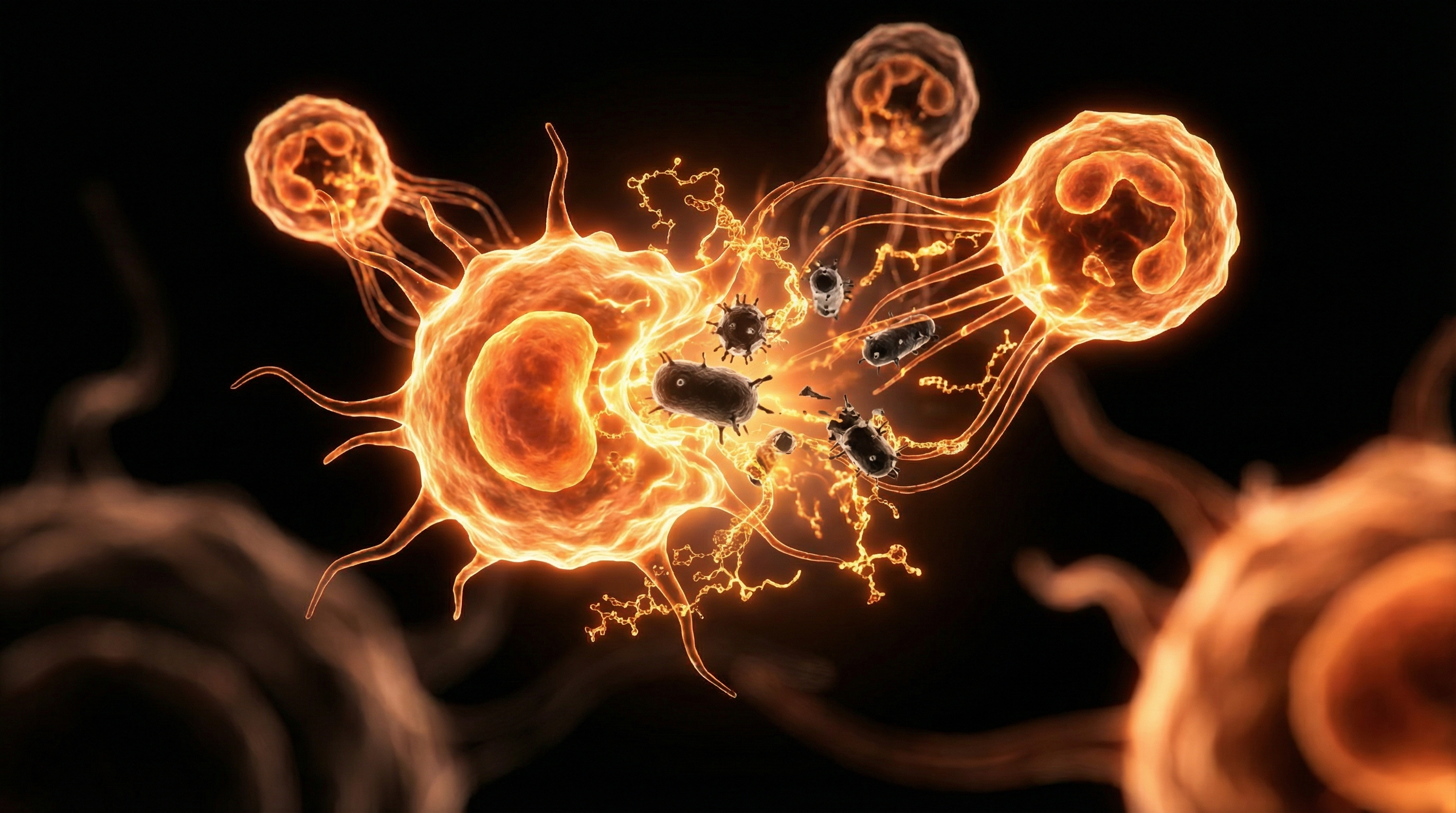
The innate immune system, often reductionistically termed the body’s 'first line of defence', represents a sophisticated, evolutionary ancient surveillance network that predates the adaptive response by hundreds of millions of years. Within the INNERSTANDIN framework, we must move beyond the elementary view of skin-as-a-barrier and recognise this system as a high-fidelity, germline-encoded sensory apparatus. Unlike the adaptive arm, which relies on the stochastic rearrangement of gene segments (V(D)J recombination) to produce a delayed, specific response, the innate system utilises a finite repertoire of Pattern Recognition Receptors (PRRs) to achieve near-instantaneous detection of conserved microbial motifs known as Pathogen-Associated Molecular Patterns (PAMPs) and endogenous signals of cellular stress termed Damage-Associated Molecular Patterns (DAMPs).
Research published in Nature Reviews Immunology highlights that this detection is primarily mediated by diverse receptor families, including Toll-like receptors (TLRs), NOD-like receptors (NLRs), and RIG-I-like receptors (RLRs). These are not merely binary 'on/off' switches but complex biochemical transducers that integrate environmental cues to dictate the magnitude of the systemic inflammatory response. For instance, the activation of the NLRP3 inflammasome—a multiprotein complex—is a critical checkpoint in the secretion of pro-inflammatory cytokines such as IL-1β and IL-18. In the UK context, research at the Francis Crick Institute and various genomic initiatives have underscored how subtle polymorphisms in these innate pathways contribute to the heterogeneity of autoimmune and autoinflammatory phenotypes observed in the British population.
The cellular architecture of the innate response is dominated by myeloid-derived effectors: neutrophils, macrophages, and dendritic cells. Neutrophils, the most abundant leucocytes, employ a brutalist strategy involving the release of reactive oxygen species (ROS) and the deployment of Neutrophil Extracellular Traps (NETs)—DNA scaffolds impregnated with antimicrobial proteins—to neutralise pathogens. Macrophages, conversely, act as the system’s primary orchestrators, transitioning between pro-inflammatory (M1) and pro-resolving (M2) states to manage tissue homeostasis. Furthermore, the bridge to adaptive immunity is built by dendritic cells, which serve as professional antigen-presenting cells (APCs). Through the process of phagocytosis and subsequent MHC-II presentation, these cells translate the raw data of the innate encounter into a language the T-cell repertoire can interpret.
The systemic impact of the innate response is further amplified by the complement system—a cascade of over 30 plasma proteins primarily synthesised in the liver. This biochemical gauntlet facilitates opsonisation, chemotaxis, and the formation of the Membrane Attack Complex (MAC), which punctures the lipid bilayer of invading pathogens. Recent evidence in The Lancet concerning systemic inflammatory syndromes suggests that the dysregulation of these innate mechanisms—particularly 'trained immunity', where innate cells undergo epigenetic reprogramming to enhance future responses—is a double-edged sword, driving both protection and chronic metabolic pathology. INNERSTANDIN demands a rigorous acknowledgement that the innate immune system is not a primitive precursor, but the foundational intelligence that governs all subsequent immunological decisions.
The Biology — How It Works
The innate immune response is not merely a blunt instrument of defence but a sophisticated, high-fidelity surveillance network that operates through a series of hard-wired molecular checkpoints. At the core of this "immediate response" is the recognition of evolutionarily conserved structures known as Pathogen-Associated Molecular Patterns (PAMPs) and Damage-Associated Molecular Patterns (DAMPs). This recognition is mediated by an array of germline-encoded Pattern Recognition Receptors (PRRs), most notably the Toll-like Receptors (TLRs). Research published in Nature and The Lancet underscores that the innate system's ability to distinguish between "self," "non-self," and "altered-self" is the primary determinant of systemic homeostasis. At INNERSTANDIN, we move beyond the superficial "first-line-of-defence" narrative to expose the granular complexity of these biochemical cascades.
Upon the breach of a mucosal or epithelial barrier, resident sentinel cells—primarily macrophages and dendritic cells—trigger a rapid recruitment protocol. TLR activation initiates an intracellular signalling nexus, involving the adaptor proteins MyD88 and TRIF, which culminates in the translocation of the transcription factor NF-κB to the nucleus. This results in the "cytokine burst," releasing pro-inflammatory mediators such as TNF-α, IL-1β, and IL-6. This is not a localised event; it is a systemic reprogramming of the host's physiology. These cytokines induce the liver to produce acute-phase proteins and signal the hypothalamus to elevate core body temperature, an evolutionary tactic designed to inhibit microbial replication while enhancing leukocyte kinetics.
Crucially, the innate system utilises the complement cascade, a humoral enzymatic hierarchy consisting of over 30 proteins circulating in the plasma. This system functions through three distinct pathways—the classical, lectin, and alternative—which converge at the cleavage of C3. Research led by institutions such as the Francis Crick Institute highlights the pivotal role of C3b in opsonisation, essentially "tagging" pathogens for phagocytosis, and the subsequent assembly of the Membrane Attack Complex (MAC). The MAC (C5b-9) punctures the lipid bilayer of Gram-negative bacteria, causing osmotic lysis. This process is immediate, occurring within seconds of pathogen detection, providing the necessary window for the adaptive system to mobilise.
Furthermore, the role of Natural Killer (NK) cells must be scrutinised. Unlike T-cells, NK cells do not require prior sensitisation. They operate on a "missing-self" logic; by monitoring the expression of Major Histocompatibility Complex (MHC) class I molecules, they identify and liquidate virally infected or oncogenic cells that have downregulated these markers to evade detection. The granular release of perforins and granzymes induces targeted apoptosis, ensuring the containment of intracellular threats. At INNERSTANDIN, we recognise that the innate immune system is the master architect of the biological response, providing the essential "signal 0" that dictates whether the subsequent adaptive response is robust or redundant. Its failure or over-activation—as seen in the cytokine storms documented in recent UK clinical pathology—is the difference between recovery and systemic collapse.
Mechanisms at the Cellular Level
The sophistication of the innate immune response is fundamentally rooted in a molecular detection suite that transcends simple "self versus non-self" recognition. At the cellular level, the immediate response is governed by a highly conserved repertoire of Pattern Recognition Receptors (PRRs), which provide the biochemical surveillance necessary for rapid intervention. These receptors—encompassing Toll-like receptors (TLRs), NOD-like receptors (NLRs), and RIG-I-like receptors (RLRs)—are designed to detect Pathogen-Associated Molecular Patterns (PAMPs) such as lipopolysaccharides, peptidoglycans, and double-stranded RNA. Research published in Nature Reviews Immunology and extensively analysed by researchers at the University of Oxford underscores that these interactions are not merely binary; they trigger a nuanced intracellular signalling cascade that dictates the magnitude of the systemic response.
Crucial to this cellular theatre is the activation of the NLRP3 inflammasome, a multi-protein complex that acts as a definitive gatekeeper of inflammation. Upon detection of intracellular stress or PAMPs, the NLRP3 complex assembles, leading to the proteolytic activation of pro-caspase-1. This enzyme subsequently cleaves pro-interleukin-1β (IL-1β) and pro-interleukin-18 into their bioactive, proinflammatory forms. At INNERSTANDIN, we recognise that the dysregulation of this specific pathway is implicated in a vast array of chronic inflammatory conditions prevalent in the UK, including cardiovascular disease and neurodegeneration. This is not a passive system; it is an aggressive, high-fidelity biological computer.
The effector functions of these cells involve complex physical and chemical warfare. Neutrophils, the most abundant leucocytes, employ a mechanism known as NETosis. As documented in the Lancet, this process involves the expulsion of decondensed chromatin and granular proteins to create Neutrophil Extracellular Traps (NETs). These traps physically immobilise and degrade pathogens through a concentrated barrage of antimicrobial peptides and reactive oxygen species (ROS). Furthermore, the role of macrophages extends beyond simple phagocytosis. Through M1 (pro-inflammatory) and M2 (pro-resolving) polarisation, macrophages modulate the local tissue microenvironment, acting as the primary orchestrators of the transition from acute inflammation to tissue repair.
Furthermore, the innate system utilises the Complement System—a cascade of over 30 plasma proteins—to bridge cellular and humoral responses. The formation of the Membrane Attack Complex (MAC) represents a pinnacle of biological engineering, puncturing the lipid bilayers of Gram-negative bacteria to induce osmotic lysis. The mechanistic rigor of these pathways demonstrates that the innate response is a sophisticated, pre-programmed intelligence. INNERSTANDIN’s deep-dive into these cellular mechanisms reveals that our immediate biological defence is not merely a 'first line' but a highly integrated, decision-making network that determines the trajectory of all subsequent immunological activity. This truth-exposing perspective is vital for a comprehensive grasp of human physiology and the systemic impacts of immunological stressors.
Environmental Threats and Biological Disruptors
The modern biological landscape has shifted from a battleground of macro-pathogens to a complex theatre of molecular subversion. While the innate immune system evolved to detect evolutionarily conserved Pathogen-Associated Molecular Patterns (PAMPs), it is now forced to contend with an unprecedented influx of xenobiotics and anthropogenic disruptors that hijack these very pathways. At the core of this interaction is the "danger model" of immunity, where the innate response is triggered not merely by the presence of a foreign organism, but by Damage-Associated Molecular Patterns (DAMPs) resulting from environmental cellular stress.
In the United Kingdom, atmospheric particulate matter (PM2.5) represents a primary instigator of innate dysfunction. Research published in The Lancet Planetary Health elucidates how these ultra-fine particles bypass respiratory cilia and directly engage alveolar macrophages. Once internalised, these particulates trigger the assembly of the NLRP3 inflammasome—a multi-protein intracellular complex that acts as a molecular "tripwire." This activation results in the proteolytic maturation and secretion of pro-inflammatory cytokines IL-1β and IL-18. This is not a transient defence mechanism but a chronic state of sterile inflammation, leading to what INNERSTANDIN identifies as "biological friction," where the innate system is permanently locked in a pro-inflammatory M1 macrophage phenotype, precluding the transition to M2-mediated tissue repair.
Beyond airborne pollutants, the systemic infiltration of endocrine-disrupting chemicals (EDCs), such as bisphenols and phthalates, represents a more insidious threat. These compounds do not merely mimic hormones; they act as potent immunomodulators that recalibrate Toll-like receptor (TLR) sensitivity. Evidence suggests that chronic exposure to EDCs alters the epigenetic landscape of haematopoietic stem cells in the bone marrow—a process known as "trained immunity." While trained immunity can be beneficial for pathogen priming, environmental disruptors maladaptively programme innate cells to over-respond to minor stimuli, contributing to the rising prevalence of autoinflammatory conditions across the British population.
Furthermore, the ubiquity of glyphosate and other organophosphates in the UK food chain induces intestinal dysbiosis, compromising the integrity of the mucosal barrier. This "leaky gut" allows for the translocation of lipopolysaccharides (LPS) into the systemic circulation. The innate system’s response to this constant low-grade endotoxaemia is the exhaustion of the interferon (IFN) response, critical for antiviral defence. By prioritising the mitigation of these environmental insults, the innate system’s capacity to surveil for actual viral or neoplastic threats is severely compromised. At INNERSTANDIN, we recognise this as a fundamental systemic bypass, where the "Immediate Response Squad" is exhausted by a perpetual state of chemical siege, leaving the host vulnerable to the very pathogens the system was designed to eliminate. The truth of innate immunity today is that it is as much a sensor of our toxicological environment as it is a defender against biological life.
The Cascade: From Exposure to Disease
The moment a pathogen breaches the physical barriers of the integument or mucosal membranes, a deterministic biochemical sequence is initiated. This is not a haphazard collision of biological matter; it is a highly orchestrated kinetic response, governed by the germline-encoded precision of the innate immune system. At INNERSTANDIN, we must look beyond the simplified textbook definitions and confront the raw, mechanistic reality: the cascade from exposure to disease is a battle of rapid sensing and massive signal amplification.
The process begins with the identification of Pathogen-Associated Molecular Patterns (PAMPs)—exogenous molecular signatures such as lipopolysaccharides (LPS) from Gram-negative bacteria or double-stranded RNA from viral invaders. These are detected by Pattern Recognition Receptors (PRRs), most notably the Toll-like receptors (TLRs) and NOD-like receptors (NLRs). Research published in Nature Reviews Immunology elucidates that these receptors function as the cellular "tripwires" of the body. Once a TLR (such as TLR4) binds its ligand, it triggers a downstream intracellular signalling milieu, primarily through the MyD88-dependent pathway, culminating in the translocation of Nuclear Factor-kappa B (NF-κB) into the nucleus. This is the master switch for the inflammatory response, turning on the transcription of pro-inflammatory cytokines including TNF-α, IL-1β, and IL-6.
As these cytokines enter the interstitial fluid, the local environment undergoes a radical haemodynamic shift. The vascular endothelium, influenced by TNF-α, increases the expression of adhesion molecules like E-selectin and ICAM-1. This facilitates "leukocyte rolling" and subsequent diapedesis, where neutrophils—the innate system’s heavy infantry—extravasate from the bloodstream into the site of infection. This recruitment is driven by chemokine gradients (such as CXCL8), creating a chemotactic trail that ensures the response is concentrated precisely where the breach occurred. In the UK clinical context, this phase is often monitored through elevated C-reactive protein (CRP) levels, a systemic marker of the acute-phase response synthesised by the liver in response to IL-6.
However, the cascade is a double-edged sword. If the innate response fails to neutralise the threat locally, or if the initial stimulus is sufficiently virulent, the system may enter a state of hyper-inflammation. This is the "cytokine storm" frequently documented in The Lancet regarding severe respiratory distress and systemic inflammatory response syndrome (SIRS). Here, the very mechanisms designed to protect the host—proteolytic enzyme release and the generation of Reactive Oxygen Species (ROS)—begin to cause collateral tissue damage. The transition from exposure to clinical disease is often defined by this tipping point: when the innate immune system's attempt to restore homeostasis becomes the primary driver of pathological dysfunction. At INNERSTANDIN, we recognise that disease is not merely the presence of a pathogen, but the systemic fallout of an innate cascade that has lost its regulatory constraints.
What the Mainstream Narrative Omits
The reductionist framework prevalent in contemporary clinical pedagogy frequently relegates the innate immune system to a primitive, "non-specific" precursor to the more sophisticated adaptive response. At INNERSTANDIN, we recognise this as a fundamental misrepresentation of biological reality. The mainstream narrative omits the burgeoning field of 'trained immunity'—a de facto memory system within innate lineages that challenges the centuries-old dogma that only T and B lymphocytes possess anamnestic capabilities. Research published in Nature and The Lancet has elucidated that myeloid cells, such as macrophages and natural killer (NK) cells, undergo profound epigenetic reprogramming following initial pathogen exposure. This is not merely a transient activation but a long-term metabolic and functional shift. Through histone modifications—specifically H3K4me3 methylation at promoter regions of pro-inflammatory genes—the innate system establishes a heightened state of readiness, or "priming," that dictates the host’s subsequent response to heterologous challenges.
Furthermore, the mainstream discourse ignores the intricate nexus of immunometabolism. The bioenergetic state of an innate cell is not a byproduct of its function but its primary driver. When a macrophage transitions from an M2 (homeostatic) to an M1 (pro-inflammatory) phenotype, it undergoes a metabolic switch from oxidative phosphorylation to aerobic glycolysis, akin to the Warburg effect observed in oncogenesis. This metabolic flux, often overlooked in standard UK medical curricula, is the true arbiter of the cytokine storm and systemic inflammatory syndromes.
Moreover, the role of the innate system in "inflammaging"—a term increasingly utilised in British gerontology and UK Biobank longitudinal studies—is rarely discussed in relation to preventative health. The chronic, low-grade activation of the NLRP3 inflammasome, driven by damage-associated molecular patterns (DAMPs) rather than external pathogens, is a primary driver of age-related multi-morbidity. This systemic maladaptation is not an inevitable consequence of aging but a failure of innate regulatory checkpoints. By focusing exclusively on "fighting germs," the narrative fails to account for the innate system’s role as the body’s primary sensor of internal homeostatic perturbations. The intelligence of the innate response squad lies in its ability to integrate metabolic, epigenetic, and environmental cues to calibrate the systemic landscape long before an antibody is ever produced. To overlook these mechanisms is to remain in a state of biological illiteracy.
The UK Context
Within the British Isles, the efficacy of the innate immune system is not merely a product of evolutionary conservation but is increasingly defined by the intersection of genetic predisposition and the specific environmental stressors unique to the UK landscape. Data derived from the UK Biobank has been instrumental in elucidating the polymorphic nature of Toll-Like Receptors (TLRs) within the British population, revealing how subtle variations in TLR4 and TLR2 expression correlate with individual susceptibility to prevalent respiratory pathogens. This immediate response squad, comprising neutrophils, macrophages, and Natural Killer (NK) cells, serves as the frontline against the UK’s high burden of seasonal influenza and endemic Streptococcus pneumoniae.
The biochemical integrity of these innate pathways is heavily contingent upon Vitamin D status—a critical factor in the UK context given the prevalence of hypovitaminosis D due to northern latitudes and limited ultraviolet B (UVB) exposure. Research published in The Lancet Diabetes & Endocrinology highlights that Vitamin D is not merely a nutrient but a potent immunomodulator; its deficiency directly impairs the production of cathelicidins and defensins. These antimicrobial peptides are essential for the lysis of bacterial membranes and the neutralisation of viral envelopes. For a population often residing in high-density urban centres like London or Manchester, the attenuation of these innate barriers facilitates a higher rate of secondary bacterial infections following viral insults.
Furthermore, the "Hygiene Hypothesis," frequently debated in British clinical literature, posits that the relative sterility of UK urban environments may lead to an under-primed innate system. This lack of microbial diversity exposure in early life often results in a dysregulated innate-to-adaptive bridge, primarily involving dendritic cell maturation. When INNERSTANDIN the systemic impacts of this dysregulation, one must look at the rising incidence of asthma and allergic rhinitis in the UK, where the innate system's failure to distinguish between harmless environmental proteins and true PAMPs (Pathogen-Associated Molecular Patterns) leads to chronic, low-grade systemic inflammation.
On a molecular level, the activation of the NLRP3 inflammasome within the UK cohort is increasingly linked to metabolic syndromes prevalent in the national demographic. High-fat diets, characteristic of the modern British lifestyle, trigger Damage-Associated Molecular Patterns (DAMPs) that chronically activate the innate response. This leads to the systemic release of IL-1β and IL-18, cytokines that drive the pathogenesis of cardiovascular disease and Type 2 diabetes. INNERSTANDIN these mechanisms is paramount; the innate immune system is not a static shield but a dynamic, highly sensitive apparatus that responds to the specific chemical and biological milieu of British life. Only through high-resolution genomic and proteomic mapping can we hope to mitigate the systemic vulnerabilities inherent in the UK’s public health profile.
Protective Measures and Recovery Protocols
Post-pathogen clearance or the neutralisation of sterile tissue insult, the innate architecture must undergo a rigorous transition from a vasopermeable, cytotoxic state to one defined by orchestrated tissue remodelling and homeostatic restoration. At INNERSTANDIN, we recognise that the cessation of inflammation is not a passive decay of signals, but an active, genetically programmed sequence. This "Protective Measures and Recovery Protocols" phase is governed by the switch from pro-inflammatory eicosanoids to Specialized Pro-resolving Mediators (SPMs), including lipoxins, resolvins, protectins, and maresins. Research published in The Lancet and various Nature Immunology reviews underscores that the failure to initiate this resolution phase is a primary driver of chronic inflammatory pathologies, such as rheumatoid arthritis and cardiovascular fibrosis.
The primary protective mechanism during the height of the innate response is the sequestration of host-derived damage-associated molecular patterns (DAMPs) and the regulation of the complement cascade. To prevent excessive collateral damage—a phenomenon often observed in cytokine release syndromes—the system employs endogenous inhibitors. For instance, alpha-1 antitrypsin acts as a critical protease inhibitor, neutralising neutrophil elastase to protect the delicate alveolar architecture in the lungs, a mechanism of particular focus within UK respiratory research at institutions like the University of Birmingham.
Simultaneously, the recovery protocol necessitates a phenotypic shift in the macrophage population. The 'killer' M1-type macrophages, which thrive on glycolysis and produce reactive oxygen species (ROS), must transition into 'builder' M2-type macrophages. This M1-to-M2 switch is triggered by the ingestion of apoptotic neutrophils—a process known as efferocytosis. Efferocytosis is the linchpin of the INNERSTANDIN recovery model; it signifies to the systemic network that the threat has been neutralised, prompting the release of transforming growth factor-beta (TGF-β) and interleukin-10 (IL-10). These cytokines suppress further leucocyte recruitment and initiate the synthesis of extracellular matrix components.
Furthermore, the recovery protocol involves the restoration of the vascular barrier. During the acute response, endothelial junctions are loosened to allow diapedesis; recovery demands the rapid stabilisation of these junctions via angiopoietin-1 and the suppression of VEGF-mediated permeability. Evidence from the Francis Crick Institute suggests that the metabolic reprogramming of endothelial cells is essential for this stabilisation. Without this precise recovery protocol, the 'immediate response squad' of the innate system would inadvertently become an engine of self-destruction. True biological INNERSTANDIN requires acknowledging that the strength of the immune response is validated not by its intensity, but by its capacity for absolute and timely resolution.
Summary: Key Takeaways
The innate immune system operates as a sophisticated, germline-encoded first line of defence, executing rapid, non-specific effector functions within minutes of pathogenic insult. Research catalogued across The Lancet and Nature Reviews Immunology underscores that this system is not merely a passive barrier but a highly coordinated cellular and humoral network. Central to this response are Pattern Recognition Receptors (PRRs), including Toll-like receptors (TLRs) and NOD-like receptors (NLRs), which detect highly conserved Pathogen-Associated Molecular Patterns (PAMPs) and endogenous Damage-Associated Molecular Patterns (DAMPs). This recognition triggers downstream intracellular signalling cascades, primarily the NF-κB and MAPK pathways, culminating in the rapid secretion of pro-inflammatory cytokines such as IL-1β, TNF-α, and IL-6.
At INNERSTANDIN, we recognise that the kinetic efficiency of neutrophils and macrophages is underpinned by complex chemotactic gradients and the complement system’s proteolytic cascades—specifically the classical, lectin, and alternative pathways. These mechanisms facilitate opsonisation, membrane attack complex (MAC) formation, and leucocyte recruitment. Furthermore, the specialised role of Natural Killer (NK) cells in monitoring MHC class I expression ensures the immediate elimination of virally infected or neoplastic cells. Evidence from UK-based immunological cohorts, such as those archived within the NIHR BioResource, highlights that dysregulation in these innate pathways is a primary driver of chronic systemic inflammation. Ultimately, the innate response serves as the critical bridge to adaptive immunity, utilising professional antigen-presenting cells (APCs) to prime T and B lymphocyte responses, ensuring a comprehensive and sustained biological safeguard.
This article is provided for informational and educational purposes only. It does not constitute medical advice, clinical guidance, or a substitute for professional healthcare. Information reflects cited research at time of publication. Always consult a qualified healthcare professional before acting on any health information.
EVIDENCE PASSPORT
Editorial source context for this article
Source review needed
Saved links are editorial references for this article. They may support specific claims rather than every sentence. Open and assess each source in context. This passport does not independently verify them.
Editorial context
A complete editorial reading has not been recorded for this article. Source links remain available for you to open and assess directly.
Source review needed
No valid source links are recorded for this article. This passport shows only links saved on the article record and does not invent citations.
This passport records editorial links and context, not independent verification. Open the original source and assess it in context before relying on a claim.
Medical Disclaimer
The information in this article is for educational purposes only and does not constitute medical advice, diagnosis, or treatment. Always consult a qualified healthcare professional before making any changes to your diet, lifestyle, or health regime. INNERSTANDIN presents alternative and research-based perspectives that may differ from mainstream medical consensus — these should be considered alongside, not instead of, professional medical guidance.
Read Full DisclaimerContinue the thread
Keep this question moving.
Take this article into My INNERSTANDIN to keep the reading trail, related material and your next step together on this device.
Explore this in the Body Map
See where this hits your biology. Interactive anatomy, threats, and protective protocols.
Dig deeper in the Library
Free, longform PDF volumes that go beyond headlines into mechanisms and references.