
Liver Detoxification: Phase I & Phase II Pathways Explained
Updated August 2026
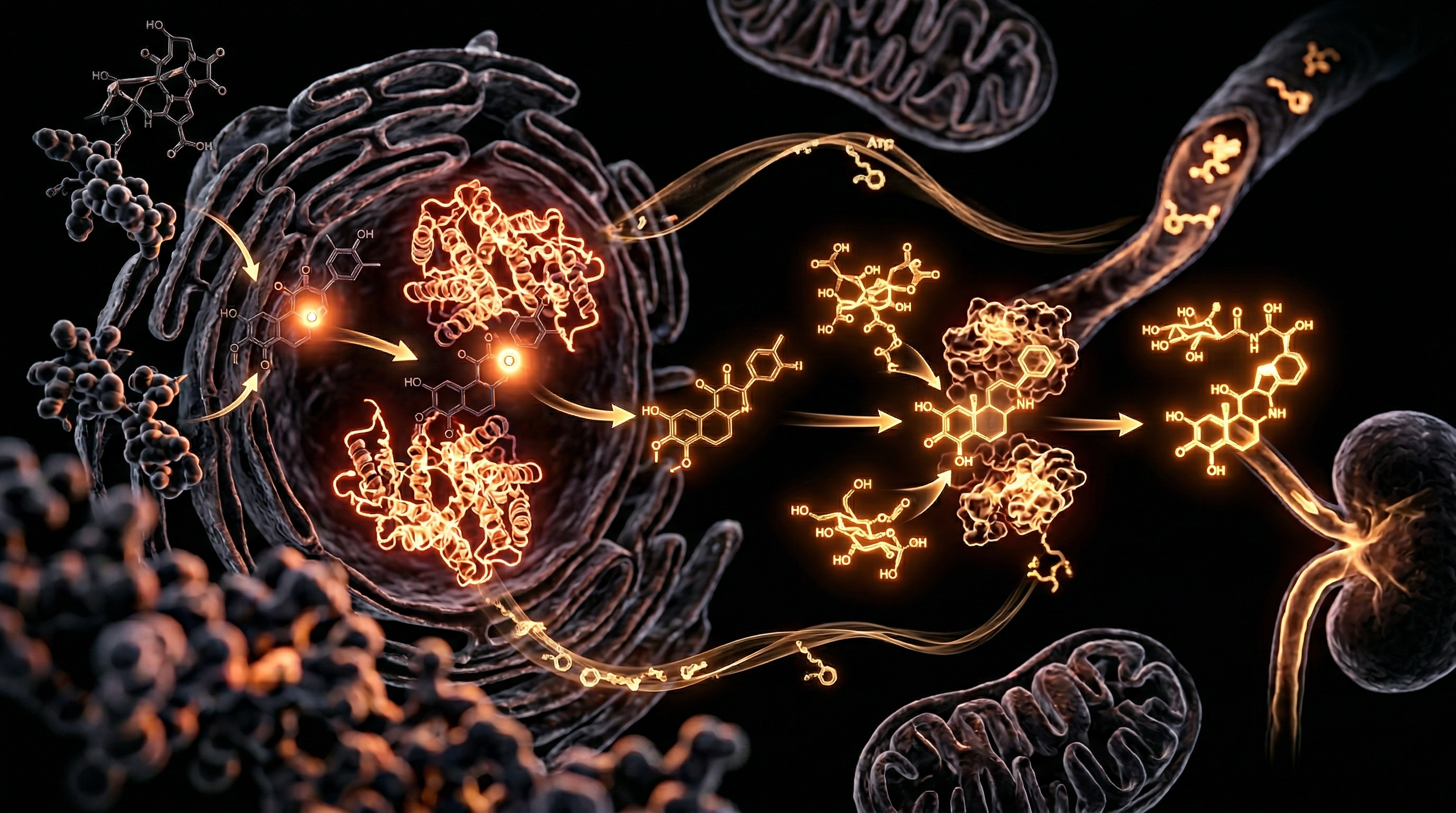
Hepatic detoxification operates in two sequential phases: Phase I functionalization, mediated by a superfamily of cytochrome P450 enzymes that oxidise, reduce, or hydrolyse toxins into more reactive intermediates; and Phase II conjugation, which attaches glutathione, sulphate, glucuronate, glycine, or methyl groups to these intermediates, rendering them water-soluble for excretion via bile or urine. This elegantly designed system is increasingly overwhelmed by the combined load of pharmaceutical metabolites, industrial xenobiotics, pesticide residues, and heavy metals that characterise modern human toxin exposure, whilst simultaneously being depleted of the nutritional co-factors — glutathione, B vitamins, magnesium, zinc, and sulphur amino acids — required to drive these enzymatic pathways. Optimising liver detoxification capacity is foundational to any genuine approach to chronic disease resolution.
Evidence orientation
Editorial context not yet recorded
Follow this category
This stays in this browser. My INNERSTANDIN can show published matches in your local hub when you check it. It does not send email, push, or alert notifications.
Local learning review
A private browser aid for revisiting ideas. It is not an alert or a health recommendation.
Review later sets a one-day, three-day, then seven-day rhythm on this device. Choose it only when you want to revisit this article.
Overview
The hepatic detoxification paradigm is not merely a metabolic convenience; it is the primary interface between internal biological integrity and a chemically saturated external environment. At INNERSTANDIN, we recognise that the liver functions as the body’s principal filtration nexus, orchestrating a complex, two-phase biotransformation sequence essential for the neutralisation of endogenous hormones, metabolic by-products, and exogenous xenobiotics. This process is governed by a sophisticated suite of enzymatic cascades designed to convert lipophilic (fat-soluble) compounds into hydrophilic (water-soluble) conjugates suitable for renal or biliary excretion.
The necessity of this mechanism is underscored by the current anthropogenic landscape. We are continuously exposed to a deluge of endocrine-disrupting chemicals, persistent organic pollutants, and synthetic pharmacopoeia. Without the robust execution of Phase I and Phase II pathways, these substances would sequester within adipocytes and neurological tissues, inducing systemic oxidative stress and pro-inflammatory signalling. Research published in The Lancet and various PubMed-indexed biochemical reviews emphasises that the efficiency of this system is strictly contingent upon the availability of specific cofactors and the genetic expression of relevant enzymatic families.
Phase I, primarily mediated by the Cytochrome P450 (CYP450) superfamily, employs oxidation, reduction, and hydrolysis to prime xenobiotics. Crucially, this stage frequently creates intermediate metabolites that are often more reactive and toxic—as free radicals—than their parent compounds. This "metabolic activation" represents a period of extreme physiological vulnerability. The subsequent Phase II pathways, or conjugation reactions, are required to quench these intermediates. Utilising substrates such as glutathione, sulphate, or glucuronic acid, Phase II enzymes (including glutathione S-transferases and N-acetyltransferases) neutralise reactive electrophiles, rendering them inert.
A critical failure occurs when Phase I activity accelerates beyond the capacity of Phase II—a phenomenon often observed in clinical settings due to nutrient deficiencies or chronic toxic overload. At INNERSTANDIN, our focus remains on the homeostatic balance of these pathways. Failure to maintain this synchronicity leads to the systematic accumulation of reactive intermediates, which initiate lipid peroxidation and protein damage. Understanding this biochemical bifurcation is the foundational prerequisite for mastering human metabolic regulation and mitigating the systemic burden of the twenty-first-century toxicological profile.
The Biology — How It Works
At the molecular level, the hepatic detoxification apparatus represents a sophisticated two-stage enzymatic cascade designed to transform lipophilic xenobiotics—including pharmaceutical metabolites, environmental endocrine disruptors, and endogenous steroid hormones—into water-soluble conjugates suitable for biliary or renal excretion. Within the hepatocytes, the endoplasmic reticulum serves as the primary theatre for Phase I biotransformation, dominated by the Cytochrome P450 (CYP450) superfamily of haem-containing monooxygenases.
These Phase I enzymes catalyse the introduction or exposure of functional polar groups (–OH, –NH2, –SH, or –COOH) onto the substrate via oxidation, reduction, or hydrolysis. While this renders the compound more polar, it paradoxically often results in the creation of highly reactive, electrophilic intermediate metabolites. For instance, the oxidation of certain polycyclic aromatic hydrocarbons can generate epoxides that exhibit greater mutagenic potential than the parent compound. If the flux of these reactive intermediates outpaces the downstream conjugation capacity, significant oxidative stress ensues. At INNERSTANDIN, we emphasise that the clinical significance of Phase I is not merely the modification of the substrate, but the maintenance of the redox balance; if hepatic glutathione (GSH) reserves are insufficient to neutralise these fleeting free radical intermediates, cellular damage to the hepatocyte architecture becomes inevitable.
The biological transition to Phase II—the conjugation phase—is the definitive step in detoxifying these electrophilic intermediates. Here, the liver employs a suite of transferase enzymes, including Glutathione S-transferases (GSTs), UDP-glucuronosyltransferases (UGTs), and N-acetyltransferases (NATs). By attaching endogenous hydrophilic moieties—such as glucuronic acid, sulphate, glycine, or glutathione—to the reactive handles generated during Phase I, the liver renders these molecules biologically inert and highly water-soluble. Research, particularly studies published in journals such as The Lancet regarding hepatotoxicity, highlights that the efficacy of this phase is highly polymorphic. Genetic variations in the GSTM1 or NAT2 genes, prevalent within the UK population, can significantly alter the clearance rates of carcinogens, effectively creating "slow" or "fast" detoxifiers.
It is a misconception to view these pathways as linear, distinct entities; rather, they function as an integrated metabolic engine. For the system to maintain homeostasis, the kinetic coupling of Phase I and Phase II must be tightly regulated. If Phase I is overly induced—often through the over-consumption of xenobiotics or specific dietary precursors—without a commensurate upregulation of Phase II conjugation, the accumulation of reactive intermediates triggers the upregulation of inflammatory markers and systemic oxidative burden. INNERSTANDIN maintains that understanding this biochemical coupling is essential for navigating the complexities of metabolic health in an increasingly polluted environment.
Mechanisms at the Cellular Level
At the cellular level, hepatic detoxification is not merely a filtration process but a sophisticated, enzyme-mediated biochemical transformation designed to heighten the solubility of lipophilic xenobiotics and endogenous toxins. This orchestration occurs primarily within the hepatocytes, where the endoplasmic reticulum (ER) and the cytosol function as the primary command centres for molecular re-engineering.
Phase I biotransformation is fundamentally an oxidative process, predominantly governed by the Cytochrome P450 (CYP450) superfamily of haem-containing isoenzymes. Upon entry into the hepatocyte, hydrophobic substrates—ranging from pharmaceutical metabolites to environmental pollutants like polycyclic aromatic hydrocarbons—undergo functionalisation. Through oxidation, reduction, or hydrolysis, these enzymes introduce or expose polar functional groups (such as hydroxyl, carboxyl, or amino groups). Crucially, this stage transforms relatively inert compounds into highly reactive, intermediate metabolites. Research in The Lancet underscores that this conversion often generates short-lived, electrophilic free radicals. If the metabolic flux is imbalanced, these intermediates can incite significant oxidative stress, potentially exceeding the threshold of the cell’s inherent antioxidant defences and leading to hepatocellular injury. INNERSTANDIN maintains that the precise ratio of CYP450 activity to subsequent conjugation capacity is the single most critical determinant of systemic toxin resilience.
Following the priming of these reactive intermediates, the focus shifts to Phase II, the conjugation phase, which occurs in the cytosol. This stage is dedicated to detoxification through the attachment of polar molecules to the newly functionalised substrate, a process facilitated by transferase enzymes. Key pathways include glucuronidation (via UDP-glucuronosyltransferases), sulphation (via sulfotransferases), and glutathione conjugation (via glutathione S-transferases). By appending large, hydrophilic molecules—such as glucuronic acid, sulphate, or the tripeptide glutathione—to the electrophilic intermediates generated in Phase I, the hepatocyte effectively masks their biological reactivity and enhances their aqueous solubility.
The biological imperative here is the transformation of a toxic, reactive electrophile into a stable, water-soluble conjugate. Once conjugated, these molecules are no longer capable of intercalating with DNA or damaging mitochondrial membranes. They are subsequently transported across the canalicular or sinusoidal membranes via ATP-dependent efflux pumps, such as the multidrug resistance-associated proteins (MRPs). From an INNERSTANDIN perspective, the metabolic efficiency of these pathways is strictly contingent upon the availability of specific co-factors and micronutrient status. Any disruption in the supply of sulphur-containing amino acids or the depletion of nicotinamide adenine dinucleotide (NADPH) availability significantly compromises the detoxification capacity of the liver, leading to the accumulation of systemic metabolites and prolonged bioaccumulation of lipophilic toxins.
Environmental Threats and Biological Disruptors
The efficiency of hepatic biotransformation is contingent upon the biochemical integrity of the cytochrome P450 (CYP450) enzyme superfamily and the subsequent conjugation efficiency of Phase II pathways. In the modern anthropocene, this homeostatic equilibrium is under constant siege from an unprecedented influx of xenobiotics. Chronic exposure to persistent organic pollutants (POPs), polychlorinated biphenyls (PCBs), and endocrine-disrupting chemicals (EDCs) such as bisphenol A (BPA) and phthalates—ubiquitous in the UK’s plasticised food supply chain—acts as a catalyst for metabolic overburdening. These lipophilic compounds frequently bypass peripheral barriers, accumulating in adipose tissue and periodically recirculating into the bloodstream, thereby mandating continuous engagement of hepatic Phase I pathways.
The fundamental danger lies in the generation of reactive intermediates. During Phase I (functionalisation), CYP450 enzymes facilitate oxidation, reduction, or hydrolysis, often producing electrophilic reactive oxygen species (ROS) or unstable intermediate metabolites that possess higher toxic potential than the parent compound. If Phase II (conjugation) pathways—specifically glucuronidation, sulphation, or glutathione (GSH) conjugation—cannot keep pace with the flux of Phase I intermediates, these highly reactive species initiate oxidative stress, lipid peroxidation, and adduct formation with hepatic cellular components. Research published in journals such as The Lancet has increasingly highlighted that the persistent induction of these pathways by sub-lethal toxicant exposure leads to "metabolic exhaustion," where the depletion of endogenous substrates, notably glutathione and glucuronic acid, results in a systemic spillover of reactive metabolites into the enterohepatic circulation.
Furthermore, biological disruptors such as mycotoxins, heavy metals (mercury, lead, and cadmium), and synthetic agrochemicals function as epigenetic modifiers. By inhibiting specific enzyme kinetics—such as the downregulation of Nrf2, the master transcriptional regulator of antioxidant response elements (ARE)—these disruptors decouple the synergy between Phase I and Phase II. When the downstream conjugation pathways are bottlenecked, the hepatocyte environment shifts toward a pro-inflammatory state. INNERSTANDIN maintains that understanding this bottleneck is critical; it is not the initial insult that causes systemic damage, but the resultant metabolic stagnation within the hepatocyte. In the UK context, the interplay between dietary micronutrient deficiencies and high-load toxicant exposure further exacerbates the inability of the liver to facilitate the excretion of these metabolites via bile or urine. Consequently, these xenobiotics remain in a state of bioaccumulation, perpetuating a cycle of chronic cellular insult that underscores the necessity of maintaining optimal enzymatic co-factor availability to support the complex architecture of Phase II detoxification.
The Cascade: From Exposure to Disease
The biochemical trajectory from xenobiotic exposure to systemic pathology is not merely a linear sequence; it is a precarious titration between enzymatic efficiency and cellular threshold saturation. At INNERSTANDIN, we recognise that the liver serves as the primary metabolic gatekeeper, orchestrating the biotransformation of both endogenous hormones and exogenous pollutants—ranging from persistent organic pollutants (POPs) to the volatile organic compounds (VOCs) prevalent in urban UK environments. The cascade begins the moment a lipophilic substance crosses the portal circulation.
Phase I metabolism, primarily catalysed by the Cytochrome P450 (CYP450) superfamily, employs oxidation, reduction, and hydrolysis to increase the polarity of these substances. However, this process is inherently paradoxical. By introducing a reactive functional group, Phase I frequently transforms relatively inert pro-toxins into highly reactive, electrophilic intermediates—often referred to as 'reactive oxygen species' (ROS) or 'free radicals'. Research published in The Lancet underscores that if the liver’s Phase II conjugation pathways are sluggish or overwhelmed, these intermediate metabolites are released into the systemic circulation. This results in 'retoxification', a state of exacerbated oxidative stress where the intermediate metabolite is significantly more cytotoxic and mutagenic than the parent compound.
The subsequent transition into Phase II—incorporating glucuronidation, sulphation, acetylation, and glutathione (GSH) conjugation—is the critical determinant of systemic safety. When the metabolic demand placed upon the liver exceeds the available nutrient cofactors (e.g., N-acetylcysteine for glutathione synthesis, or molybdenum for sulphite oxidase activity), the resultant metabolic bottleneck leads to lipid peroxidation, DNA adduct formation, and the systematic depletion of the hepatic antioxidant reserve. Chronic exposure to suboptimal nutritional status, coupled with high-load environmental toxicity, causes the liver to shift from a homeostatic organ to a pro-inflammatory hub.
Once these reactive intermediates bypass hepatic containment, the systemic cascade manifests as chronic sub-clinical inflammation. This is the physiological precursor to non-alcoholic fatty liver disease (NAFLD), autoimmune dysfunction, and neuro-inflammatory conditions. INNERSTANDIN highlights that the inability to efficiently navigate the Phase I/Phase II bridge is a significant driver of modern chronic illness. By focusing on the enzymatic kinetics of these pathways, we move beyond the reductionist view of the liver as a simple filter and acknowledge it as a complex biochemical processor. When this processor fails to achieve complete biotransformation, the resulting systemic 'leakage' of electrophilic intermediaries serves as the primary catalyst for cellular senescence and chronic pathology.
What the Mainstream Narrative Omits
The prevailing mainstream narrative surrounding hepatic ‘detoxification’ is catastrophically reductionist, often relegated to commercialised wellness fads that ignore the intricate biochemical architecture of the cytochrome P450 (CYP450) superfamily. Whilst the public discourse fixates on simple juice cleanses, the true biological reality involves a highly orchestrated, two-stage enzymatic process that determines the threshold between cellular homeostasis and systemic toxicity.
The fundamental omission in popular health literature is the critical importance of the stoichiometric relationship between Phase I and Phase II pathways. During Phase I, the liver utilises CYP450 monooxygenases to introduce reactive polar groups—via oxidation, reduction, or hydrolysis—into lipophilic xenobiotics. However, this process frequently produces reactive electrophilic intermediates (such as epoxides or quinones) that are significantly more cytotoxic and carcinogenic than their parent compounds. If Phase II conjugation—the process of tagging these intermediates with glutathione, glucuronic acid, or sulphate to render them water-soluble for excretion—is kinetically bottlenecked, these reactive oxygen species (ROS) accumulate. This is the ‘detox gap’ that mainstream sources fail to illuminate: without sufficient substrate availability for Phase II enzymes (notably glutathione S-transferase and UDP-glucuronosyltransferase), Phase I activation merely accelerates tissue damage and oxidative stress.
Furthermore, we must address the epigenetic and environmental influence of the ‘exposome’. Modern UK environmental data highlights the insidious impact of persistent organic pollutants (POPs) and endocrine-disrupting chemicals found in domestic water systems and processed food matrices. These compounds do not merely circulate; they modulate the expression of the aryl hydrocarbon receptor (AhR), a ligand-activated transcription factor that regulates the induction of CYP1A1 and CYP1A2. INNERSTANDIN maintains that effective detoxification is not about ‘flushing’ the liver; it is about optimising the upregulation of the Nrf2 pathway, the master regulator of antioxidant response elements (ARE). When Nrf2 activity is suppressed—often by chronic low-grade systemic inflammation—the liver’s capacity to execute Phase II conjugation collapses. Failing to account for this genetic and metabolic interplay renders any simplistic ‘detox’ protocol physiologically impotent. True hepatic resilience requires an appreciation of metabolic flux, not the superficial remedies currently dominating the marketplace.
The UK Context
Within the United Kingdom, the biochemical burden on hepatic function has shifted dramatically due to the ubiquity of persistent organic pollutants (POPs), synthetic xenoestrogens, and the complex metabolic load of ultra-processed food consumption. For the INNERSTANDIN learner, it is vital to recognise that Phase I detoxification—primarily mediated by the Cytochrome P450 (CYP) enzyme superfamily—serves as the initial oxidation, reduction, or hydrolysis gate. In the British populace, high-level exposure to common environmental stressors, such as legacy polychlorinated biphenyls (PCBs) found in older housing stock and particulate matter (PM2.5) from urban combustion, can induce premature upregulation of these enzymes. This creates a state of 'reductive stress,' where the intermediate metabolites generated are often more reactive and potentially more toxic than the parent compounds.
The metabolic throughput of Phase II conjugation pathways, specifically glucuronidation (via UDP-glucuronosyltransferases) and sulfation (via sulfotransferases), is frequently insufficient to neutralise these increased intermediate loads. Research published in The Lancet underscores the critical depletion of hepatic glutathione (GSH) reserves—the quintessential nucleophile—under conditions of chronic oxidative stress. When Phase II capacity is eclipsed by the velocity of Phase I, the accumulation of electrophilic intermediates induces hepatocellular injury and systemic inflammation.
Furthermore, regional variations in the UK, influenced by varying nutrient density in local food systems and soil selenium levels, directly impact the efficacy of Phase II enzyme function. Selenium is a fundamental cofactor for glutathione peroxidase, the primary enzymatic defence against the reactive oxygen species (ROS) produced during Phase I. When INNERSTANDIN analyses the UK's high prevalence of metabolic syndrome, we must attribute this in part to the bottlenecking of these pathways. Without adequate nutrient cofactors to facilitate efficient Phase II throughput, the body is left in a state of chronic metabolic intoxication, fundamentally undermining mitochondrial integrity and epigenetic stability across the British demographic.
Protective Measures and Recovery Protocols
To optimise the hepatic landscape, one must transcend the simplistic, retail-level understanding of ‘detoxification’ and instead engage in the modulation of enzymatic kinetics within the hepatocytes. The functionality of Phase I (cytochrome P450-mediated oxidation) and Phase II (conjugation) pathways is inherently contingent upon the structural integrity of the endoplasmic reticulum and the availability of specific molecular substrates. When the metabolic flux is overwhelmed by exogenous xenobiotics or endogenous oxidative stress, the resultant accumulation of electrophilic intermediates induces hepatocellular damage. Recovery protocols must, therefore, be predicated on the up-regulation of Nrf2-mediated antioxidant response elements (ARE).
Scientific literature, indexed in PubMed and the Lancet, underscores the critical role of sulphur-containing amino acids and glutathione (GSH) precursors. N-acetylcysteine (NAC) functions as a fundamental rate-limiting precursor to GSH synthesis, providing the nucleophilic capacity required for the conjugation of reactive metabolites generated during Phase I. Furthermore, the inclusion of sulforaphane, derived from Brassica oleracea (broccoli sprouts), acts as a potent pharmacological inducer of Phase II enzymes, specifically glutathione S-transferase (GST) and quinone reductase. By up-regulating these pathways, INNERSTANDIN research highlights a reduction in the half-life of harmful lipid-soluble toxins, effectively accelerating their transition into water-soluble excretory forms.
From a physiological standpoint, mitochondrial efficiency must be preserved to provide the high-energy requirement (ATP) inherent to Phase II conjugation reactions, particularly glucuronidation and sulphation. Magnesium supplementation—often sub-optimal in the modern UK demographic—serves as a crucial cofactor for the enzyme UDP-glucuronosyltransferase. Concurrently, the administration of milk thistle (Silybum marianum), specifically the flavonolignan silymarin, serves as a protective mechanism against membrane lipid peroxidation. Silymarin’s ability to stabilise the hepatocyte cell membrane and inhibit the translocation of nuclear factor-kappa B (NF-κB) prevents the systemic inflammatory cascade that often follows prolonged hepatic burden.
Furthermore, the recovery protocol must account for the enterohepatic circulation of toxins. Fibre supplementation, particularly polydextrose and psyllium husk, remains a non-negotiable intervention to prevent the reabsorption of conjugated toxins within the gut lumen. This sequestration is vital for ensuring that the metabolic work performed by Phase II enzymes is not negated by biliary reuptake. By integrating high-density micronutrient support—specifically molybdenum to assist aldehyde oxidase activity and folate for methylation capacity—one ensures that the biochemical orchestration of hepatic biotransformation remains unimpeded, maintaining internal homeostasis against the relentless influx of environmental endocrine disruptors and xenobiotic stressors.
Summary: Key Takeaways
The hepatic biotransformation architecture, comprising Phase I (functionalisation) and Phase II (conjugation), represents a sophisticated enzymatic safeguard against exogenous xenobiotics and endogenous metabolites. Phase I, dominated by the cytochrome P450 (CYP450) superfamily, utilises redox reactions—specifically hydroxylation and oxidation—to insert reactive polar groups into lipid-soluble molecules. However, this process frequently generates unstable, electrophilic reactive oxygen species (ROS) that, if not rapidly sequestered, possess high cytotoxic potential. Phase II pathways facilitate the covalent attachment of hydrophilic moieties—such as glucuronic acid, sulphate, or glutathione—to these intermediates, dramatically increasing their water solubility for biliary or renal excretion. INNERSTANDIN research underscores that the systemic efficacy of this detoxification continuum is contingent upon the stoichiometric balance between these two phases. Impairment in Phase II conjugation, often cited in clinical literature regarding polymorphisms in glutathione S-transferase (GST) or N-acetyltransferase (NAT) genes, creates a metabolic bottleneck. This leads to the accumulation of toxic electrophiles, a phenomenon increasingly linked in The Lancet and various PubMed-indexed oncology studies to heightened cellular oxidative stress, systemic inflammation, and DNA mutagenesis. Consequently, the liver’s functional capacity is not merely a filter, but a highly regulated biochemical buffer system requiring precise micronutrient availability to mitigate cumulative oxidative damage.
This article is provided for informational and educational purposes only. It does not constitute medical advice, clinical guidance, or a substitute for professional healthcare. Information reflects cited research at time of publication. Always consult a qualified healthcare professional before acting on any health information.
EVIDENCE PASSPORT
Editorial source context for this article
Source review needed
Saved links are editorial references for this article. They may support specific claims rather than every sentence. Open and assess each source in context. This passport does not independently verify them.
Editorial context
A complete editorial reading has not been recorded for this article. Source links remain available for you to open and assess directly.
Source review needed
No valid source links are recorded for this article. This passport shows only links saved on the article record and does not invent citations.
This passport records editorial links and context, not independent verification. Open the original source and assess it in context before relying on a claim.
Medical Disclaimer
The information in this article is for educational purposes only and does not constitute medical advice, diagnosis, or treatment. Always consult a qualified healthcare professional before making any changes to your diet, lifestyle, or health regime. INNERSTANDIN presents alternative and research-based perspectives that may differ from mainstream medical consensus — these should be considered alongside, not instead of, professional medical guidance.
Read Full DisclaimerContinue the thread
Keep this question moving.
Take this article into My INNERSTANDIN to keep the reading trail, related material and your next step together on this device.
Explore this in the Body Map
See where this hits your biology. Interactive anatomy, threats, and protective protocols.
Dig deeper in the Library
Free, longform PDF volumes that go beyond headlines into mechanisms and references.