
The Unique Vulnerability of Mitochondrial DNA to Environmental Stress
Updated May 2026
Unlike nuclear DNA, mitochondrial DNA lacks protective histone proteins, making it highly susceptible to damage from toxins and radiation. Learn why protecting this genetic material is crucial for preventing age-related decline.
Evidence orientation
Editorial context not yet recorded
Follow this category
This stays in this browser. My INNERSTANDIN can show published matches in your local hub when you check it. It does not send email, push, or alert notifications.
Local learning review
A private browser aid for revisiting ideas. It is not an alert or a health recommendation.
Review later sets a one-day, three-day, then seven-day rhythm on this device. Choose it only when you want to revisit this article.
Overview
The history of modern medicine has been dominated by a "nuclear-centric" obsession. For decades, the scientific establishment has looked toward the nucleus of the cell—the vaulted chamber housing our 23 pairs of chromosomes—as the sole arbiter of health, disease, and heredity. Yet, this narrative is fundamentally incomplete. Tucked away in the cytoplasm of nearly every cell in the human body lies a secondary, far more ancient genetic system that dictates our biological age, our metabolic resilience, and our ultimate fate. These are the mitochondria, and their genetic code (mtDNA) is currently facing an unprecedented assault from the modern environment.
Mitochondria are not merely the "powerhouses of the cell," as the simplistic schoolroom analogy suggests. They are the chemical engines of life, responsible for the production of Adenosine Triphosphate (ATP) via oxidative phosphorylation. However, their most critical characteristic is their ancestry. Descended from ancient alphaproteobacteria that entered into a symbiotic relationship with our ancestral cells billions of years ago, mitochondria have retained their own distinct, circular genome.
This mitochondrial DNA (mtDNA) is the "Achilles' heel" of the human organism. While the DNA in the nucleus is shielded by a sophisticated fortress of proteins and sophisticated repair mechanisms, mtDNA sits exposed, naked, and physically tethered to the very site where the most volatile reactive chemicals in our bodies are produced. As a senior researcher at INNERSTANDING, I have observed a disturbing trend: the exponential rise in chronic, multi-systemic illnesses that do not follow traditional Mendelian inheritance patterns. These are "mitochondriopathies," driven by the unique and profound vulnerability of mtDNA to environmental stressors.
The failure of regulatory bodies to acknowledge this vulnerability has led to a public health crisis. From the air we breathe to the pharmaceuticals prescribed by the NHS, the modern world is a minefield for mitochondrial integrity. To understand why we are witnessing a global decline in vitality and a surge in early-onset neurodegeneration, we must look beyond the nucleus and into the fragile, circular world of the mitochondrial genome.
##
The Biology — How It Works
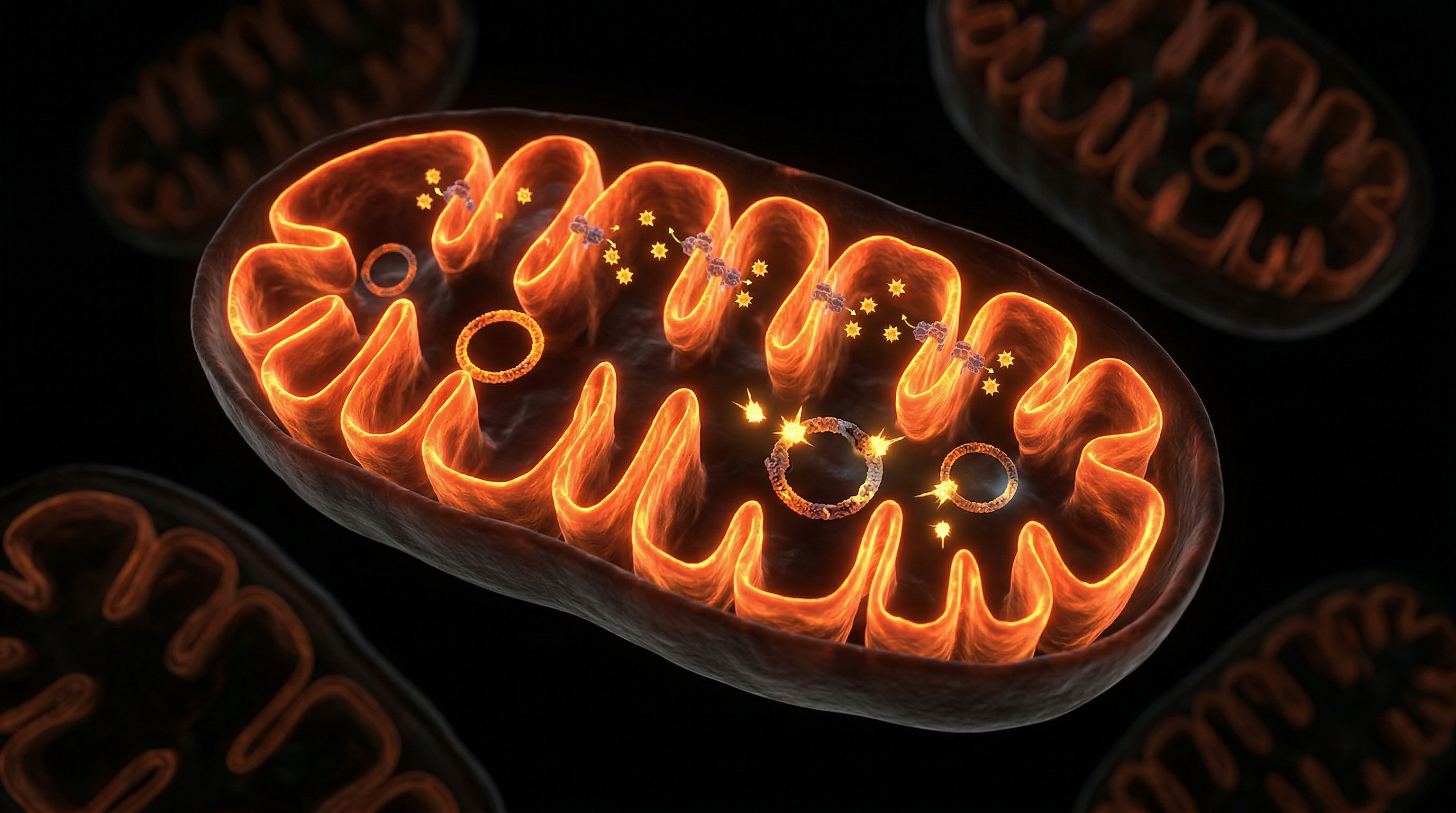
To grasp the vulnerability of mtDNA, one must first understand its structural and functional deviations from nuclear DNA (nDNA). The human mitochondrial genome is a compact, circular double-stranded molecule consisting of approximately 16,569 base pairs. It encodes 37 genes: 13 for proteins involved in the Electron Transport Chain (ETC), 22 for transfer RNAs (tRNAs), and 2 for ribosomal RNAs (rRNAs).
The Absence of Histones
The most glaring difference—and the primary reason for the vulnerability we are discussing—is the lack of histones. In the nucleus, DNA is meticulously wound around histone proteins, forming a structure called chromatin. Histones do not just serve as organisational spools; they act as a physical and chemical shield, protecting the genetic sequence from oxidative damage and ionising radiation.
Critical Fact: Mitochondrial DNA is entirely devoid of histones. Instead, it is organised into small clusters called nucleoids. While proteins like TFAM (Mitochondrial Transcription Factor A) provide some structural support, they offer nowhere near the level of protection afforded by the nuclear histone architecture.
Proximity to the "Furnace"
The location of mtDNA is biologically precarious. It resides in the mitochondrial matrix, in immediate proximity to the inner mitochondrial membrane where the ETC operates. The ETC is a series of protein complexes (Complex I through V) that pass electrons along to generate a proton gradient. This process is inherently "leaky." Even under optimal conditions, a small percentage of electrons escape the chain and react with oxygen to form Superoxide Anions (O2•−), a potent form of Reactive Oxygen Species (ROS).
Because mtDNA is physically tethered to the inner membrane (likely to facilitate the rapid transcription of ETC proteins), it is constantly bathed in a stream of high-energy free radicals. It is effectively like placing a library inside a blast furnace.
Polyploidy and Heteroplasmy
Unlike the nucleus, which contains two copies of each chromosome (diploid), a single cell can contain hundreds or thousands of mitochondria, each with multiple copies of mtDNA. This state is known as polyploidy. When a mutation occurs in one mtDNA molecule, it creates a state of heteroplasmy—a mixture of mutant and wild-type (normal) genomes.
The danger lies in the "threshold effect." A cell can often function normally with 20% or 30% mutated mtDNA. However, once the mutation load crosses a certain threshold (often 60-80%), the cell’s ability to produce energy collapses, leading to cell death or the release of inflammatory signals. This explains why mitochondrial damage can accumulate silently for years before manifesting as a "sudden" chronic illness.
##
Mechanisms at the Cellular Level
The vulnerability of mtDNA is not merely a matter of bad "real estate" near the ETC; it is also a result of limited biological "maintenance" compared to the nucleus.
Limited Repair Pathways
For decades, it was erroneously believed that mitochondria lacked DNA repair mechanisms altogether. We now know this is false, but the repair repertoire is significantly diminished. The primary mechanism available to mitochondria is Base Excision Repair (BER), which handles small-scale damage like oxidised bases. However, mitochondria largely lack Nucleotide Excision Repair (NER)—the pathway responsible for fixing bulky DNA adducts caused by UV radiation and many chemical toxins (like polycyclic aromatic hydrocarbons found in air pollution).
If an environmental toxin creates a bulky lesion on the mtDNA, the mitochondrion often has no way to fix it. The result is a stalled replication process or a permanent mutation.
DNA Polymerase Gamma (PolG)
The replication of mtDNA is handled by a specific enzyme called DNA Polymerase Gamma (PolG). While PolG is highly efficient, it is uniquely sensitive to inhibition by certain environmental factors and pharmaceutical agents. When PolG is inhibited, the mitochondrion cannot replicate its DNA, leading to mtDNA depletion.
Biological Alarm: Certain classes of drugs, specifically nucleoside reverse transcriptase inhibitors (NRTIs) and even some common antibiotics, have a high affinity for PolG, effectively "shutting down" the production of new mitochondrial genomes within the patient’s cells.
The Role of Mitophagy
The body’s primary defence against damaged mtDNA is mitophagy—the selective autophagy (consumption) of dysfunctional mitochondria. When a mitochondrion becomes too damaged and its membrane potential drops, it is "flagged" for destruction. However, environmental stressors can also impair the mitophagy pathway itself. If the "waste disposal" system is broken, the cell becomes cluttered with "zombie" mitochondria that produce little energy but high amounts of ROS, further damaging the remaining healthy mtDNA in a catastrophic feedback loop.
##
Environmental Threats and Biological Disruptors
We are living in an era of "mitochondrial sabotage." The sheer volume of synthetic chemicals and non-native frequencies introduced into our environment over the last 70 years has outpaced our evolutionary capacity to adapt.
Agricultural Toxins: Glyphosate and Paraquat
The UK's agricultural landscape is heavily reliant on herbicides. Glyphosate, the active ingredient in many broad-spectrum herbicides, is often touted as safe because its primary mechanism (the shikimate pathway) is not present in humans. This is a half-truth that ignores mitochondrial biology. Glyphosate has been shown to act as a mitochondrial uncoupler, disrupting the delicate proton gradient required for ATP synthesis.
More alarming is Paraquat, a herbicide known to induce oxidative stress specifically within the mitochondria. Paraquat undergoes "redox cycling," where it continuously generates superoxide radicals inside the mitochondrial matrix, leading directly to mtDNA fragmentation and the destruction of dopaminergic neurons. This is a primary reason why Paraquat exposure is a leading environmental predictor of Parkinson's Disease.
Heavy Metals: The "Displacers"
Heavy metals such as Mercury, Cadmium, Lead, and Aluminium are potent mitochondrial toxins. These metals have an affinity for the thiol groups (sulfur-containing) found in mitochondrial enzymes.
- Cadmium accumulates within the mitochondria and inhibits Complex III of the ETC.
- Mercury depletes mitochondrial glutathione, the primary internal antioxidant, leaving mtDNA defenceless.
- Lead mimics calcium, entering the mitochondria and triggering the "Mitochondrial Permeability Transition Pore" (mPTP), which causes the mitochondrion to burst and release its contents into the cell.
Non-Ionising Radiation (EMFs)
A burgeoning area of research—often suppressed in mainstream tech circles—is the effect of Electromagnetic Fields (EMFs) on mitochondrial function. Research by Professor Martin Pall has demonstrated that EMFs can activate Voltage-Gated Calcium Channels (VGCCs) in the cell membrane. This leads to an influx of calcium into the cell, which the mitochondria must then sequester.
Technical Insight: Excessive mitochondrial calcium triggers the production of Peroxynitrite (ONOO−), a powerful oxidant that is significantly more damaging to mtDNA than the superoxide radical. This process creates a "nitrative stress" that can snap the strands of the mitochondrial genome.
The Pharmaceutical Oversight
Perhaps the most overlooked threat is the "medicine cabinet." Many commonly prescribed drugs are "mitotoxins."
- Statins: By inhibiting the HMG-CoA reductase pathway, statins not only lower cholesterol but also deplete Coenzyme Q10 (CoQ10), a vital component of the ETC.
- Fluoroquinolone Antibiotics: Drugs like Ciprofloxacin have been issued "Black Box" warnings by regulators due to their ability to damage mitochondrial DNA and cause "mitochondrial toxicity syndrome," manifesting as ruptured tendons and permanent nerve damage.
- Paracetamol: In high doses (or chronic low-level use), it depletes mitochondrial glutathione, leading to hepatic mitochondrial failure.
##
The Cascade: From Exposure to Disease
When mtDNA is damaged, the consequences are not confined to a single organelle. A cascade of biological failures ensues, leading to what we recognise as "chronic disease."
The Vicious Cycle of ROS
Damage to mtDNA typically affects the genes encoding the proteins of the ETC. When these proteins are mutated or misfolded, the electron flow becomes "clunky" and inefficient. This results in even more electrons leaking out, forming more ROS, which then causes further damage to the mtDNA. This is the Mitochondrial Theory of Ageing: a self-accelerating downward spiral of energy failure and oxidative destruction.
Inflammageing and the NLRP3 Inflammasome
One of the most revolutionary discoveries in immunology is that mitochondria are "danger sensors." When mtDNA is damaged and escapes into the cytosol (the fluid inside the cell) or the bloodstream, the body perceives it as a foreign invader.
Because mtDNA has circular structures and "CpG motifs" similar to bacterial DNA, it triggers the NLRP3 Inflammasome and the cGAS-STING pathway. The body literally goes into a state of systemic inflammation because it thinks it is being invaded by bacteria, when in fact, it is merely reacting to its own "leaking" mitochondrial fragments. This is the root of "inflammageing"—the chronic, low-grade inflammation that drives heart disease, obesity, and dementia.
Neurodegeneration: The Energy Crisis
The brain is the most metabolically active organ, consuming roughly 20% of the body's total energy despite being only 2% of its weight. Neurons are almost entirely dependent on mitochondrial ATP. When mtDNA damage accumulates in the brain, neurons cannot maintain their membrane potential, leading to synaptic failure and, eventually, apoptosis (programmed cell death).
- Alzheimer’s: Often referred to as "Type 3 Diabetes," it is characterised by mitochondrial hypometabolism and mtDNA deletions in the hippocampus.
- Parkinson’s: Directly linked to Complex I failure and mtDNA mutations in the Substantia Nigra.
##
What the Mainstream Narrative Omits
The refusal of the medical establishment to centre mitochondrial health in its protocols is not merely an oversight; it is a structural failure of our current paradigm.
The Siloed Approach
Modern medicine treats the body as a collection of separate parts. A cardiologist looks at the heart; a neurologist looks at the brain; an endocrinologist looks at hormones. However, mitochondria are the common denominator. A "heart problem," a "brain problem," and a "hormone problem" are often the exact same "mitochondrial problem" manifesting in different tissues. By failing to address the underlying mtDNA vulnerability, the mainstream narrative merely "manages" symptoms with drugs that, ironically, often cause further mitochondrial damage.
The Regulatory Gap in Toxicology
Currently, the MHRA (Medicines and Healthcare products Regulatory Agency) and other global bodies do not require specific "mitochondrial toxicity" testing for new pharmaceuticals or environmental chemicals. Most toxicology studies focus on "LD50" (the dose that kills 50% of subjects) or visible chromosomal damage in the nucleus. They completely ignore the subtle, long-term degradation of the mitochondrial genome, which may take years to manifest as chronic disease.
Exposure Truth: We are currently conducting a massive, uncontrolled biological experiment on the human population, using thousands of chemicals that have never been screened for their impact on mtDNA integrity.
The Inheritance Factor: Beyond the Father
We are taught that we get 50% of our genes from our mother and 50% from our father. This is true for nuclear DNA, but mitochondrial DNA is inherited exclusively from the mother. This means that a woman’s mitochondrial health at the time of conception—her accumulated environmental "mtDNA load"—is what determines the metabolic baseline of her child. We are seeing a transgenerational "metabolic debt" being passed down, as each generation starts with more compromised mitochondria than the last.
##
The UK Context
In the United Kingdom, several factors exacerbate the vulnerability of our mitochondrial health.
The Legacy of Industrialisation
As the first nation to industrialise, the UK has a unique "legacy pollution" profile. The heavy metal contamination in our soil and old piping systems (especially lead) remains a significant concern. Furthermore, the UK’s heavy reliance on gas boilers and the high density of urban traffic contribute to levels of Nitrogen Dioxide (NO2) and Particulate Matter (PM2.5) that are known to enter the bloodstream and directly inhibit mitochondrial respiration.
Water Quality and the Environment Agency
Recent scandals involving the discharge of raw sewage into British waterways by water companies highlight a deeper issue. Our water contains not just biological waste, but a "chemical soup" of pharmaceutical residues (antidepressants, birth control, antibiotics) that the Environment Agency and water treatment facilities are not equipped to filter. As we have seen, many of these "micro-pollutants" are direct mitotoxins.
The "Indoor Generation"
The UK climate often dictates an indoor lifestyle. This has two major impacts on mitochondrial health:
- Vitamin D Deficiency: Vitamin D is crucial for mitochondrial biogenesis. A significant portion of the UK population is "mitochondrially stunted" due to a lack of sun exposure.
- Artificial Light (Blue Light): Over-exposure to artificial blue light from screens and LED bulbs, especially after sunset, disrupts the circadian rhythm. Mitochondria have their own "clocks," and circadian disruption is one of the fastest ways to increase mtDNA mutations.
##
Protective Measures and Recovery Protocols
While the vulnerability of mtDNA is profound, the "plasticity" of mitochondria is equally remarkable. We can take specific, scientifically-backed steps to protect and even regenerate our mitochondrial population.
Nutritional Shielding
We must provide the "building blocks" and "shields" that mitochondria lack.
- Coenzyme Q10 (Ubiquinol): A critical electron carrier and the only lipid-soluble antioxidant synthesised in the body that can protect mtDNA from lipid peroxidation.
- PQQ (Pyrroloquinoline Quinone): Known to stimulate Mitochondrial Biogenesis (the creation of new mitochondria) via the activation of the PGC-1α pathway.
- Magnesium: Magnesium is the "essential spark." Every molecule of ATP must be bound to a magnesium ion (Mg-ATP) to be biologically active. The UK diet is chronically deficient in this mineral.
- NAC (N-Acetyl Cysteine): A precursor to Glutathione, the body’s master antioxidant, which is essential for protecting the mitochondrial matrix.
Hormesis: The "Stress that Heals"
Mitochondria respond to "biological challenges" by becoming stronger—a process known as mitohormesis.
- Cold Exposure: Cold-water immersion or "wild swimming" (increasingly popular in the UK) triggers the production of "brown fat," which is densely packed with mitochondria that "uncouple" to produce heat rather than ATP.
- Heat Stress: Sauna use induces Heat Shock Proteins that help refold damaged mitochondrial enzymes and clear out "zombie" cells.
- Intermittent Fasting: By temporarily depriving the cell of nutrients, we trigger mitophagy. The cell is forced to "eat" its most damaged mitochondria for fuel, leaving only the healthiest, most efficient ones behind.
Environmental Hygiene
- Filtering Water: Use high-quality multi-stage filters (like reverse osmosis or high-end gravity filters) to remove heavy metals and pharmaceutical residues.
- Reducing "Dirty Electricity": Minimising EMF exposure in the home, particularly in the bedroom (turning off Wi-Fi at night), reduces the calcium-induced nitrative stress on mtDNA.
- Grounding (Earthing): Physical contact with the earth allows for the transfer of electrons into the body, which may act as a systemic antioxidant to neutralise the ROS produced by our mitochondria.
Red Light Therapy (Photobiomodulation)
One of the most exciting frontiers in mitochondrial health is the use of Near-Infrared (NIR) light. NIR light (in the 600nm to 1000nm range) can penetrate the skin and be absorbed by Cytochrome c Oxidase (Complex IV) in the ETC. This "unchokes" the electron transport chain, increases ATP production, and reduces oxidative stress. In the grey, light-deprived UK winter, NIR therapy is an essential "mitochondrial nutrient."
##
Summary: Key Takeaways
The health of our mitochondrial DNA is the "foundation of the foundation." Without functional, protected mtDNA, no amount of exercise or "clean eating" can prevent the eventual decline into chronic disease.
- Naked and Exposed: Unlike nuclear DNA, mtDNA lacks the protection of histones and sits at the primary site of free radical production.
- Environmental Fragility: We are surrounded by mitotoxins—from glyphosate and heavy metals to EMFs and certain antibiotics—that target PolG and the ETC.
- The "Vicious Cycle": Damaged mtDNA creates more ROS, which causes more damage, eventually triggering the "inflammageing" cascade through the NLRP3 inflammasome.
- A Silent Crisis: Regulatory bodies like the MHRA and the NHS currently lack the protocols to identify and address the widespread "mitochondrial sabotage" occurring in the UK population.
- Empowered Protection: Through targeted nutrients (CoQ10, PQQ, Magnesium), hormetic stressors (cold, fasting), and light therapy, we can support mitochondrial biogenesis and mitophagy.
The mission of INNERSTANDING is to bring these suppressed biological truths to light. We must stop viewing ourselves as victims of "bad luck" or "bad genes" in the nucleus. We are the stewards of an ancient, bacterial legacy within our cells. Protecting that legacy is the only true path to longevity and resilience in an increasingly toxic world. The time has come to shift our focus from the "fortress" of the nucleus to the "exposed engines" of the mitochondria. Our future depends on it.
This article is provided for informational and educational purposes only. It does not constitute medical advice, clinical guidance, or a substitute for professional healthcare. Information reflects cited research at time of publication. Always consult a qualified healthcare professional before acting on any health information.
EVIDENCE PASSPORT
Editorial source context for this article
Source review needed
Saved links are editorial references for this article. They may support specific claims rather than every sentence. Open and assess each source in context. This passport does not independently verify them.
Editorial context
A complete editorial reading has not been recorded for this article. Source links remain available for you to open and assess directly.
Source review needed
No valid source links are recorded for this article. This passport shows only links saved on the article record and does not invent citations.
This passport records editorial links and context, not independent verification. Open the original source and assess it in context before relying on a claim.
Medical Disclaimer
The information in this article is for educational purposes only and does not constitute medical advice, diagnosis, or treatment. Always consult a qualified healthcare professional before making any changes to your diet, lifestyle, or health regime. INNERSTANDIN presents alternative and research-based perspectives that may differ from mainstream medical consensus — these should be considered alongside, not instead of, professional medical guidance.
Read Full DisclaimerContinue the thread
Keep this question moving.
Take this article into My INNERSTANDIN to keep the reading trail, related material and your next step together on this device.
Explore this in the Body Map
See where this hits your biology. Interactive anatomy, threats, and protective protocols.
Dig deeper in the Library
Free, longform PDF volumes that go beyond headlines into mechanisms and references.