
Mitochondrial-Mediated Apoptosis: The Biochemical Pathway of Mercury-Triggered Neuronal Cell Death
A comprehensive exploration into the molecular mechanisms by which mercury induces neurodegeneration, focusing on mitochondrial membrane disruption, oxidative stress, and the activation of the caspase-dependent apoptotic cascade.
# Mitochondrial-Mediated Apoptosis: The Biochemical Pathway of Mercury-Triggered Neuronal Cell Death
Introduction: The Invisible Neurotoxin
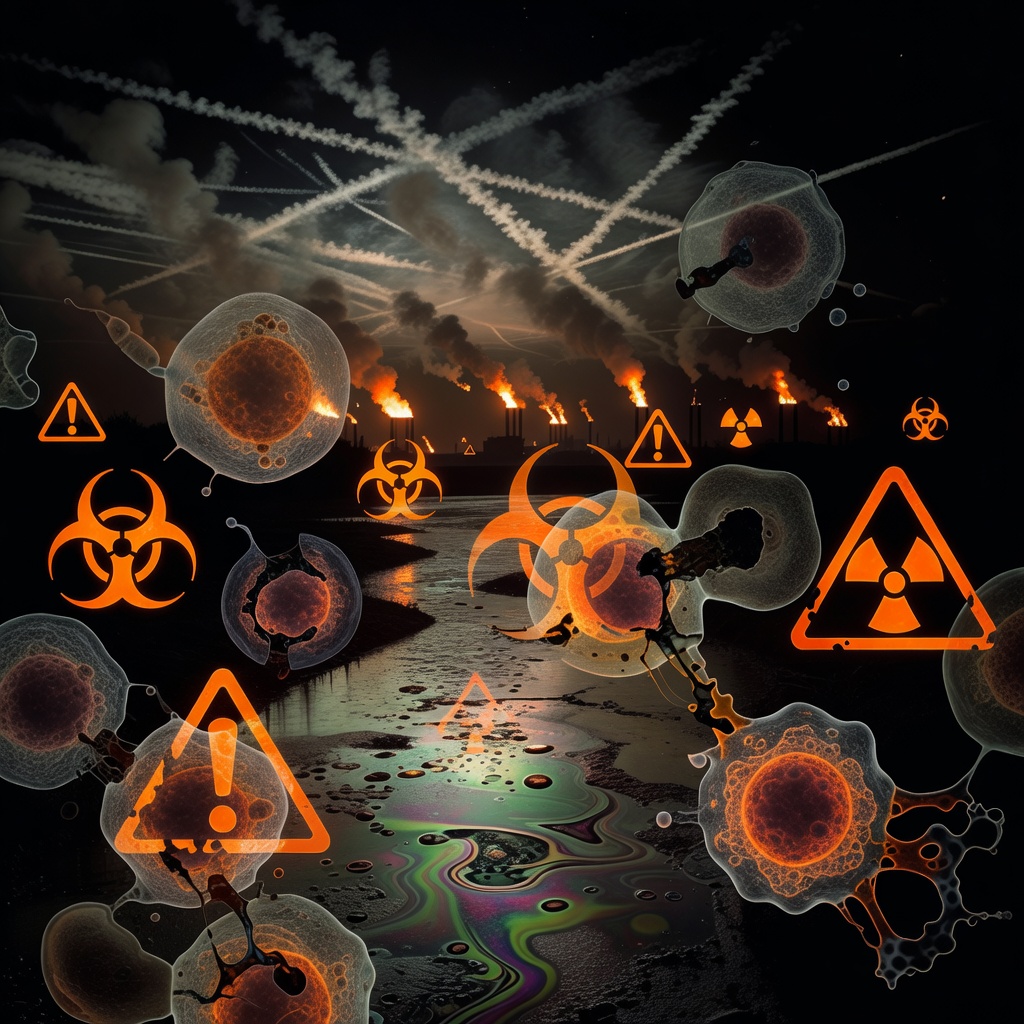
Mercury (Hg) is one of the most potent neurotoxins known to science. Its ubiquitous presence in the environment—stemming from industrial emissions, dental amalgams, and the bioaccumulation of methylmercury in aquatic food chains—presents a significant challenge to human neurology. Unlike other toxins that cause immediate necrotic damage, mercury often operates through a more insidious mechanism: the induction of programmed cell death, or apoptosis. At INNERSTANDING, we focus on the root causes of disease. To understand mercury toxicity, one must look past the symptoms of tremors, cognitive decline, and sensory impairment, and delve into the microscopic collapse of the mitochondria within the neuronal architecture.
The Thiol Affinity: Mercury’s Molecular Weaponry
The primary biochemical driver of mercury toxicity is its extreme affinity for sulfhydryl (-SH) groups, also known as thiols. Mercury is a 'soft' acid, and sulfur is a 'soft' base, meaning they form nearly irreversible covalent bonds. In the cellular environment, this leads mercury to bind to essential proteins and antioxidants, most notably glutathione (GSH) and thioredoxin. By sequestering these antioxidants, mercury creates a state of 'antioxidant bankruptcy.' In the brain, where oxygen consumption is high and antioxidant defenses are naturally lower than in the liver, this depletion is catastrophic. The resulting oxidative stress is not merely a side effect; it is the opening salvo that destabilises the cell's most vital organelle: the mitochondrion.
Mitochondrial Collapse: The Epicentre of Toxicity
Mitochondria are often described as the 'powerhouses' of the cell, but in the context of neurotoxicity, they are better understood as the 'gatekeepers of survival.' Mercury disrupts mitochondrial function through several converging pathways:
1. Disruption of the Electron Transport Chain (ETC)
Mercury directly inhibits Complex I, III, and IV of the mitochondrial electron transport chain. This inhibition halts the flow of electrons, leading to a massive leak of electrons that react with molecular oxygen to form superoxide radicals. This creates a vicious cycle: the more the mitochondria are damaged, the more reactive oxygen species (ROS) they produce, further damaging mitochondrial DNA and lipid membranes.
2. Loss of Mitochondrial Membrane Potential
The inner mitochondrial membrane maintains an electrochemical gradient (the membrane potential) essential for ATP production. Mercury induces the opening of the Mitochondrial Permeability Transition Pore (mPTP). The opening of this pore causes the membrane potential to collapse, essentially 'short-circuiting' the cell's battery. This event marks the point of no return for the neuron.
The Apoptotic Cascade: From Cytochrome c to Caspase Execution
Once the mitochondrial membrane is breached via the mPTP, proteins that are normally sequestered within the mitochondria are released into the cytosol. The most critical of these is Cytochrome c.
The Formation of the Apoptosome
In the cytosol, Cytochrome c binds to an adapter protein called Apaf-1 (Apoptotic Protease Activating Factor-1) and dATP, forming a wheel-like heptameric structure known as the apoptosome. This structure acts as a platform for the recruitment and activation of Procaspase-9.
The Activation of the Executioners
Once activated, Caspase-9 (the initiator caspase) cleaves and activates downstream 'executioner' caspases, specifically Caspase-3 and Caspase-7. Caspase-3 is the primary effector that dismantles the cell. It travels to the nucleus to activate DNases, which fragment the cell’s DNA, and it breaks down the cytoskeleton, leading to the characteristic 'blebbing' and shrinkage of the dying neuron. Unlike necrosis, which causes the cell to burst and trigger inflammation, apoptosis is a quiet, orderly suicide. However, in the brain, the loss of these non-regenerative cells leads to the progressive atrophy seen in chronic mercury poisoning.
Why the Brain? Neuronal Vulnerability to Mercury
Neurons are uniquely susceptible to this mitochondrial-mediated pathway for several reasons. Firstly, methylmercury (MeHg) readily crosses the blood-brain barrier by mimicking essential amino acids (specifically, by forming a complex with L-cysteine). Secondly, neurons have an exceptionally high demand for ATP to maintain ion gradients necessary for nerve impulse transmission. Any disruption in mitochondrial ATP production results in immediate functional failure. Finally, the brain is rich in polyunsaturated fatty acids, which are highly susceptible to the lipid peroxidation triggered by mercury-induced ROS.
Clinical Implications and the Root-Cause Paradigm
Understanding that mercury toxicity is a mitochondrial crisis shifts the therapeutic focus. Traditional detoxification (chelation) is essential for removing the systemic burden of the metal, but the 'root-cause' approach also necessitates mitochondrial support and the restoration of thiol-based antioxidant systems. Strategies that involve N-acetylcysteine (NAC) to boost glutathione, alpha-lipoic acid to support mitochondrial enzymes, and targeted antioxidants like selenium (which has a higher affinity for mercury than even sulfur) are critical in protecting neurons from the apoptotic cascade.
Conclusion
The journey from mercury exposure to neuronal loss is a precise biochemical sequence. It begins with thiol binding, progresses through mitochondrial oxidative stress, and culminates in the activation of the caspase-dependent apoptotic pathway. By mapping this process, we move away from treating mercury toxicity as a vague collection of neurological symptoms and toward a targeted, molecular intervention strategy that preserves the integrity of the brain's most vital cells.
This article is provided for informational and educational purposes only. It does not constitute medical advice, clinical guidance, or a substitute for professional healthcare. Information reflects cited research at time of publication. Always consult a qualified healthcare professional before acting on any health information.
RESEARCH FOUNDATIONS
Biological Credibility Archive
Citations provided for educational reference. Verify via PubMed or institutional databases.
Medical Disclaimer
The information in this article is for educational purposes only and does not constitute medical advice, diagnosis, or treatment. Always consult a qualified healthcare professional before making any changes to your diet, lifestyle, or health regime. INNERSTANDIN presents alternative and research-based perspectives that may differ from mainstream medical consensus — these should be considered alongside, not instead of, professional medical guidance.
Read Full DisclaimerReady to learn more?
Continue your journey through our classified biological research.
DISCUSSION ROOM
Members of THE COLLECTIVE discussing "Mitochondrial-Mediated Apoptosis: The Biochemical Pathway of Mercury-Triggered Neuronal Cell Death"
SILENT CHANNEL
Be the first to discuss this article. Your insight could help others understand these biological concepts deeper.
THE ARSENAL
Based on Mercury Toxicity — products curated by our research team for educational relevance and biological support.
Methylene Blue – Advanced Cellular Chemistry

Fulvic Minerals – Natural Rare Earth Minerals. The essential trace elements missing from modern processed foods.
INNERSTANDING may earn a commission on purchases made through these links. All products are selected based on rigorous educational relevance to our biological research.
RABBIT HOLE
Follow the biological thread deeper
