
Neuroplasticity and Developmental Growth
Updated May 2026
Examining the brain's ability to reorganize itself and adapt in individuals with neurodevelopmental conditions.
Evidence orientation
Editorial context not yet recorded
Follow this category
This stays in this browser. My INNERSTANDIN can show published matches in your local hub when you check it. It does not send email, push, or alert notifications.
Local learning review
A private browser aid for revisiting ideas. It is not an alert or a health recommendation.
Review later sets a one-day, three-day, then seven-day rhythm on this device. Choose it only when you want to revisit this article.
Introduction
In the landscape of modern neuroscience, few concepts have revolutionised our understanding of the human condition as profoundly as neuroplasticity. Once regarded as a static organ that reached its definitive form in early adulthood, the brain is now understood to be a dynamic, ever-evolving architecture, capable of significant structural and functional reorganisation throughout the lifespan. For those navigating the complexities of neurodevelopmental conditions—most notably Attention Deficit Hyperactivity Disorder (ADHD)—neuroplasticity offers both a lens through which we can understand the origins of cognitive differences and a beacon of hope for therapeutic intervention.
In the United Kingdom, where the prevalence of ADHD in children is estimated at approximately 3% to 5%, and where adult diagnoses are rising sharply, understanding the intersection of brain plasticity and developmental growth is no longer merely an academic exercise. It is a clinical and societal imperative. This article explores the authoritative science of neuroplasticity within the context of ADHD, examining how the British healthcare and educational systems interface with the developing brain, and how we might harness the brain’s inherent malleability to foster better outcomes for neurodivergent individuals.
Part I: The Foundations of Neuroplasticity and Brain Development
Understanding the Plastic Brain
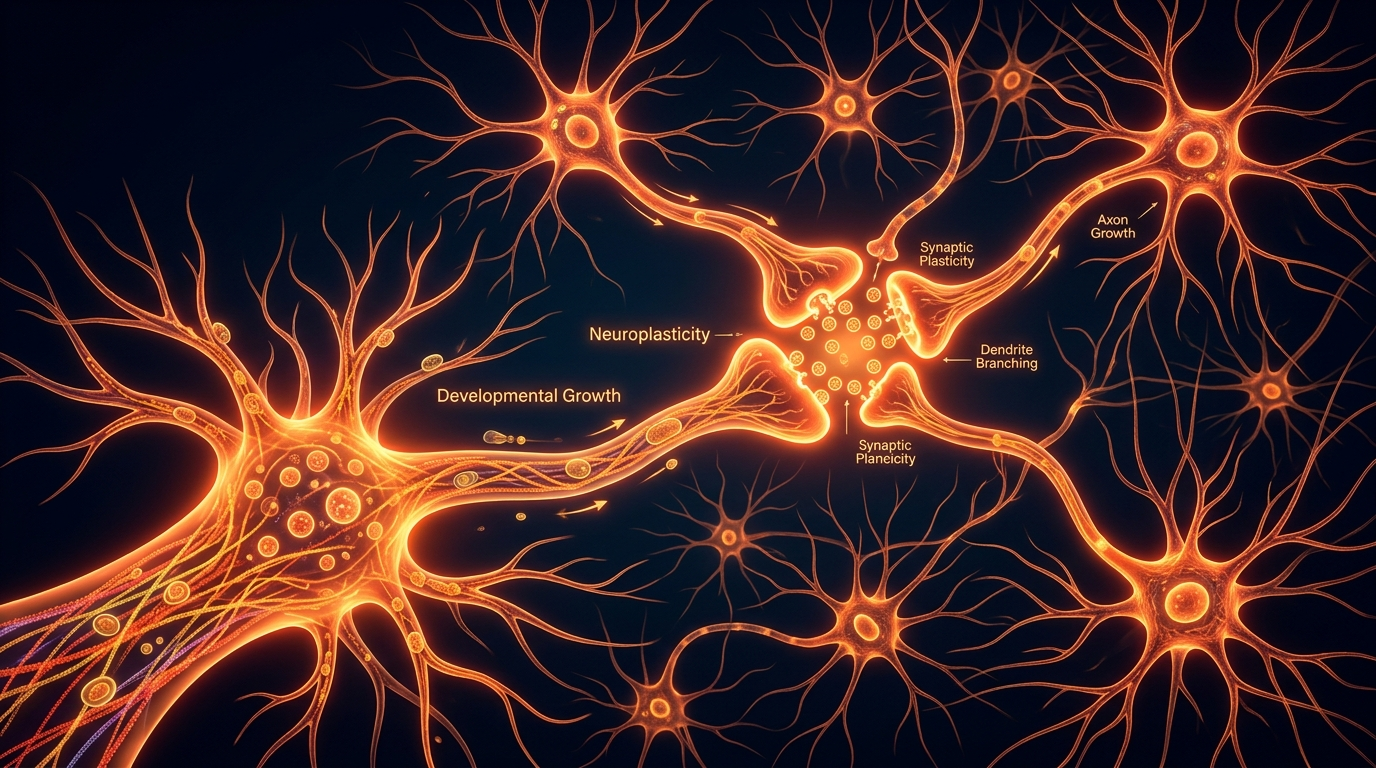
Neuroplasticity, or brain plasticity, refers to the nervous system's ability to change its activity in response to intrinsic or extrinsic stimuli by reorganising its structure, functions, or connections. This occurs through several mechanisms:
- Synaptogenesis: The formation of new synapses (connections between neurons).
- Synaptic Pruning: The elimination of weaker synaptic connections to increase the efficiency of neural networks.
- Myelination: The coating of axons with a fatty sheath, which accelerates the speed of electrical impulses.
- Neurogenesis: The birth of new neurons, primarily occurring in the hippocampus.
In typically developing individuals, these processes follow a relatively predictable chronological trajectory. However, in neurodevelopmental conditions like ADHD, this "biological timetable" is often altered.
The ADHD Growth Trajectory: A Delay, Not a Deficit?
Seminal longitudinal studies, notably those conducted by the National Institute of Mental Health (NIMH) and mirrored in various UK-based research cohorts, have suggested that the ADHD brain follows a different developmental pace. Magnetic Resonance Imaging (MRI) data indicates that children with ADHD often experience a delay in cortical maturation.
In a landmark study, researchers found that the point at which the cerebral cortex reaches peak thickness is delayed by approximately three years in children with ADHD compared to their neurotypical peers. Crucially, this delay is most prominent in the prefrontal cortex—the region responsible for executive functions such as impulse control, planning, and working memory.
From a neuroplasticity perspective, this finding is vital. It suggests that ADHD is not necessarily a "broken" brain, but a brain developing on a lag. In the UK context, where the National Institute for Health and Care Excellence (NICE) guidelines emphasise the importance of developmental age over chronological age, this research underscores the need for patience and tailored support in schools and clinical settings.
Part II: The Architecture of ADHD – Structural and Functional Insights
The Prefrontal Cortex and Executive Dysfunction
The prefrontal cortex (PFC) is often described as the "CEO of the brain." It regulates emotions, focuses attention, and inhibits inappropriate responses. In ADHD, reduced activation and slower structural growth in the PFC are hallmark features. Because the PFC is one of the most "plastic" regions of the brain—remaining open to change well into a person’s mid-twenties—it represents a primary target for developmental interventions.
The Basal Ganglia and Reward Circuitry
ADHD is also deeply linked to the basal ganglia, particularly the striatum, which is involved in reward processing and motor control. The "dopamine hypothesis" of ADHD posits that a deficiency in dopamine signalling leads individuals to seek out high-stimulation environments to compensate for a lack of internal reward.
Neuroplasticity plays a role here through "reward-based learning." When an ADHD brain receives a dopamine hit from a novel stimulus, the neural pathways associated with that stimulus are strengthened (Long-Term Potentiation). Conversely, mundane but necessary tasks (like homework or administrative filing) fail to trigger this strengthening, leading to the "disorganisation" often seen in the condition.
The Default Mode Network (DMN) vs. Task Positive Network (TPN)
Modern UK neuroscience focuses heavily on "connectivity" rather than just isolated brain regions. In neurotypical brains, when we focus on a task, the Task Positive Network (TPN) activates and the Default Mode Network (DMN)—associated with day-dreaming and self-referential thought—deactivates.
In the ADHD brain, this "switch" is often faulty. The DMN frequently intrudes upon the TPN, causing the "internal distractibility" that many patients describe. Developmental growth in ADHD involves training the brain’s plasticity to strengthen the inhibitory control required to toggle between these networks effectively.
Part III:
The UK Context
– Environment, Schooling, and the Plastic Brain
The Impact of the British Education System
In the UK, the "Special Educational Needs and Disability" (SEND) system and the provision of Education, Health and Care Plans (EHCPs) are designed to support neurodivergent learners. However, the rigidity of the standard National Curriculum can often clash with the ADHD developmental trajectory.
Environmental factors are significant "drivers" of neuroplasticity. A high-stress, exclusionary school environment can trigger the "toxic stress" response, which negatively impacts the hippocampus and PFC. Conversely, an inclusive environment that utilises "scaffolding"—providing external structures for tasks the child cannot yet do internally—allows the brain the time it needs to catch up.
The "Postcode Lottery" and Early Intervention
The "wait-and-see" approach often necessitated by long NHS waiting lists for Child and Adolescent Mental Health Services (CAMHS) can be detrimental. Because neuroplasticity is most "potent" during childhood and adolescence, early intervention is critical. Delaying support can lead to "maladaptive plasticity," where a child develops negative coping mechanisms (such as avoidance or aggression) that become hard-wired into their neural circuitry.
Part IV: Therapeutic Interventions and the Mechanisms of Change
Pharmacological Plasticity: The Role of Stimulants
In the UK, medication such as Methylphenidate (Ritalin, Concerta) and Lisdexamfetamine (Elvanse) are common treatments for ADHD. While often viewed simply as "fixing a chemical imbalance," their role in neuroplasticity is more profound.
Research suggests that long-term, therapeutic doses of stimulant medication may actually normalise brain structure. By increasing the levels of dopamine and norepinephrine in the synapse, these medications facilitate better "signal-to-noise" ratios in the PFC. This allows the child to engage more effectively in learning and social interactions, which in turn reinforces positive neural pathways. Essentially, medication can act as a "chemical scaffold" that allows plastic changes to occur more easily.
Non-Pharmacological Pathways: Cognitive Behavioural Therapy (CBT)
CBT is a mainstay of UK ADHD management, particularly for adults and as an adjunct for children. From a neuroplasticity standpoint, CBT is "top-down" training. By repeatedly practicing executive function skills—such as breaking tasks into chunks or using visual timers—individuals are literally "rewiring" their brains.
The mantra "neurons that fire together, wire together" (Hebb’s Law) is the foundation of CBT. Repeatedly choosing a new, constructive behaviour over an old, impulsive one weakens the old synaptic connections (Long-Term Depression) and strengthens the new ones.
Neurofeedback and Technological Innovations
Emerging in UK private clinics and some NHS research trials, neurofeedback uses real-time displays of brain activity to teach self-regulation of brainwaves. While still considered "experimental" by some NICE standards, the underlying principle is pure neuroplasticity: rewarding the brain for entering a "focused" state (e.g., increasing Beta waves while decreasing Theta waves) to encourage the brain to maintain that state naturally over time.
Part V: Life-Course Perspective – Adolescence and Adulthood
The Adolescent "Pruning" Crisis
Adolescence is a second "window of opportunity" for neuroplasticity. During this time, the brain undergoes massive synaptic pruning and myelination. For the ADHD teenager in the UK, this is often a period of high risk. The gap between the maturing "reward system" (seeking thrills) and the lagging "control system" (PFC) is at its widest.
Supporting neuroplasticity during this phase involves providing "external frontal lobes"—parents and teachers who help manage risks while the brain continues its structural maturation. It is also a time where the "transition" from paediatric to adult services in the NHS occurs—a transition that is notoriously difficult in the UK and requires careful management to prevent a lapse in treatment that could disrupt developmental growth.
ADHD in Adulthood: It is Never Too Late
One of the most heartening discoveries of modern neuroscience is that neuroplasticity does not end. While the "rate" of change slows, the adult brain remains plastic. Adult ADHD often manifests as "internalised" restlessness and executive dysfunction.
In the UK, many adults are being diagnosed for the first time in their 30s, 40s, or 50s. For these individuals, understanding neuroplasticity is transformative. It moves the conversation away from "innate failure" toward "late-stage developmental growth." Occupational therapy, coaching, and medication can still induce structural brain changes in adulthood, proving that the ADHD brain is a work in progress, not a finished product.
Part VI: Harnessing Plasticity – Strategies for Positive Growth
The Role of Physical Exercise
Exercise is perhaps the most underrated tool for promoting neuroplasticity. Physical activity increases the production of Brain-Derived Neurotrophic Factor (BDNF), often called "Miracle-Gro for the brain." BDNF supports the survival of existing neurons and encourages the growth of new ones.
In UK schools, the "Daily Mile" initiative and increased emphasis on PE are not just good for physical health; they are neurological interventions. For the ADHD brain, exercise provides an immediate spike in dopamine and norepinephrine, mimicking the effects of stimulants and priming the brain for plastic change.
Sleep and the "Glymphatic System"
The ADHD population in the UK suffers from high rates of sleep disorders. Sleep is not merely "rest"; it is when the brain consolidates learning and "cleans" itself via the glymphatic system. Without adequate sleep, the plastic changes initiated during the day cannot be solidified. Addressing sleep hygiene is therefore a fundamental pillar of supporting developmental growth.
Nutrition and the Gut-Brain Axis
The emerging field of nutritional psychiatry is gaining traction in the UK. While no "ADHD diet" is a cure-all, the gut-brain axis plays a role in neuroinflammation. Reducing systemic inflammation through a balanced diet (rich in Omega-3 fatty acids, which are crucial for myelination) creates a more hospitable environment for neuroplasticity.
Part VII: Addressing the UK’s Challenges in Neurodevelopmental Care
The Impact of Austerity and Service Pressures
While the science of neuroplasticity is flourishing, the delivery of this science in the UK faces significant hurdles. A decade of austerity has strained CAMHS and adult ADHD services. Long waiting lists mean that many children miss the "optimal windows" for plasticity-based interventions.
Furthermore, the "medical model" often used in the NHS can sometimes overlook the "social model" of disability. An authoritative approach to ADHD must acknowledge that while the brain is plastic, the environment must also be "plastic"—it must be willing to bend and adapt to the needs of the neurodivergent individual.
Reframing ADHD: From Deficit to Divergence
The concept of "Neurodiversity" is gaining significant momentum in UK corporate and educational sectors. This movement suggests that ADHD is not a "disorder" to be "cured" but a natural variation in the human genome.
When we view ADHD through the lens of neuroplasticity, we see a brain that is highly "context-dependent." In a rigid, sedentary environment, the ADHD brain is "disordered." In a dynamic, high-stimulation, or creative environment, that same plastic brain may excel. The goal of developmental growth, therefore, should not be to "normalise" the ADHD brain, but to optimise its unique plastic potential.
Part VIII: Future Horizons – The Intersection of Genetics and Plasticity
The future of ADHD care in the UK lies in "Precision Psychiatry." By understanding an individual’s genetic makeup (genomics), clinicians may one day be able to predict which type of neuroplastic intervention—be it a specific medication or a type of cognitive training—will be most effective for that specific person.
Research at institutions like King’s College London and the University of Oxford is currently investigating the "epigenetics" of ADHD—how environmental factors (like early life stress or nutrition) can "turn on or off" certain genes related to brain plasticity. This research will eventually allow for even more targeted support, ensuring that the developmental growth of every child is maximised.
Conclusion: The Resilient Brain
Neuroplasticity is the ultimate testament to human resilience. For individuals with ADHD and other neurodevelopmental conditions, the journey is often fraught with challenges—from the frustrations of executive dysfunction to the systemic hurdles of the UK’s healthcare and education systems.
However, the science is clear: the ADHD brain is a dynamic, growing, and adaptable organ. It is a brain that arrives "late" to certain developmental milestones but brings with it unique strengths in creativity, hyperfocus, and divergent thinking.
As we continue to refine our understanding of brain growth, our focus must shift. We must move away from a "repair" mentality and toward a "cultivation" mentality. By providing the right environments, the right "scaffolding," and the right interventions at the right time, we can harness the power of neuroplasticity to ensure that neurodivergent individuals do not just "cope," but truly thrive in the modern world.
The story of the ADHD brain is not one of fixed limitation, but of unfolding potential. In the UK, as we grapple with the rising demand for neurodevelopmental support, we would do well to remember that the most powerful tool we have is the brain’s own ability to change itself.
References and Further Reading (UK Focused)
- NICE Guidelines [NG87]: Attention deficit hyperactivity disorder: diagnosis and management. The gold standard for UK clinical practice.
- The ADHD Foundation Neurodiversity Charity: Based in Liverpool, they provide excellent resources on the "stress-diathesis" model and brain plasticity.
- Shaw, P., et al. (2007): "Defining the temporal dynamics of cortical development in children with ADHD." Proceedings of the National Academy of Sciences. (The definitive study on cortical delay).
- Barkley, R. A. (2012): Executive Functions: What They Are, How They Work, and Why They Evolved. (Essential for understanding the PFC's role).
- Royal College of Psychiatrists (CR210): The transition from CAMHS to adult mental health services.
- The British Psychological Society (BPS): Various position papers on the "Neurodiversity" paradigm and its implications for educational psychology.
Author’s Note: This article is intended for informational and educational purposes. If you suspect you or a child may have ADHD, please consult your GP or a qualified healthcare professional. In the UK, you can request a referral to a specialist ADHD clinic via the NHS Right to Choose pathway or through your local Integrated Care Board (ICB).
This article is provided for informational and educational purposes only. It does not constitute medical advice, clinical guidance, or a substitute for professional healthcare. Information reflects cited research at time of publication. Always consult a qualified healthcare professional before acting on any health information.
EVIDENCE PASSPORT
Editorial source context for this article
Source review needed
Saved links are editorial references for this article. They may support specific claims rather than every sentence. Open and assess each source in context. This passport does not independently verify them.
Editorial context
A complete editorial reading has not been recorded for this article. Source links remain available for you to open and assess directly.
Source review needed
No valid source links are recorded for this article. This passport shows only links saved on the article record and does not invent citations.
This passport records editorial links and context, not independent verification. Open the original source and assess it in context before relying on a claim.
Medical Disclaimer
The information in this article is for educational purposes only and does not constitute medical advice, diagnosis, or treatment. Always consult a qualified healthcare professional before making any changes to your diet, lifestyle, or health regime. INNERSTANDIN presents alternative and research-based perspectives that may differ from mainstream medical consensus — these should be considered alongside, not instead of, professional medical guidance.
Read Full DisclaimerContinue the thread
Keep this question moving.
Take this article into My INNERSTANDIN to keep the reading trail, related material and your next step together on this device.
Explore this in the Body Map
See where this hits your biology. Interactive anatomy, threats, and protective protocols.
Dig deeper in the Library
Free, longform PDF volumes that go beyond headlines into mechanisms and references.