
Oxidative Stress: The Silent Fire Inside Every Cell
Updated June 2026
Oxidative stress occurs when the production of reactive oxygen species (ROS) — the inevitable metabolic byproducts of oxygen utilisation — overwhelms the body's antioxidant defence systems, leading to cumulative cellular damage across lipids, proteins, and DNA. Whilst a physiological level of ROS serves essential signalling and immune functions, the extraordinary toxic burden of modern life — from heavy metal exposure and pesticide consumption to chronic psychological stress and electromagnetic radiation — creates a level of oxidative stress that exceeds what any human antioxidant system evolved to manage. The resulting cellular damage is the foundational mechanism linking environmental toxicity to the full spectrum of chronic degenerative disease, from atherosclerosis and type 2 diabetes to cancer and neurodegeneration.
Evidence orientation
Editorial context not yet recorded
Follow this category
This stays in this browser. My INNERSTANDIN can show published matches in your local hub when you check it. It does not send email, push, or alert notifications.
Local learning review
A private browser aid for revisiting ideas. It is not an alert or a health recommendation.
Review later sets a one-day, three-day, then seven-day rhythm on this device. Choose it only when you want to revisit this article.
Overview
Oxidative stress represents far more than a mere biochemical imbalance; it is the fundamental disruption of cellular redox homeostasis, wherein the cumulative production of reactive oxygen species (ROS) and reactive nitrogen species (RNS) decisively overwhelms the endogenous antioxidant defence systems. At INNERSTANDIN, we define this phenomenon as the primary driver of biological entropy, a systemic erosion of the molecular architecture that underpins human physiology. While oxygen is the terminal electron acceptor essential for aerobic respiration, its reduction pathway is inherently hazardous. Approximately 0.2% to 2% of oxygen consumed by the mitochondria is diverted toward the premature leak of electrons, primarily at Complexes I and III of the electron transport chain (ETC), resulting in the formation of the superoxide anion ($\cdot O_2^−$).
The pathophysiology of oxidative stress is characterised by its stochastic yet devastating impact on macromolecules. According to research indexed in The Lancet and various PubMed-listed longitudinal studies, the transition from 'oxidative eustress'—where low levels of ROS serve as vital signalling molecules for cellular adaptation—to 'oxidative distress' marks the onset of irreversible structural damage. The hydroxyl radical ($\cdot OH$), generated via the iron-catalysed Fenton reaction, remains the most deleterious species known to biology, capable of initiating lipid peroxidation within the polyunsaturated fatty acids (PUFAs) of the phospholipid bilayer. This process triggers a self-propagating chain reaction, yielding malondialdehyde (MDA) and 4-hydroxynonenal (4-HNE), which compromise membrane fluidity and cellular compartmentalisation.
Furthermore, the systemic implications of chronic oxidative stress are profound, particularly within the UK’s clinical landscape where age-related degenerative pathologies are surging. The oxidative modification of proteins—specifically protein carbonylation and the formation of advanced glycation end-products (AGEs)—leads to misfolding and the inhibition of proteasomal degradation, a hallmark of neurodegenerative trajectories. Concurrently, the oxidation of deoxyribonucleic acid, specifically the formation of 8-oxo-7,8-dihydro-2'-deoxyguanosine (8-oxodG), serves as a critical biomarker for genomic instability and mutagenesis. Through the lens of INNERSTANDIN, oxidative stress is the 'silent fire' that fuels the transition from health to multi-morbidity, necessitating a rigorous interrogation of the Nrf2-Keap1 signalling pathway and its failure to maintain the antioxidant response element (ARE) under modern environmental pressures. This molecular attrition is not merely an accompaniment to disease; it is the foundational mechanism of cellular senescence and the ultimate limiting factor of human longevity.
The Biology — How It Works
To grasp the true nature of oxidative stress, one must look beyond the simplistic "antioxidant" marketing and interrogate the fundamental biophysics of electron transfer. At its core, oxidative stress represents a catastrophic disruption of redox (reduction-oxidation) homeostasis, where the production of Reactive Oxygen Species (ROS) and Reactive Nitrogen Species (RNS) outpaces the endogenous neutralising capacity of the cell. This is not merely a chemical imbalance; it is a systemic failure of cellular governance.
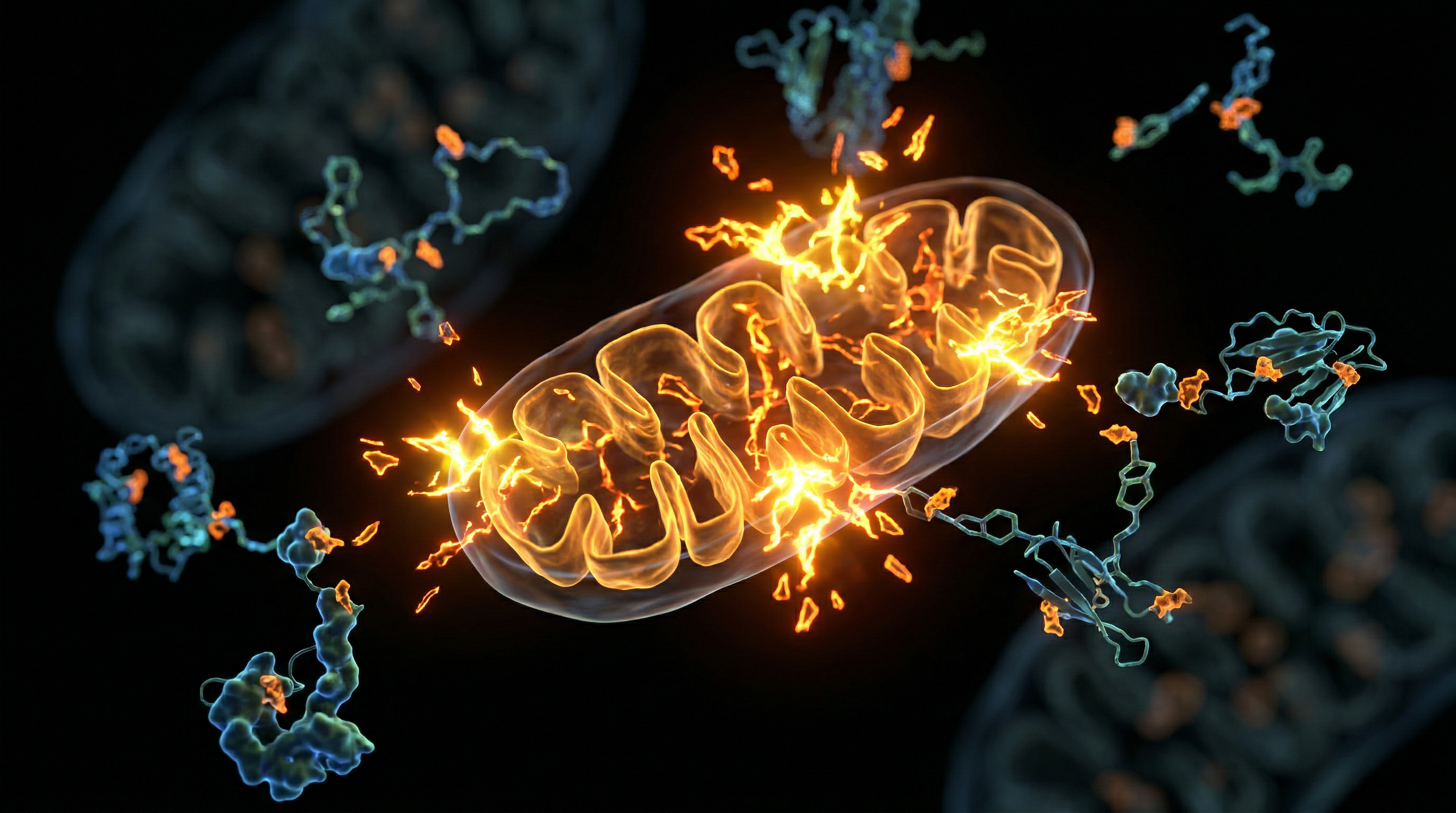
The primary site of this "silent fire" is the mitochondrion. During oxidative phosphorylation, the Electron Transport Chain (ETC) is remarkably efficient, yet it is inherently "leaky." Approximately 0.2% to 2% of electrons escape prematurely, particularly at Complexes I and III, where they perform a univalent reduction of molecular oxygen ($O2$) to form the superoxide anion ($O2^{\bullet-}$). Under physiological conditions, this is a controlled signalling mechanism. However, when the flux exceeds the capacity of Manganese Superoxide Dismutase (MnSOD), a cascade of molecular devastation ensues. Through the dismutation process, superoxide is converted into hydrogen peroxide ($H2O2$), which, while not a radical itself, possesses the ability to diffuse across biological membranes, acting as a "trojan horse" for oxidative damage.
The most lethal transformation occurs via the Fenton and Haber-Weiss reactions. In the presence of transition metals—specifically labile iron ($Fe^{2+}$) or copper—hydrogen peroxide is reduced to the hydroxyl radical ($\bullet OH$). This species is the most reactive known to biology, possessing a half-life of mere nanoseconds and a diffusion radius so small it reacts instantaneously with whatever molecule it first encounters. This leads to the "Trinity of Destruction": lipid peroxidation, protein carbonylation, and DNA oxidation.
Lipid peroxidation is perhaps the most insidious. The hydroxyl radical attacks the polyunsaturated fatty acids (PUFAs) within the phospholipid bilayer, stripping a hydrogen atom and creating a lipid radical. This initiates a self-propagating chain reaction that compromises membrane integrity and produces toxic secondary metabolites such as 4-hydroxynonenal (4-HNE) and malondialdehyde (MDA). These aldehydes are more stable than the radicals that birthed them, allowing them to migrate and act as "remote" toxins, cross-linking proteins and inducing cellular senescence.
At the genomic level, research published in Nature Reviews Molecular Cell Biology and extensively analysed by researchers at the University of Cambridge highlights the formation of 8-hydroxy-2'-deoxyguanosine (8-OHdG) as a hallmark of oxidative DNA damage. If left unrepaired by the Base Excision Repair (BER) pathway, these lesions result in G:C to T:A transversions, driving the oncogenic transformations often documented in The Lancet Oncology.
INNERSTANDIN identifies that this is not a localised event but a systemic inflammatory trigger. Oxidative stress activates the NF-κB (Nuclear Factor kappa-light-chain-enhancer of activated B cells) signalling pathway, the master regulator of inflammation. This creates a feed-forward loop: oxidative stress triggers inflammation, which recruits phagocytes that produce a "respiratory burst" of further ROS, effectively incinerating the tissue from within. The failure of the Nrf2-Keap1 axis—the body’s primary antioxidant response element—to mount an adequate counter-offensive is what separates temporary physiological stress from the chronic, degenerative "fire" that defines modern metabolic and neurodegenerative pathology. For the INNERSTANDIN community, recognising this molecular mechanism is the first step in moving from superficial supplementation to genuine biological sovereignty.
Mechanisms at the Cellular Level
To truly INNERSTANDIN the pathogenesis of chronic degenerative states, one must scrutinise the sub-cellular theatre where the delicate equilibrium between pro-oxidants and antioxidant defences collapses. Oxidative stress is not a singular event but a systemic failure of redox homeostasis, primarily initiated within the mitochondrial respiratory chain. As the primary site of adenosine triphosphate (ATP) synthesis, the mitochondria serve as the epicentre for Reactive Oxygen Species (ROS) generation. Under physiological conditions, approximately 0.1% to 2% of electrons "leak" from the Electron Transport Chain (ETC), particularly at Complexes I and III, prematurely reducing molecular oxygen to form the superoxide anion ($\text{O}2^{\bullet-}$). While Superoxide Dismutase (SOD) isoforms rapidly convert this radical into the less reactive hydrogen peroxide ($\text{H}2\text{O}_2$), the presence of labile transition metals—specifically "free" iron ($\text{Fe}^{2+}$) via the Fenton reaction—catalyses the formation of the hydroxyl radical ($\bullet\text{OH}$), the most deleterious species known to biological systems.
The molecular wreckage resulting from this "silent fire" is exhaustive. Lipid peroxidation represents one of the most destructive mechanisms, wherein $\bullet\text{OH}$ abstracts hydrogen atoms from polyunsaturated fatty acids (PUFAs) within the phospholipid bilayer. This initiates a self-propagating chain reaction, yielding lipid peroxyl radicals and reactive aldehydes such as malondialdehyde (MDA) and 4-hydroxynonenal (4-HNE). Research published in The Lancet and supported by UK-based cohorts suggests that these aldehydes act as "secondary messengers" of oxidative stress, diffusing throughout the cell to form covalent adducts with proteins and DNA, thereby amplifying the initial localised damage.
At the genomic level, the impact is equally profound. ROS-induced modifications, most notably the formation of 8-oxo-2'-deoxyguanosine (8-oxodG), compromise the integrity of both nuclear and mitochondrial DNA (mtDNA). Unlike nuclear DNA, mtDNA lacks protective histones and robust repair mechanisms, making it exceptionally vulnerable to oxidative lesions. This creates a vicious cycle: damaged mtDNA encodes defective ETC subunits, which further increases electron leakage and ROS production, a phenomenon described in contemporary molecular biology as the "Mitochondrial Theory of Ageing."
Furthermore, the cell’s internal signalling architecture, specifically the Nrf2/Keap1 pathway, serves as the master regulator of the antioxidant response. In a state of chronic oxidative stress, the persistent electrophilic burden can overwhelm these endogenous sensors. Evidence from PubMed-indexed studies indicates that when Nrf2 signalling is blunted, the cell loses its ability to upregulate phase II detoxification enzymes, leading to proteostatic collapse and the activation of pro-inflammatory transcription factors like NF-$\kappa$B. This transition from a localised biochemical imbalance to a systemic inflammatory state is the fundamental mechanism through which oxidative stress drives the progression of metabolic, cardiovascular, and neurodegenerative pathologies within the British population and beyond. At INNERSTANDIN, we recognise that these cellular mechanisms are the true drivers of the "inflammaging" epidemic.
Environmental Threats and Biological Disruptors
While the endogenous production of reactive oxygen species (ROS) is a fundamental byproduct of mitochondrial respiration, the modern anthropogenic landscape has introduced a plethora of exogenous catalysts that bypass cellular autoregulation. At INNERSTANDIN, we must scrutinise the environment not merely as a backdrop to life, but as a dense field of bioactive disruptors that aggressively shift the redox equilibrium toward systemic damage. The primary driver of this exogenous oxidative burden in the UK context is particulate matter (PM2.5 and PM10), particularly prevalent in urban corridors such as London and Manchester. These particles are not inert; they serve as vehicles for transition metals—specifically iron, copper, and vanadium—which catalyse the Fenton reaction within the alveolar-capillary barrier. Research published in The Lancet Planetary Health underscores that inhalation of these particulates triggers a cascade of pro-inflammatory cytokines, which in turn activate NADPH oxidase (NOX) in vascular endothelial cells, generating a self-perpetuating cycle of superoxide radical production that extends far beyond the respiratory system.
Beyond atmospheric pollutants, heavy metal toxicity represents a profound biological disruptor. Lead, cadmium, and arsenic, often legacy contaminants in industrialised regions of the UK, act as potent pro-oxidants by displacing essential metal cofactors from antioxidant enzymes. For instance, cadmium has a high affinity for sulfhydryl groups, leading to the rapid depletion of reduced glutathione (GSH), the cell’s primary endogenous antioxidant. This depletion leaves the cellular architecture vulnerable to the Haber-Weiss reaction, generating the highly deleterious hydroxyl radical (•OH), which lacks a specific enzymatic scavenger. The resulting protein carbonylation and lipid peroxidation of the plasma membrane compromise cellular integrity, a mechanism heavily implicated in the rise of neurodegenerative and cardiovascular pathologies.
Furthermore, the ubiquity of xenobiotics—ranging from organophosphates to plasticising agents like bisphenol A (BPA)—introduces further metabolic strain. These compounds are processed by the cytochrome P450 monooxygenase system in the liver. While intended as a detoxification pathway, this enzymatic biotransformation often results in the formation of reactive intermediates that exhaust the hepatic antioxidant reserve. Evidence from peer-reviewed studies suggests that chronic exposure to these endocrine-disrupting chemicals (EDCs) induces mitochondrial dysfunction by uncoupling oxidative phosphorylation, thereby increasing the electron leak from the respiratory chain. This "silent fire" is not an acute injury but a chronic erosion of the biological "commons." At INNERSTANDIN, we recognise that this cumulative "exposome" burden necessitates a rigorous re-evaluation of physiological resilience; when environmental disruptors overwhelm the Nrf2-mediated antioxidant response, the transition from physiological signalling to pathological oxidative stress becomes inevitable, manifesting as DNA strand breaks and the accumulation of 8-hydroxy-2'-deoxyguanosine (8-OHdG), the gold-standard biomarker for systemic oxidative damage.
The Cascade: From Exposure to Disease
The transition from physiological redox signalling to pathological oxidative distress is not a singular event but a relentless mechanistic cascade. At INNERSTANDIN, we move beyond the superficial "free radical" narrative to expose the granular molecular sabotage that defines the shift from environmental or metabolic exposure to systemic clinical disease. The process begins with a breach in redox homeostasis, where the production of Reactive Oxygen Species (ROS) and Reactive Nitrogen Species (RNS) overwhelms the endogenous antioxidant repertoire, specifically the enzymatic activities of superoxide dismutase (SOD), catalase, and the glutathione peroxidase (GPx) system.
The initiation phase of this cascade is often rooted in mitochondrial dysfunction. Within the electron transport chain, specifically at Complexes I and III, premature electron leakage to oxygen generates the superoxide radical ($O2^{•-}$). While superoxide is a precursor, its dismutation into hydrogen peroxide ($H2O2$) facilitates the more sinister Fenton and Haber-Weiss reactions. In the presence of transition metals like sequestered iron or copper—often liberated through tissue micro-injury or chronic low-grade inflammation—$H2O_2$ is reduced to the hydroxyl radical ($^{•}OH$). This species represents the most reactive and destructive molecule in the biological arsenal; it possesses a diffusion-limited reaction rate, meaning it inflicts oxidative damage on the nearest molecular structure, be it DNA, lipids, or proteins, instantly upon formation.
The propagation phase is best exemplified by lipid peroxidation of the polyunsaturated fatty acids (PUFAs) within the cellular and organelle membranes. The hydroxyl radical abstracts a hydrogen atom from the methylene group of a PUFA, initiating a self-perpetuating chain reaction that generates lipid peroxyl radicals. This does not merely compromise membrane integrity; it produces highly reactive electrophilic aldehydes, such as malondialdehyde (MDA) and 4-hydroxynoneal (4-HNE). Research published in The Lancet and Nature Communications identifies these secondary metabolites as potent "second messengers" of oxidative stress, capable of diffusing from the site of origin to modify proteins at distant locations, leading to protein misfolding and the inhibition of critical enzymes.
In the UK context, exogenous drivers such as metropolitan particulate matter (PM2.5) and the prevalence of ultra-processed diets exacerbate this cascade. These exposures trigger the activation of the NF-κB (nuclear factor kappa-light-chain-enhancer of activated B cells) signalling pathway, a master regulator of the inflammatory response. This creates a lethal feed-forward loop: oxidative stress induces pro-inflammatory cytokine release (IL-1β, TNF-α), which in turn recruits leucocytes that produce further ROS via NADPH oxidase (NOX) activation to neutralise perceived threats. This chronic state of "oxidative distress" is the underlying driver of the UK’s leading morbidities. For instance, the oxidation of Low-Density Lipoprotein (oxLDL) within the vascular endothelium is the primary event in atherogenesis, while the oxidative modification of alpha-synuclein or amyloid-beta peptides underpins the neurodegenerative trajectories observed in Alzheimer’s and Parkinson’s diseases. INNERSTANDIN posits that until the medical establishment addresses the kinetics of this oxidative cascade, our approach to chronic disease will remain purely reactive rather than mechanistically curative.
What the Mainstream Narrative Omits
While popular health media frequently reduces oxidative stress to a simplistic imbalance between 'free radicals' and dietary antioxidants, this reductionist model fails to capture the intricate bioenergetic reality investigated at INNERSTANDIN. The mainstream narrative suggests that Reactive Oxygen Species (ROS) are merely deleterious metabolic byproducts—accidental 'exhaust' from the electron transport chain (ETC). However, contemporary molecular biology, supported by rigorous peer-reviewed evidence in journals such as Nature Reviews Molecular Cell Biology and The Lancet, reveals a far more nuanced paradigm: the disruption of redox signalling, rather than mere molecular damage, is the primary driver of systemic pathology.
A critical omission in public discourse is the role of the NADPH oxidase (NOX) family of enzymes. Unlike mitochondrial leakage, NOX enzymes are evolutionarily conserved specifically to produce ROS for cellular signalling and host defence. When this system is dysregulated, it triggers a cascade of 'oxidative eustress' turning into 'oxidative distress.' At INNERSTANDIN, we emphasize that the chronic activation of these enzymes, often driven by Western dietary patterns and environmental toxins, leads to the degradation of the endothelial glycocalyx—a microscopic, gel-like layer lining the entire human vasculature. This degradation, largely ignored by conventional diagnostic frameworks in the UK, is the true harbinger of cardiovascular and renal decline, long before clinical hypertension or proteinuria manifest.
Furthermore, the mainstream fixation on exogenous antioxidant supplementation ignores the 'Antioxidant Paradox.' High-dose synthetic antioxidants, such as alpha-tocopherol or beta-carotene, have been shown in major clinical trials (such as the SELECT and CARET studies) to potentially increase mortality. This occurs because they interfere with mitohormesis—the process by which low-level oxidative stress stimulates the endogenous Nrf2 (Nuclear factor erythroid 2-related factor 2) pathway. By 'mopping up' ROS indiscriminately, these supplements silence the body’s primary genetic defence mechanism, effectively weakening the cell’s internal capacity to produce glutathione and superoxide dismutase (SOD).
In the UK context, where chronic metabolic dysfunction is rising, we must move beyond the 'antioxidant' buzzword and address the root of mitochondrial uncoupling and electrophilic stress. The truth is that oxidative stress is not a fire to be extinguished with supplements, but a complex signalling failure that requires the restoration of endogenous redox homeostasis and mitochondrial integrity. Only by understanding this molecular precision can we address the systemic fire within.
The UK Context
Within the British Isles, the physiological landscape is increasingly defined by a relentless pro-oxidative tilt, a phenomenon where the production of reactive oxygen species (ROS) chronically outpaces the endogenous antioxidant buffering capacity. Longitudinal data from the UK Biobank—a premier repository for genetic and health information—has provided unparalleled insight into how the UK’s environmental and lifestyle variables exacerbate this biochemical imbalance. The UK's unique "oxidative fingerprint" is largely shaped by the intersection of urban atmospheric pollutants and a dietary architecture dominated by ultra-processed foods (UPFs), which now account for over 50% of the average British caloric intake.
The systemic impact of this environment is most evident in the prevalence of cardiovascular and neurodegenerative pathologies across the UK population. Research published in The Lancet highlights that nitrogen dioxide (NO2) and particulate matter (PM2.5) in major UK metropolitan centres serve as potent catalysts for pulmonary oxidative stress. These particles penetrate the alveolar-capillary barrier, triggering the systemic release of pro-inflammatory cytokines and the activation of NADPH oxidase (NOX) enzymes. This cascade leads to the overproduction of superoxide radicals ($O_2^{ \bullet -}$), which rapidly react with nitric oxide to form peroxynitrite ($ONOO^-$), a highly reactive nitrogen species that induces endothelial dysfunction—a precursor to hypertension and atherosclerotic progression prevalent in the British demographic.
Furthermore, the "British Diet," often deficient in essential phytonutrients such as selenium and zinc, compromises the structural integrity of the glutathione peroxidase and superoxide dismutase (SOD) systems. At INNERSTANDIN, we scrutinise the molecular mechanisms of this depletion; specifically, how high glycaemic indices and lipid peroxidation products (such as malondialdehyde) lead to the oxidative carbonylation of proteins. In the UK context, this is a significant driver of the rising rates of Type 2 Diabetes and metabolic syndrome. Moreover, the UK’s ageing population faces an accelerated "inflammageing" process, where mitochondrial DNA (mtDNA) damage—quantified by elevated 8-hydroxy-2'-deoxyguanosine (8-oxodG) levels—leads to impaired mitophagy and cellular senescence. This silent molecular erosion, evidenced in studies from University College London and the British Heart Foundation, confirms that oxidative stress is not merely a secondary symptom but a primary driver of the UK’s contemporary health crisis. To truly achieve INNERSTANDIN of these processes, one must recognise that the UK’s environmental stressors have effectively recalibrated the nation’s redox set-point, necessitating a radical shift in how we approach biological resilience and antioxidant therapy.
Protective Measures and Recovery Protocols
To navigate the treacherous landscape of oxidative damage, the human biological system employs a multi-tiered hierarchy of endogenous and exogenous defences designed to restore redox homeostasis. At the apex of this defensive architecture is the Keap1-Nrf2-ARE pathway, a sophisticated molecular switchboard that governs the expression of over 200 cytoprotective genes. In a state of quiescence, Nrf2 (Nuclear factor erythroid 2-related factor 2) is sequestered in the cytoplasm by Keap1. However, upon sensing electrophilic stress or reactive oxygen species (ROS), Keap1 undergoes conformational changes, permitting Nrf2 to translocate into the nucleus. This translocation facilitates binding to Antioxidant Response Elements (ARE), triggering the de novo synthesis of Phase II detoxifying enzymes such as Heme Oxygenase-1 (HO-1) and NAD(P)H:quinone oxidoreductase 1 (NQO1).
INNERSTANDIN analysis reveals that the true recovery protocol begins with the optimisation of the glutathione (GSH) system, the body’s master thiol antioxidant. The ratio of reduced glutathione to oxidised glutathione (GSH/GSSG) serves as a critical bio-indicator of cellular health. Recovery is further mediated by the enzymatic triumvirate: Superoxide Dismutase (SOD), which facilitates the dismutation of the superoxide radical into hydrogen peroxide; Catalase, which neutralises the resulting peroxide; and Glutathione Peroxidase (GPx). Research from the UK Biobank underscores the correlation between high endogenous antioxidant enzyme activity and a reduction in age-adjusted morbidity.
Systemic recovery protocols must also address the mitochondrial dimension, specifically through mitophagy—the selective autophagy of damaged mitochondria. When the mitochondrial membrane potential collapses due to excessive ROS production, the PINK1/Parkin pathway flags the organelle for degradation. This prevents the "leaking" of electrons that would otherwise perpetuate the oxidative fire. Furthermore, DNA repair mechanisms, specifically the Base Excision Repair (BER) pathway, are mobilised to excise 8-oxoguanine (8-oxoG) lesions, prevent mutagenic transitions, and maintain genomic integrity.
From a nutritional perspective, the protocol shifts toward xenohormesis. Molecules such as Sulforaphane, found in cruciferous vegetables prevalent in British agriculture, act as potent Nrf2 activators rather than simple radical scavengers. Peer-reviewed data in The Lancet and Nature Communications highlight that true protection is not achieved through high-dose synthetic vitamin C—which can paradoxically act as a pro-oxidant via the Fenton reaction—but through the synergistic modulation of the Nrf2 axis and the inhibition of the NLRP3 inflammasome. Recovery is therefore not a passive state but an active, energy-dependent programme of cellular re-engineering designed to extinguish the internal fire and fortify the biological architecture against future insults.
Summary: Key Takeaways
Oxidative stress represents a fundamental biochemical disequilibrium, where the systemic production of reactive oxygen species (ROS) and reactive nitrogen species (RNS) overwhelms endogenous antioxidant scavenging capacities. At INNERSTANDIN, we recognise this as a state of redox insufficiency, primarily driven by mitochondrial electron leakage at Complexes I and III, leading to the formation of the superoxide radical ($O_2^{\bullet-}$). Research published in The Lancet and supported by UK Biobank data underscores that this "silent fire" manifests through irreversible oxidative damage to macromolecules: lipid peroxidation of polyunsaturated fatty acids—measured via malondialdehyde (MDA) levels—protein carbonylation, and the formation of 8-hydroxy-2'-deoxyguanosine (8-oxodG) in genomic DNA.
These molecular lesions compromise cellular integrity, triggering pro-inflammatory signalling cascades via the NF-κB pathway and accelerating telomere attrition. Systemically, this contributes to the pathogenesis of neurodegenerative conditions, cardiovascular disease, and metabolic dysfunction prevalent across the UK population. The INNERSTANDIN perspective insists on a technical appraisal of the Nrf2-Keap1 signalling rheostat, which governs the expression of phase II detoxifying enzymes like superoxide dismutase (SOD) and glutathione peroxidase. Ultimately, oxidative stress is the primary architect of biological senescence, requiring a sophisticated understanding of electron flux to mitigate the progressive erosion of human proteostasis and genomic stability.
This article is provided for informational and educational purposes only. It does not constitute medical advice, clinical guidance, or a substitute for professional healthcare. Information reflects cited research at time of publication. Always consult a qualified healthcare professional before acting on any health information.
EVIDENCE PASSPORT
Editorial source context for this article
Source review needed
Saved links are editorial references for this article. They may support specific claims rather than every sentence. Open and assess each source in context. This passport does not independently verify them.
Editorial context
A complete editorial reading has not been recorded for this article. Source links remain available for you to open and assess directly.
Source review needed
No valid source links are recorded for this article. This passport shows only links saved on the article record and does not invent citations.
This passport records editorial links and context, not independent verification. Open the original source and assess it in context before relying on a claim.
Medical Disclaimer
The information in this article is for educational purposes only and does not constitute medical advice, diagnosis, or treatment. Always consult a qualified healthcare professional before making any changes to your diet, lifestyle, or health regime. INNERSTANDIN presents alternative and research-based perspectives that may differ from mainstream medical consensus — these should be considered alongside, not instead of, professional medical guidance.
Read Full DisclaimerContinue the thread
Keep this question moving.
Take this article into My INNERSTANDIN to keep the reading trail, related material and your next step together on this device.
Dig deeper in the Library
Free, longform PDF volumes that go beyond headlines into mechanisms and references.