
Oxidative Stress: The Silent Cellular Destroyer
Updated August 2026
Reactive oxygen species — superoxide, hydrogen peroxide, and the hydroxyl radical — are generated as inevitable byproducts of mitochondrial respiration and immune function, and in controlled quantities serve essential roles in cellular signalling and pathogen killing. When ROS production exceeds the antioxidant defence capacity of the cell — through environmental toxin exposure, nutritional deficiency, chronic inflammation, or impaired mitochondrial function — oxidative stress occurs, causing indiscriminate damage to lipid membranes, proteins, and DNA that accelerates ageing, drives cancer initiation, destroys neural tissue, and disrupts every aspect of cellular metabolism. The modern lifestyle — high in seed oil linoleic acid, processed carbohydrates, heavy metal exposure, and chronically low in antioxidant nutrients — is a perfect engine for sustained oxidative stress.
Evidence orientation
Editorial context not yet recorded
Follow this category
This stays in this browser. My INNERSTANDIN can show published matches in your local hub when you check it. It does not send email, push, or alert notifications.
Local learning review
A private browser aid for revisiting ideas. It is not an alert or a health recommendation.
Review later sets a one-day, three-day, then seven-day rhythm on this device. Choose it only when you want to revisit this article.
Overview
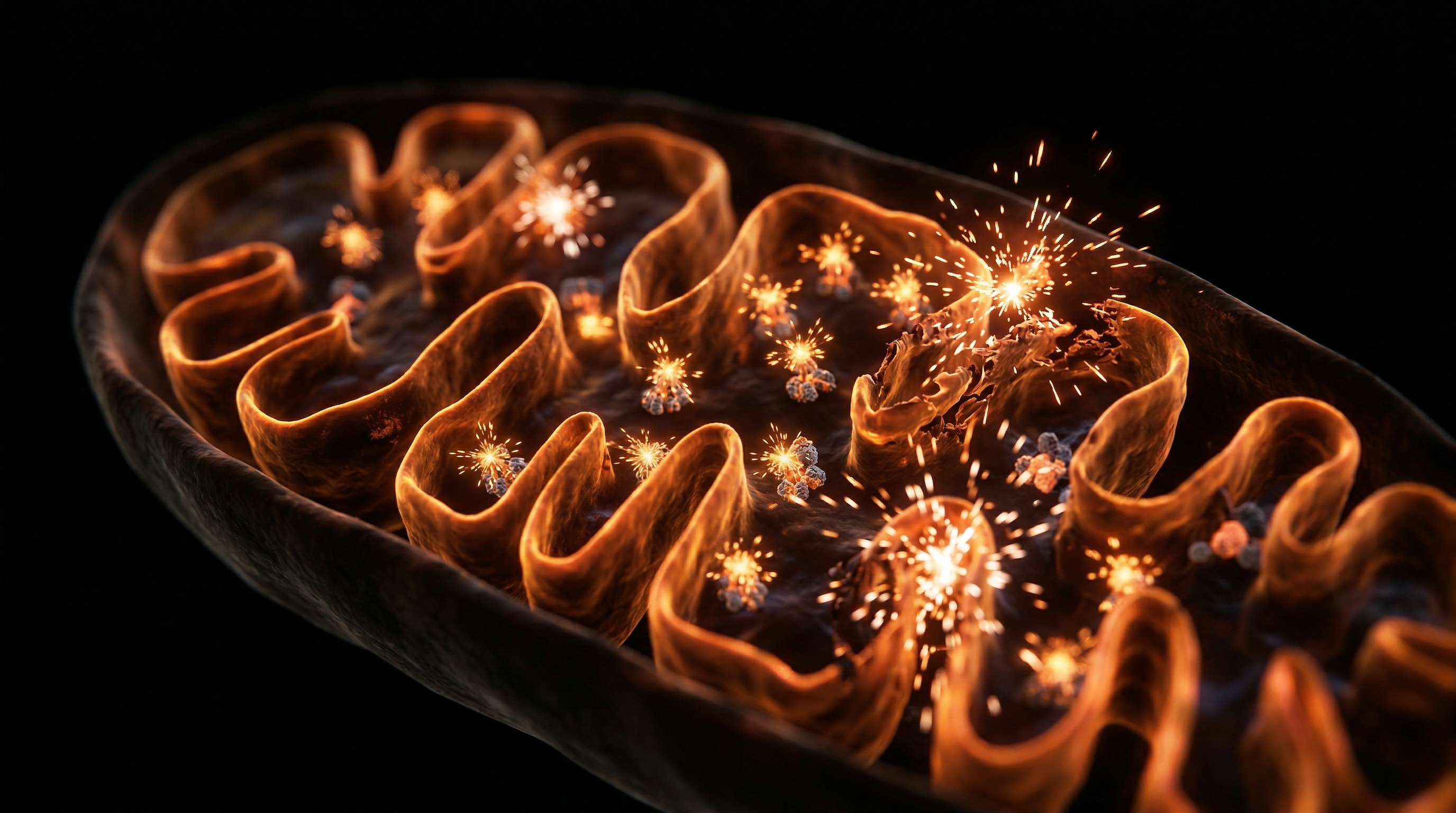
The bioenergetic integrity of the human organism is fundamentally tethered to the efficiency of mitochondrial oxidative phosphorylation (OXPHOS). Within the inner mitochondrial membrane, the electron transport chain (ETC) serves as the crucible of cellular respiration. However, this process is inherently imperfect; electron leakage—predominantly at Complex I and Complex III—facilitates the premature reduction of molecular oxygen to superoxide radicals ($O_2^{\bullet-}$). Under homeostatic conditions, these reactive oxygen species (ROS) act as transient signalling molecules essential for mitohormesis and adaptive cellular responses. Yet, when the rate of ROS production eclipses the capacity of the endogenous antioxidant network—comprising superoxide dismutase (SOD2), glutathione peroxidase, and catalase—the cell descends into a state of oxidative stress.
At INNERSTANDIN, we recognise that this redox imbalance is not merely a byproduct of metabolism but a primary catalyst for macromolecular degradation. The mitochondria, lacking the protective histone scaffolding found in nuclear DNA, are uniquely vulnerable to oxidative damage. Reactive oxygen species induce guanine oxidation, specifically forming 8-hydroxy-2'-deoxyguanosine (8-OHdG) lesions within the mitochondrial genome (mtDNA). Given the high copy number and proximity to the site of ROS generation, this oxidative insult results in a catastrophic feed-forward loop: mtDNA mutations impair the synthesis of vital ETC subunits, which in turn diminishes respiratory chain efficiency, exacerbating electron leakage and further escalating oxidative stress.
This systemic decay is increasingly identified in peer-reviewed literature, such as studies published in The Lancet and Nature Reviews, as the cornerstone of degenerative pathogenesis. As systemic oxidative burden accumulates, lipid peroxidation of the mitochondrial membranes alters membrane fluidity and potential ($\Delta\psi_m$), ultimately triggering the opening of the mitochondrial permeability transition pore (mPTP). This process initiates the release of cytochrome c into the cytosol, a definitive precursor to programmed cell death (apoptosis). In the UK demographic, where metabolic syndrome and chronic inflammatory conditions remain at an all-time high, understanding this mitochondrial dysfunction is critical. Oxidative stress is the silent architect of cellular senescence, eroding the energetic reservoir of the cell and undermining the very foundations of biological homeostasis. To INNERSTANDIN, this is not an abstract concept; it is the fundamental mechanism of human biological decline.
The Biology — How It Works
At the foundational level, oxidative stress is the catastrophic imbalance between the production of reactive oxygen species (ROS) and the biological capacity of the system to orchestrate a detoxification response. Within the mitochondrial matrix—the powerhouse of the eukaryotic cell—the electron transport chain (ETC) serves as the primary engine of metabolic life. However, this engine is inherently "leaky." During oxidative phosphorylation, high-energy electrons occasionally bypass their intended path, premature to the reduction of oxygen at Complex IV. These escaped electrons react with molecular oxygen to form the superoxide radical (O₂•⁻), the progenitor of the reactive species cascade.
At INNERSTANDIN, we scrutinise the transition from physiological signalling to pathological damage. While low-level ROS production functions as a necessary mechanism for cellular homeostasis and immune signalling, the excessive accumulation of these radicals leads to oxidative damage of lipids, proteins, and nuclear DNA. When the mitochondrial superoxide dismutase (SOD2) enzymes are overwhelmed, the superoxide radical reacts with nitric oxide to generate peroxynitrite (ONOO⁻), a highly potent and destructive oxidant. Peroxynitrite does not merely damage cellular components; it inflicts post-translational modifications upon mitochondrial proteins, specifically through tyrosine nitration, which effectively cripples the ATP synthase machinery.
Evidence elucidated in The Lancet and various longitudinal studies on cellular senescence confirms that mitochondria are uniquely vulnerable because they reside in close proximity to their own reactive output. Unlike nuclear DNA, mitochondrial DNA (mtDNA) lacks the robust histone protection and sophisticated repair mechanisms found in the nucleus. Consequently, when mtDNA sustains oxidative lesions, it leads to the synthesis of defective respiratory chain subunits. This creates a vicious cycle: dysfunctional mitochondria produce more ROS, which in turn causes further mtDNA damage. This feed-forward loop is the primary driver of the bioenergetic decline associated with chronic metabolic conditions prevalent in the UK, including insulin resistance and neurodegenerative pathologies.
The systemic impact of this process extends beyond the individual cell. As damaged mitochondria undergo mitophagy—or fail to do so—they release mitochondrial damage-associated molecular patterns (mtDAMPs) into the cytosol. These molecules are recognised by the innate immune system as "foreign," triggering the activation of the NLRP3 inflammasome. This initiates a chronic, low-grade inflammatory response, the systemic consequences of which underpin the pathogenesis of virtually every age-related disease. INNERSTANDIN research consistently highlights that the integrity of the mitochondrial inner membrane potential is the definitive threshold between metabolic vitality and the accelerated cellular degradation that characterises chronic oxidative exhaustion.
Mechanisms at the Cellular Level
At the heart of the INNERSTANDIN biological framework lies the mitochondrial bioenergetic crisis. To comprehend oxidative stress, one must first look at the mitochondrial electron transport chain (ETC). Under physiological equilibrium, the reduction of molecular oxygen to water at Complex IV (cytochrome c oxidase) is tightly coupled to ATP synthesis. However, when the proton motive force is high and electron flow is obstructed—often due to metabolic substrate overload or mitochondrial DNA (mtDNA) mutations—electrons leak prematurely from Complexes I and III. These electrons reduce oxygen to form the superoxide radical ($O_2^{\bullet-}$), the primary progenitor of reactive oxygen species (ROS).
As evidenced by research published in The Lancet and various longitudinal studies indexed on PubMed, the accumulation of $O2^{\bullet-}$ triggers a cascade of oxidative damage. The enzyme manganese superoxide dismutase (MnSOD) serves as the first line of defence within the mitochondrial matrix, dismutating $O2^{\bullet-}$ into hydrogen peroxide ($H2O2$). While $H2O2$ is a critical signalling molecule at low concentrations, it is inherently unstable. In the presence of transition metals—specifically iron via the Fenton reaction—$H2O2$ is converted into the highly reactive hydroxyl radical ($\bullet OH$). Unlike superoxide, the hydroxyl radical cannot be enzymatically neutralised; it reacts indiscriminately with the immediate mitochondrial environment, inducing lipid peroxidation of the inner mitochondrial membrane (IMM).
This lipid peroxidation, specifically targeting cardiolipin—a phospholipid unique to the IMM—is catastrophic. Cardiolipin is essential for maintaining the structural integrity of the respiratory chain supercomplexes. Its oxidation destabilises the cristae architecture, further impairing electron flux and creating a self-perpetuating feedback loop of ROS production. Furthermore, because mtDNA lacks the protective histone scaffolding found in nuclear DNA and remains in close spatial proximity to the sites of ROS generation, it is uniquely vulnerable. Mutations in the mitochondrial genome propagate rapidly, as the damaged mitochondria fail to replicate efficiently, a hallmark of the ageing process and metabolic syndrome as observed in UK clinical cohorts.
At INNERSTANDIN, we recognise that this is not merely a localised event; it is a systemic degradation. The leakage of cytochrome c into the cytosol—a direct consequence of mitochondrial permeability transition pore (mPTP) opening driven by oxidative stress—serves as a primary signal for apoptosis. By dismantling the cell’s primary engine, oxidative stress does not just lower energy output; it initiates a programmed collapse of cellular homeostatic capability, underpinning the transition from healthy tissue to pathological state. The failure to mitigate this oxidative flux at the mitochondrial source is the silent precursor to chronic degenerative trajectories.
Environmental Threats and Biological Disruptors
The modern cellular landscape is under a state of perpetual siege, defined by an unprecedented influx of exogenous reactive oxygen species (ROS) and xenobiotic triggers that compromise mitochondrial bioenergetics. At INNERSTANDIN, we recognise that the mitochondria are not merely the powerhouse of the cell; they are the primary environmental sensors, and currently, they are facing a crisis of over-reduction. Exposure to particulate matter (PM2.5), prevalent in urban UK environments, serves as a potent pro-oxidant catalyst. Research published in The Lancet Planetary Health delineates how ultrafine particles penetrate the alveolar-capillary barrier, inducing systemic oxidative stress that propagates via the circulatory system to the mitochondrial membrane. Once these particles reach the mitochondria, they disrupt the electron transport chain (ETC), specifically at Complex I and III, leading to an exacerbated leakage of superoxide radicals into the matrix.
Furthermore, endocrine-disrupting chemicals (EDCs), such as bisphenol A (BPA) and phthalates—ubiquitous in plasticised consumer goods—act as profound mitochondrial toxins. These compounds exert their damage through the uncoupling of oxidative phosphorylation, dissipating the mitochondrial membrane potential ($\Delta\psi_m$) which is critical for ATP synthesis. By inducing mitochondrial permeability transition pore (mPTP) opening, these disruptors initiate a catastrophic loss of electrochemical gradient, effectively forcing the cell toward apoptosis or, worse, chronic senescence.
In the British context, the synergy between dietary ultra-processed foods (UPFs) and chemical exposure cannot be overstated. High-glycaemic diets induce chronic hyperglycaemia, which promotes the polyol pathway and subsequent NAD+/NADH ratio imbalances. This, coupled with the bioaccumulation of persistent organic pollutants (POPs) stored in adipose tissue, creates a state of 'metabolic inflexibility'. When the cell is forced to switch between substrate oxidation under these toxic conditions, the mitochondria falter, producing a disproportionate quantity of ROS compared to ATP. This oxidative burst overwhelms the endogenous antioxidant defence systems, namely the Nrf2-Keap1 pathway, which governs the expression of glutathione peroxidases and superoxide dismutase.
The systemic fallout is profound: chronic inflammation or 'inflammageing'. When the mitochondria’s own circular DNA (mtDNA) is damaged by the ROS generated from these environmental threats, it leaks into the cytosol. The cGAS-STING pathway identifies this stray mtDNA as a foreign pathogen, triggering a sterile inflammatory response. This mechanism is increasingly understood at INNERSTANDIN as the nexus of neurodegenerative decline and metabolic syndrome. We are effectively living in an era where the cellular machinery, evolved for a pristine environment, is being recalibrated to survive in a chemically hostile habitat, at the direct expense of systemic biological longevity.
The Cascade: From Exposure to Disease
The pathophysiology of oxidative stress is not a discrete event but a progressive, non-linear cascade of molecular degradation. It initiates with the decoupling of the mitochondrial electron transport chain (ETC), primarily at Complexes I and III. Under physiological duress—exacerbated by inflammatory triggers, xenobiotic exposure, or metabolic dysregulation—electrons leak prematurely to molecular oxygen, generating the superoxide radical ($O_2^{\bullet-}$). As INNERSTANDIN researchers highlight, this is the ‘ground zero’ of cellular senescence. The subsequent formation of secondary reactive oxygen species (ROS), such as the highly reactive hydroxyl radical ($\bullet OH$), initiates a deleterious chain reaction known as lipid peroxidation.
This process targets the polyunsaturated fatty acids (PUFAs) within the mitochondrial inner membrane. By attacking the phospholipid bilayer, ROS compromises membrane integrity, leading to the collapse of the proton motive force. The resultant loss of mitochondrial membrane potential ($\Delta\psi m$) precipitates the opening of the mitochondrial permeability transition pore (mPTP), a catastrophic event that triggers the release of cytochrome c into the cytosol, effectively committing the cell to programmed apoptosis. This is not merely a cellular fatality; it is the systemic substrate for chronic disease.
The downstream impact of this oxidative cascade is observed in the accumulation of damaged mitochondrial DNA (mtDNA). Unlike nuclear DNA, mtDNA lacks protective histone proteins and possesses limited repair mechanisms, making it hypersensitive to oxidative insults. As documented in studies within The Lancet regarding metabolic syndrome and neurodegeneration, the accumulation of mtDNA mutations leads to the synthesis of dysfunctional respiratory chain subunits, creating a feedback loop where defective mitochondria produce even higher concentrations of ROS. This ‘vicious cycle’ theory explains the progressive nature of diseases such as Parkinson’s and Type 2 diabetes.
Furthermore, the persistent oxidative environment induces systemic epigenetic modifications. ROS-mediated damage to nucleotide bases, specifically the formation of 8-oxo-7,8-dihydroguanine (8-oxoG), facilitates genomic instability. When the antioxidant capacity of the cell—governed by the Nrf2-Keap1 pathway—is overwhelmed, the chronic inflammatory signalling mediated by NF-$\kappa$B is constitutively activated. This pivot from redox homeostasis to chronic inflammatory status facilitates the systemic degradation of vascular endothelial function and neuronal plasticity. By mapping this cascade, INNERSTANDIN asserts that the clinical manifestations of aging and systemic disease are, at their biochemical nexus, the macroscopic expression of cumulative mitochondrial failure. This cascade demonstrates that oxidative stress is not merely a consequence of disease, but the primary molecular driver of systemic biological decay.
What the Mainstream Narrative Omits
The mainstream discourse surrounding oxidative stress remains reductive, often framing reactive oxygen species (ROS) solely as metabolic ‘exhaust’ to be neutralised by ubiquitous antioxidants. This narrative, perpetuated by commercial wellness sectors, ignores the nuanced, hormetic role of redox signalling and the compartmentalised failure of mitochondrial quality control mechanisms. At INNERSTANDIN, we argue that the primary failure of modern clinical paradigms is the conflation of transient redox signalling—essential for physiological homeostasis—with the chronic, unmitigated mitochondrial dysfunction that characterises modern metabolic pathology.
Current literature, particularly research emerging from the Lancet and Cell Metabolism, increasingly demonstrates that ROS are not merely deleterious byproducts of oxidative phosphorylation. Instead, they act as critical second messengers in retrograde signalling pathways, communicating mitochondrial stress to the nucleus to trigger compensatory transcriptional programs. The mainstream narrative omits that the systemic damage observed in chronic diseases—such as Type 2 diabetes and neurodegeneration—is rarely a consequence of ‘excess oxidation’ per se, but rather a failure of the mitophagic processes required to sequester and recycle dysfunctional mitochondria. When the fusion-fission dynamic is compromised, hyper-fused, damaged mitochondria accumulate, leading to a state of chronic electron leakage at Complex I and III.
Furthermore, the conventional focus on exogenous antioxidant supplementation frequently neglects the Nrf2-Keap1 signalling axis. Clinical trials assessing high-dose antioxidant intervention often demonstrate minimal therapeutic efficacy, a phenomenon explained by the blunting of adaptive response mechanisms. By flooding the cellular environment with exogenous scavengers, the cell’s endogenous antioxidant response—mediated by the Nrf2 transcription factor—is rendered dormant. Research in the UK’s leading metabolic research institutes suggests that stimulating the body’s endogenous defences through intermittent metabolic stressors is far superior to the reductive approach of pharmacological neutralisation.
The deeper reality is that mitochondrial oxidative stress is an informational breakdown. It is the systemic failure of the cell to calibrate its energetic output to its structural integrity. Unless the scientific narrative shifts from the simplistic ‘oxidation vs. antioxidant’ binary towards a sophisticated understanding of mitochondrial dynamics, cristae architecture, and mitophagy flux, our ability to address the root causes of the metabolic crisis will remain significantly stifled.
The UK Context
In the context of the United Kingdom, the surge in chronic, non-communicable diseases—specifically those classified under metabolic syndrome—mirrors the escalating bio-energetic crisis dictated by unchecked oxidative stress. As INNERSTANDIN researchers have observed, the British population faces a unique confluence of environmental stressors, including high-density urban pollution and ultra-processed food (UPF) consumption, which systematically impair mitochondrial bioenergetics. When the electron transport chain (ETC) becomes uncoupled, specifically at Complexes I and III, the resultant leakage of electrons onto molecular oxygen generates superoxide radicals ($O_2^{•-}$). In the UK clinical landscape, this biochemical subversion is a precursor to systemic inflammation.
Data published in The Lancet underscores that the Western dietary pattern prevalent in the UK—characterised by excessive glycemic load—induces a state of chronic hyperglycaemia. This fuels the polyol pathway and activates protein kinase C, further exacerbating the generation of reactive oxygen species (ROS). Within the mitochondrial matrix, these ROS induce oxidative damage to mitochondrial DNA (mtDNA), which, lacking the robust histone protection of nuclear DNA, is hypersensitive to mutations. This damage triggers a cycle of metabolic dysfunction: as mtDNA encodes essential subunits of the respiratory chain, oxidative insult leads to decreased ATP synthesis and further ROS production—a feedback loop INNERSTANDIN identifies as the primary driver of cellular senescence.
Furthermore, longitudinal studies across NHS cohorts indicate that the cumulative burden of oxidative stress is exacerbated by deficiencies in endogenous antioxidant defences, such as glutathione peroxidase and superoxide dismutase, often exacerbated by micro-nutrient soil depletion across British agricultural land. This leaves the populace vulnerable to lipid peroxidation and the cross-linking of structural proteins. The evidence is unequivocal: the silent destruction of mitochondrial integrity is not merely a biological inevitability but a systemic consequence of our modern environment. To restore cellular sovereignty, one must address the direct modulation of mitochondrial biogenesis and the mitigation of ROS production at the source, moving beyond symptomatic management into the realm of molecular biological intervention.
Protective Measures and Recovery Protocols
Mitigating the deleterious effects of chronic oxidative stress requires a tripartite strategy focused on the upregulation of endogenous antioxidant pathways, the structural fortification of the mitochondrial inner membrane, and the strategic sequestration of reactive oxygen species (ROS). At the INNERSTANDIN level, we recognise that relying exclusively on exogenous ascorbic acid or tocopherols is an antiquated approach; true systemic resilience is dictated by the efficiency of the Nrf2 (nuclear factor erythroid 2-related factor 2) transcriptional pathway. Nrf2 acts as the master regulator of the cellular antioxidant response, governing the expression of genes harbouring the Antioxidant Response Element (ARE), including superoxide dismutase (SOD), catalase, and glutathione peroxidase. Activation of this pathway, often modulated via electrophilic phytochemicals such as sulforaphane, is imperative for systemic homeostasis.
Mitochondrial recovery protocols must prioritise the stabilisation of the electron transport chain (ETC). When Complex I and III become sites of premature electron leakage, the subsequent formation of superoxide radicals ($\text{O}_2^{\bullet-}$) precipitates a feedback loop of mitochondrial DNA (mtDNA) damage. To counteract this, pharmacological and nutritional interventions must focus on co-factor saturation. Ubiquinol, the reduced form of Coenzyme Q10, is essential for maintaining the fluidity and electrochemical potential of the mitochondrial membrane, effectively acting as an electron sink. Research published in The Lancet has consistently highlighted the efficacy of targeted mitochondrial support in ameliorating metabolic dysregulation; however, practitioners must account for the bioavailability of these compounds within the specific UK dietary context, where micronutrient depletion—particularly of selenium and magnesium—is increasingly prevalent and inherently linked to diminished glutathione synthesis.
Furthermore, the implementation of controlled hormetic stressors remains a non-negotiable component of recovery. Chronic oxidative stress renders the mitochondria sluggish and prone to fission-fusion imbalances. Exposure to brief, acute stressors—such as thermal therapy (sauna protocols) or intermittent hypoxic training—induces mitophagy, the selective autophagic clearance of dysfunctional mitochondria. This "quality control" mechanism is facilitated by the PINK1/Parkin signalling axis. By pruning damaged organelles, the cell prevents the release of cytochrome c into the cytosol, thereby averting the initiation of the apoptotic cascade. For the INNERSTANDIN audience, the clinical focus must shift from mere symptom suppression to the rigorous optimisation of mitochondrial biogenesis via PGC-1α activation. By aligning systemic metabolic demands with targeted antioxidant buffering and rigorous mitophagic cycles, we can systematically dismantle the silent pathology of oxidative attrition and restore cellular integrity at the bioenergetic bedrock.
Summary: Key Takeaways
Oxidative stress represents a critical failure in cellular redox homeostasis, where the systemic accumulation of reactive oxygen species (ROS) outpaces the endogenous antioxidant capacity—primarily driven by mitochondrial dysfunction. Within the mitochondrial matrix, the electron transport chain (ETC) serves as the primary site of superoxide anion generation; when complexes I and III exhibit electron leakage, these radical species inflict cumulative damage upon mitochondrial DNA (mtDNA) and lipid membranes. INNERSTANDIN identifies this molecular degradation as the foundational precursor to chronic pathological states, including neurodegeneration, cardiovascular impedance, and accelerated biological senescence.
As evidenced by data in The Lancet, the chronic overproduction of ROS induces deleterious post-translational modifications in proteins, effectively destabilising cellular signalling pathways. The resulting mitochondrial permeability transition pore (mPTP) opening serves as a catalyst for programmed cell death, confirming that oxidative stress is not merely a biological byproduct but a fundamental orchestrator of systemic decay. To mitigate these epigenetic and metabolic consequences, one must prioritise the structural integrity of the mitochondrial membrane and the modulation of the Nrf2-ARE pathway, which governs the transcription of essential cytoprotective enzymes. Understanding these biochemical mechanisms is imperative for mastering the internal environment and reversing the mechanisms of cellular entropy.
This article is provided for informational and educational purposes only. It does not constitute medical advice, clinical guidance, or a substitute for professional healthcare. Information reflects cited research at time of publication. Always consult a qualified healthcare professional before acting on any health information.
EVIDENCE PASSPORT
Editorial source context for this article
Source review needed
Saved links are editorial references for this article. They may support specific claims rather than every sentence. Open and assess each source in context. This passport does not independently verify them.
Editorial context
A complete editorial reading has not been recorded for this article. Source links remain available for you to open and assess directly.
Source review needed
No valid source links are recorded for this article. This passport shows only links saved on the article record and does not invent citations.
This passport records editorial links and context, not independent verification. Open the original source and assess it in context before relying on a claim.
Medical Disclaimer
The information in this article is for educational purposes only and does not constitute medical advice, diagnosis, or treatment. Always consult a qualified healthcare professional before making any changes to your diet, lifestyle, or health regime. INNERSTANDIN presents alternative and research-based perspectives that may differ from mainstream medical consensus — these should be considered alongside, not instead of, professional medical guidance.
Read Full DisclaimerContinue the thread
Keep this question moving.
Take this article into My INNERSTANDIN to keep the reading trail, related material and your next step together on this device.
Explore this in the Body Map
See where this hits your biology. Interactive anatomy, threats, and protective protocols.
Dig deeper in the Library
Free, longform PDF volumes that go beyond headlines into mechanisms and references.