
Oxidative Stress: The Molecular Mechanism of Fried Oil Consumption
Updated May 2026
Reheating seed oils in commercial kitchens creates carcinogenic cyclic polymers and polar compounds. We examine the biological damage caused by the UK's high-frequency consumption of deep-fried takeaway foods.
Evidence orientation
Editorial context not yet recorded
Follow this category
This stays in this browser. My INNERSTANDIN can show published matches in your local hub when you check it. It does not send email, push, or alert notifications.
Local learning review
A private browser aid for revisiting ideas. It is not an alert or a health recommendation.
Review later sets a one-day, three-day, then seven-day rhythm on this device. Choose it only when you want to revisit this article.
Overview
In the modern landscape of public health, we are witnessing a silent, molecular siege. For decades, the nutritional discourse has been dominated by a singular focus on caloric intake and the demonisation of saturated fats. However, as a senior biological researcher at INNERSTANDING, it is my duty to peel back the layers of mainstream dietary dogma to expose a far more insidious threat to human physiology: the oxidative trauma induced by the consumption of thermally degraded seed oils.
The industrialisation of the Western diet has replaced traditional, stable cooking fats—such as tallow, lard, and butter—with highly unstable, polyunsaturated fatty acids (PUFAs) derived from soy, corn, rapeseed, and sunflower. In the United Kingdom, this shift is most visible in the "High Street" culture of deep-fried takeaway food. From the ubiquitous "chippy" to the burgeoning "chicken shop" phenomenon, the British public is consuming unprecedented volumes of oils that have been subjected to repeated thermal stress.
This article examines the molecular mechanisms by which fried oil consumption triggers oxidative stress. We are not merely discussing "unhealthy" food; we are discussing a potent chemical process that alters the very structure of our cellular membranes, damages our DNA, and creates a pro-inflammatory environment that serves as the bedrock for chronic disease. When seed oils are heated to high temperatures—and subsequently reheated over days or even weeks in commercial vats—they undergo a catastrophic chemical transformation. They cease to be nutrients and become vehicles for carcinogenic cyclic polymers, polar compounds, and lipid peroxides.
The Reality of Commercial Frying: In many UK commercial kitchens, oil is filtered and "topped up" rather than replaced, creating a concentrated "toxic soup" of degraded lipid species that are absorbed directly into the food matrix.
The Biology — How It Works
To understand the toxicity of fried oils, we must first understand the vulnerability of their chemical structure. Most industrial seed oils are predominantly composed of Linoleic Acid (LA), an omega-6 polyunsaturated fatty acid.
The Vulnerability of Polyunsaturation
The term "polyunsaturated" refers to the presence of multiple double bonds within the carbon chain of the fatty acid. From a biological perspective, these double bonds are points of extreme chemical instability. Unlike saturated fats, which have a straight, tightly packed structure with no double bonds, PUFAs contain "methylene bridges"—carbon atoms situated between two double bonds. These sites are exceptionally prone to hydrogen abstraction.
When these oils are exposed to heat, light, and oxygen—the three pillars of the deep-frying environment—a chain reaction known as lipid peroxidation is initiated. This process occurs in three distinct phases:
- Initiation: Heat provides the activation energy to strip a hydrogen atom from the fatty acid chain, creating a highly reactive lipid radical.
- Propagation: The lipid radical reacts with oxygen to form a peroxyl radical, which then attacks adjacent fatty acid chains, creating a self-sustaining cycle of destruction.
- Termination: The process ends when radicals react with each other to form stable but non-functional end-products, or when antioxidants are completely depleted.
Thermal Degradation Products
In a commercial deep-fryer, the oil is not just hot; it is undergoing a violent chemical rearrangement. The high temperatures (typically 170°C to 190°C) catalyze the formation of several classes of toxic compounds:
- Cyclic Fatty Acid Monomers (CFAMs): These are formed when the fatty acid chain curls back on itself and bonds, creating a ring structure that the human body cannot effectively metabolise.
- Polar Compounds: This is a broad category including aldehydes, ketones, and alcohols. The "Total Polar Materials" (TPM) count is the gold standard for measuring oil degradation.
- Acrylamide: Formed through the Maillard reaction between amino acids (asparagine) and sugars in starchy foods (like chips) when fried at high temperatures.
- 4-Hydroxynonenal (4-HNE): Perhaps the most dangerous byproduct, 4-HNE is a highly reactive aldehyde that acts as a "second messenger of oxidative stress," capable of bonding to proteins and DNA.
Mechanisms at the Cellular Level
The damage does not stop at the palate. Once consumed, these degraded lipids enter the human body, where they bypass traditional detoxification pathways and integrate into our very architecture.
The Trojan Horse Effect
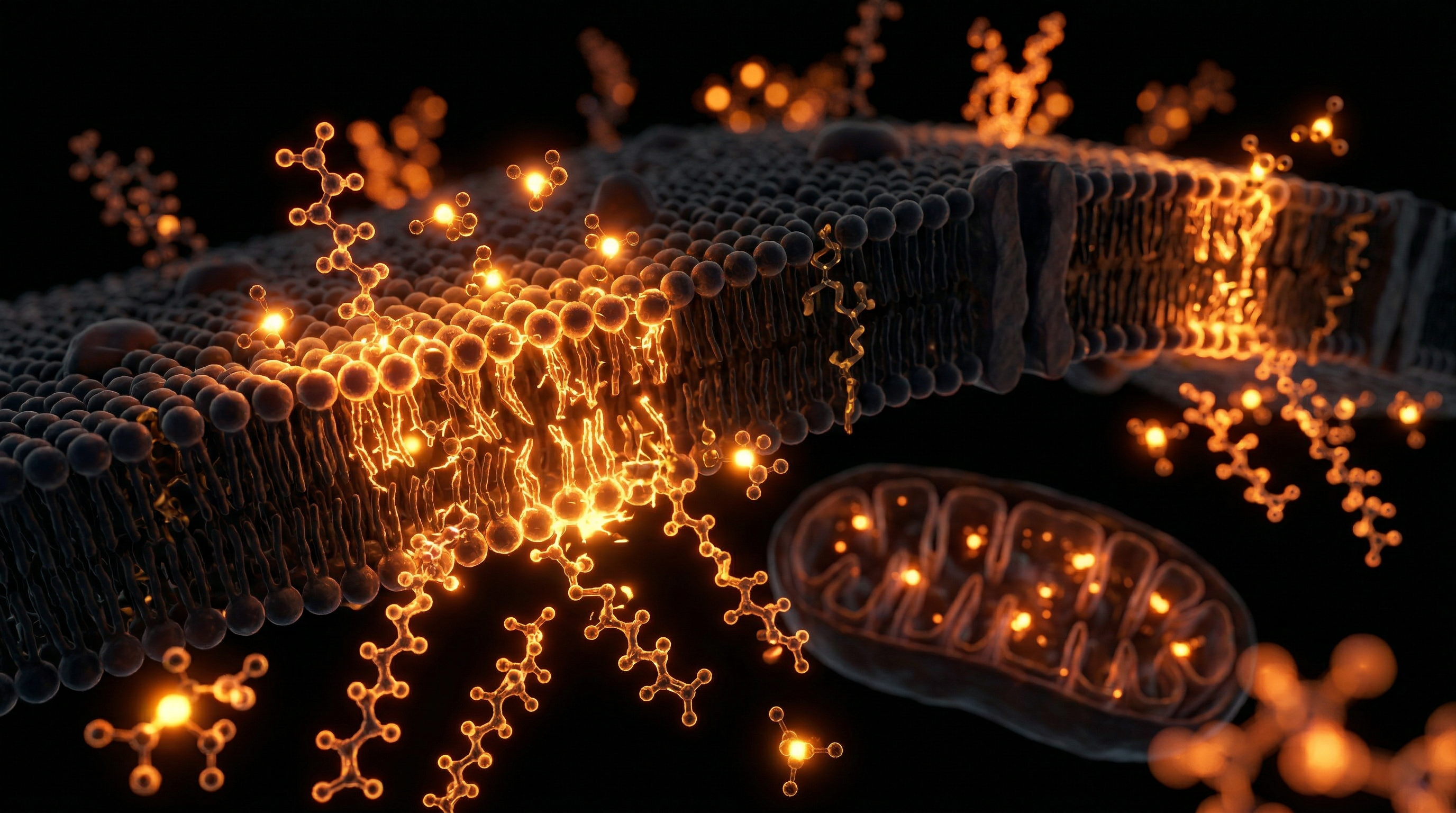
When you consume a piece of fried fish or a portion of chips, the degraded oil is packaged into chylomicrons in the small intestine. These chylomicrons transport the lipids into the lymphatic system and eventually into the bloodstream. Because these oils are "foreign" but still resemble fatty acids, the body attempts to use them. They are incorporated into the phospholipid bilayers of our cell membranes.
A cell membrane comprised of oxidized, cyclic, or trans-fats is structurally compromised. It loses its fluidity and its "gatekeeper" function. This leads to:
- Leaky Membranes: Ions and molecules leak in and out of the cell uncontrollably.
- Receptor Dysfunction: Insulin receptors and hormone transporters become "clogged" or distorted by the rigid, damaged lipids, leading to metabolic resistance.
The Mitochondrial Assault
The mitochondria are the powerhouses of the cell, and they are particularly susceptible to the products of fried oil. Cardiolipin, a unique phospholipid found exclusively in the inner mitochondrial membrane, is highly enriched in linoleic acid. When we consume high amounts of oxidized LA, the cardiolipin becomes oxidized.
This triggers a collapse of the mitochondrial membrane potential. The electron transport chain, which generates ATP (energy), begins to leak electrons. These leaked electrons react with oxygen to create Superoxide (O2•−), a potent reactive oxygen species (ROS). This creates a feedback loop: fried oil consumption causes mitochondrial dysfunction, which produces more oxidative stress, which further damages the cell.
Protein Adduction and DNA Damage
The aldehydes produced during frying—specifically 4-HNE and Malondialdehyde (MDA)—are "electrophilic." They seek out and bind to "nucleophilic" targets like proteins and DNA.
- Protein Carbonylation: When these aldehydes bind to enzymes, they render them non-functional.
- DNA Adducts: When they bind to DNA, they can cause mutations or interfere with gene expression. This is the primary pathway by which fried oil consumption acts as a carcinogenic driver.
Key Term: Electrophile. A chemical species that seeks electrons. In the context of fried oils, these molecules "steal" electrons from your healthy tissues, leading to systemic cellular decay.
Environmental Threats and Biological Disruptors
The consumption of fried oils does not occur in a vacuum. The modern human is already under an "oxidative load" from various environmental factors. The synergistic effect of these stressors makes the impact of fried oils even more devastating.
Synergistic Toxicity
In the UK urban environment, we are exposed to nitrogen dioxide (NO2) and particulate matter (PM2.5) from vehicle emissions. These pollutants are themselves oxidative stressors. When a person with high systemic levels of lipid peroxides (from a diet high in fried food) is exposed to air pollution, the lung tissue becomes a site of massive lipid peroxidation. The lungs are highly oxygenated, providing the perfect environment for the "fire" of fried-oil-induced oxidation to spread.
The Role of Glyphosate
Much of the oil used in the UK—particularly soy and rapeseed—is derived from crops heavily treated with glyphosate. Emerging research suggests that glyphosate may interfere with the Cytochrome P450 enzymes in the liver. These enzymes are responsible for detoxifying many of the harmful compounds found in fried oil. By inhibiting our primary detoxification pathway, glyphosate ensures that the cyclic polymers and aldehydes from our "Friday night takeaway" remain in circulation for longer, causing more extensive damage.
The Depletion of Endogenous Antioxidants
The body has an internal defense system, primarily Glutathione. However, the sheer volume of oxidative species generated by a typical high-street fried meal can rapidly deplete glutathione levels. Once glutathione is exhausted, the body enters a state of uncompensated oxidative stress, where the damage to tissues becomes exponential.
- Iron Overload: Many modern foods are "fortified" with metallic iron filings. In the presence of lipid peroxides, iron catalyzes the Fenton Reaction, producing the hydroxyl radical—the most reactive and destructive radical known to biology.
The Cascade: From Exposure to Disease
The progression from the consumption of a fried meal to the manifestation of chronic disease is a multi-year "cascade" of biological failure.
Cardiovascular Disease: The oxLDL Paradigm
The mainstream narrative suggests that high cholesterol causes heart disease. This is a half-truth that ignores the most critical factor: oxidation. Cholesterol is transported in LDL particles. As long as those particles remain unoxidized, they are generally harmless. However, when the LDL particle is enriched with polyunsaturated fats from fried oils, it becomes highly susceptible to oxidation.
This oxidized LDL (oxLDL) is not recognised by the standard LDL receptors. Instead, it is "cleared" by macrophages (immune cells) in the arterial walls. These macrophages engorge themselves on the toxic lipids until they become foam cells. This is the literal beginning of atherosclerosis (plaque formation).
Neurodegeneration: The Lipid-Rich Brain
The human brain is roughly 60% fat. Its structure depends on the quality of the fats we consume. The brain is also the most metabolically active organ, consuming vast amounts of oxygen. When the brain's lipid structure is replaced by the damaged, oxidized fatty acids from fried oils, it sets the stage for neuroinflammation. 4-HNE has been found in high concentrations in the brains of patients with Alzheimer’s and Parkinson’s. These aldehydes cross the blood-brain barrier and cause the misfolding of proteins (such as amyloid-beta), leading to the cognitive decline now epidemic in the UK's ageing population.
Metabolic Syndrome and NAFLD
The liver is the primary site for processing fats. When bombarded with cyclic polymers and trans-fats from commercial deep-fryers, the liver becomes overwhelmed. This leads to Non-Alcoholic Fatty Liver Disease (NAFLD). Unlike the fat accumulation from simple sugar, the fat accumulation in "fried oil NAFLD" is highly inflammatory. It triggers insulin resistance, the precursor to Type 2 Diabetes, by disrupting the insulin signalling pathway at the cellular membrane level.
Statistic: In the UK, it is estimated that 1 in 3 people have early-stage NAFLD. The correlation with the rise of industrial seed oil consumption and takeaway culture is undeniable.
What the Mainstream Narrative Omits
The refusal of public health bodies to sound the alarm on seed oils is one of the greatest oversights—or perhaps intentional omissions—in modern history.
The Saturated Fat Diversion
For 50 years, the British Heart Foundation and the NHS have focused on reducing saturated fat. By doing so, they have implicitly encouraged the consumption of "heart-healthy" vegetable oils. This focus ignores the Stability Factor. Saturated fats (like butter or coconut oil) do not have the double bonds required for lipid peroxidation. They are stable under heat. By replacing stable fats with unstable ones, the mainstream narrative has inadvertently increased the oxidative load on the population.
The "Smoke Point" Fallacy
Mainstream cooking advice often focuses on an oil’s smoke point. This is a dangerous metric. The smoke point is simply the temperature at which an oil produces visible smoke. It is not the temperature at which the oil becomes toxic. Many seed oils, such as refined rapeseed oil, have a high smoke point but begin to undergo chemical degradation and produce polar compounds at much lower temperatures. A "high smoke point" often gives a false sense of security to commercial fryers and home cooks alike.
The Corporate Interest
The industrial seed oil complex is a multi-billion pound global industry. These oils are cheap to produce, easy to transport, and have a long shelf-life. The food industry relies on them for their "mouthfeel" and their ability to act as a cheap carrier for flavour. To admit that these oils are oxidative toxins would require a total dismantling of the industrial food supply chain.
The UK Context
The United Kingdom presents a unique and troubling case study in the effects of fried oil consumption.
The High-Street "Takeaway" Epidemic
In many UK towns, the high street is dominated by fast-food outlets. A "chicken shop" can often be found every few hundred yards in urban areas like London, Birmingham, and Manchester. For many in lower-income brackets, these shops provide "cheap calories." However, the biological cost is immense. The oil in these establishments is often:
- Low Quality: Inexpensive "vegetable oil" blends (mostly soy and rapeseed).
- Aged: Used for multiple days, allowing for the accumulation of massive concentrations of polar compounds.
- High-Heat: Often kept at maximum temperature to ensure fast turnaround times.
The Socio-Economic Gradient
There is a clear link between lower socio-economic status and the frequency of fried takeaway consumption in the UK. This creates a "biological divide." While wealthier demographics may shop at organic grocers and cook with cold-pressed olive oil, poorer communities are being metabolically sabotaged by the oxidative stress of cheap fried fats. This is a significant, yet rarely discussed, driver of the UK's health inequalities.
The NHS Burden
The long-term consequences of this dietary pattern—diabetes, heart disease, and cancer—are the primary drivers of the escalating cost of the NHS. We are treating the symptoms of oxidative stress with pharmaceuticals while the "molecular fire" continues to be fuelled by the national diet.
UK FACT: Fish and chips remains the nation's favourite dish, with over 380 million portions consumed annually. If the oil used is not changed daily, a single portion can contain more oxidative byproducts than 20 cigarettes.
Protective Measures and Recovery Protocols
Understanding the mechanism of damage allows us to develop strategies for protection and recovery. The goal is to reduce the "Body Burden" of oxidized lipids and restore mitochondrial function.
Absolute Avoidance
The first and most important step is the total elimination of commercially fried foods. There is no "safe" amount of oil that has been reheated for 48 hours.
- Replace seed oils at home with stable fats: Grass-fed Tallow, Ghee, Butter, or Virgin Coconut Oil.
- Cold-pressed oils (like extra virgin olive oil or avocado oil) should only be used cold or for very light, low-heat cooking.
Boosting the Antioxidant Shield
To combat the damage already done, we must provide the body with the precursors it needs to rebuild its internal defences.
- N-Acetyl Cysteine (NAC): A precursor to glutathione. It is essential for neutralising the aldehydes (like 4-HNE) produced by fried oils.
- Selenium: A vital co-factor for the enzyme glutathione peroxidase, which "mops up" lipid peroxides.
- Vitamin E (Alpha and Gamma Tocopherols): The primary fat-soluble antioxidant that protects cell membranes from lipid peroxidation. It is crucial to get "complex" Vitamin E, not just the synthetic dl-alpha-tocopherol.
- Glycine: This amino acid is critical for collagen synthesis and glutathione production. It helps repair the "leaky" gut and vascular linings damaged by oxidative stress.
Metabolic Clearing
- Sauna Therapy: Lipid-soluble toxins (like cyclic polymers) can be sequestered in adipose tissue. Sweating can help mobilise and excrete these compounds.
- Intermittent Fasting: Autophagy (the body's cellular recycling process) is triggered during fasting. This helps the body identify and break down damaged proteins and dysfunctional mitochondria that have been compromised by fried oil byproducts.
Targeted Nutritional Intervention
- Magnesium: Required for over 300 enzymatic reactions, including those that repair DNA damage.
- Metabolic Switch: Shifting the body toward burning ketones rather than glucose can reduce the overall oxidative load on the mitochondria during the healing phase.
Summary: Key Takeaways
The consumption of fried oils is not merely a "bad habit"; it is a sustained molecular assault on the human body. The process of deep-frying transforms polyunsaturated seed oils into a cocktail of reactive chemicals that have no place in human biology.
- Seed oils are inherently unstable due to their polyunsaturated structure, making them unsuitable for high-heat cooking.
- Repeated heating in commercial vats creates a concentrated source of cyclic polymers, polar compounds, and toxic aldehydes like 4-HNE.
- The damage is systemic, affecting cell membrane integrity, mitochondrial function, and DNA stability.
- Chronic diseases—from heart disease to Alzheimer's—are significantly driven by the oxidative stress initiated by these degraded lipids.
- The UK’s takeaway culture represents a public health crisis that is currently being ignored by mainstream medical and governmental bodies.
As researchers and citizens, we must look beyond the simplified "calories in, calories out" model and recognise the chemical reality of our food supply. The "Innerstanding" of these molecular mechanisms is the first step toward reclaiming our biological sovereignty and ending the epidemic of oxidative-driven disease. We must return to the stable fats our ancestors used and reject the industrial byproducts that are currently being sold as food.
The fire of oxidative stress can be extinguished, but only if we stop pouring oil on the flames.
This article is provided for informational and educational purposes only. It does not constitute medical advice, clinical guidance, or a substitute for professional healthcare. Information reflects cited research at time of publication. Always consult a qualified healthcare professional before acting on any health information.
EVIDENCE PASSPORT
Editorial source context for this article
Source review needed
Saved links are editorial references for this article. They may support specific claims rather than every sentence. Open and assess each source in context. This passport does not independently verify them.
Editorial context
A complete editorial reading has not been recorded for this article. Source links remain available for you to open and assess directly.
Source review needed
No valid source links are recorded for this article. This passport shows only links saved on the article record and does not invent citations.
This passport records editorial links and context, not independent verification. Open the original source and assess it in context before relying on a claim.
Medical Disclaimer
The information in this article is for educational purposes only and does not constitute medical advice, diagnosis, or treatment. Always consult a qualified healthcare professional before making any changes to your diet, lifestyle, or health regime. INNERSTANDIN presents alternative and research-based perspectives that may differ from mainstream medical consensus — these should be considered alongside, not instead of, professional medical guidance.
Read Full DisclaimerContinue the thread
Keep this question moving.
Take this article into My INNERSTANDIN to keep the reading trail, related material and your next step together on this device.
Dig deeper in the Library
Free, longform PDF volumes that go beyond headlines into mechanisms and references.