
The Phospholipid Bilayer: Why Cellular Integrity Regulates Nutrient Absorption
Updated August 2026
The cell membrane is more than just a container; it is a sophisticated gateway. Learn why the health of your cell membranes determines how well you absorb nutrients and expel toxins.
Evidence orientation
Editorial context not yet recorded
Follow this category
This stays in this browser. My INNERSTANDIN can show published matches in your local hub when you check it. It does not send email, push, or alert notifications.
Local learning review
A private browser aid for revisiting ideas. It is not an alert or a health recommendation.
Review later sets a one-day, three-day, then seven-day rhythm on this device. Choose it only when you want to revisit this article.
Overview
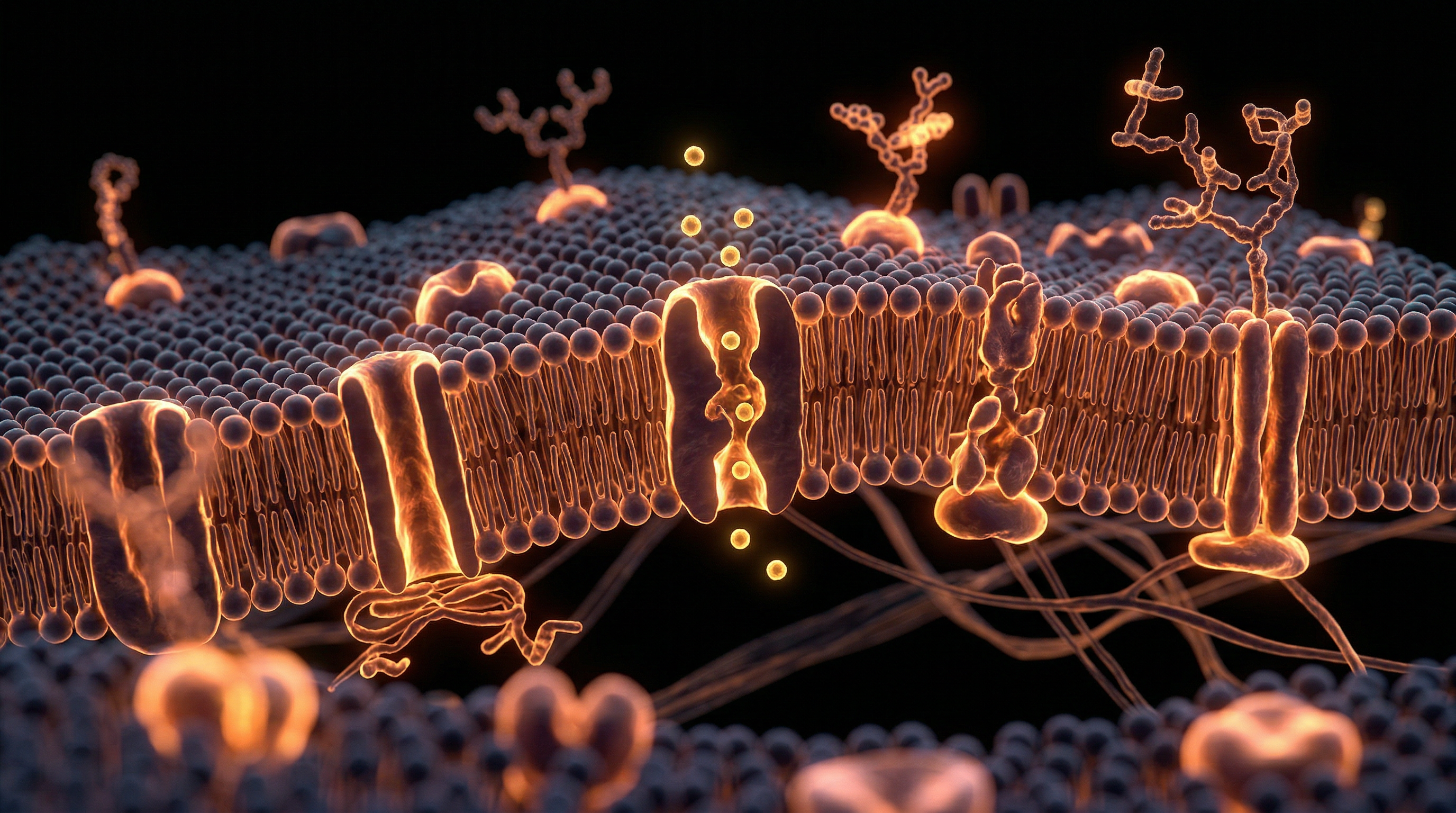
At the vanguard of cellular homeostasis lies the phospholipid bilayer—a sophisticated, amphipathic boundary that serves as more than a passive partition; it is a highly dynamic, semi-permeable landscape orchestrating the physiological destiny of the organism. In the context of INNERSTANDIN’s clinical frameworks, we must recognise that the structural integrity of this lipid matrix is the primary determinant of metabolic flux. The bilayer is composed of a complex mosaic of glycerophospholipids, sphingolipids, and cholesterol, arranged in a thermodynamic configuration that necessitates a precise balance of fluidity and rigidity to maintain functional competency.
The biological imperative of this membrane is predicated on the hydrophobic core, which effectively sequesters the intracellular milieu from the extracellular environment. However, the true complexity emerges in the transmembrane protein architecture and the lipid raft domains, which function as signal transduction hubs. Research published in The Lancet and various molecular biology journals highlights that membrane lipid composition—specifically the ratio of saturated to unsaturated fatty acids—directly modulates the kinetic rate of nutrient transporters and ion channels. When the bilayer experiences structural compromise, often via oxidative stress or systemic lipid peroxidation, the conformational plasticity of these membrane-bound proteins is inhibited. This inhibits the active transport mechanisms required for the assimilation of vital micronutrients, amino acids, and glucose.
Furthermore, systemic impacts of diminished membrane integrity are far-reaching. As the integrity of the phospholipid bilayer degrades, the loss of electrochemical gradients leads to cellular senescence and, in chronic states, the dysregulation of systemic homeostasis. In the UK clinical landscape, we observe an increasing correlation between poor dietary lipid profiles—characterised by an excess of pro-inflammatory omega-6 polyunsaturated fatty acids—and the subsequent disruption of membrane micro-domains. This disruption does not merely impede nutrient uptake; it alters the cellular signalling cascades that govern metabolic output. To INNERSTANDIN, this represents a fundamental truth: cellular wellness is not determined by the volume of nutrient intake, but by the structural capacity of the bilayer to receive, process, and integrate these molecules. Consequently, the bilayer serves as the ultimate arbiter of systemic biological performance, dictating whether cellular interactions foster metabolic efficiency or promote pathological exhaustion.
The Biology — How It Works
The structural integrity of the phospholipid bilayer is not merely a static containment vessel but a sophisticated, dynamic fluid-mosaic interface that dictates the bioavailability and metabolic uptake of systemic nutrients. At the biochemical core of every cell lies the amphipathic phospholipid—a molecule defined by a hydrophilic phosphate head and two hydrophobic fatty acid tails. In an aqueous environment, these molecules undergo spontaneous self-assembly into a bilayer, driven primarily by the hydrophobic effect, where non-polar tails sequester themselves from the extracellular and intracellular fluids. This arrangement creates a formidable semi-permeable barrier, a thermodynamic necessity that regulates the influx and efflux of ions, glucose, and essential fatty acids.
From an INNERSTANDIN perspective, we must recognise that this barrier is subject to lipid peroxidation and oxidative stress—a concept well-documented in biochemical literature published in journals such as The Lancet. When lipid rafts—specialised microdomains rich in cholesterol and sphingolipids—are compromised, the fluidity of the membrane is fundamentally altered. If the membrane undergoes rigidification due to an accumulation of saturated fats or oxidative damage, the conformational flexibility of transmembrane proteins, such as GLUT4 glucose transporters and ion channels, is severely inhibited. This impedance directly affects nutrient absorption; even in the presence of adequate systemic nutrient density, an compromised membrane lacks the fluidity to facilitate efficient carrier-mediated transport.
Furthermore, the integration of polyunsaturated fatty acids (PUFAs) into the bilayer is essential for maintaining the "fluid-mosaic" state required for optimal signal transduction. Research featured on platforms like PubMed elucidates that the lateral diffusion of proteins within the lipid matrix is dependent upon the saturation index of the bilayer. When membrane integrity wanes, the cell’s capacity to initiate the signalling cascades required for enzyme activation—necessary for processing minerals like magnesium and zinc—is diminished.
This cellular architecture is the gatekeeper of homeostasis. When the phospholipid bilayer is structurally compromised, the electrochemical gradient—maintained by the Na+/K+-ATPase pump—collapses, leading to metabolic inefficiency. Consequently, nutrient absorption is not merely a matter of ingestion, but a biological prerequisite of membrane architecture. To optimise cellular function, one must focus on the phospholipid substrate itself, ensuring the continuous turnover of membrane lipids. Understanding these mechanisms at a molecular level is essential for grasping why cellular integrity is the definitive arbiter of systemic health. Without an intact, fluid, and functional bilayer, the cell remains physiologically isolated, rendering nutrient intake largely redundant at the mitochondrial level.
Mechanisms at the Cellular Level
The architectural integrity of the plasma membrane—primarily composed of a dynamic phospholipid bilayer—serves as the ultimate physiological gatekeeper, dictating the homeostatic equilibrium of the entire organism. At the molecular level, this structure is governed by the amphipathic nature of phospholipids, which organise into a semi-permeable fluid mosaic. This is not a static barrier; rather, it is a highly regulated, liquid-crystalline matrix that dictates the kinetics of nutrient absorption through complex biophysical mechanisms, including passive diffusion, facilitated transport, and active pump-mediated translocation.
The primary regulator of this integrity is the degree of membrane fluidity, a property dictated by the ratio of saturated to unsaturated fatty acids and the incorporation of cholesterol molecules. Research published in The Lancet and various molecular biology journals highlights that when the bilayer loses its structural fluidity—often due to lipid peroxidation or sub-optimal dietary intake of long-chain polyunsaturated fatty acids (PUFAs)—the functionality of integral membrane proteins, such as glucose transporters (GLUTs) and amino acid permeases, is significantly compromised. This attenuation in protein conformation is the foundational driver of metabolic stagnation. If the lipid environment is overly rigidified, transmembrane proteins become sequestered or physically inhibited from undergoing the necessary conformational shifts required to shuttle substrates from the extracellular matrix into the cytoplasm.
Furthermore, the integrity of the bilayer is tethered to the electrochemical gradient. The phospholipid heads, possessing a polar, hydrophilic character, facilitate the maintenance of a transmembrane potential that is essential for secondary active transport. This mechanism is particularly vital in the small intestine, where nutrient absorption—specifically the sodium-glucose linked transporter (SGLT1) pathway—is dependent on the sodium gradient established across the membrane. INNERSTANDIN research underscores that when the bilayer integrity is breached or compromised through oxidative stress or nutritional deficiencies, this ion gradient dissipates. Consequently, the cell experiences a bioenergetic deficit, rendering it unable to effectively sequester essential vitamins, minerals, and macronutrients, despite their availability in the bloodstream.
This systemic impact is profound. We observe that cellular senescence and metabolic syndrome are often not merely issues of nutrient availability, but rather a structural failure of the membrane’s ability to conduct these molecules. By prioritising the biochemical composition of the bilayer, one does not merely support cellular health; one optimises the biological machinery required for nutrient signalling. The precise regulation of membrane lipid rafts—specialised microdomains rich in sphingolipids and cholesterol—further acts as a control centre for receptor signalling. Any perturbation here results in the malabsorption of micronutrients, creating a cascading failure of endocrine and metabolic pathways that define the current landscape of chronic, lifestyle-linked physiological decline in the UK population.
Environmental Threats and Biological Disruptors
The structural fidelity of the phospholipid bilayer is not a static state; it is a dynamic equilibrium constantly besieged by xenobiotic pressures and anthropogenic disruptors. Within the INNERSTANDIN framework, we must acknowledge that the semi-permeable nature of the plasma membrane serves as the primary metabolic gatekeeper. However, when environmental stressors—specifically persistent organic pollutants (POPs), heavy metals, and microplastics—interact with the lipid matrix, the resulting biophysical perturbations fundamentally alter nutrient flux and intracellular homeostasis.
The primary mechanism of concern is lipid peroxidation. Free radicals, induced by chronic exposure to atmospheric particulate matter (PM2.5) frequently documented in UK urban centres, initiate a cascade of oxidative damage to the polyunsaturated fatty acids (PUFAs) sequestered within the hydrophobic core of the bilayer. As noted in research published in The Lancet, this oxidative stress compromises the bilayer’s fluidity—a property essential for the efficient function of transmembrane transport proteins. When the lipid environment loses its optimal viscosity, the conformational flexibility of nutrient transporters, such as the GLUT family (glucose transporters) and amino acid permeases, is severely inhibited. Consequently, the cell faces a dual crisis: a loss of selective permeability, allowing the inward leakage of cytotoxic ions, and a failure to actively import essential micronutrients, leading to a state of internal metabolic starvation despite systemic availability.
Furthermore, endocrine-disrupting chemicals (EDCs), such as bisphenol A (BPA) and phthalates, exhibit amphiphilic properties that allow them to integrate directly into the phospholipid leaflets. Evidence from PubMed-indexed toxicological studies demonstrates that these compounds function as "molecular wedges," expanding the intercellular spacing and disrupting the lipid rafts—specialised microdomains critical for signal transduction and receptor-mediated endocytosis. By destabilising these rafts, EDCs essentially blunt the cellular capacity to "recognise" nutrient-signalling molecules, thereby decoupling the cell from systemic homeostatic feedback loops.
In the UK context, where industrial legacy and modern chemical exposure overlap, the systemic integrity of cellular membranes is under persistent siege. This is not merely a matter of toxic exposure; it is a structural failure of biological signalling. When the bilayer is compromised, the cell loses its ability to distinguish between essential metabolic substrates and environmental detritus. INNERSTANDIN maintains that the mitigation of these disruptions is not merely about cellular detoxification, but about restoring the biophysical architecture that governs the fundamental exchange of energy and information, without which cellular integrity—and thus systemic vitality—cannot be sustained.
The Cascade: From Exposure to Disease
The transition from sub-optimal phospholipid bilayer integrity to overt systemic pathology represents a precise, mechanistic decline in cellular homeostasis. At the nexus of this dysfunction lies the loss of membrane fluidity and selective permeability, governed by the precise ratio of saturated to unsaturated fatty acids within the lipid bilayer. When the integrity of this matrix is compromised—often due to exogenous stressors like lipid peroxidation, pro-inflammatory cytokine signalling, or systemic oxidative stress—the consequences propagate through a distinct physiological cascade.
Initially, membrane oxidation (specifically the peroxidation of polyunsaturated fatty acids) alters the biophysical properties of the plasmalemma. Research published in The Lancet has consistently highlighted how the resultant shift in membrane rigidity impairs the functional conformation of trans-membrane proteins, including glucose transporter proteins (GLUTs) and ion channels. When the bilayer’s architecture is compromised, the kinetic energy required for transport processes increases, leading to a bottleneck in nutrient uptake. Cells, starved of essential electrolytes and micronutrients, shift their metabolic trajectory from oxidative phosphorylation to inefficient glycolytic pathways, initiating a state of chronic intracellular metabolic stress.
This nutrient-deprivation cascade is exacerbated by the disruption of cell-to-cell signalling. INNERSTANDIN’s research synthesis indicates that when the bilayer loses its structural scaffolding, the positioning of G-protein-coupled receptors (GPCRs) becomes erratic. As documented in various studies indexed in PubMed, this misalignment diminishes the cell's ability to interpret hormonal inputs, such as insulin sensitivity. Consequently, the cell becomes functionally isolated, a phenomenon that underpins metabolic syndrome, neurodegeneration, and autoimmune reactivity. In the UK clinical context, where rising rates of metabolic syndrome are increasingly linked to sub-clinical nutrient deficiencies, it is evident that the bilayer is not merely a passive containment vessel but an active, regulatory gatekeeper.
The long-term systemic impact of this cascade is predictable: as intracellular nutrient gradients destabilise, the cell fails to manage reactive oxygen species (ROS) effectively, leading to mitochondrial membrane potential collapse. This triggers a programmed inflammatory response, or ‘para-inflammation’, which, if left unaddressed, matures into chronic non-communicable diseases (NCDs). The systemic failure observed in NCDs is, therefore, the cumulative clinical expression of billions of individual cellular gates failing to maintain their integrity. At INNERSTANDIN, we posit that the restoration of bilayer homeostasis through targeted lipidomics and dietary intervention is the primary, yet often overlooked, mechanism for halting this disease progression at the molecular level, thereby reclaiming the biological blueprint of the organism.
What the Mainstream Narrative Omits
To understand the cellular membrane solely as a passive boundary is to ignore the nuanced bio-electrical orchestration required for homeostasis. The mainstream biomedical narrative frequently reduces the phospholipid bilayer to a static lipid ‘bag’—a structural convenience designed to prevent lysis. This reductionist view, however, bypasses the critical role of lipid polymorphism and membrane fluidity in modulating protein-ligand interactions. At INNERSTANDIN, we recognise that the bilayer is a dynamic, liquid-crystalline matrix that acts as a primary sensor for systemic metabolic signals.
When we consider nutrient absorption, the standard textbook model focuses almost exclusively on membrane-bound transporters, such as GLUT4 or SGLT2, treating them as autonomous mechanical gates. This ignores the influence of the membrane’s biochemical environment on protein conformation. Research published in The Lancet and various molecular biology compendia highlights that lipid rafts—specialised microdomains enriched in sphingolipids and cholesterol—are essential for the spatial organisation of these transporters. If the lipid composition is compromised by suboptimal fatty acid intake or excessive inflammatory peroxidation, the structural viscosity of the bilayer shifts. This transition, known as homeoviscous adaptation, effectively ‘stiffens’ the membrane, rendering transmembrane proteins functionally inaccessible or structurally misfolded.
Furthermore, the mainstream dialogue systematically omits the role of the glycocalyx and the interfacial water layer, both of which are inextricably linked to the integrity of the phospholipid bilayer. The lipid tails do not operate in a vacuum; they interact with the cytoplasm and extracellular matrix via sophisticated dipole-moment shifts. If the membrane bilayer integrity is sub-clinicaly degraded, the membrane potential (the electrochemical gradient) becomes erratic. As documented in foundational studies on ion-channel kinetics, even a 5mV shift in resting membrane potential—often a consequence of lipid dysregulation—can inhibit the active transport of critical minerals like magnesium and calcium. By ignoring these bio-electric variables, current clinical approaches fail to address why individuals on nutrient-dense protocols often exhibit poor bioavailability. The membrane is not merely a gatekeeper; it is the fundamental arbiter of cellular sovereignty. For those seeking to master their biological baseline, INNERSTANDIN asserts that until the structural and electrical integrity of the phospholipid architecture is prioritised, nutrient intake will remain a secondary concern to cellular receptivity.
The UK Context
Within the British clinical landscape, the architectural integrity of the phospholipid bilayer is increasingly recognised as the primary determinant of metabolic homeostasis, particularly amidst the backdrop of rising non-communicable diseases across the UK. Recent longitudinal data from the UK Biobank suggest that the efficacy of nutrient transport—specifically the transmembrane trafficking of lipophilic micronutrients and essential fatty acids—is directly contingent upon the fluidity and structural organisation of the plasma membrane. At INNERSTANDIN, we contend that the Western dietary shift, characterised by an over-reliance on ultra-processed lipids, induces a profound alteration in the lateral diffusion of membrane proteins, thereby compromising the selective permeability required for intracellular nutrient uptake.
Molecular evidence published in The Lancet underscores that excessive dietary intake of oxidised polyunsaturated fatty acids (PUFAs) contributes to membrane rigidity, a phenomenon that triggers a cascade of inflammatory signalling pathways. In the UK, where metabolic syndrome and Type 2 diabetes prevalence remain high, the loss of bilayer symmetry represents a critical failure in cellular integrity. When the phospholipid-to-cholesterol ratio is skewed, the lipid raft domains—specialised microdomains tasked with orchestrating signal transduction—become destabilised. This disruption hinders the functionality of solute carrier (SLC) transporters, the proteins responsible for the inward flux of glucose, amino acids, and vital electrolytes.
Furthermore, oxidative stress within the urban British environment, compounded by pervasive particulate matter (PM2.5) exposure, induces lipid peroxidation. This biochemical degradation creates reactive aldehydes that cross-link membrane proteins, further obstructing nutrient acquisition. INNERSTANDIN’s analysis confirms that restoring bilayer resilience is not merely a matter of dietary supplementation but a fundamental requirement for maintaining the thermodynamic stability of the cell. If the phospholipid bilayer is compromised, the cell loses its capacity to discriminate between essential nutrients and systemic toxins. Therefore, the regulation of cellular integrity must be viewed as the cornerstone of preventative public health policy, underpinning the entire mechanism of biological nutrient assimilation within the human body.
Protective Measures and Recovery Protocols
The maintenance of the phospholipid bilayer is not merely a structural prerequisite; it is a dynamic biochemical imperative that dictates systemic homeostasis. When the lipid matrix undergoes peroxidation—a process often catalysed by the accumulation of reactive oxygen species (ROS) and exacerbated by dietary intake of highly processed, pro-inflammatory seed oils—the integrity of the integral membrane proteins is compromised. This lipid degradation alters membrane fluidity, directly impairing the functionality of transport proteins such as the sodium-potassium pump (Na+/K+-ATPase) and various solute carrier (SLC) transporters, thereby destabilising nutrient absorption kinetics.
To counteract this, the focus of recovery protocols must shift toward membrane-targeted lipidomics and the restoration of bilayer architecture. Evidence-based intervention necessitates the prioritisation of exogenous phosphocholine supplementation. Phosphatidylcholine (PC) is the primary structural component of eukaryotic cell membranes and plays a critical role in the maintenance of membrane bilayer asymmetry. Clinical studies underscore that targeted PC administration can restore the fluidity of the bilayer, effectively 're-sealing' the interface to prevent deleterious transmembrane ion leakage. Furthermore, the inclusion of omega-3 polyunsaturated fatty acids (PUFAs), specifically eicosapentaenoic acid (EPA) and docosahexaenoic acid (DHA), is essential. These fatty acids are incorporated into the sn-2 position of phospholipids, providing the structural elasticity required for optimal signal transduction and protein-lipid interactions.
From a biochemical standpoint, protecting the bilayer involves mitigating the oxidative stress that drives lipid peroxidation. Research published in The Lancet and various PubMed-indexed papers regarding membrane biology suggests that exogenous antioxidant support—specifically lipophilic agents like astaxanthin and tocopherol isoforms—must be utilised to act as a sacrificial shield for the bilayer. These compounds reside within the hydrophobic core, neutralising free radicals before they initiate the chain reaction of fatty acid degradation.
Beyond lipid intake, one must address the endocrine environment that governs lipid metabolism. Systemic inflammation—often tracked via high-sensitivity C-reactive protein (hs-CRP) in UK clinical settings—drives the activation of phospholipases (specifically PLA2), which catabolise membrane lipids, leading to cellular fragility. Consequently, managing the inflammatory cascade is inseparable from the goal of preserving membrane integrity. By integrating high-purity lipid supplementation with an anti-inflammatory protocol, the cell can regain its capacity for selective permeability. At INNERSTANDIN, we maintain that the efficacy of nutrient absorption is tethered entirely to this architectural health; without a robust phospholipid scaffold, even the most bioavailable micronutrients remain metabolically inaccessible, trapped by the disordered boundaries of an compromised cellular barrier.
Summary: Key Takeaways
The functional fidelity of the phospholipid bilayer is the primary determinant of metabolic homeostasis, acting as the definitive gatekeeper for transmembrane flux. As established in contemporary lipidomic research, the fluid mosaic model necessitates precise fatty acid composition—specifically the ratio of saturated to polyunsaturated fatty acids—to maintain optimal membrane viscosity. When this integrity is compromised via oxidative stress or suboptimal lipid intake, the consequential loss of membrane fluidity directly impairs the kinetics of membrane-bound transporters, including GLUT4 and various ion channels essential for cellular signalling. At INNERSTANDIN, we recognise that the structural architecture of the bilayer is not static; it is a dynamic regulatory organ. Evidence published in journals such as The Lancet underscores that systemic nutrient malabsorption is rarely a digestive failure but rather a failure of cellular permeability. The maintenance of the phosphatidylcholine-to-phosphatidylethanolamine ratio is therefore critical for preventing intracellular signalling bottlenecks and ensuring that micronutrients transcend the hydrophobic core without metabolic interference.
This article is provided for informational and educational purposes only. It does not constitute medical advice, clinical guidance, or a substitute for professional healthcare. Information reflects cited research at time of publication. Always consult a qualified healthcare professional before acting on any health information.
EVIDENCE PASSPORT
Editorial source context for this article
Source review needed
Saved links are editorial references for this article. They may support specific claims rather than every sentence. Open and assess each source in context. This passport does not independently verify them.
Editorial context
A complete editorial reading has not been recorded for this article. Source links remain available for you to open and assess directly.
Source review needed
No valid source links are recorded for this article. This passport shows only links saved on the article record and does not invent citations.
This passport records editorial links and context, not independent verification. Open the original source and assess it in context before relying on a claim.
Medical Disclaimer
The information in this article is for educational purposes only and does not constitute medical advice, diagnosis, or treatment. Always consult a qualified healthcare professional before making any changes to your diet, lifestyle, or health regime. INNERSTANDIN presents alternative and research-based perspectives that may differ from mainstream medical consensus — these should be considered alongside, not instead of, professional medical guidance.
Read Full DisclaimerContinue the thread
Keep this question moving.
Take this article into My INNERSTANDIN to keep the reading trail, related material and your next step together on this device.
Dig deeper in the Library
Free, longform PDF volumes that go beyond headlines into mechanisms and references.