
The HNE Pathogen: Linoleic Acid and Mitochondrial Dysfunction
Updated May 2026
4-Hydroxynonenal is a toxic byproduct of linoleic acid metabolism that directly impairs mitochondrial energy production. We examine how industrial oil consumption compromises cellular respiration at a fundamental level.
Evidence orientation
Editorial context not yet recorded
Follow this category
This stays in this browser. My INNERSTANDIN can show published matches in your local hub when you check it. It does not send email, push, or alert notifications.
Local learning review
A private browser aid for revisiting ideas. It is not an alert or a health recommendation.
Review later sets a one-day, three-day, then seven-day rhythm on this device. Choose it only when you want to revisit this article.
Overview
In the grand tapestry of human evolution, few shifts have been as sudden or as biologically catastrophic as the replacement of stable animal fats with industrial seed oils. For millions of years, the human mitochondrial engine was fuelled by fats containing minimal amounts of polyunsaturated fatty acids (PUFAs). However, over the last 150 years, and specifically since the mid-20th century, the dietary concentration of Linoleic Acid (LA)—an 18-carbon omega-6 fatty acid—has increased by more than 500% in the Western diet.
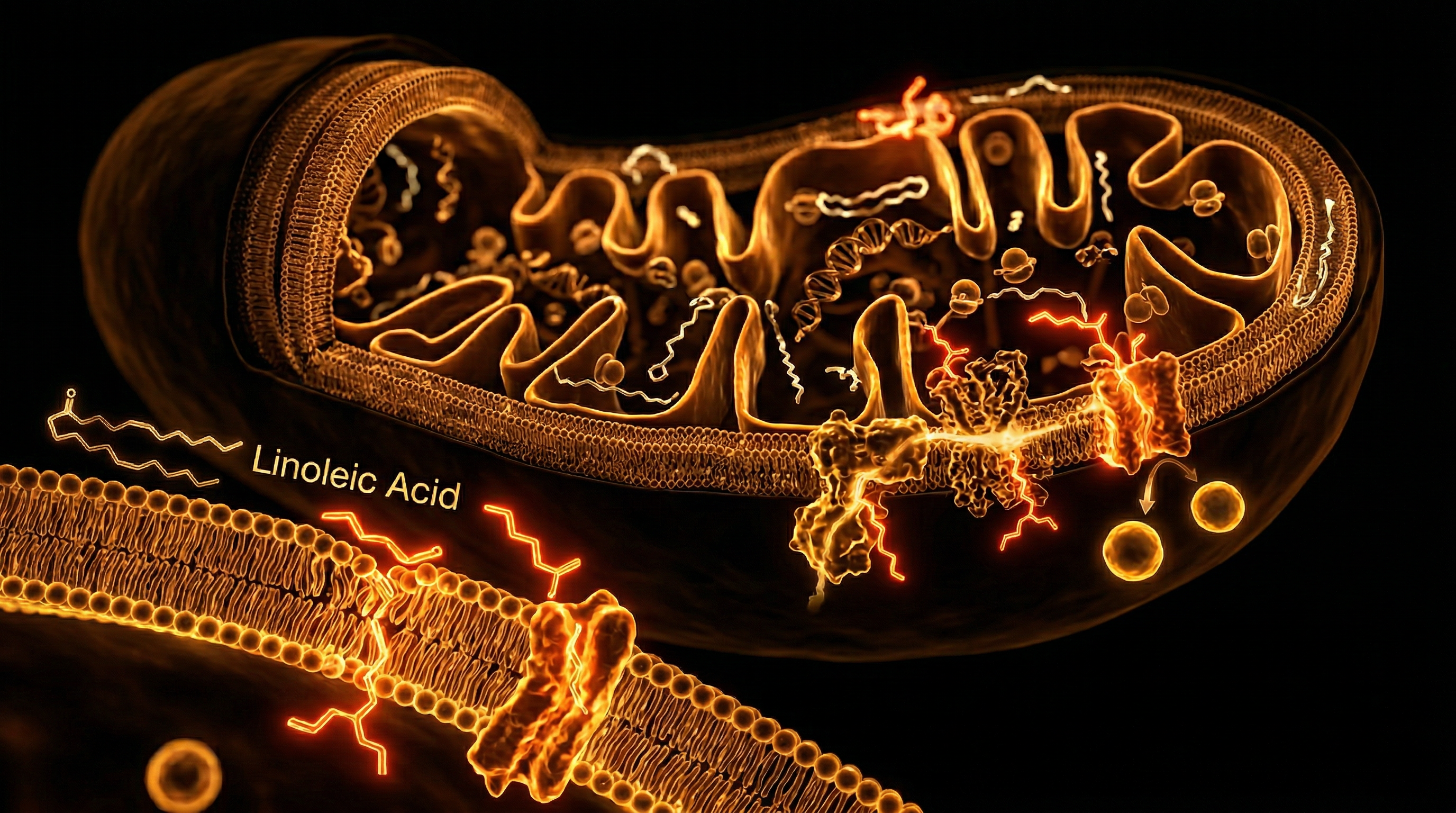
This is not merely a change in caloric source; it is a fundamental alteration of cellular architecture. As we consume these industrial fats—derived from soy, corn, sunflower, and rapeseed—they are integrated into our cell membranes and mitochondrial structures. The primary metabolic consequence of this integration is the generation of a highly reactive and toxic aldehyde known as 4-Hydroxynonenal (HNE).
HNE is not simply a 'byproduct'; it acts as a molecular pathogen. It is an electrophilic molecule that seeks out and binds to proteins, DNA, and phospholipids, distorting their shape and sabotaging their function. At the heart of this destruction lies the mitochondrion—the cellular powerhouse. By accumulating HNE, we are effectively 'rusting' from the inside out, triggering a state of mitochondrial dysfunction that precedes almost every modern chronic disease, from Type 2 diabetes to neurodegeneration. This article serves as a deep dive into the biochemical betrayal orchestrated by industrial oils and the HNE pathogen.
Fact: In the early 1900s, linoleic acid comprised roughly 2% of the average human's adipose tissue. Today, that figure frequently exceeds 25%, representing a massive bio-accumulation of unstable fuel.
The Biology — How It Works
To understand the toxicity of Linoleic Acid (LA), one must first understand its chemical vulnerability. Unlike saturated fats, which have no double bonds and are structurally robust, or monounsaturated fats (like those in olive oil), which have one double bond, PUFAs like LA contain multiple double bonds separated by a methylene bridge.
The Vulnerability of the Methylene Bridge
The hydrogen atoms located on the methylene bridge between two double bonds are exceptionally easy to remove. In the oxygen-rich environment of the cell, especially near the Electron Transport Chain (ETC) in the mitochondria, these hydrogens are frequently "stolen" by reactive oxygen species (ROS). This initiates a process called lipid peroxidation.
The Autocatalytic Chain Reaction
Once a single LA molecule is oxidised, it becomes a lipid radical. This radical then attacks neighbouring LA molecules, creating a self-sustaining cycle of destruction. It is a biological fire that spreads through the lipid bilayer of the mitochondrial membrane. The terminal product of this destructive cascade is 4-Hydroxynonenal (HNE).
- Stability vs. Instability: Saturated fats (tallow, butter, coconut oil) are straight-chain molecules that pack tightly and resist oxidation.
- The PUFA Paradox: While essential in trace amounts for signalling, in large quantities, LA acts as a pro-oxidant 'fuse' within the cell.
- HNE Persistence: Unlike many free radicals that vanish in nanoseconds, HNE is relatively stable and can travel from the site of its creation to attack distant parts of the cell, including the nucleus.
Mechanisms at the Cellular Level
The most devastating impact of HNE occurs within the mitochondria. To understand why, we must look at a unique phospholipid found exclusively in the inner mitochondrial membrane: Cardiolipin.
Cardiolipin: The Mitochondrial Anchor
Cardiolipin is the 'glue' that holds the respiratory complexes of the ETC together. In a healthy state, cardiolipin is enriched with stable fats. However, when the diet is high in industrial oils, the body is forced to build cardiolipin using Linoleic Acid.
When cardiolipin is composed of LA, it becomes highly susceptible to oxidation. As electrons leak from the ETC (a natural part of respiration), they immediately react with the LA-rich cardiolipin. This produces HNE directly at the source of energy production.
The Inhibition of ATP Synthase
HNE does not just sit there; it is a 'protein-grabbing' molecule. Through a process called carbonylation, HNE binds covalently to the amino acid residues (cysteine, histidine, and lysine) of mitochondrial proteins.
- Complex I & II Sabotage: HNE binds to these complexes, reducing their ability to move electrons, which leads to more electron leakage and more HNE—a vicious cycle.
- ATP Synthase Blockage: HNE can bind directly to the 'motor' that produces ATP. This leads to a state of 'cellular starvation' where, despite having plenty of glucose or fat available, the cell cannot convert it into usable energy.
- Uncoupling Proteins (UCPs): HNE triggers the activation of uncoupling proteins. While this is a defence mechanism to 'bleed off' pressure, it results in metabolic inefficiency and the generation of heat instead of energy.
DNA Damage and Epigenetic Distortion
Beyond the mitochondria, HNE can enter the nucleus. It is known to form DNA adducts, specifically with deoxyguanosine. This modifies the genetic code, leading to mutations or the silencing of protective genes. This is a primary pathway through which seed oil consumption contributes to oncogenesis (cancer formation).
Fact: HNE is a potent signalling molecule that, even at low concentrations, can inhibit the "master antioxidant" regulator Nrf2 if the stress becomes chronic, leaving the cell defenceless.
Environmental Threats and Biological Disruptors
The primary source of HNE is dietary intake, but the modern environment has turned this into an inescapable "pathogen" through several vectors.
The Industrial Oil Complex
Industrial fats are extracted using high heat, high pressure, and petroleum-based solvents like hexane. By the time a bottle of soybean or rapeseed oil reaches the supermarket shelf, it has been bleached and deodorised. Crucially, it already contains significant amounts of lipid peroxides and HNE before it even enters your kitchen.
The Restaurant Deep-Fryer: An HNE Factory
The most concentrated exposure to HNE occurs in commercial kitchens. When industrial oils are heated repeatedly in deep fryers:
- The LA breaks down rapidly into volatile aldehydes.
- The concentration of HNE increases exponentially with every hour the oil is used.
- Fried foods act as sponges, absorbing these thermally degraded fats and HNE.
The Role of Iron and H2O2
Modern diets are often high in "fortified" iron (elemental iron filings added to flour). When high tissue iron meets high dietary LA, the Fenton Reaction is catalysed. This reaction dramatically accelerates the conversion of LA into HNE. Similarly, common environmental toxins (like glyphosate or heavy metals) increase mitochondrial hydrogen peroxide (H2O2) production, which serves as the "spark" for the HNE "fuel."
- Common Sources of LA/HNE:
- Margarine and shortenings.
- Commercially baked goods (biscuits, cakes, breads).
- Salad dressings and mayonnaise.
- "Vegan" meat alternatives (often based on soy or sunflower oil).
- Conventional pork and poultry (animals fed high-LA soy/corn diets accumulate LA in their fat).
The Cascade: From Exposure to Disease
The systemic accumulation of HNE leads to a predictable "cascade" of biological failure. This explains why seed oil consumption is linked to such a wide variety of seemingly unrelated diseases.
Obesity and the "Fattening" Signal
HNE acts as a signalling molecule in adipose (fat) tissue. High levels of HNE signal the fat cells to multiply (hyperplasia) and grow larger (hypertrophy). Furthermore, HNE impairs the mitochondria's ability to 'burn' fat via beta-oxidation. This creates a metabolic trap: the individual is constantly hungry because their cells are starving for ATP, yet they cannot burn their stored body fat because their mitochondrial machinery is 'gummed up' with HNE.
Insulin Resistance
Insulin resistance is often described as a 'glucose' problem, but it is fundamentally a 'lipid' problem. HNE interferes with the GLUT4 transporter, which is responsible for bringing glucose into the cell. When the mitochondrial membrane is stiffened and carbonylated by HNE, the insulin receptor loses its sensitivity. The body must then pump out more insulin to achieve the same result, leading to hyperinsulinemia and eventually Type 2 diabetes.
Neurodegeneration: The Brain on HNE
The brain is particularly vulnerable to HNE for two reasons: it is highly oxidative and it is composed of 60% fat.
- Alzheimer’s Disease: HNE adducts have been found in the neurofibrillary tangles of Alzheimer’s patients. HNE impairs the clearance of amyloid-beta.
- Parkinson’s Disease: HNE specifically targets the dopaminergic neurons in the substantia nigra, leading to mitochondrial collapse in these sensitive cells.
Cardiovascular "Rust"
The mainstream narrative focuses on LDL cholesterol. However, LDL is only dangerous when it is oxidised. What oxidises LDL? The answer is primarily the linoleic acid contained within the LDL particle itself. When LA oxidises into HNE within an LDL particle, the particle becomes toxic to the arterial wall. Macrophages (immune cells) gobble up these toxic particles, becoming "foam cells" that form the basis of atherosclerotic plaque.
Statistic: Studies have shown that the concentration of HNE in the blood is a more accurate predictor of heart disease progression than total cholesterol or LDL levels alone.
What the Mainstream Narrative Omits
If the science behind HNE and linoleic acid is so damning, why is it not front-page news? The answer lies in the intersection of corporate interests and "path-dependent" science.
The Saturated Fat Scapegoat
For 70 years, the medical establishment has been wedded to the Diet-Heart Hypothesis, which posits that saturated fat raises cholesterol and causes heart disease. To lower cholesterol, the public was told to swap butter for "heart-healthy" margarine and vegetable oils.
The industry discovered that PUFAs do indeed lower blood cholesterol. However, they do this by driving cholesterol out of the blood and into the tissues, and by increasing the rate at which LDL is oxidised. The "improvement" in blood markers masks a catastrophic decline in cellular health.
Funding and Bias
A significant portion of nutritional research is funded by the very industries that produce these oils. Organisations like the American Heart Association (AHA) have historically received millions from the makers of soybean oil and margarine. This has created a "consensus" that ignores the biochemical reality of lipid peroxidation.
The Essentiality Myth
While linoleic acid is classified as an "essential" fatty acid, the human requirement for it is vanishingly small—likely less than 0.5% of total calories. Most modern humans consume 10% to 20%. The "essential" label is used as a shield to prevent the regulation of these fats as toxic substances.
- The Suppression of Data: Historical trials like the Minnesota Coronary Experiment and the Sydney Diet Heart Study, which showed that replacing saturated fat with vegetable oil increased death rates, were buried for decades or only published partially.
- The "Vegetable" Misnomer: Calling these oils "vegetable" oils is a marketing masterstroke. They are not made from vegetables; they are industrial grain and seed oils that require intensive chemical processing to be edible.
The UK Context
In the United Kingdom, the HNE crisis is particularly acute due to dietary habits and the structure of the British food system.
The "Canola" (Rapeseed) Ubiquity
The UK is a major producer of rapeseed. Consequently, rapeseed oil is marketed as a "healthy" British alternative to olive oil. While it contains slightly less LA than soybean oil, it is still a significant source of PUFAs and is highly susceptible to turning into HNE when used for roasting or frying—staples of the British diet (e.g., Sunday roasts, fish and chips).
NHS Guidelines and Public Health
The NHS and Public Health England continue to promote the consumption of "unsaturated fats" and "lower-fat spreads." This advice has remained largely unchanged since the 1980s, despite the UK seeing an explosion in obesity and Type 2 diabetes.
The Cost of Living Factor
As food prices rise in the UK, the most affordable foods are often those ultra-processed items laden with the cheapest industrial oils. The socio-economic divide in the UK is also a biological divide; those on lower incomes are disproportionately exposed to higher levels of HNE through "value" range products, further burdening the healthcare system.
Fact: The UK has one of the highest rates of ultra-processed food consumption in Europe, with over 50% of the average household's diet coming from foods that are primary delivery vehicles for linoleic acid and HNE.
Protective Measures and Recovery Protocols
The good news is that the body has the capacity to heal, though the process is slow. The half-life of linoleic acid in human fat cells is approximately two years. This means that a commitment to eliminating these toxins requires a long-term perspective.
1. The Great Purge: Eliminate Seed Oils
The first and most critical step is the total elimination of:
- Soybean oil, corn oil, sunflower oil, safflower oil, rapeseed (canola) oil, and "vegetable" oil blends.
- Check labels for "partially hydrogenated" or simply "fats and oils."
- Be wary of restaurant food, which is almost universally cooked in these oils.
2. Return to Evolutionary Fats
Replace industrial fats with stable alternatives that do not readily form HNE:
- Tallow and Suet: Highly stable and rich in stearic acid, which promotes mitochondrial fusion.
- Butter and Ghee: Contain butyrate, which is beneficial for gut health.
- Coconut Oil: Composed primarily of medium-chain triglycerides that are easily used by the mitochondria.
- Extra Virgin Olive Oil: Acceptable for cold use (salads), as it is primarily monounsaturated, though it still contains roughly 10% LA.
3. Antioxidant Support
While the goal is to stop the production of HNE, certain nutrients can help neutralise existing aldehydes:
- Vitamin E (Alpha-tocopherol): The primary lipid-soluble antioxidant that stops the lipid peroxidation chain reaction.
- Selenium: Essential for the function of Glutathione Peroxidase, the enzyme that detoxifies lipid peroxides.
- Glycine: Found in collagen and bone broth, glycine is a precursor to glutathione and helps protect the liver from HNE-induced damage.
4. Metabolic Priming
- Red Light Therapy (Photobiomodulation): Exposure to near-infrared light can help "kickstart" Complex IV of the mitochondria, helping to overcome the inhibitory effects of HNE.
- Strategic Fasting: Allows the body to engage in autophagy, the cellular "housecleaning" process that breaks down and recycles damaged, carbonylated proteins.
- Cold Exposure: Increases the expression of UCP1 and can help clear out dysfunctional "LA-heavy" fat.
Summary: Key Takeaways
The narrative of "heart-healthy" vegetable oils is one of the most significant scientific errors in human history. By flooding our bodies with linoleic acid, we have introduced a Trojan Horse that generates the HNE pathogen within our very cells.
- HNE is a toxic aldehyde created when linoleic acid (found in seed oils) oxidises in the body.
- Mitochondrial dysfunction is the primary result, as HNE binds to and sabotages the proteins responsible for energy production (ATP).
- Industrial oils like soy, corn, and rapeseed are the primary drivers of this process and are pervasive in the modern food supply.
- The "Saturated Fat" myth has served to protect the industrial oil industry, while public health has plummeted.
- Recovery is possible but requires the strict elimination of seed oils and the reintroduction of stable animal fats, alongside support for the body's natural antioxidant systems.
To restore our health, we must return to the fuels our mitochondria were designed to burn. We must stop the "rusting" of our cellular engines and reclaim our metabolic sovereignty from the HNE pathogen. The path to INNERSTANDING begins with the rejection of industrial fats and a return to biological reality.
This article is provided for informational and educational purposes only. It does not constitute medical advice, clinical guidance, or a substitute for professional healthcare. Information reflects cited research at time of publication. Always consult a qualified healthcare professional before acting on any health information.
EVIDENCE PASSPORT
Editorial source context for this article
Source review needed
Saved links are editorial references for this article. They may support specific claims rather than every sentence. Open and assess each source in context. This passport does not independently verify them.
Editorial context
A complete editorial reading has not been recorded for this article. Source links remain available for you to open and assess directly.
Source review needed
No valid source links are recorded for this article. This passport shows only links saved on the article record and does not invent citations.
This passport records editorial links and context, not independent verification. Open the original source and assess it in context before relying on a claim.
Medical Disclaimer
The information in this article is for educational purposes only and does not constitute medical advice, diagnosis, or treatment. Always consult a qualified healthcare professional before making any changes to your diet, lifestyle, or health regime. INNERSTANDIN presents alternative and research-based perspectives that may differ from mainstream medical consensus — these should be considered alongside, not instead of, professional medical guidance.
Read Full DisclaimerContinue the thread
Keep this question moving.
Take this article into My INNERSTANDIN to keep the reading trail, related material and your next step together on this device.
Explore this in the Body Map
See where this hits your biology. Interactive anatomy, threats, and protective protocols.
Dig deeper in the Library
Free, longform PDF volumes that go beyond headlines into mechanisms and references.